
Dante’s View
Dante’s View is one of Death Valley’s most spectacular high‑vantage lookouts — perched 5,575 ft above Badwater Basin on the crest of the Black Mountains.
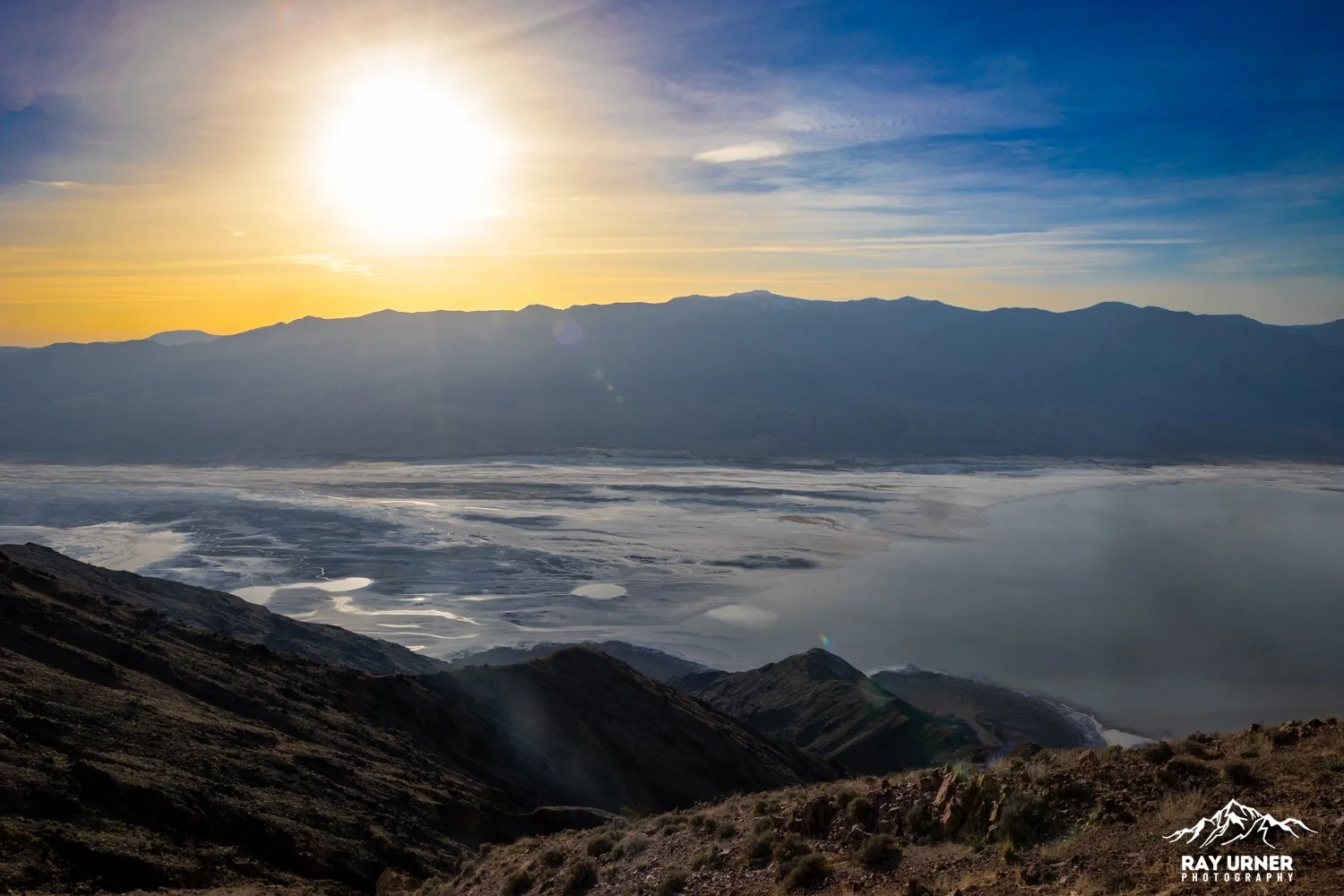
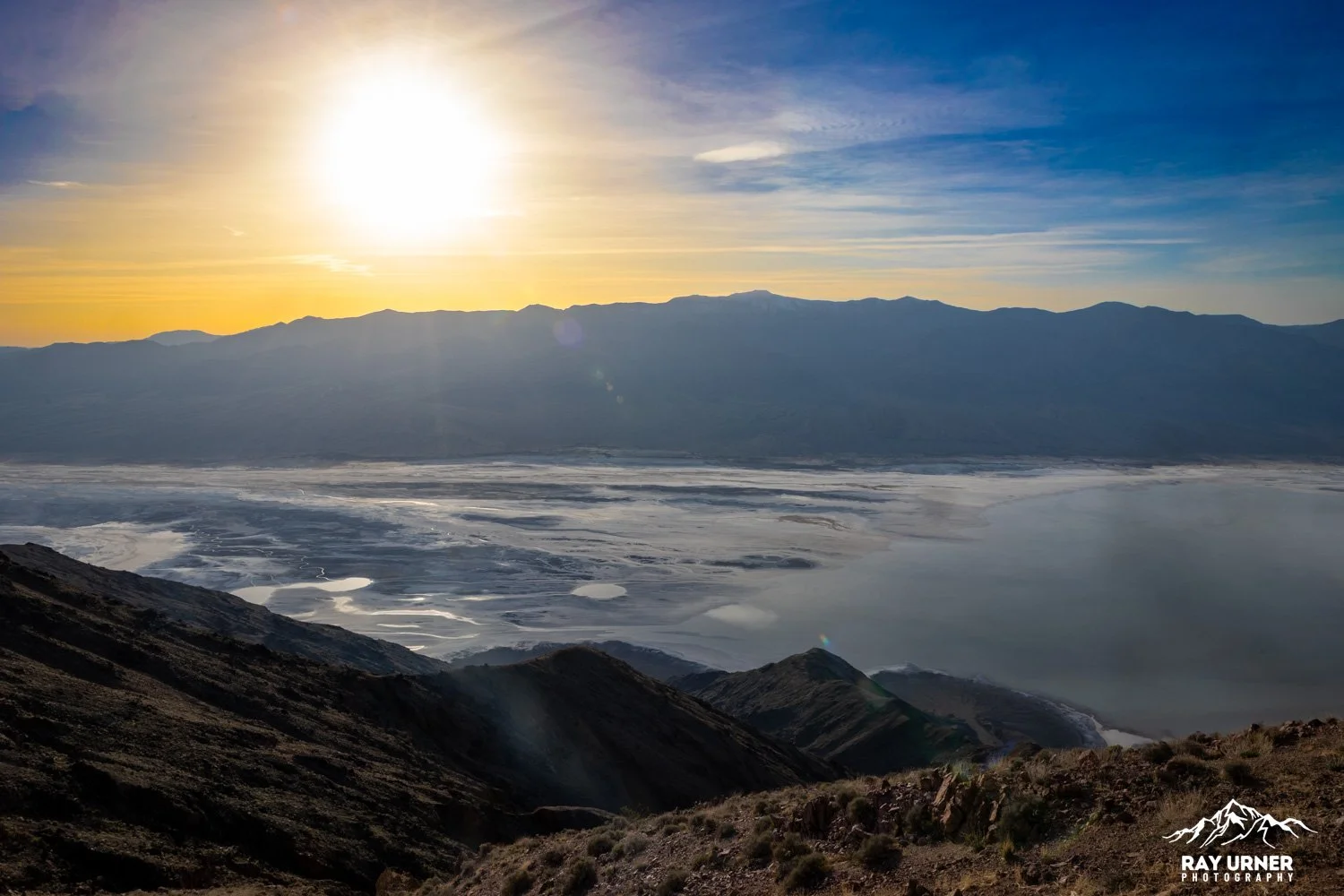
From here you peer straight down onto the salt flats, across to the Panamint Range, and, on very clear days, can even see the distant Sierra Nevada.
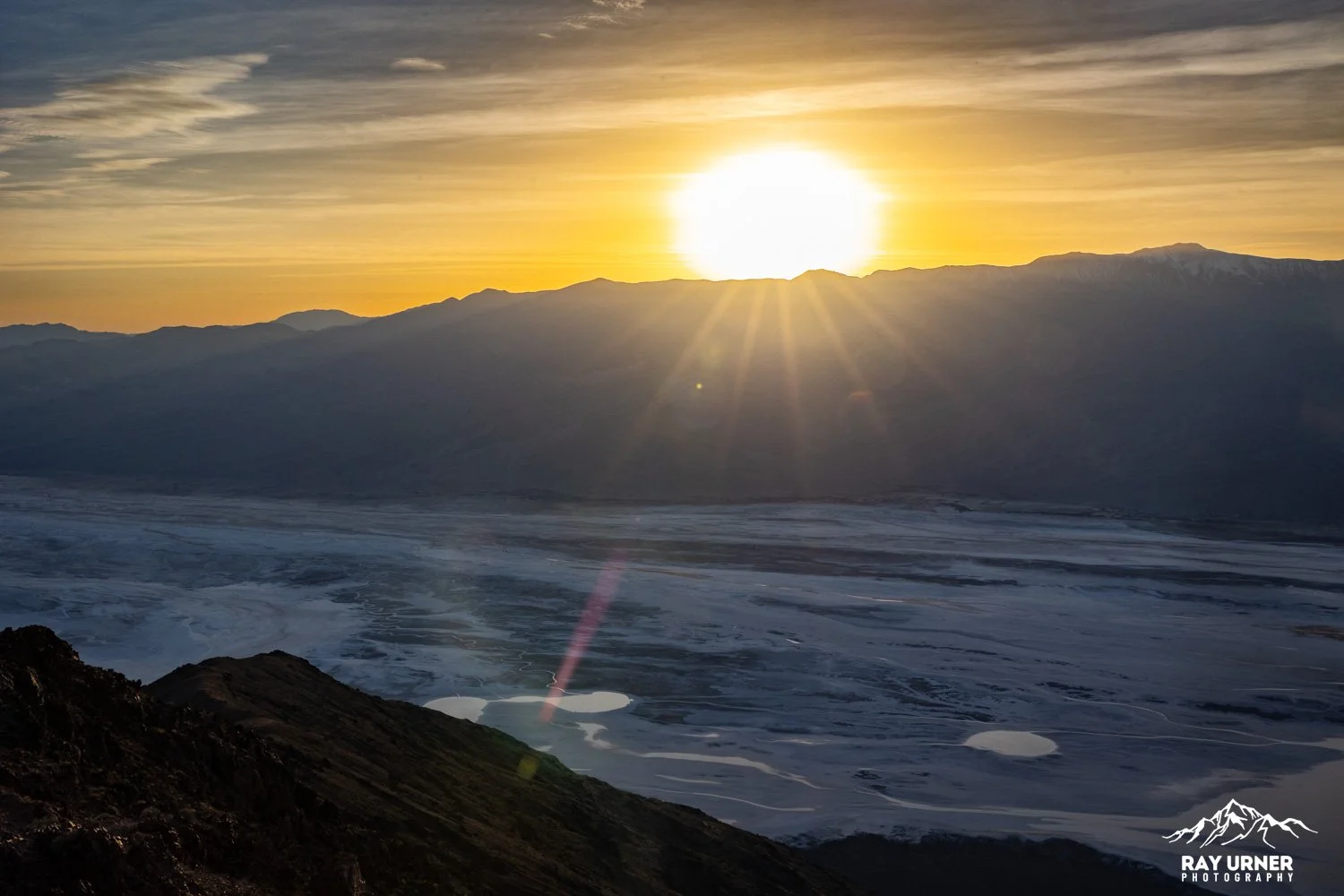
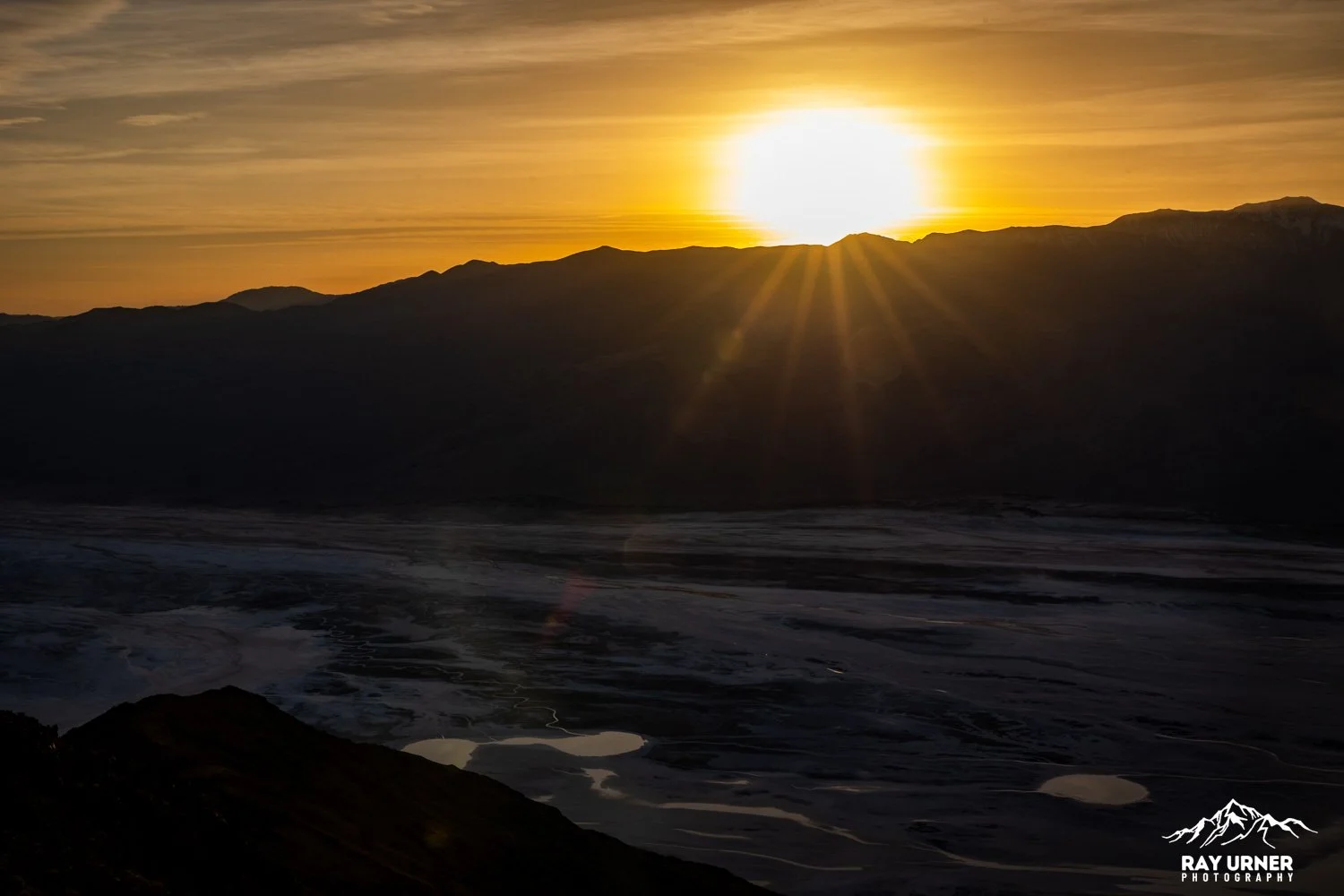
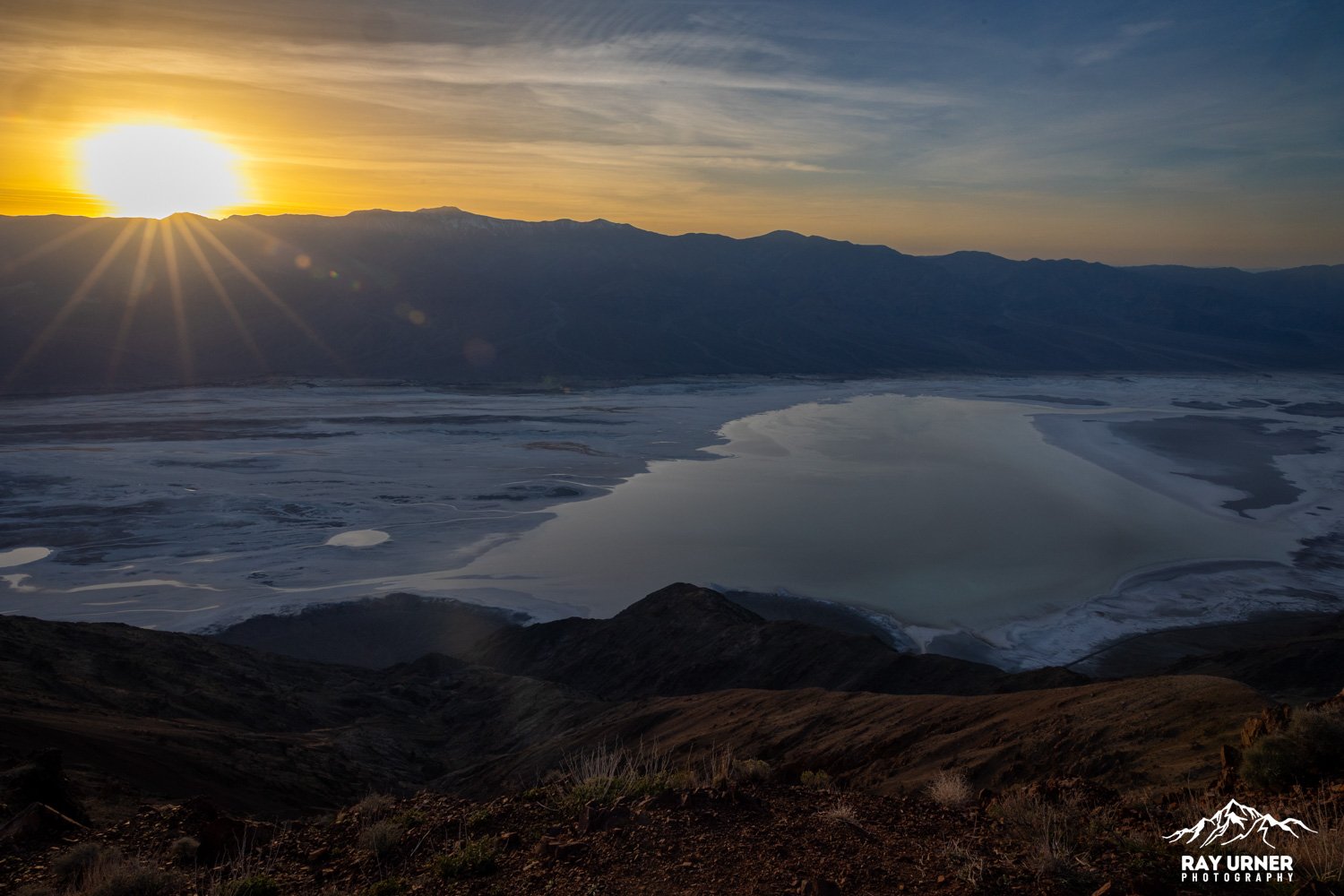
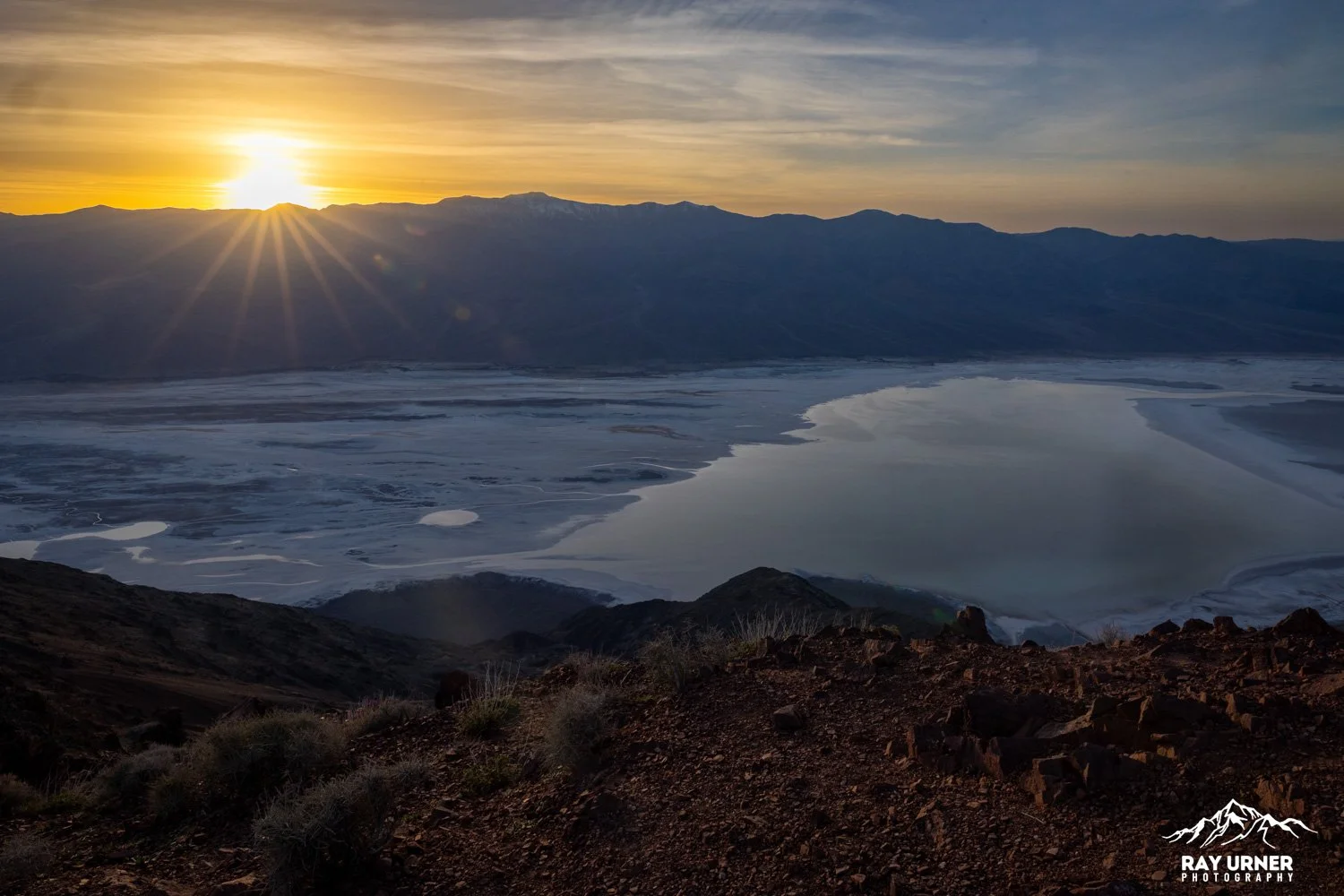
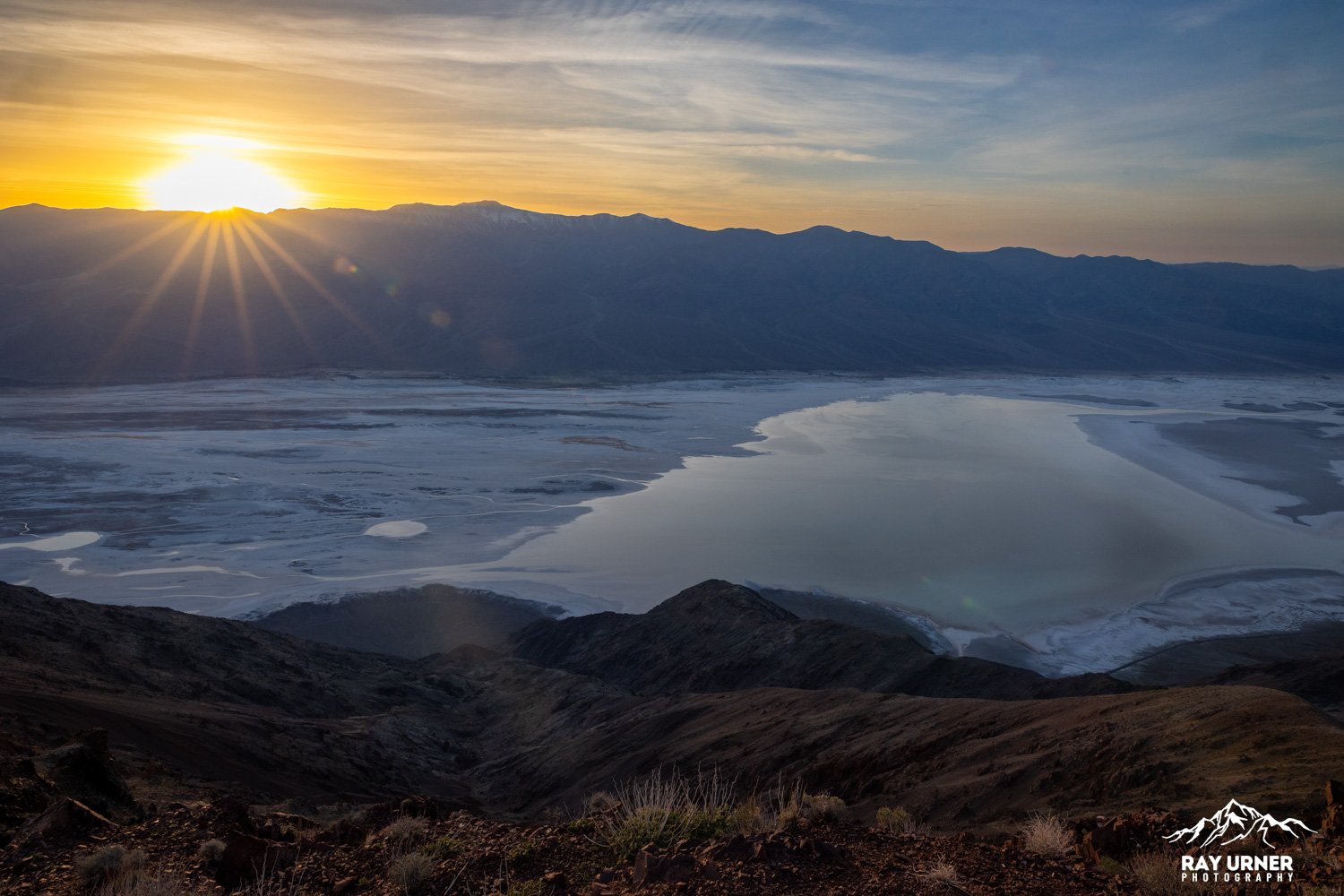
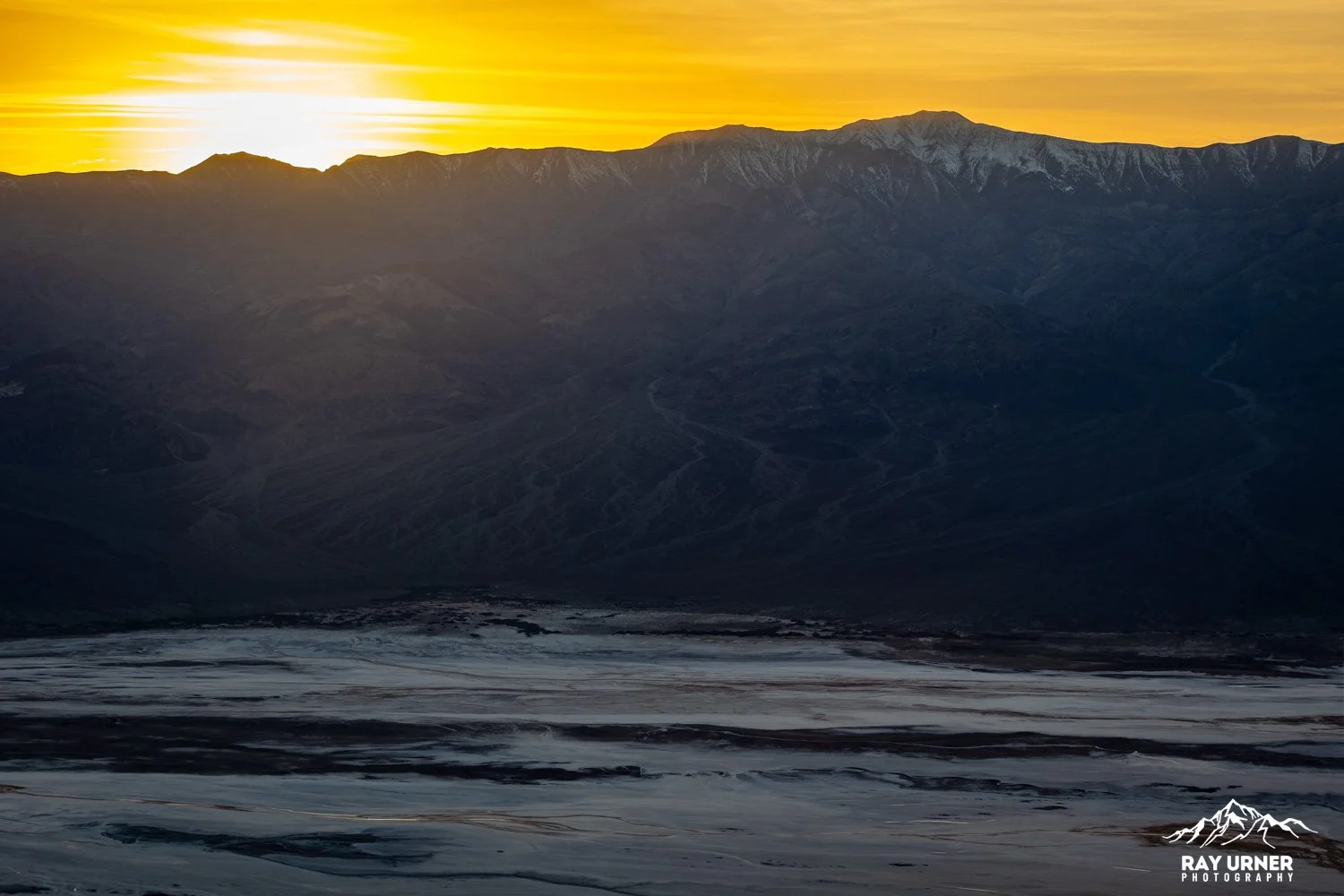
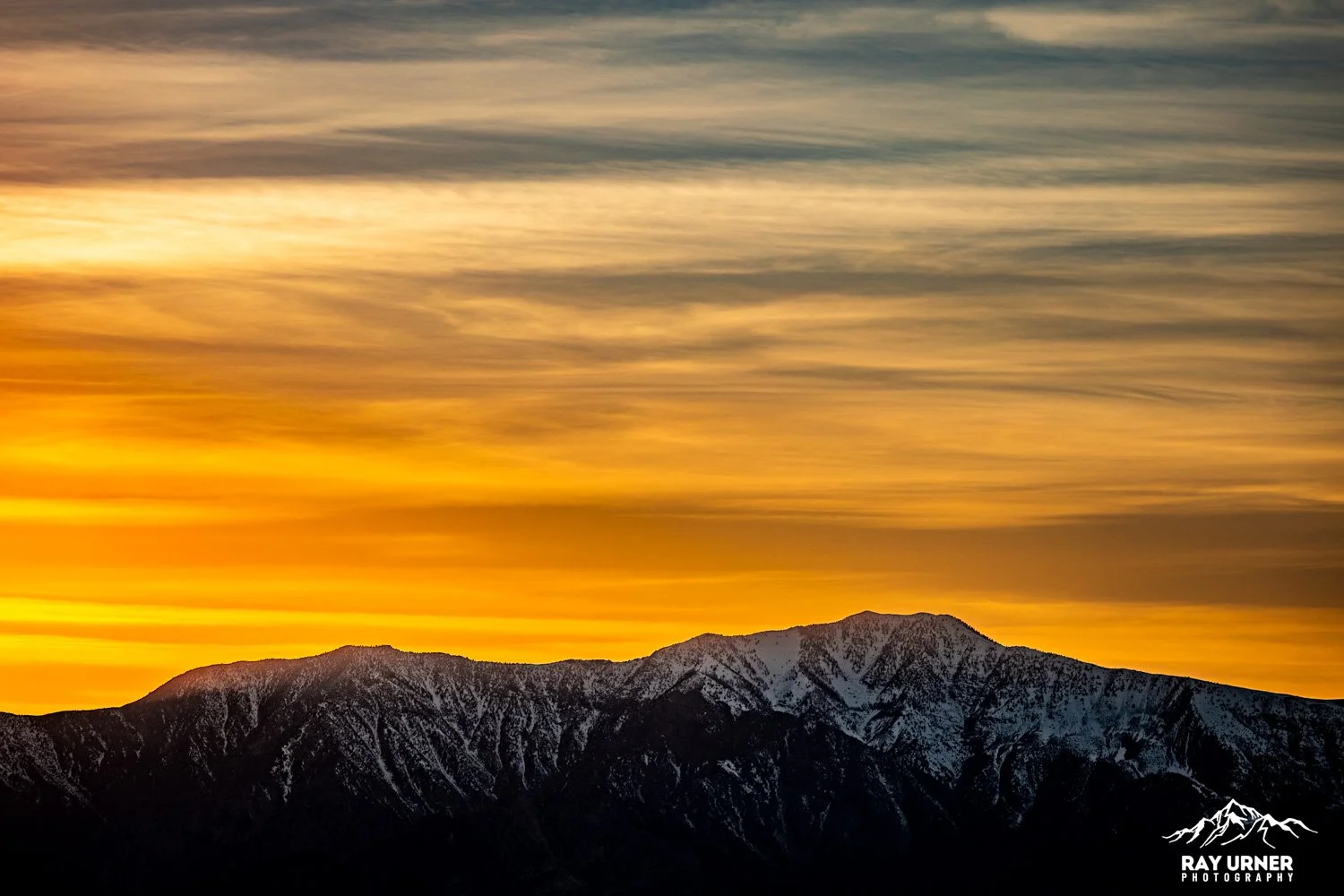
It’s one of the park’s premier sunset locations: warm cross‑light washes over Telescope Peak and the Panamints, while the basin below glows soft white.
Overview
Quick Facts
Elevation: 5,575 ft above Badwater Basin
Drive: 45 minutes from Furnace Creek
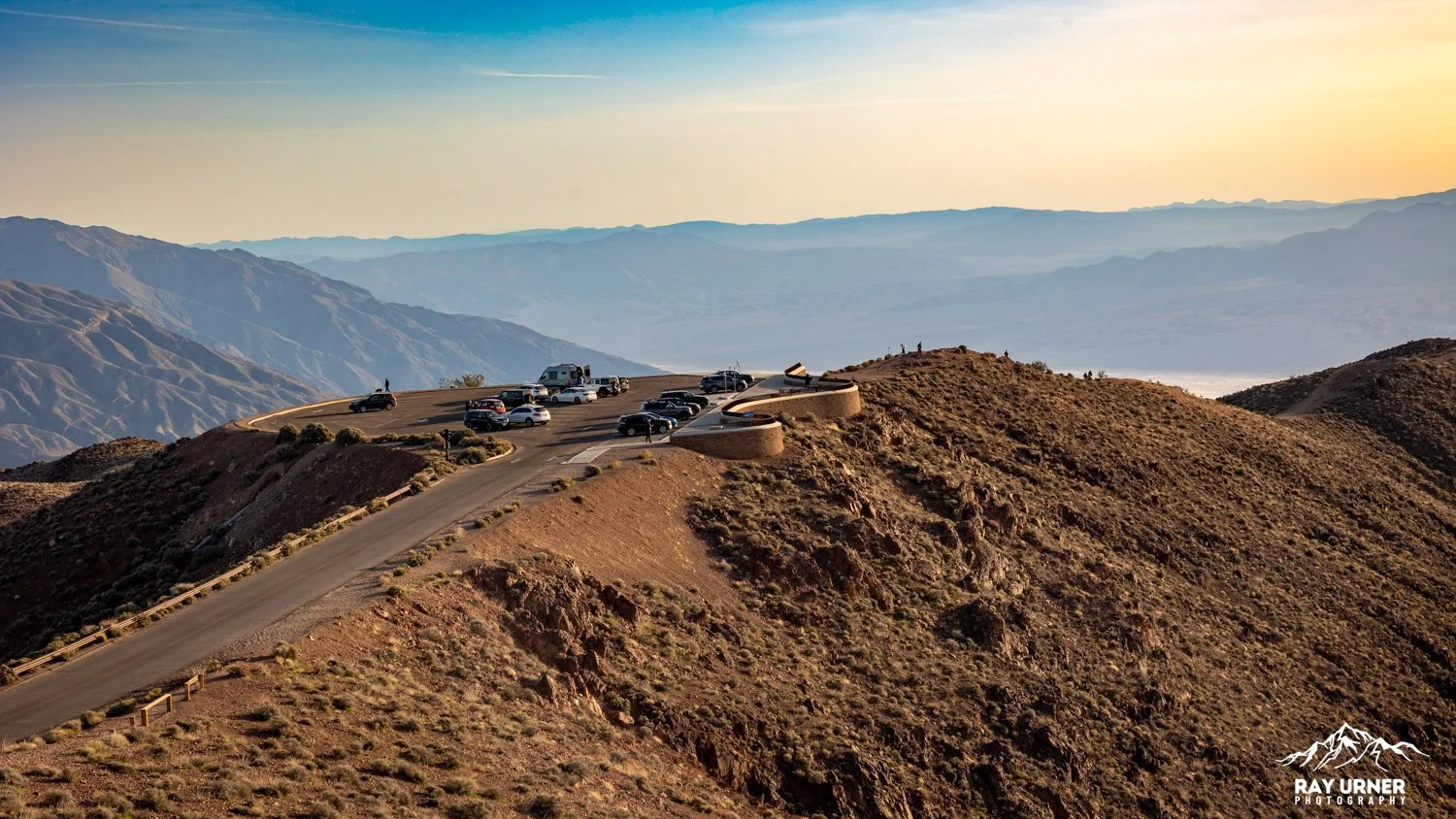
Parking: Large paved lot at the top
Facilities: Vault toilets slightly before the viewpoint; no water
Trails: Two short ridge trails (north & south); longer route to Mt. Perry via north ridge
Best Light: Sunset for warm mountains + shadow textures across the basin
The Main Overlook (Sunset Edition)
What You See
From the parking‑lot platform, you get:
A vertical drop view onto Badwater Basin
Westward views of the Panamint Range and Telescope Peak
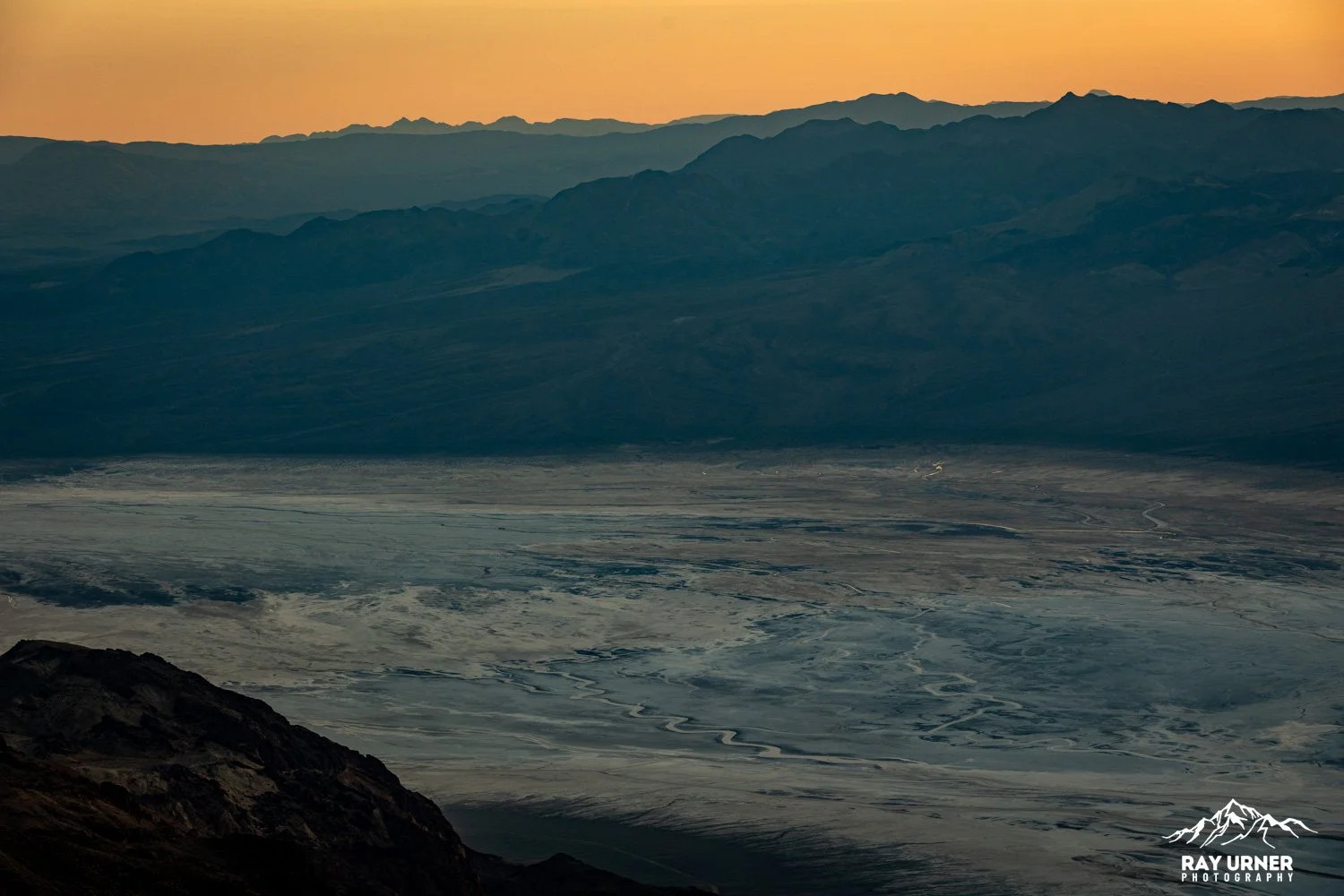
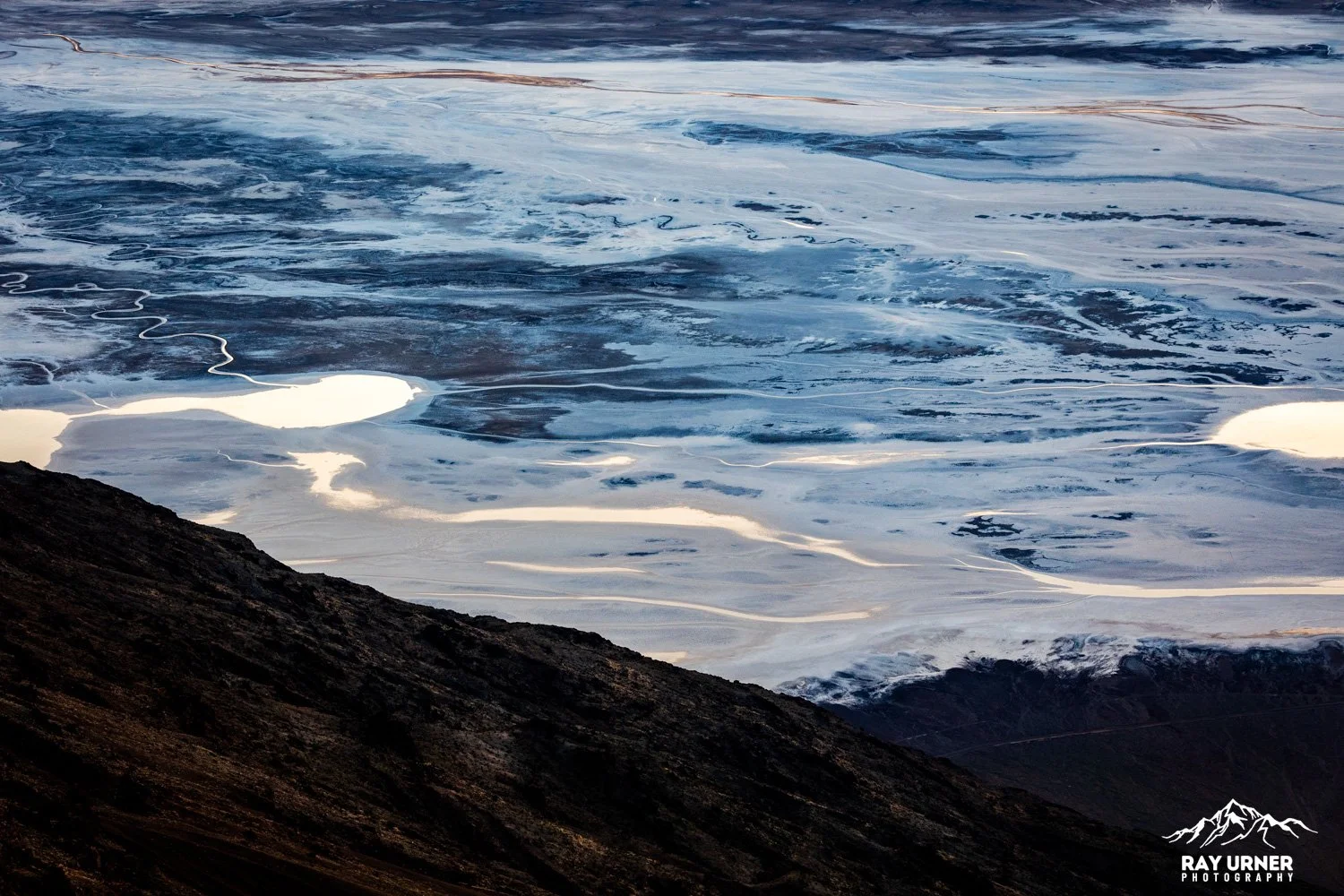
Massive contrast between dark volcanic ridges and white salt flats below
Golden hour light raking across the basin and mountains
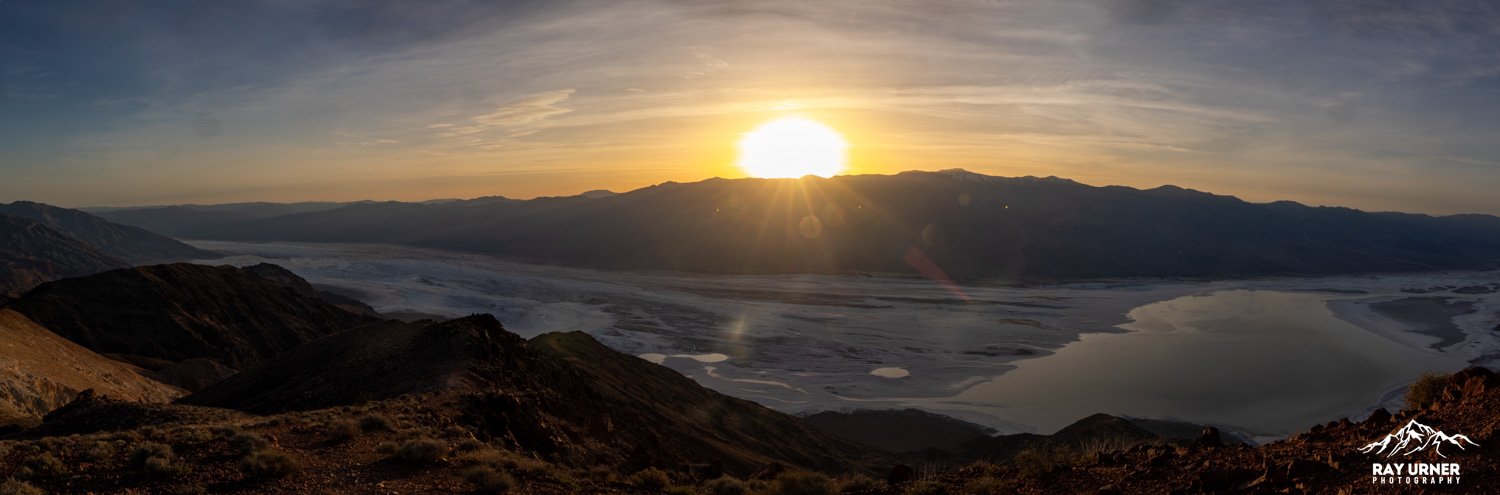
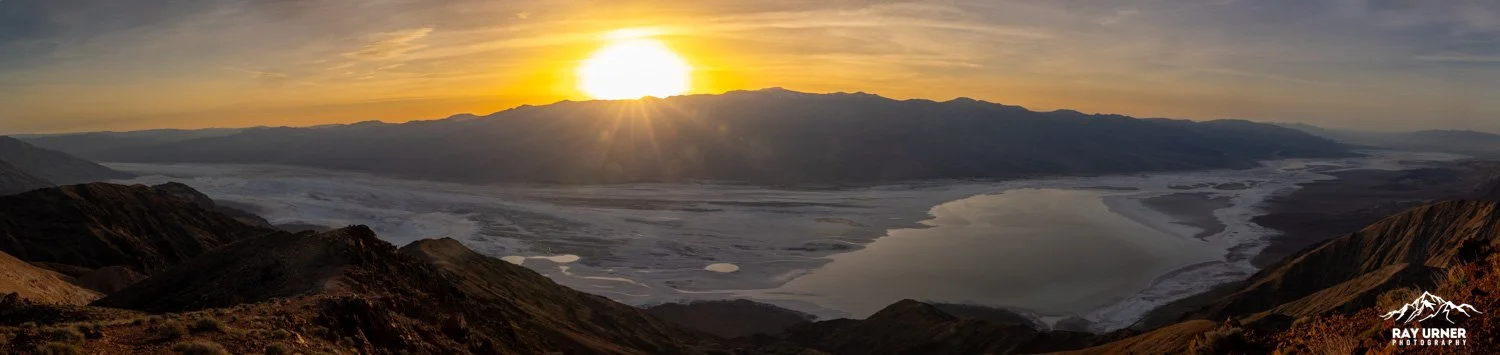
The overlook provides a 360° panorama with no hiking required.
Best Sunset Compositions
Westward Panamint Glow: Telephoto toward Telescope Peak catching warm sunset color.
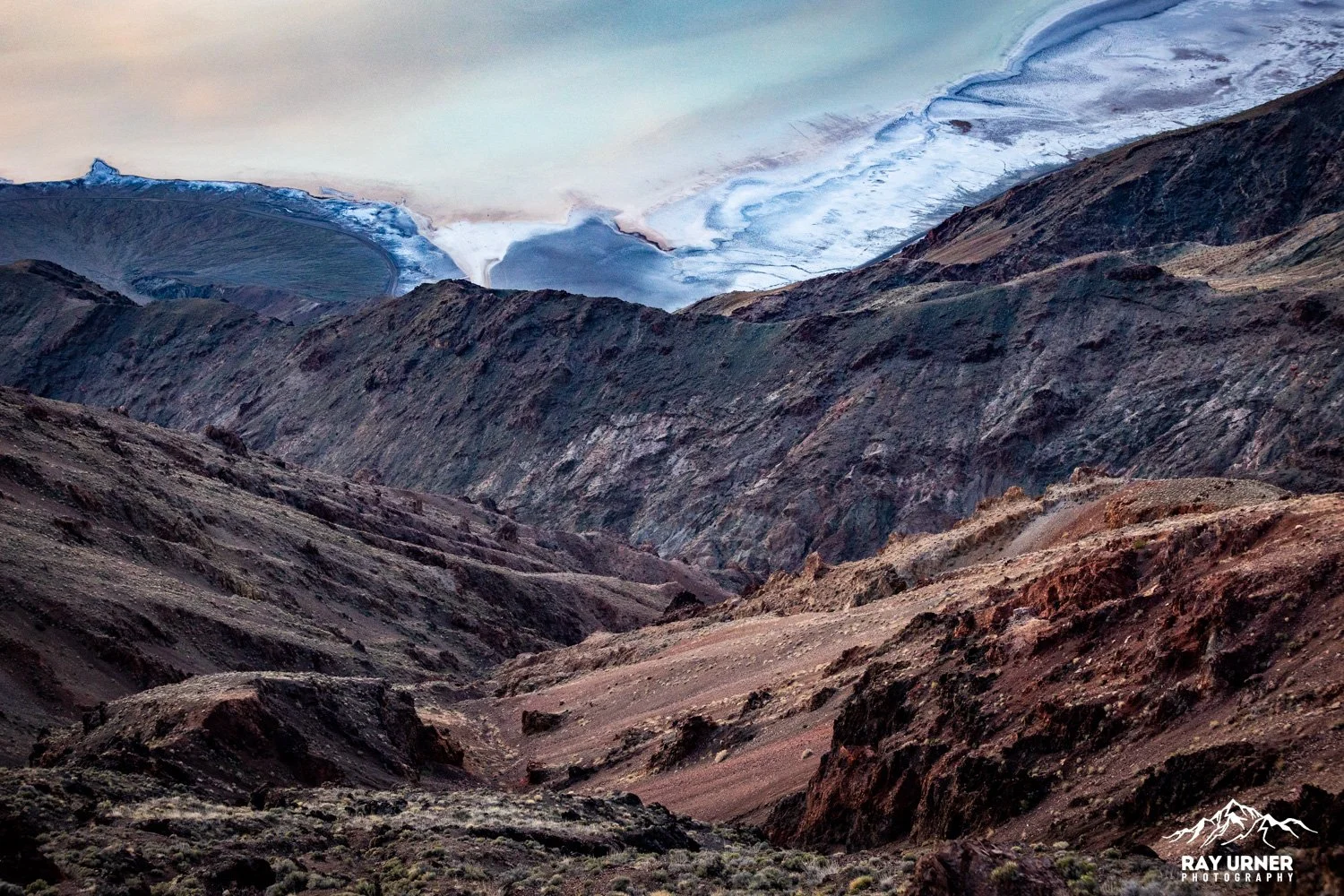
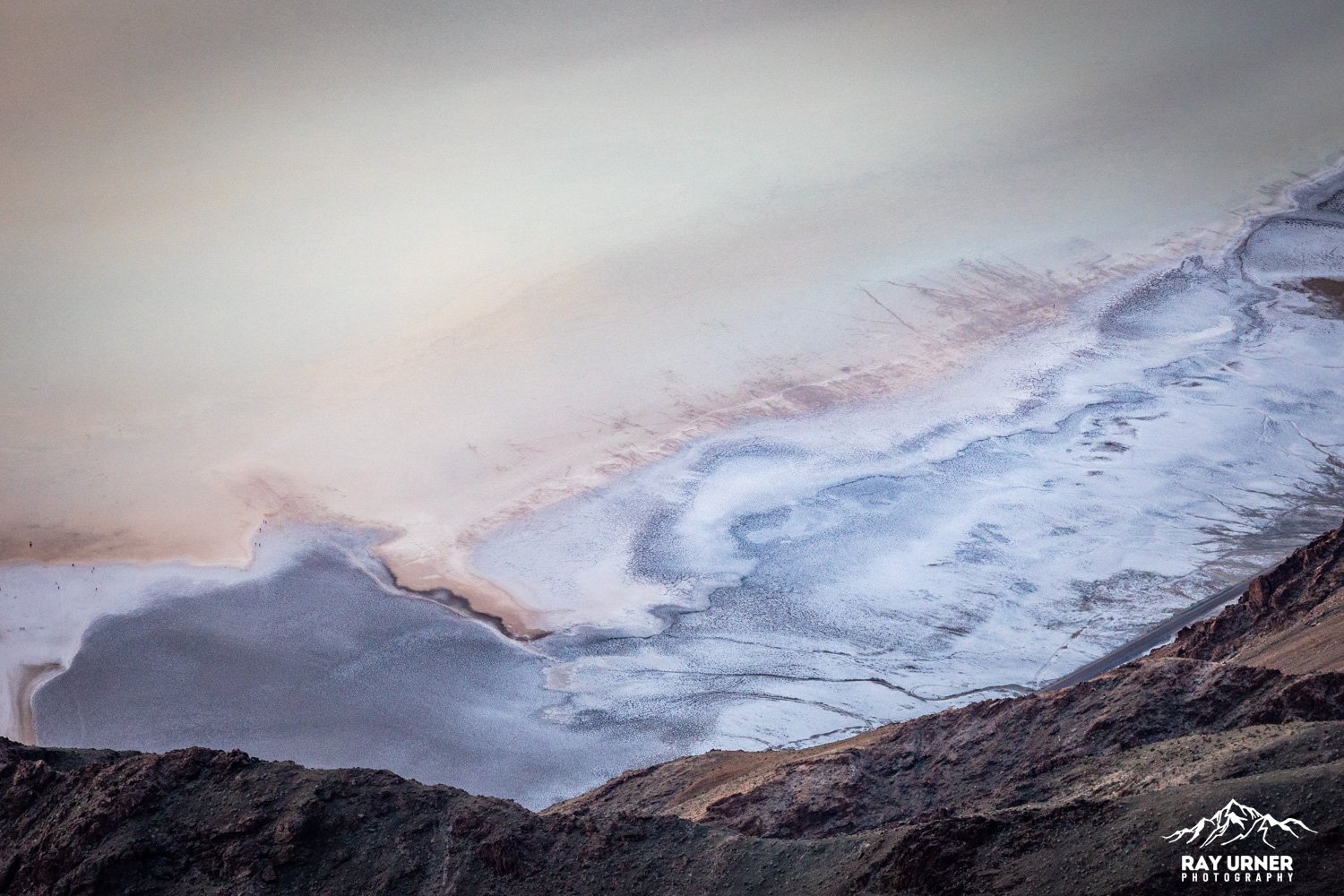
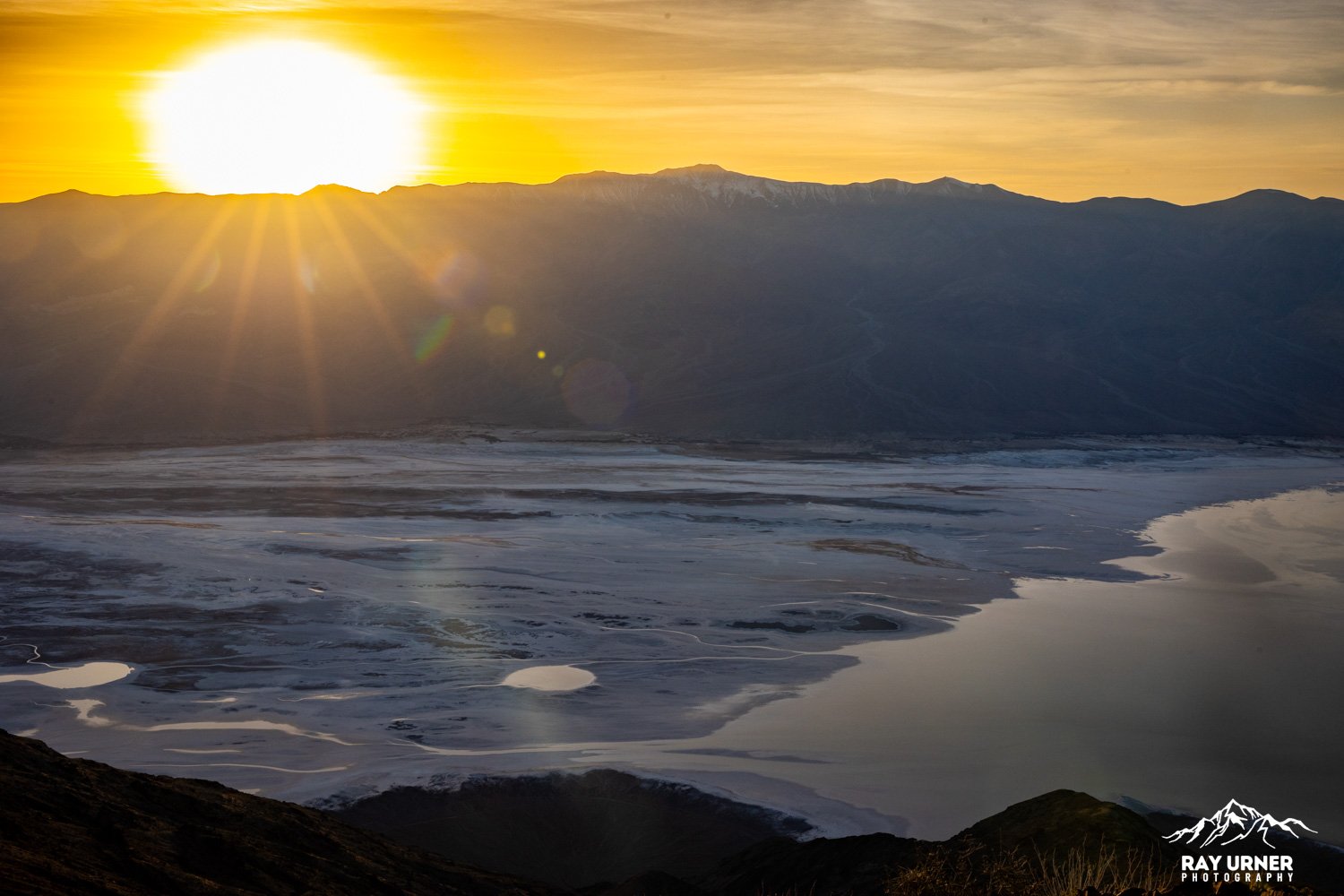
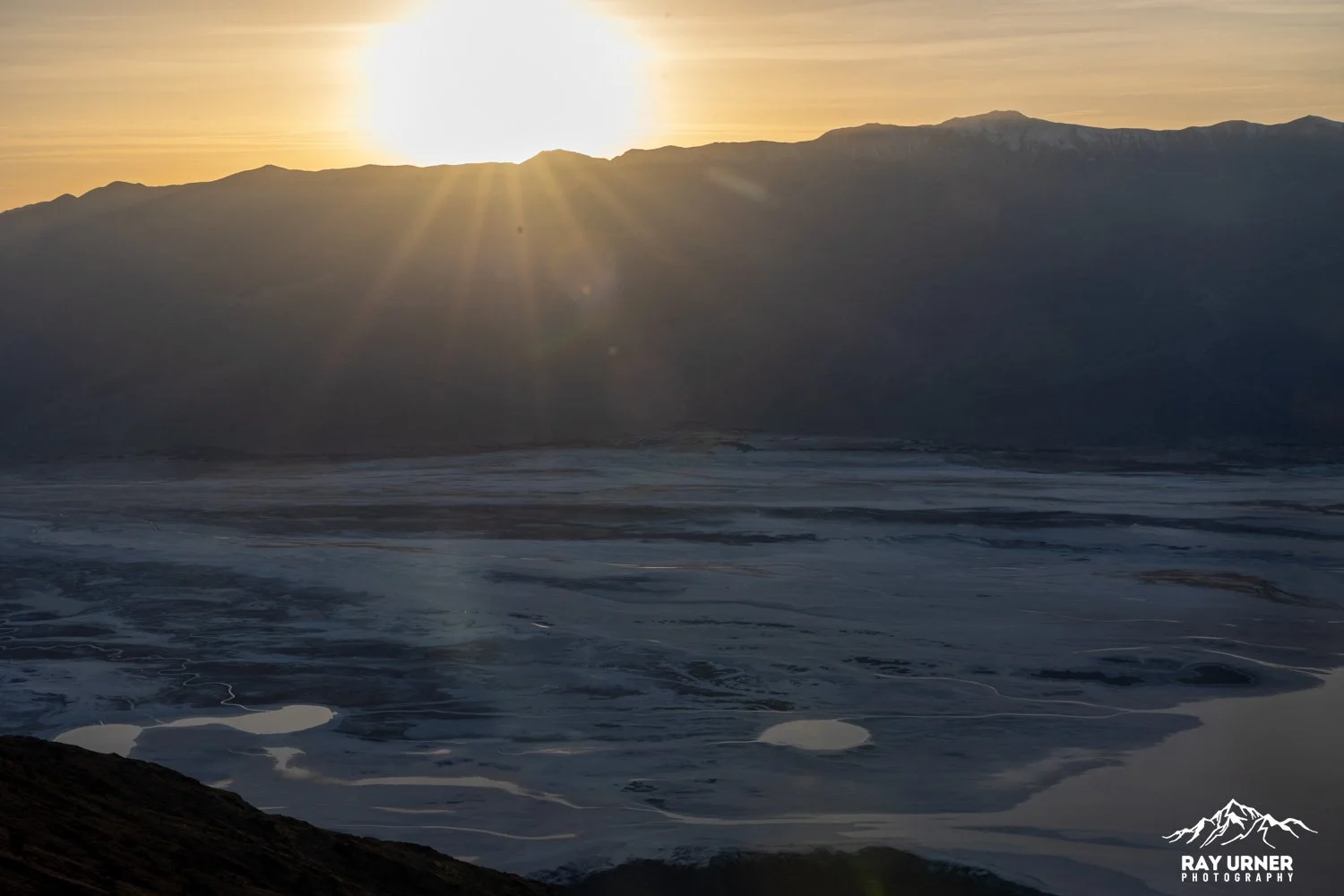
Salt Flats Geometry: Aim downward for abstract white‑and‑shadow textures.
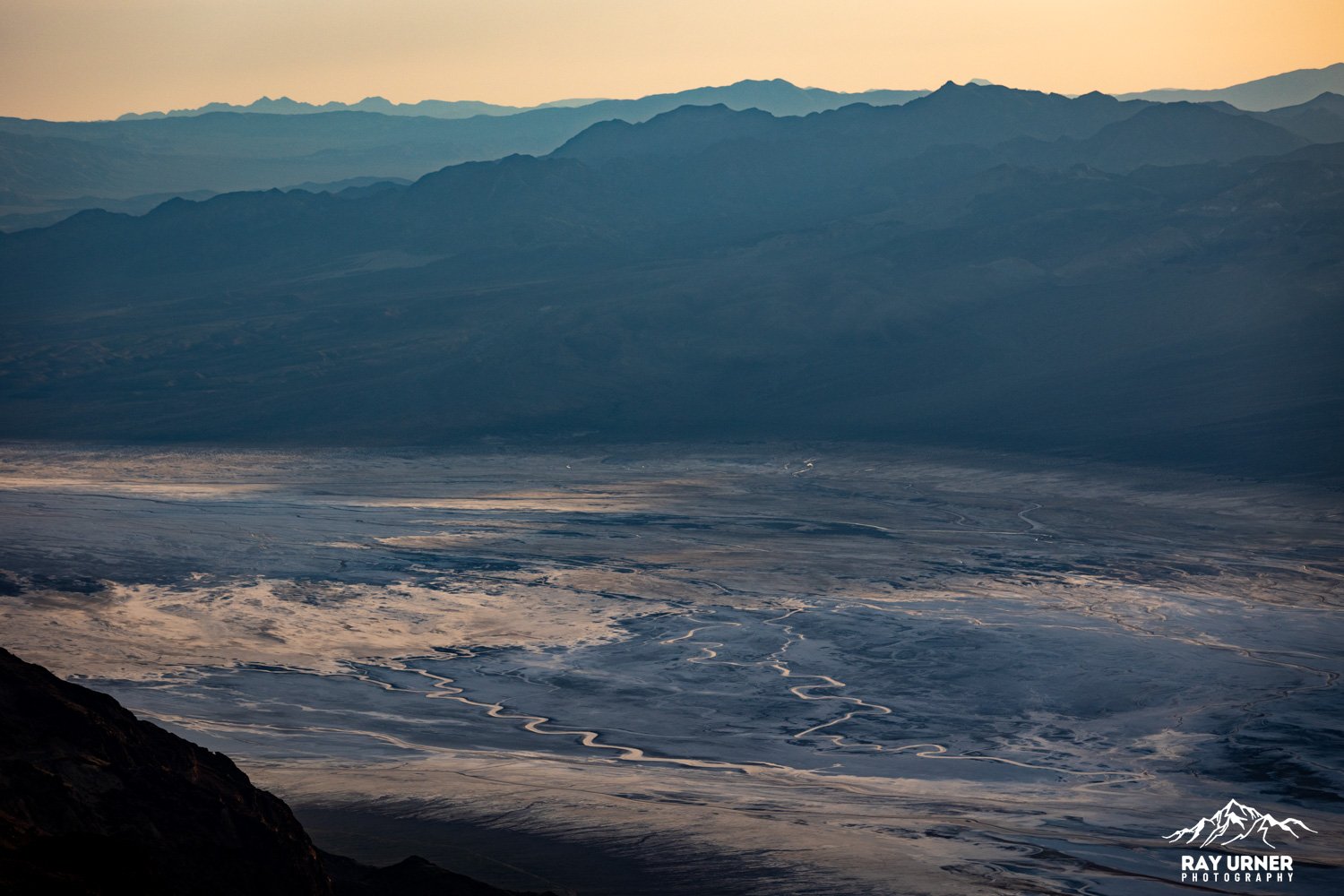
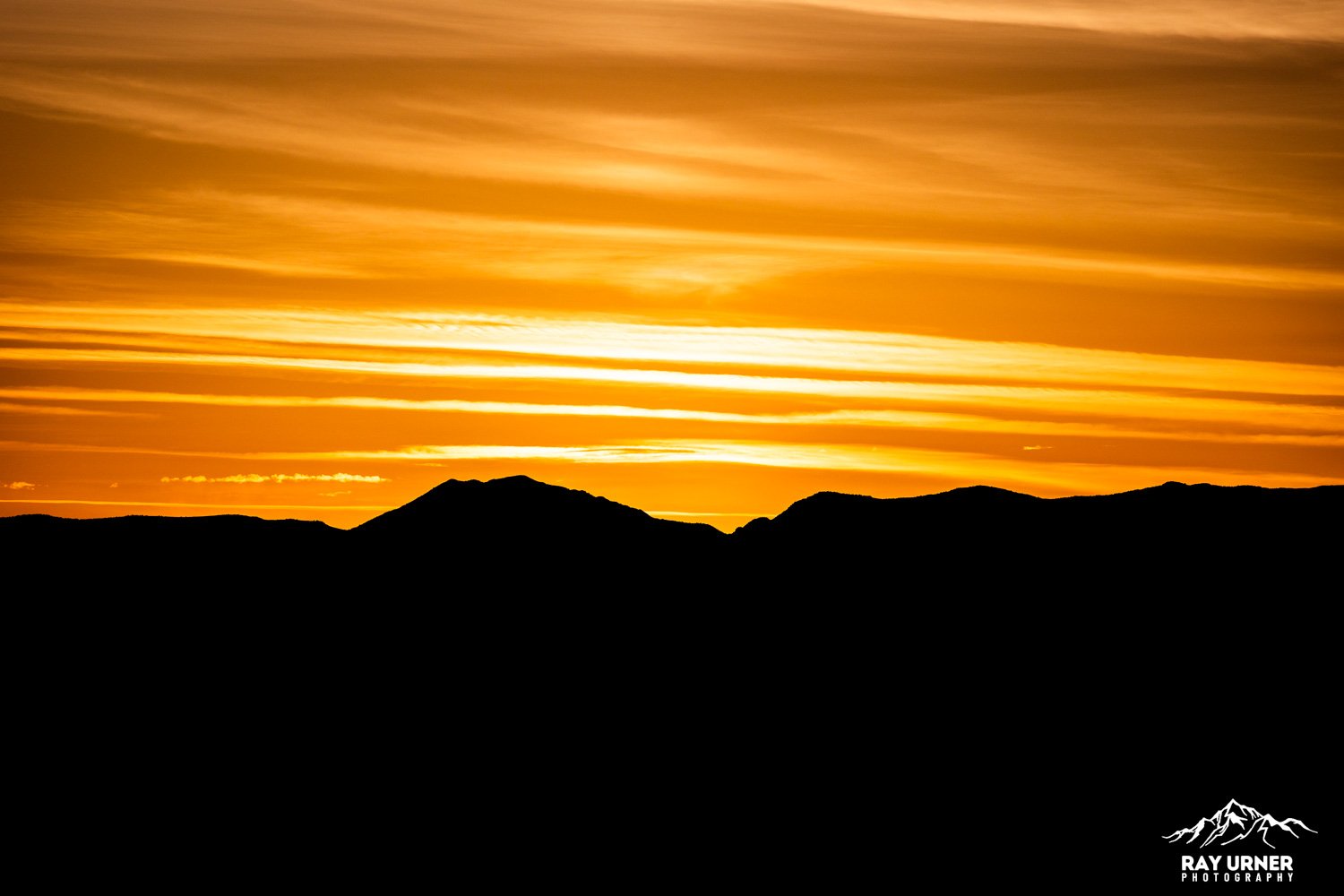
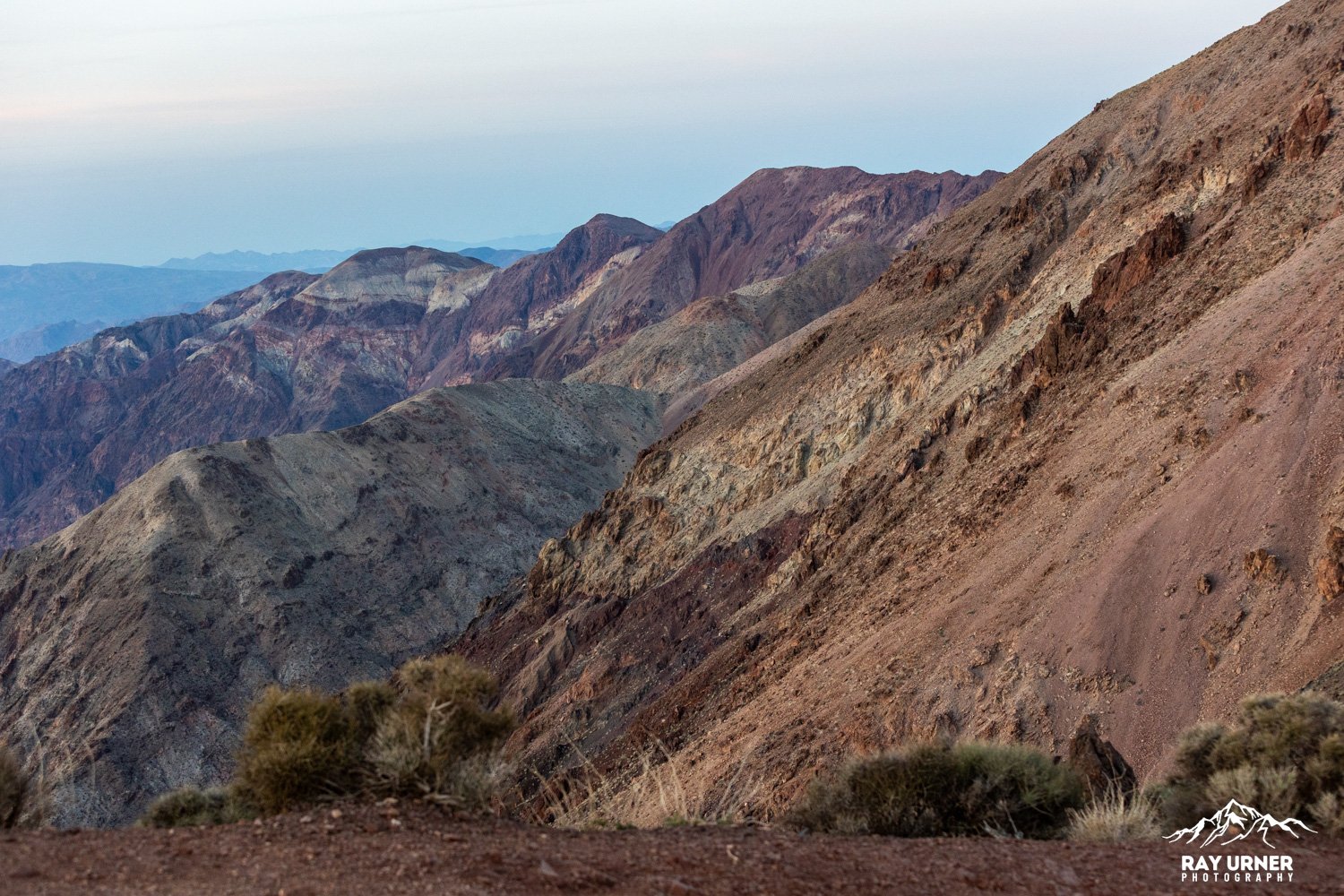
Silhouette Ridge Lines: Look south to capture overlapping volcanic ridges.
People‑for‑Scale: The overlook works beautifully for human silhouettes against the basin.
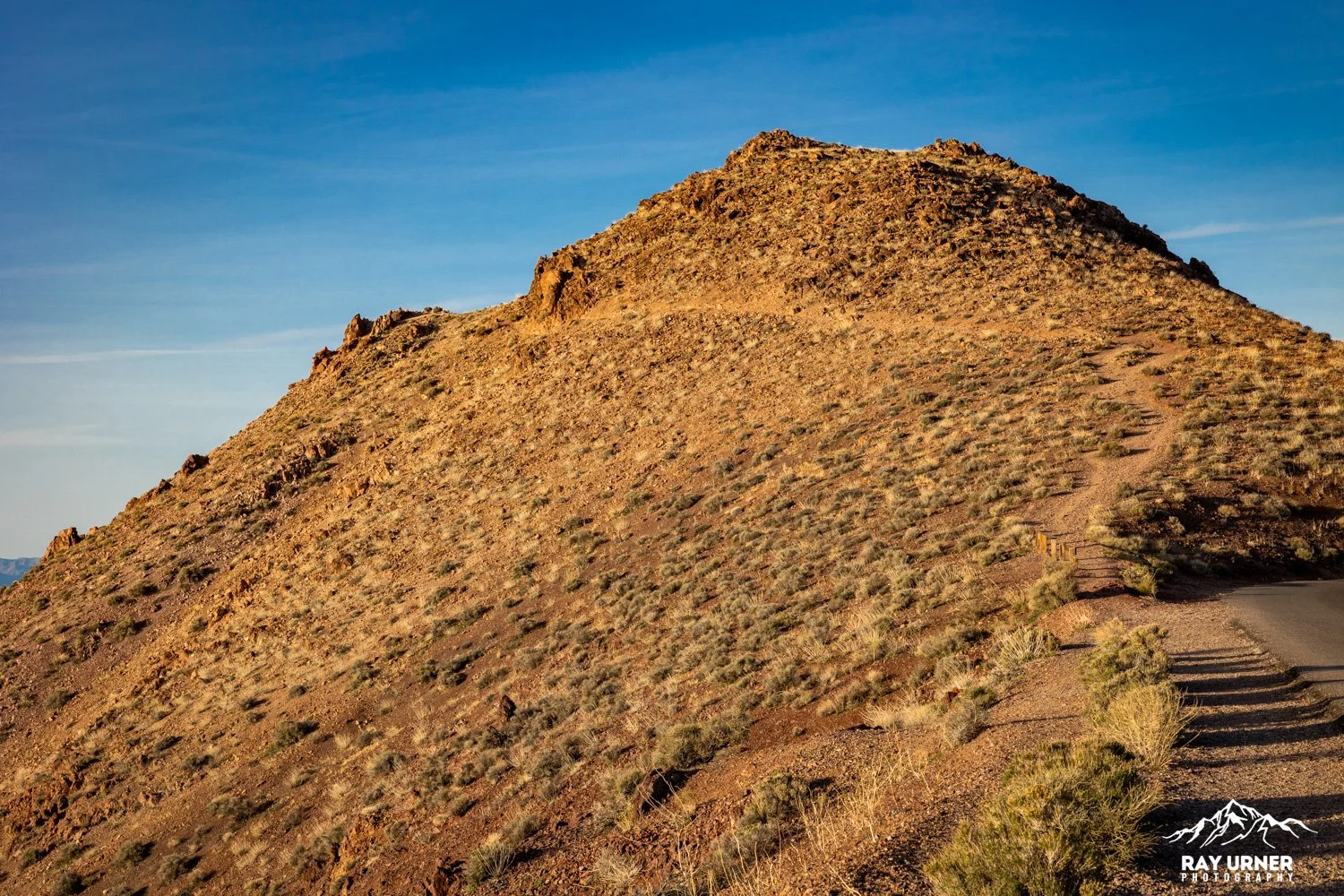
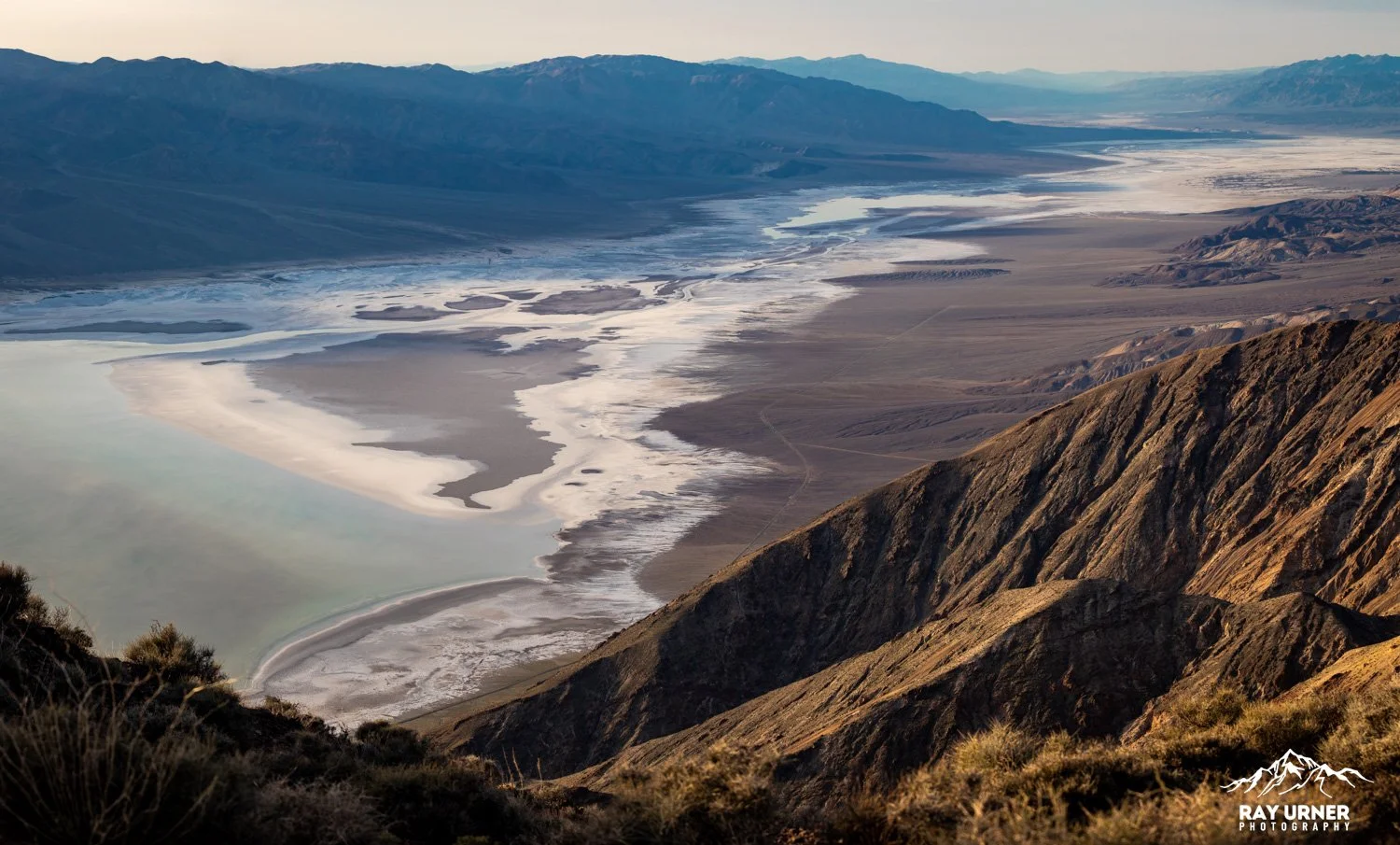
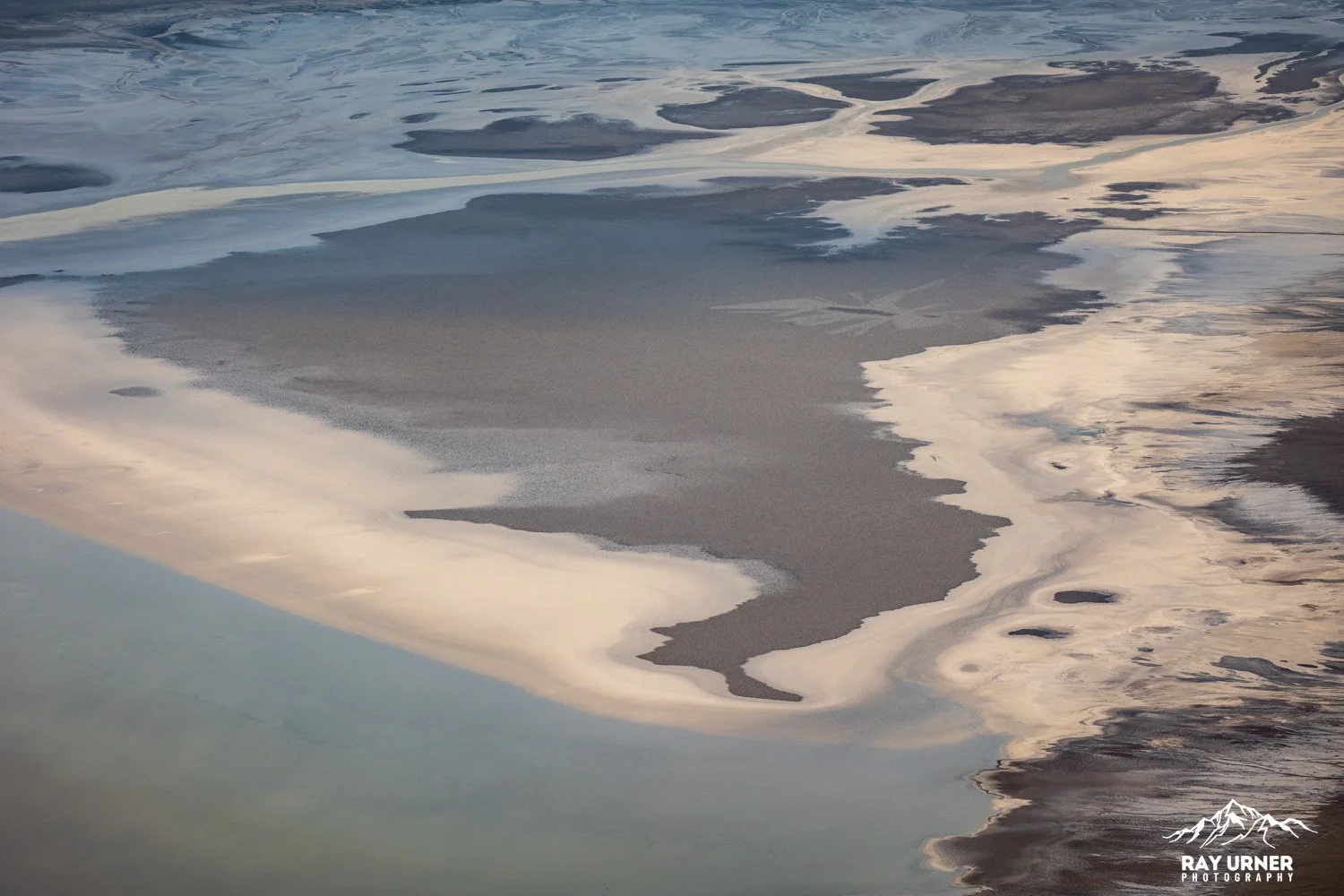
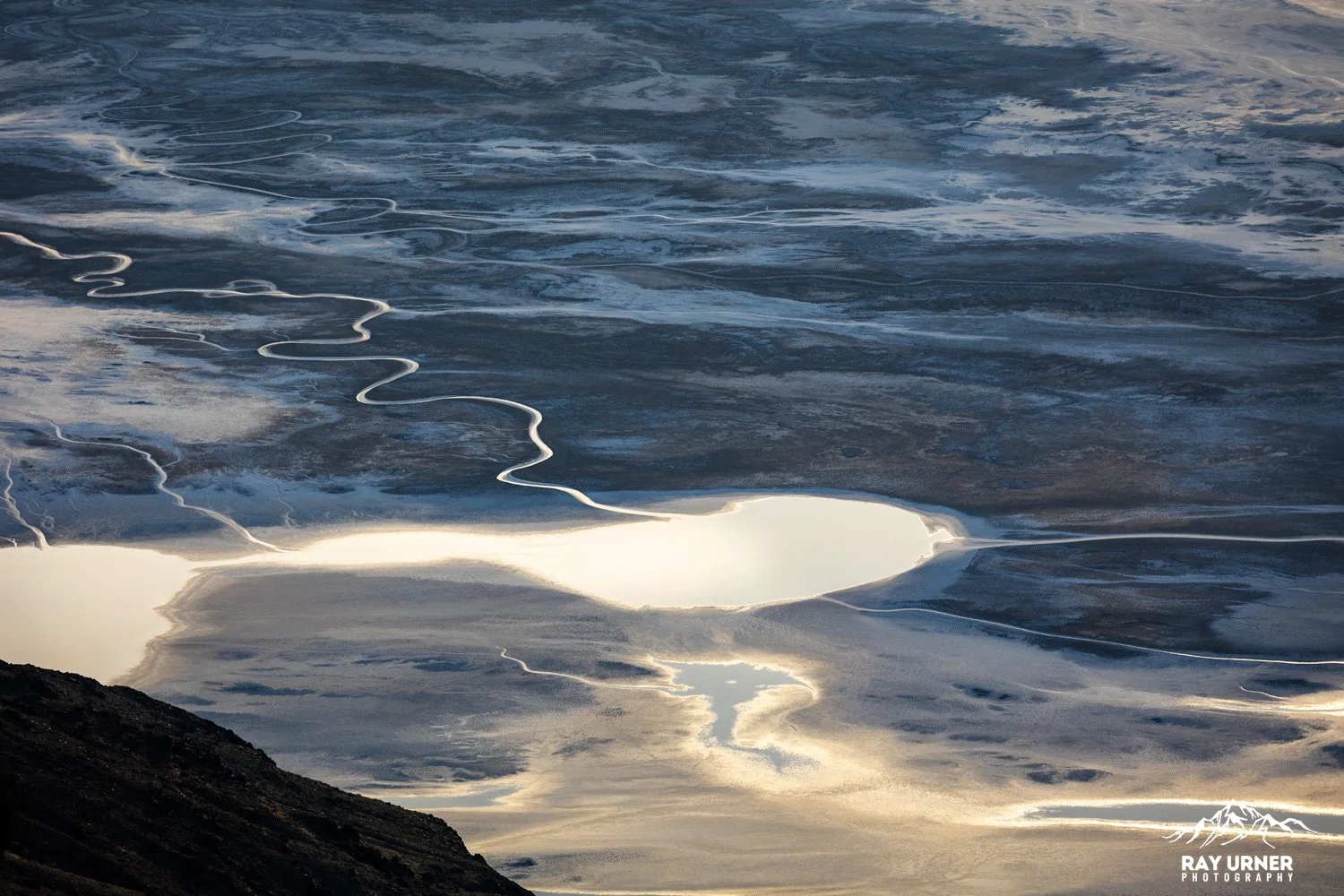
North Ridge Trail (0.75 mi RT to official Dante’s View)
Trail Basics
Distance: ~0.75 miles round trip, ~200 ft elevation change.
Direction: Trail begins at the north end of the parking area.
Terrain: Narrow ridge, rocky footing, sharp drop‑offs in places.
Leads to the official Dante’s View point and continues all the way to Mount Perry for advanced hikers (8 miles RT, +1,200 ft).
Why Photographers Love the North Ridge at Sunset
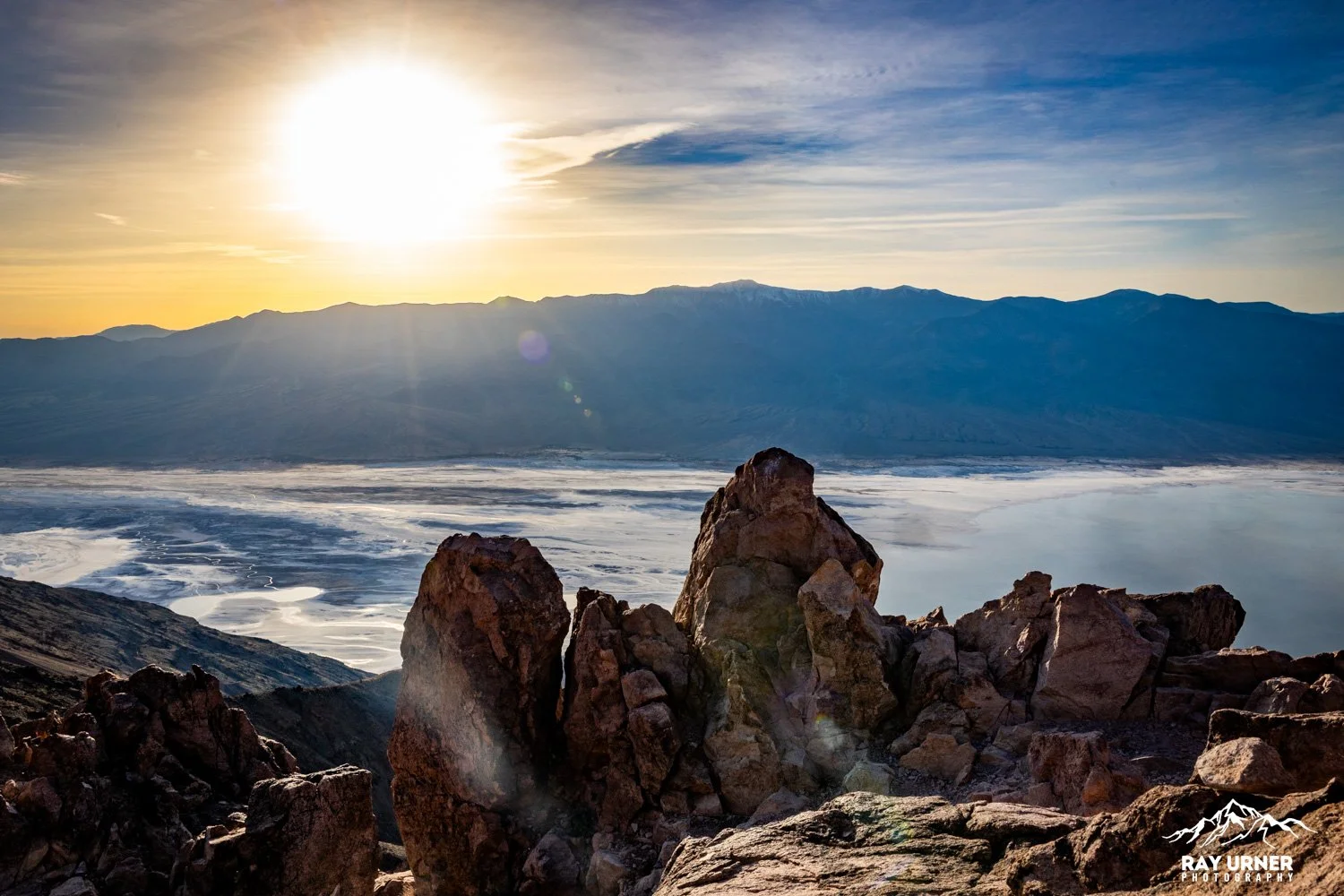
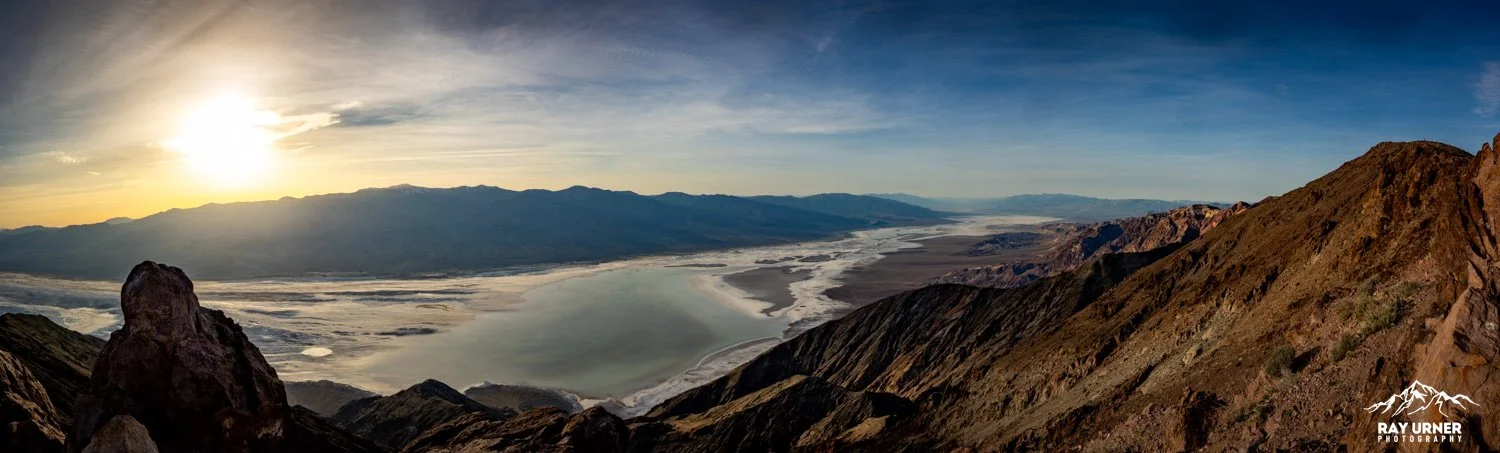
Clean western exposure: the trail faces directly toward the Panamint Range.
Less crowded than the parking area (confirmed by multiple sources).
Telephoto heaven: perfect for compressing the basin and mountains.
Best Photo Angles
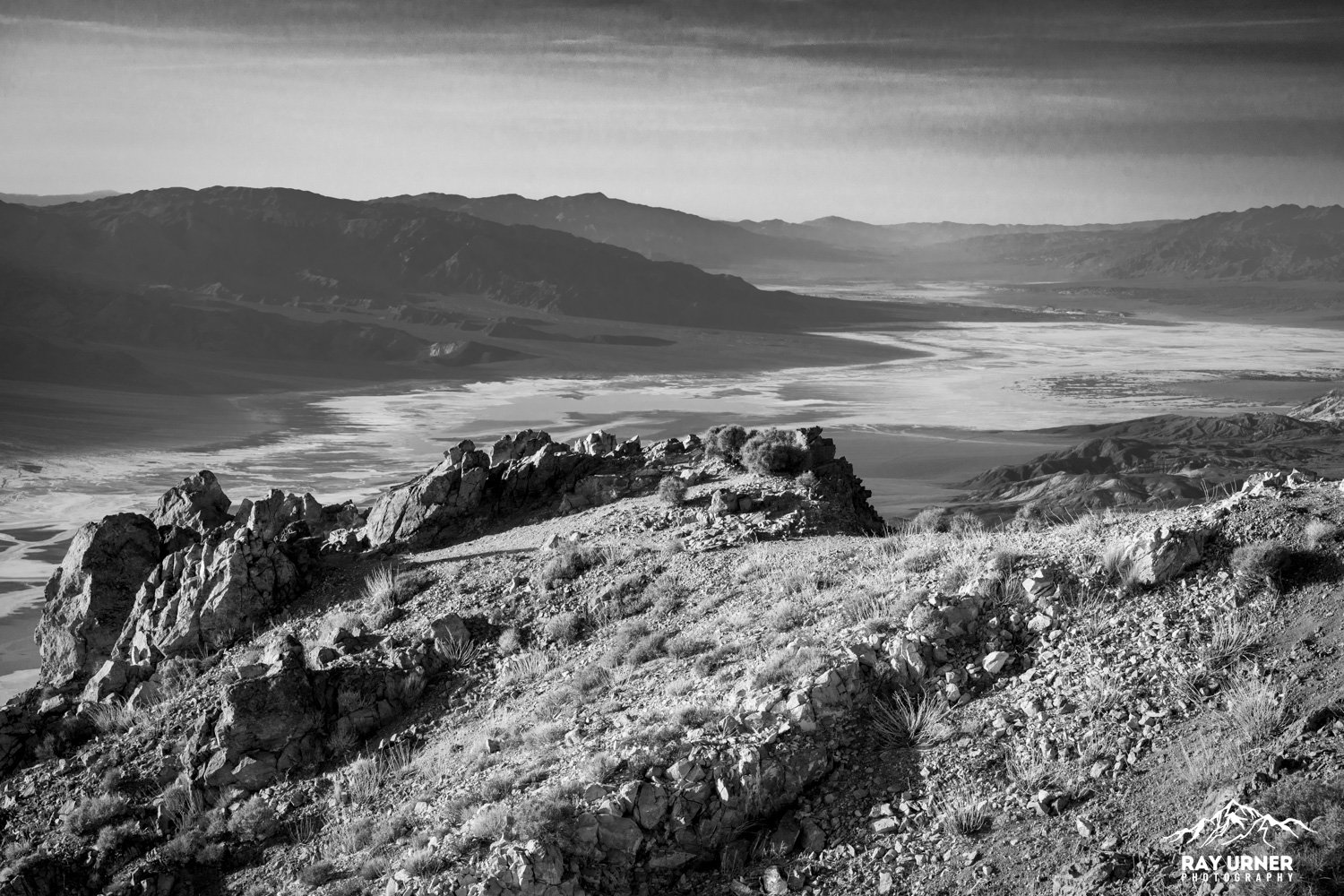
Mt. Perry Approach: Even hiking the first 5–10 minutes gives commanding open views with rugged foreground ridge rock.
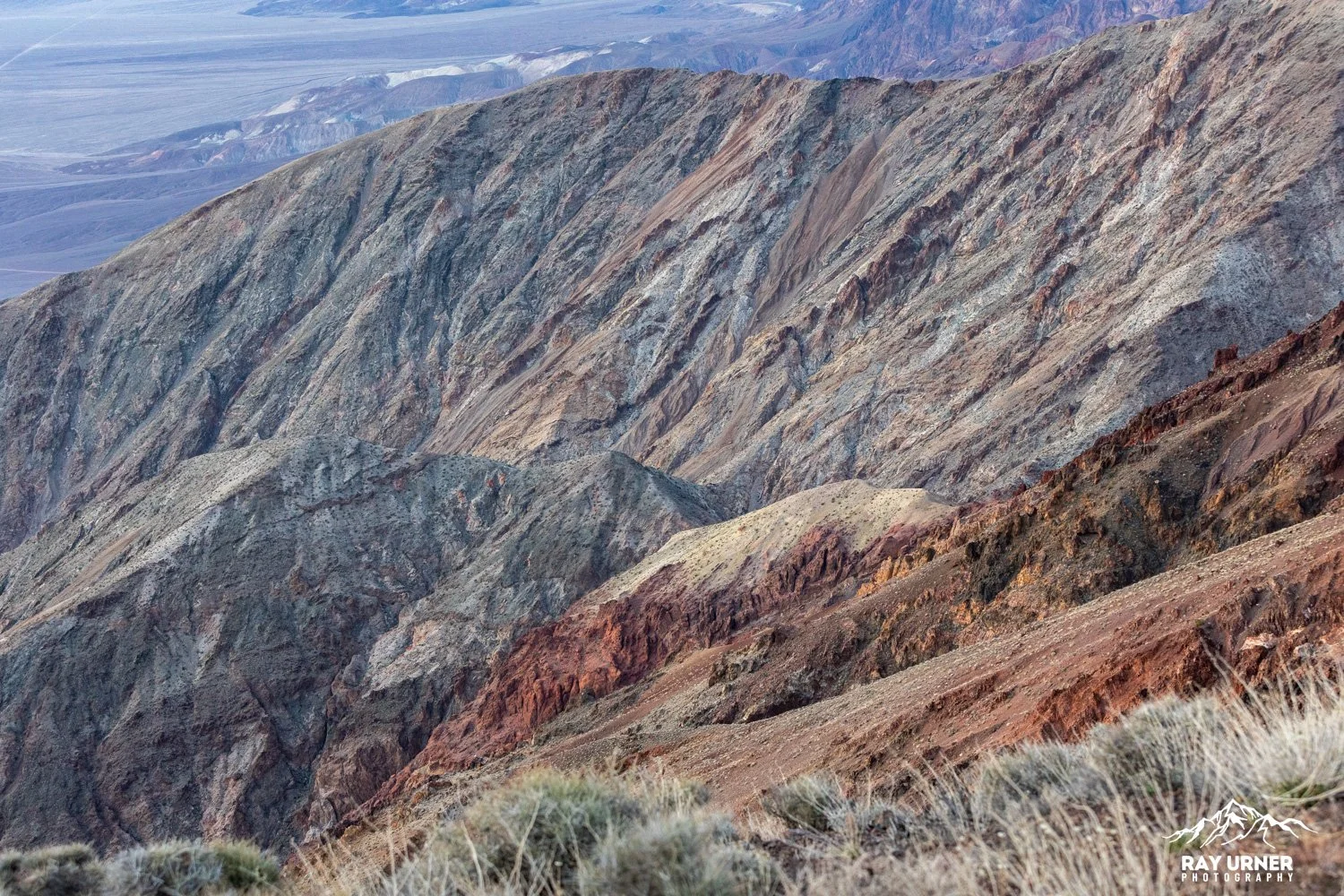
Over-the-edge Panamint View: Look for spots where the ridge drops sharply into the basin for dramatic depth.
Salt‑flat patterns: Shoot downward with long glass to pick out polygon textures.
When to Use This Trail for Sunset
If you want the most classic, golden cross‑light on Telescope Peak and the Panamints, the north trail is superior. The angled view enhances mountains and creates long shadows across the playa.
South Ridge Trail (0.75 mi RT — softer rolling ridges)
Trail Basics
Distance: Roughly 0.75 miles round trip, ~200–240 ft elevation change.
Direction: Begins at the south end of the parking area.
Features: Undulating volcanic hills, more gentle than the northern route.
What Makes the South Ridge Special
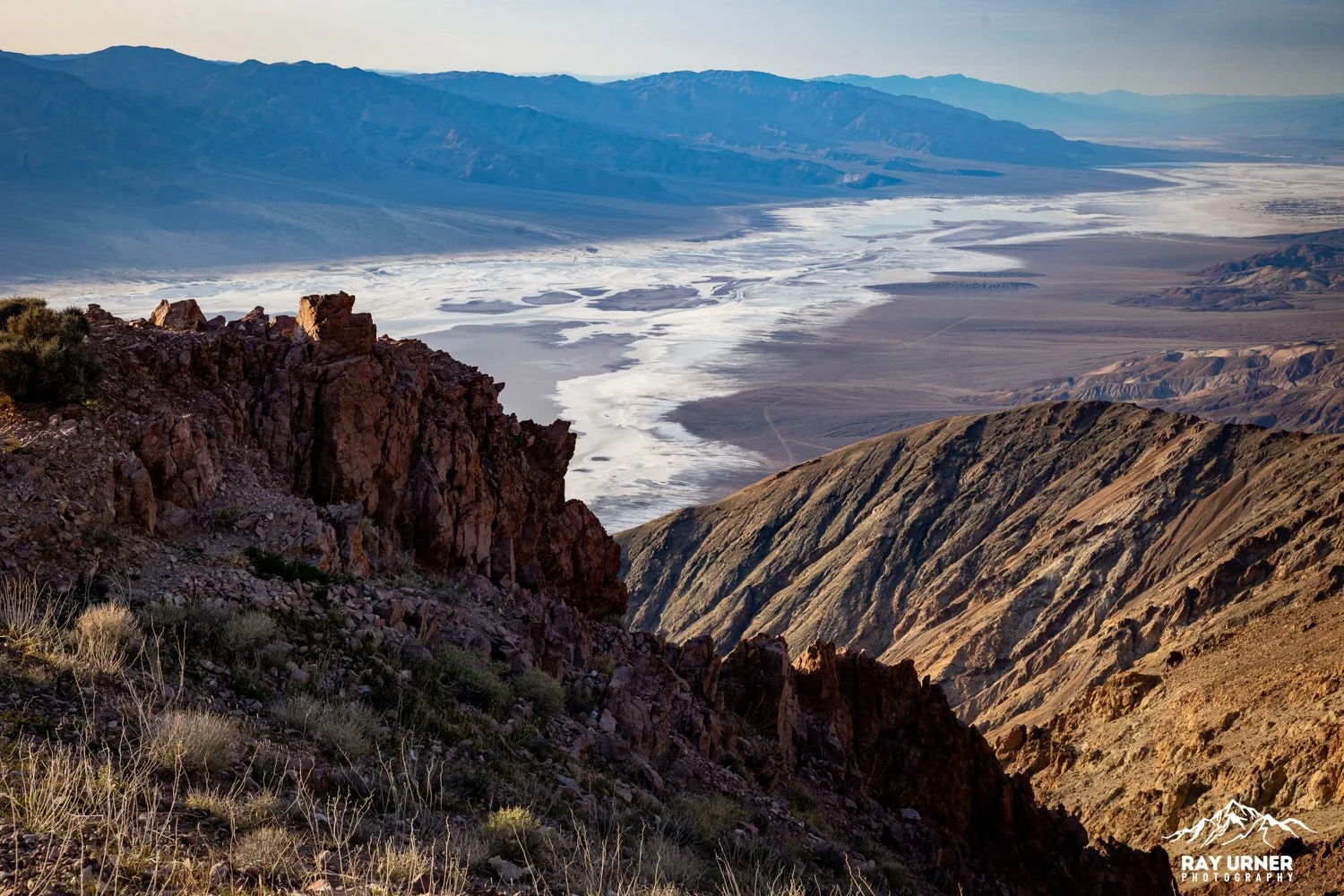
Oblique, angled view of Badwater Basin: Instead of looking straight down, you see the basin stretch diagonally.
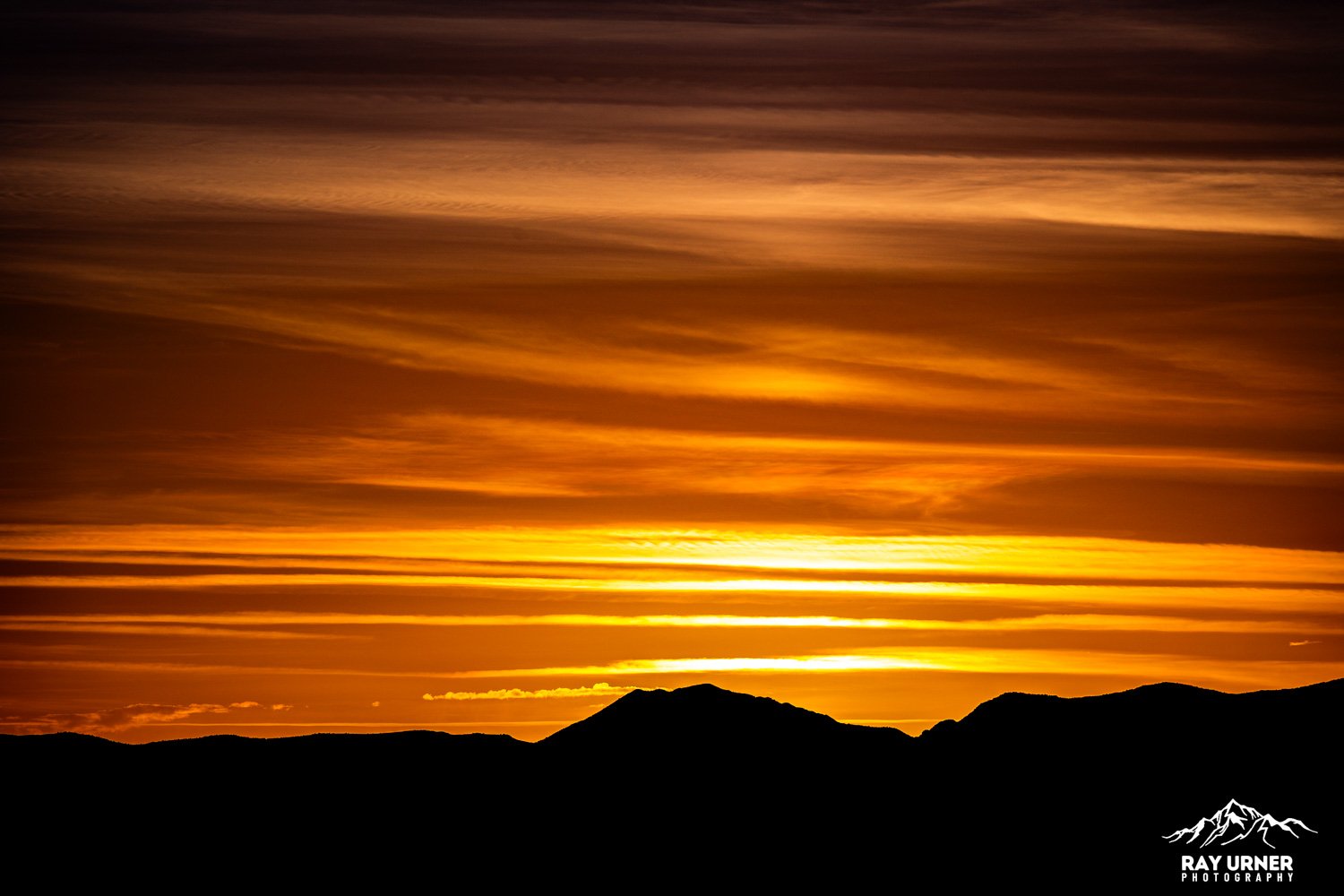
Colorful sunset transitions: South ridge catches shifting magenta and purple post‑sunset tones especially well.
Great for leading lines: Rolling hills form natural S‑curves guiding into the basin.
Best Photo Angles
S‑Curve Foregrounds: Use the ridgeline as a lead‑in toward the basin.
Abstract Badwater Textures: South ridge gives cleaner downward views of salt patterns slightly offset from the vertical fall.
Afterglow: Stay an extra 15–25 minutes after sunset; south‑facing slopes often pick up pastel reflected color.
When to Use This Trail for Sunset
Choose the south ridge when you want:
More foreground terrain
Sweeping, angled compositions
Softer, more pastel color transitions as the light fades
Light Behavior at Sunset
Golden Hour: The Panamints fire up in warm reds and oranges, giving dramatic cross‑light from the west.
Sunset: The sun drops behind the Panamints, backlighting the basin and creating an airy, glowing horizon.
Blue Hour: The salt flats reflect pale blue and lavender; the basin becomes luminous.
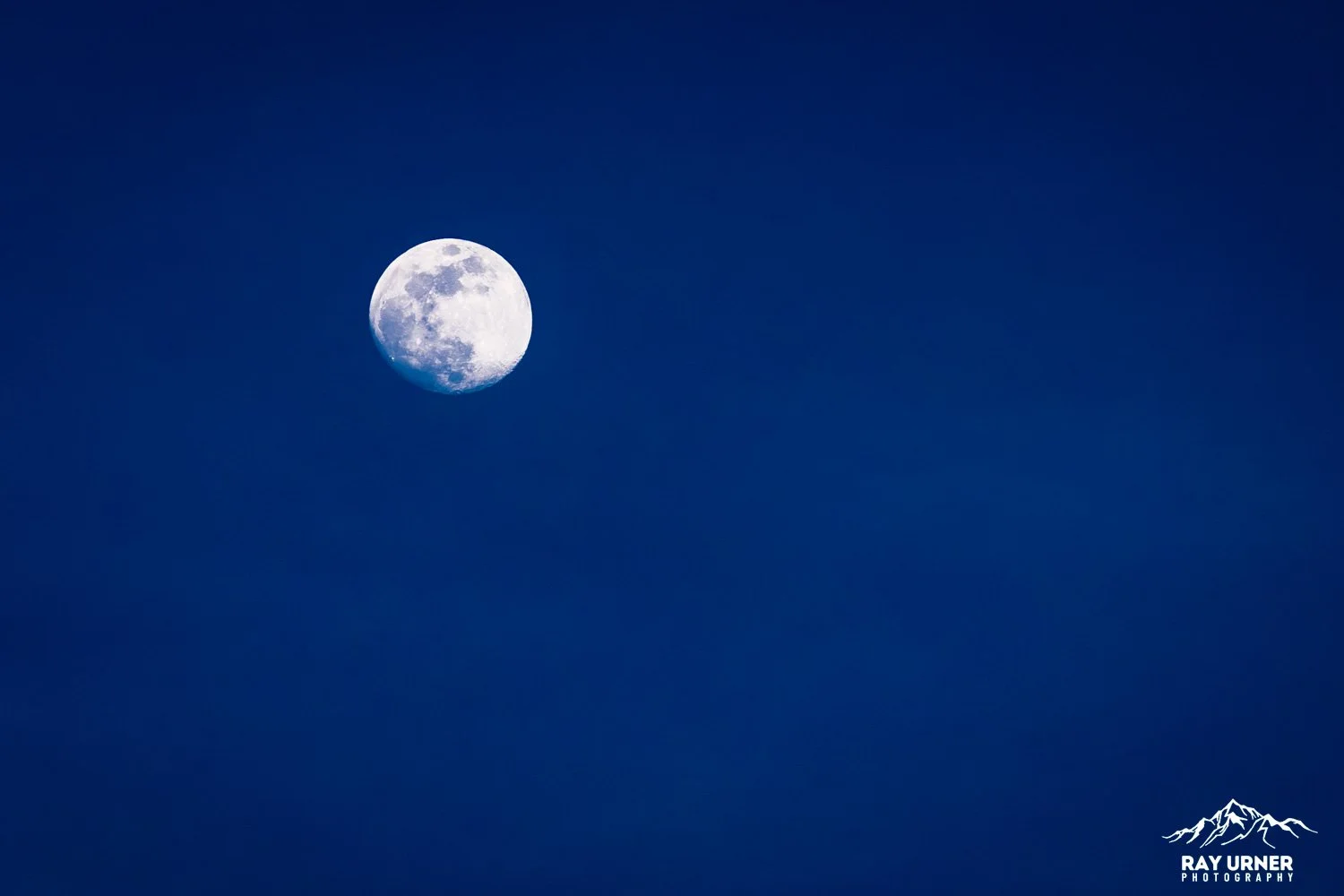
Nightfall: Dante’s View is an International Dark Sky location—excellent for Milky Way (new moon) or glowing white flats (full moon).
Photo Gear & Tips
Wide (14–24mm): For sweeping ridge lines + basin.
Telephoto (70–200mm+): Essential for compressing mountains and picking out tiny people on the salt flats.
Graduated ND: Helpful when shooting high‑dynamic‑range sunset horizons.
Tripod: For blue‑hour exposures — winds can be strong.
Stay mobile: Both ridges provide infinite micro‑compositions; keep moving until something “clicks.”
Safety & Practical Notes
High winds: Dante’s View is often breezy; bring layers.
Steep drop‑offs: Stay back from edges on ridges, especially on the North Ridge.
No water: Bring plenty; elevation is cooler but still arid.