Devil’s Golf Course
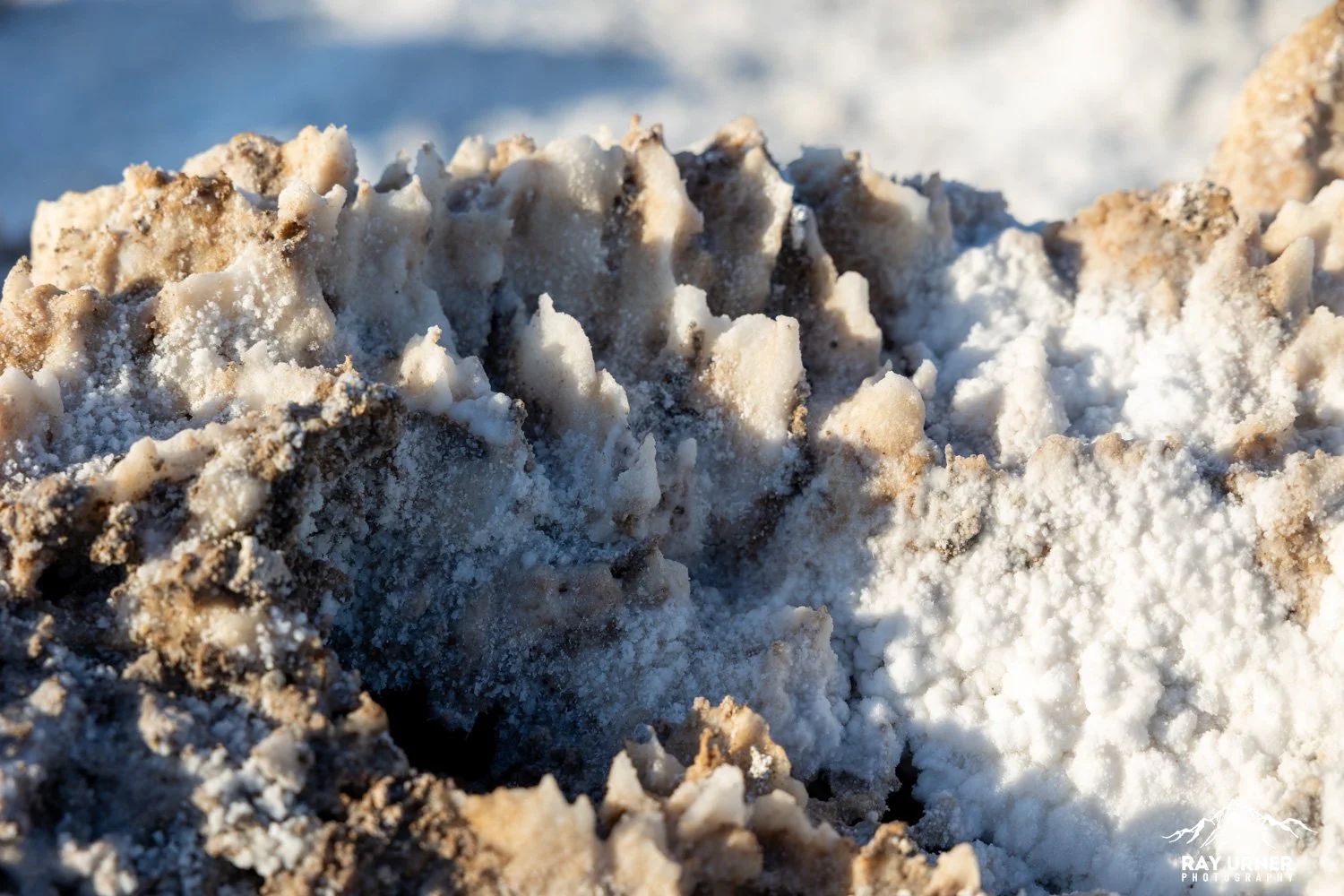
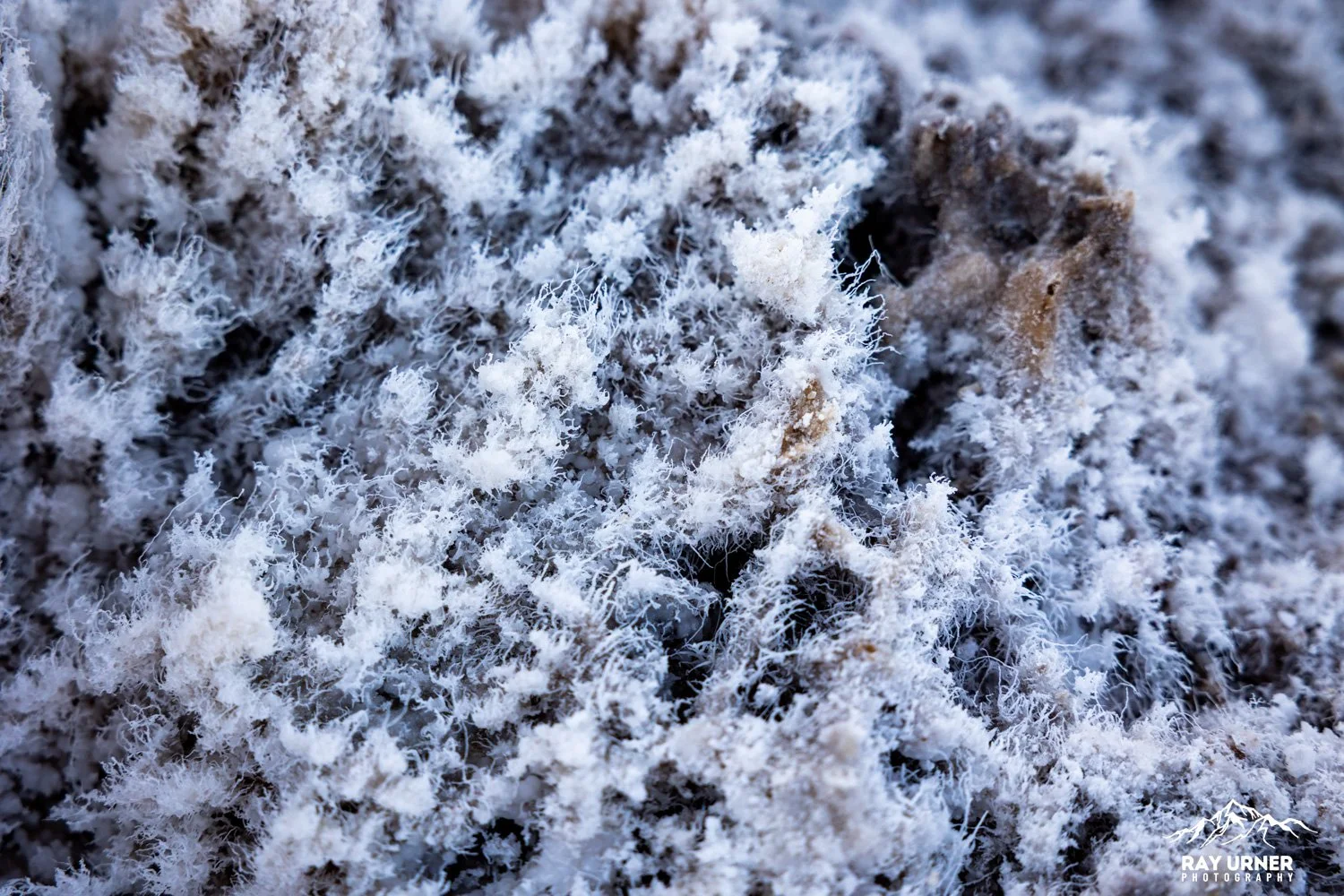
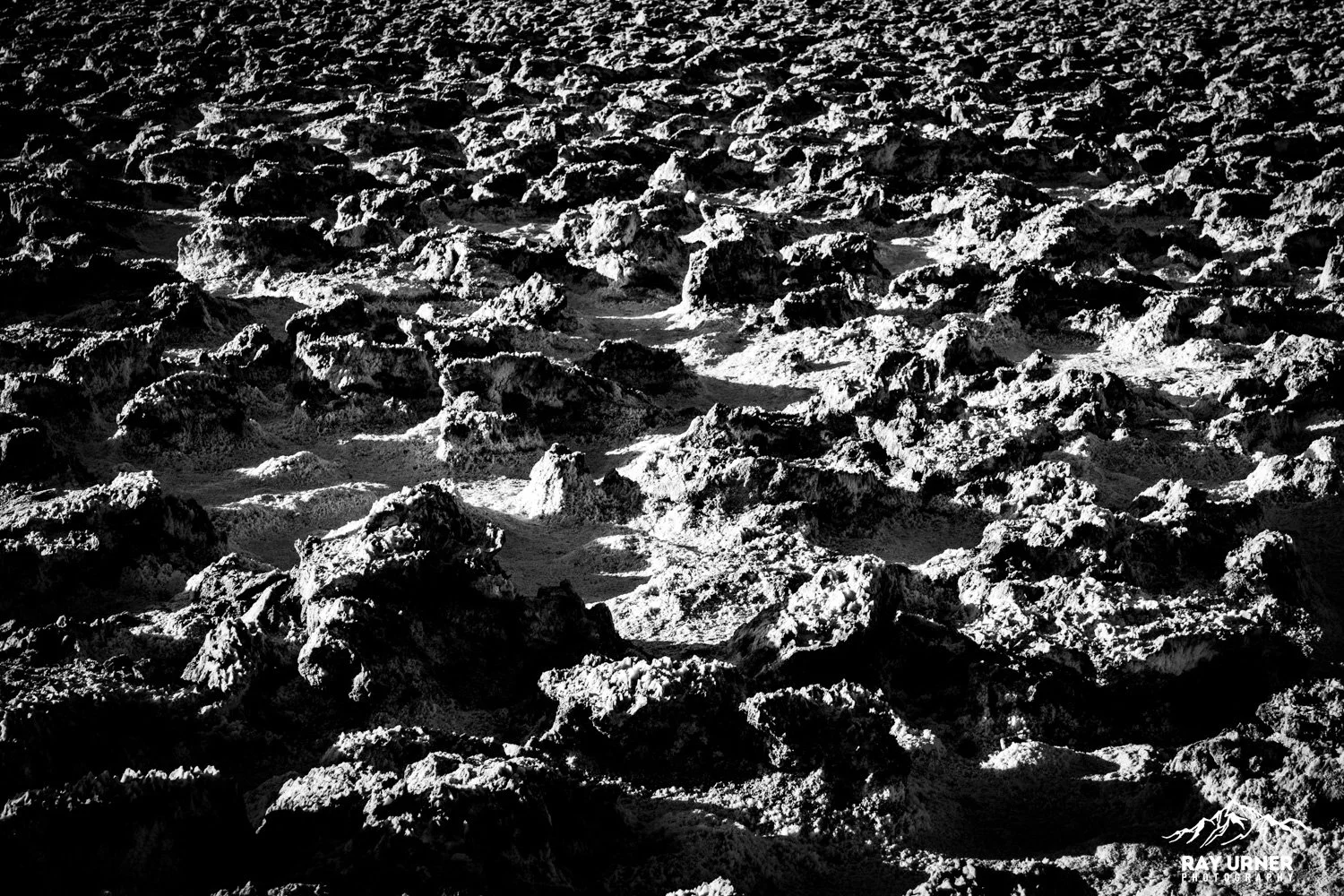
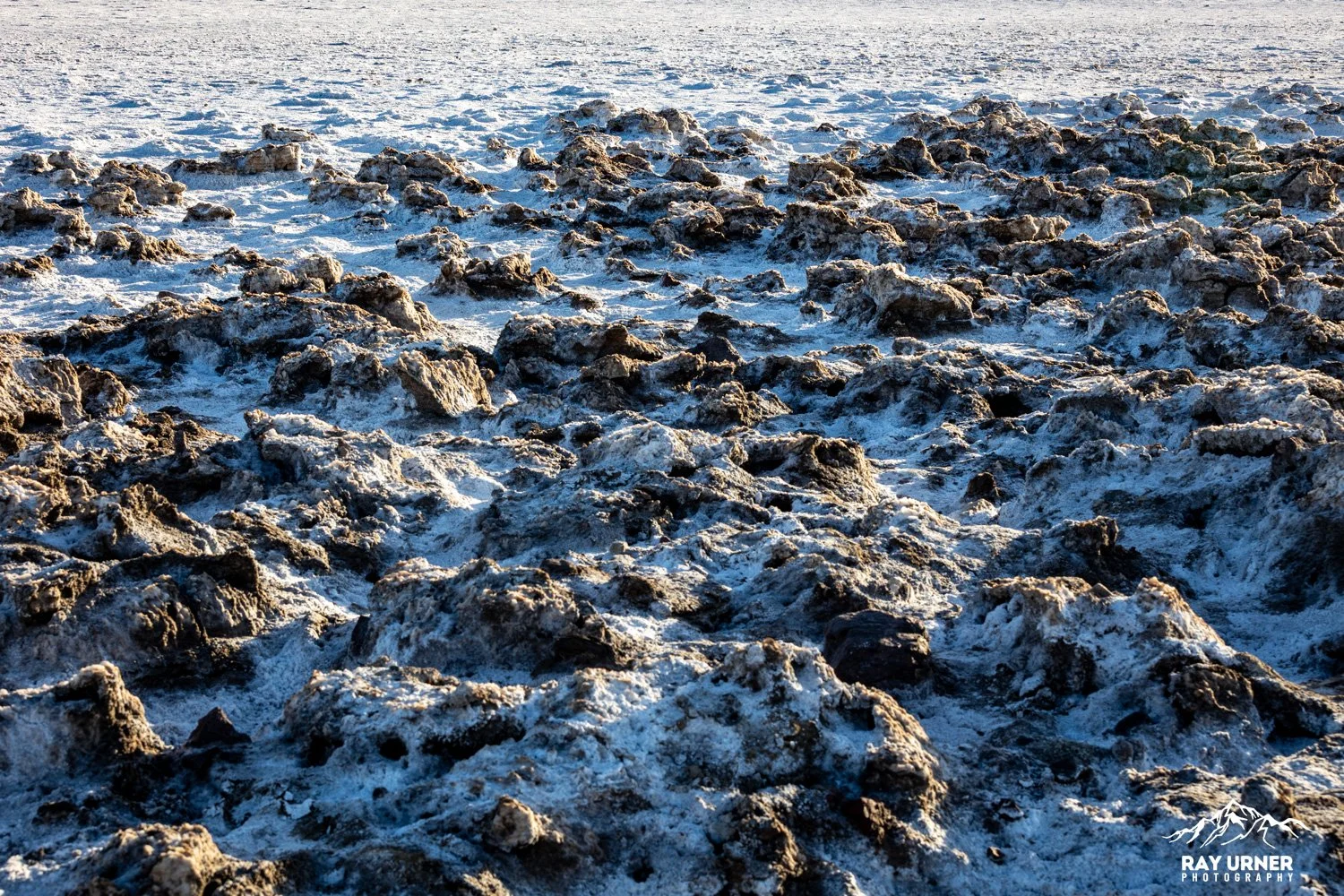
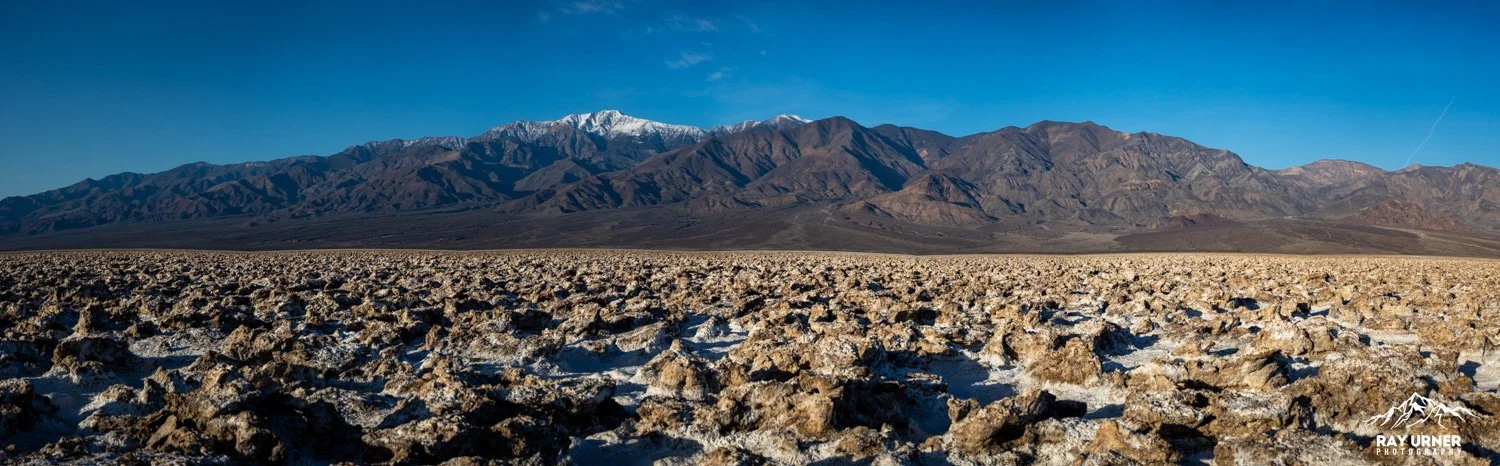
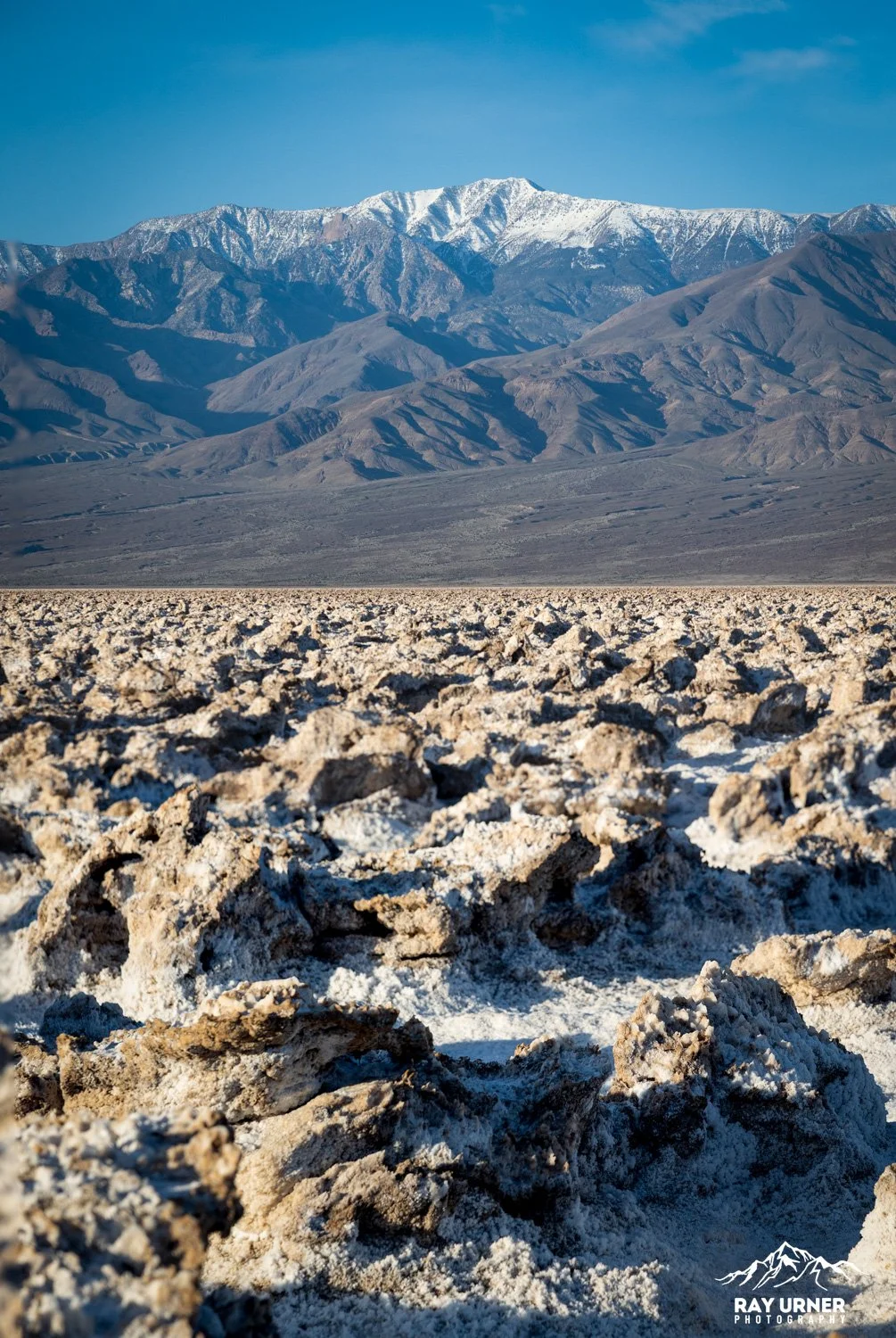
Devil’s Golf Course is one of Death Valley’s most alien landscapes — an immense field of jagged rock‑salt formations, carved over thousands of years by evaporation, erosion, and thermal expansion.
The terrain is so sharp and uneven that a 1934 NPS guidebook famously said that “only the devil could play golf on such rough links.”
Overview
The terrain is so sharp and uneven that a 1934 NPS guidebook famously said that “only the devil could play golf on such rough links.”
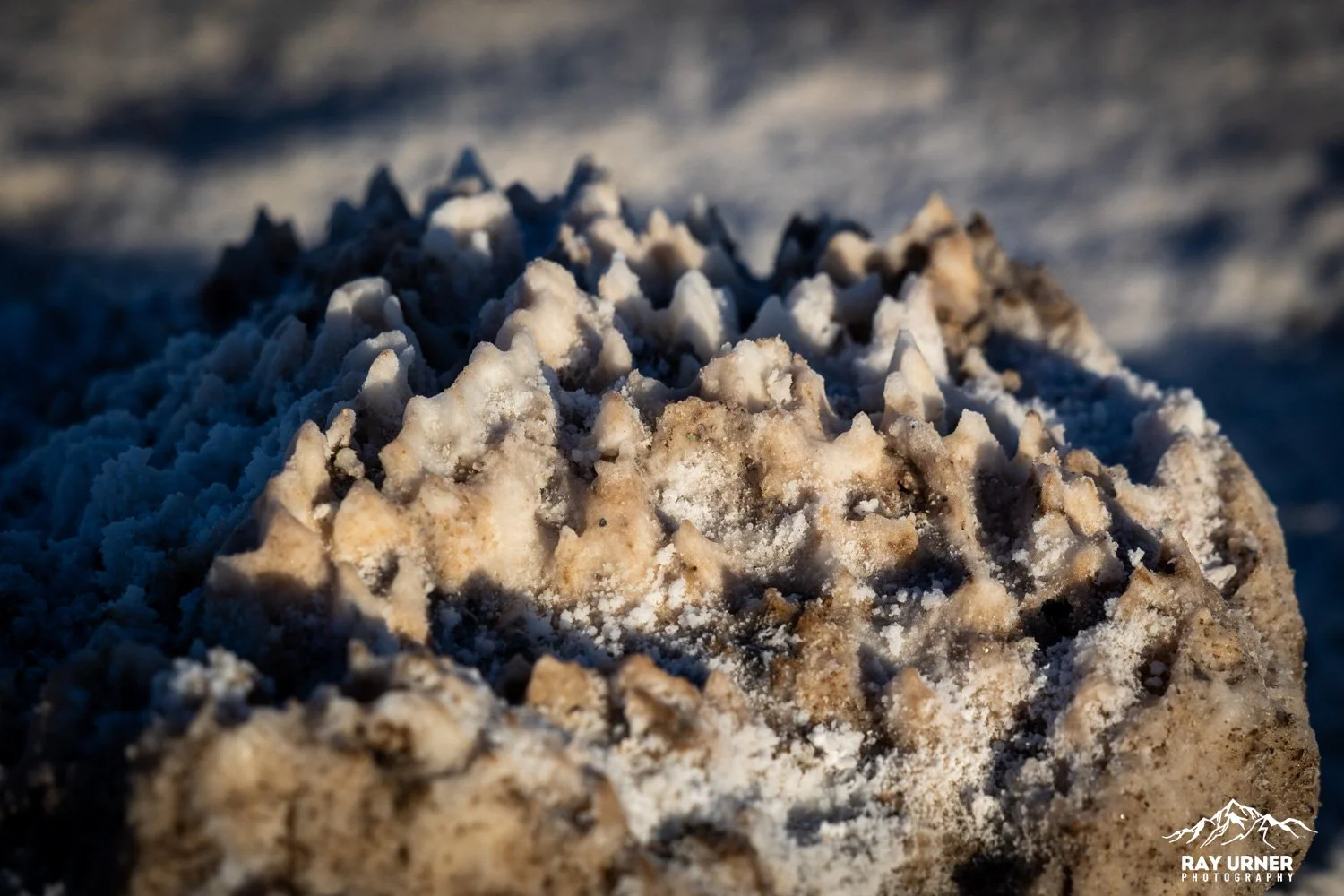
In the morning light, the angled illumination helps reveal:
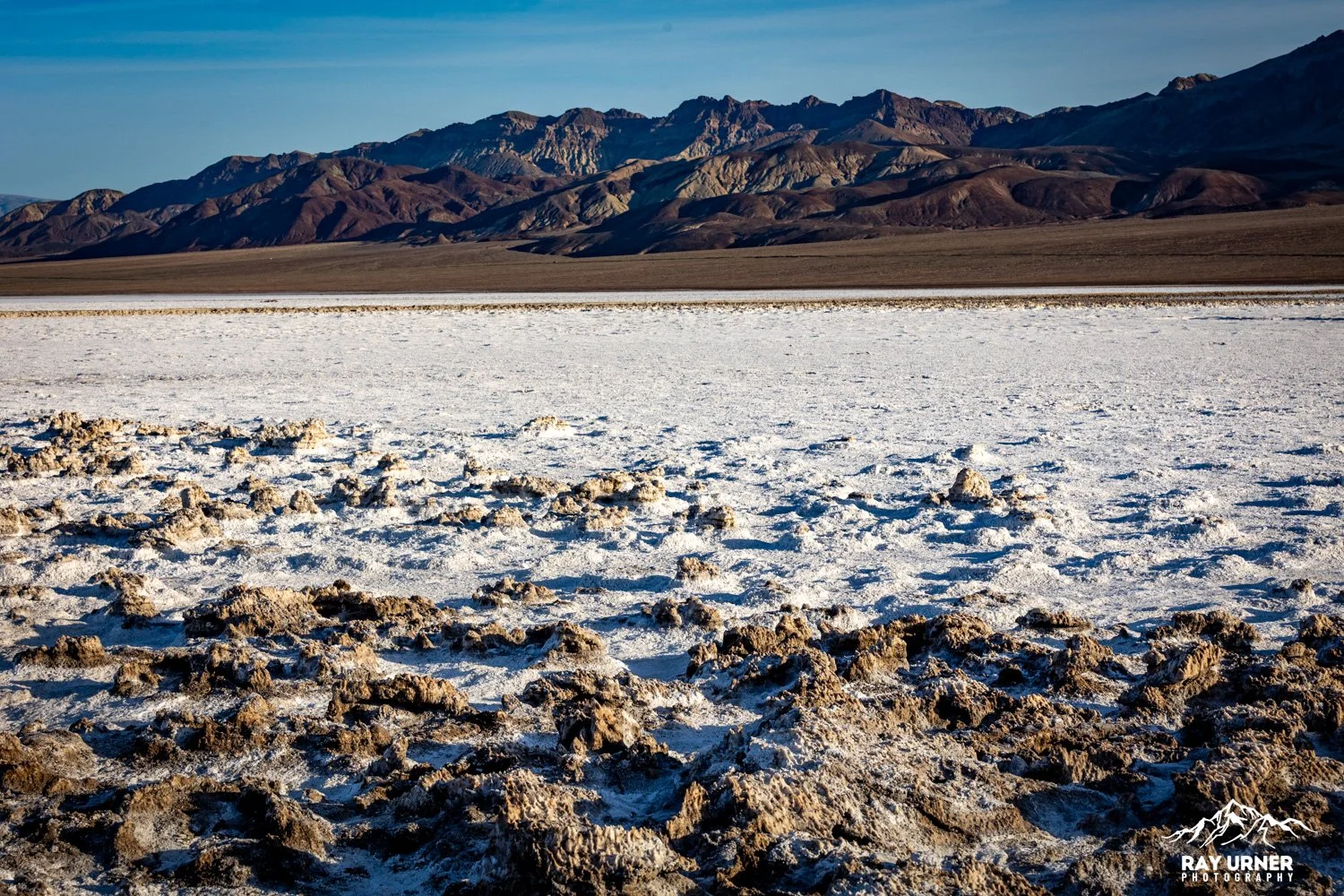
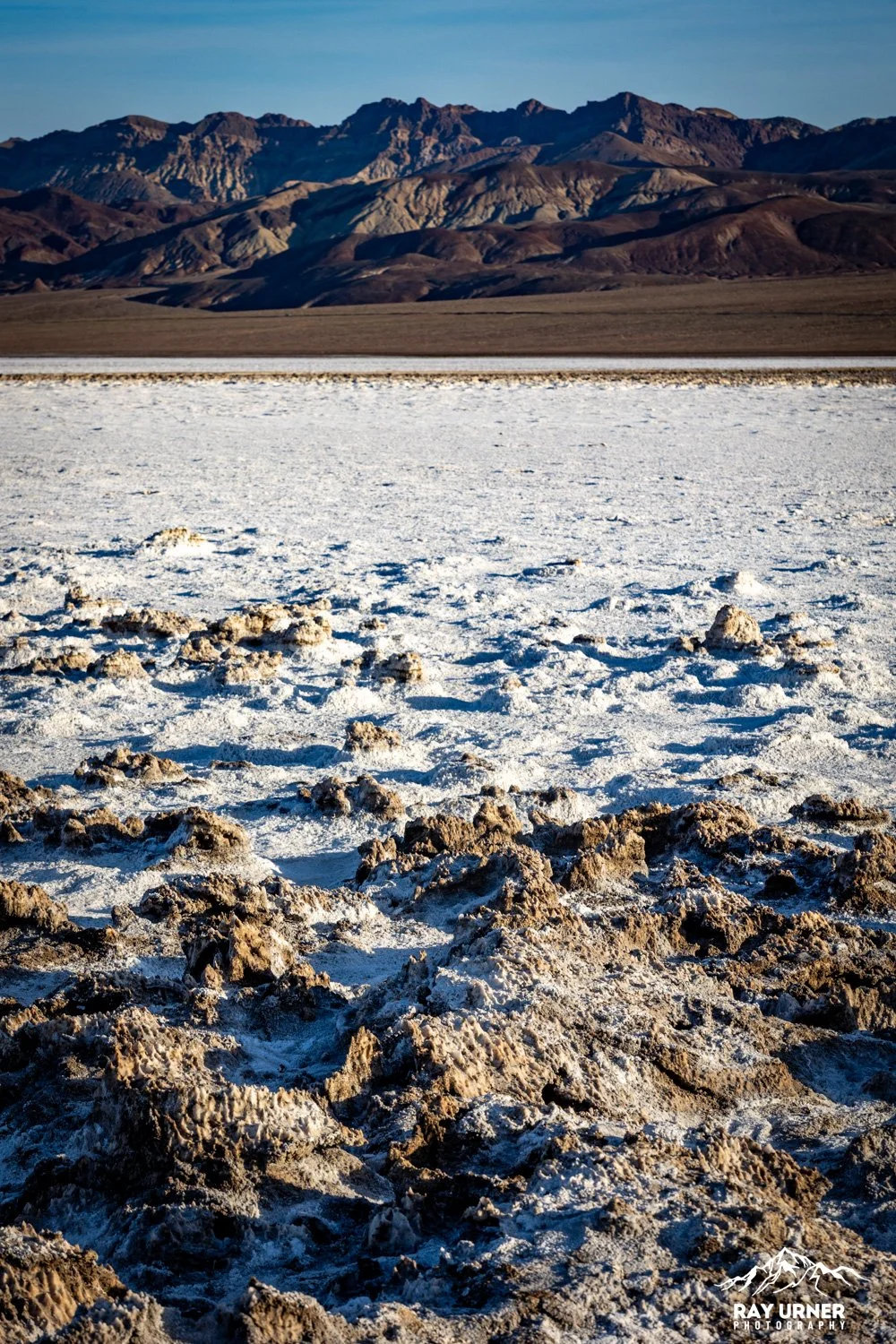
crisp texture
long-form shadow pockets
subtle earthy/brown tones beneath the salt
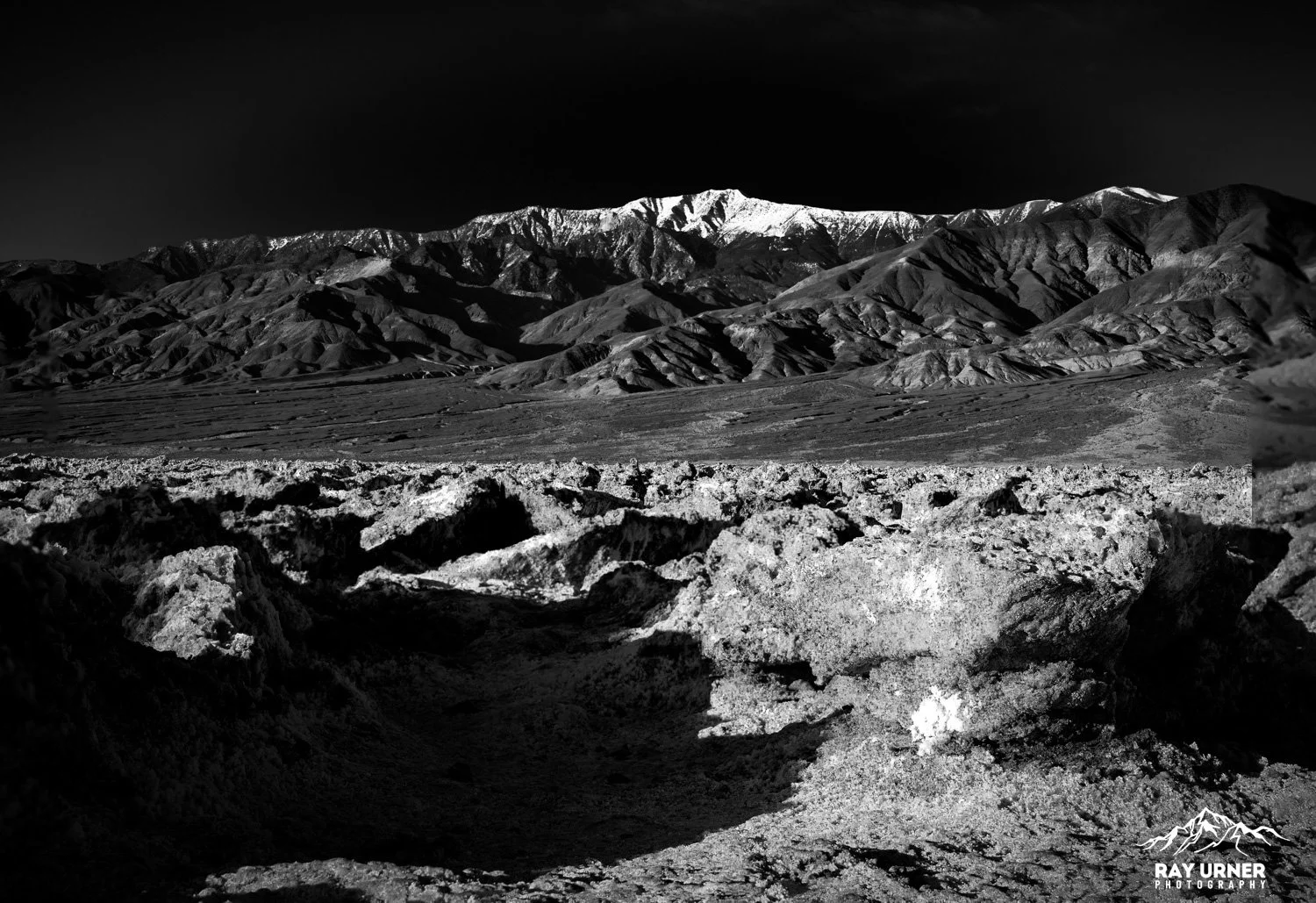
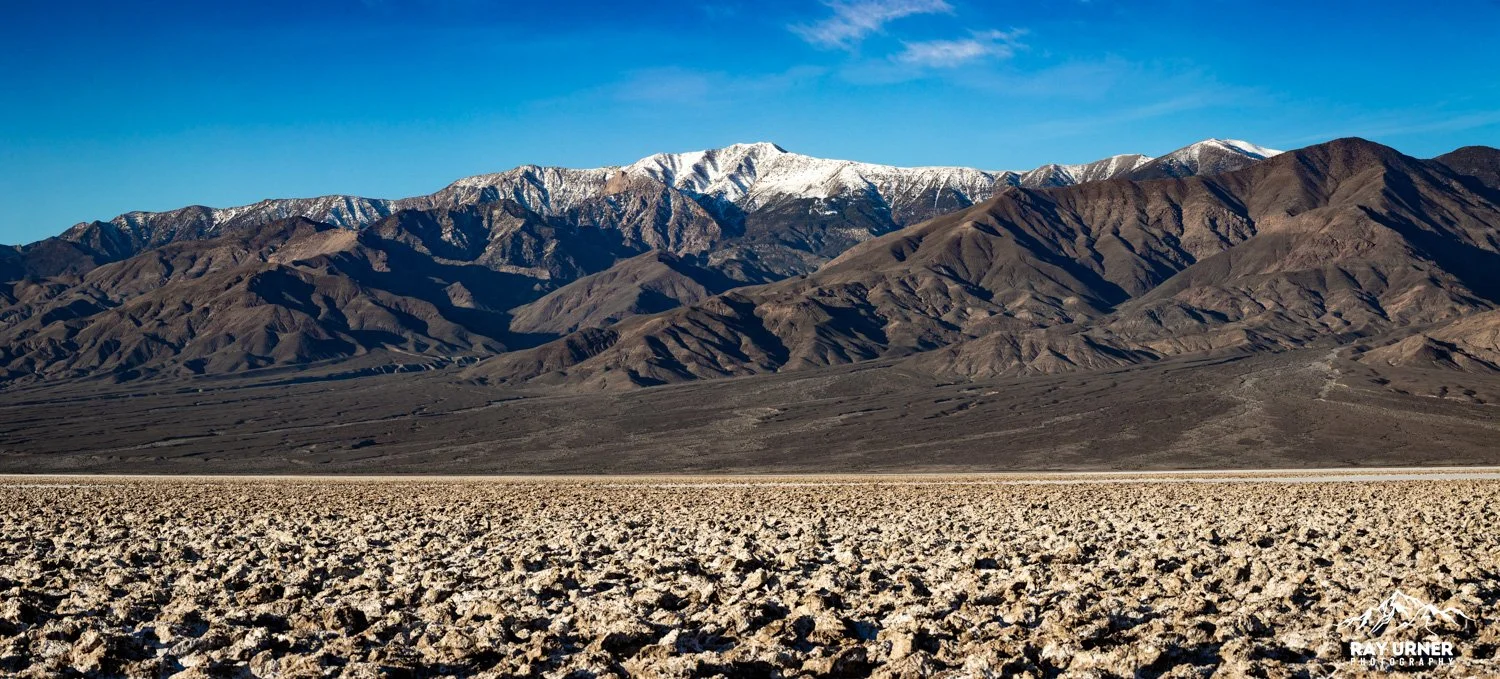
the contrast between salt ridges and the Panamint Mountains
This is the best time to capture the surface detail before harsh midday overhead sun flattens everything.
Location & Access
Located off Badwater Road via a short dirt spur road; the compacted gravel parking area is suitable for most vehicles.
No bathrooms or water at the site; nearest services at Badwater Basin or Furnace Creek.
You can view the formations safely right from the parking area; walking into the field is allowed but dangerous — spires are sharp and fragile.
Why Morning Light Works
Devil’s Golf Course is best photographed after sunrise but before the sun climbs too high:
Low‑angle morning light produces side-lit texture on the salt ridges.
Shadows deepen the spires’ shapes, creating one of the most dramatic texture studies in the park.
Mountains to the west are still illuminated with warm color early in the day, creating a complementary background.
Geology & What You’re Photographing
Devil’s Golf Course is the solid, eroded upper crust of ancient Lake Manly, the same former lake whose remnants became the Badwater Basin salt flats. As Lake Manly evaporated, it left behind dense salt deposits, which were further sculpted by:
evaporation + recrystallization
wind erosion
expansion/contraction due to desert temperature swings
Thus the intricate spires and pits form a constantly evolving texture field.
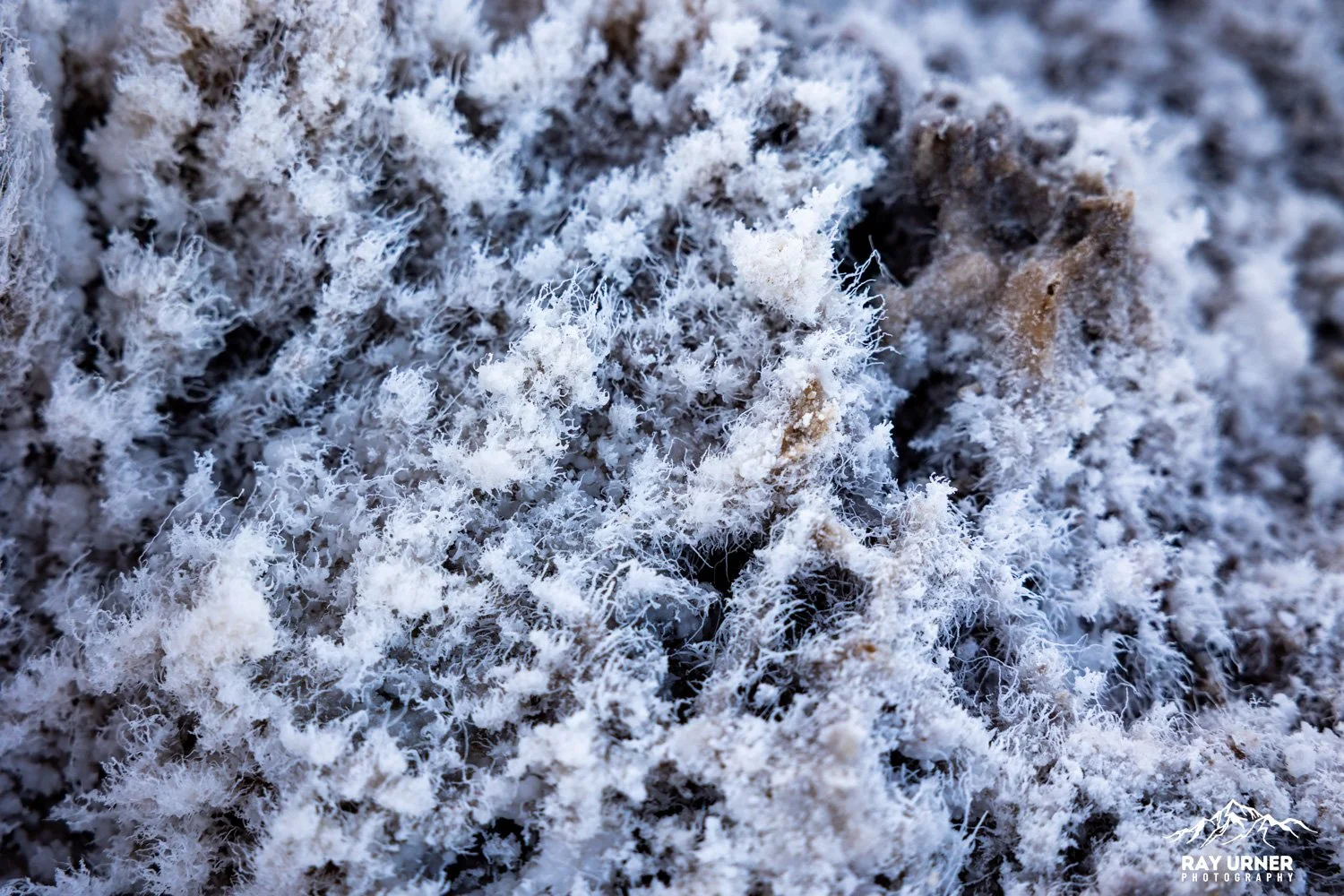
Listen closely and you may hear the famous crackling and popping sound — billions of salt crystals bursting as they heat or cool
Photography Guide
Best Time Window
30–90 minutes after sunrise:
Soft + directional light.Up to ~10:00 a.m. in cooler months:
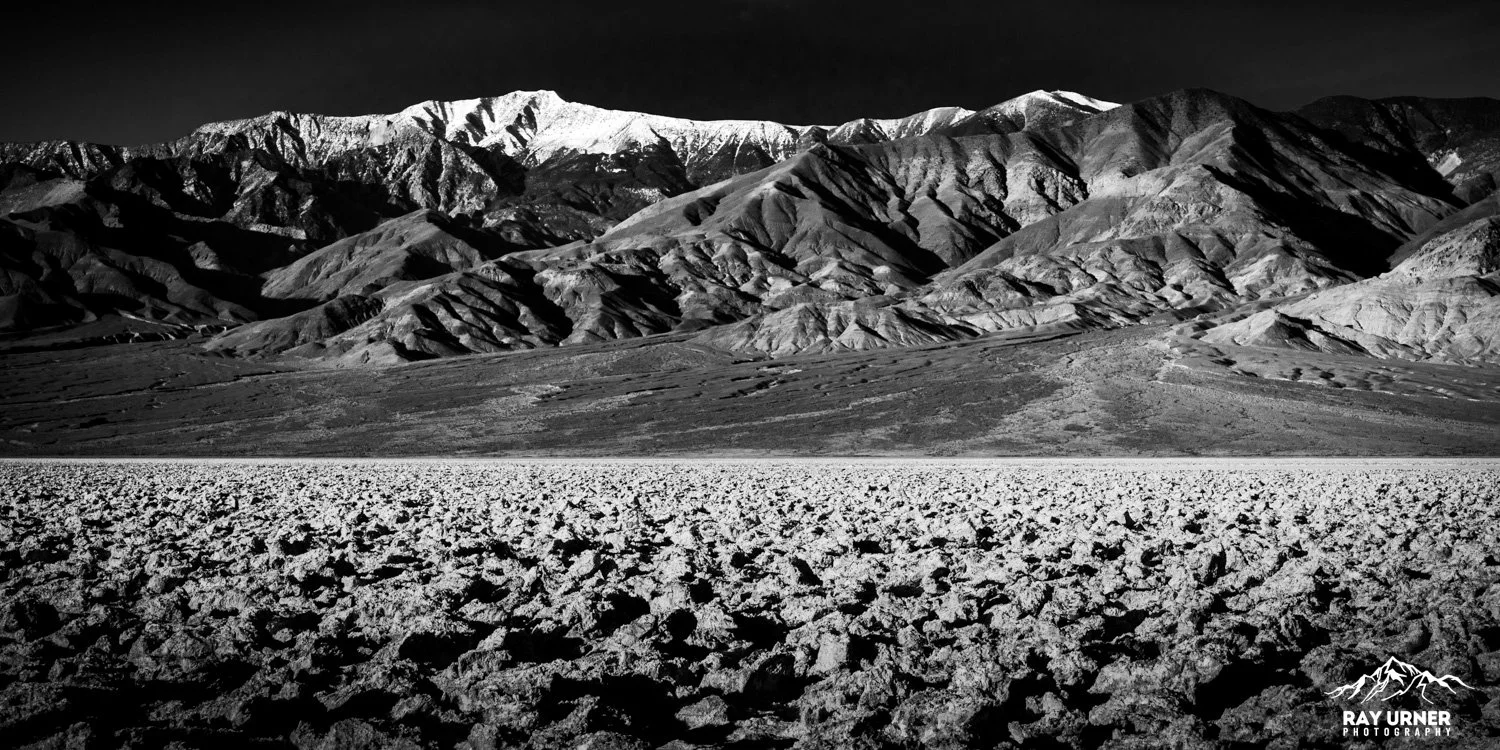
After that, the sun climbs high enough to flatten the surface contrast.Avoid midday (unless doing black‑and‑white abstracts with intentionally harsh light).
Best Photo Angles & Techniques
1. Side‑Lit Salt Towers (Your Main Subject)
Look for:
irregular columns catching light on one face
deep shadows accentuating ridges
warm morning tones hitting the mountains
Lens suggestions:
24–70mm for environmental shots
70–200mm to isolate abstract ridges and tight patterns
2. Mountain Backdrops with Salt Foreground
Photograph with the Panamint Range in background (west).
In early morning, peaks still catch the warm sunlight, giving color contrast to the white/brown salt crust.
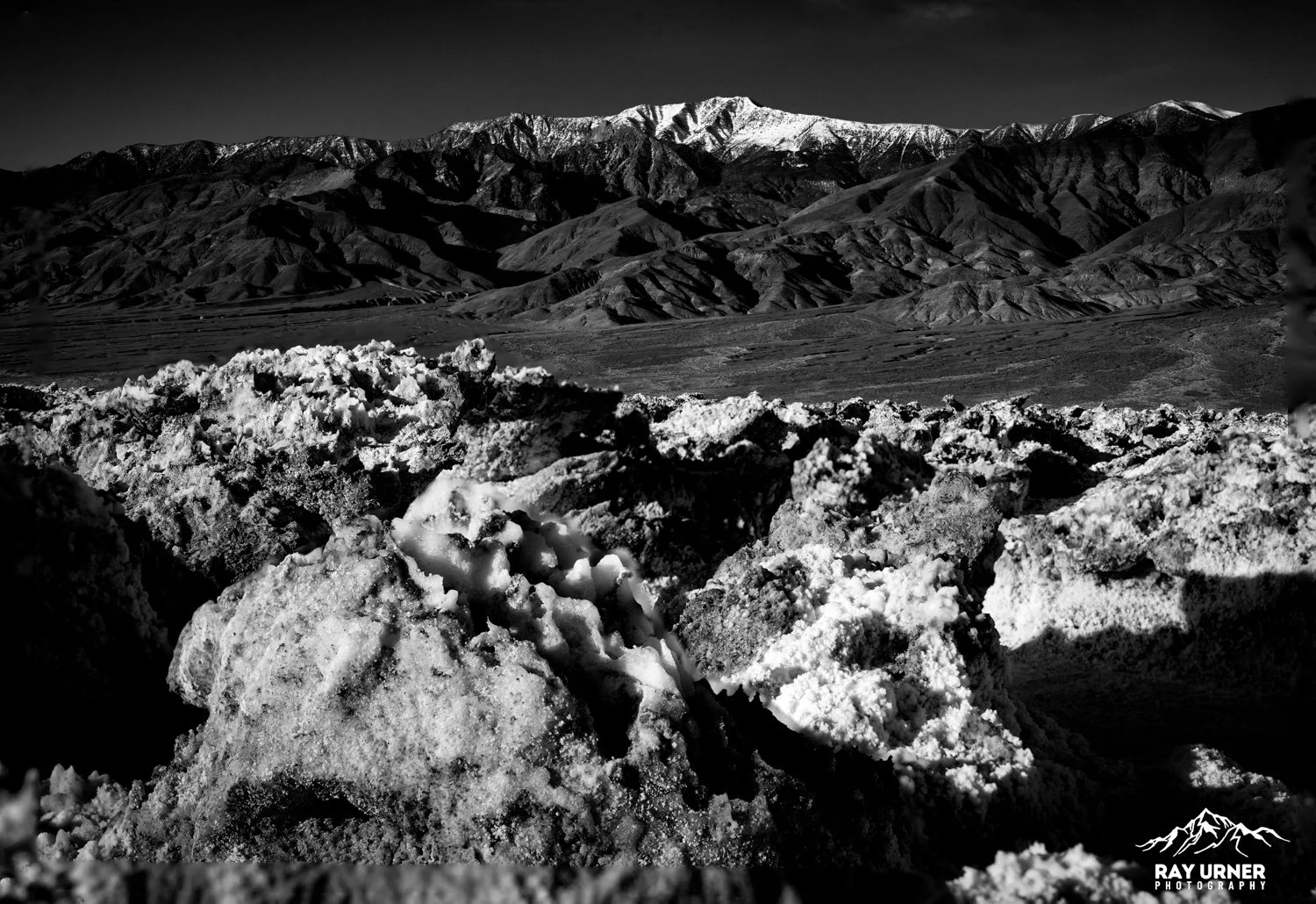
Shoot low to exaggerate the spiky foreground.
Use f/11–f/16 to keep foreground salt razor‑sharp.
On‑the‑Ground Guidance
Do NOT walk deep into the field:
The salt spires are fragile and can collapse underfoot; they are also sharp enough to cut hands/legs. NPS warns the formations are dangerous and best viewed from the parking area.Bring sturdy shoes (just in case you step slightly off the compacted ground).
Watch for heat:
Even though it's morning, temps can still be dangerous in warm seasons.No shade:
Plan for harsh light and exposure.
Pro Tips
If you want zero footprints in your foreground, stay on the outer rim of the field.
Try shooting backlit salt spires—the edges glow beautifully.
Telephoto lenses create stunning, compressed layers of repeating patterns.
For blog storytelling, capture the informational sign + field behind it.
Suggested Shot List
Classic morning salt spires with directional warm light on the ridges.
Abstract telephoto frames of repeating salt geometry.
Foreground-to-background mountain shot showing scale.
Ultra-wide low-angle texture sweep toward the Panamints.
B&W contrast study of jagged crust and negative space sky.