
Mesquite Flat Sand Dunes
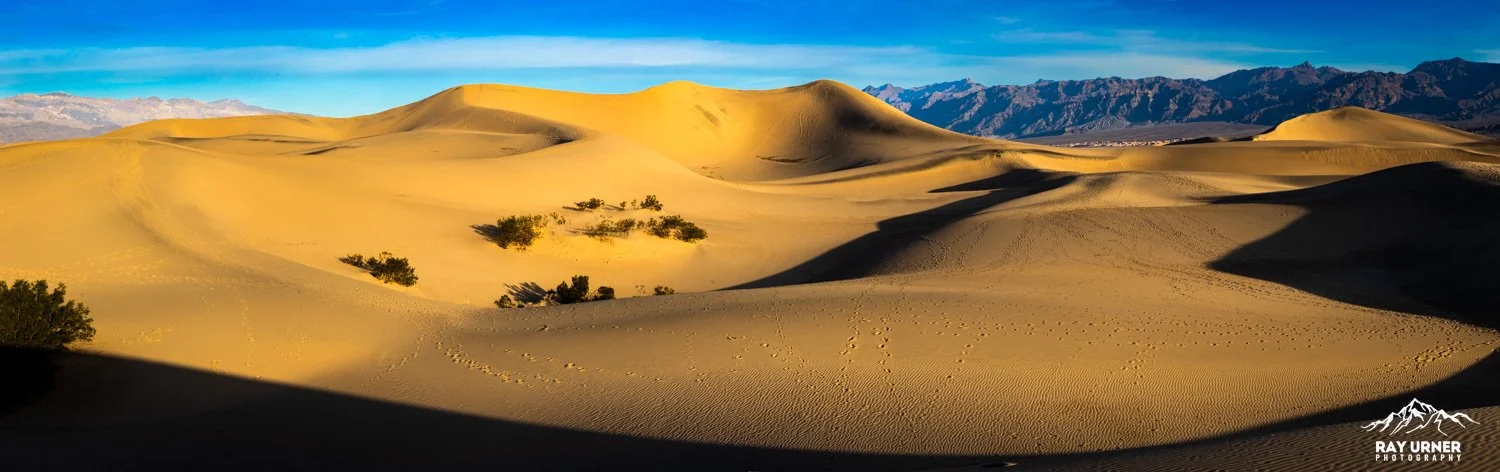
The Mesquite Flat Sand Dunes are the most accessible and well‑known dune field in Death Valley National Park, located just east of Stovepipe Wells along CA‑190.
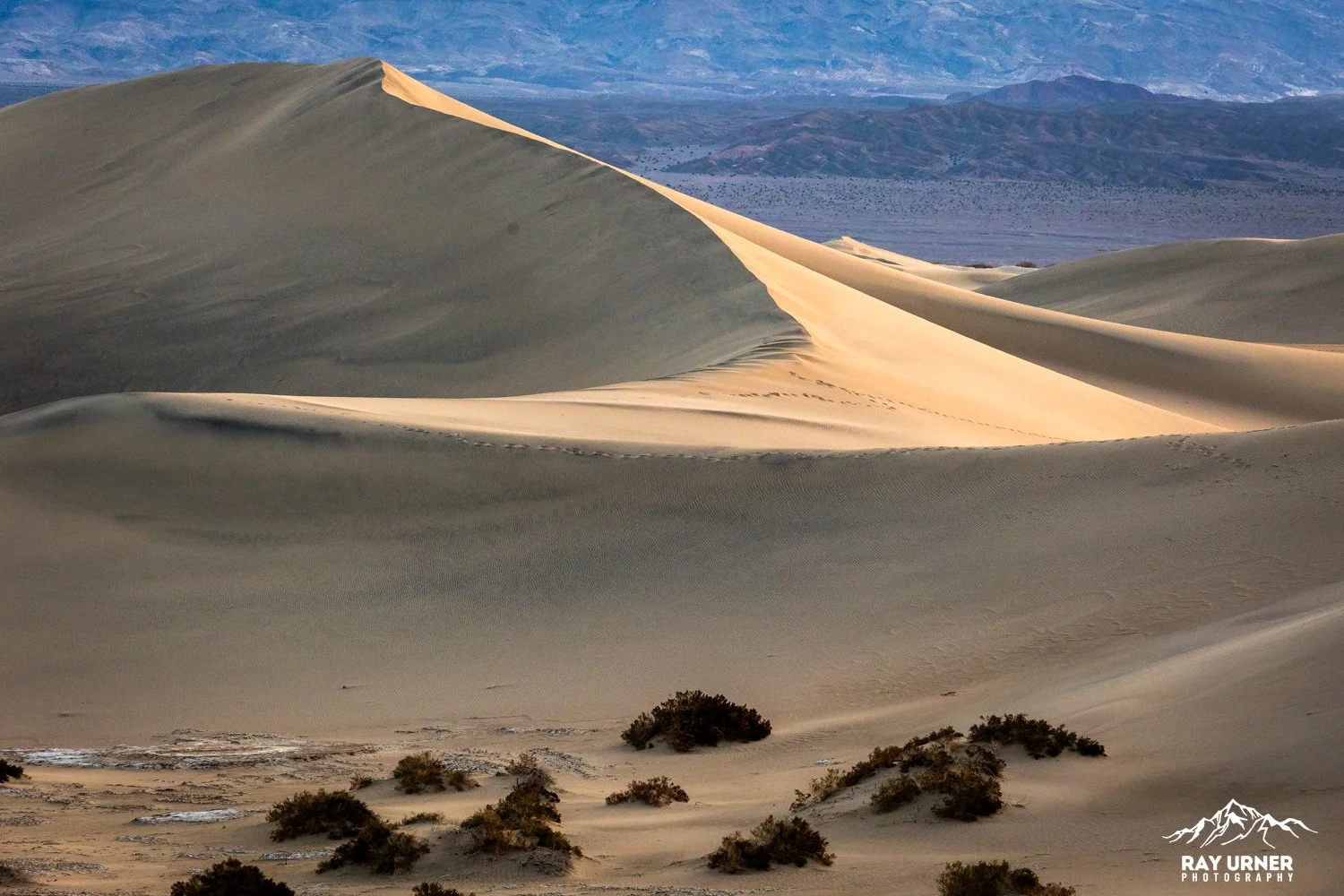
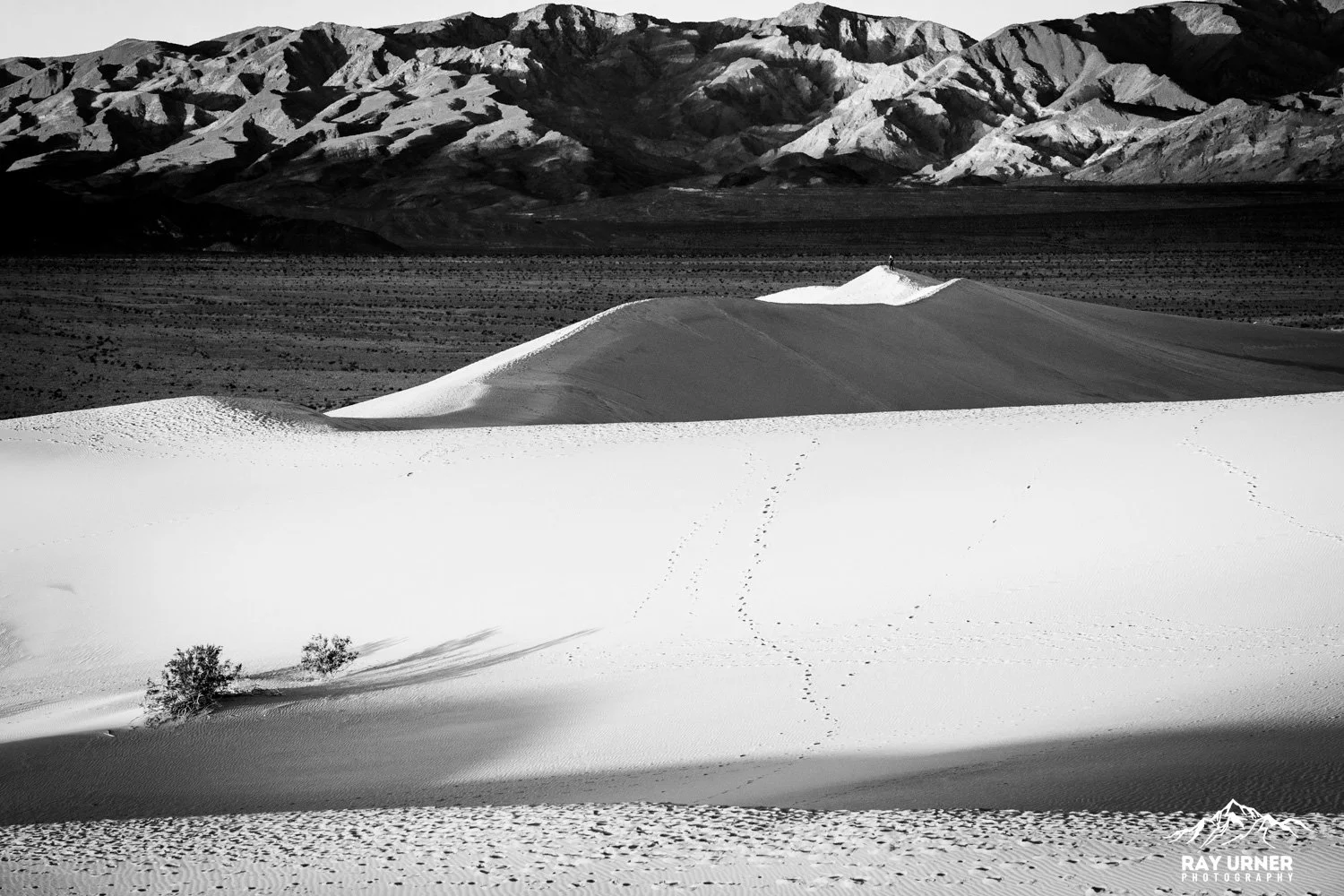
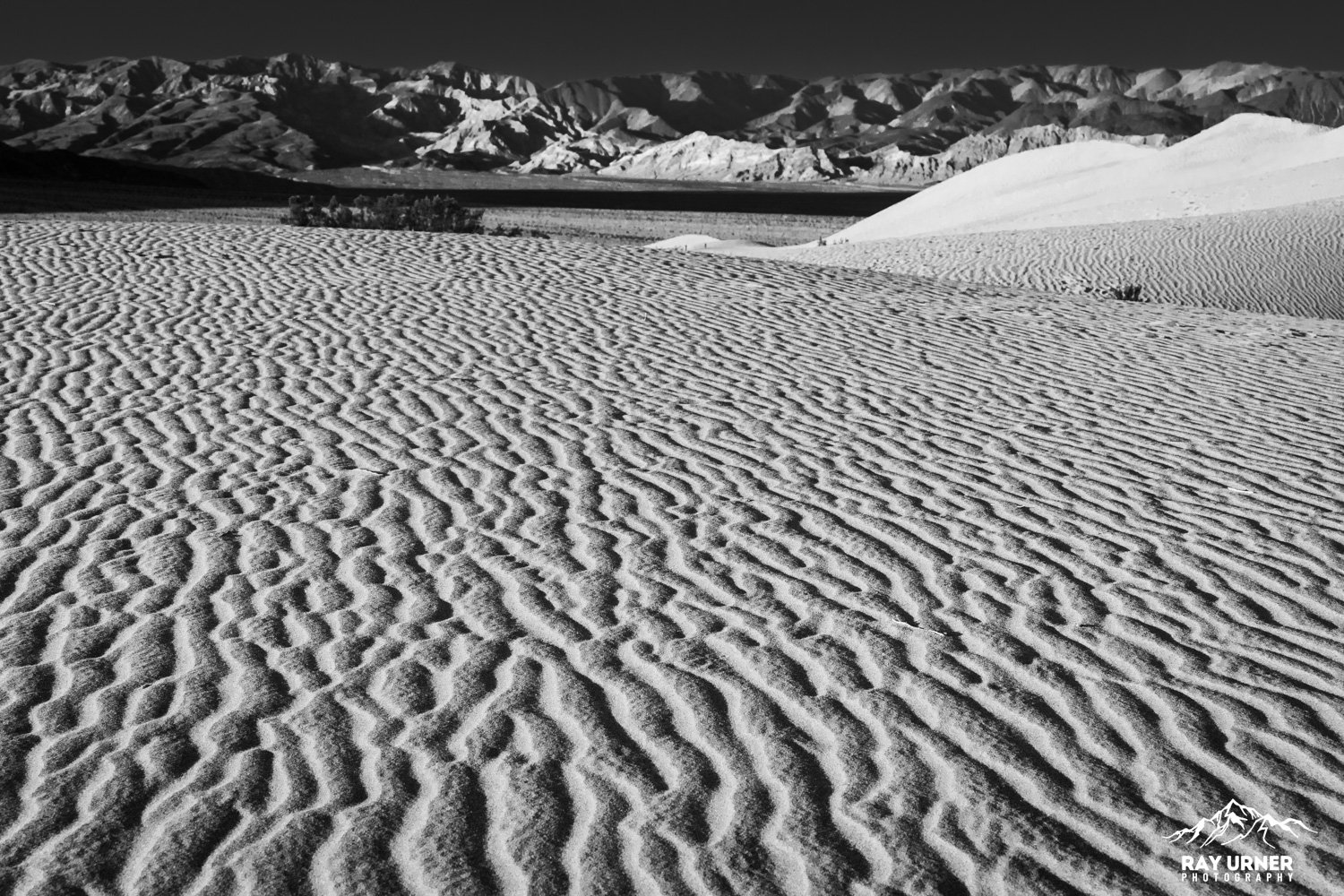
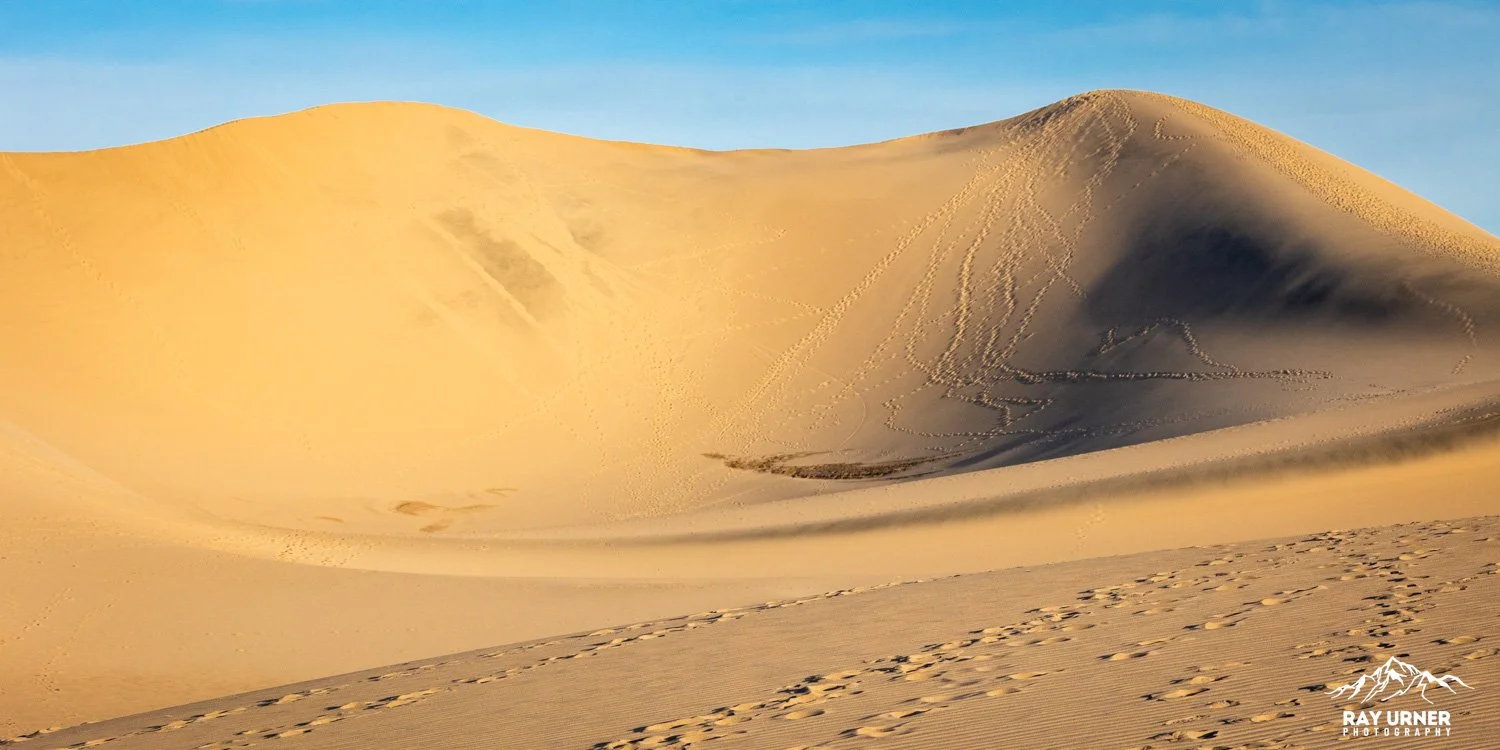
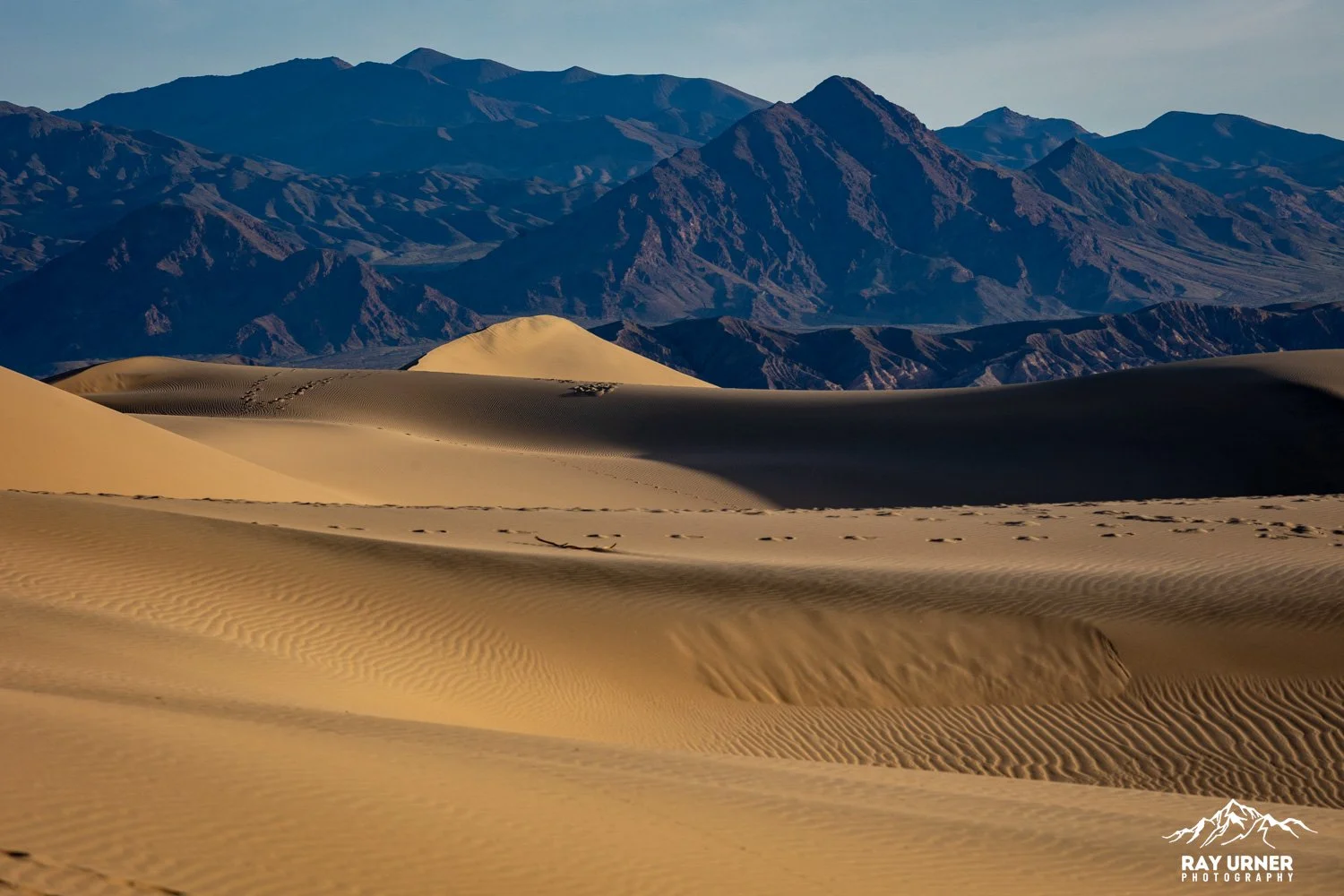
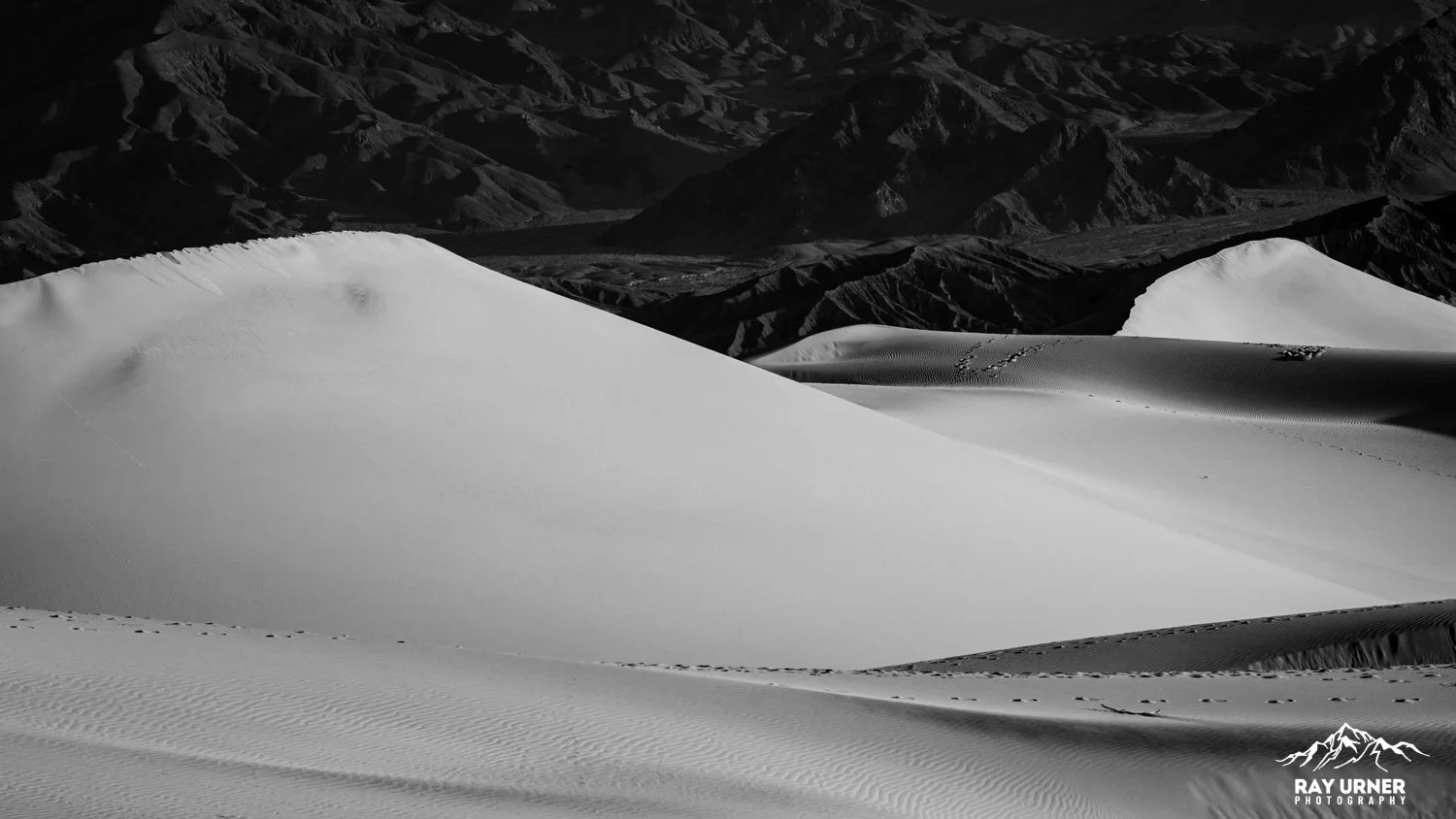
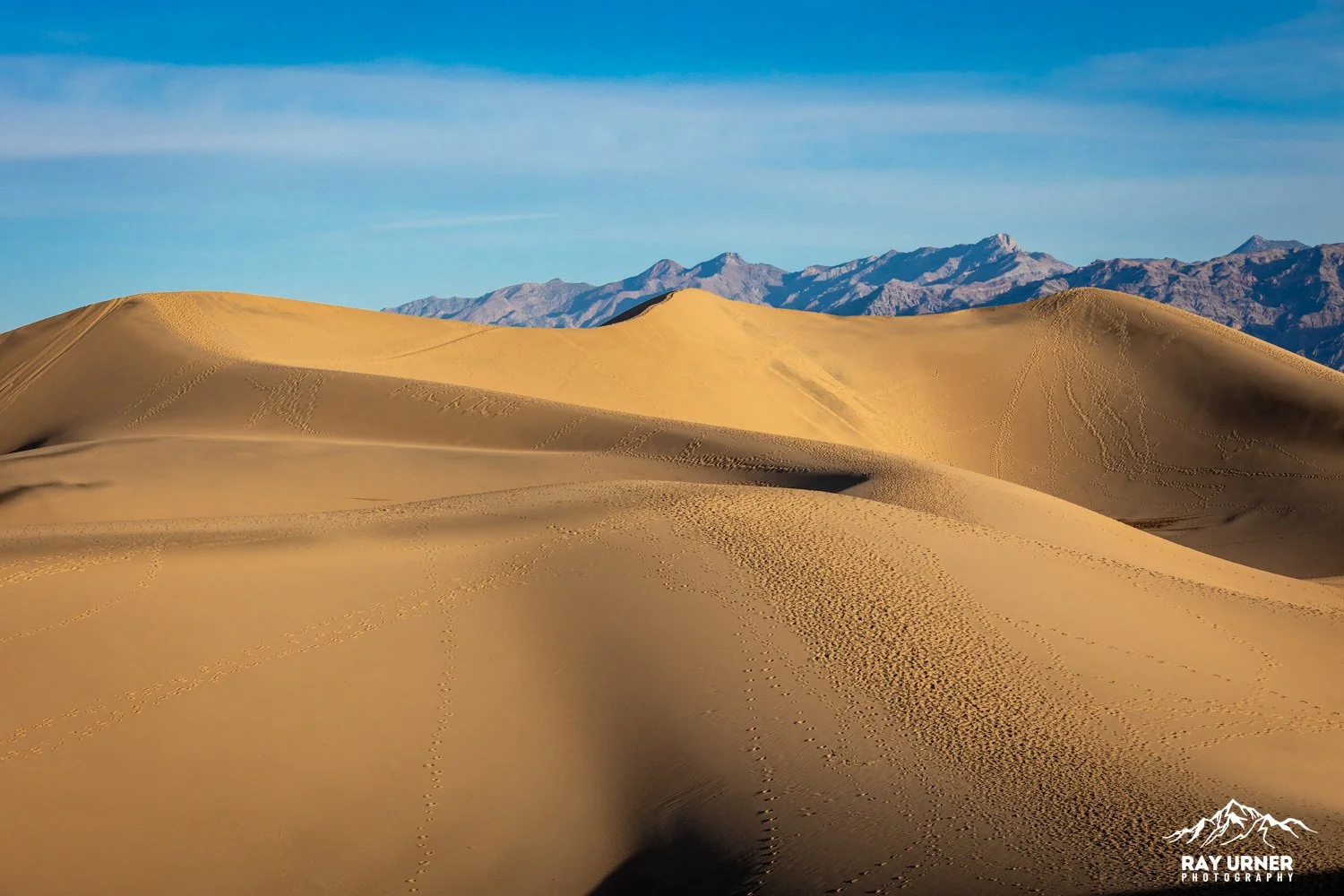
These dunes consist of crescent, linear, and star-shaped dunes stretching across roughly three square miles. They’re famous for their easy access, open exploration, and dramatic light‑and‑shadow patterns at sunrise and sunset.
There is no official trail — you choose your own path — making every visit creatively wide‑open.
Overview
Quick Facts
Round‑Trip Distance: ~2 miles to tallest dune (no official trail)
Elevation Gain: ~185 ft total
Time: ~1.5 hours
Difficulty: Easy–moderate (sand makes it tougher than it looks)
Location: Just east of Stovepipe Wells off CA‑190 (large paved lot)
Restrooms: Vault toilets at parking lot
Pets: Not allowed on dunes or trails
Best Seasons: October–April; avoid summer after 10 a.m. due to extreme heat
Geology / Environment
These dunes exist because of three factors:
(1) sand from eroding mountains to the north,
(2) near‑constant winds to move the sand, and
(3) mountains to the south that trap it.
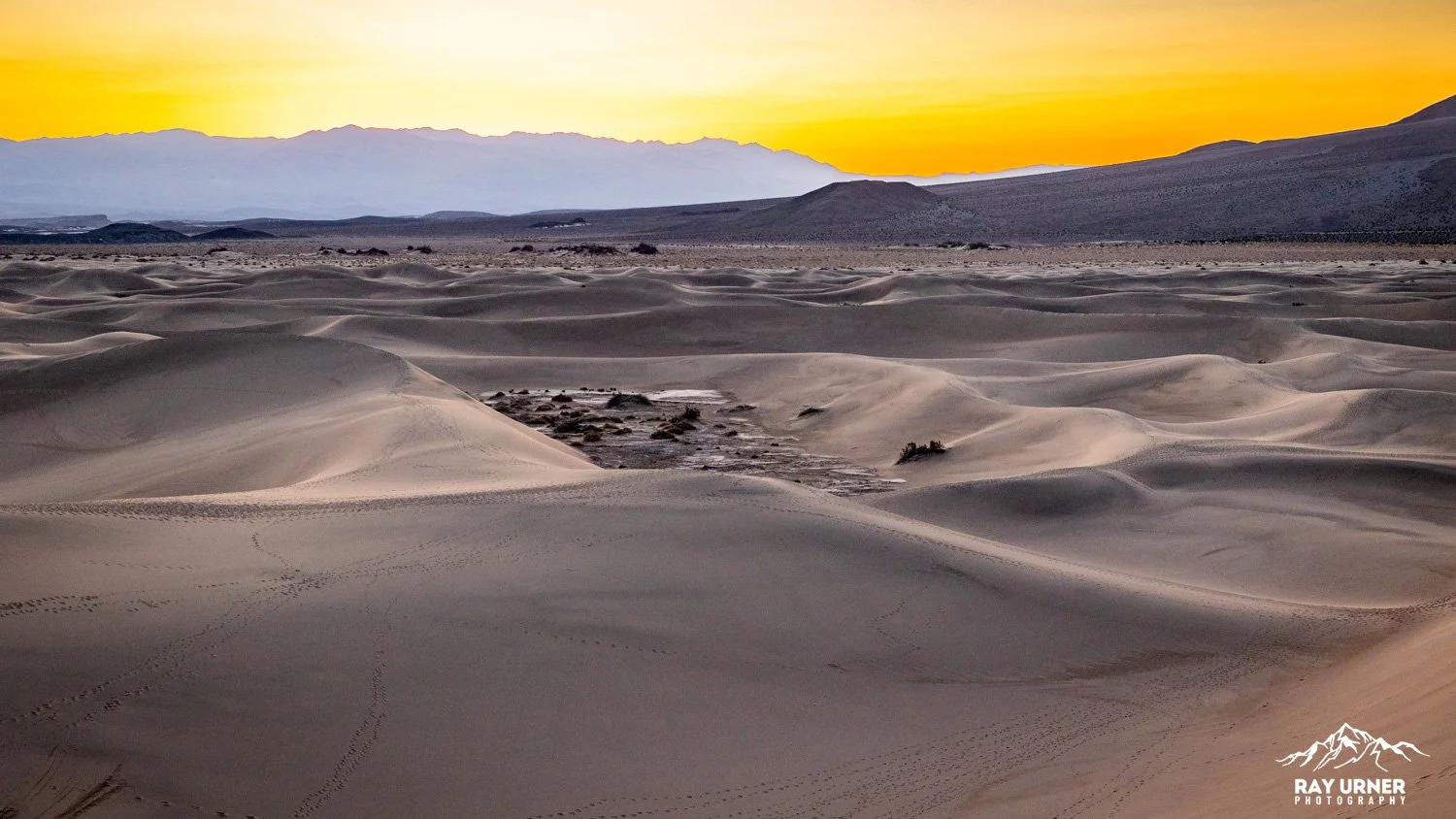
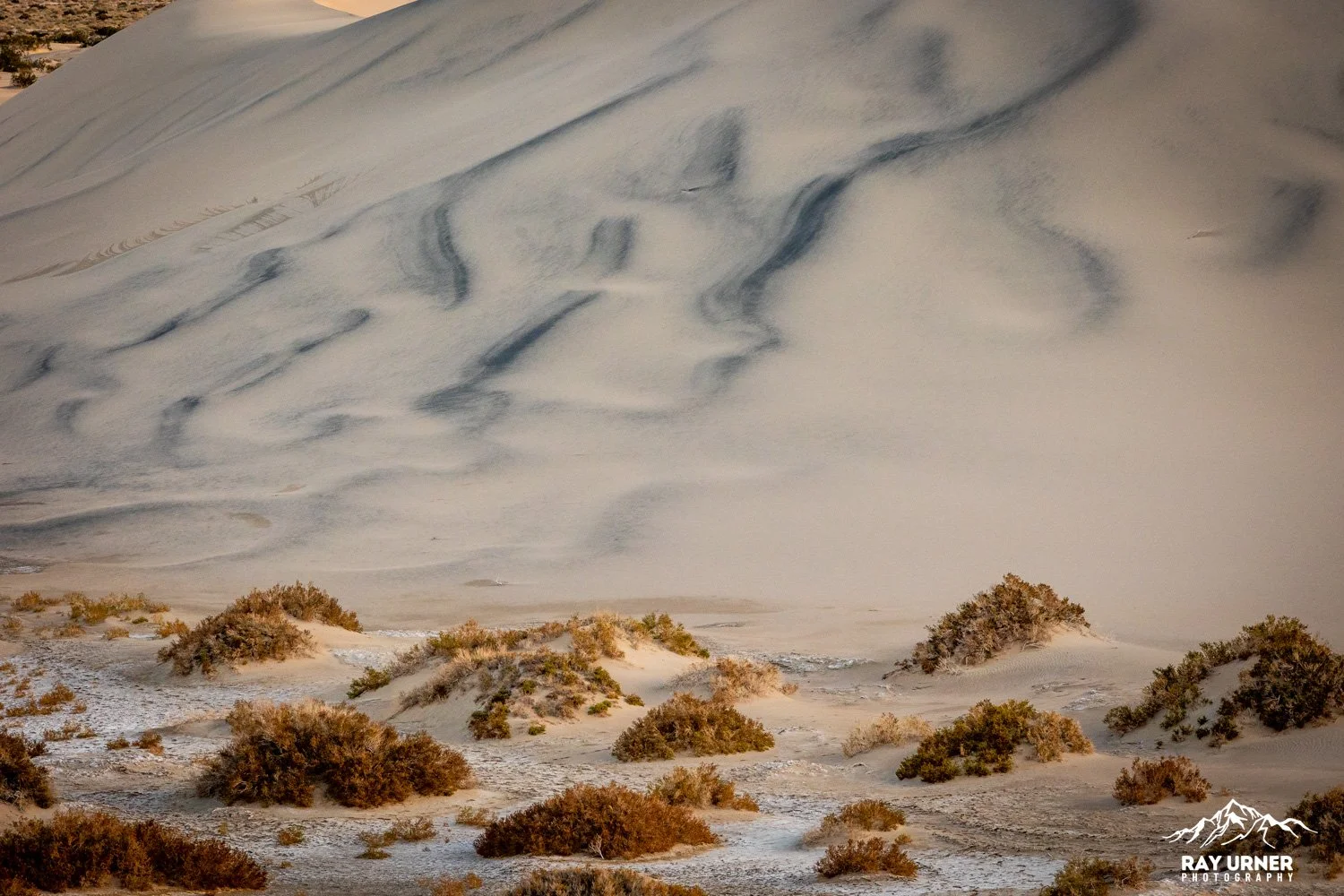
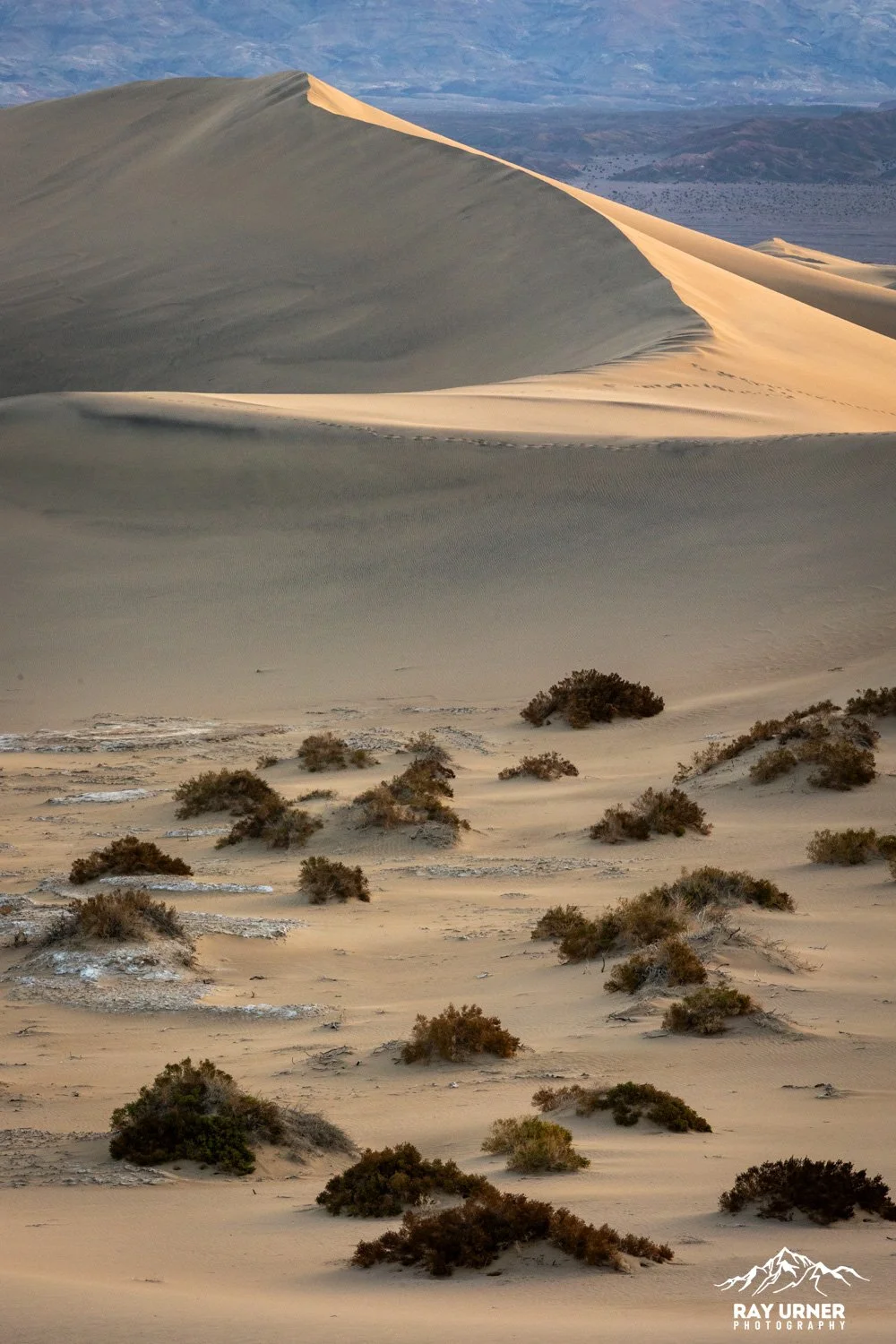
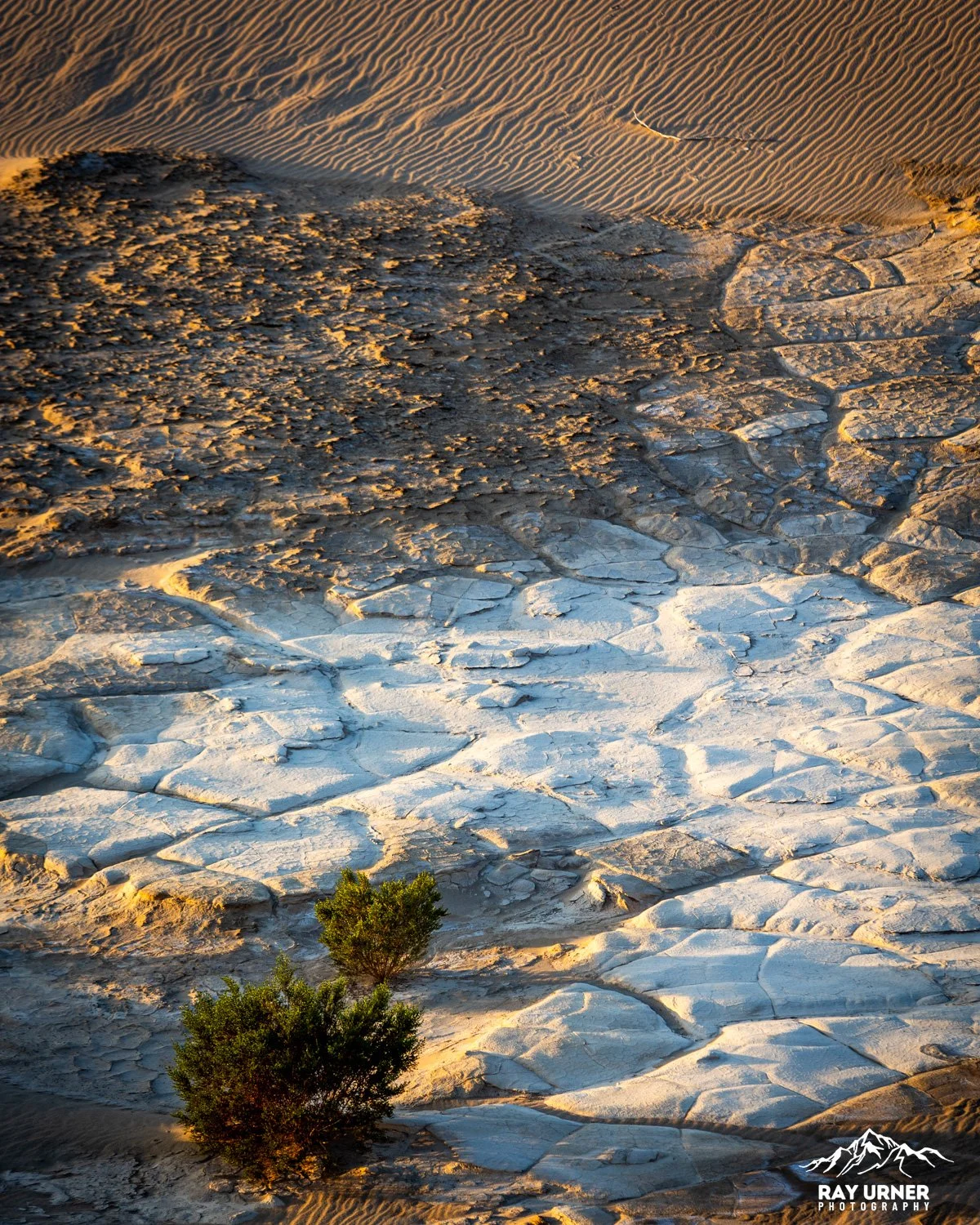
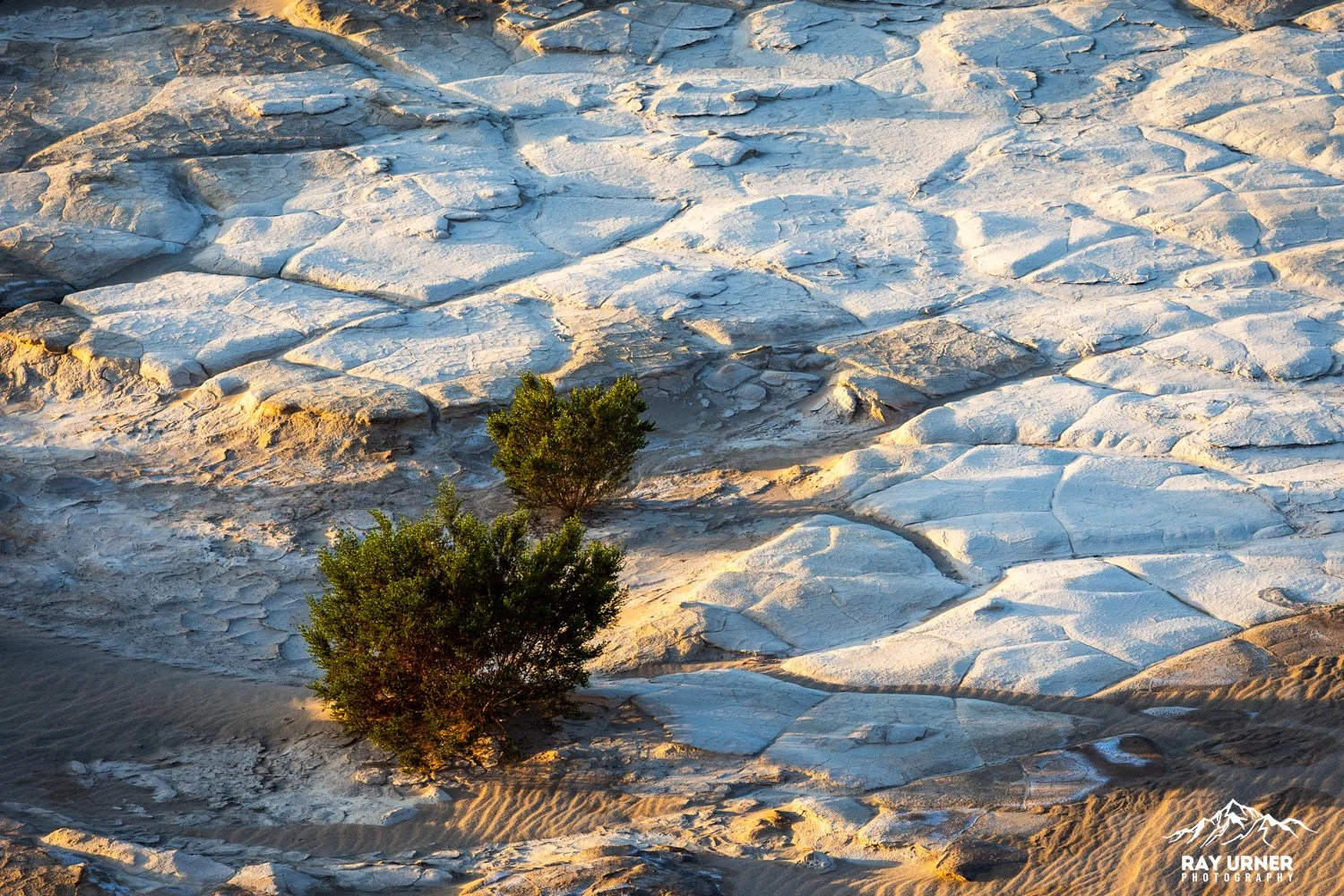
The substrate beneath the dunes is polygon‑cracked clay from an ancient lakebed, giving photographers a second texture to work with near the parking area.
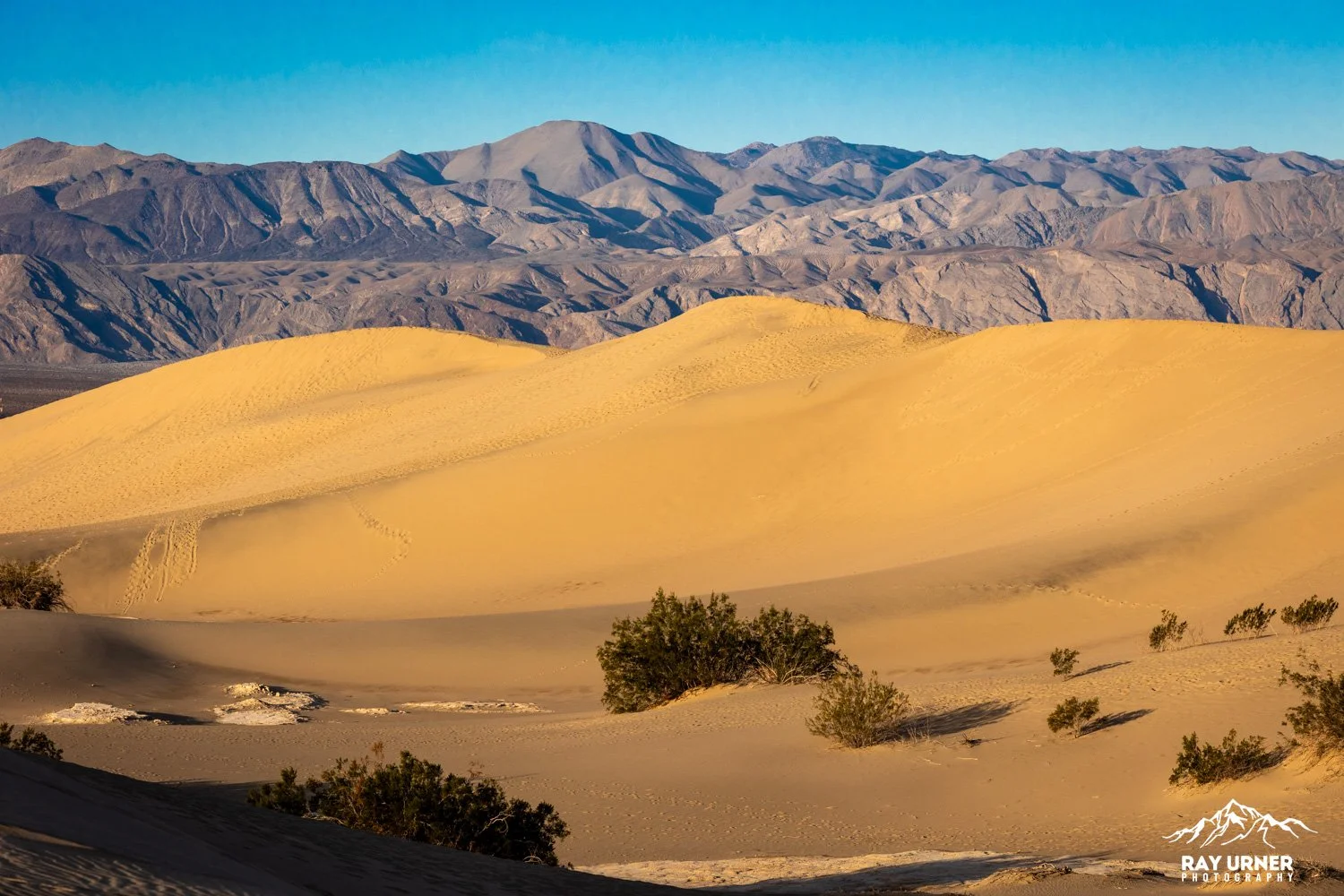
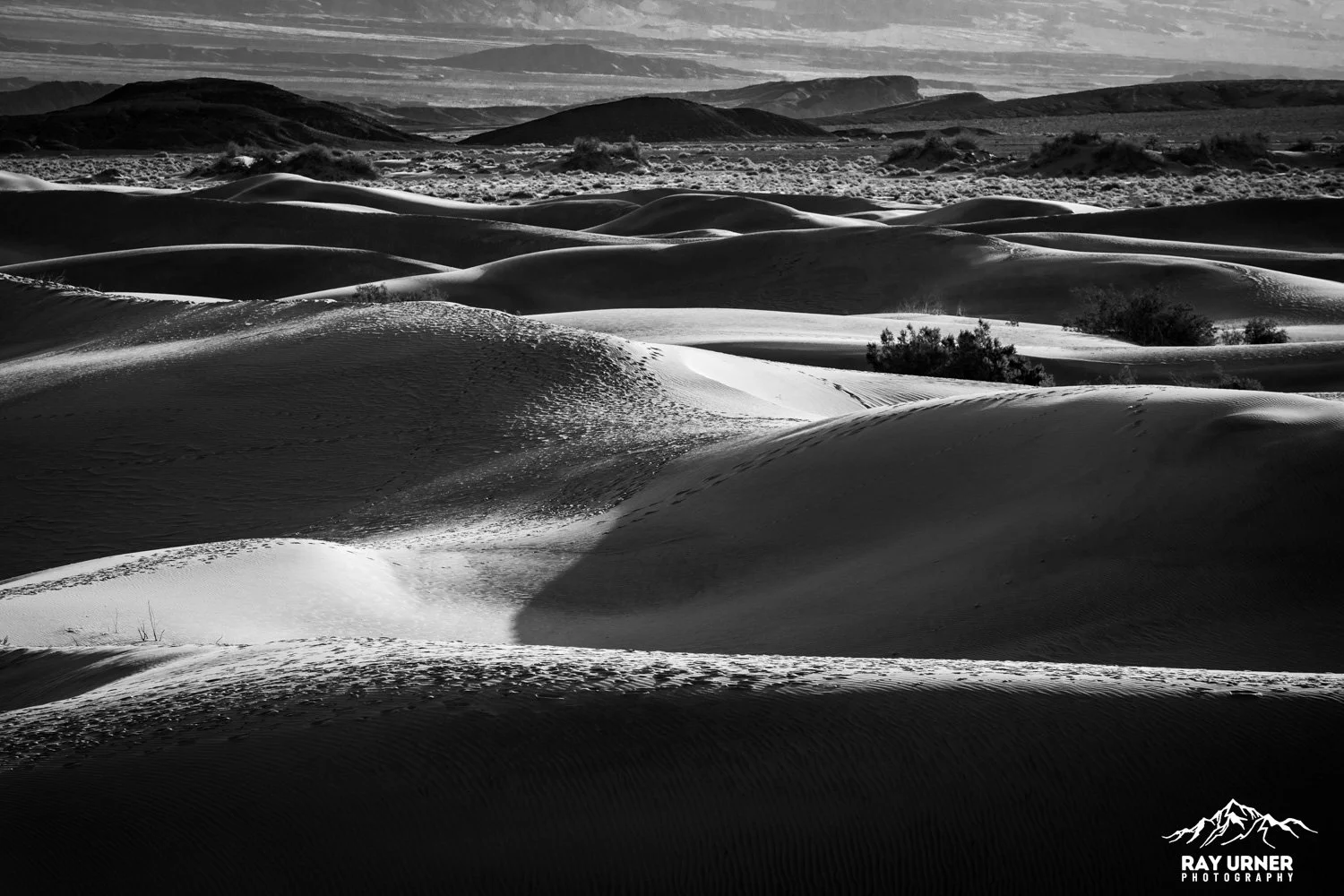
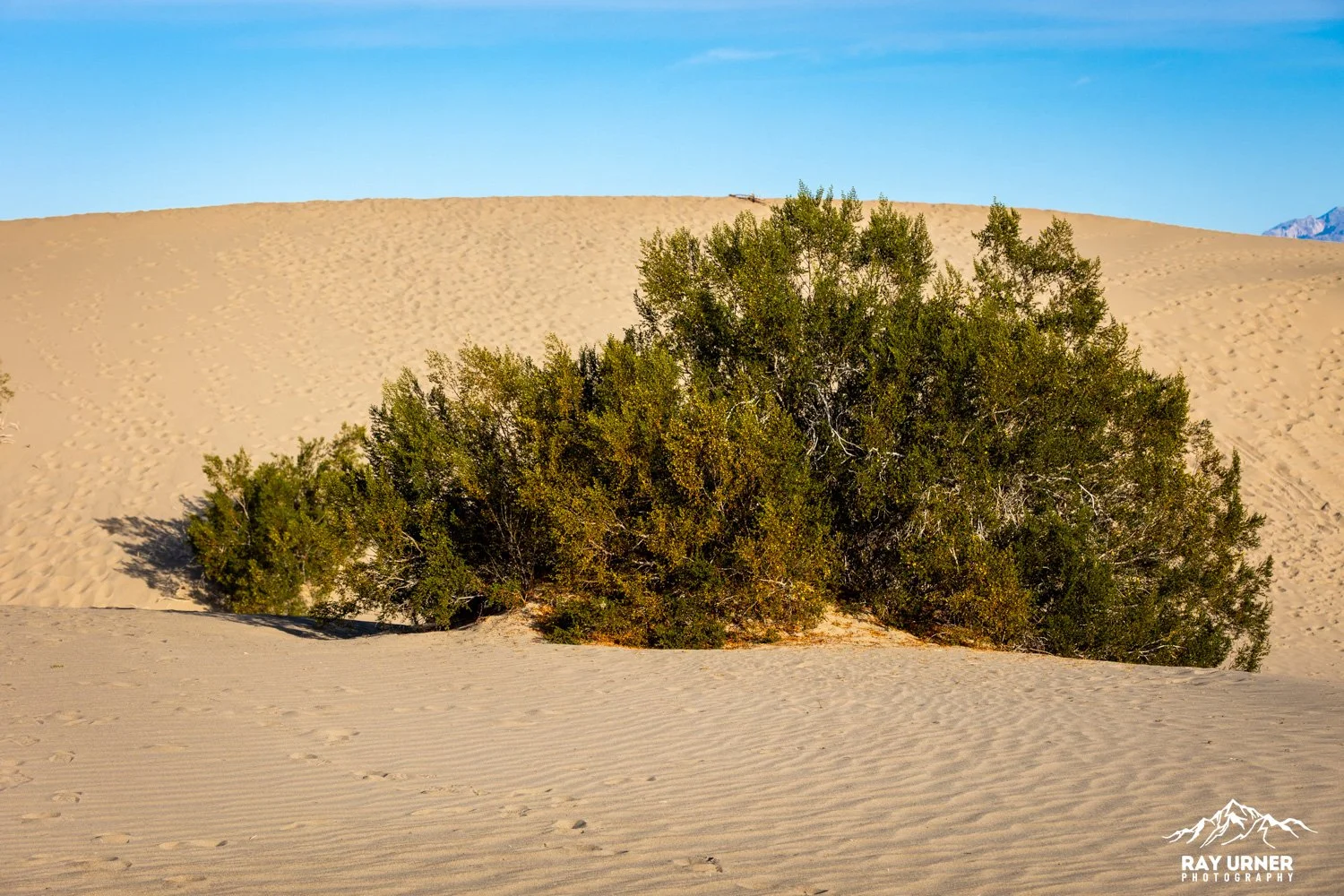
The dunes also support mesquite trees that twist and grow above shifting sand, anchoring small wildlife habitats.
Photography Guide: Sunrise
Why Sunrise Shines Here
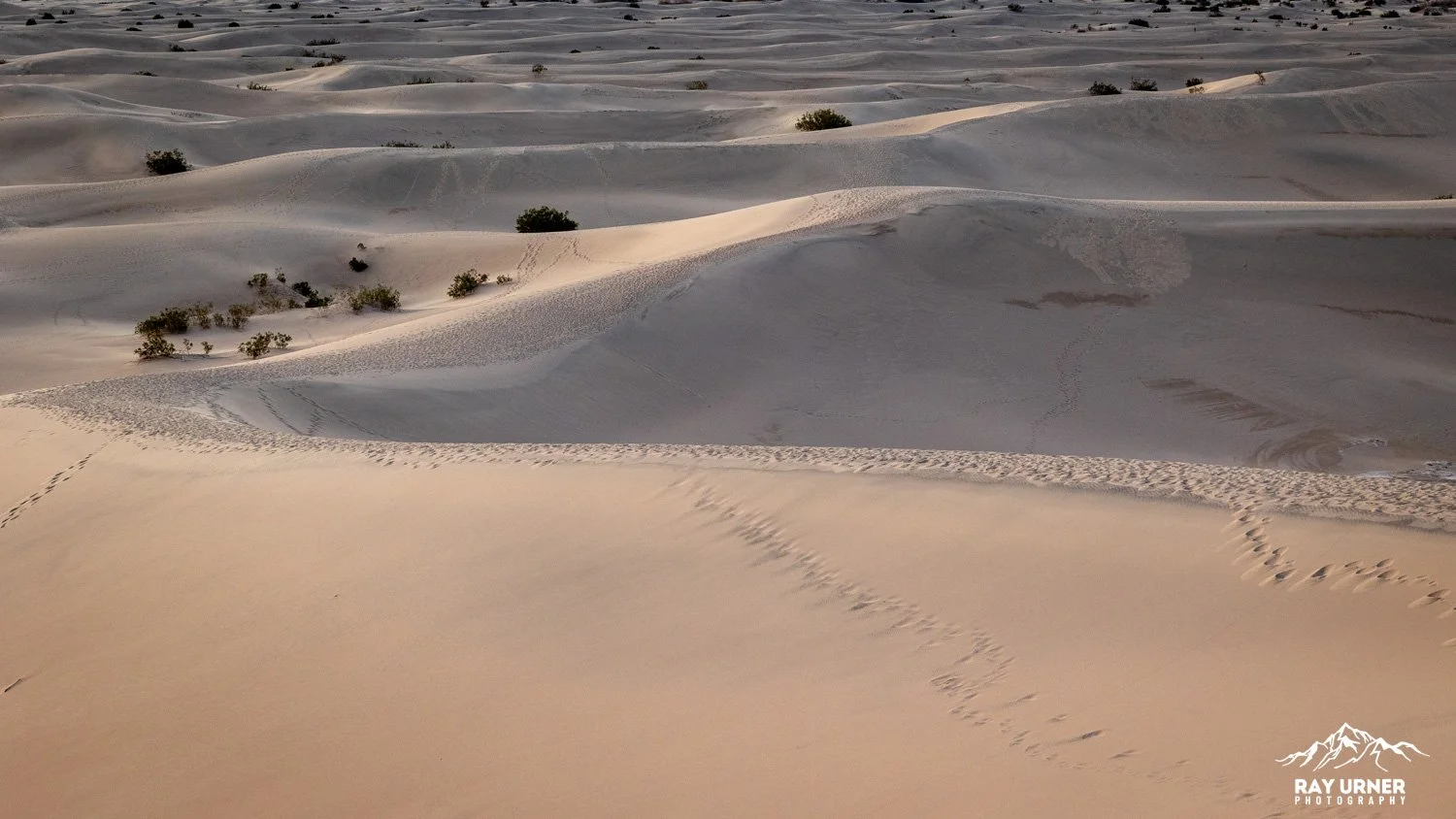
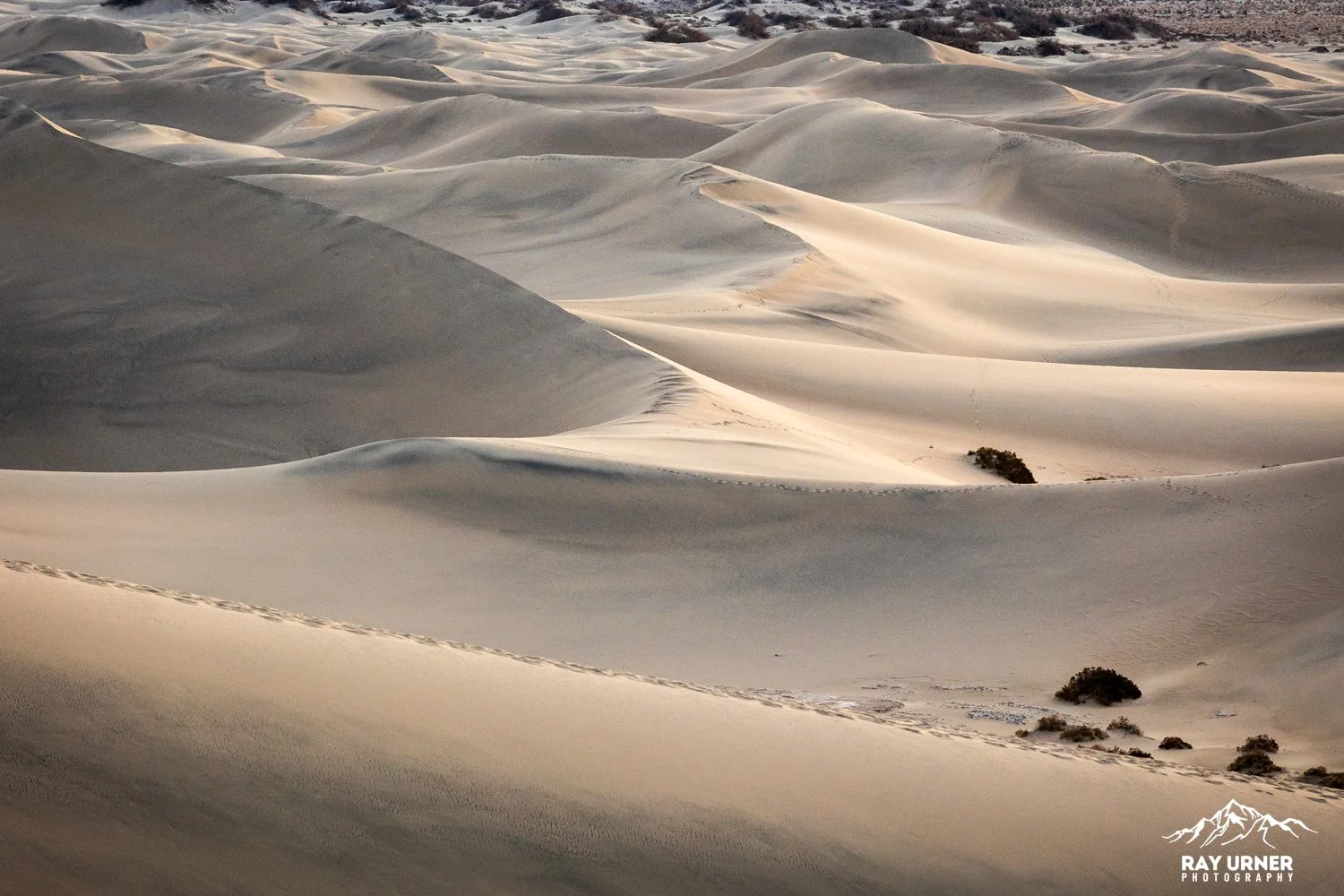
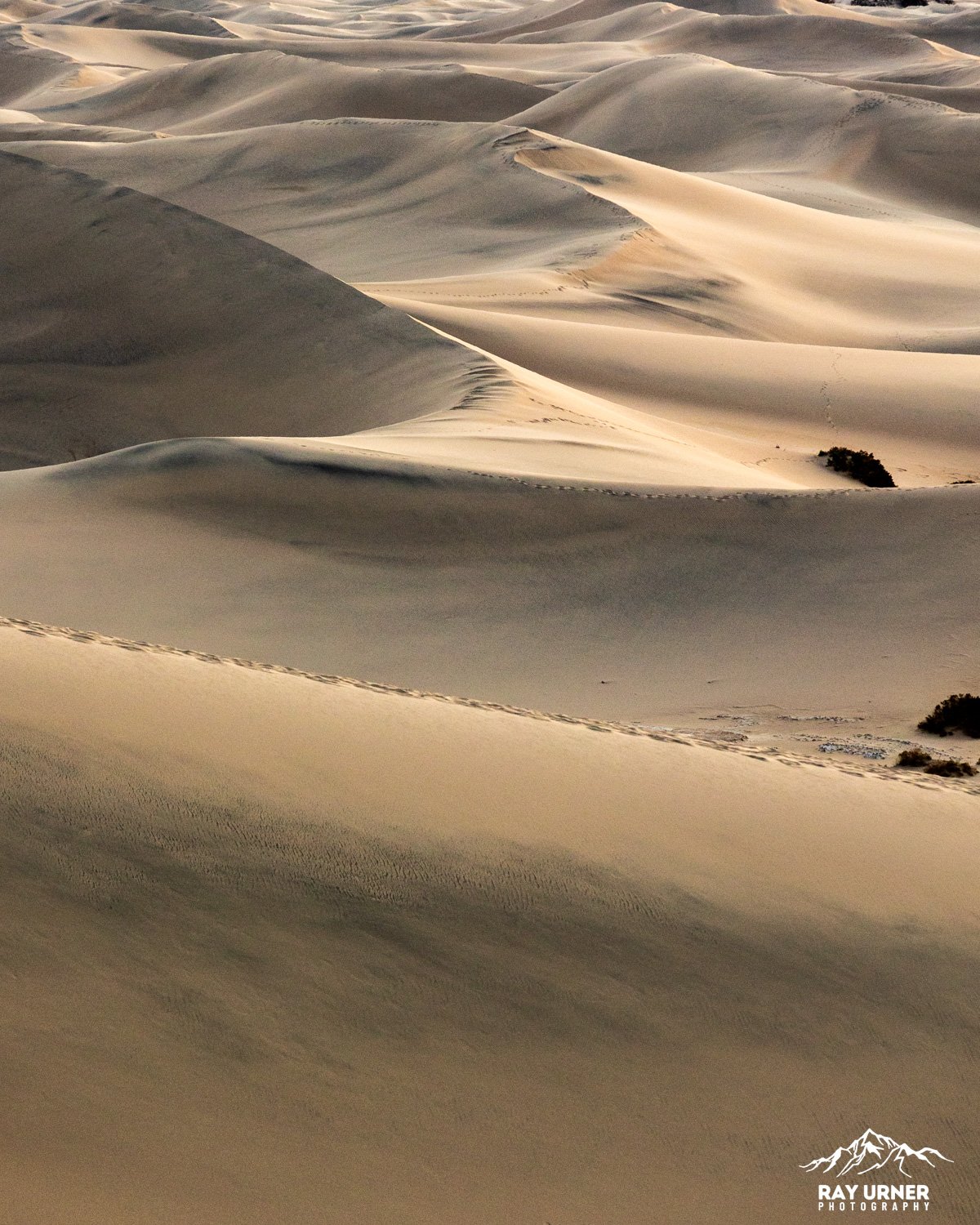
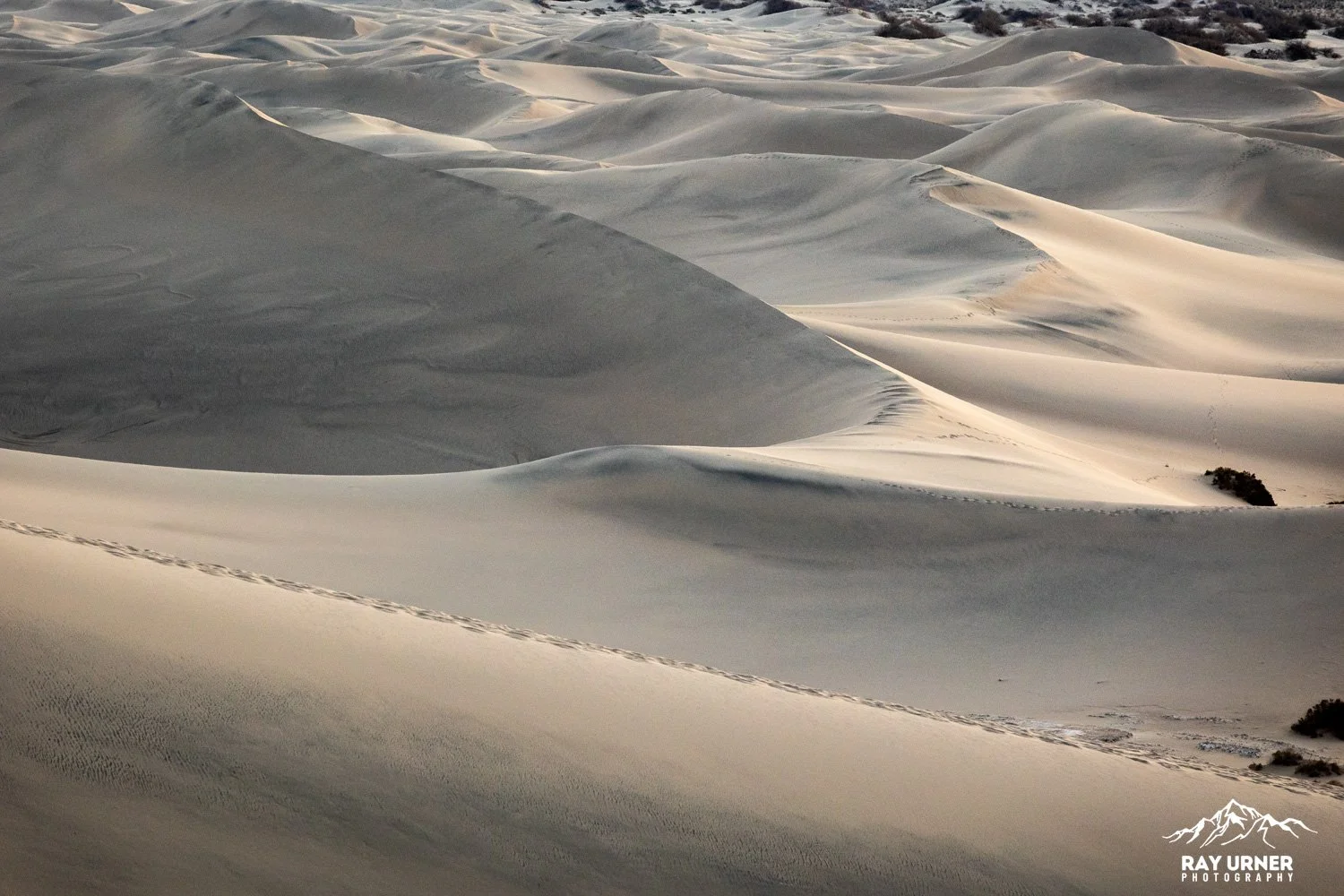
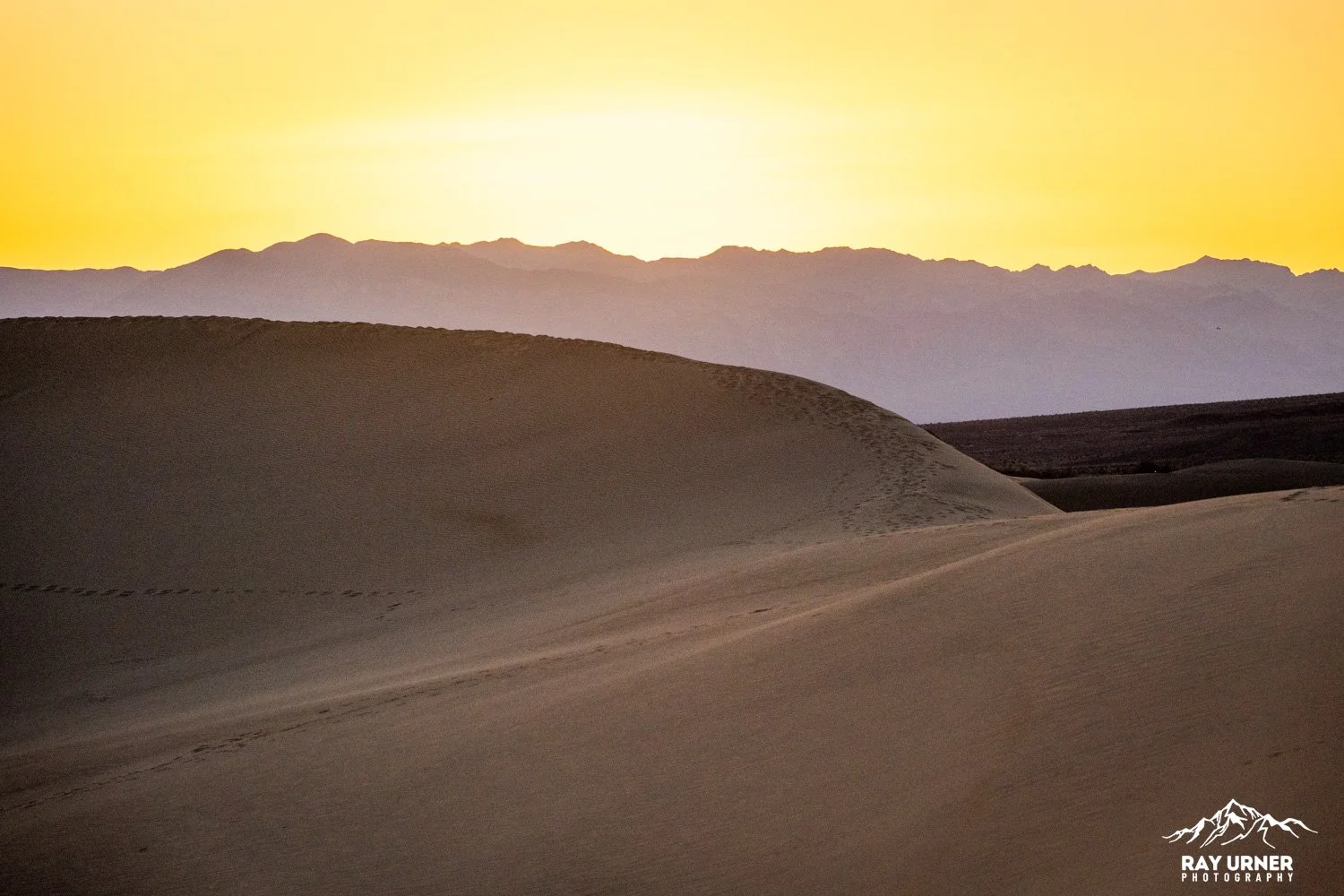
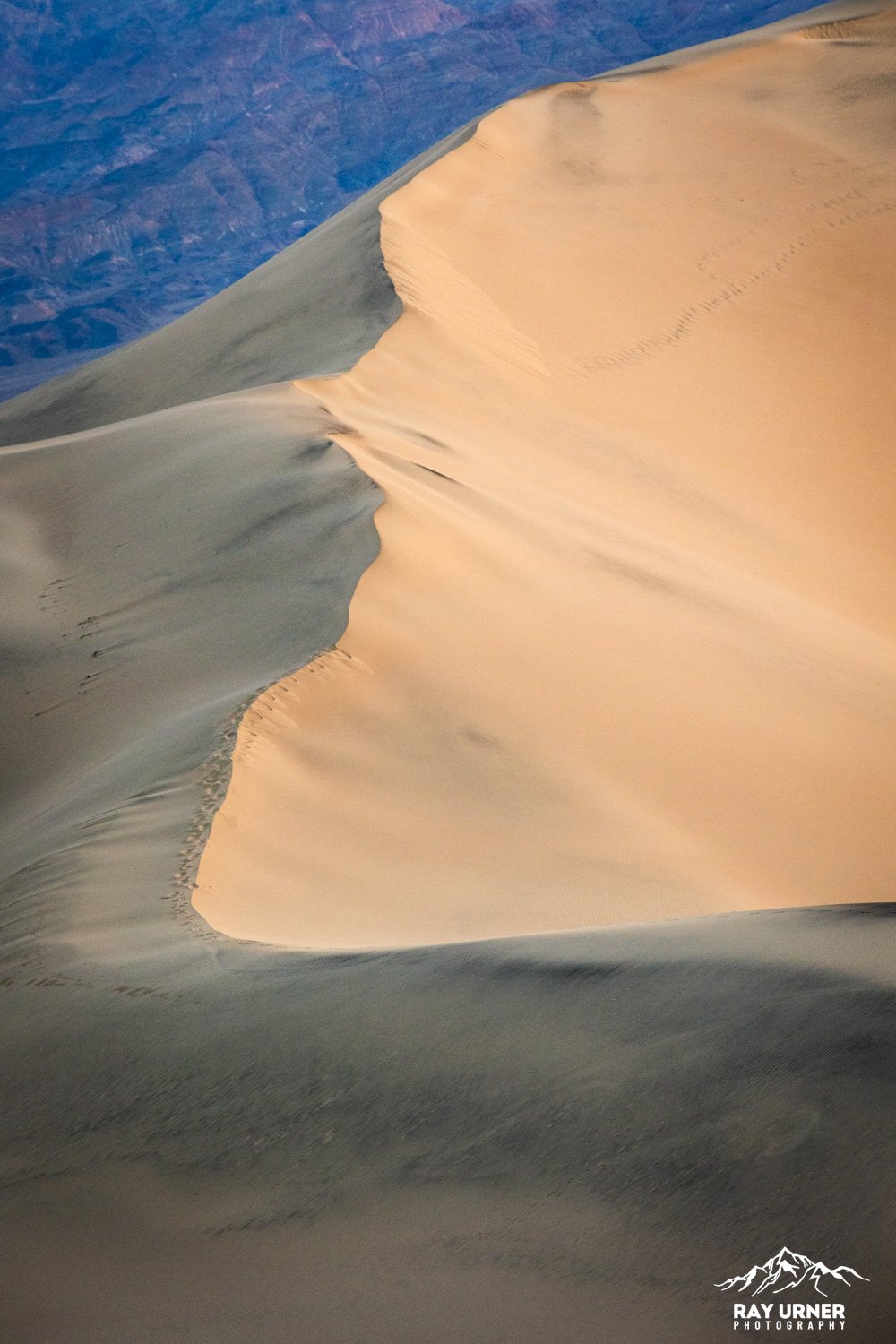
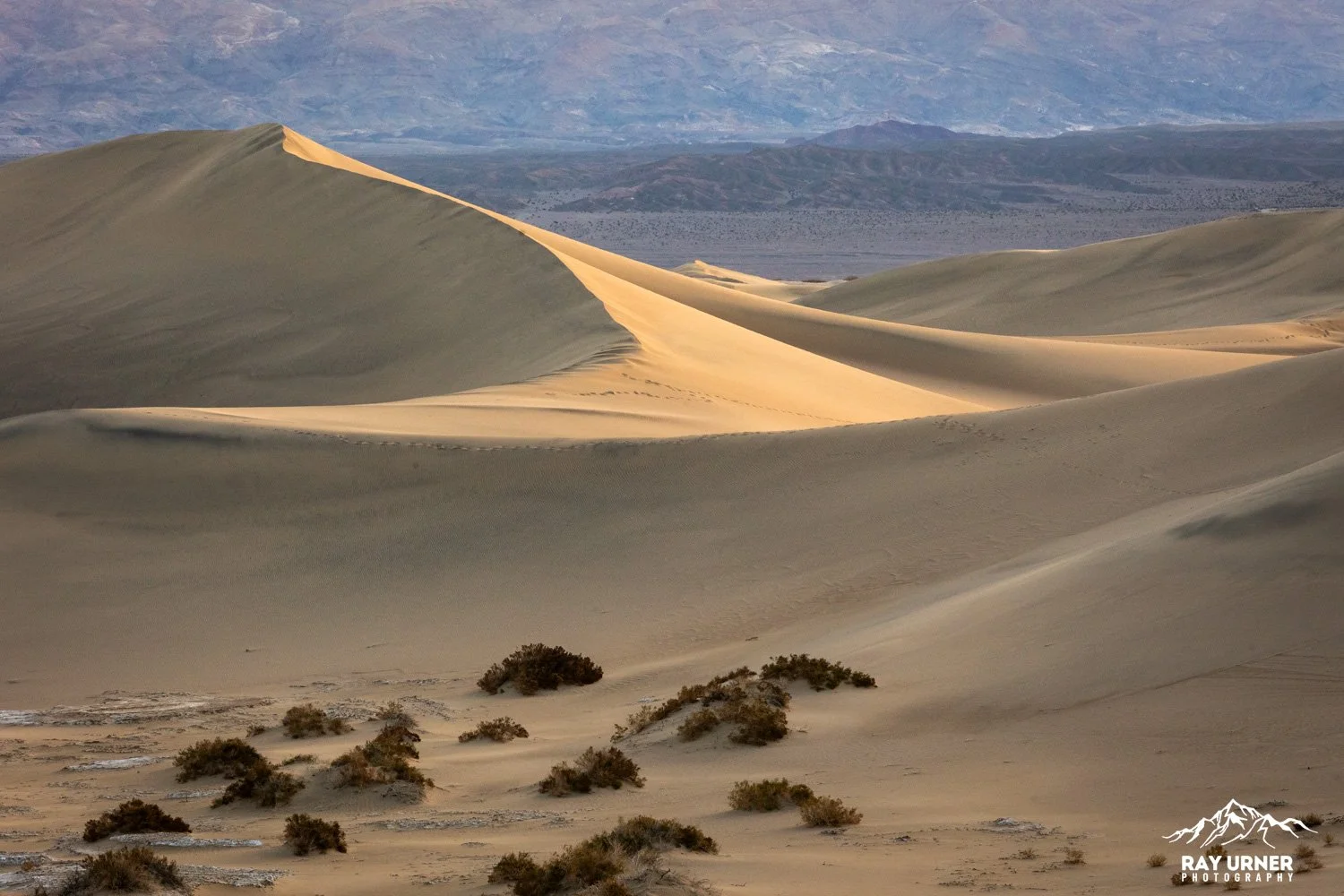
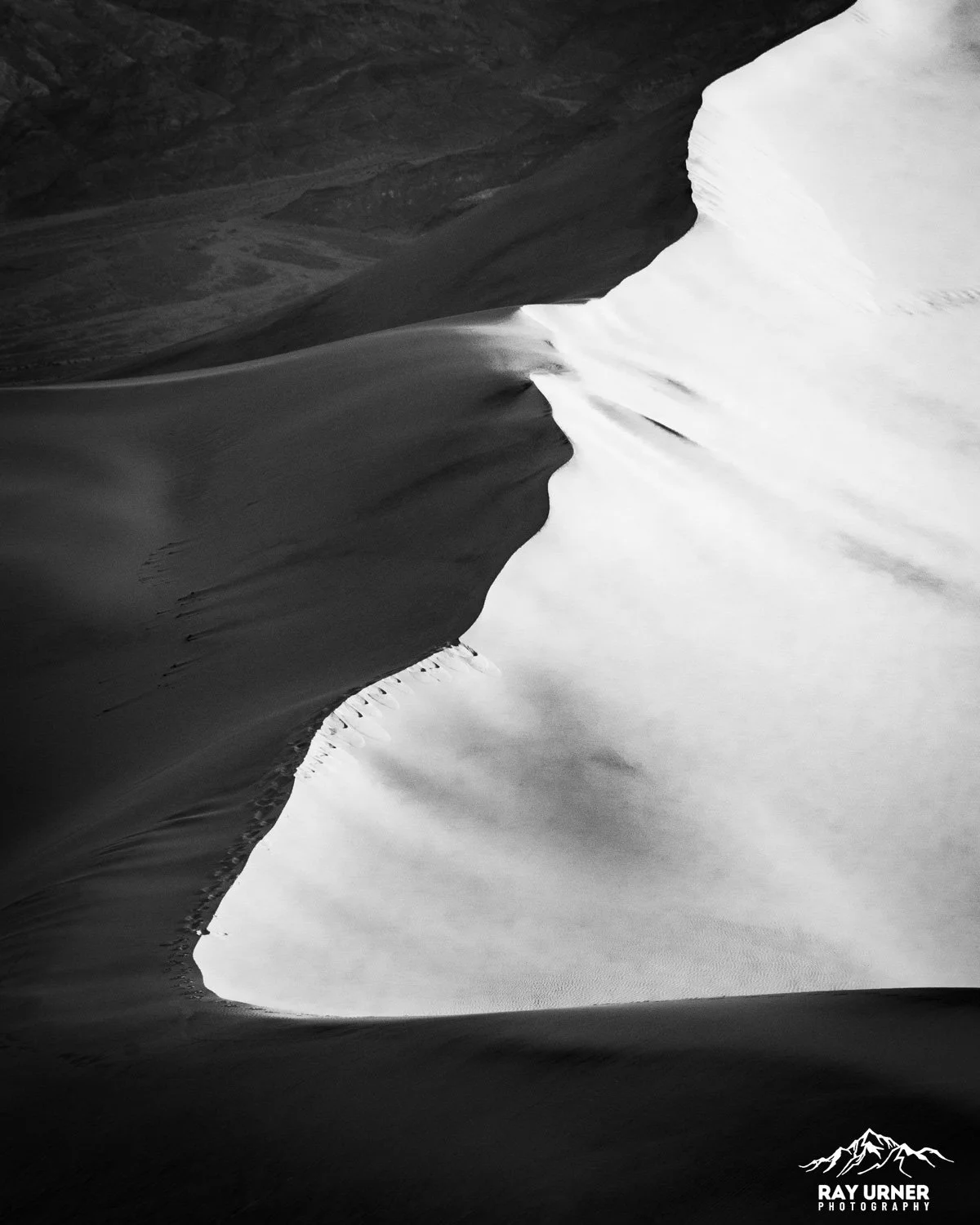
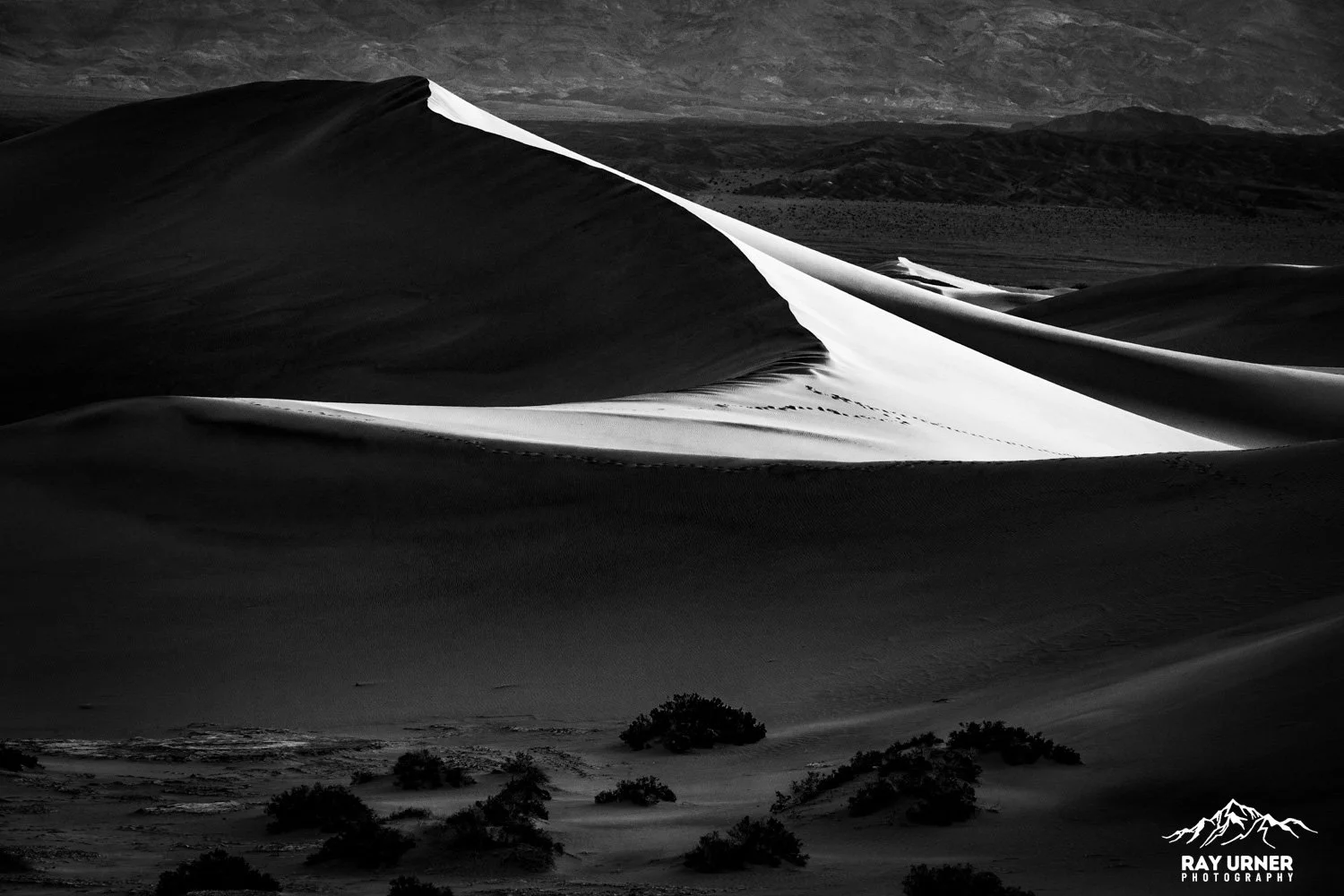
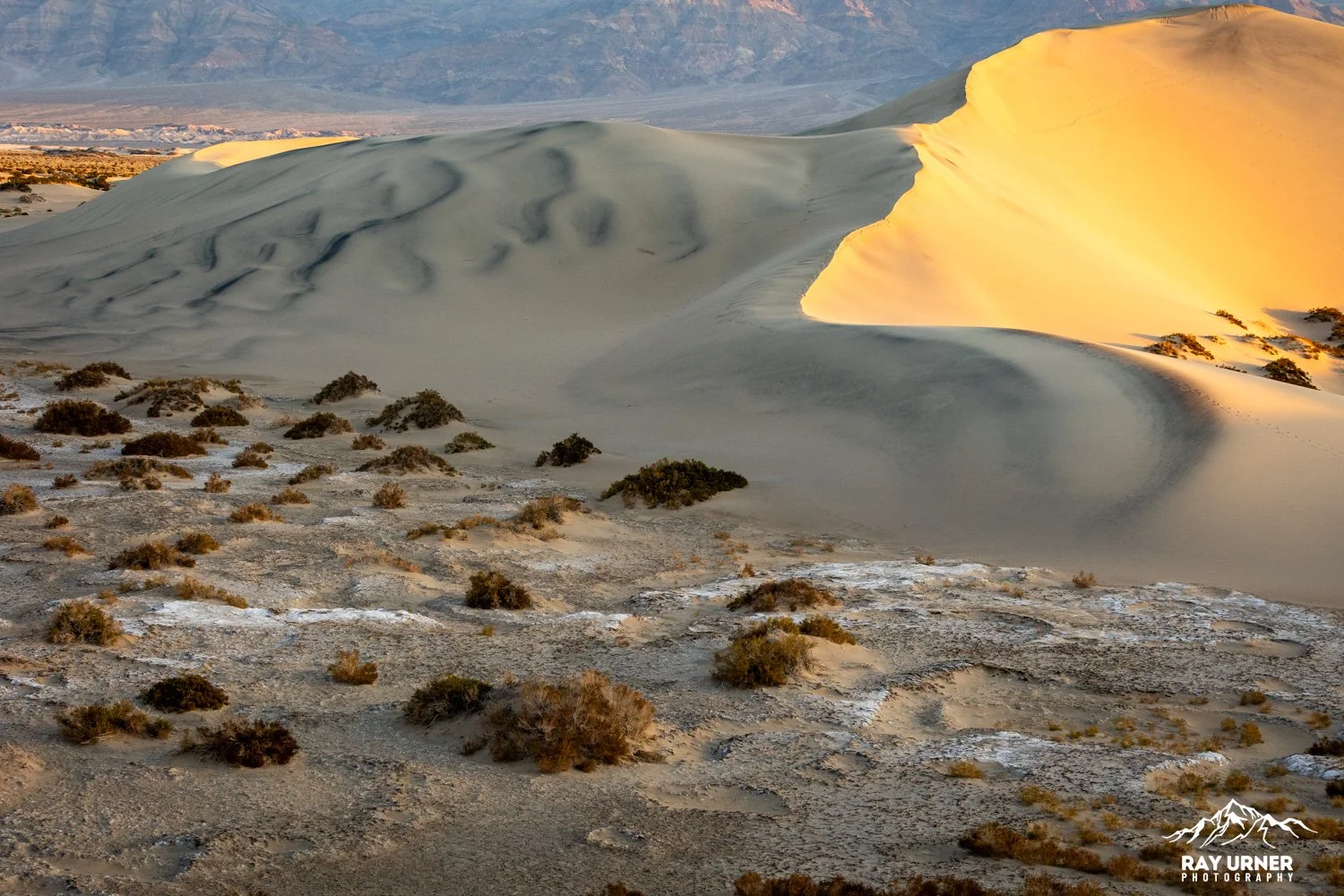
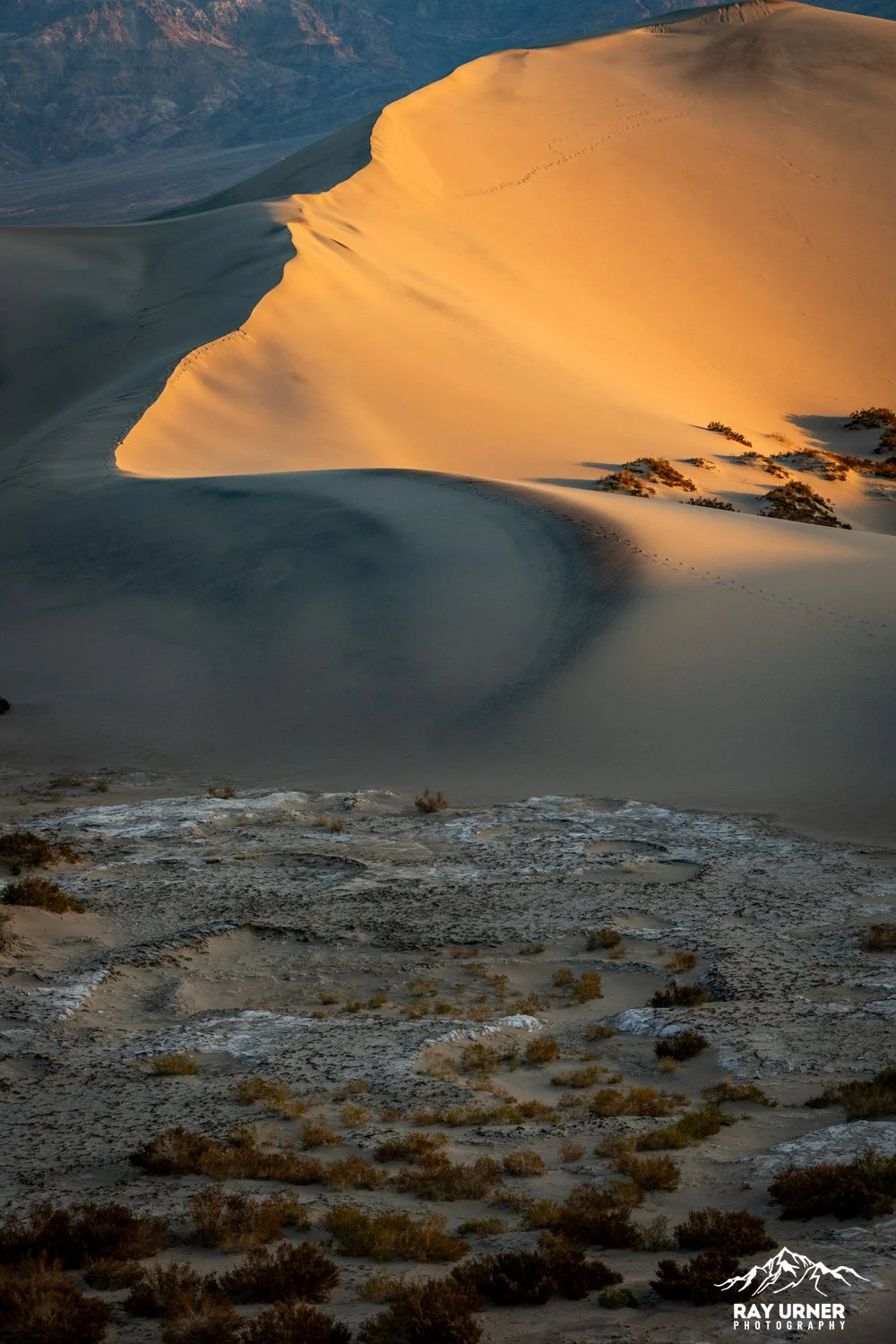
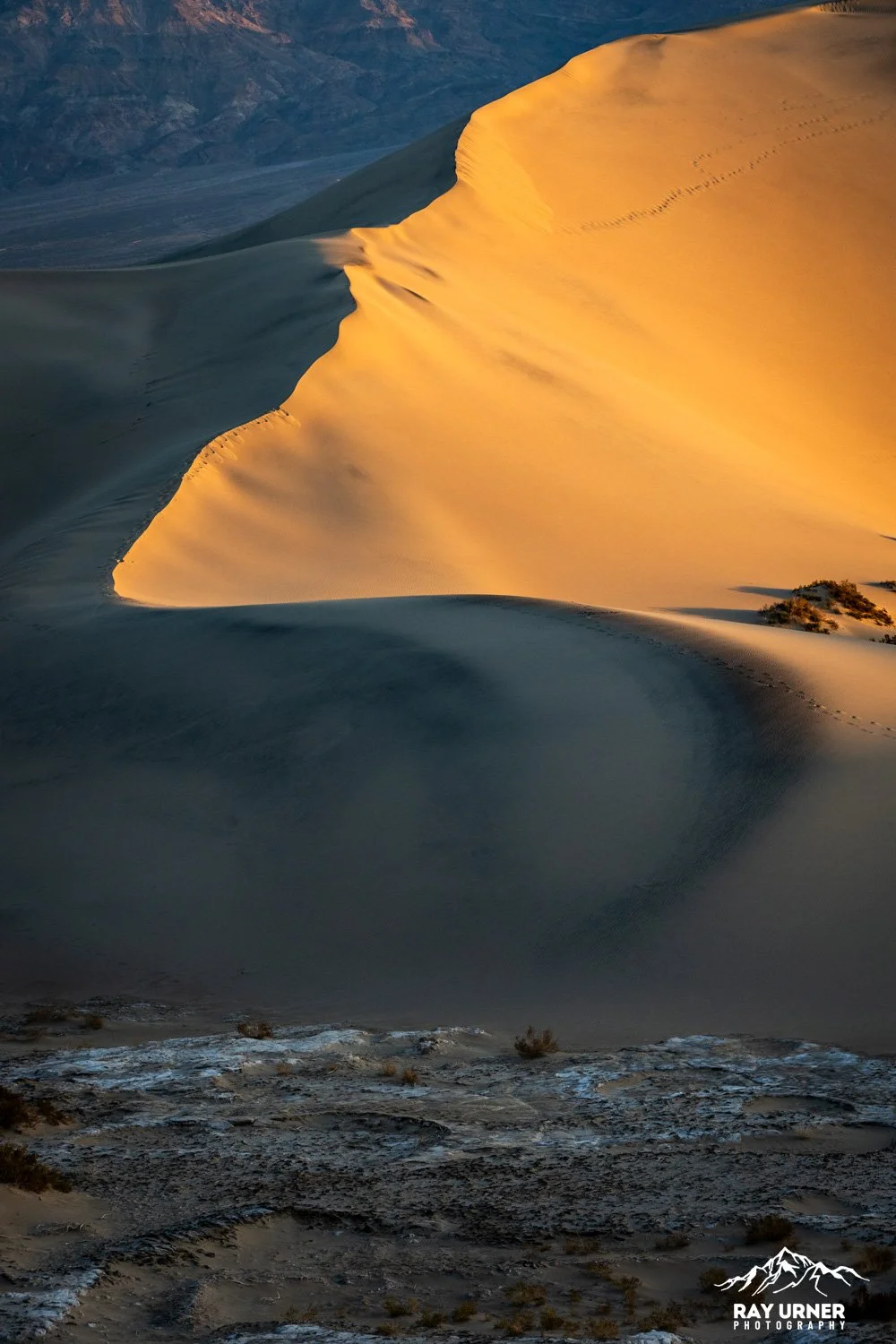
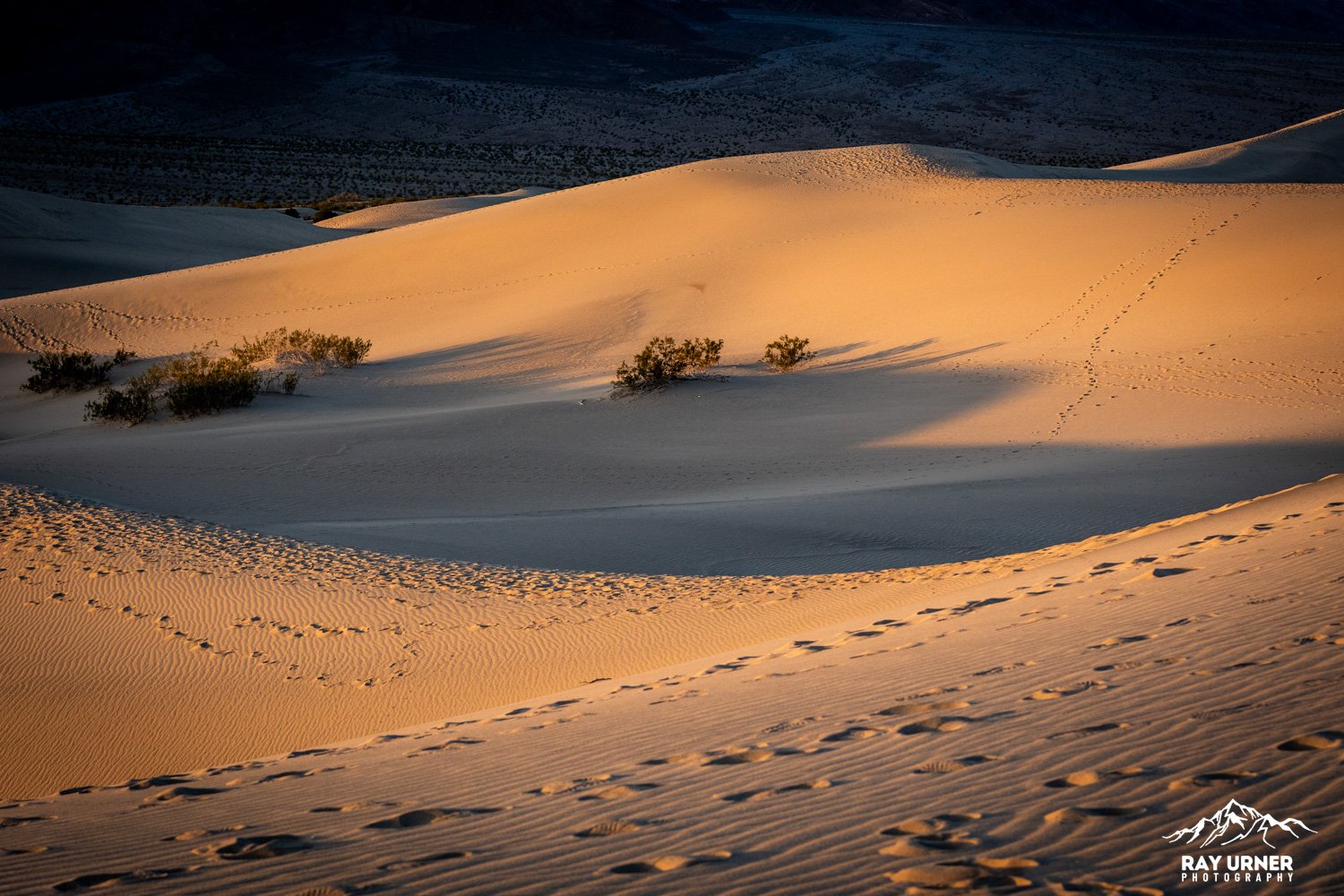
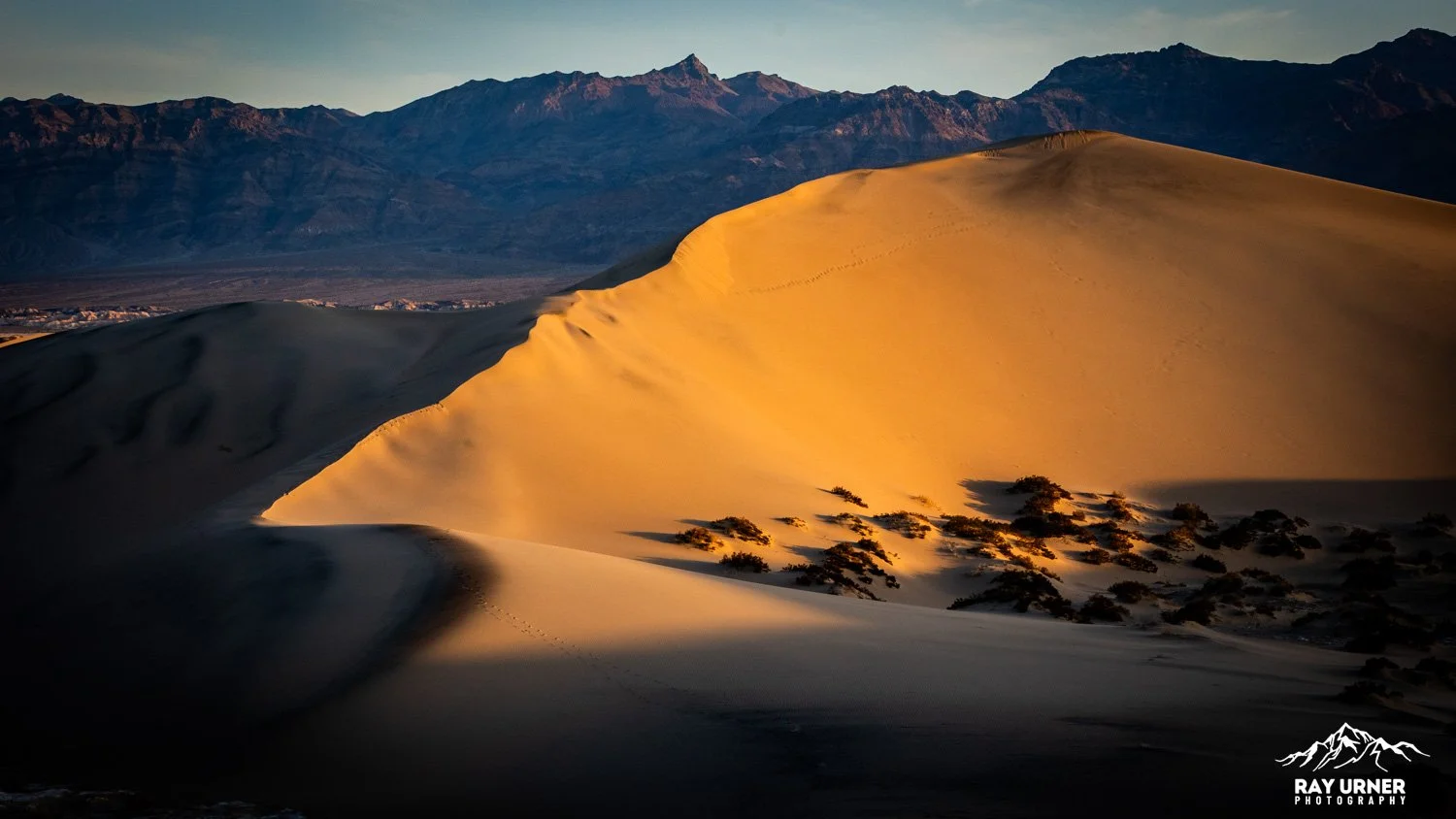
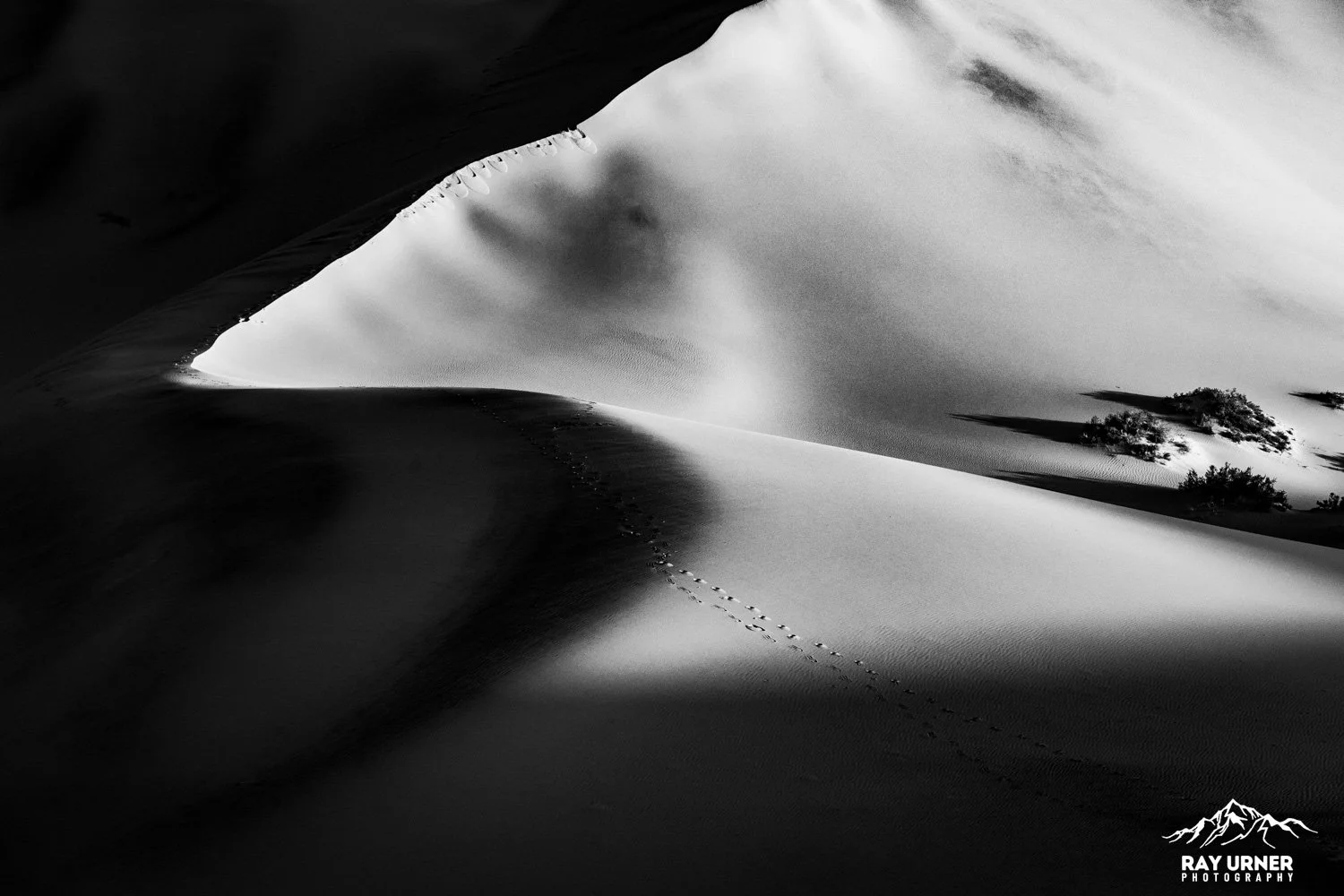
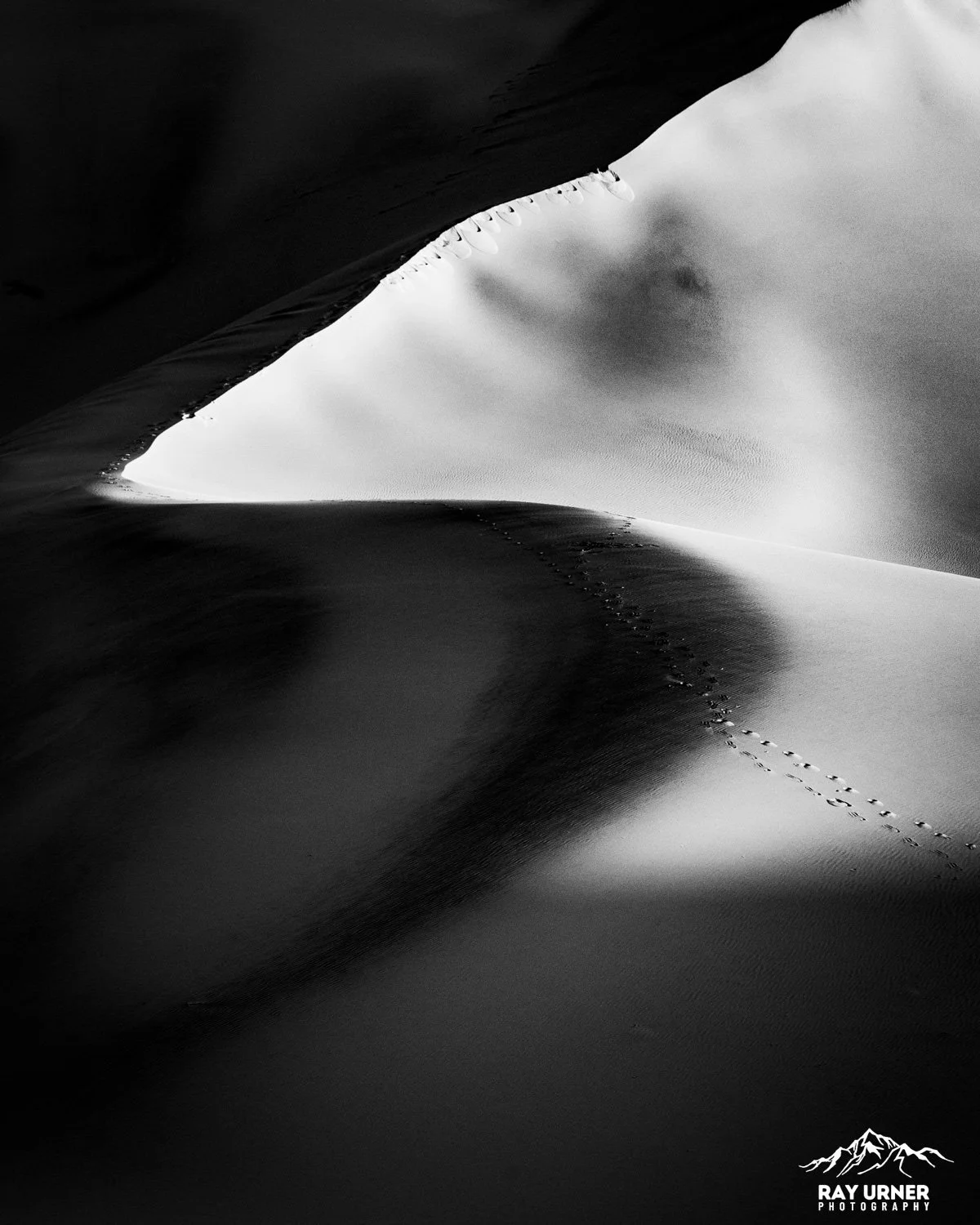
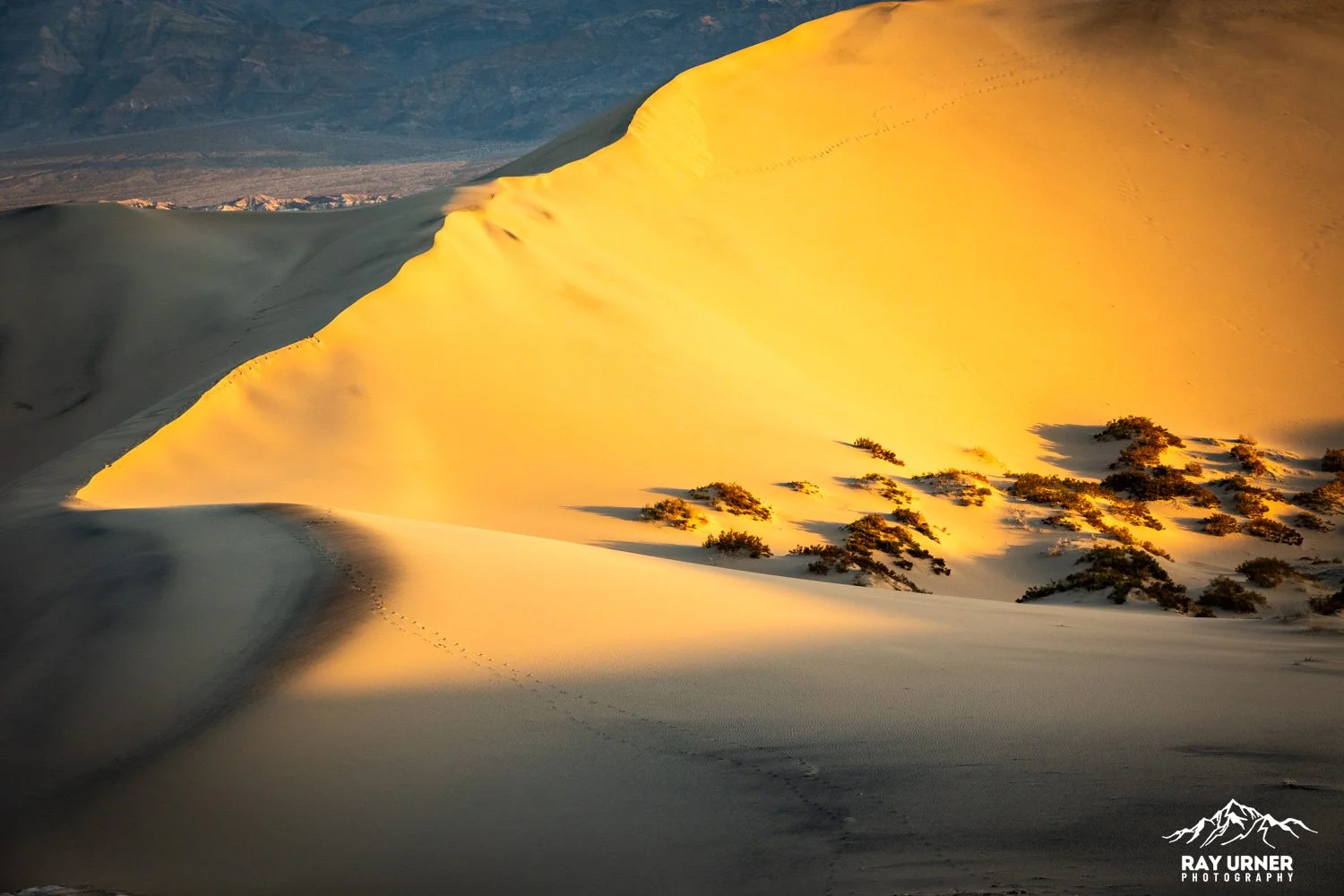
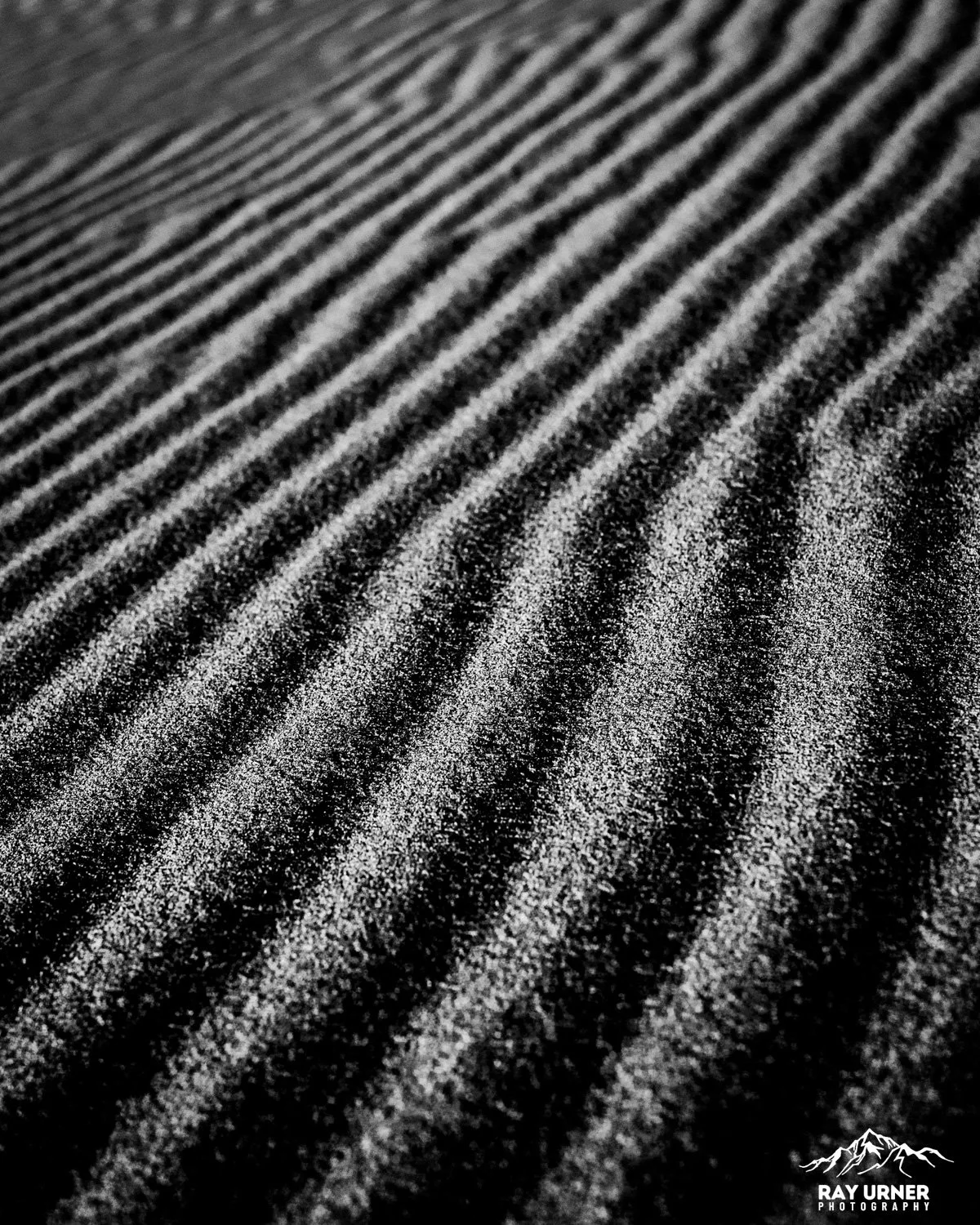
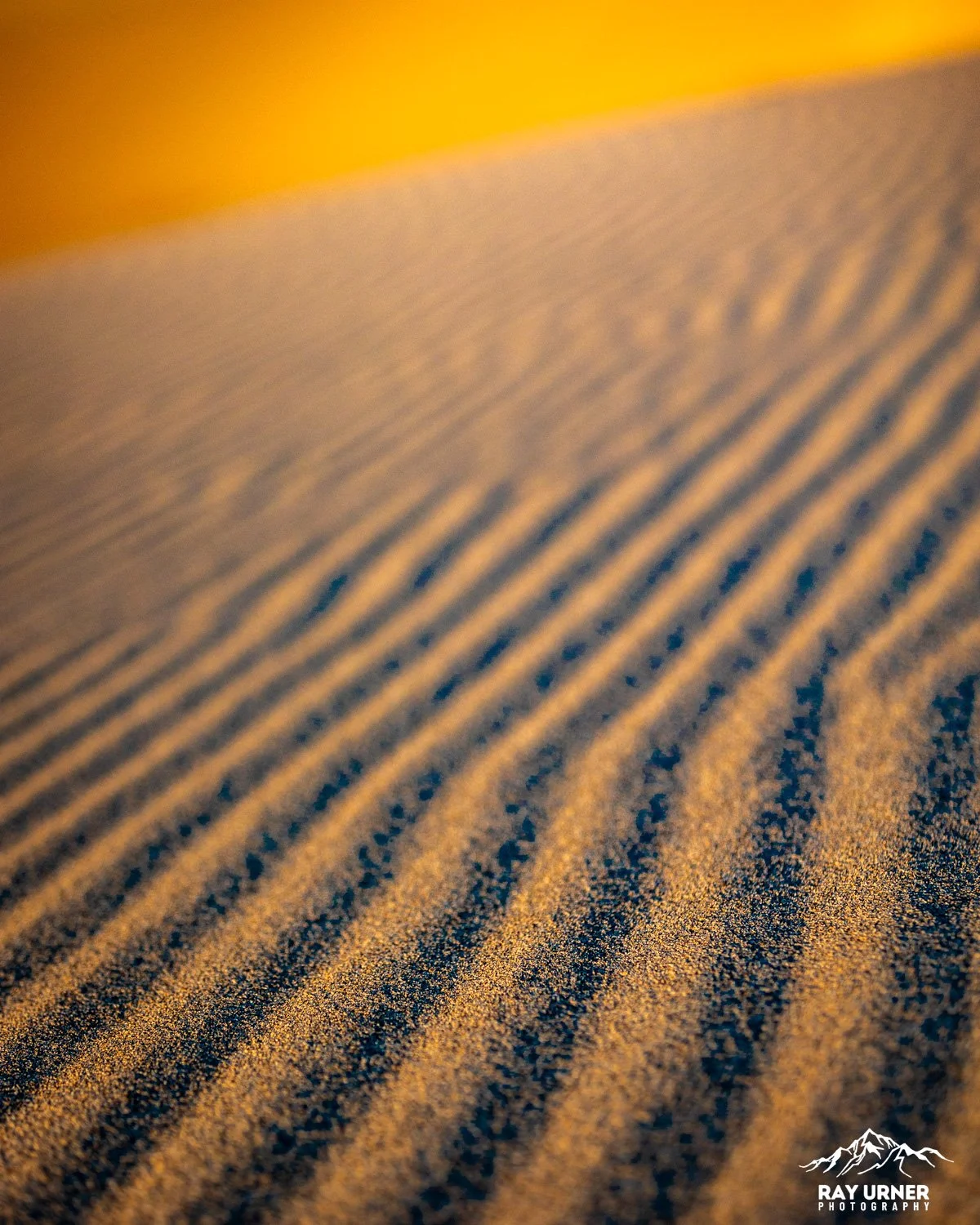
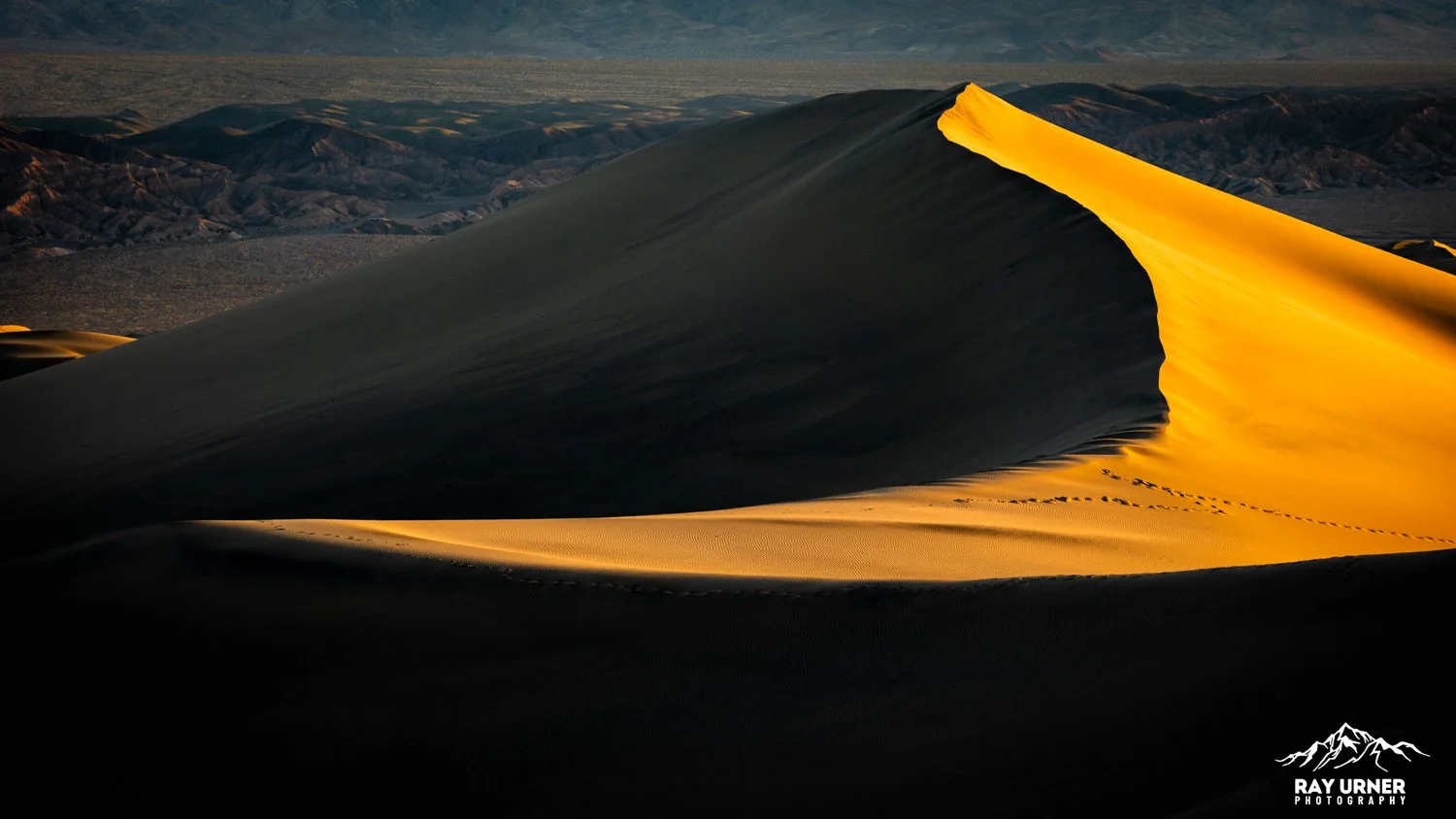
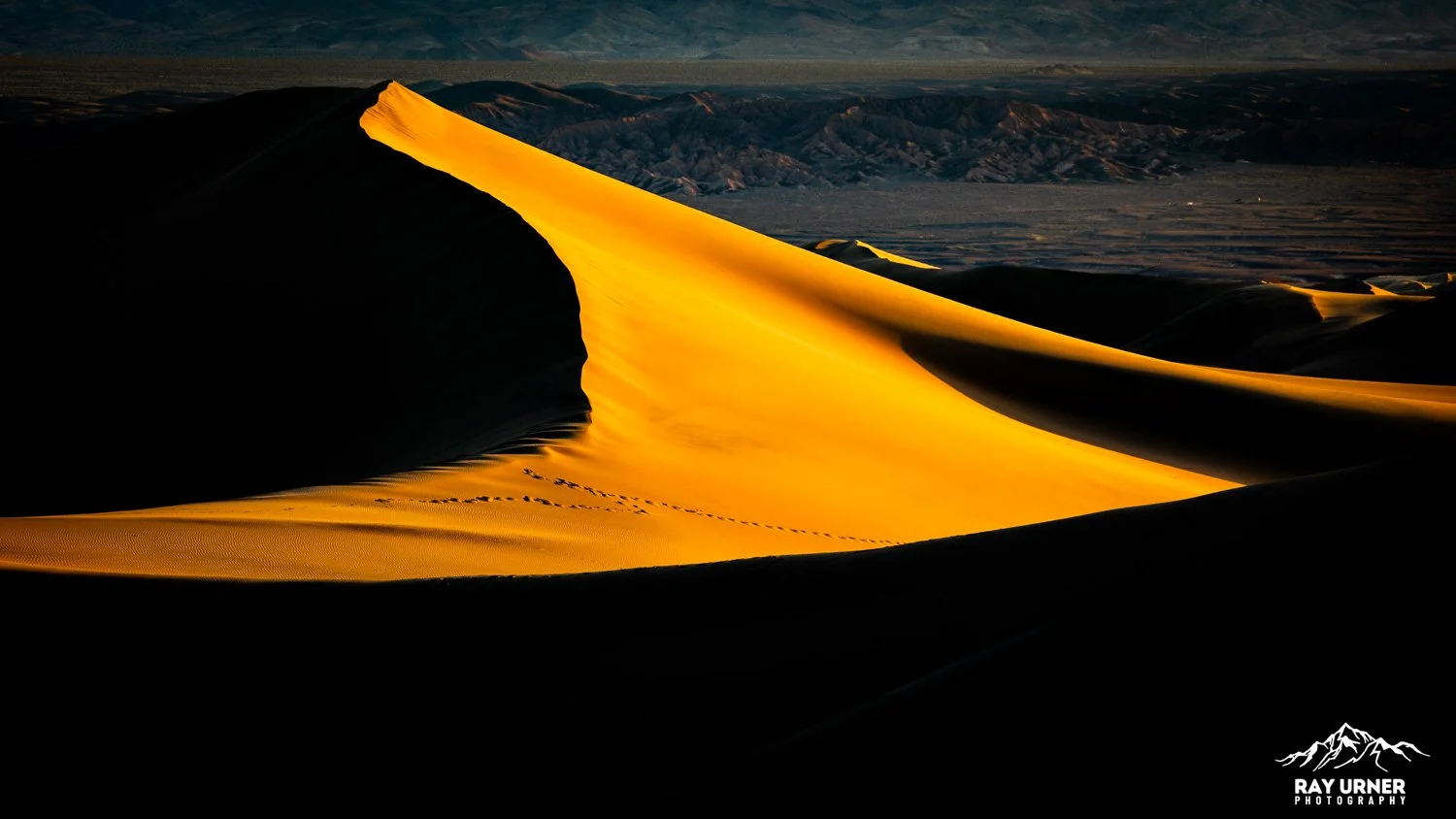
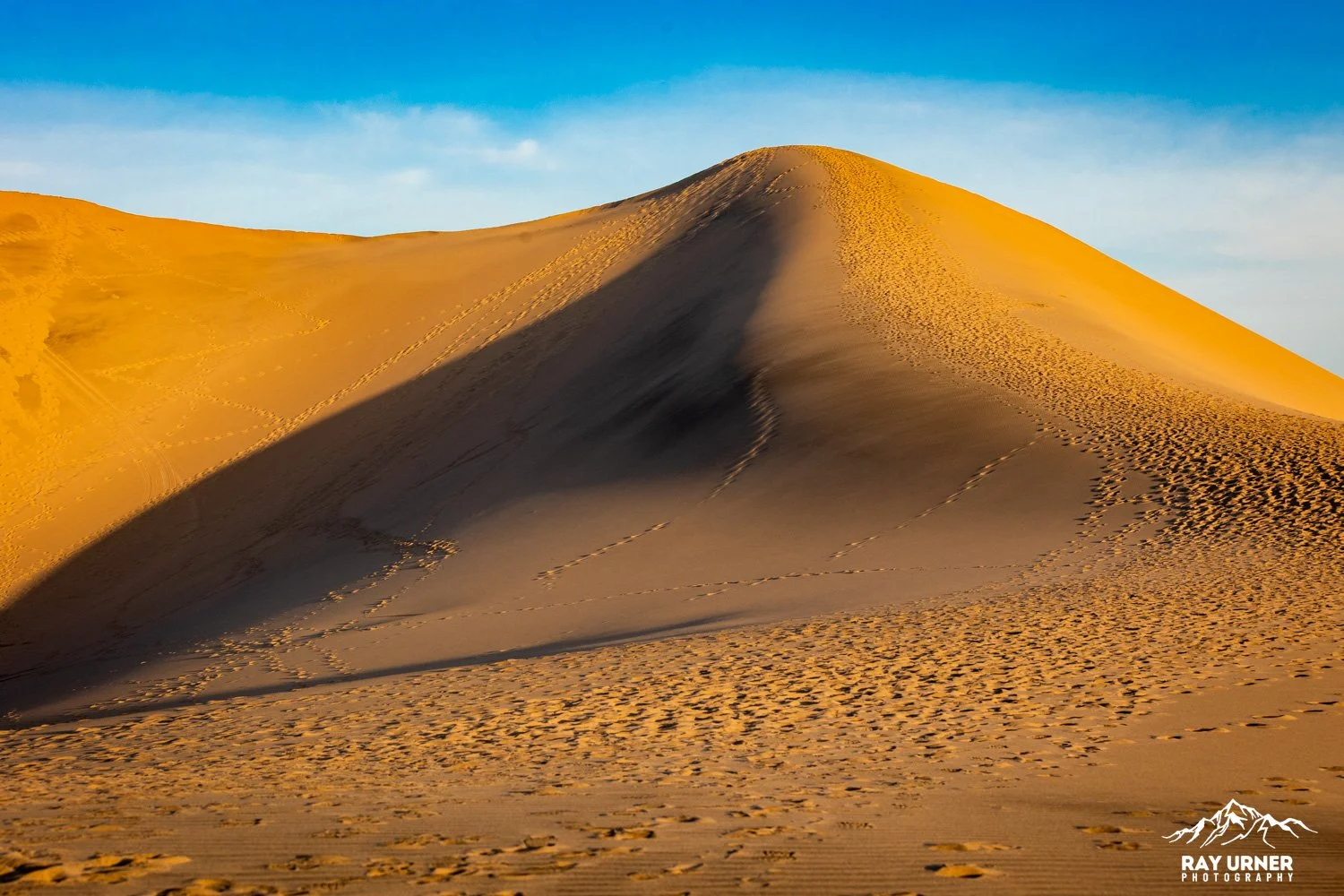
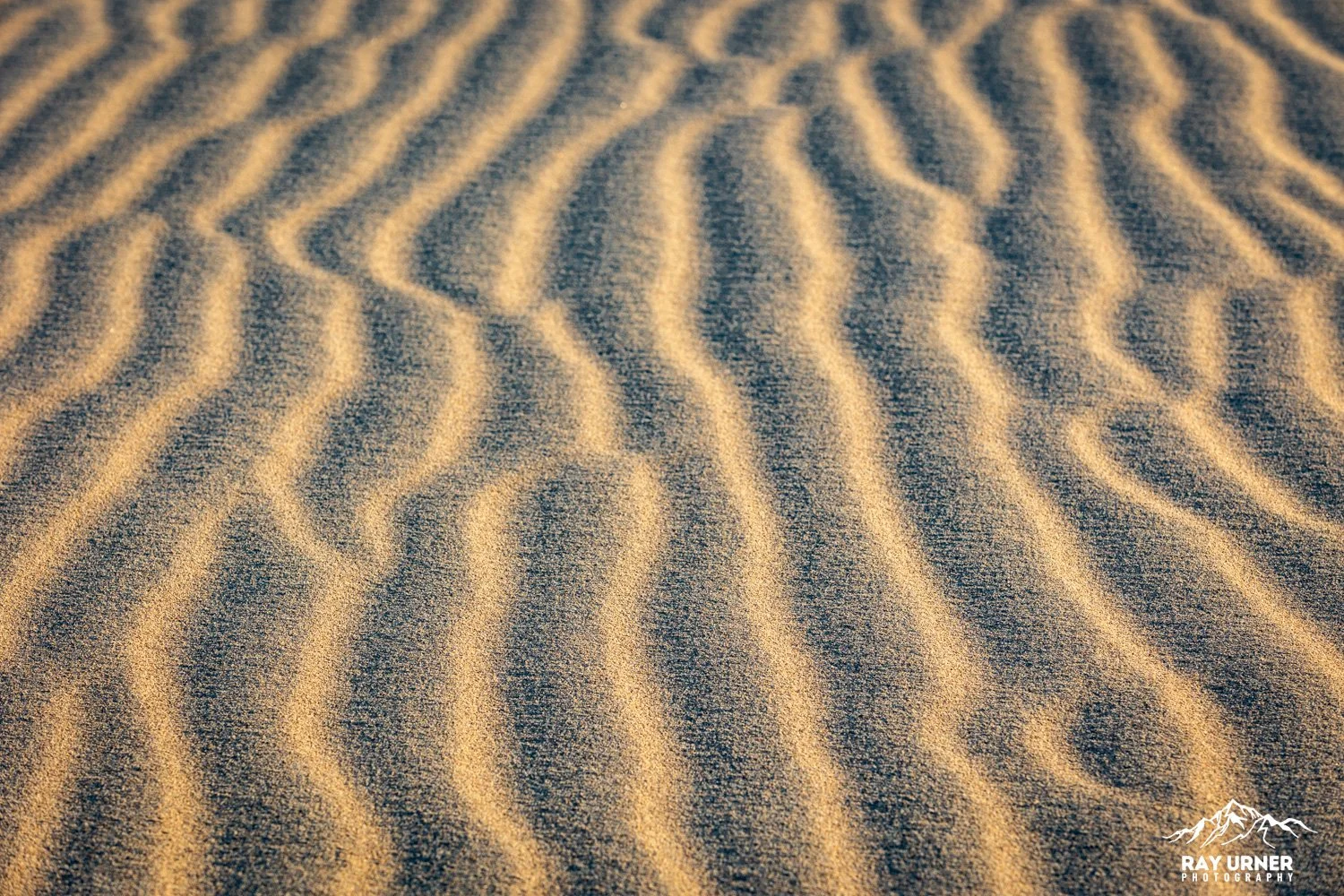
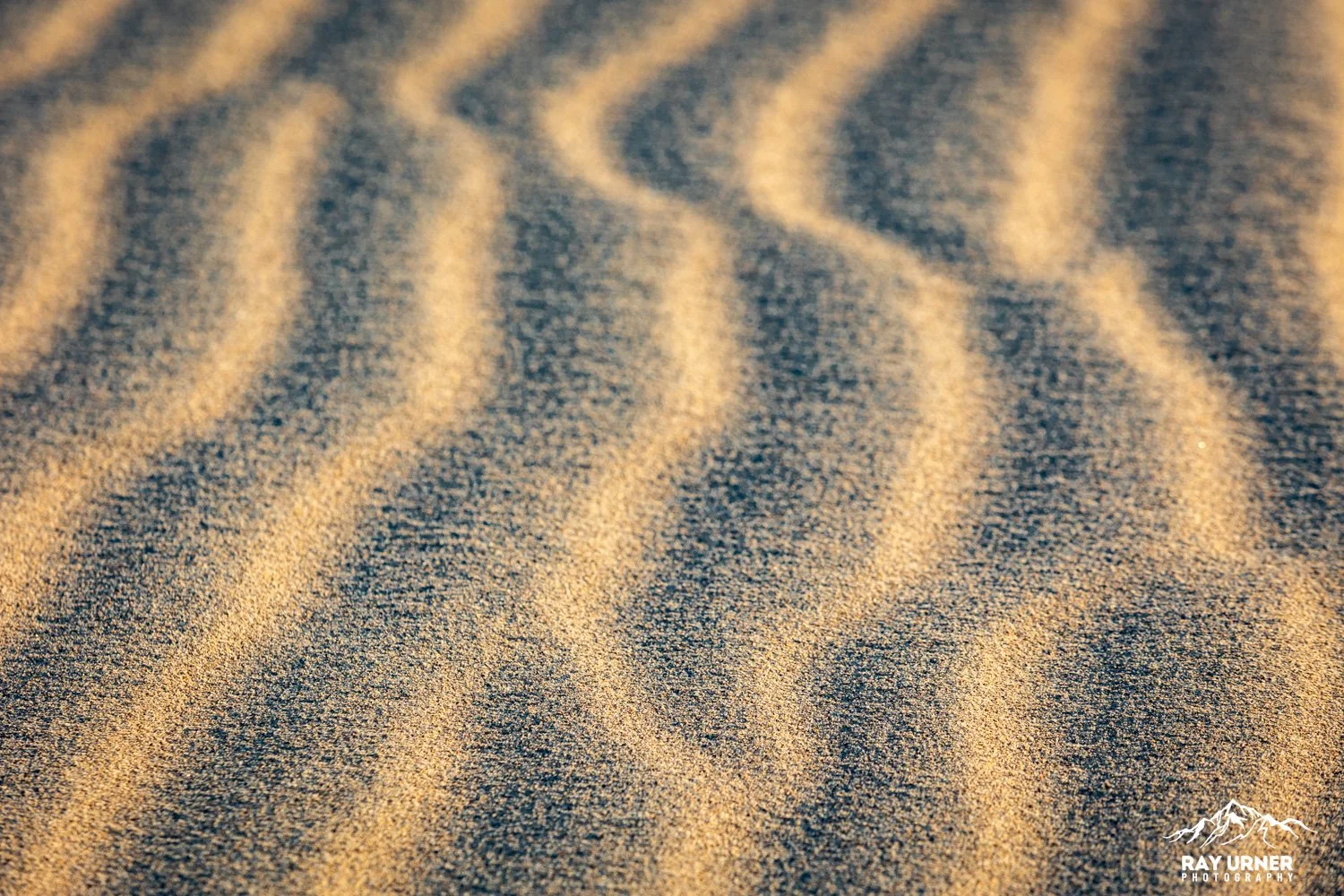
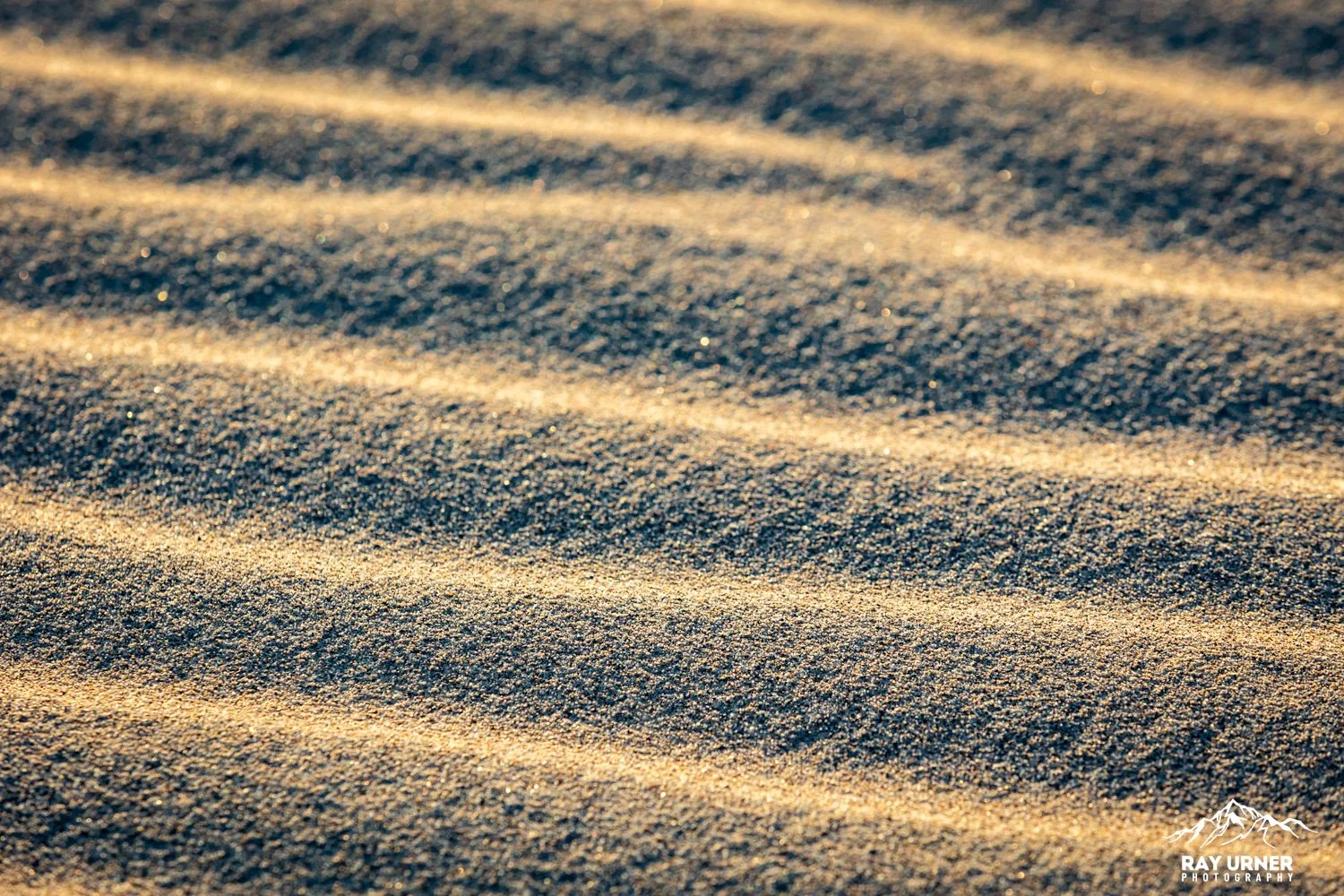
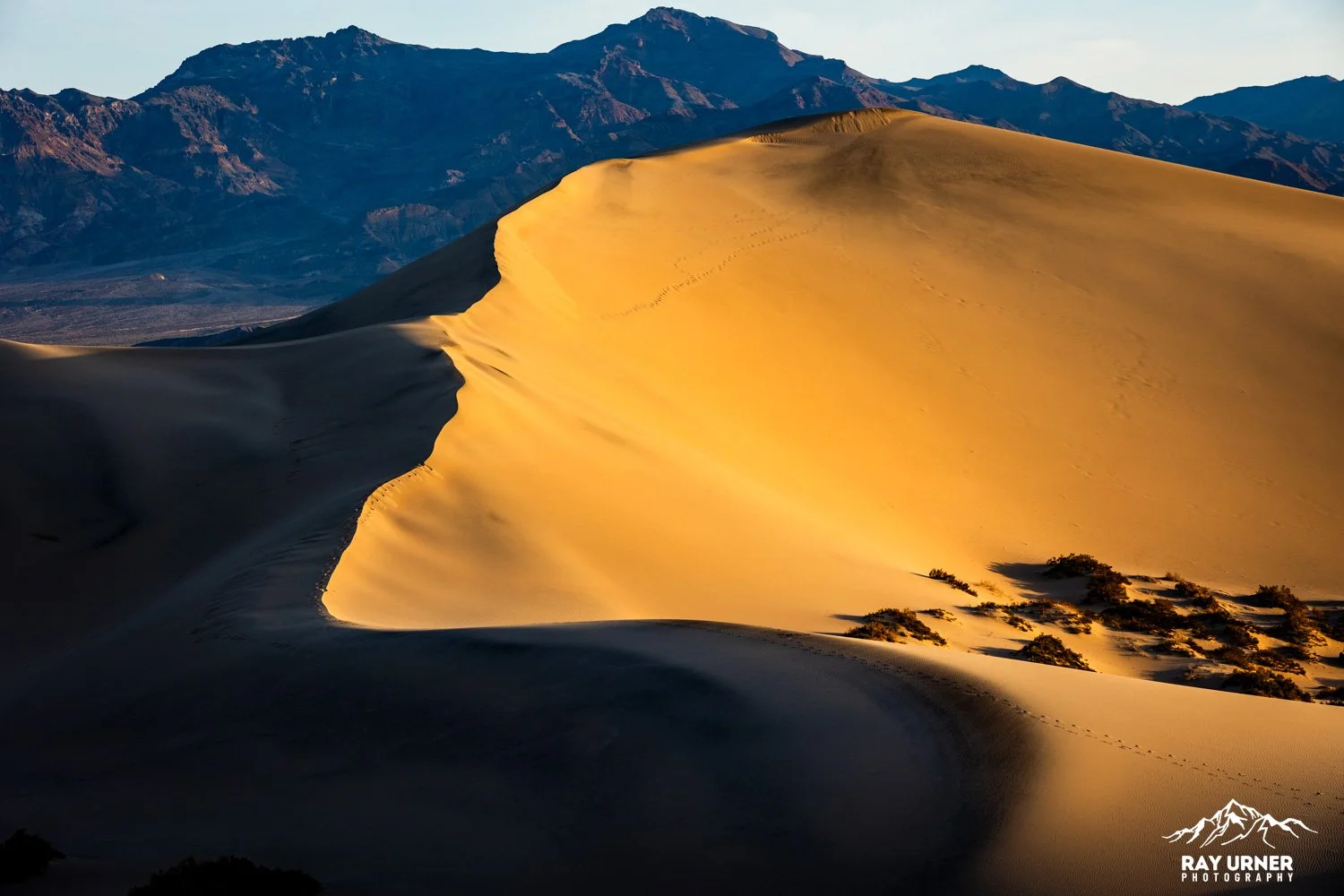
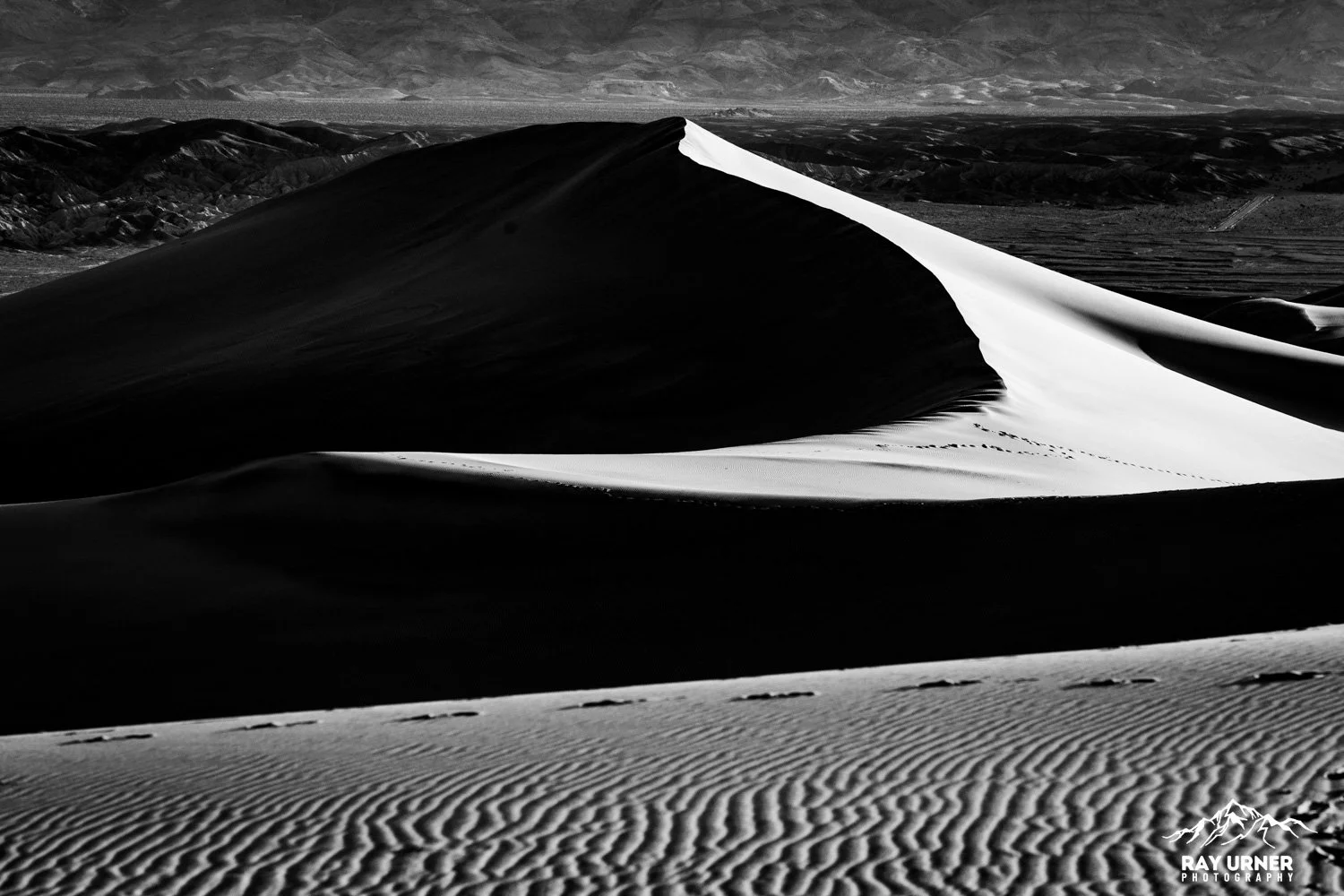
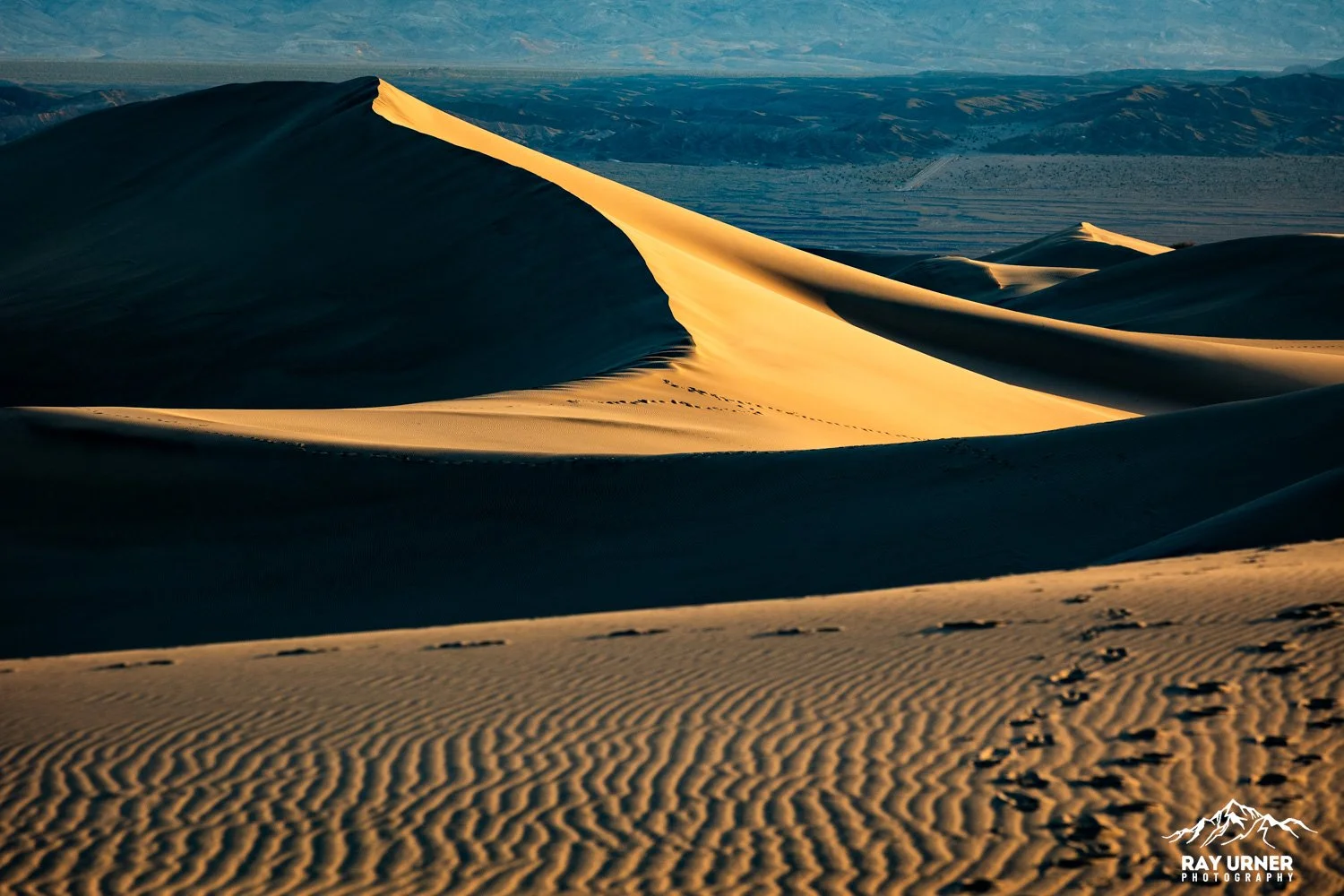
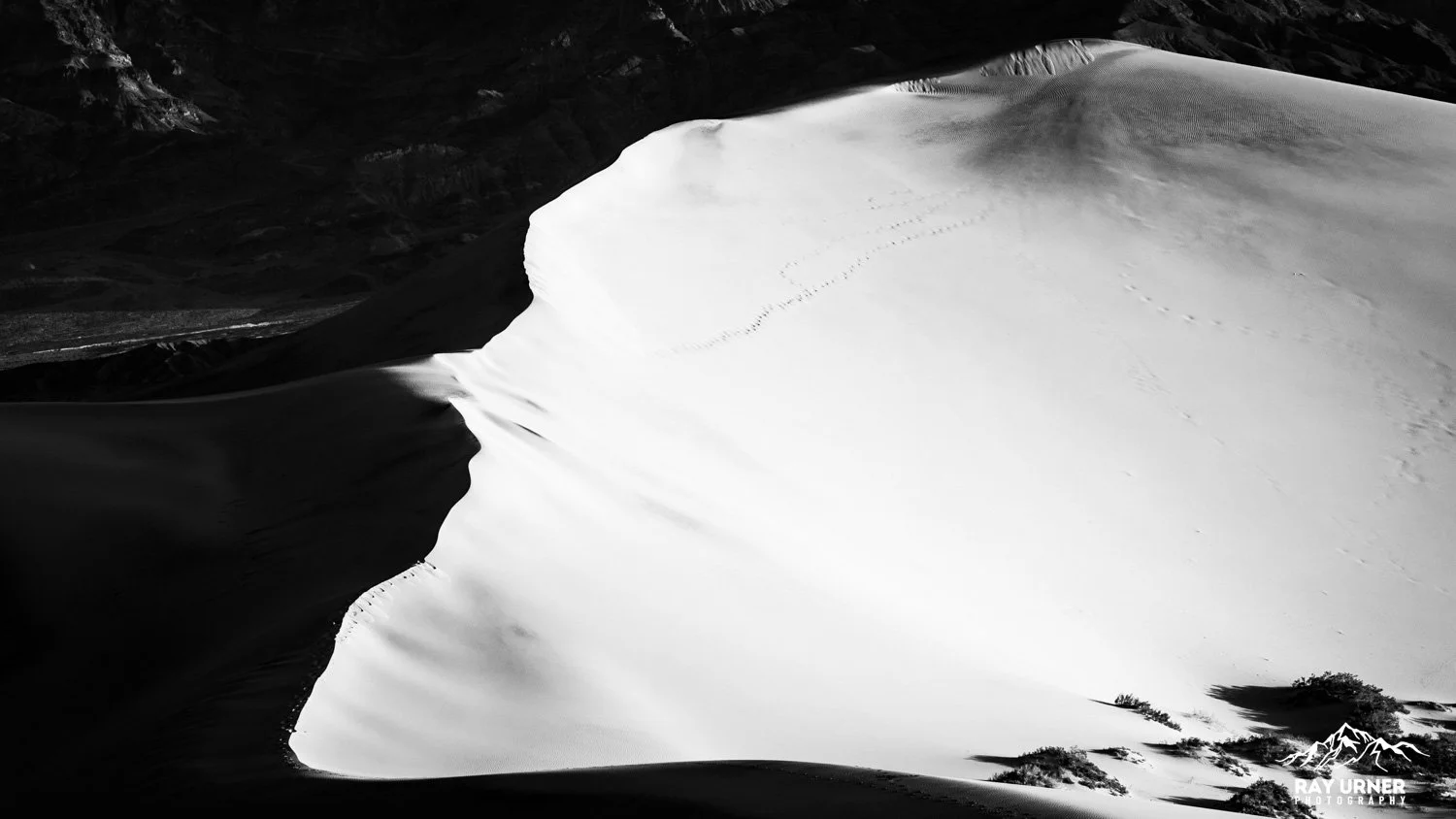
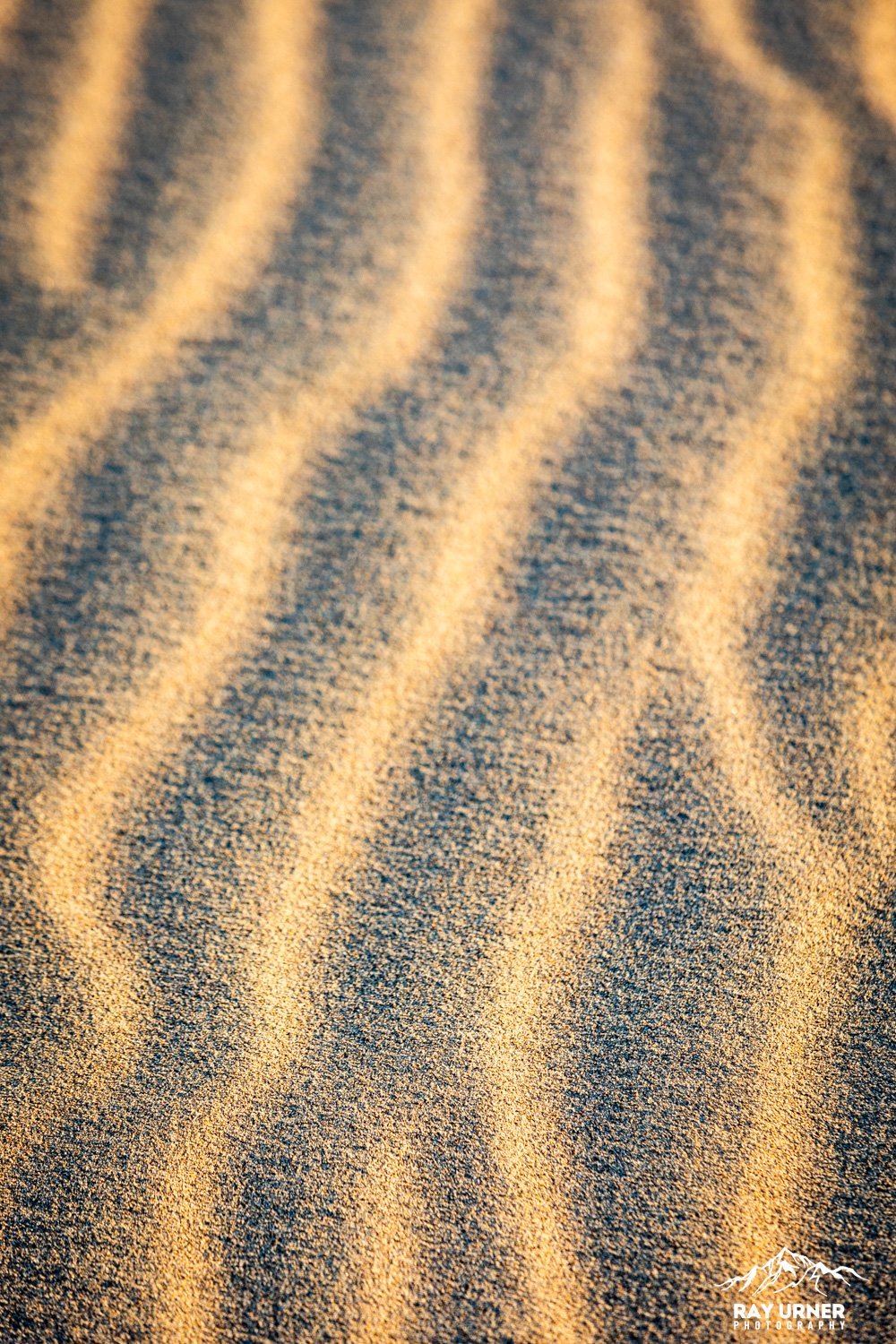
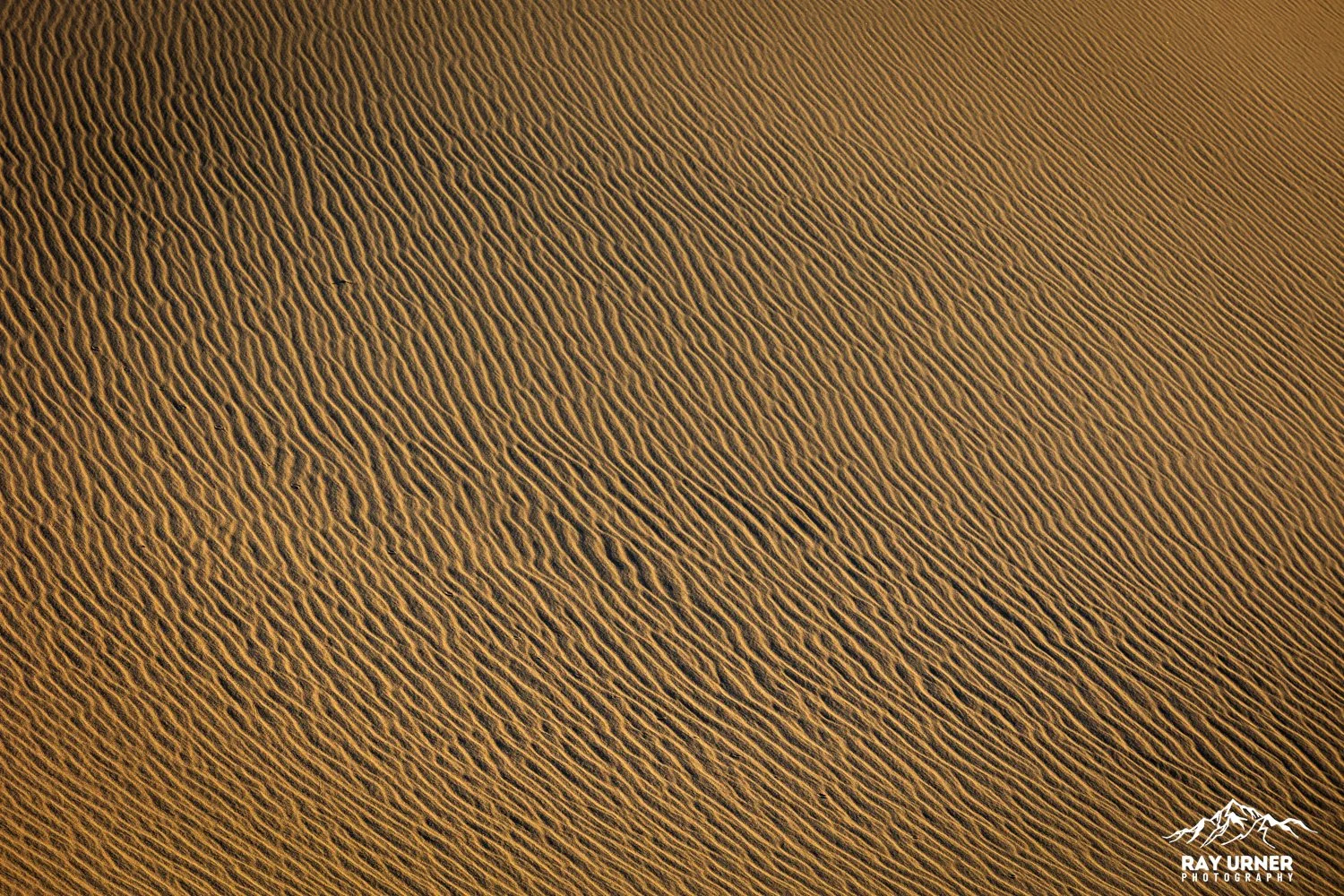
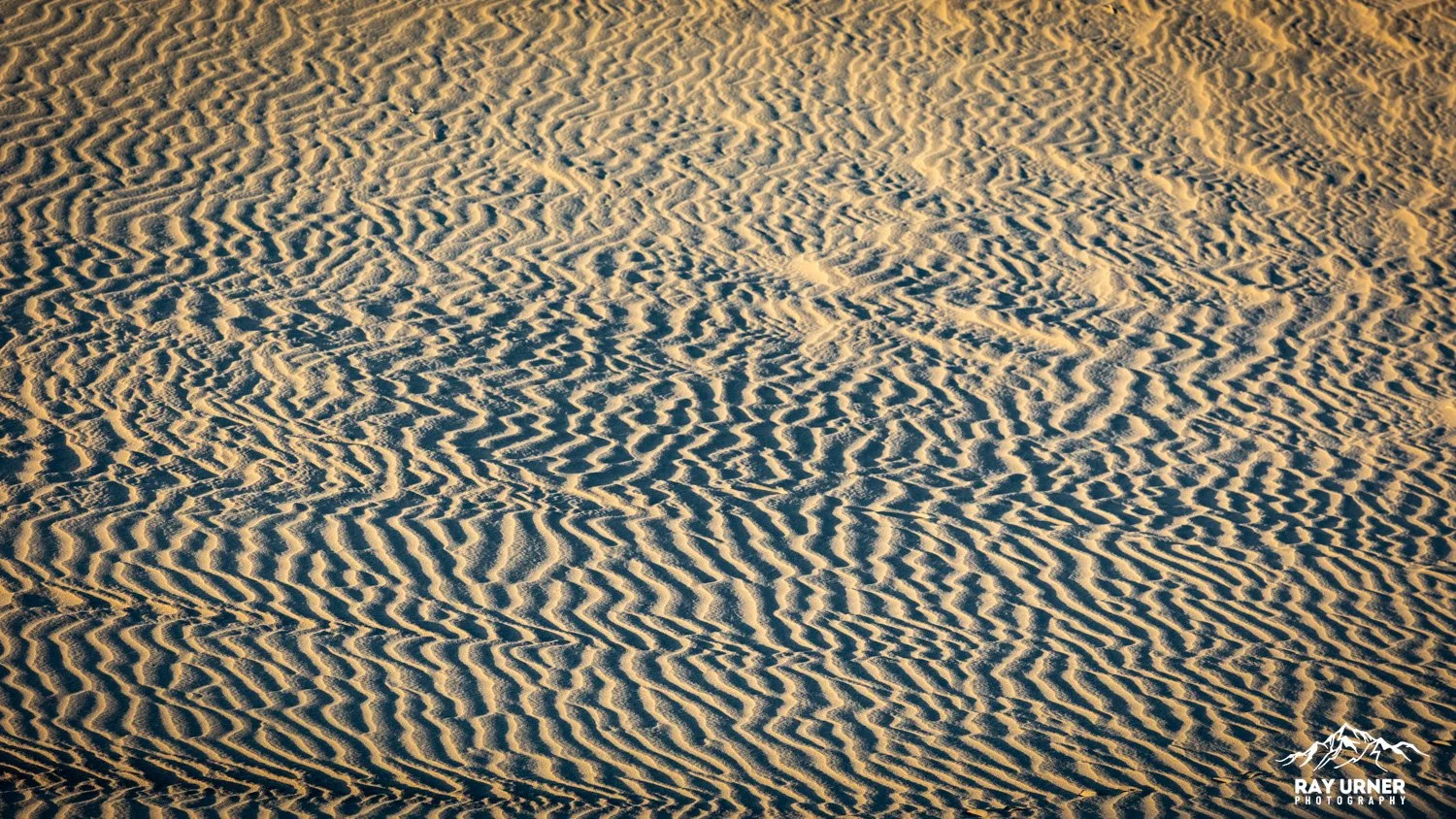
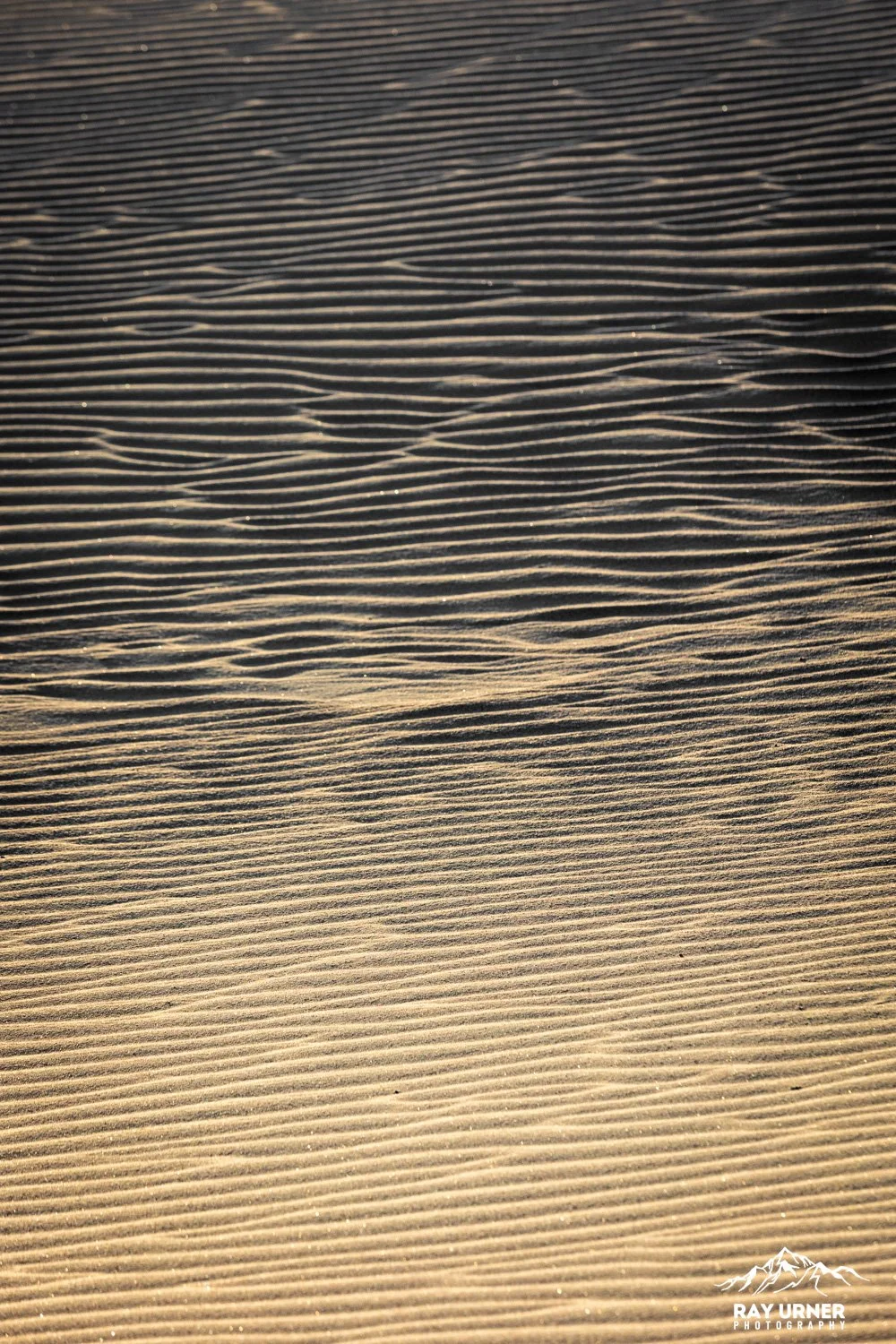
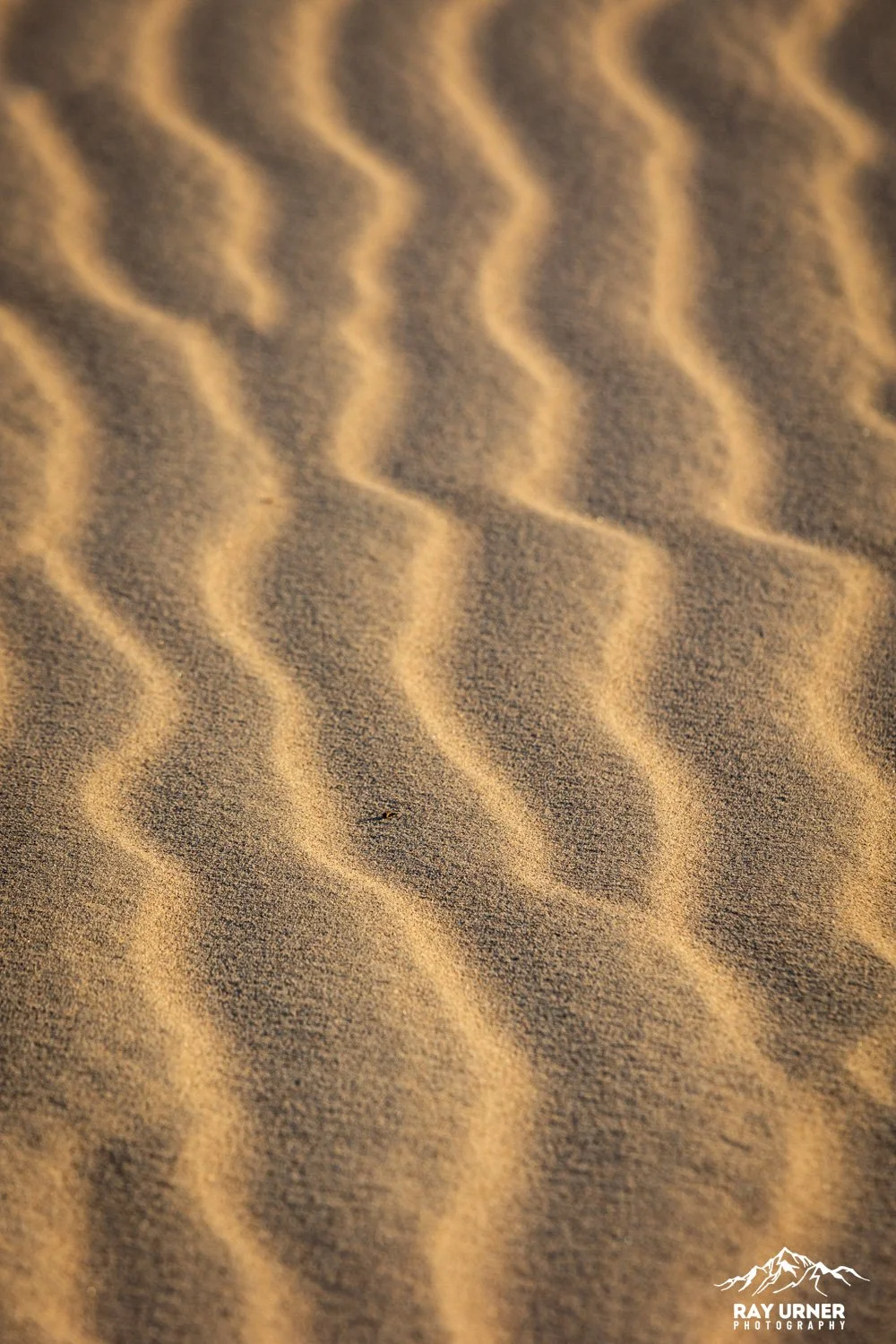
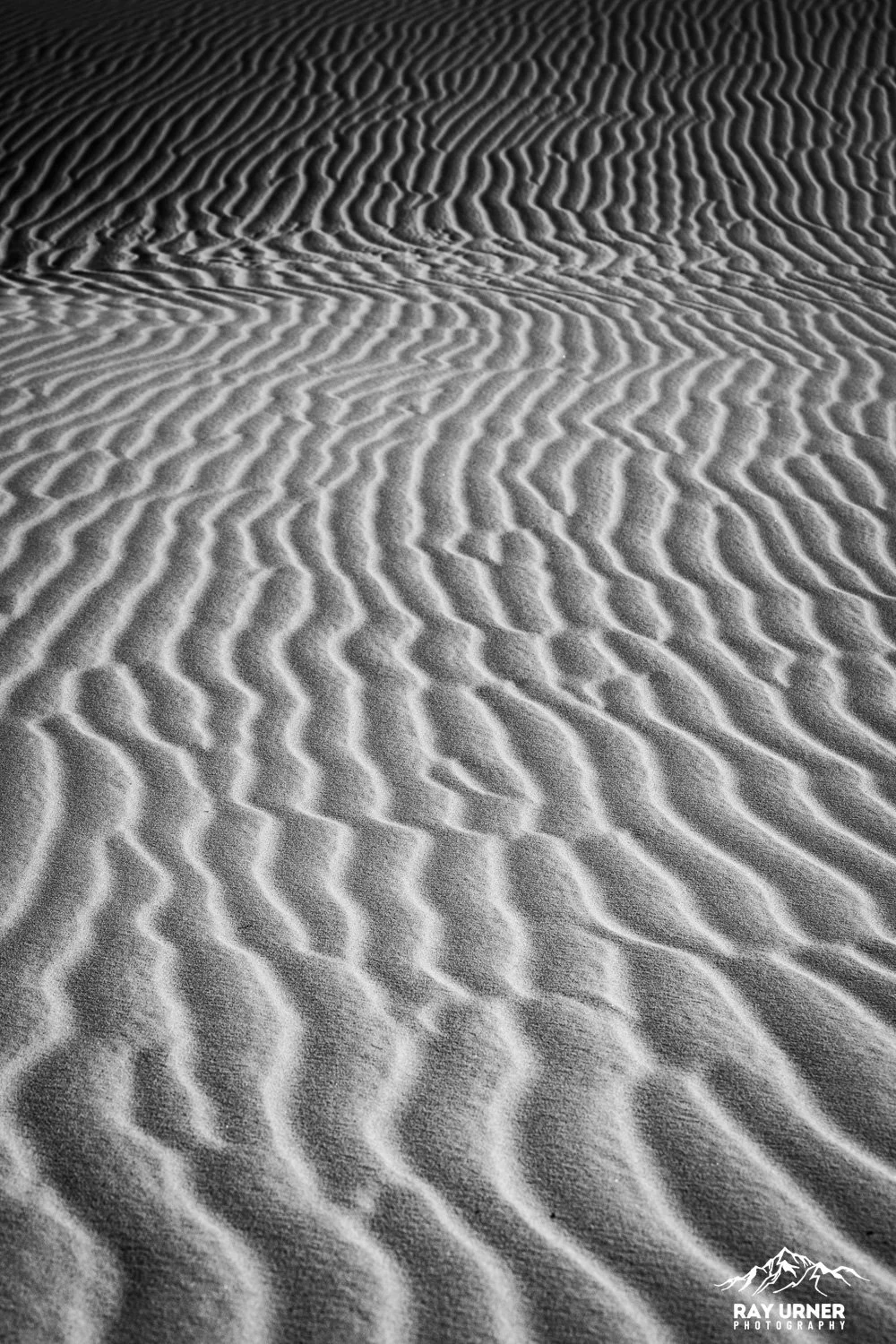
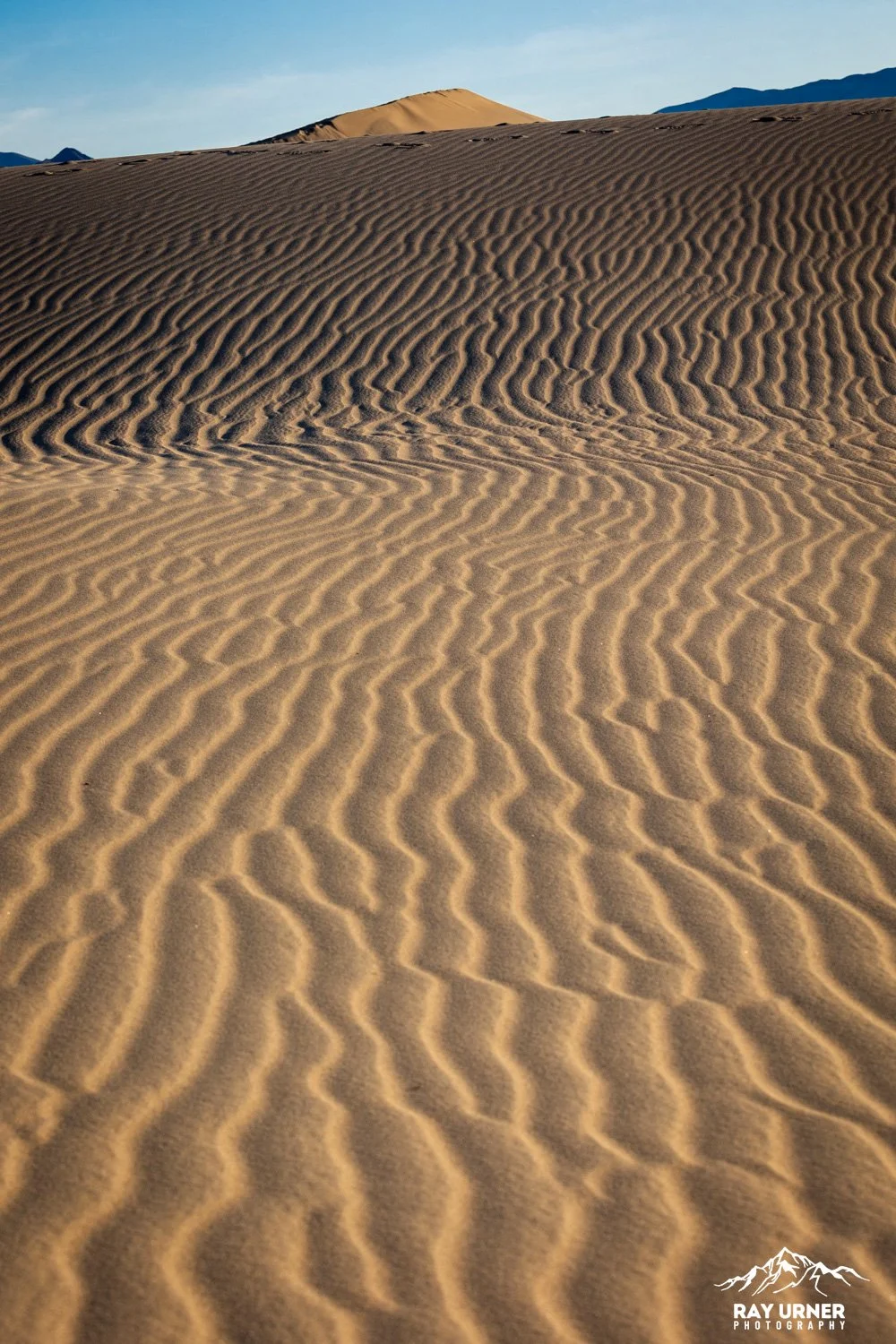
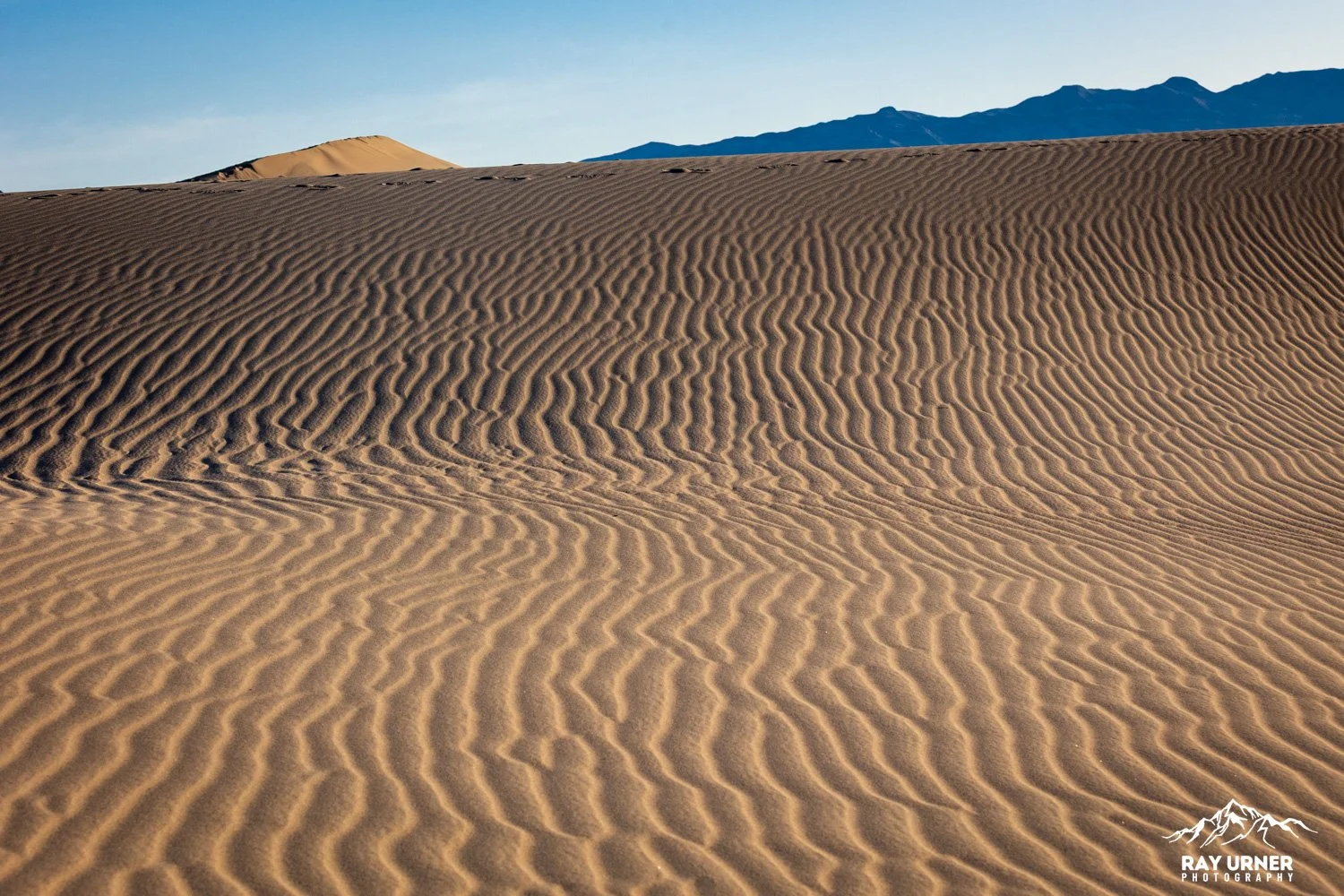
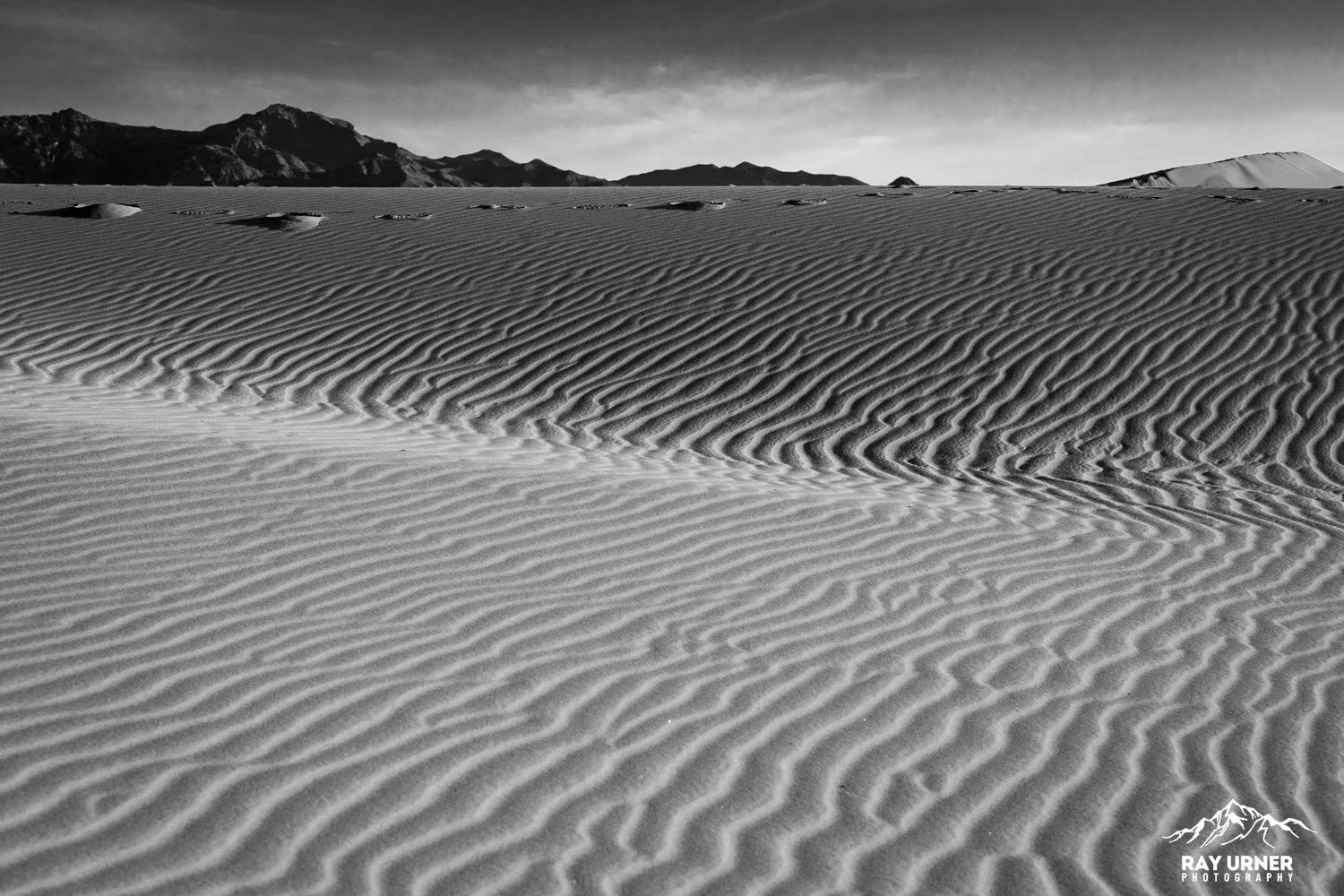
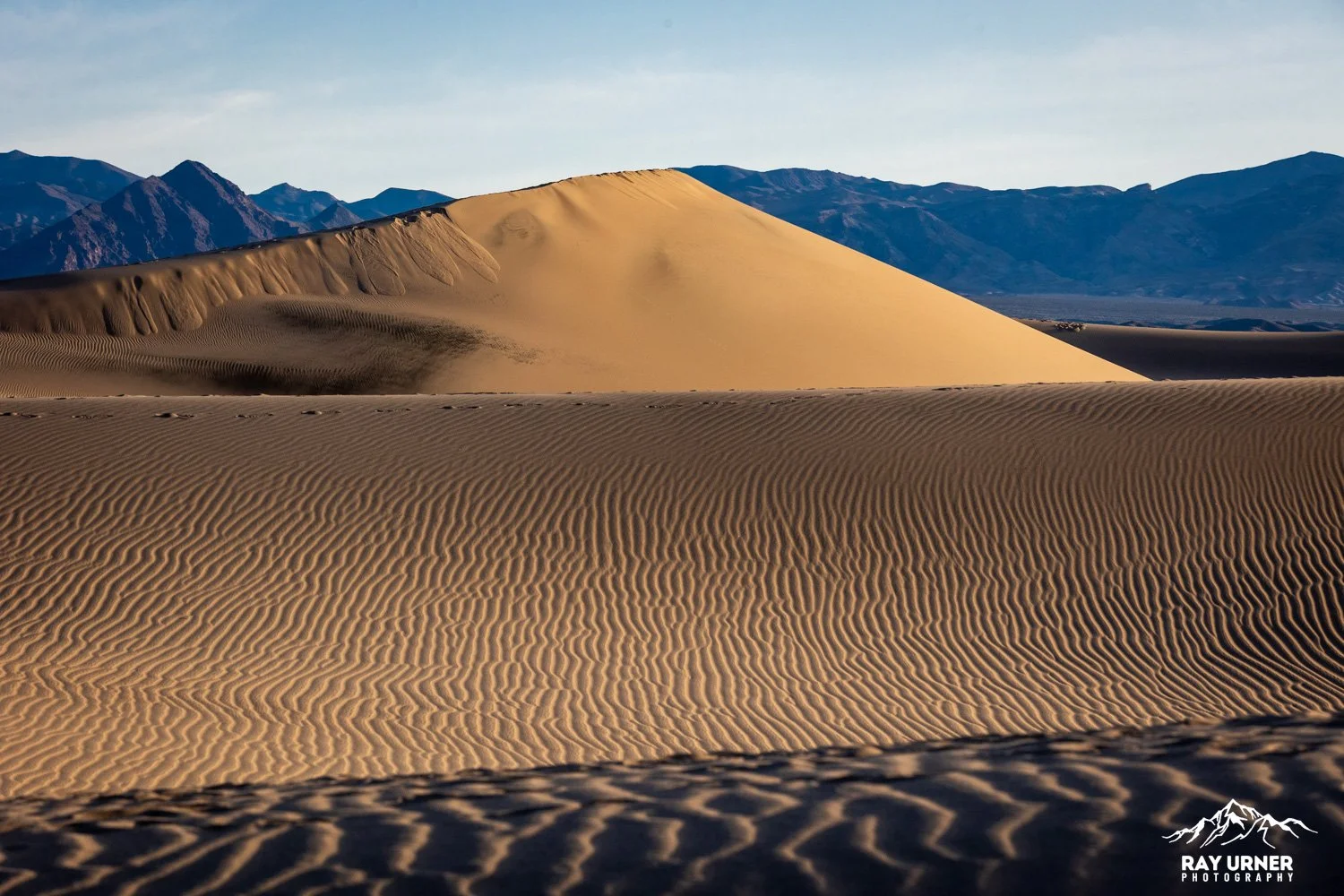
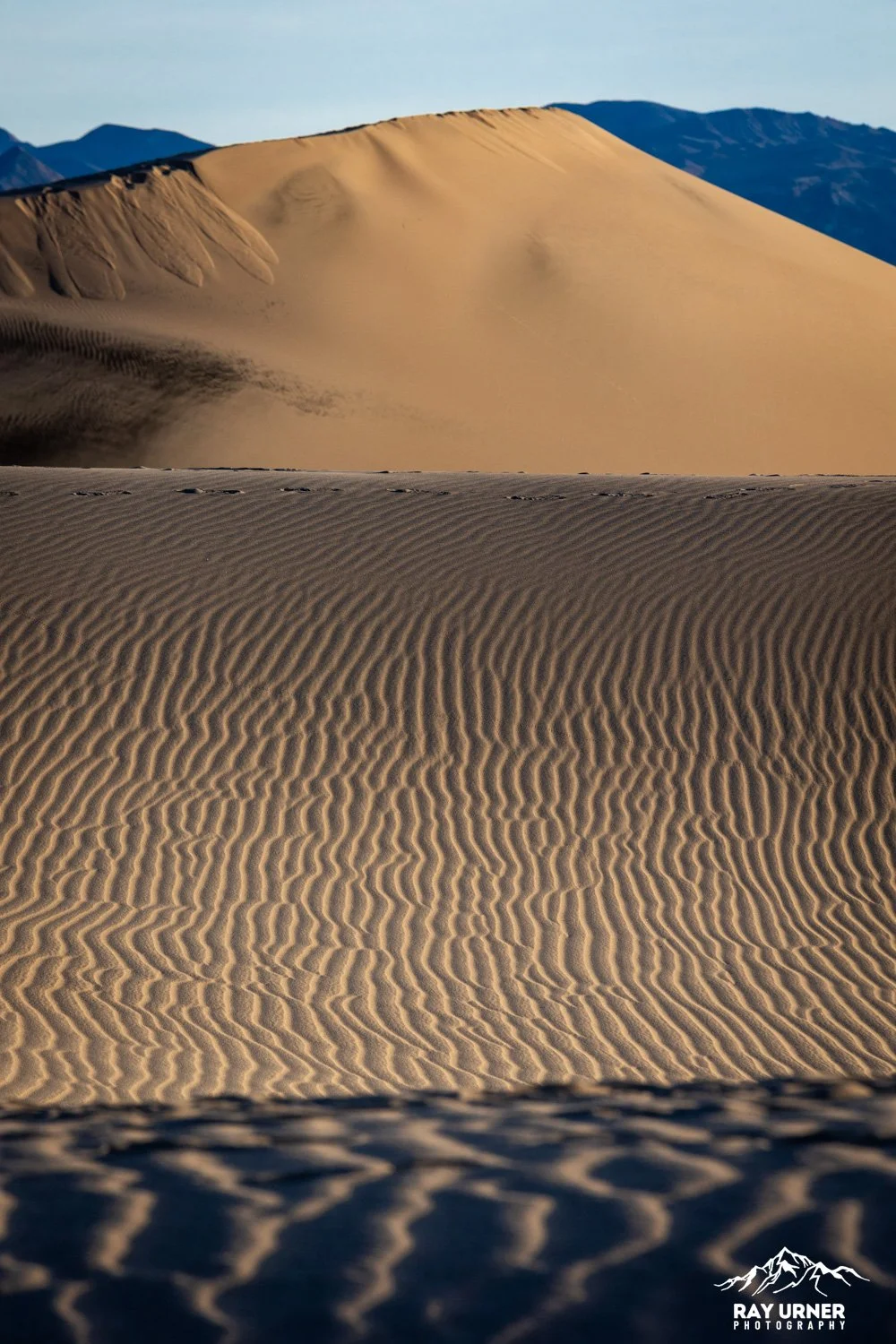
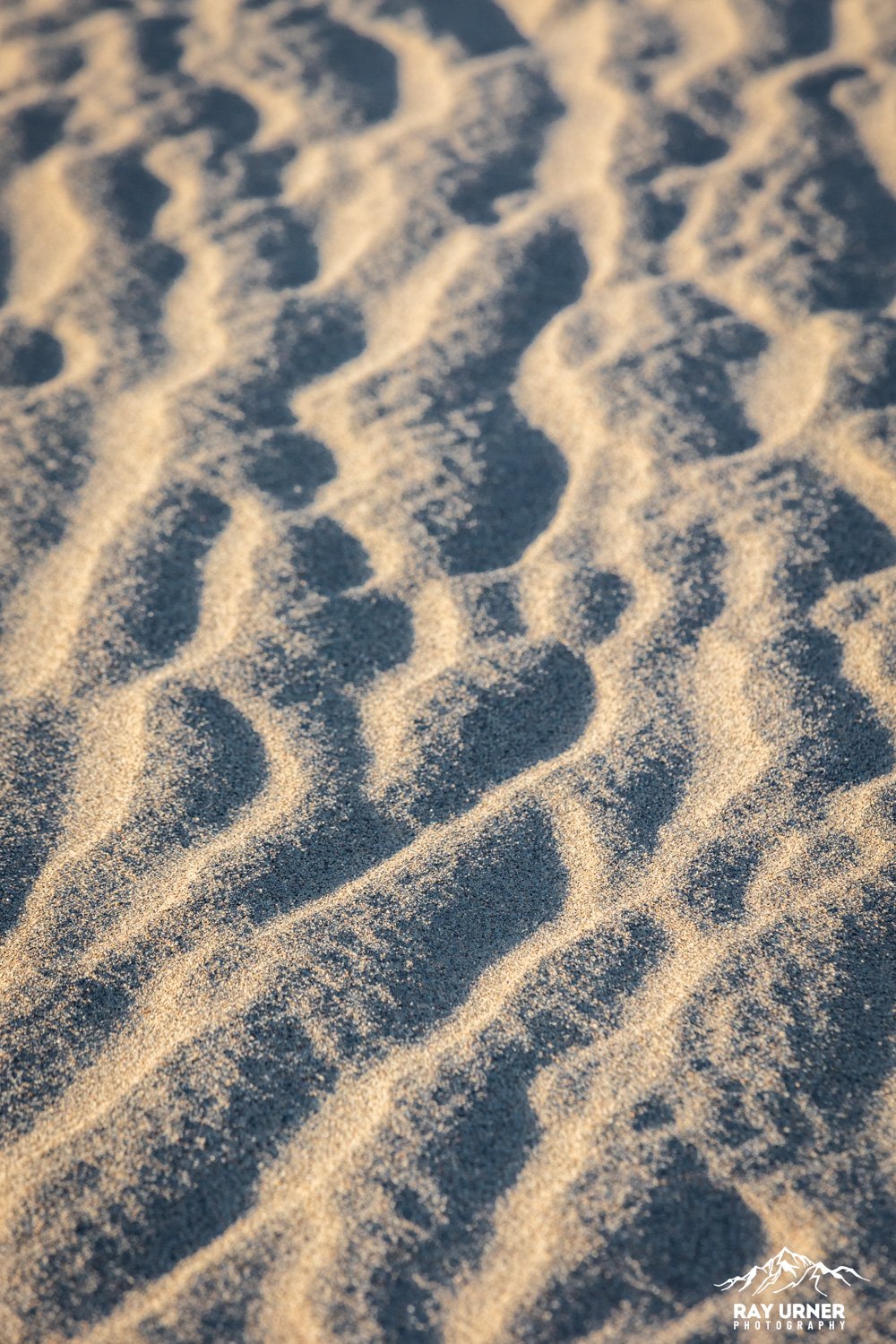
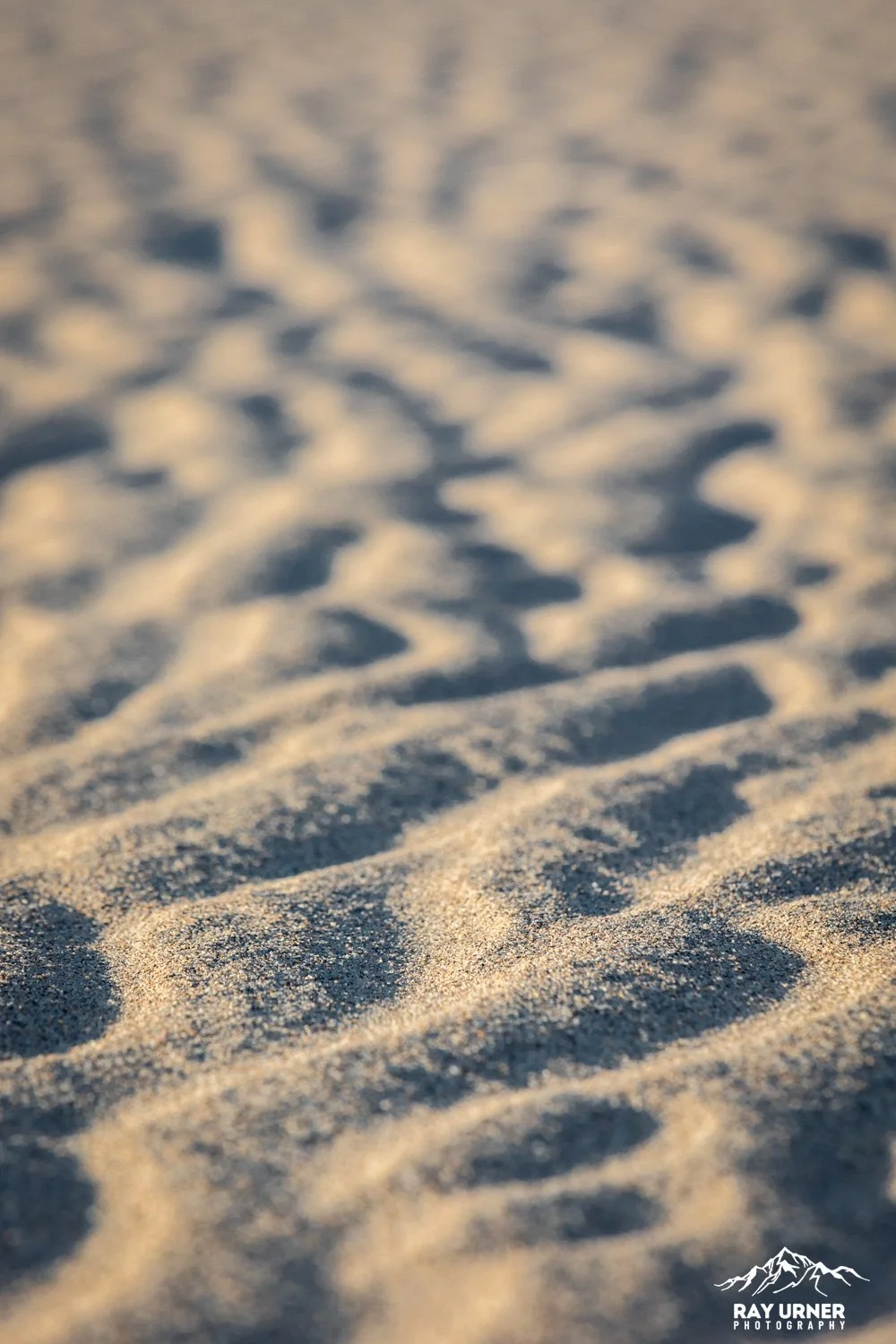
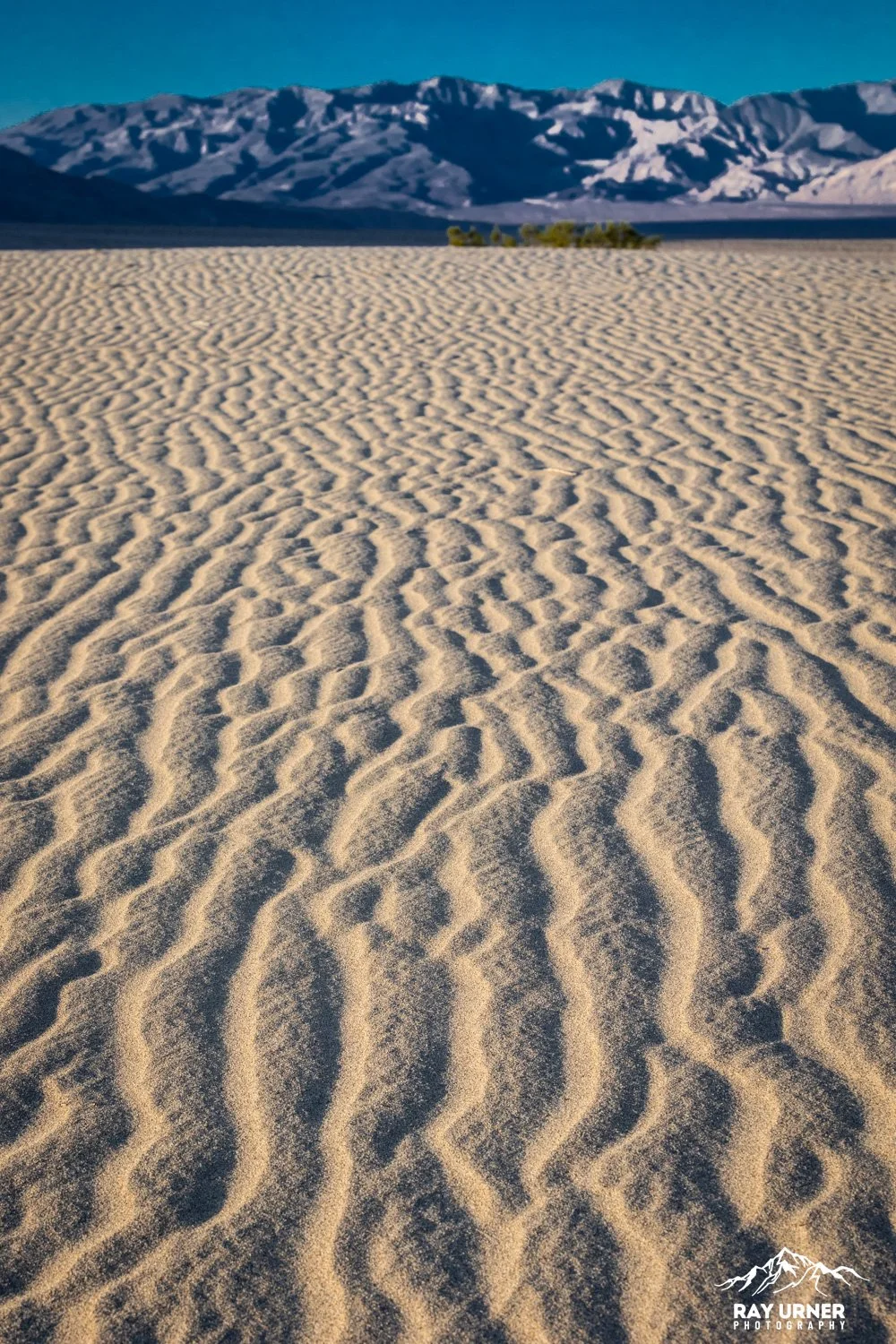
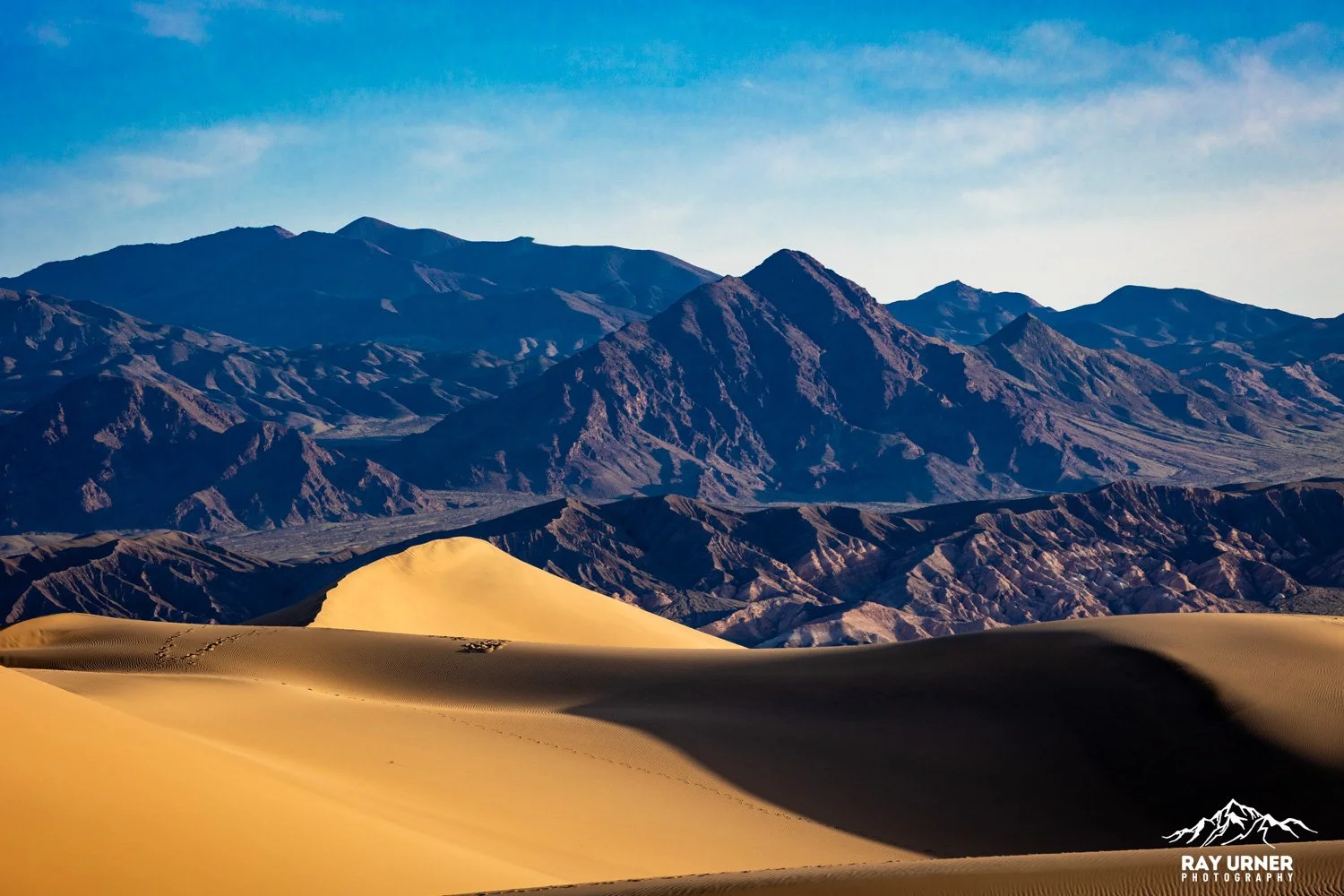
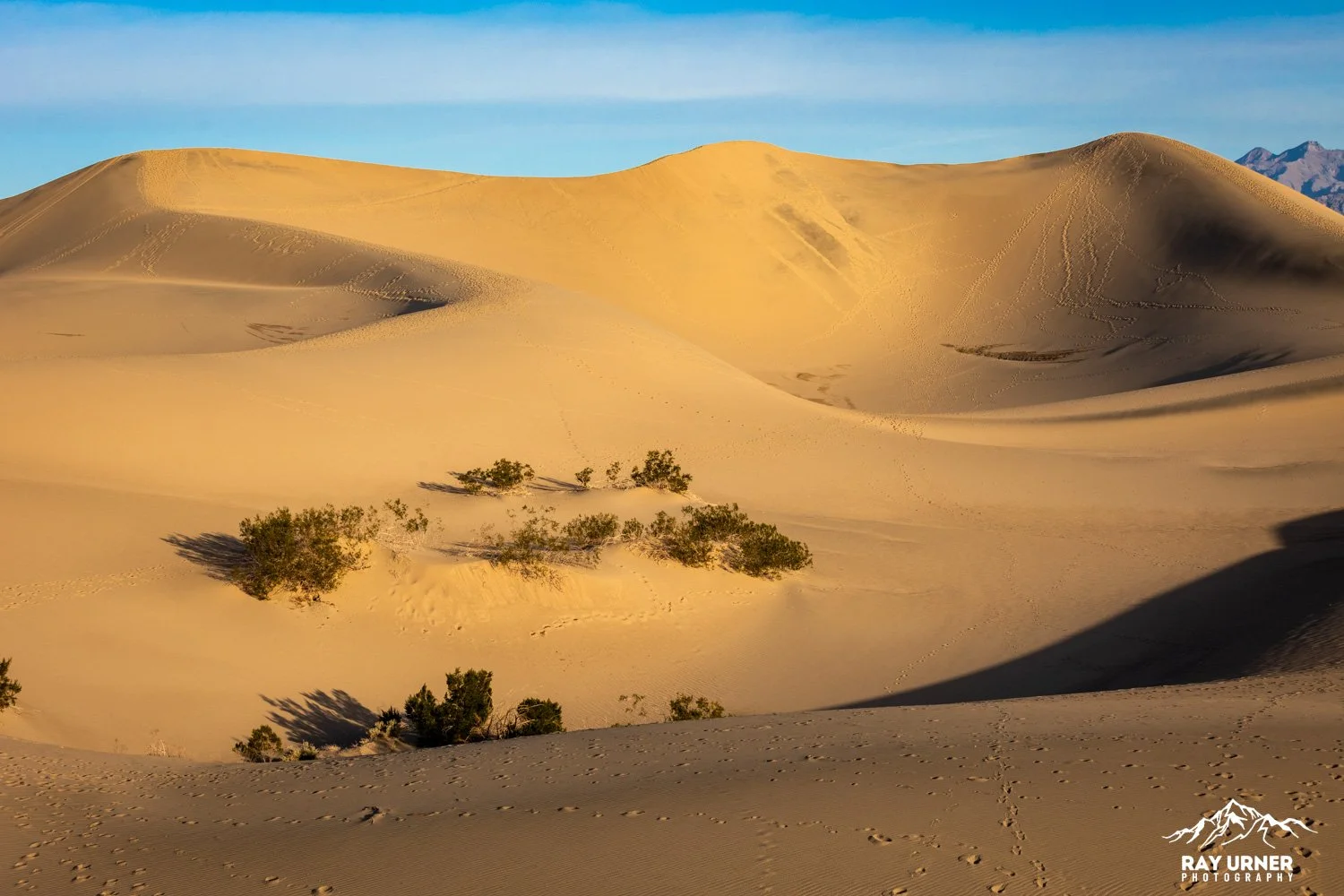
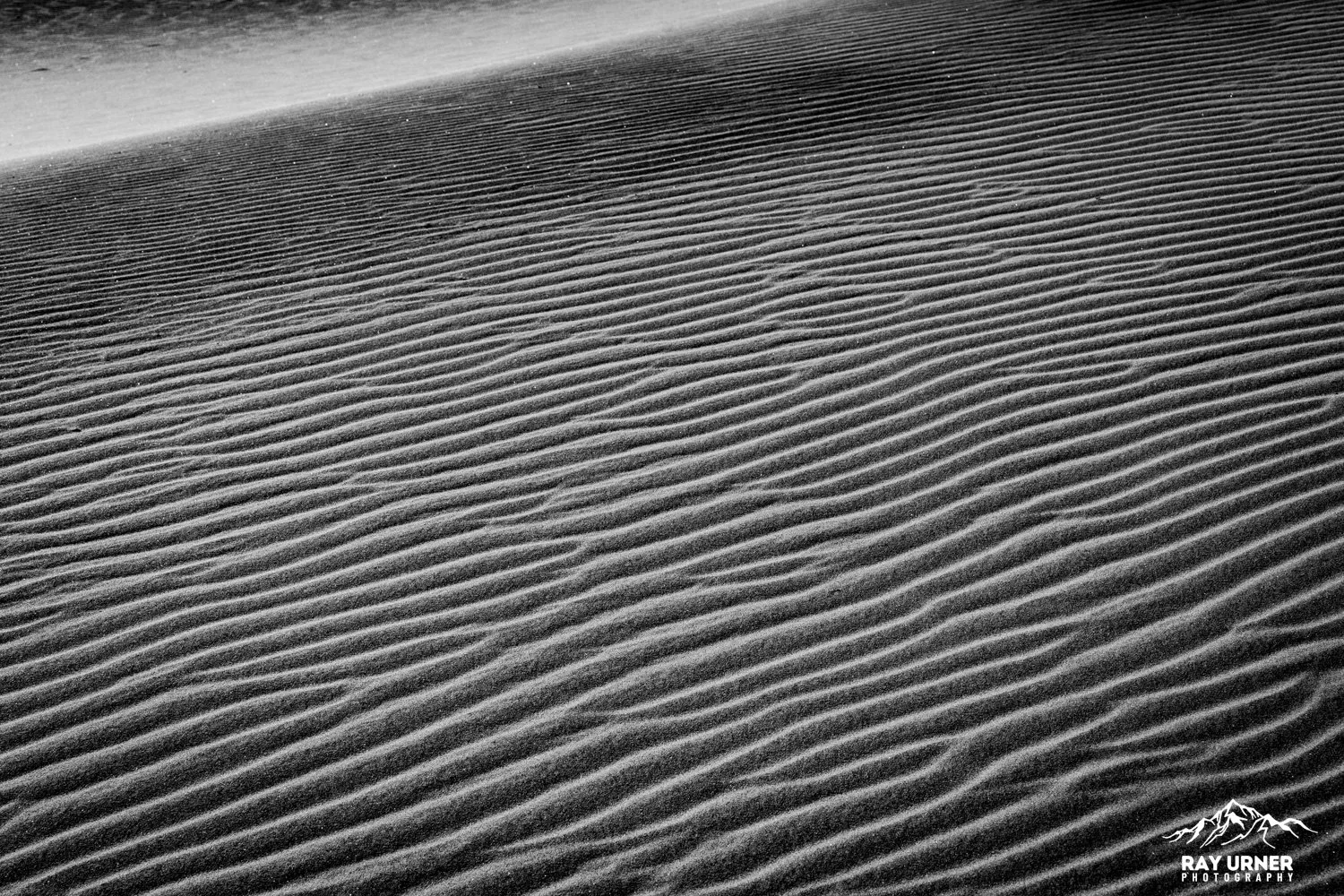
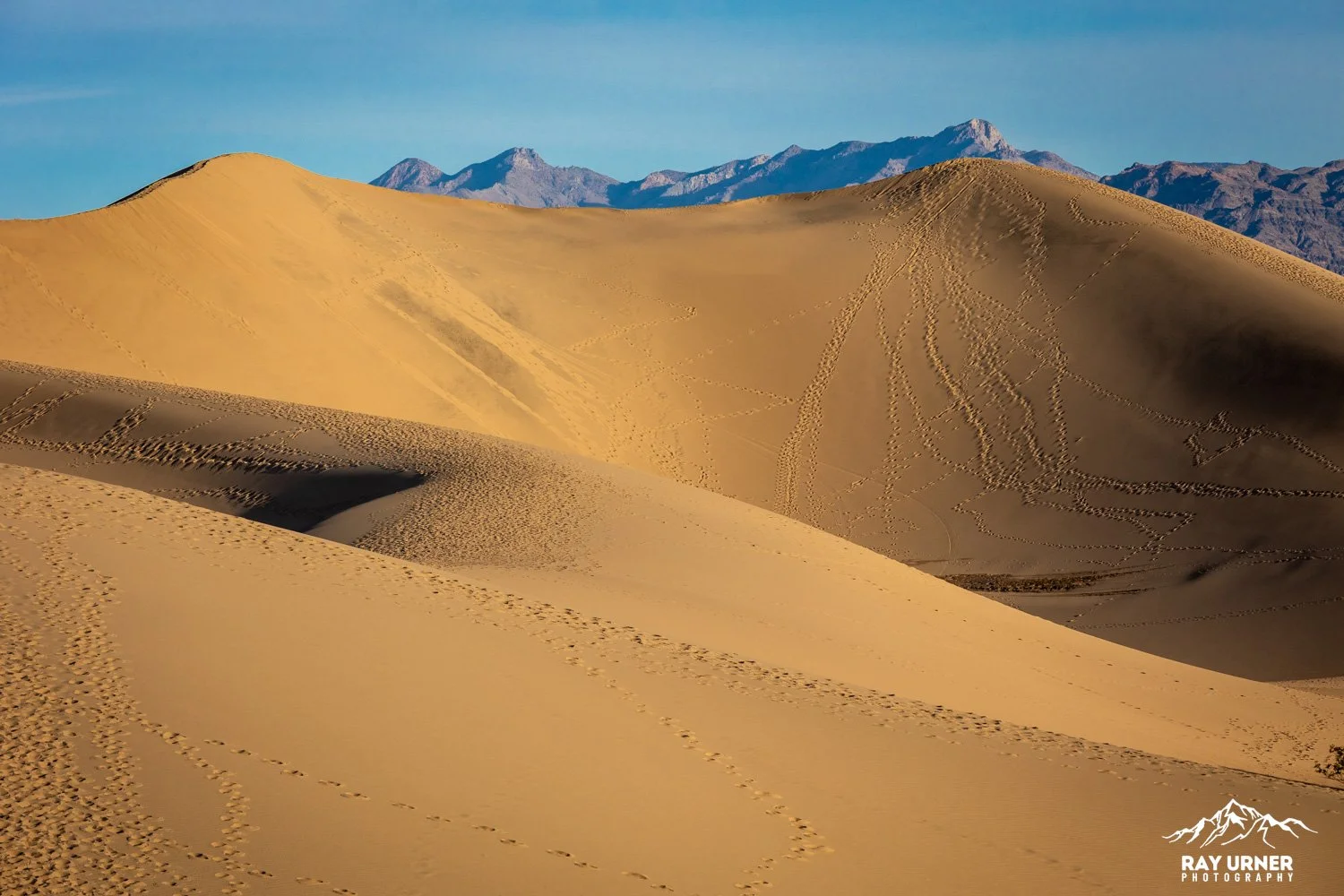
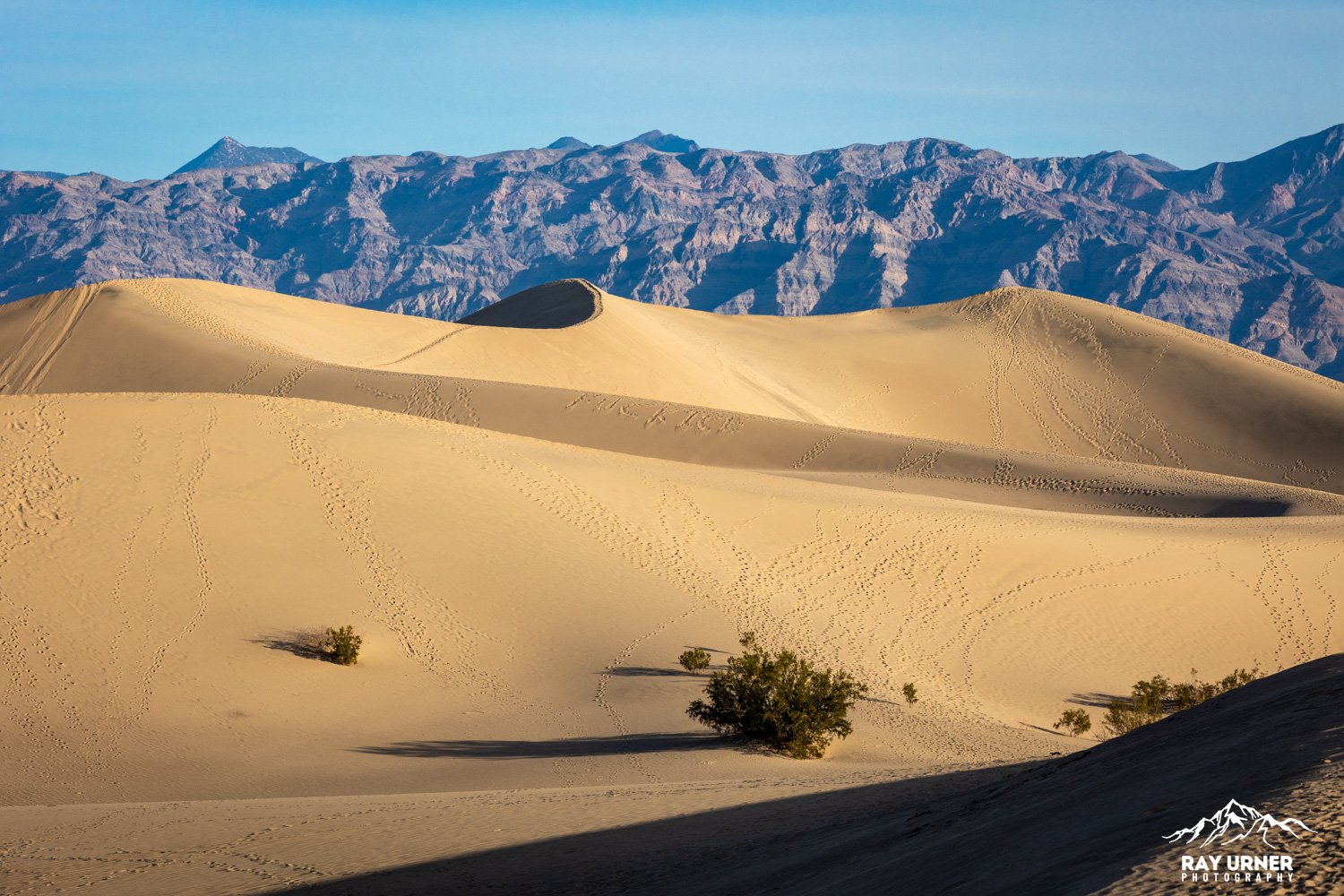
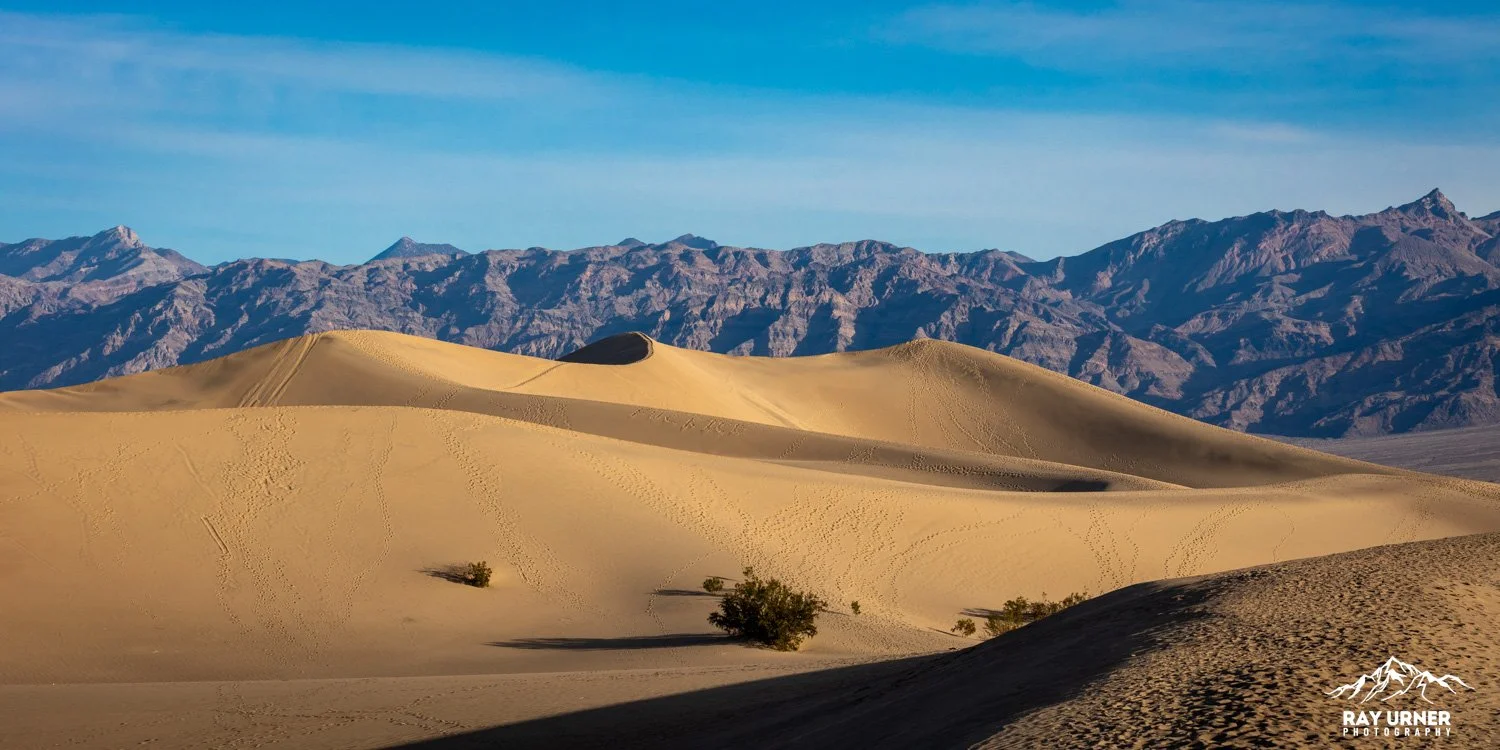
The NPS explicitly notes that at sunrise, ripples and dune edges stand out in dramatic contrast thanks to low‑angle light.
Photographers widely consider Mesquite Dunes to be one of the best sunrise locations in Death Valley.
What to Expect
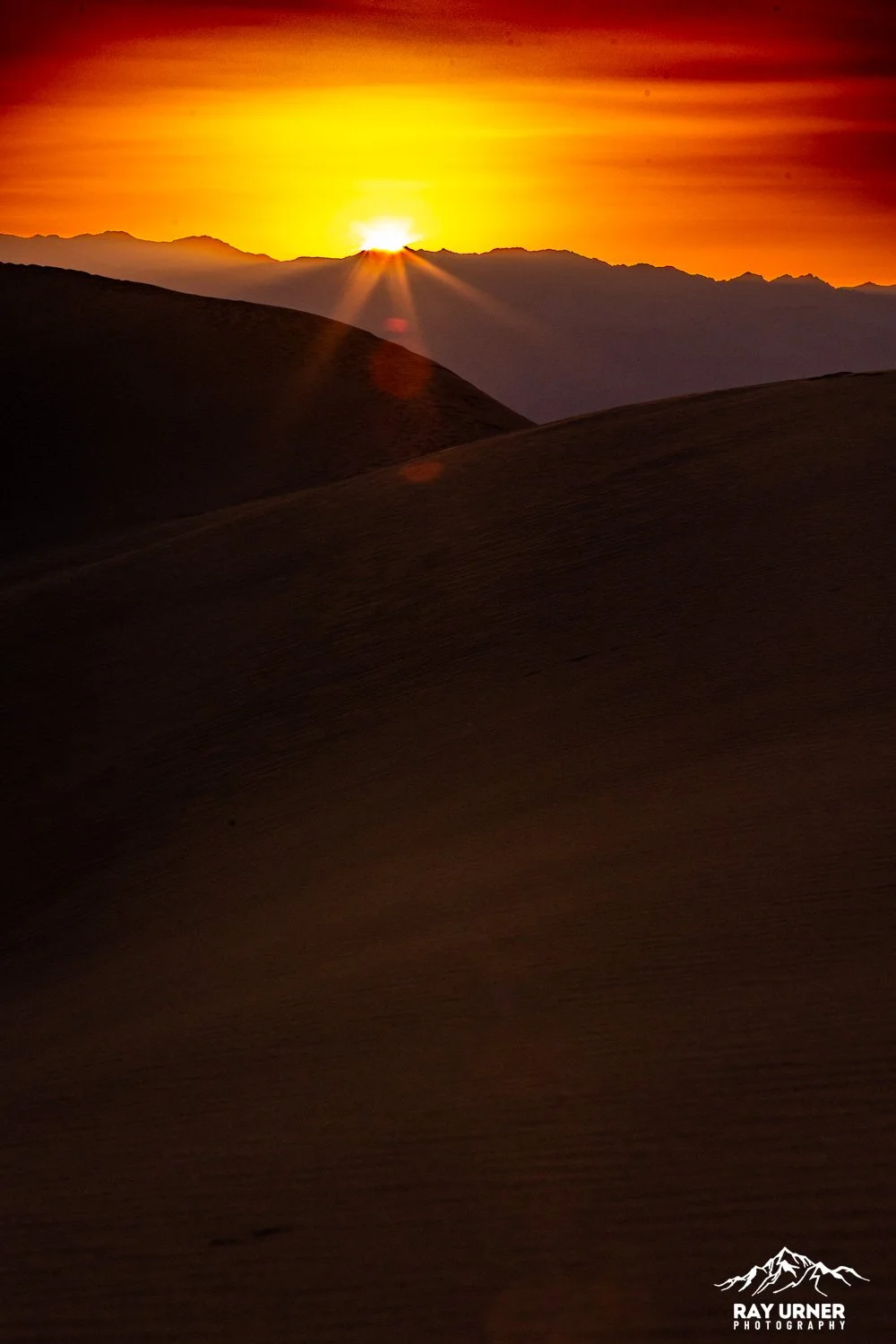
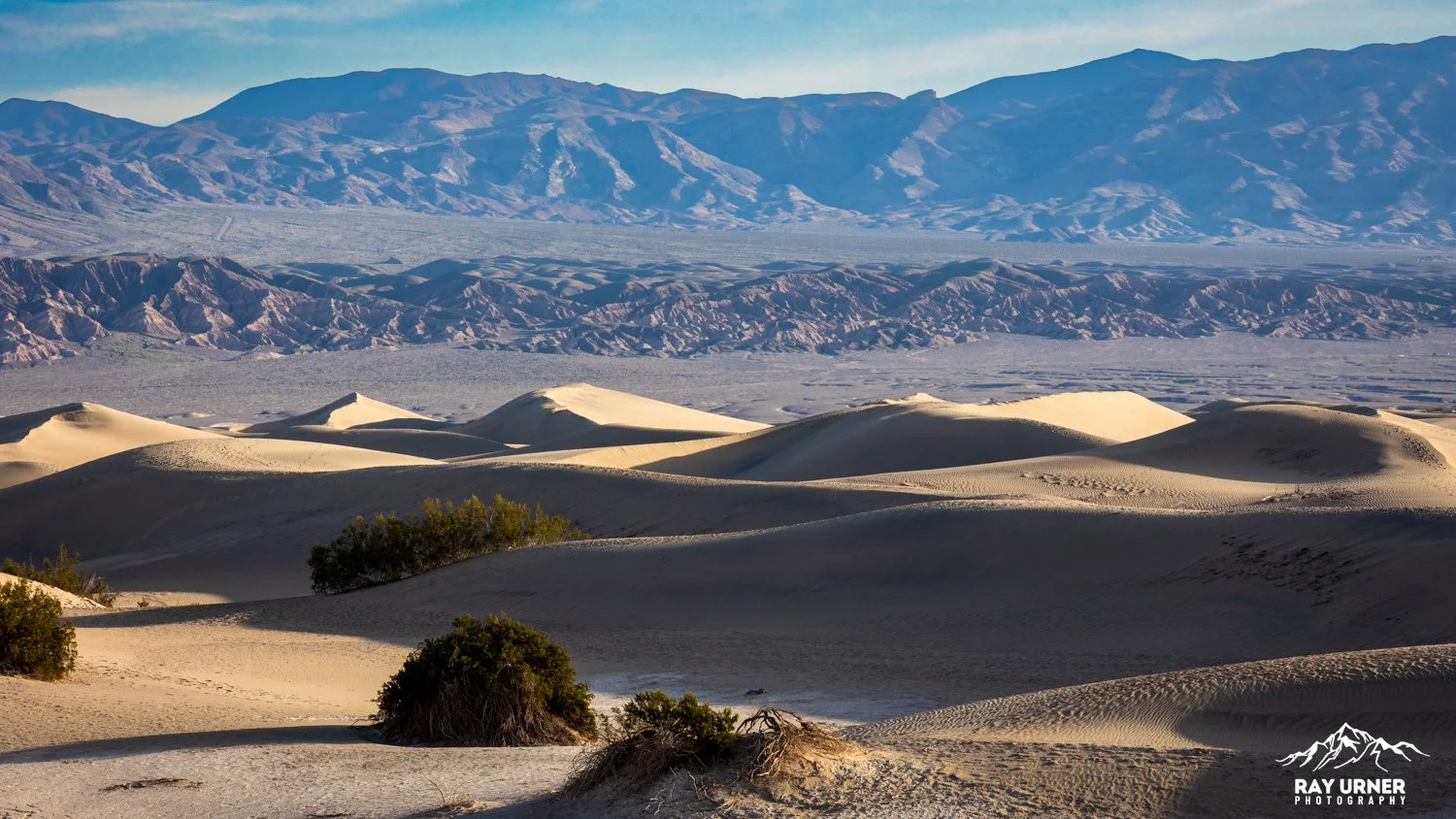
Expect pastel blues and purples before the sun crests the mountains.
The mountains to the west light up first, then the dunes begin glowing moments later.
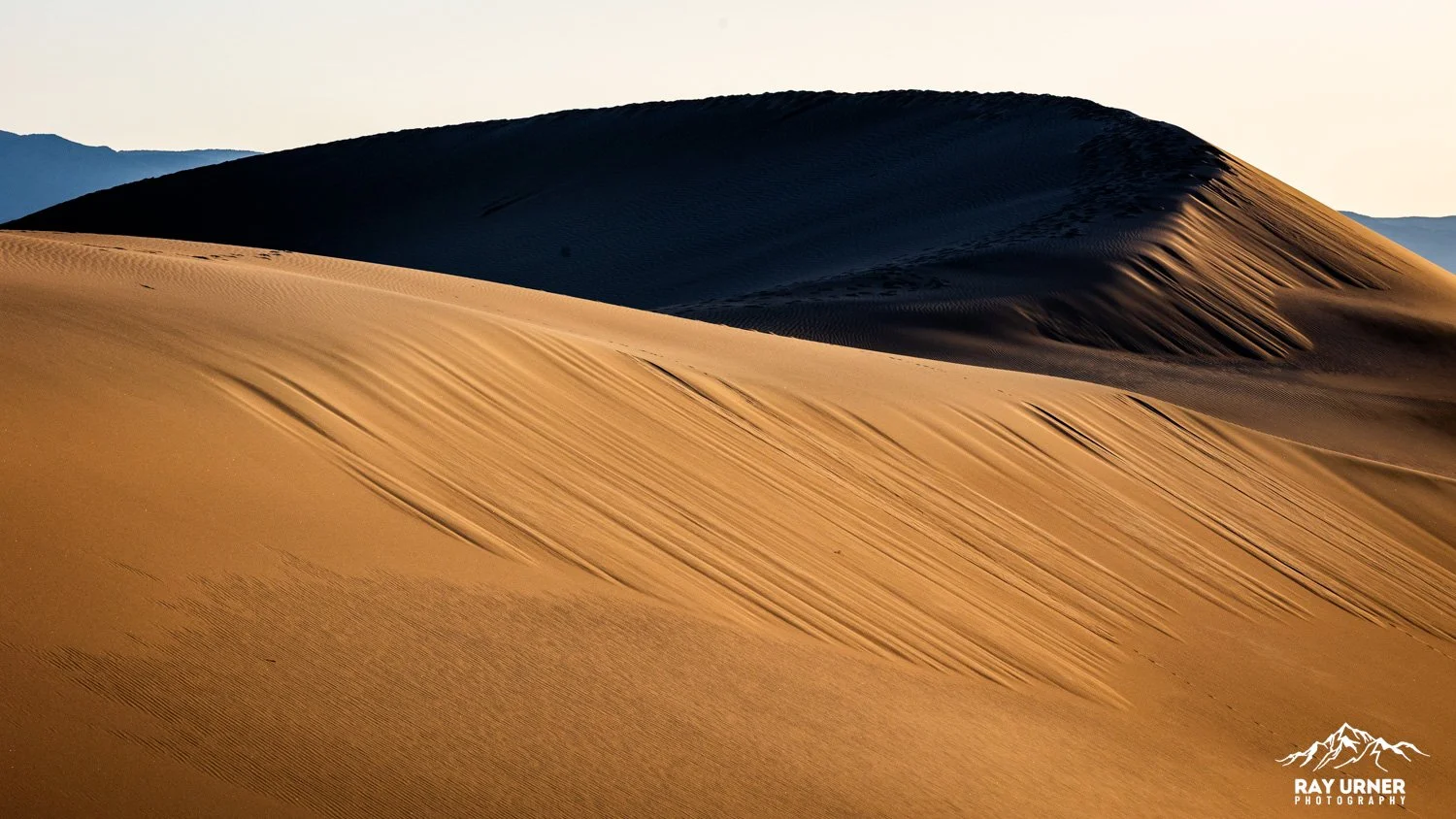
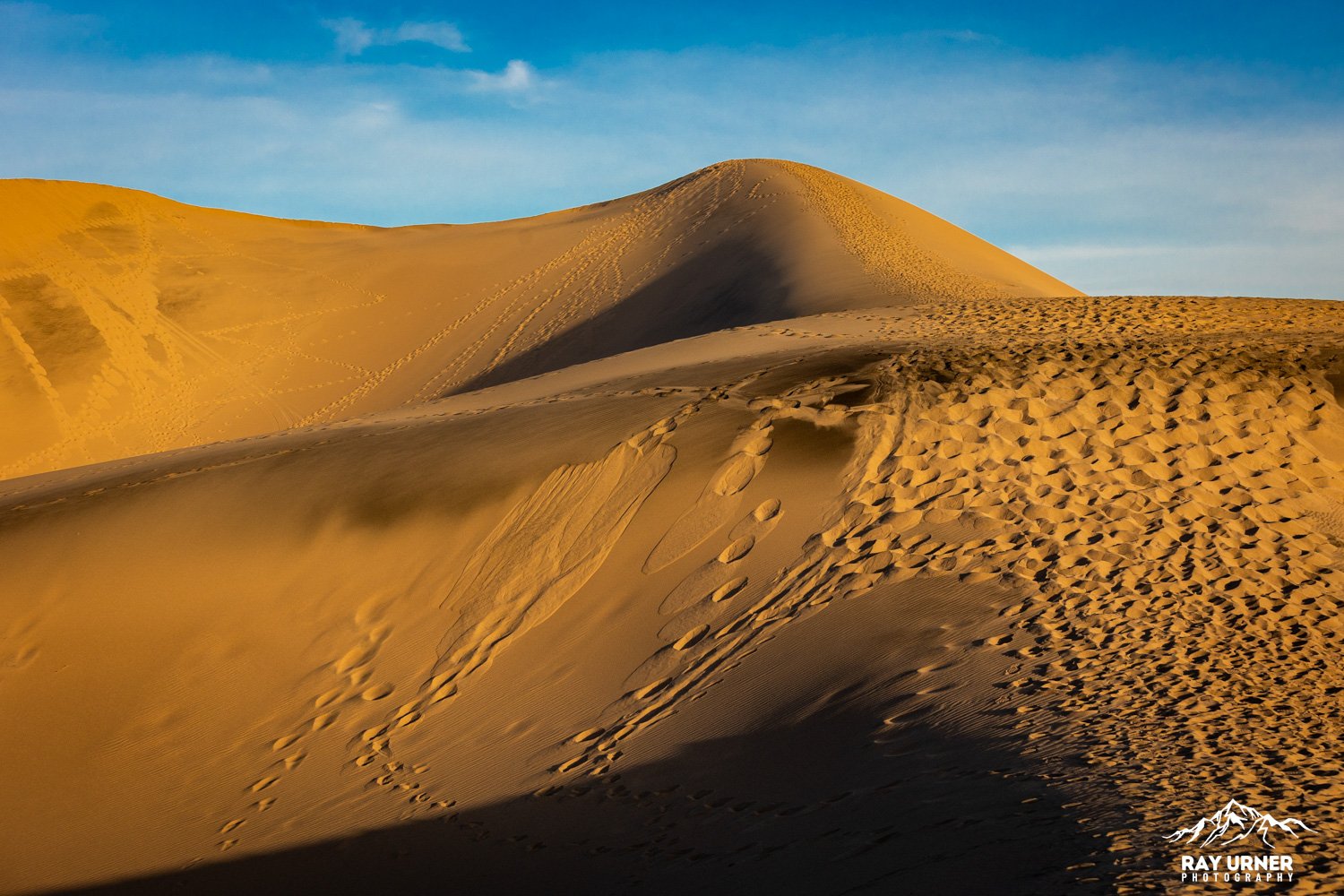
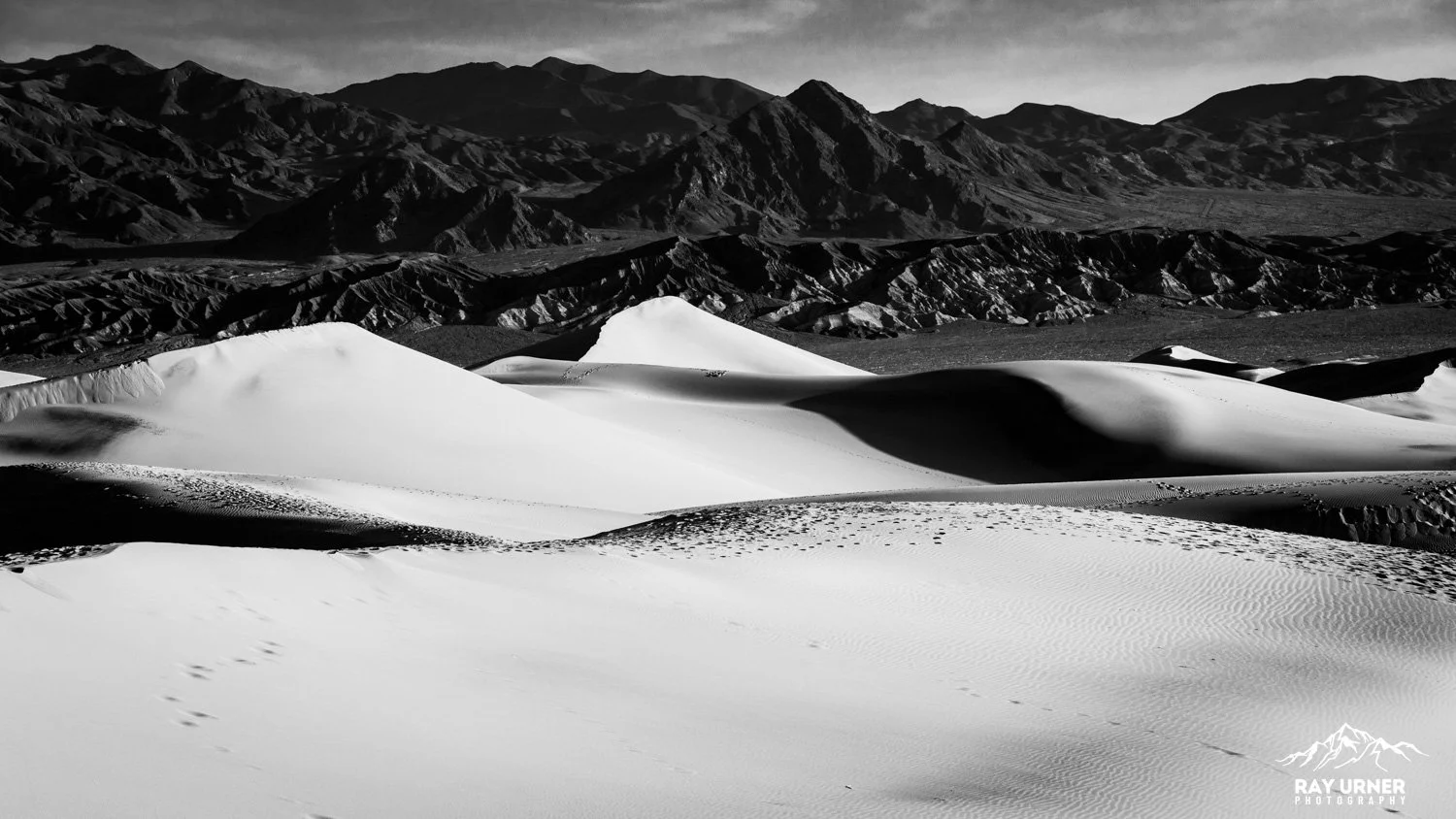
The best photo conditions last ~20–30 minutes after sunrise, when raking light creates clean shadows and ridge definition.
Tips for Sunrise Shooting
Arrive 20–45 minutes early — you’ll need time to walk out to dunes without footprints and find a clean ridge. And trust me, walking up these dunes is a workout!
Walk farther (20–30 minutes) to escape heavily tracked foreground sand.
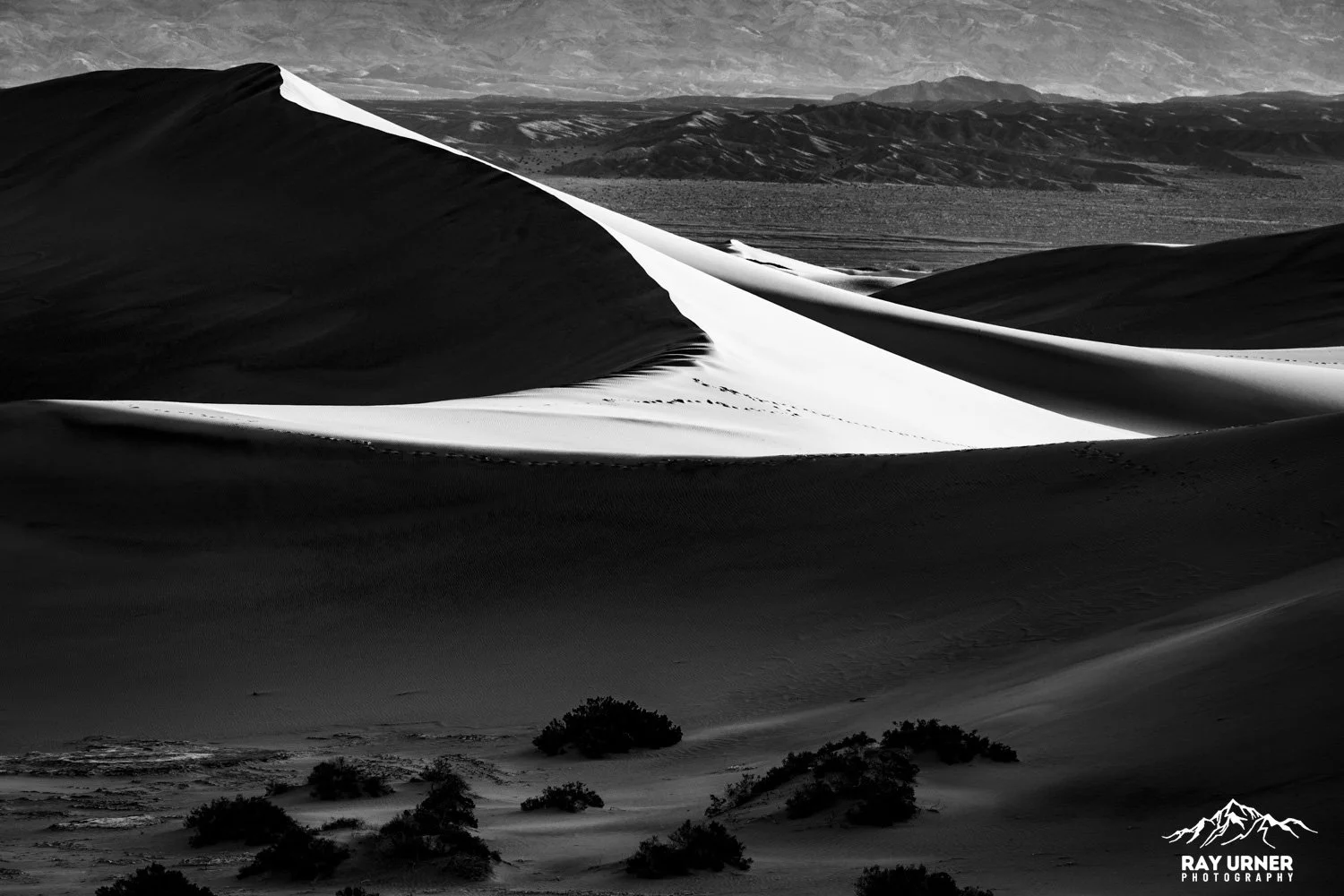
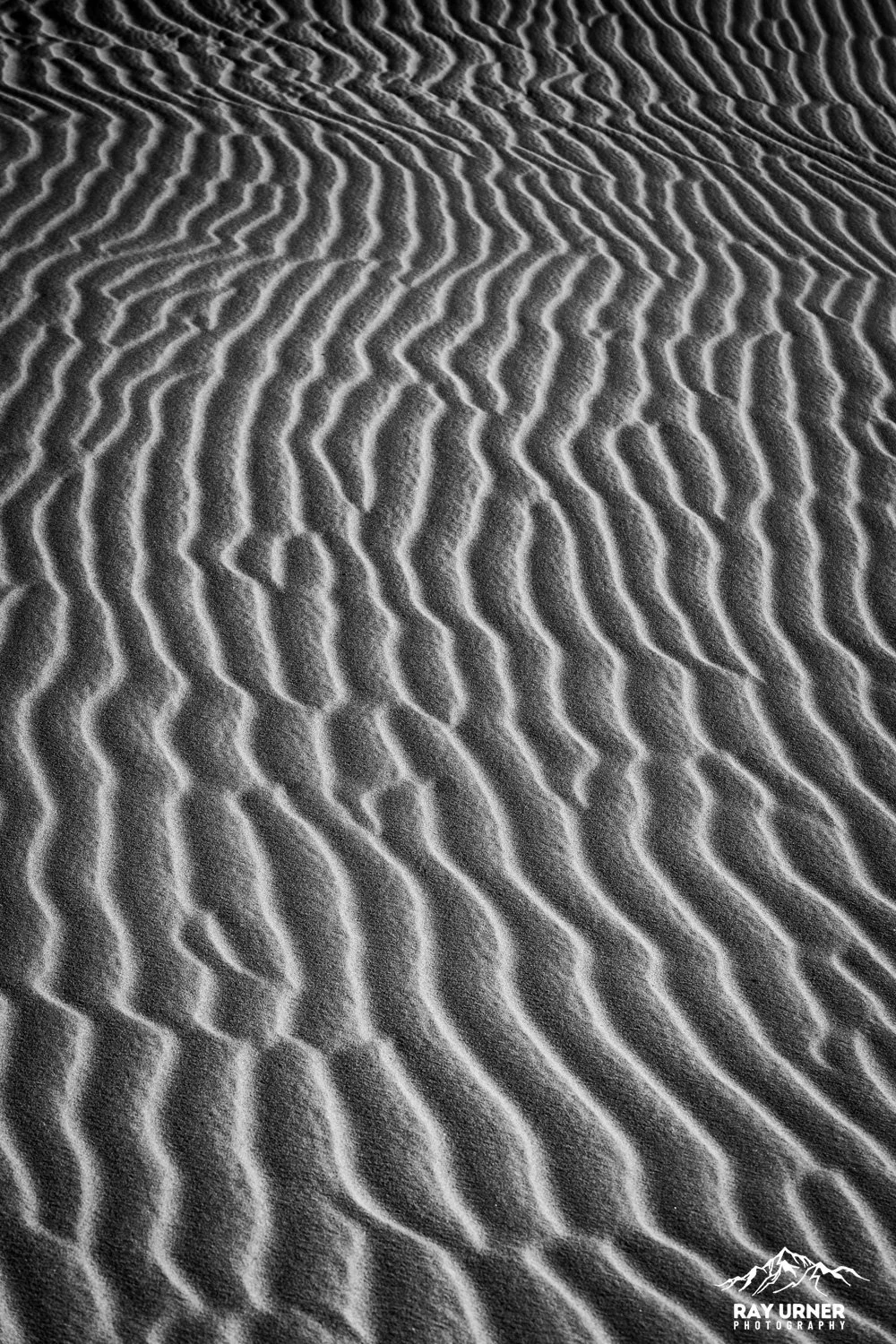
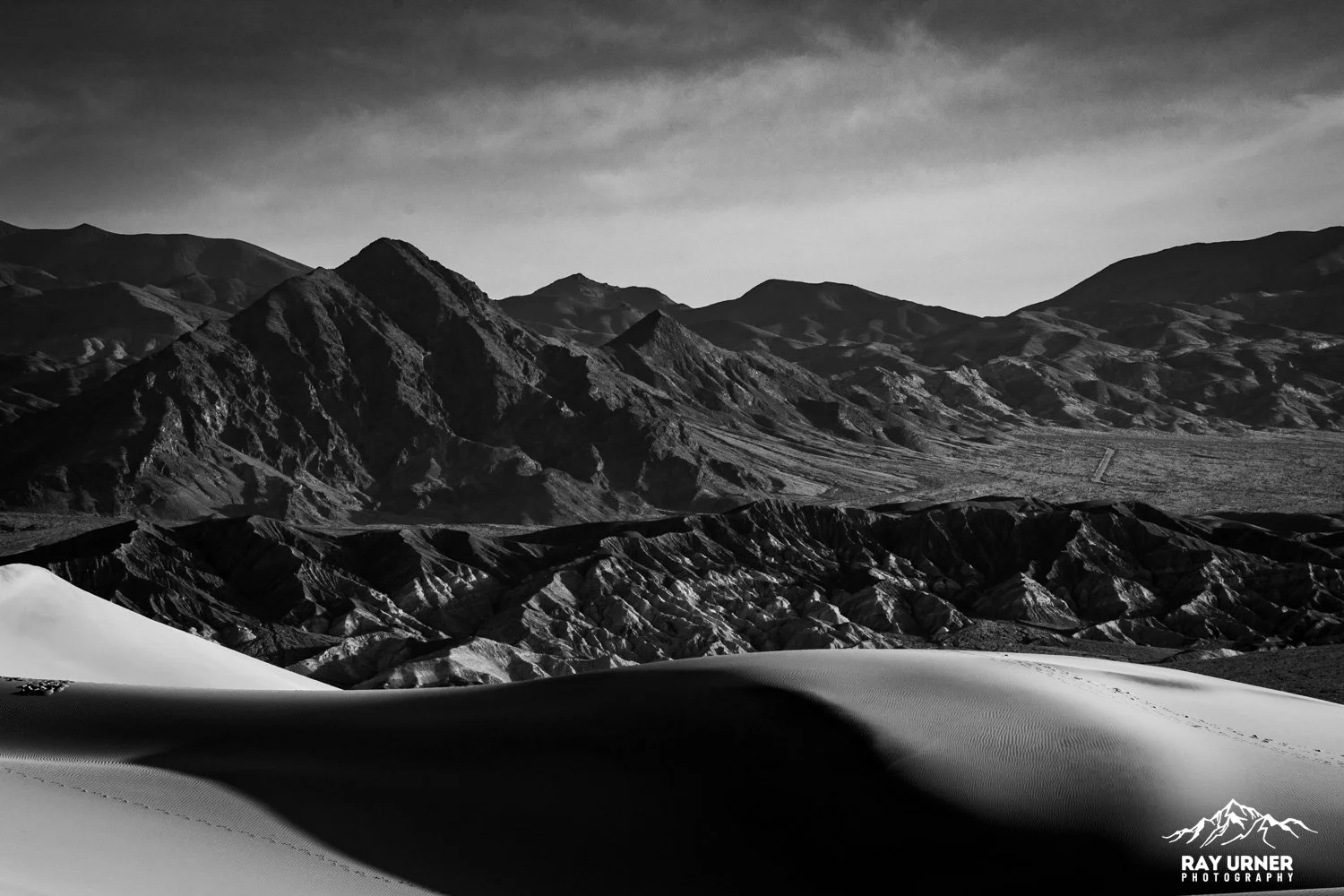
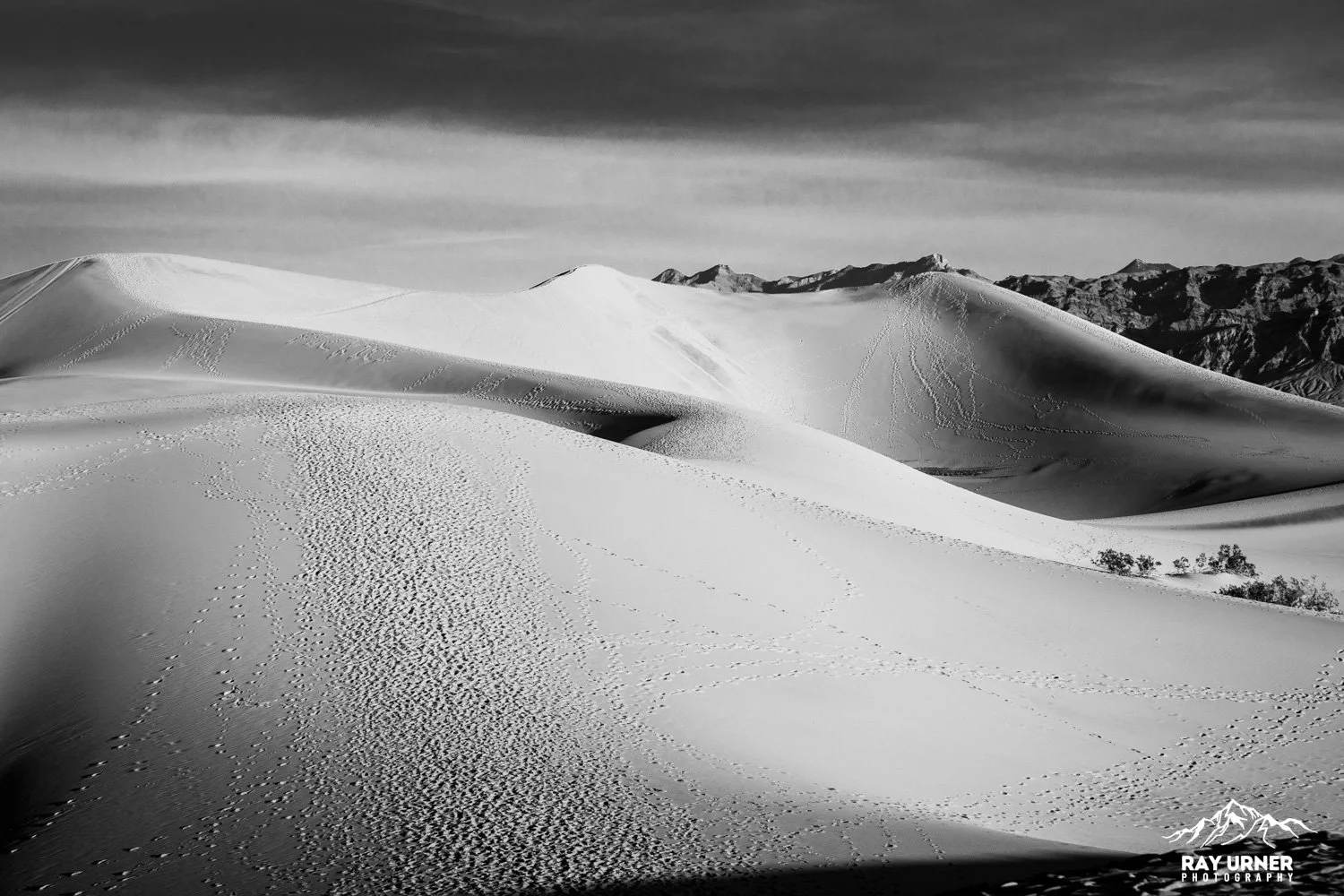
Shoot across dune ridges, not along them, to maximize shadow depth.
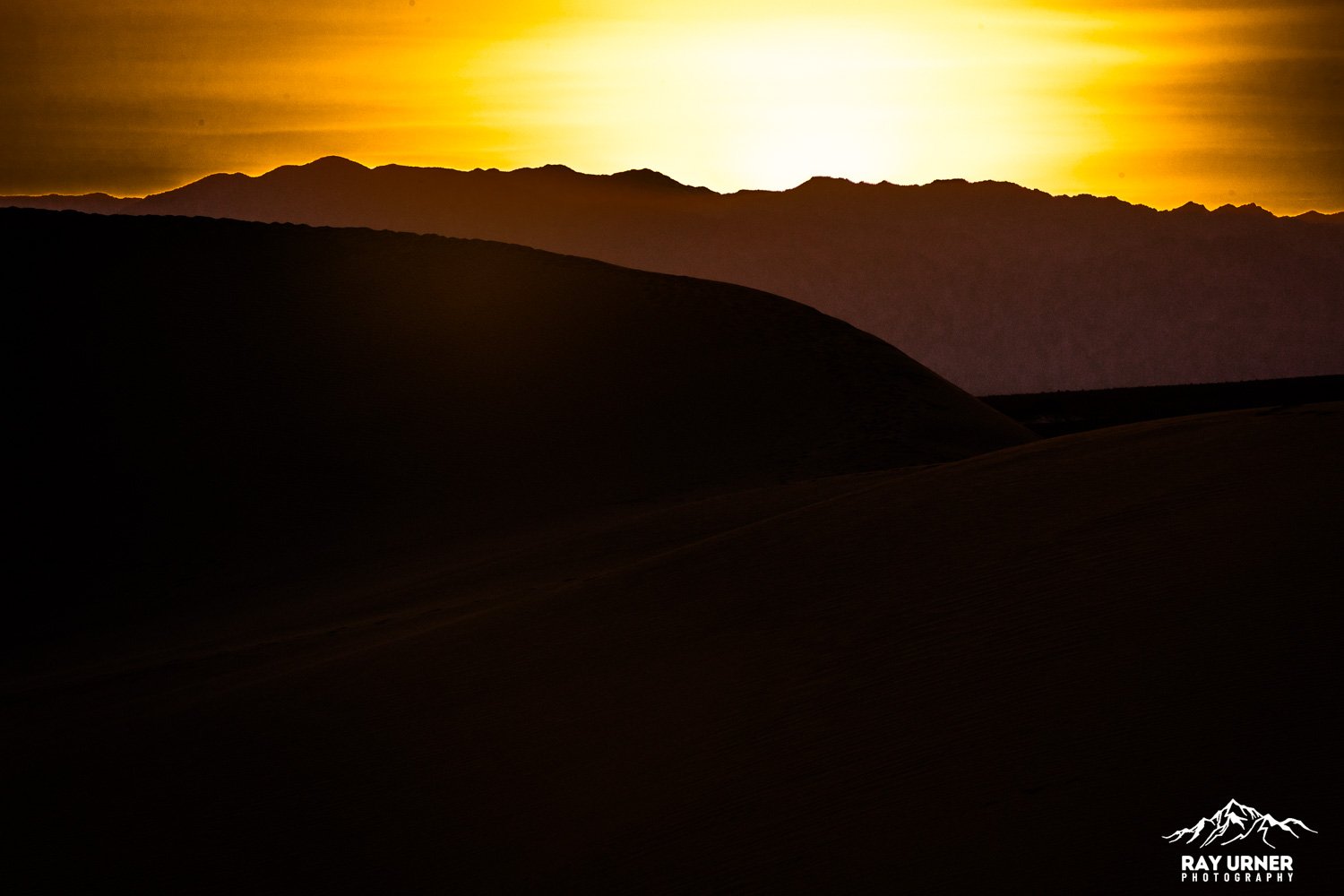
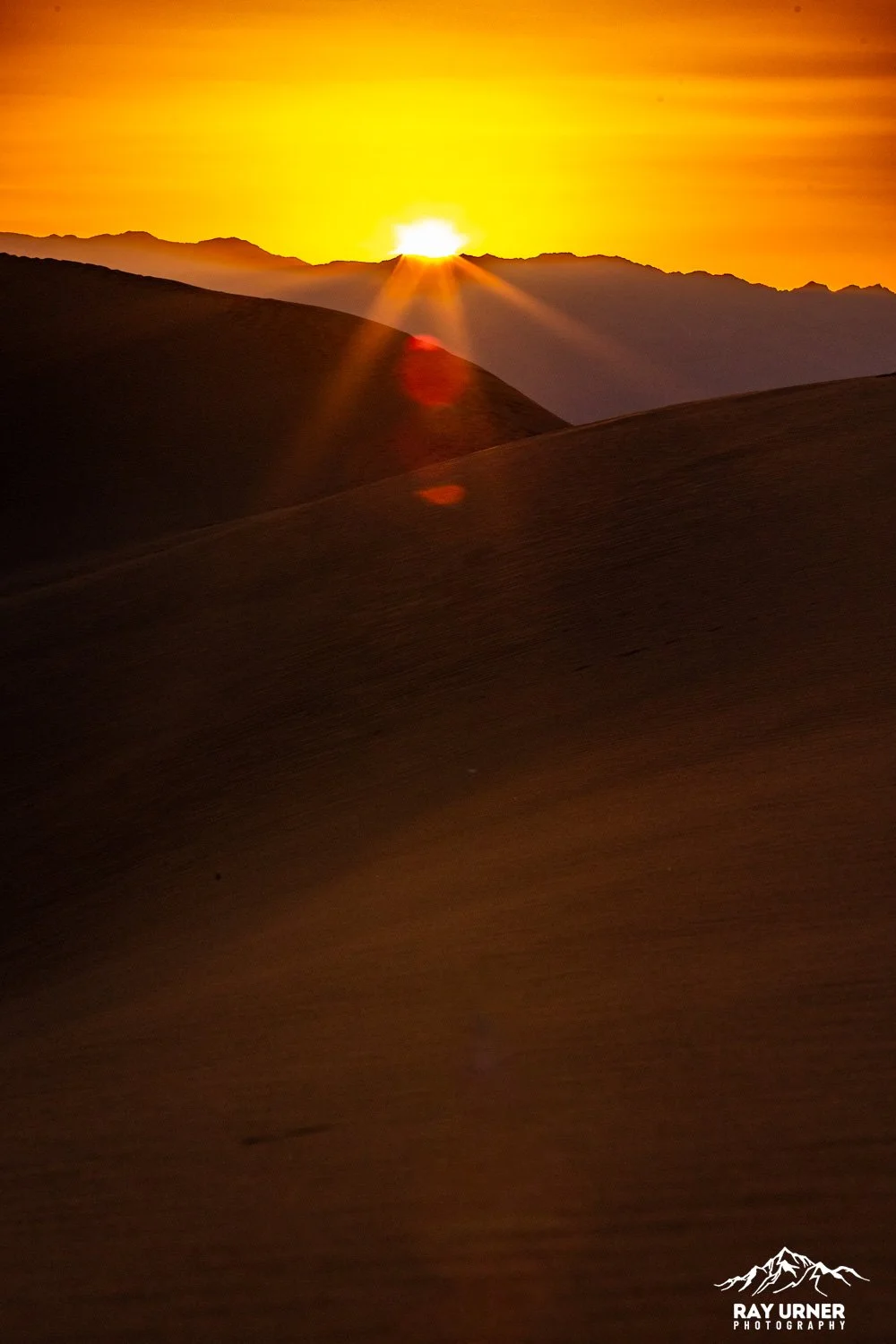
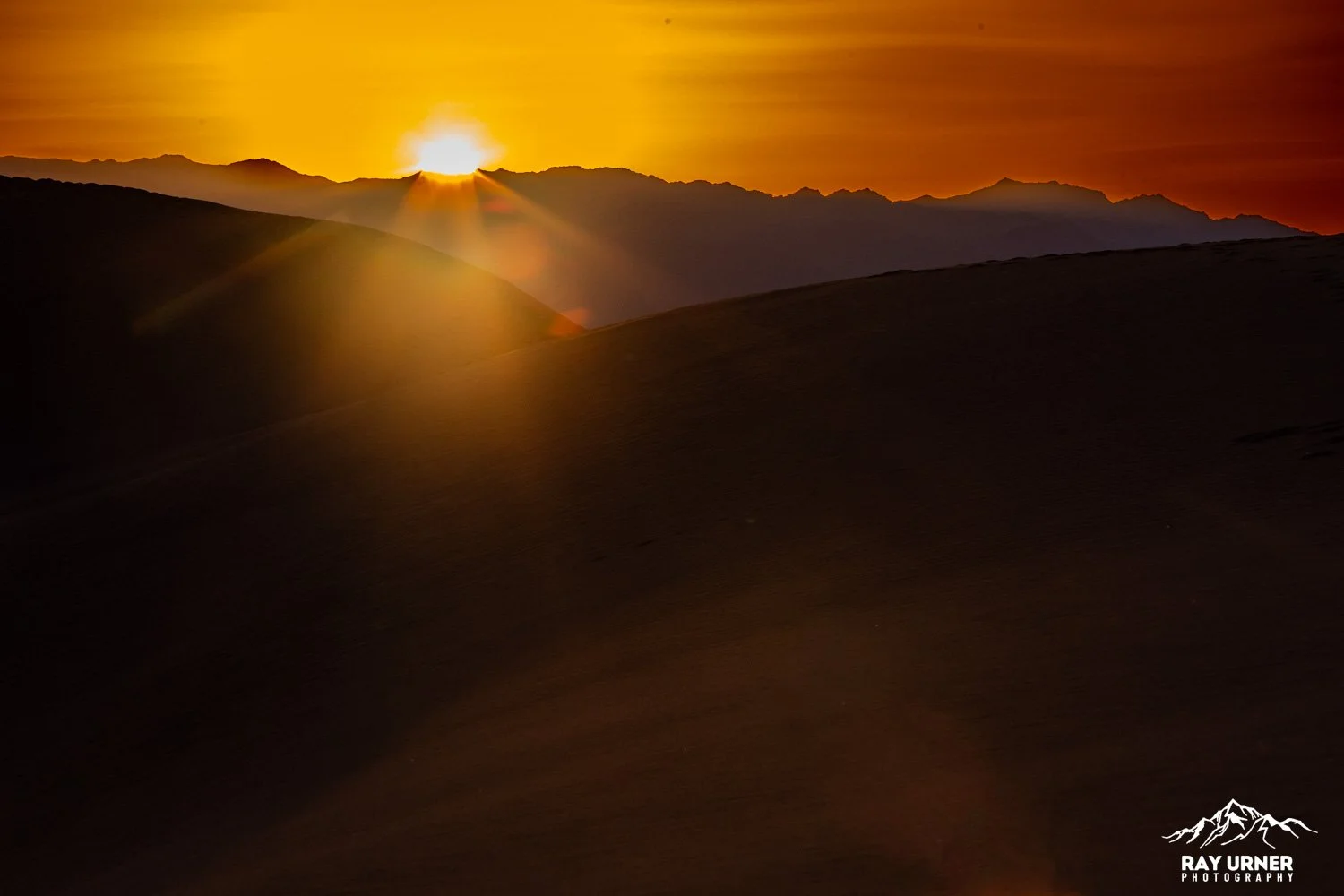
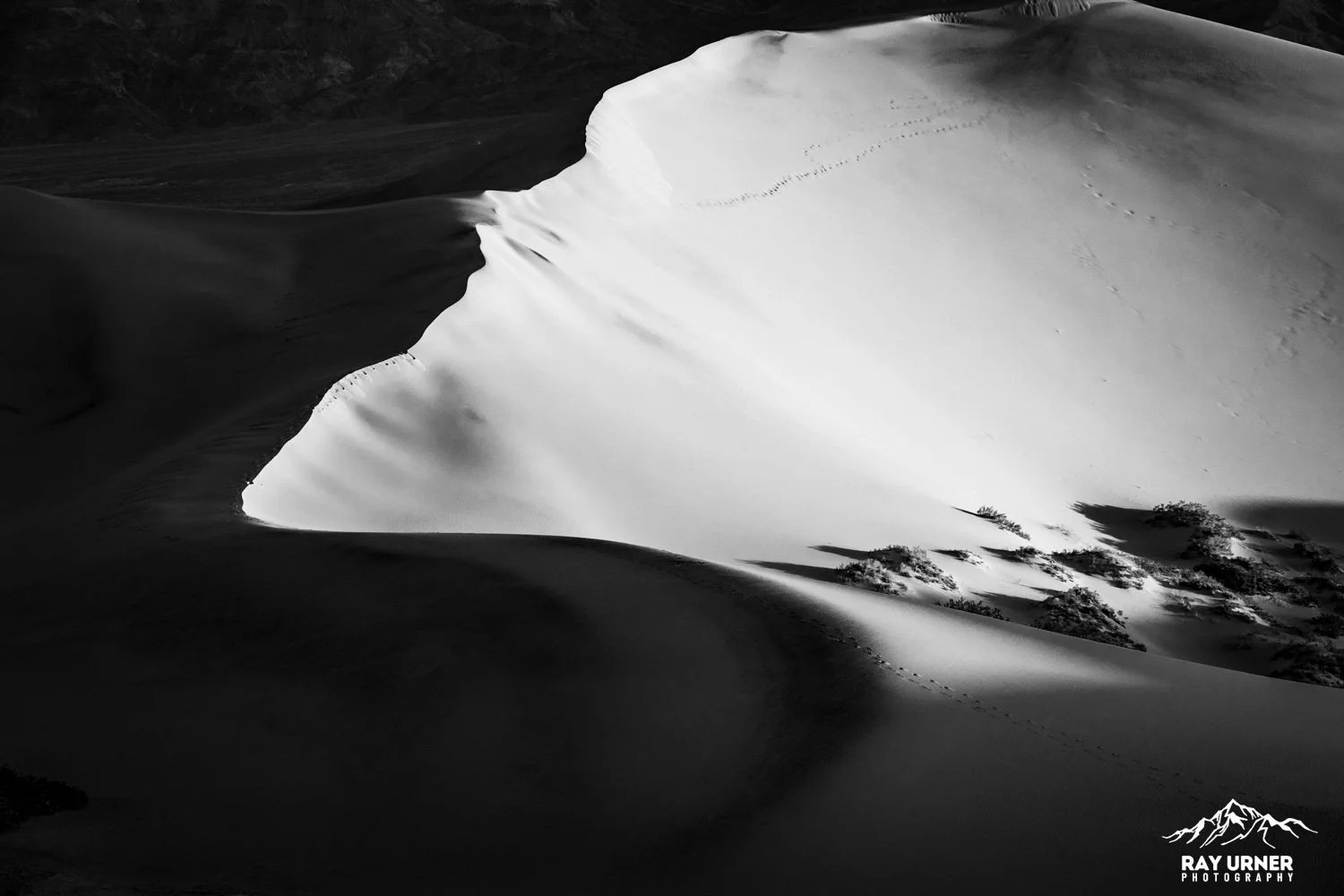
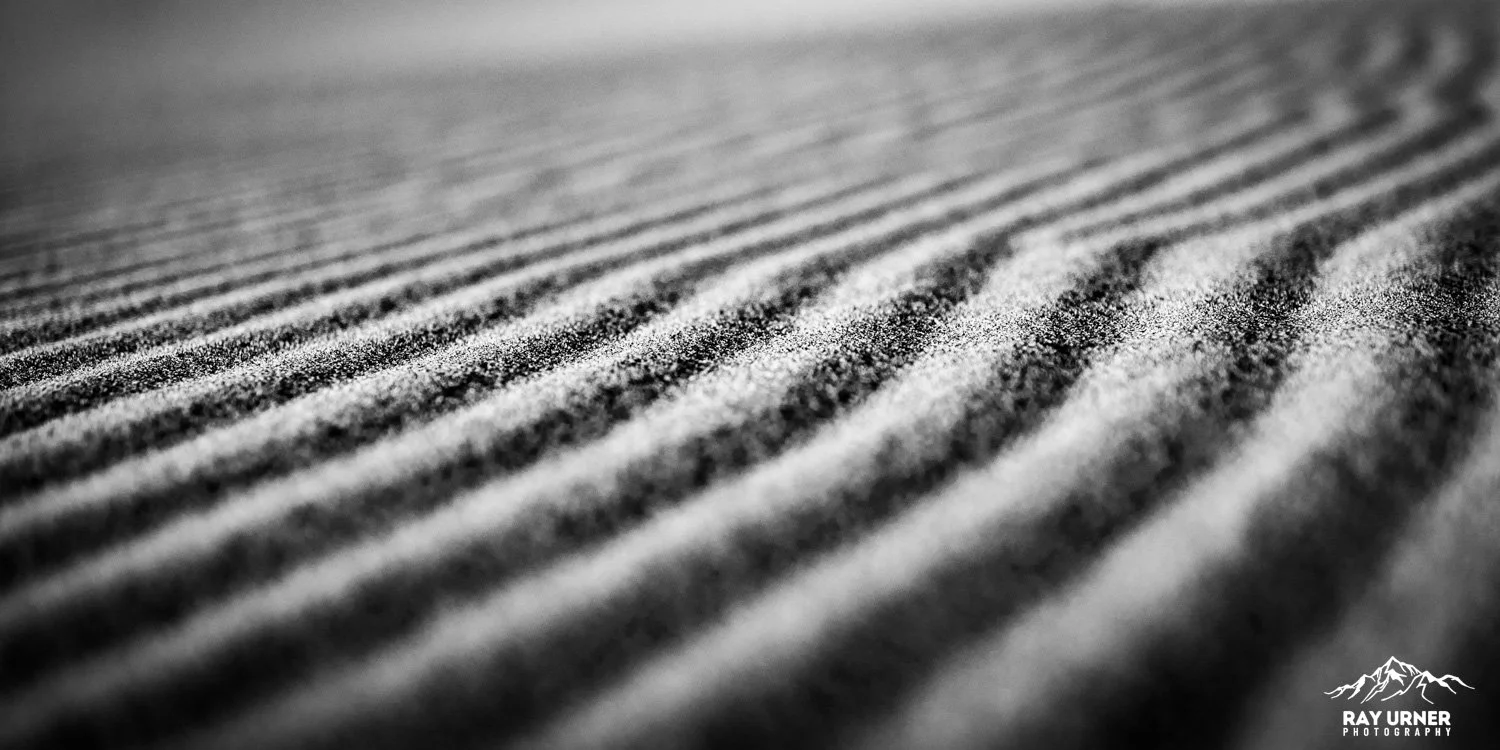
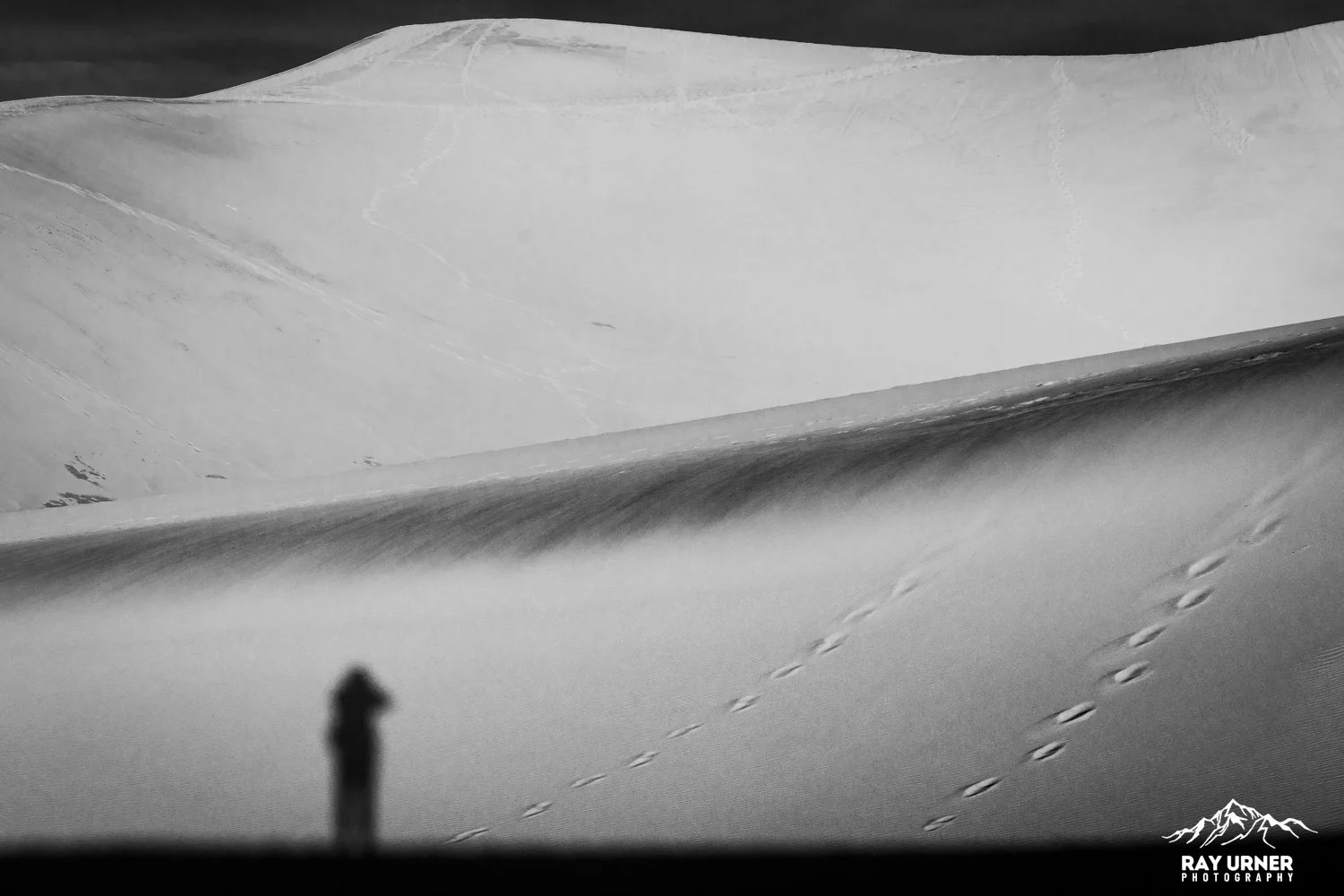
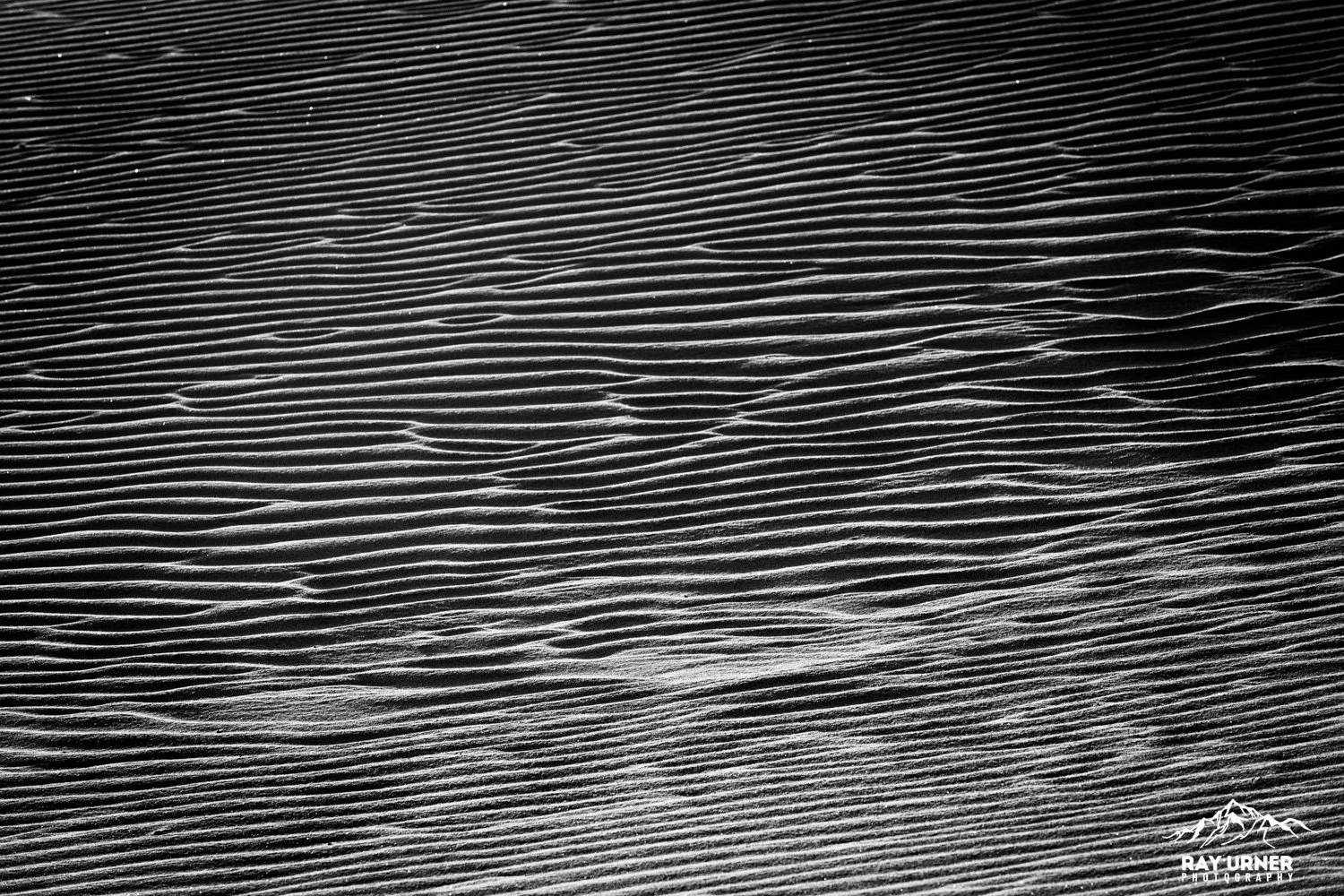
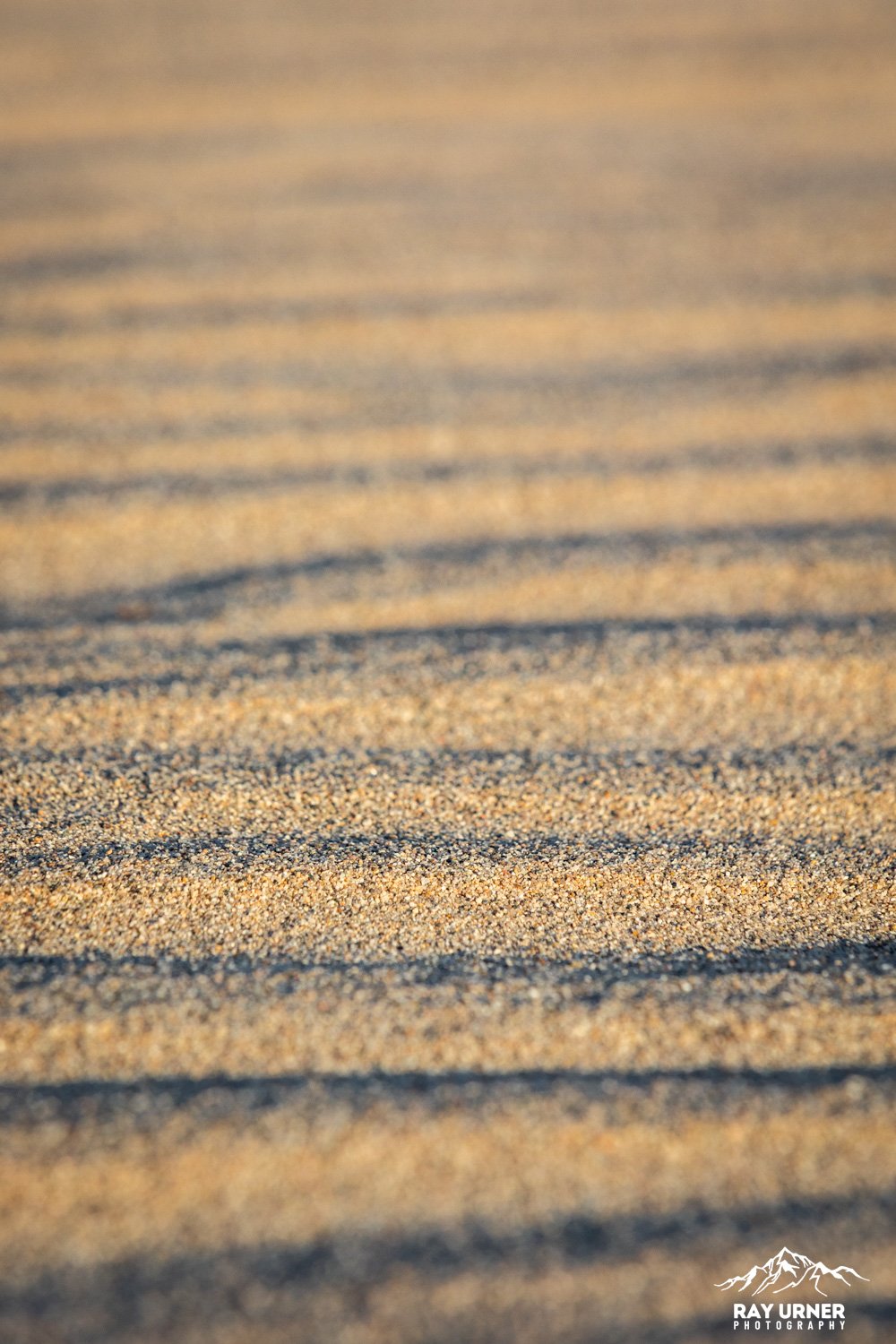
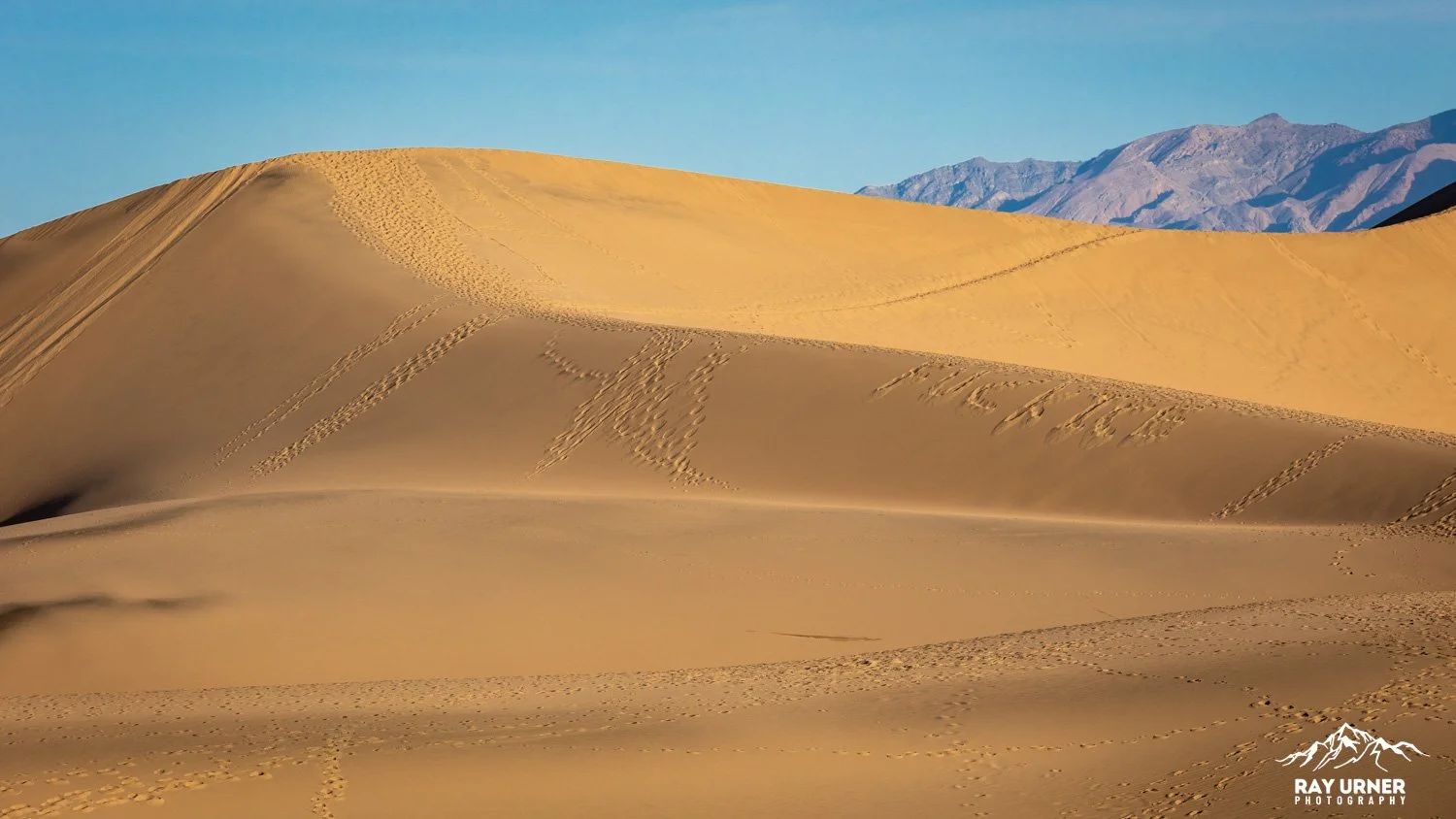
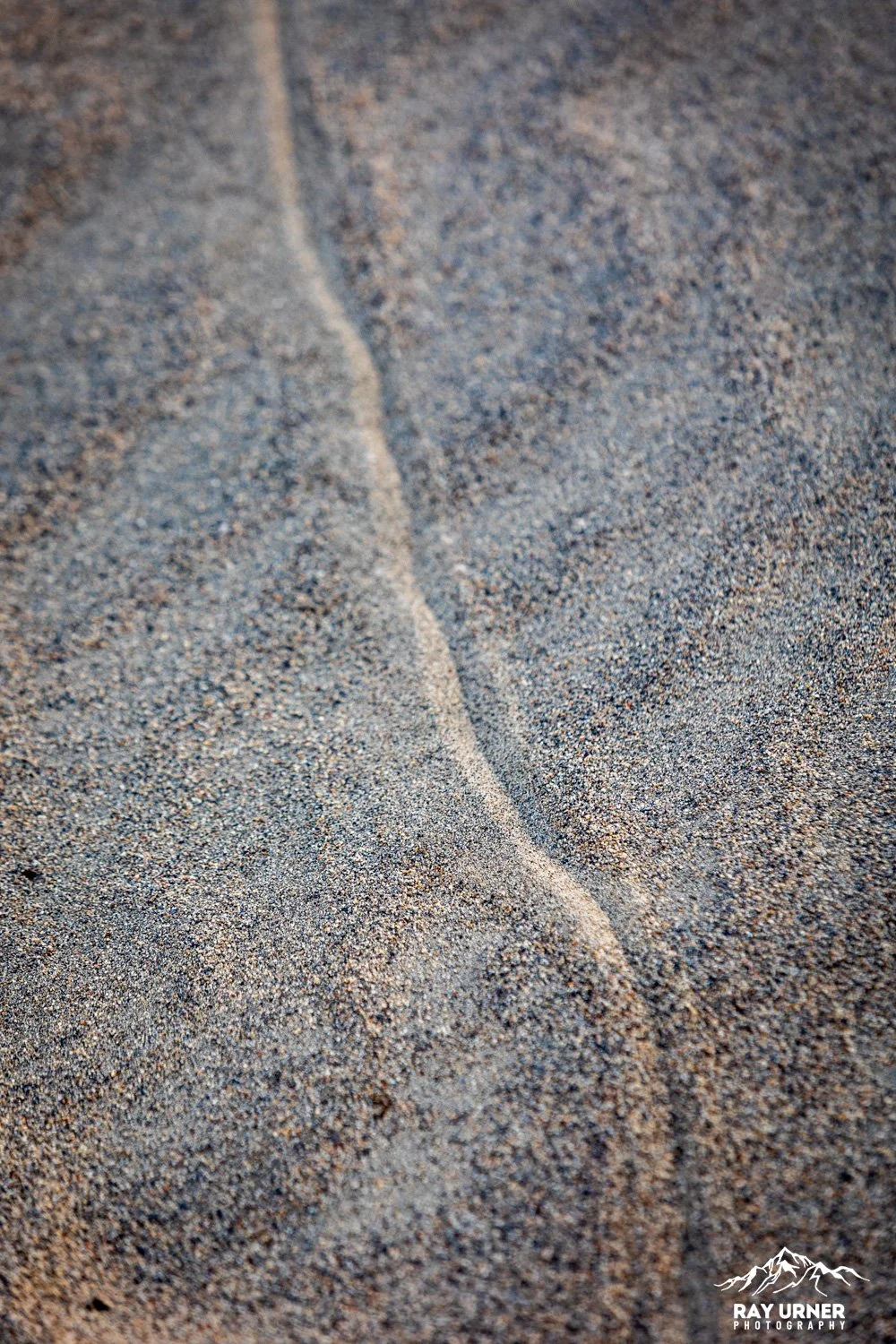
Use a telephoto (70–200mm) to isolate curves and patterns.
Shoot north or south‑facing slopes for the strongest directional contrast.
If wind is forecast overnight, you may get rare pristine, footprint‑free dunes. Consider yourself VERY lucky!

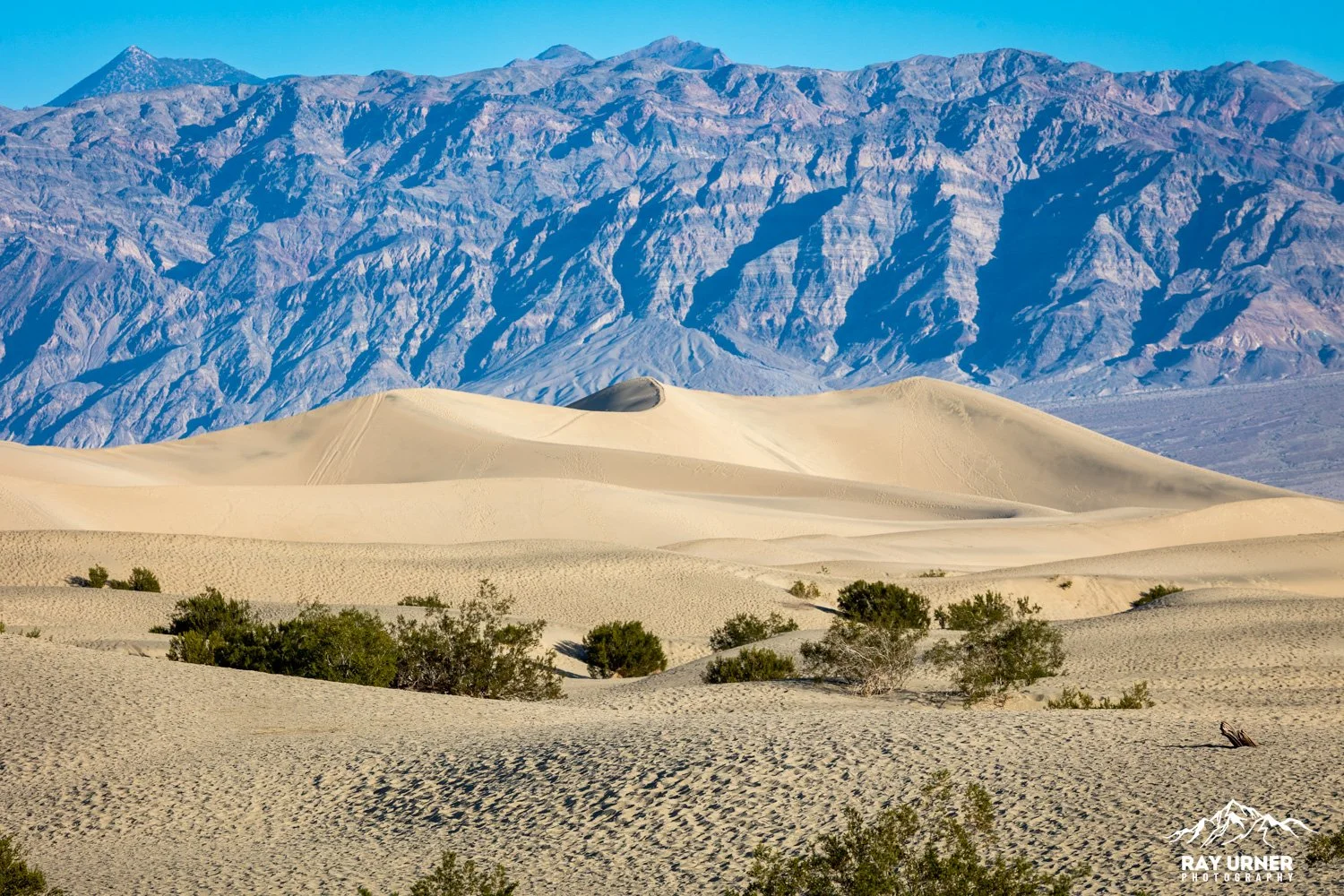
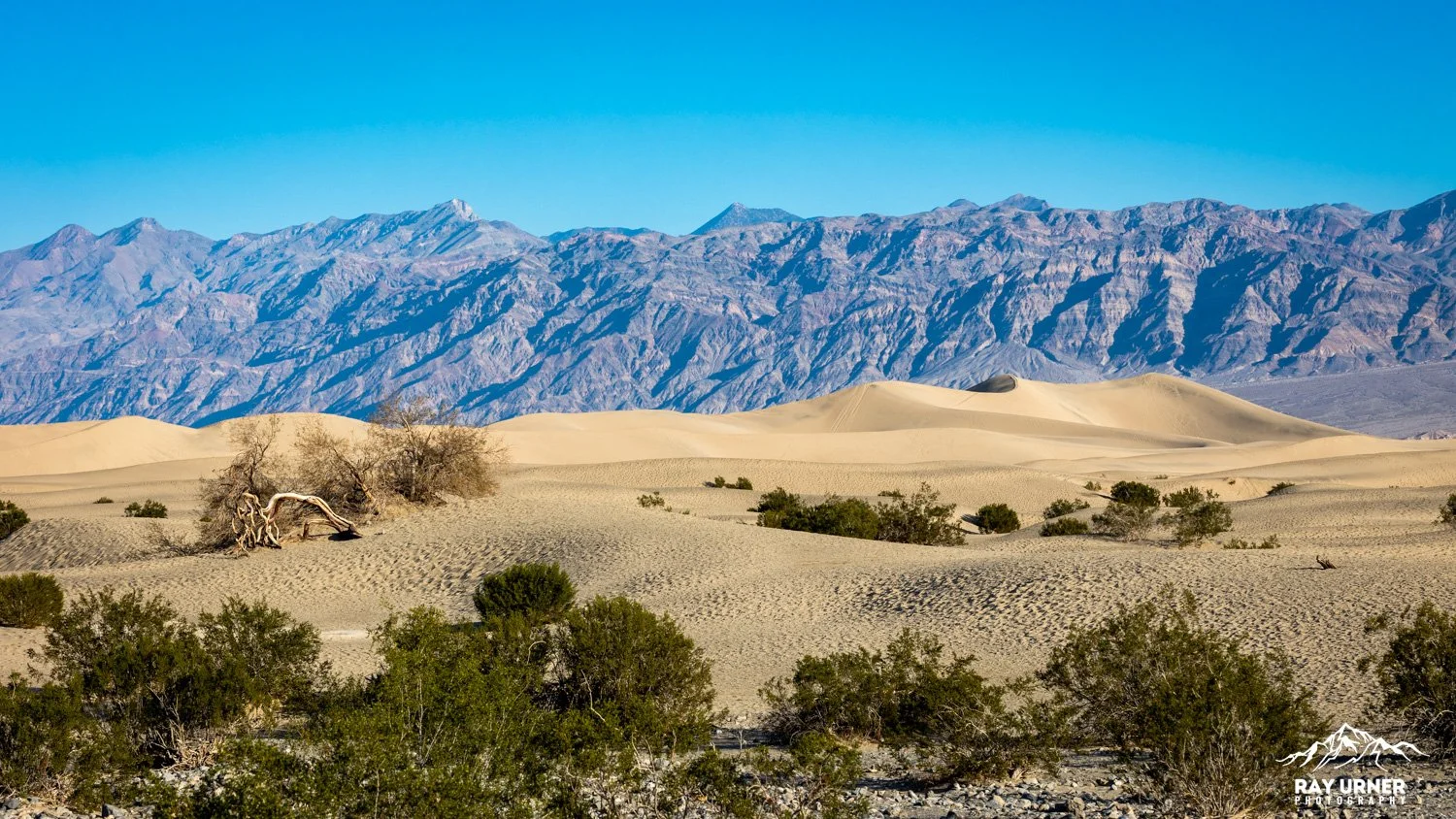
Photography Guide: Harsh Afternoon Light
While most photography guides warn about the difficulties of Death Valley’s mid‑day light, the dunes remain workable with the right strategy.
Challenges
Overhead light flattens texture, reducing definition in dune patterns.
Extreme heat makes mid‑day dune hiking dangerous in warmer seasons. NPS advises avoiding dunes after 10 a.m. in summer.
Footprints are more obvious under high sun.
How to Work with Harsh Light
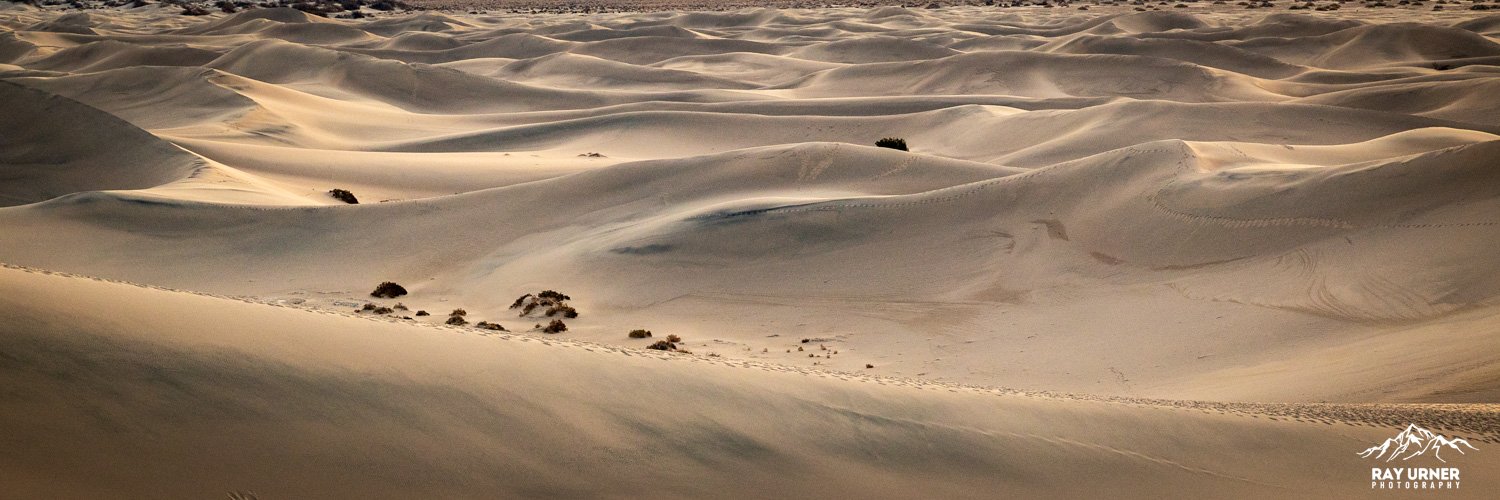
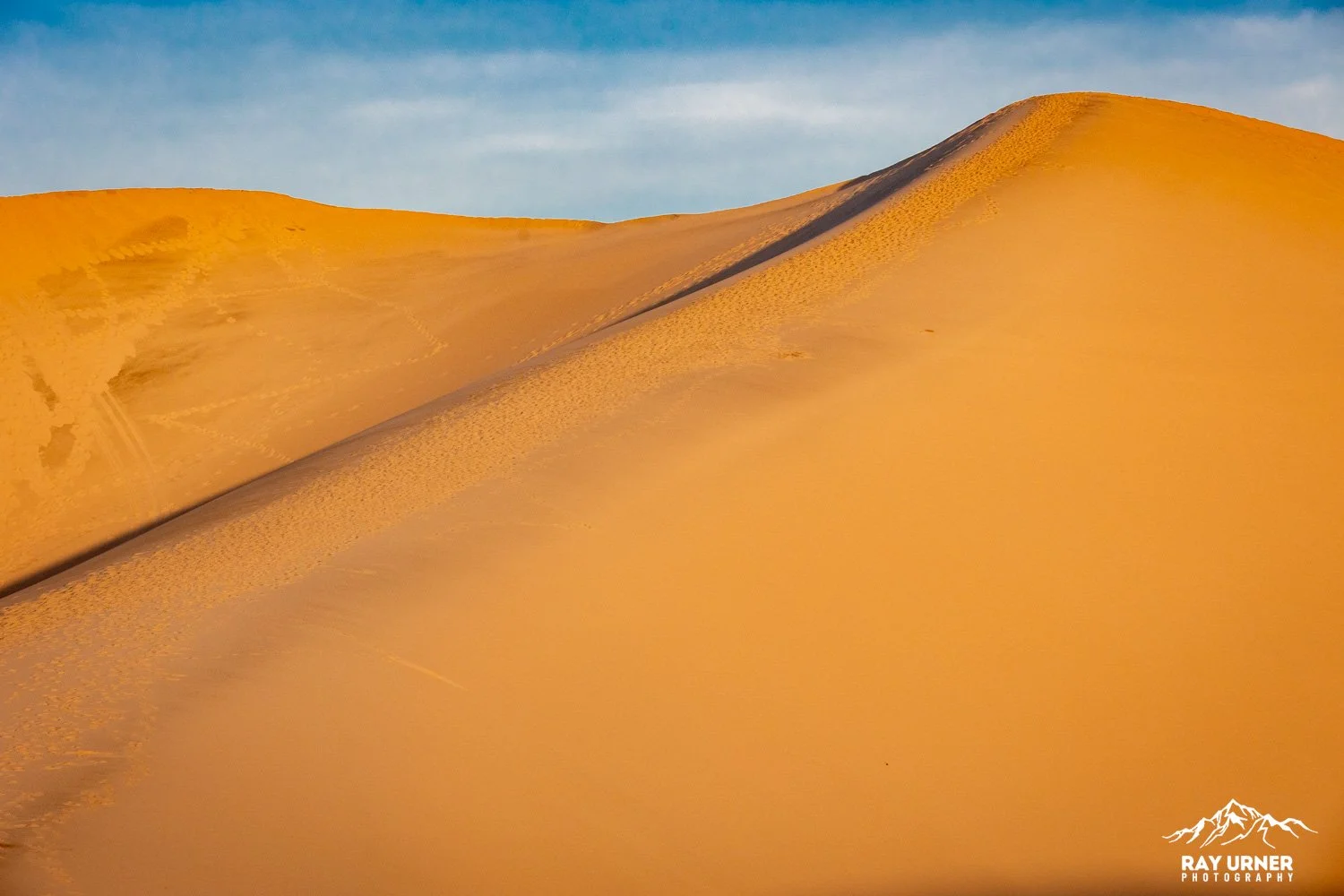
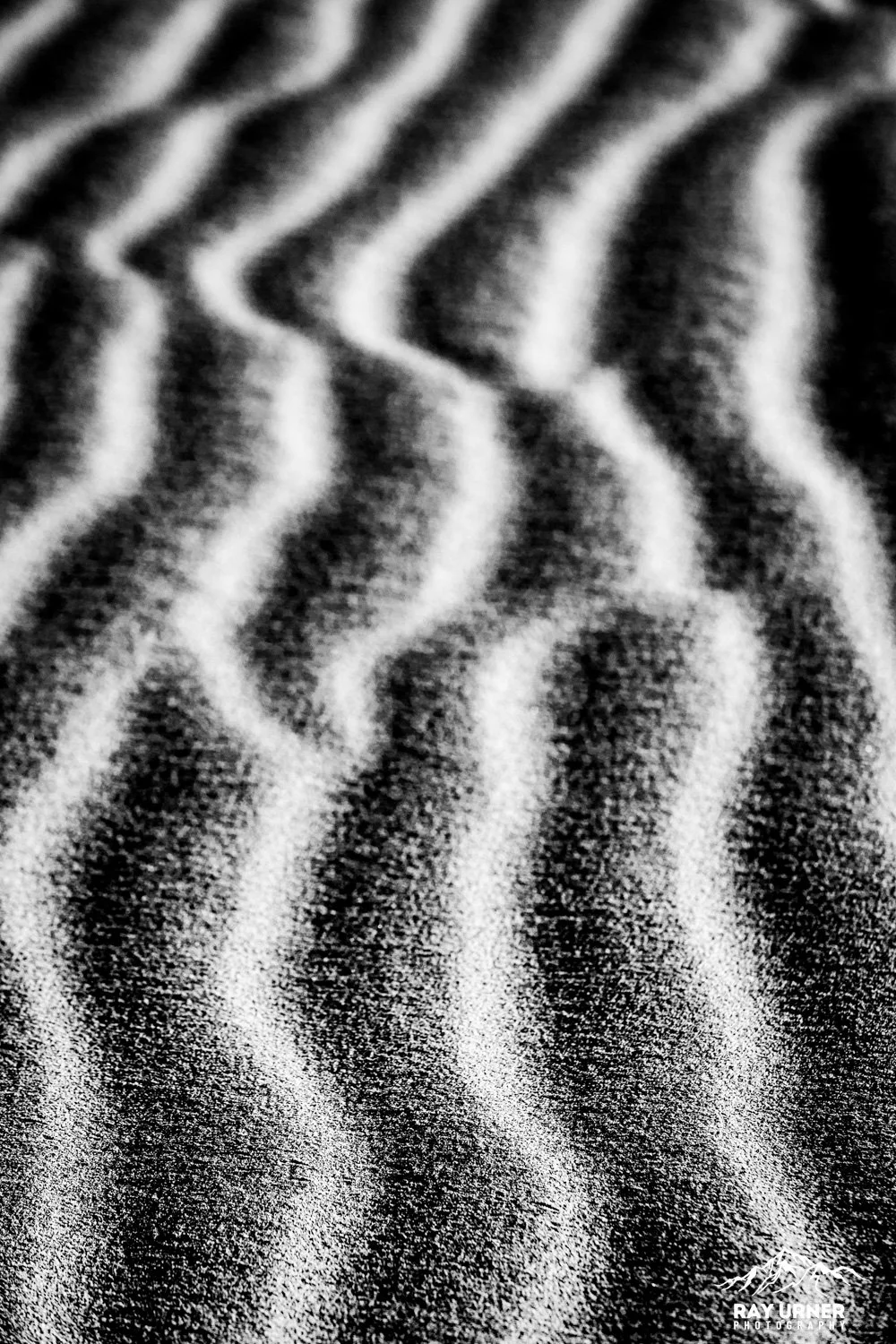
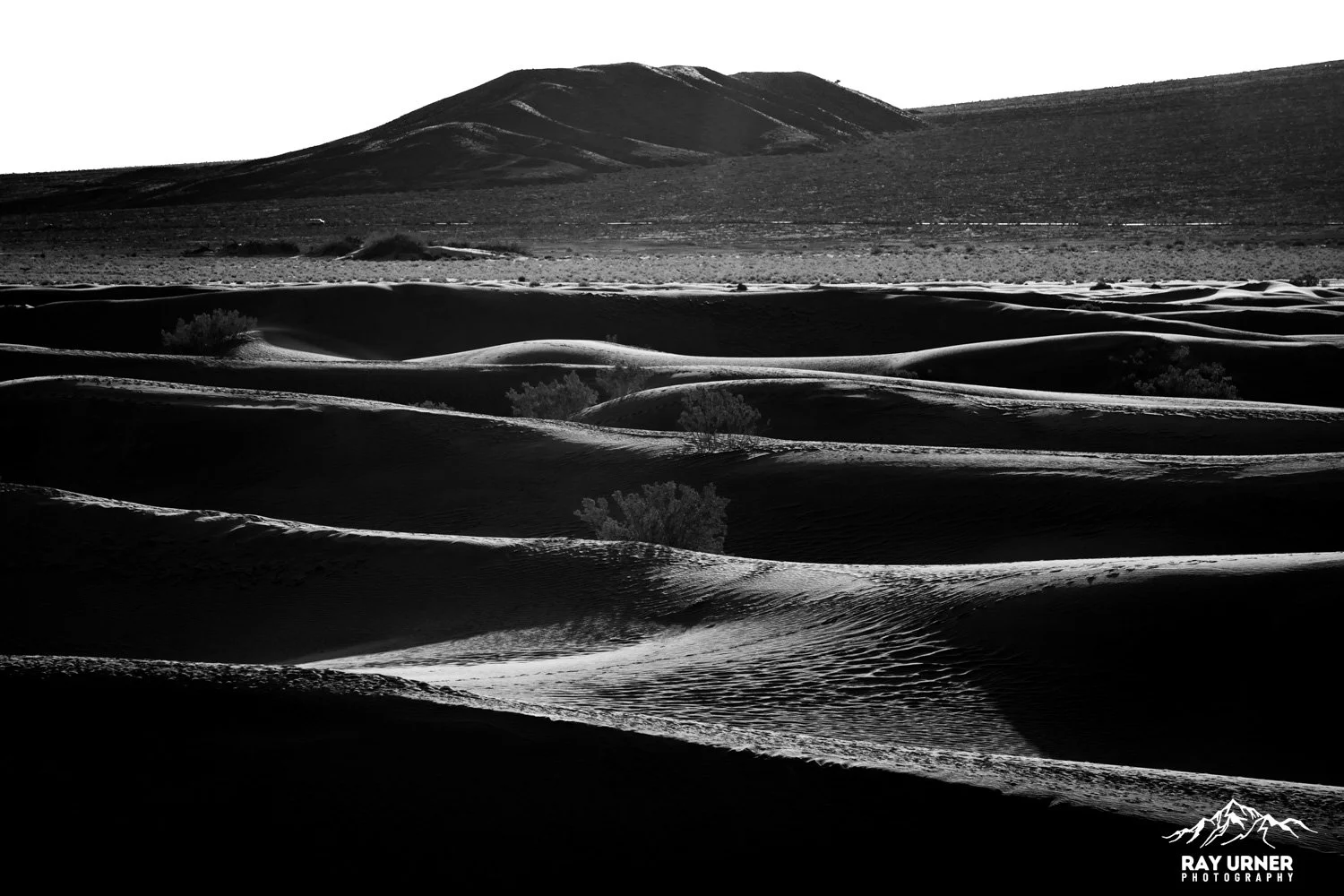
Look for graphic abstracts — overhead sun produces clean surfaces ideal for minimalist, shadow‑less compositions.
Shift to telephoto to capture heat‑haze distortion or shimmering light above dunes.
Use neutral‑density filters for high‑key exposures and ethereal sand patterns.
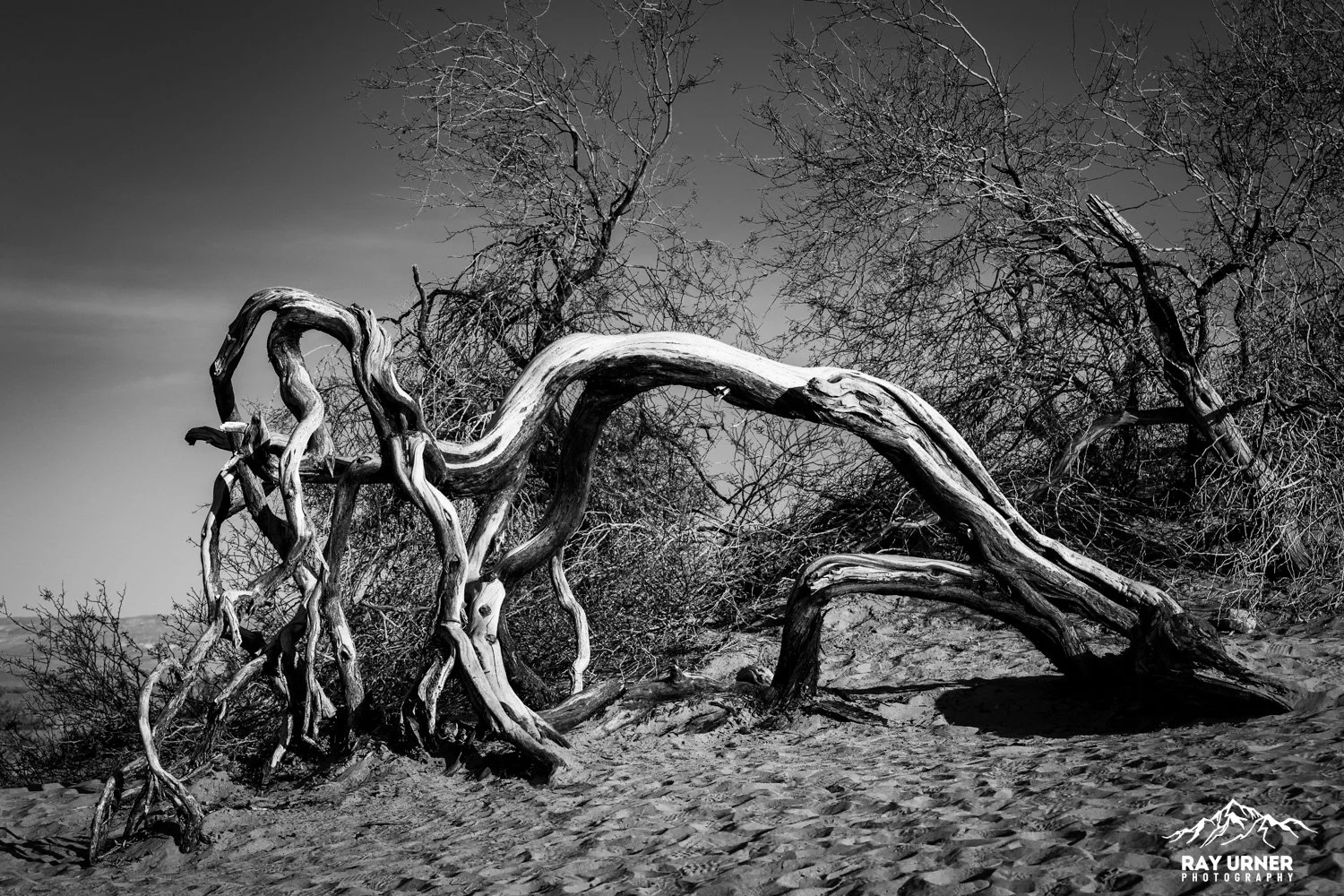
Look for mesquite trees as anchors; harsh light enhances their twisted forms and the cracked clay bed nearby. [
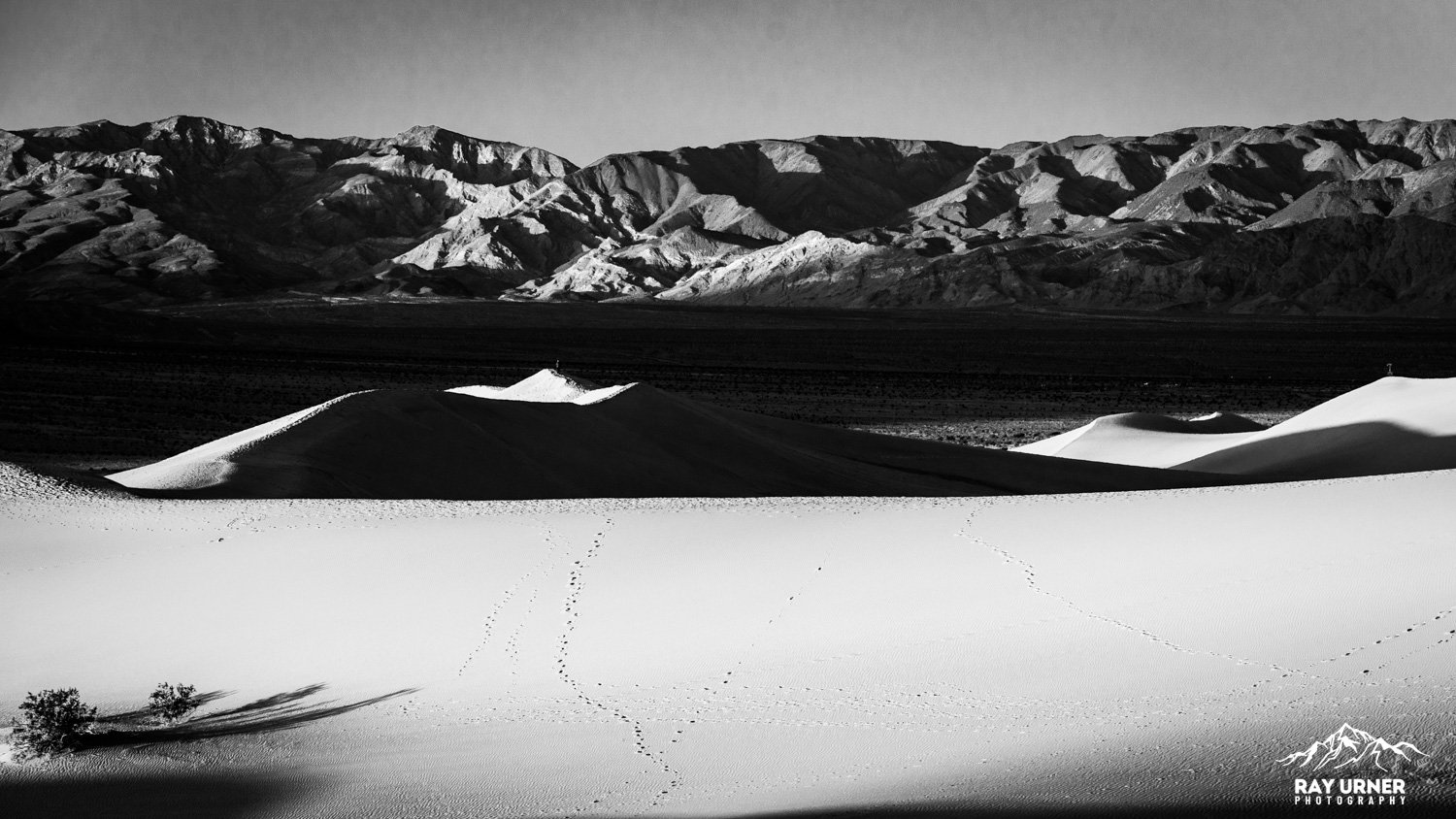
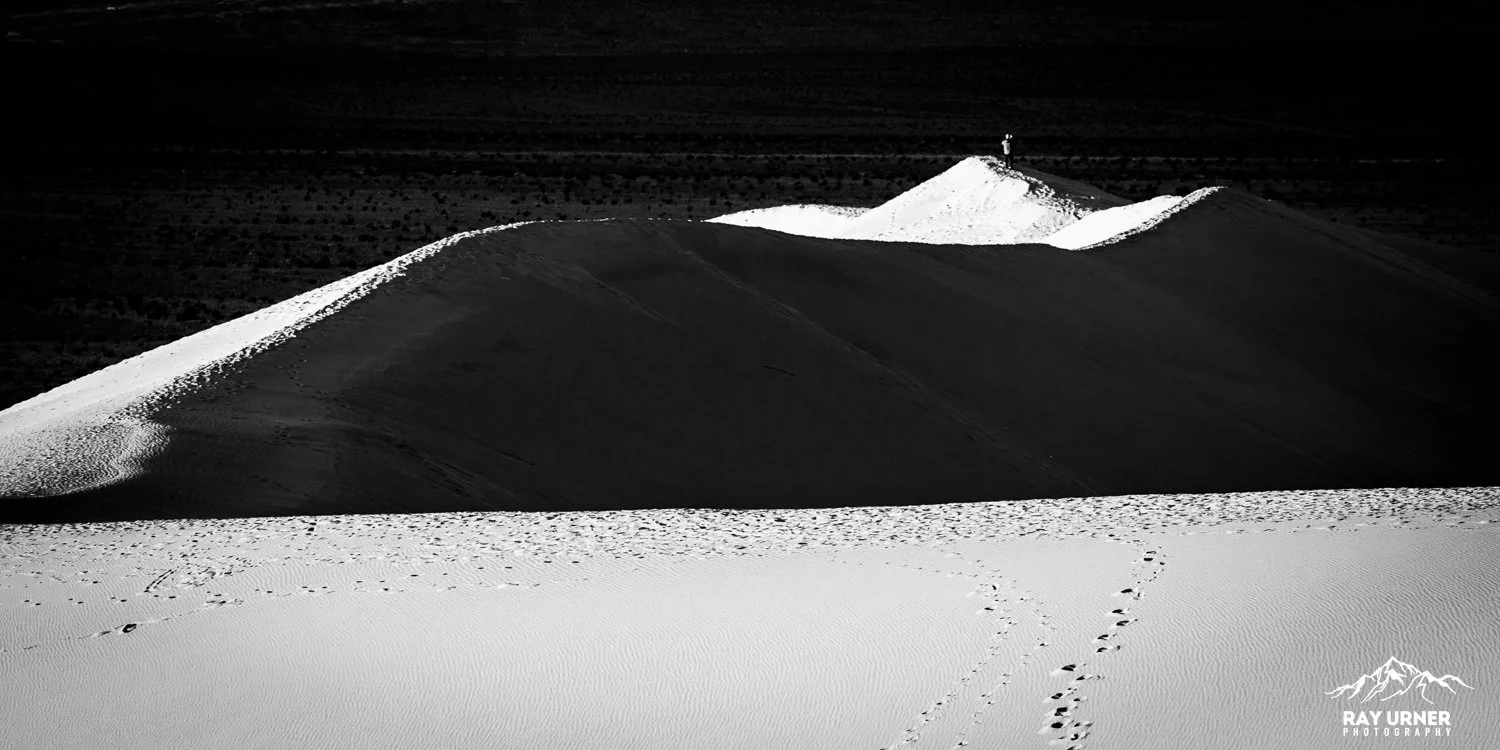
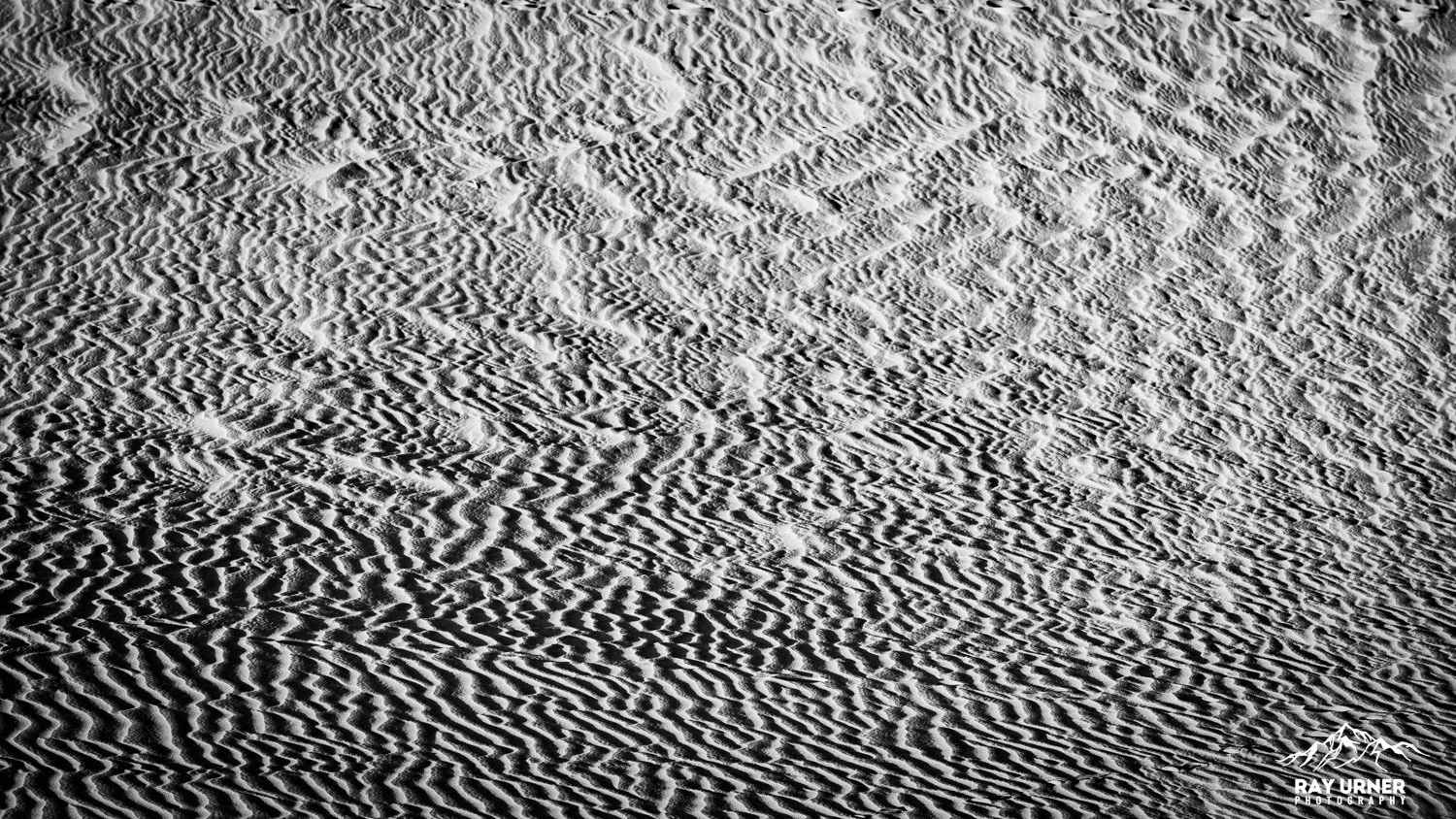
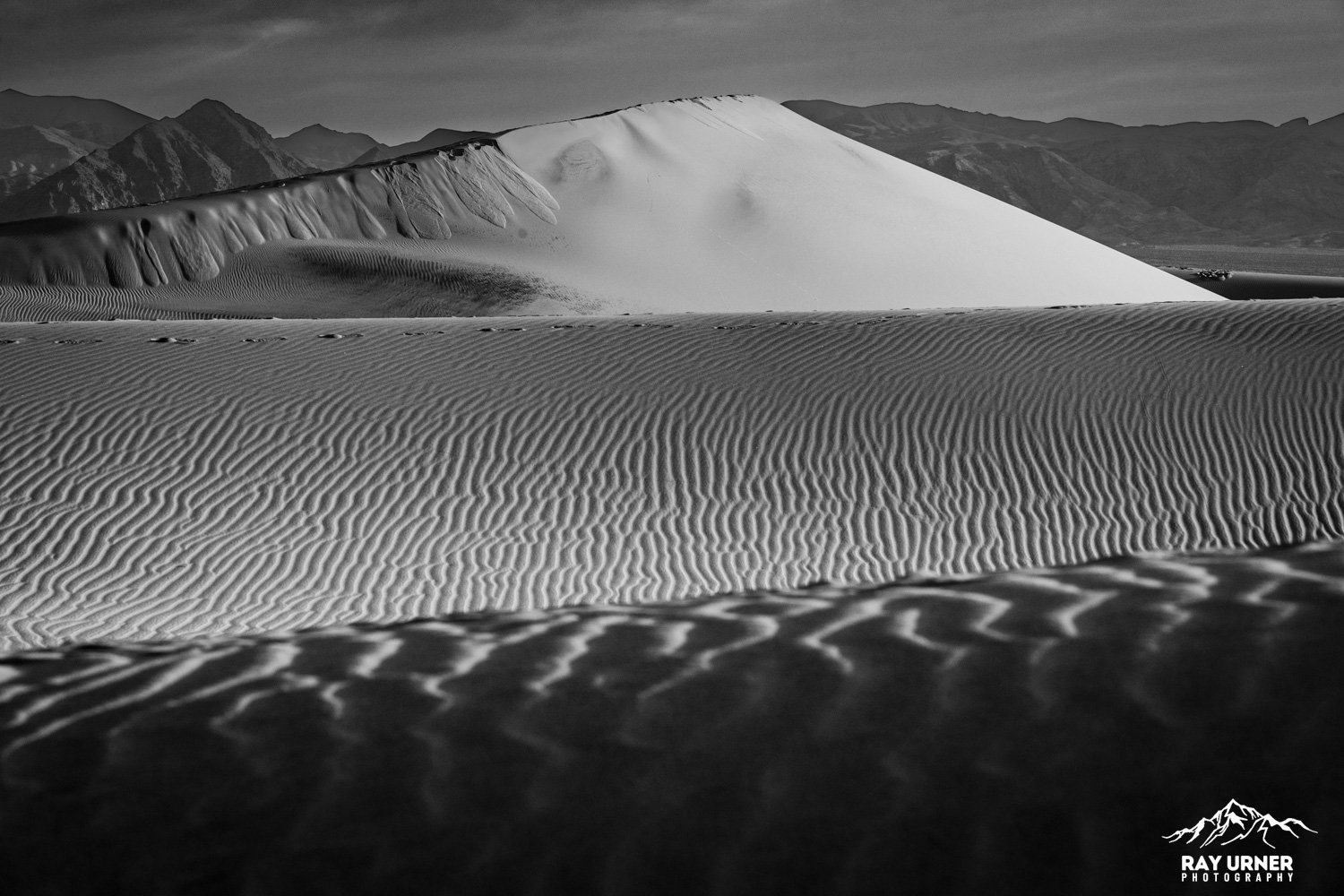
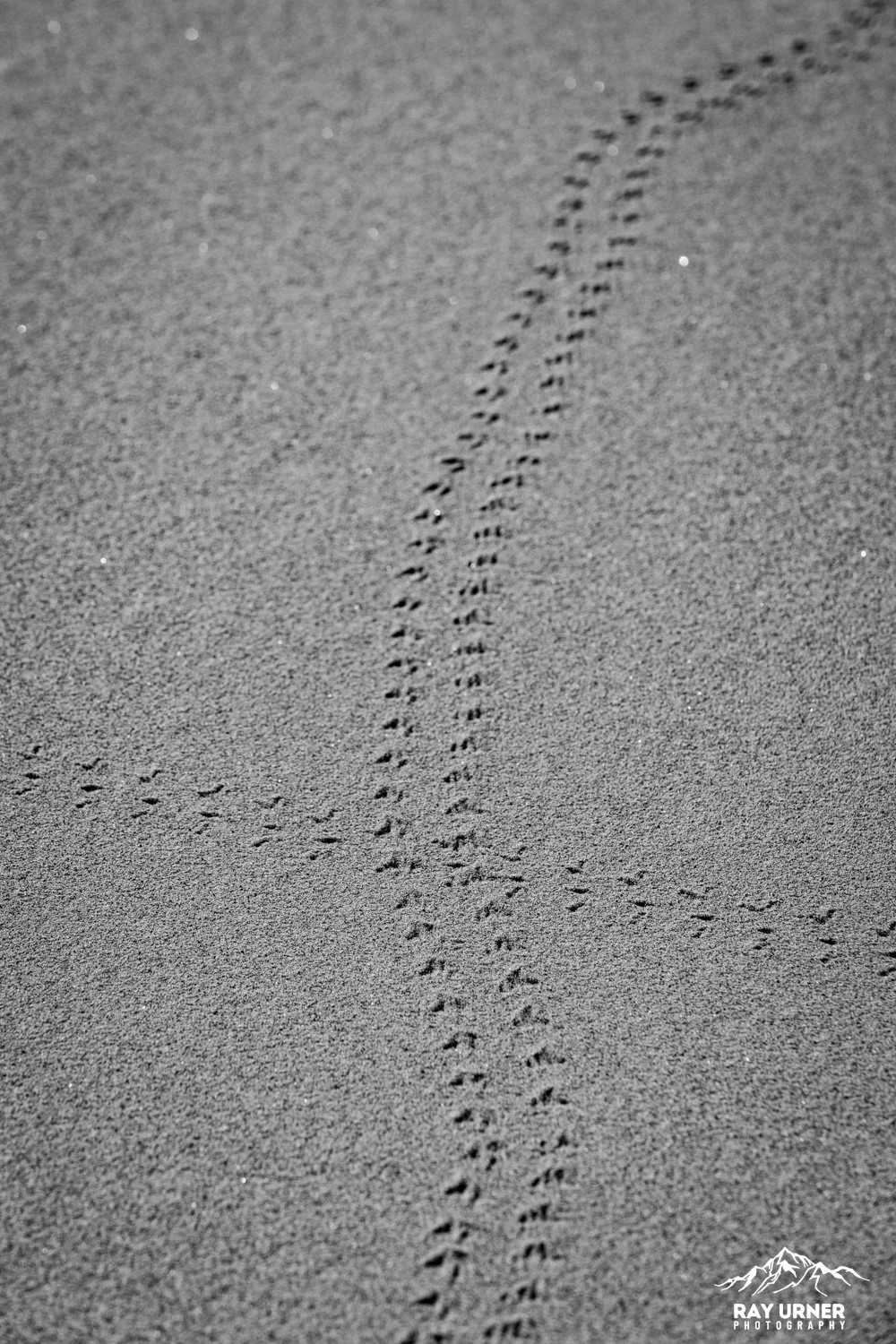
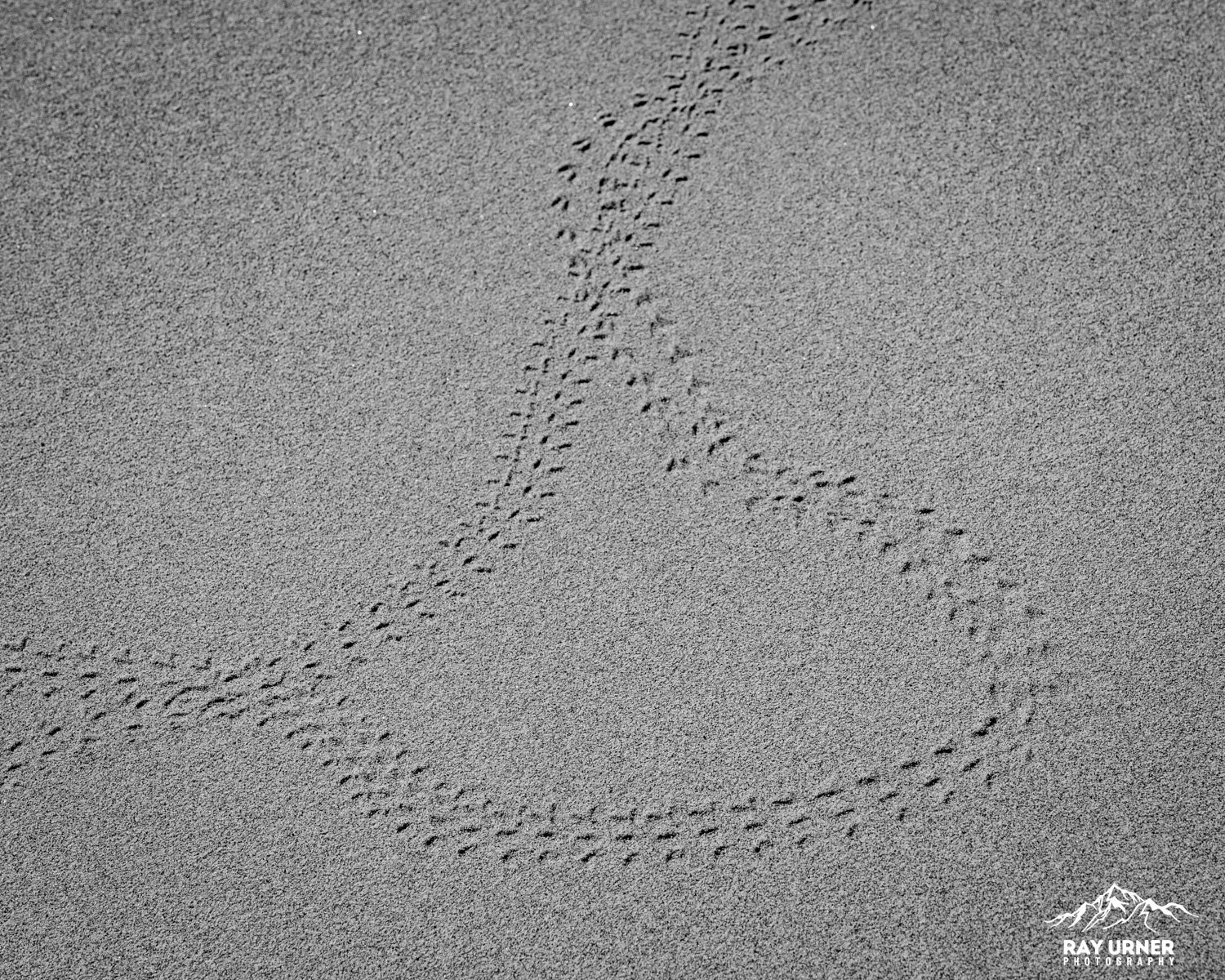
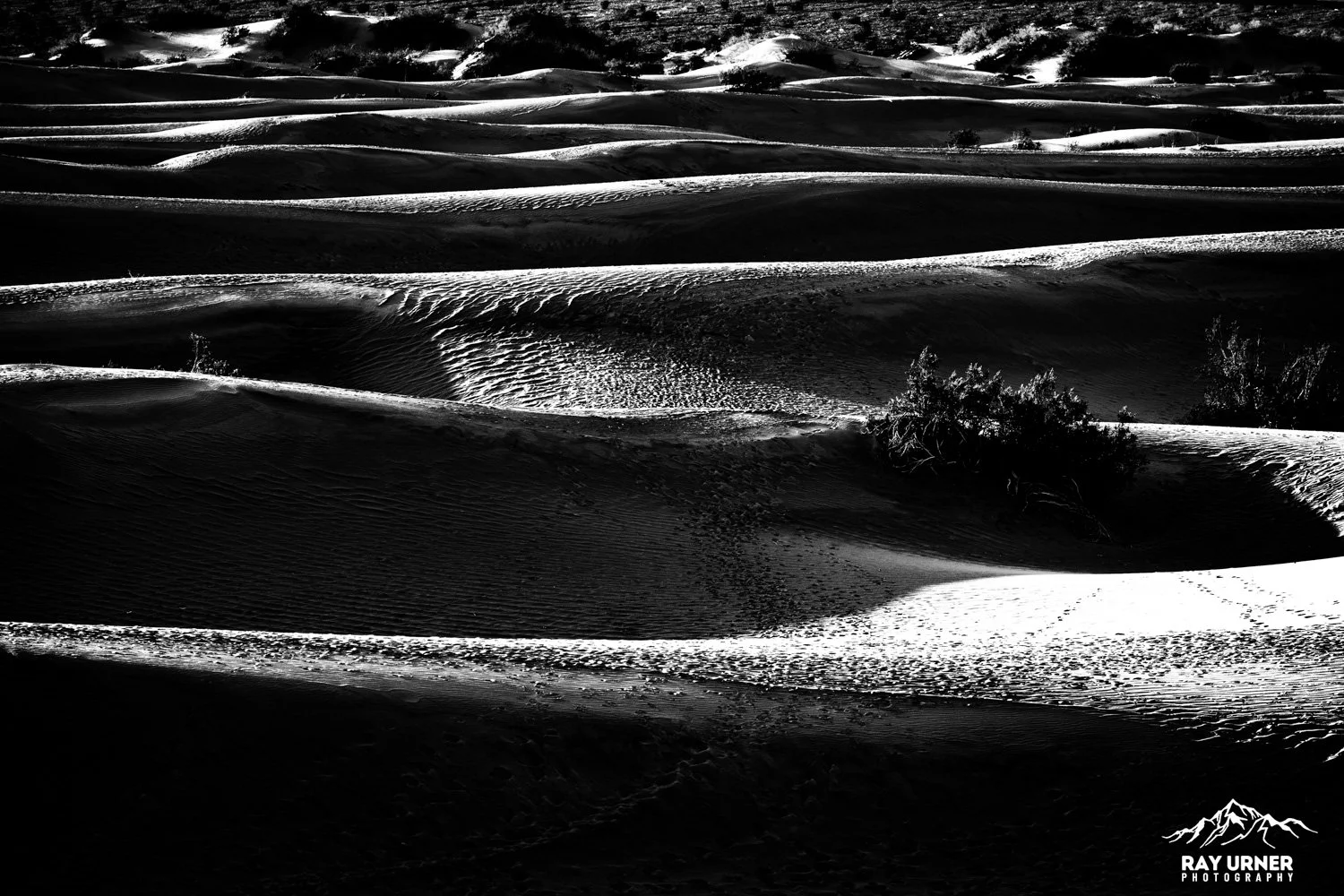
Flat light is excellent for black‑and‑white conversions, emphasizing tonal transitions over shadows.
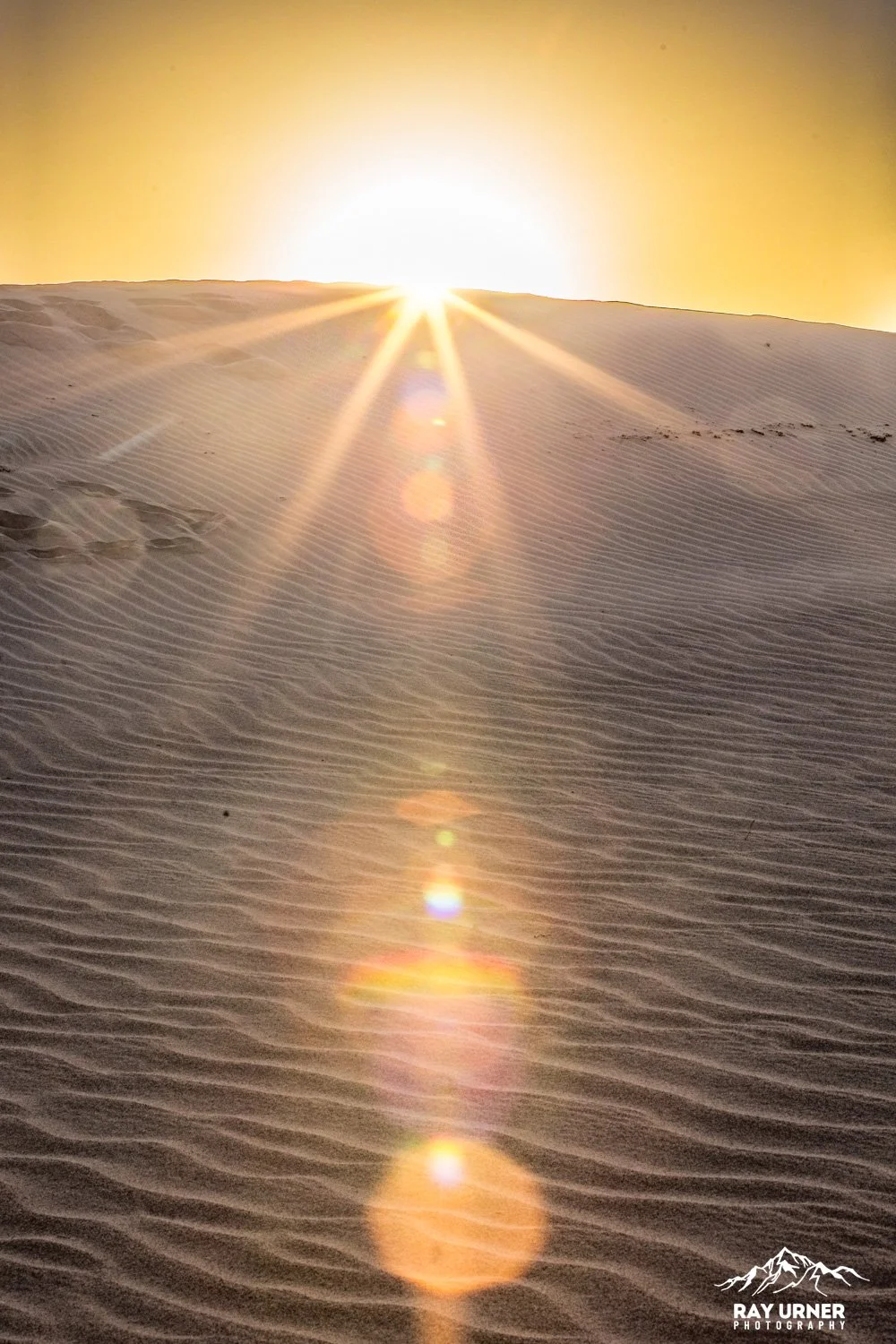
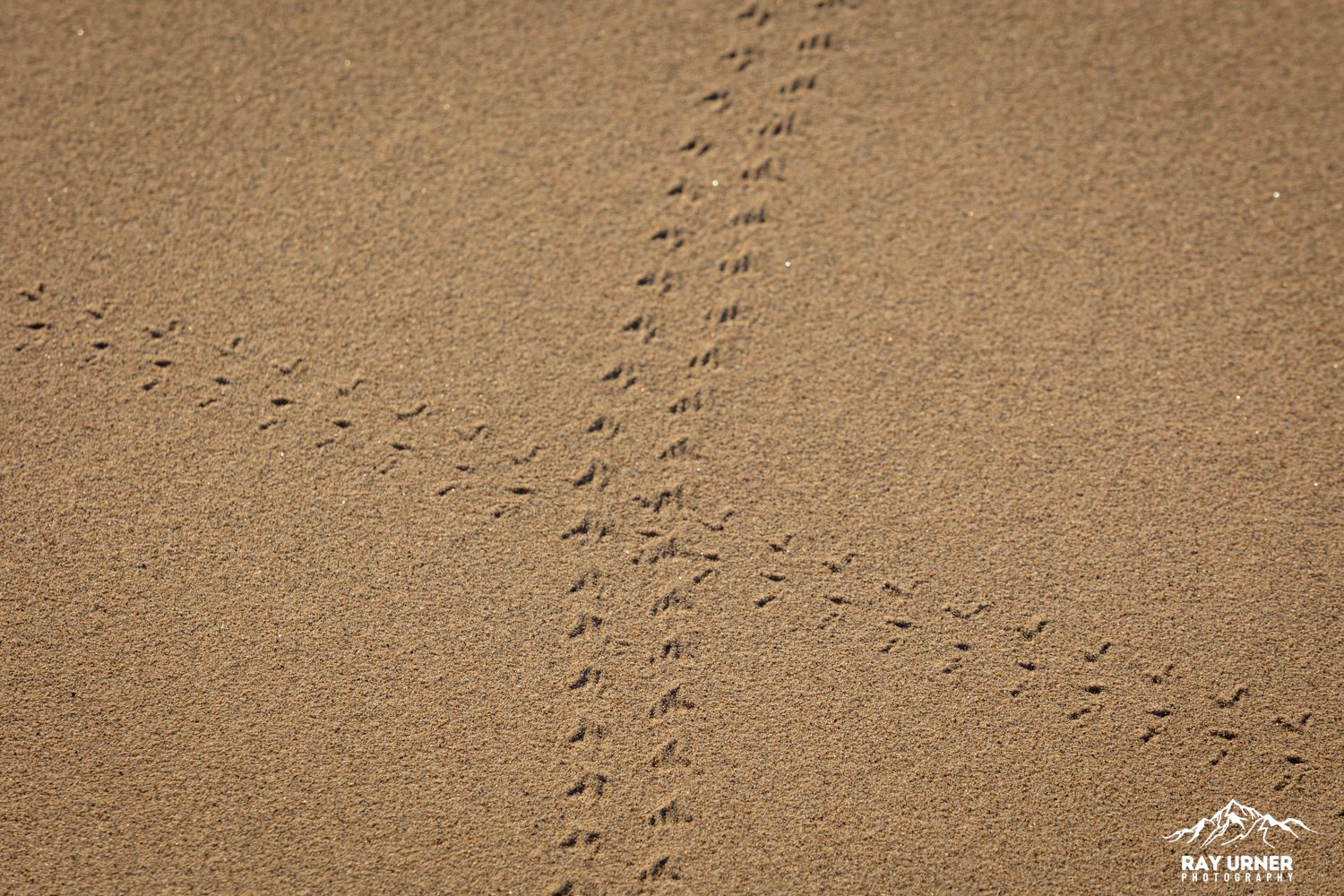
Explore backlit sand drops: even overhead sun gives micro‑shadows on ripple edges if you crouch very low.
On‑the‑Ground Navigation & Logistics
There is no trail, so aim for the tallest dune (≈1 mile each way).
Walking in sand is strenuous; plan more time than you think.
Carry extra water — no shade, no services.
Wear gaiters or tight cuffs; sand infiltration is significant.
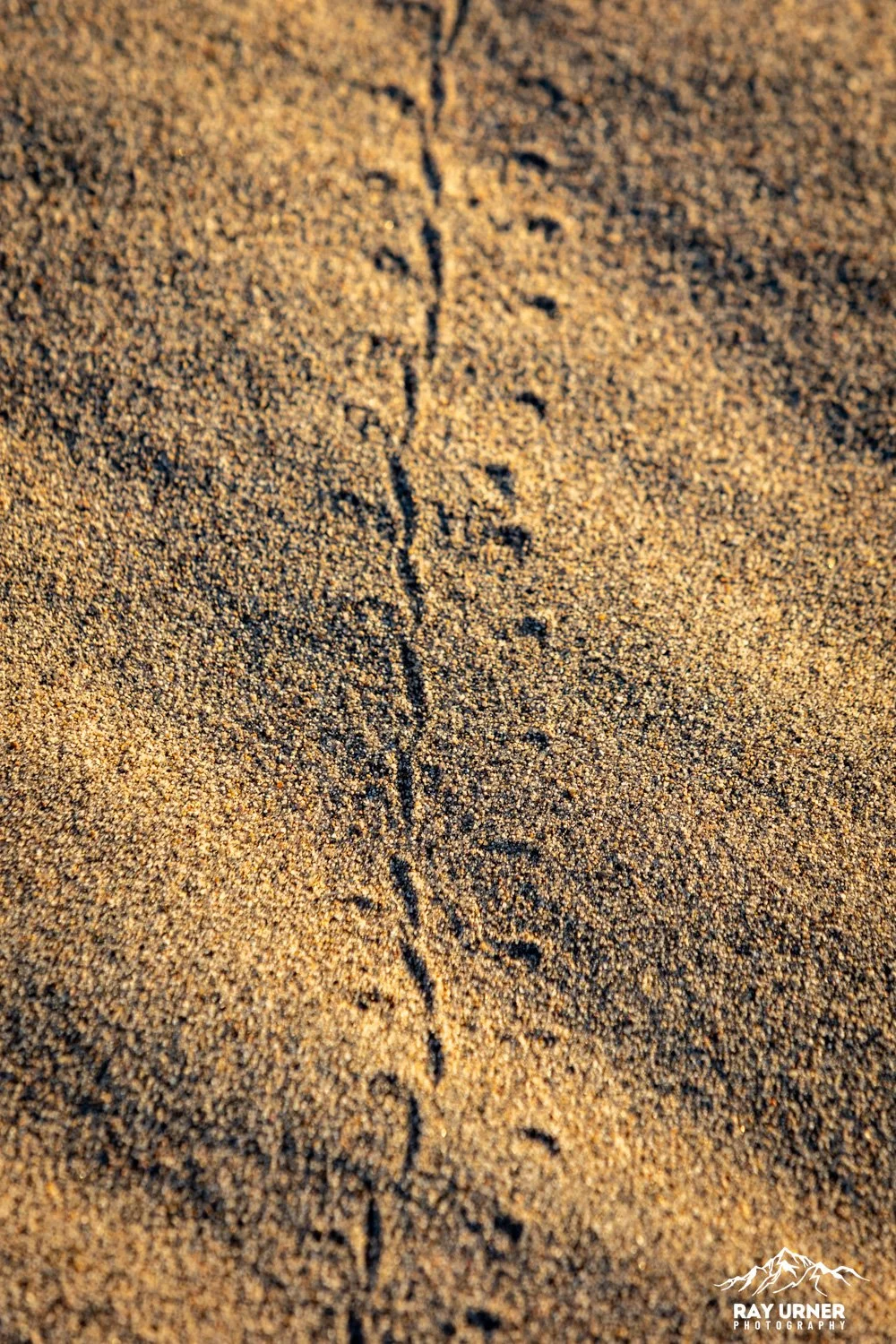
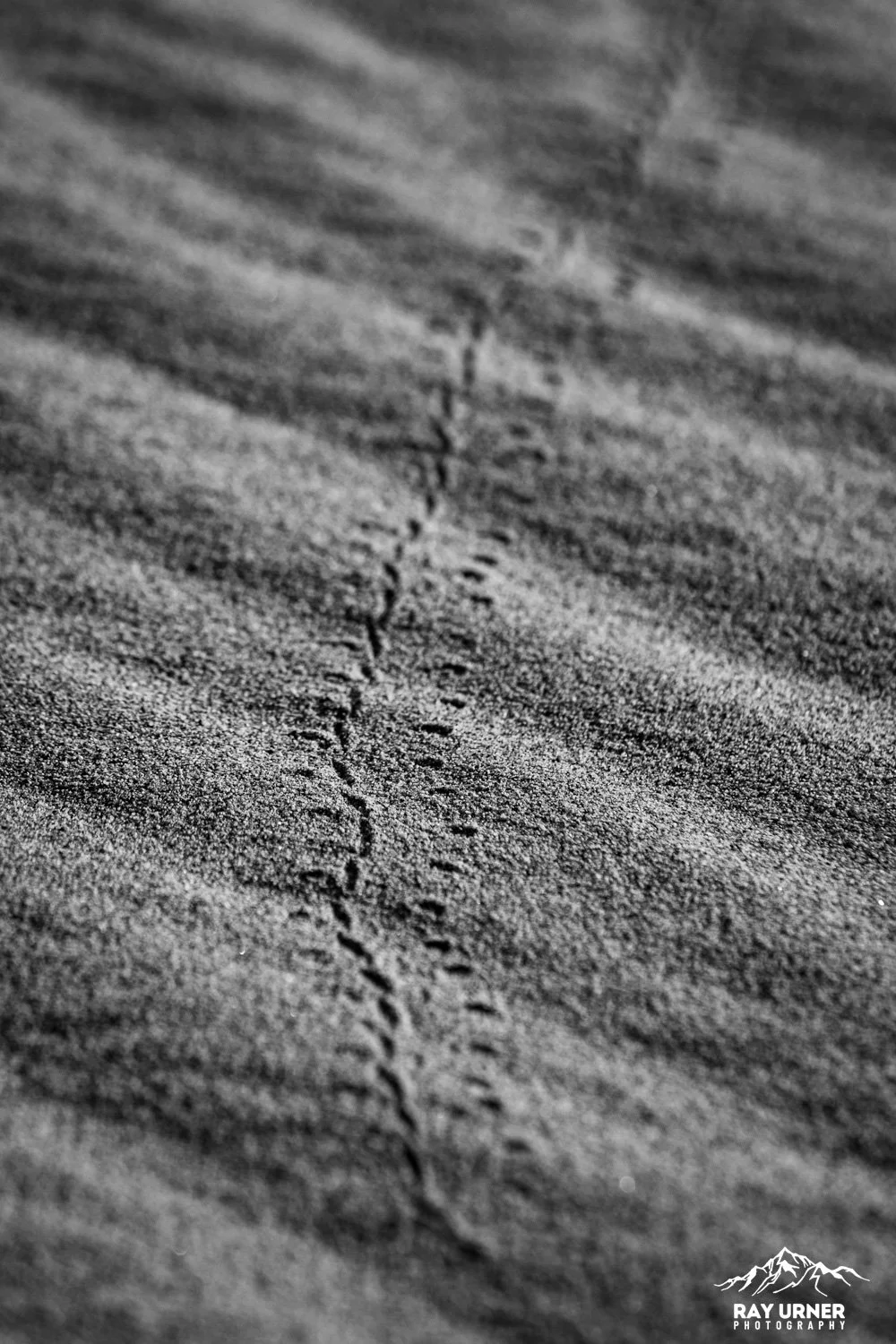
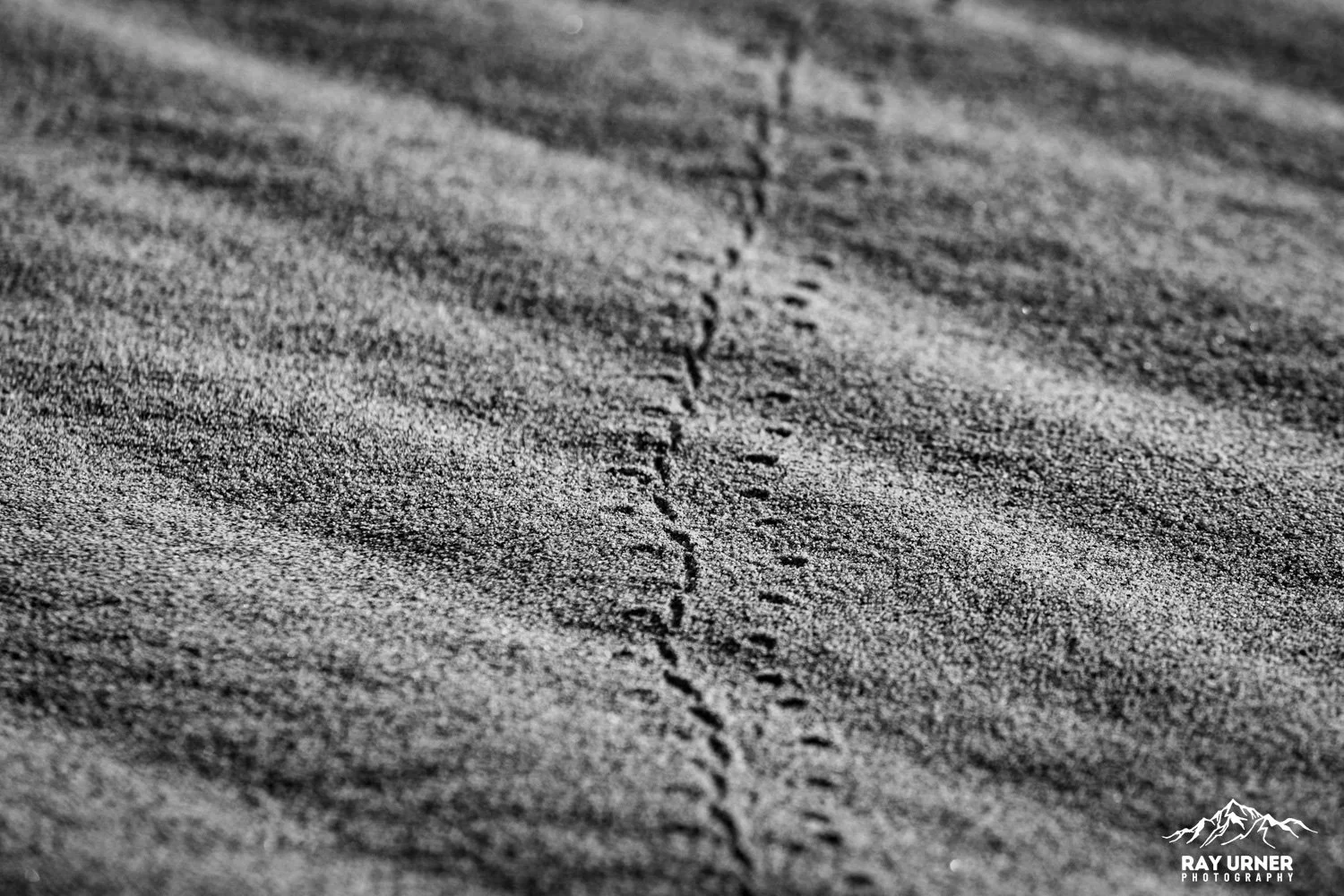
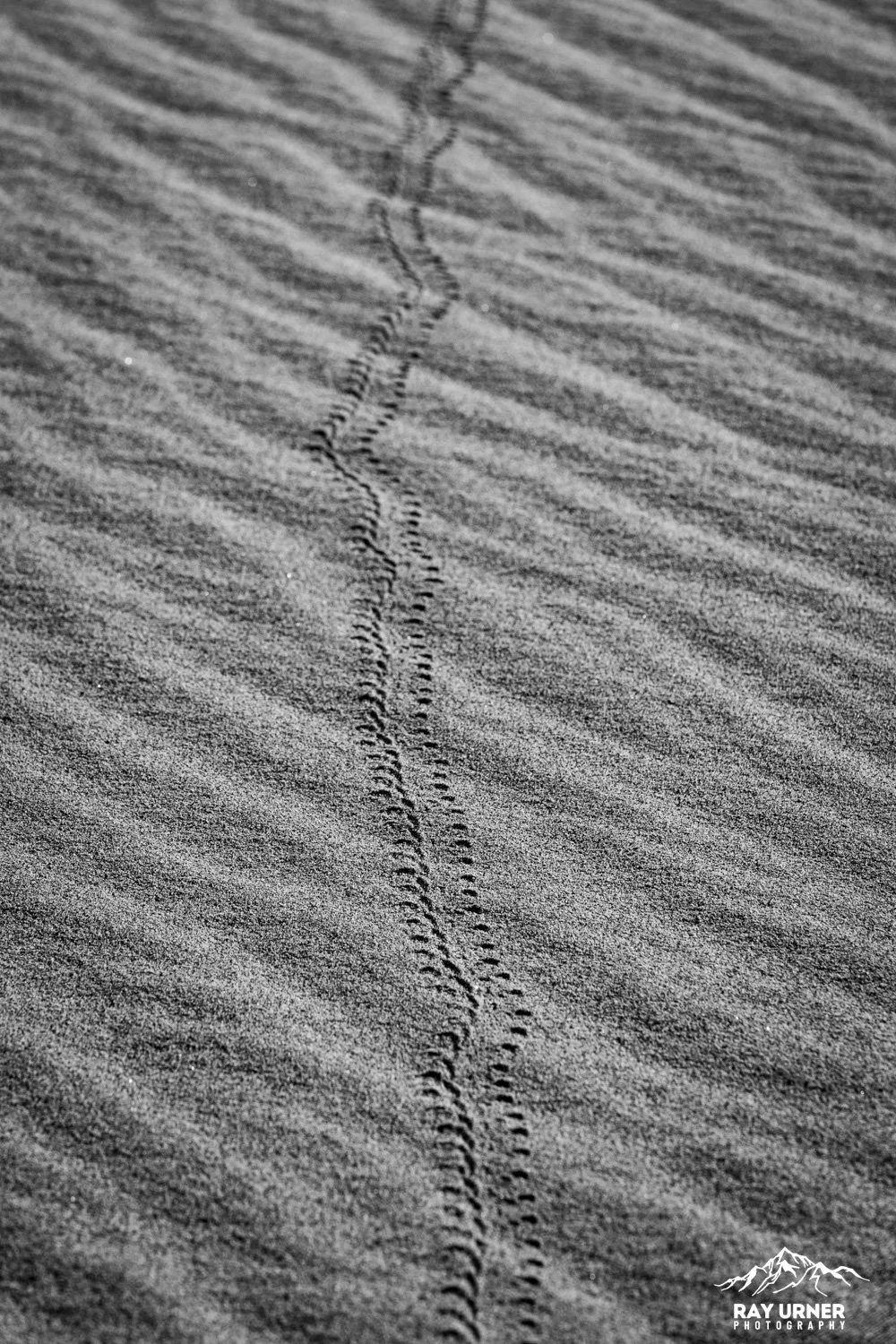
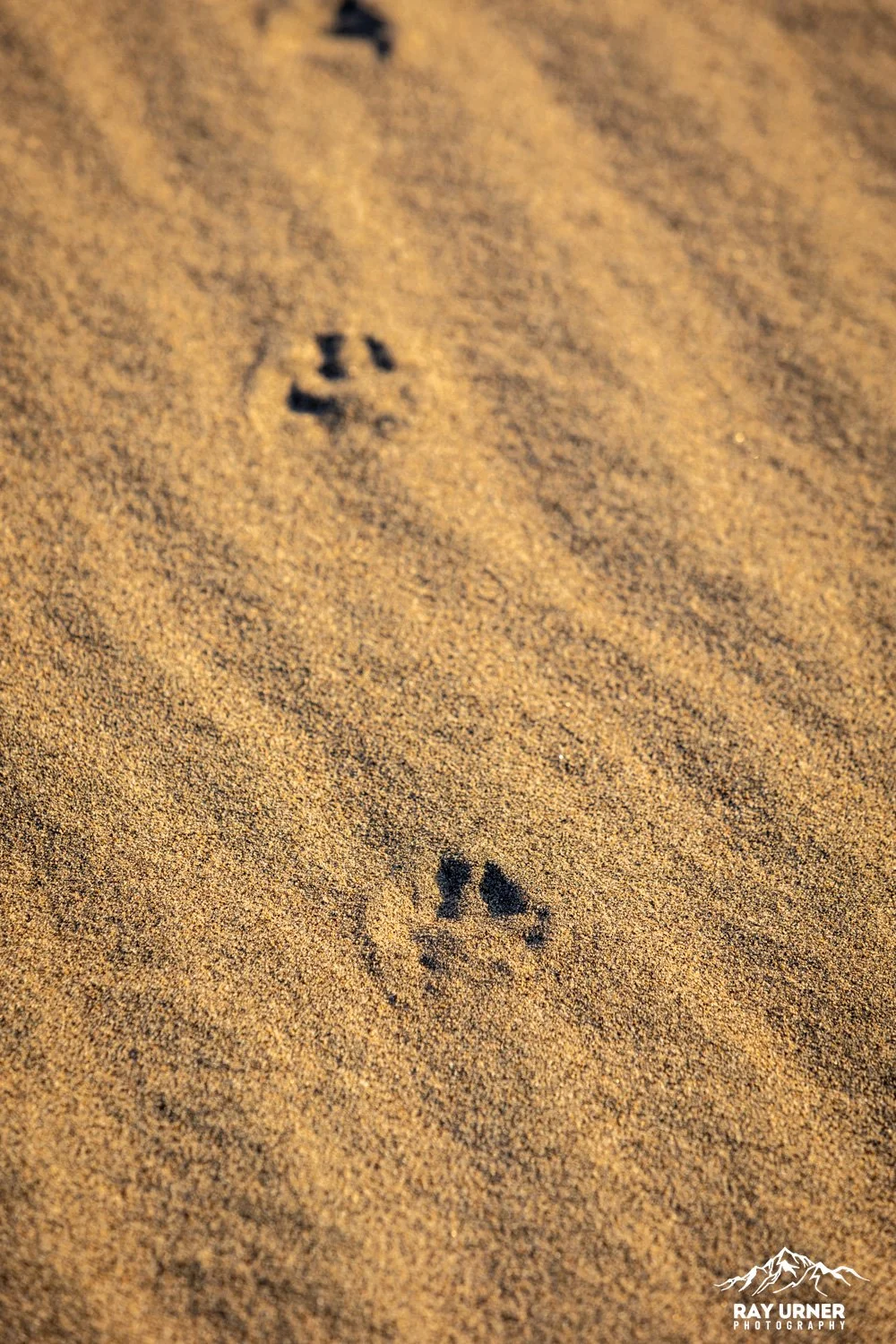
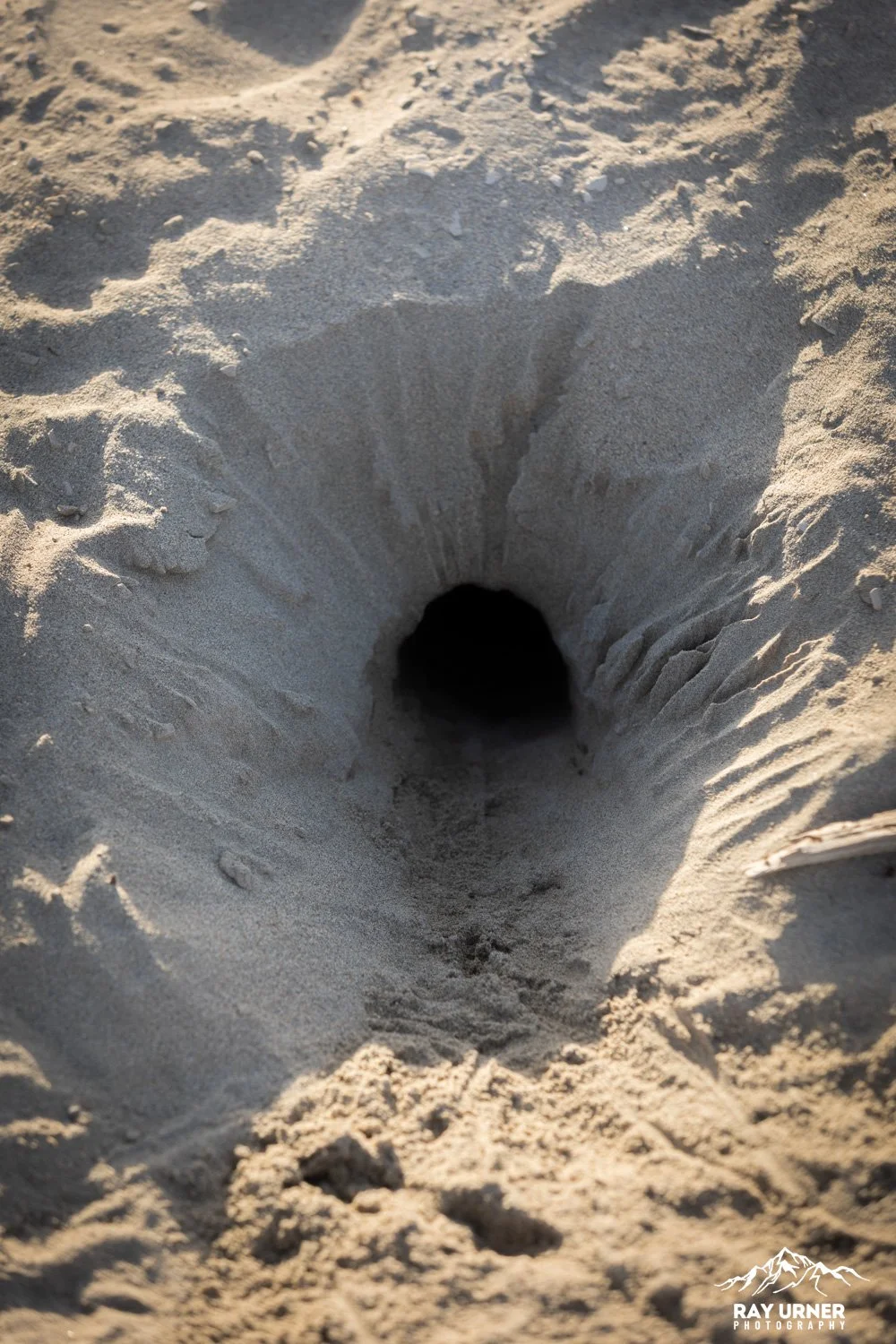
Avoid disturbing wildlife burrows — kangaroo rats and sidewinders are common.
Parking lot often fills late morning; dawn is quiet.
Pro Tips
Scout in the late afternoon, return at sunrise for optimal positioning.
Footprints are unavoidable — so use telephoto to crop them out or incorporate them intentionally as leading lines.
After wind events, prioritize this location immediately; surfaces can reset overnight.
Bring a microfiber cloth, and be extra careful when switching lenses — sand infiltrates everything.