Natural Bridge
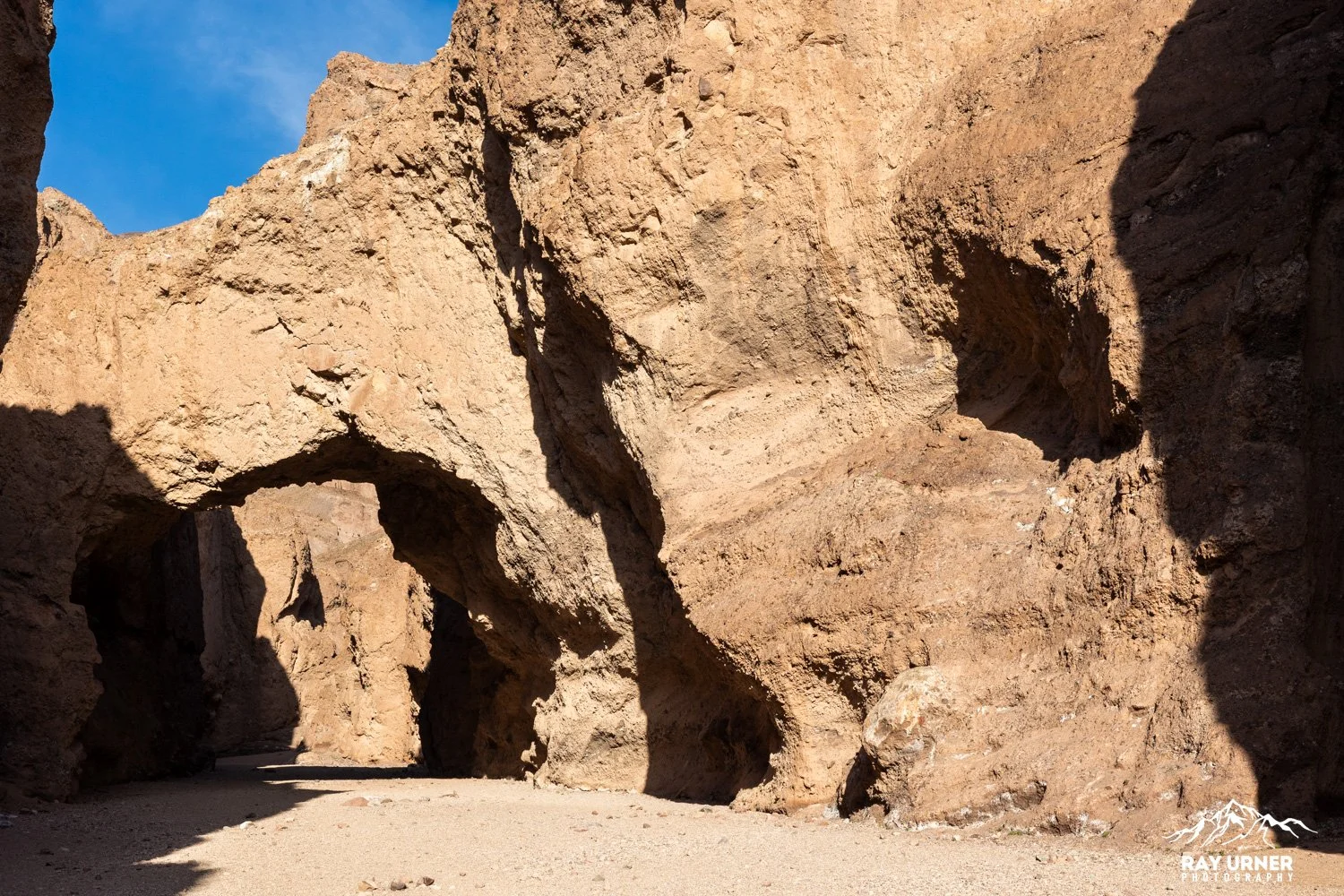
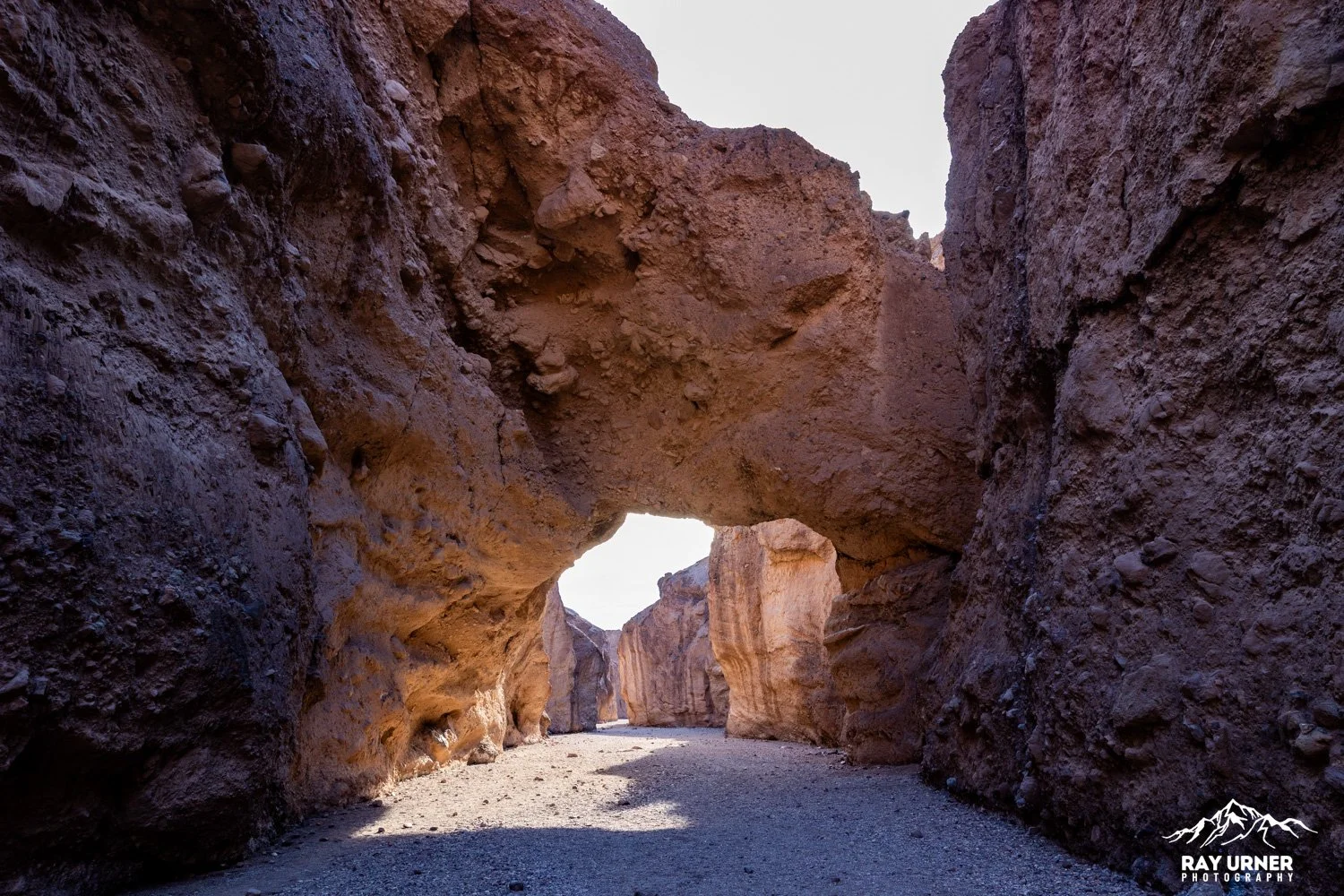
Natural Bridge is a short canyon hike off Badwater Road leading to a large, naturally carved rock arch deep within a narrow desert wash. While less visited than Death Valley’s headline viewpoints, it offers a more intimate photography experience—featuring textured canyon walls, layered rock formations, and strong leading lines that guide the eye toward the bridge itself.
The trail is short but visually engaging, gradually pulling you deeper into the landscape before revealing the arch tucked between steep canyon walls. It’s a quick stop that rewards patience and careful composition.
Overview
Quick Facts
• Location: Off Badwater Road, south of Furnace Creek
• Trail: ~1 mile round trip (moderate, gravel wash with slight elevation gain)
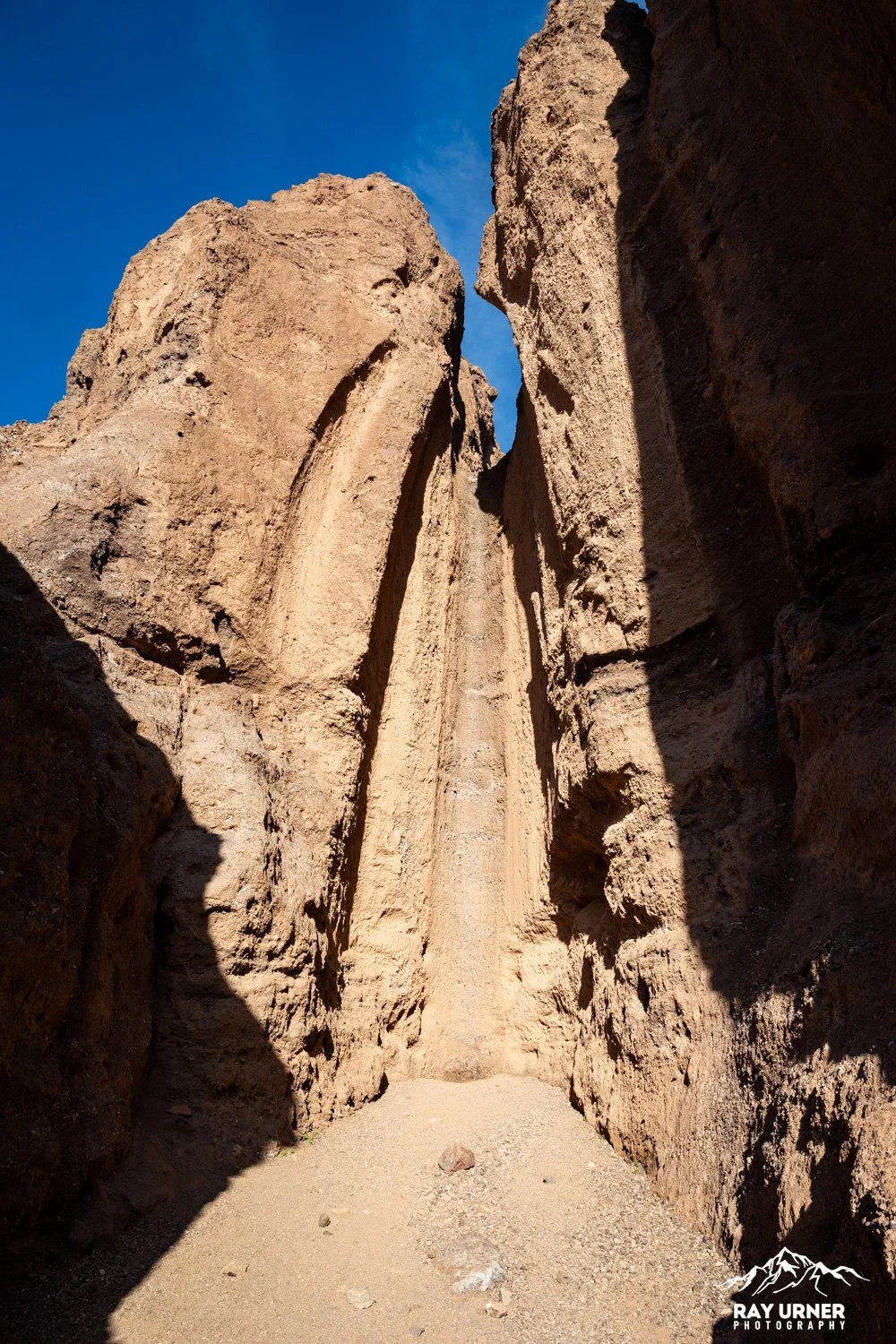
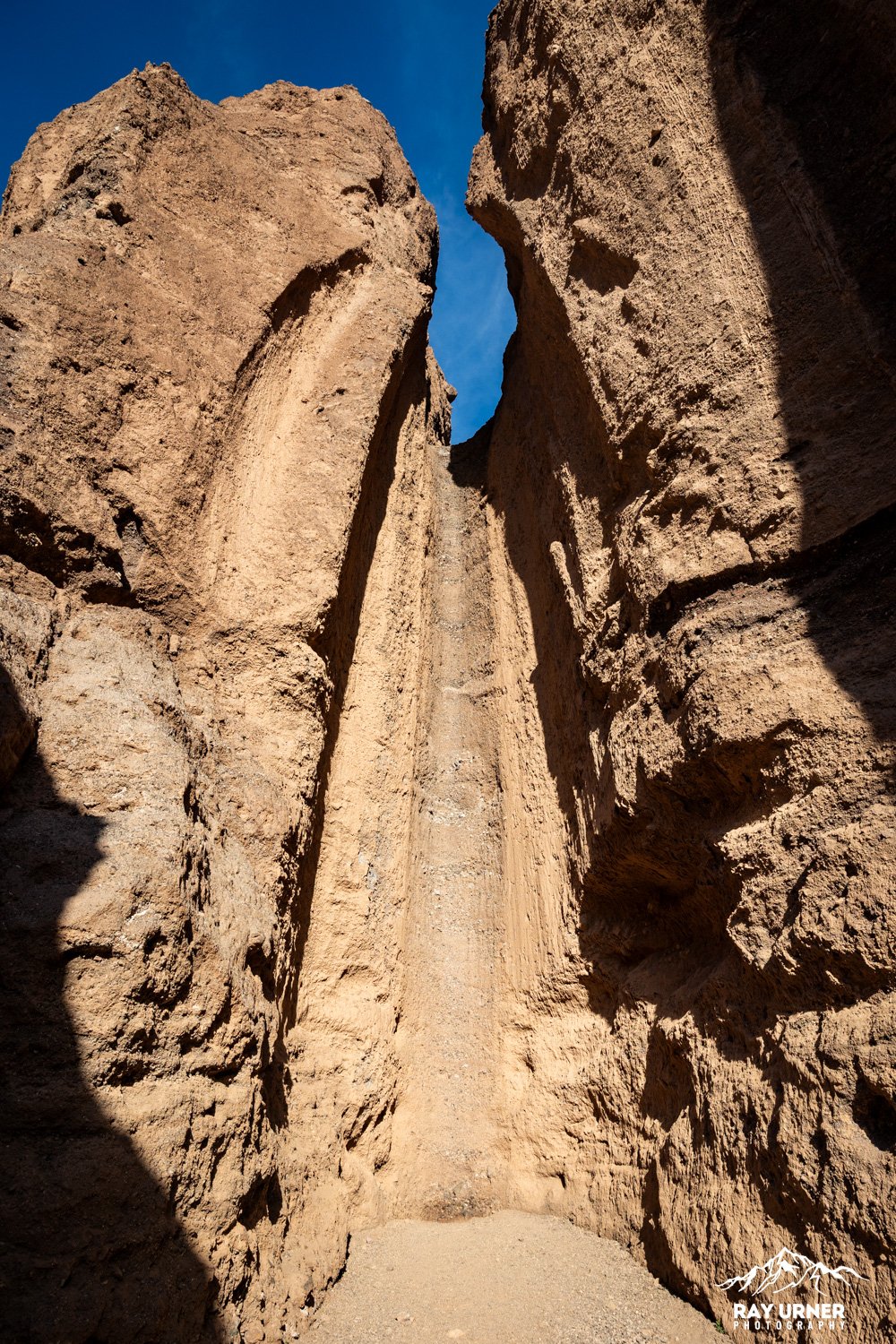
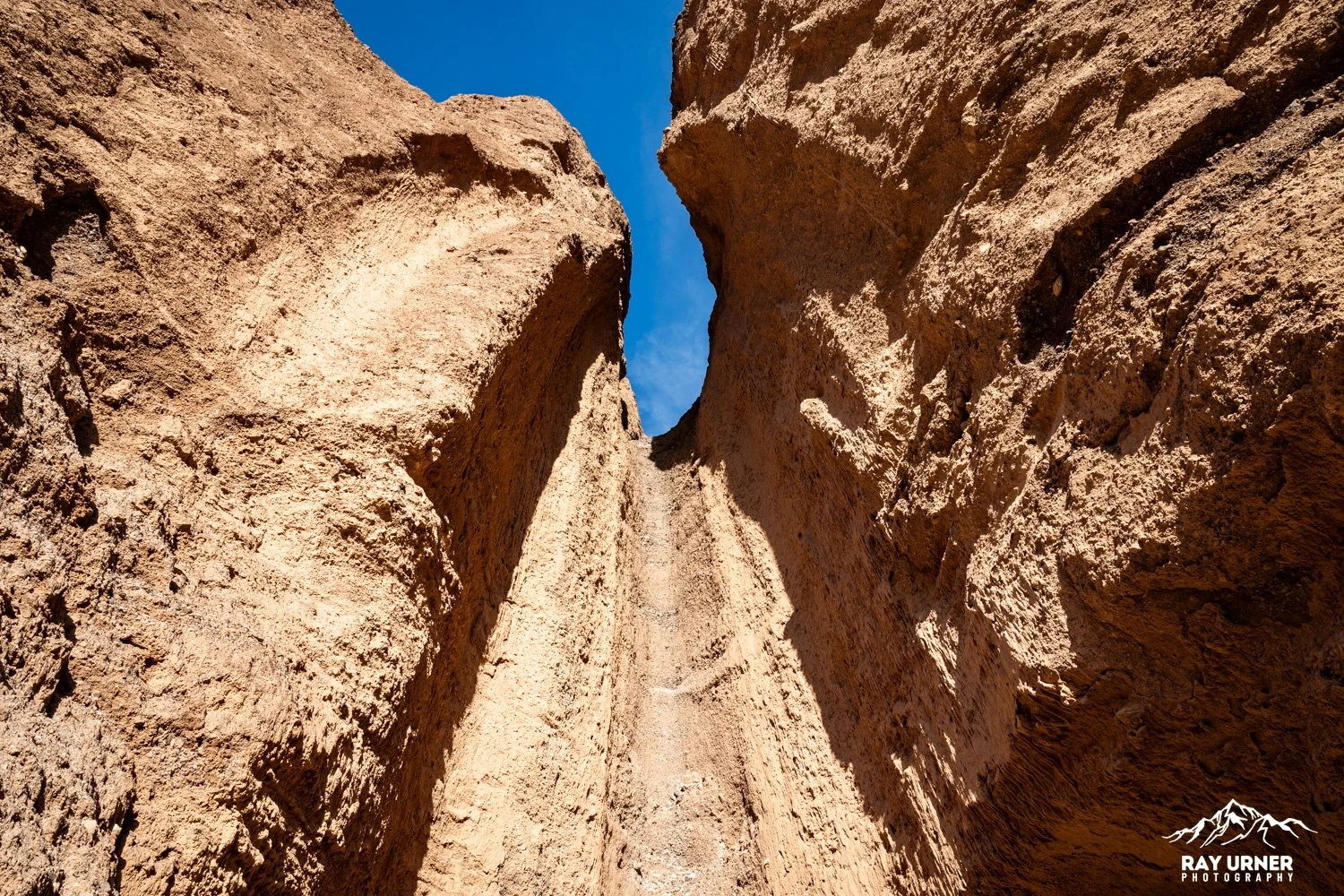
• Features: Natural rock arch, narrow canyon, dry falls, layered rock walls
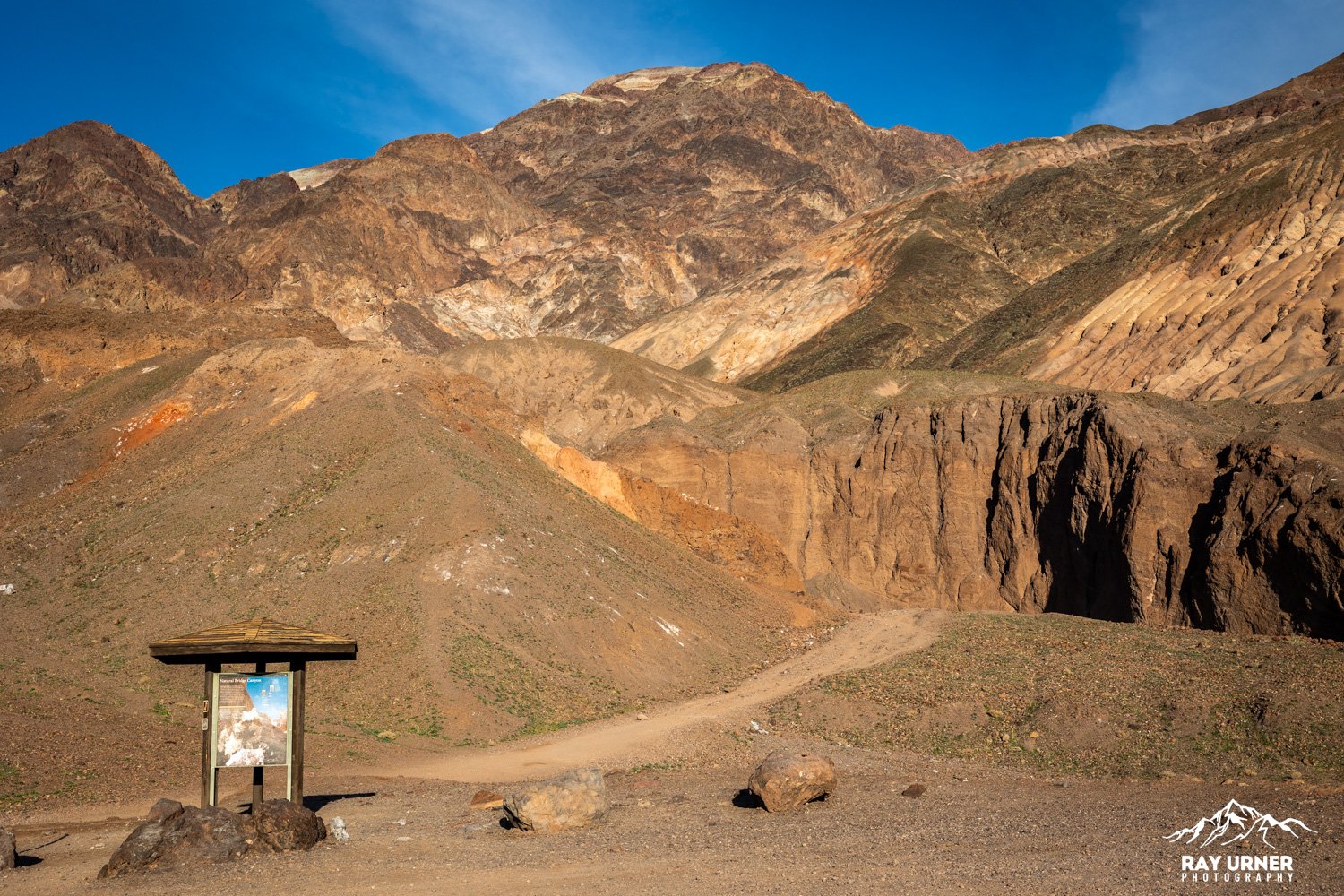
• Parking: Gravel lot at trailhead
• Best Light: Late afternoon for side light in the canyon; early morning for softer tones
• Time Needed: 30–60 minutes (longer for photography exploration)
Geology
Natural Bridge was formed through erosion over thousands of years as flash floods cut through soft alluvial and sedimentary rock. The canyon acts as a drainage channel, with periodic water flow gradually sculpting the rock into arches, dry falls, and smooth-walled passages.
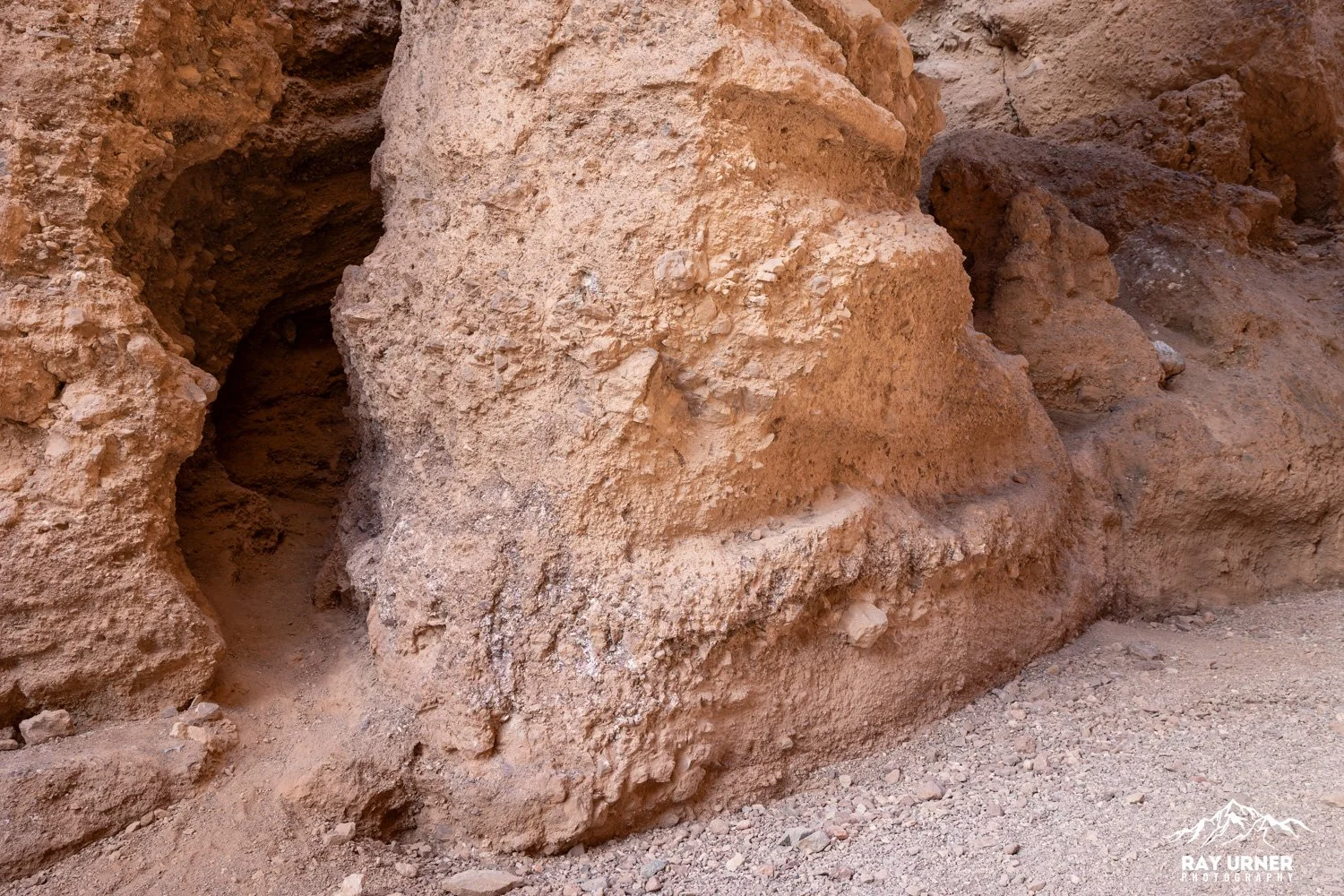
The bridge itself is a remnant of harder material left standing as surrounding rock eroded away. The surrounding canyon walls display distinct layers, textures, and erosion patterns that are especially striking when lit from the side.
Photography Guide
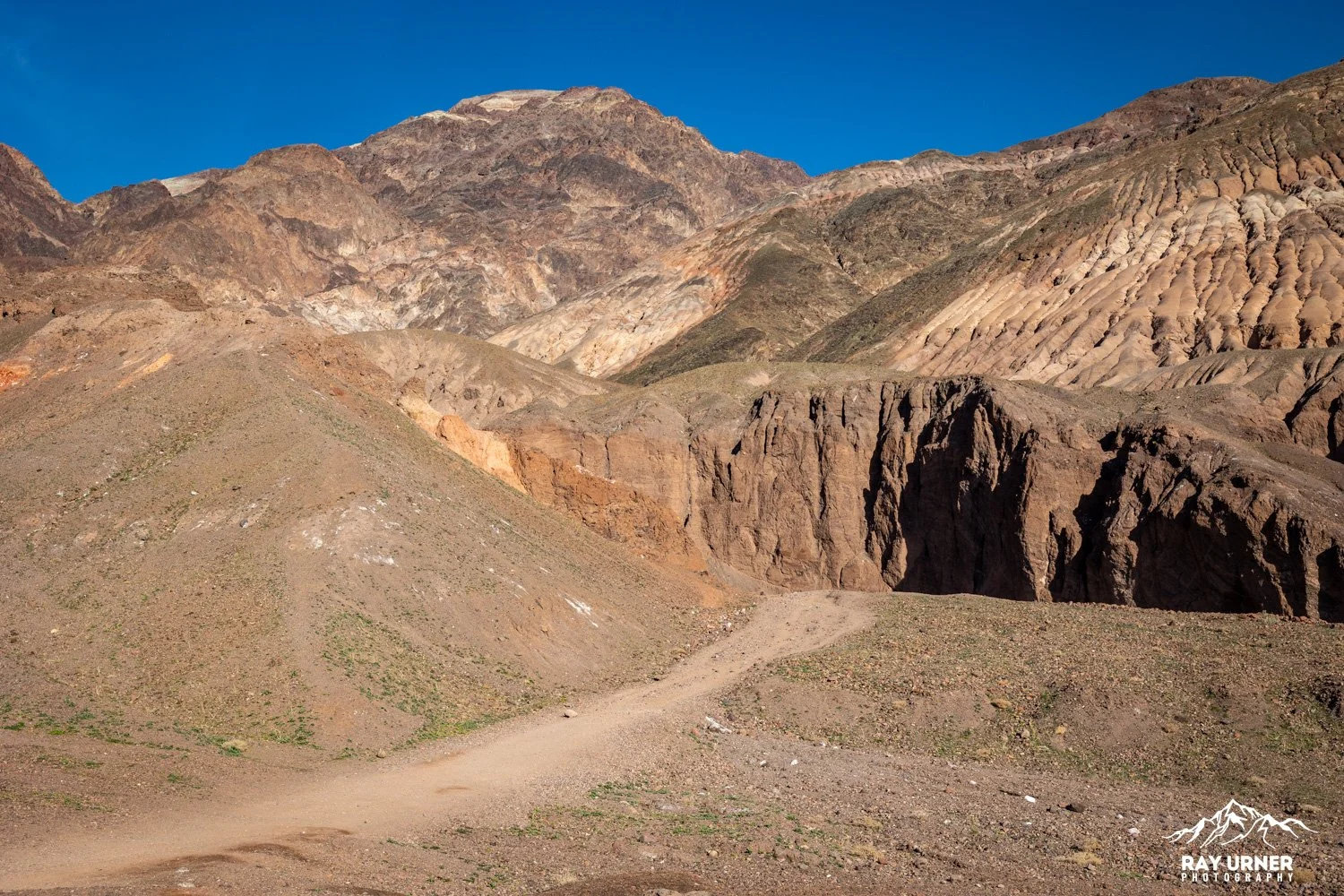
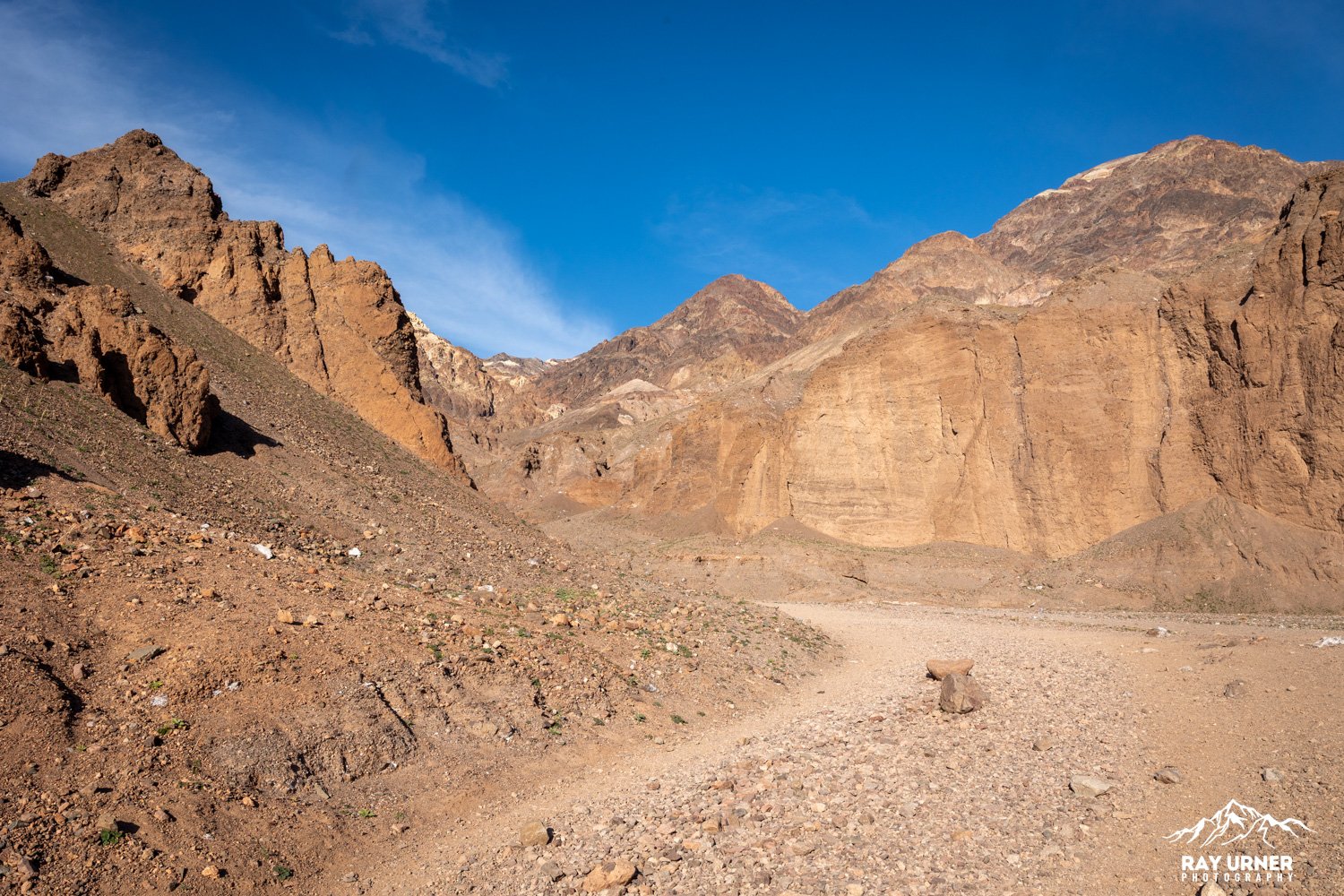
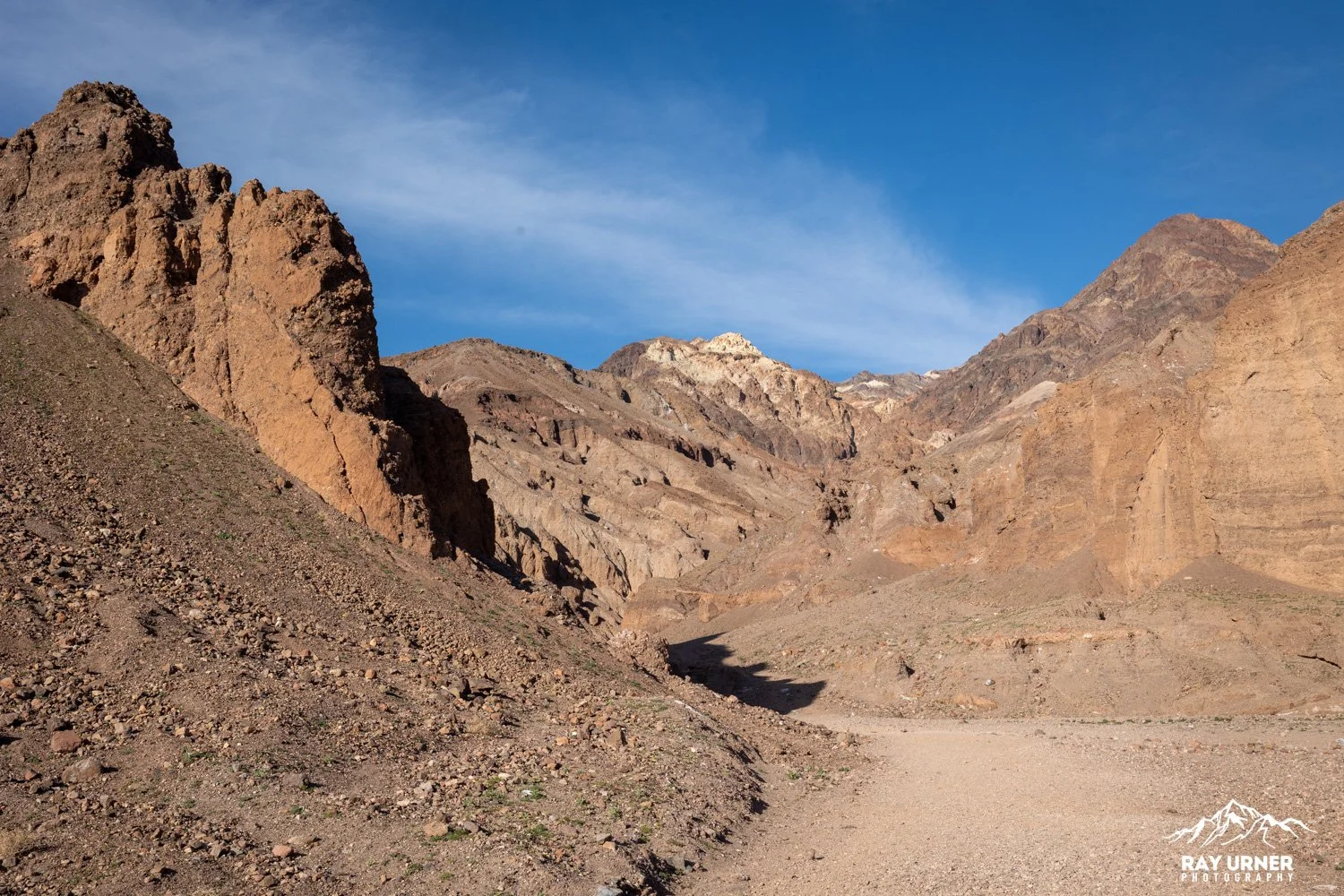
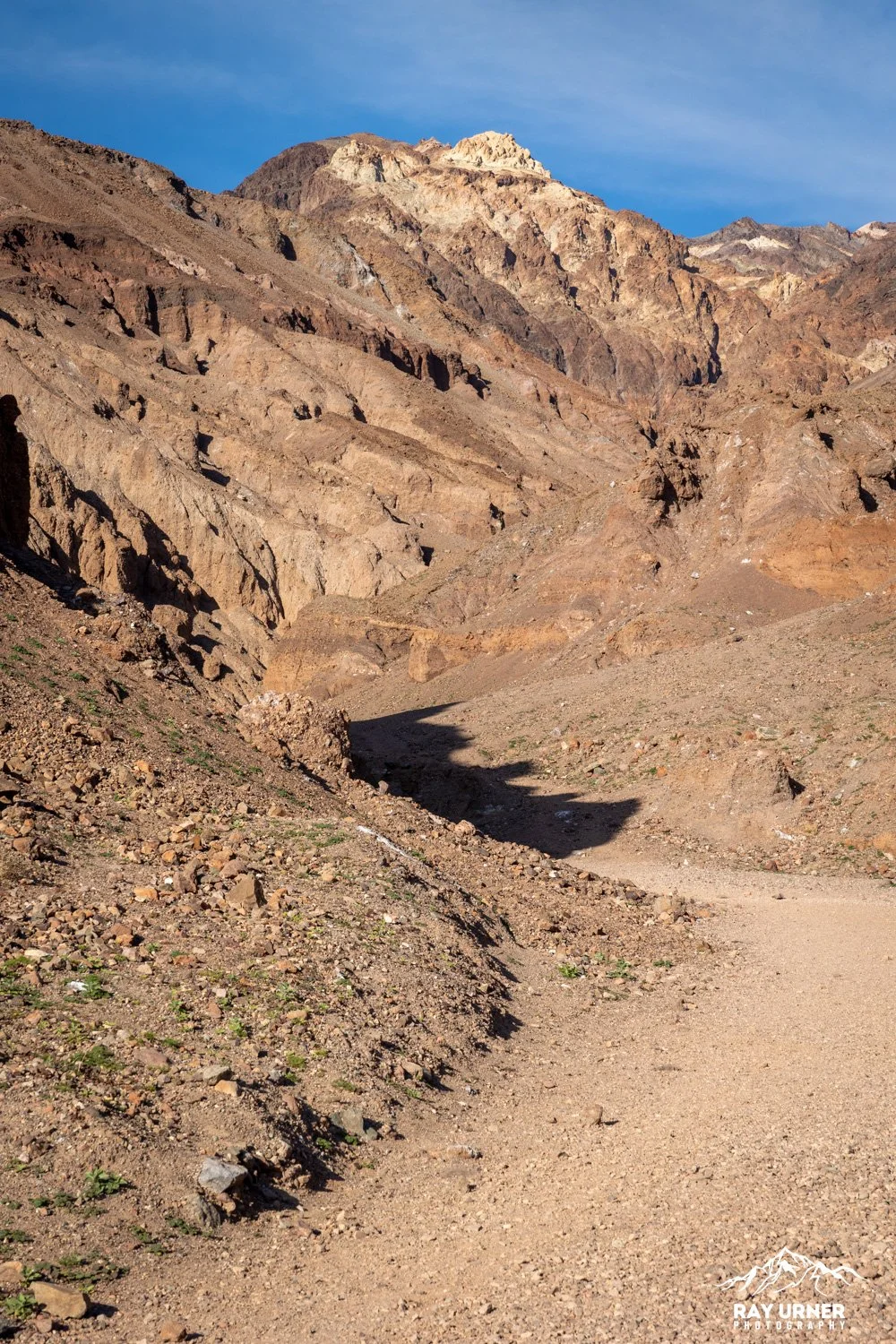
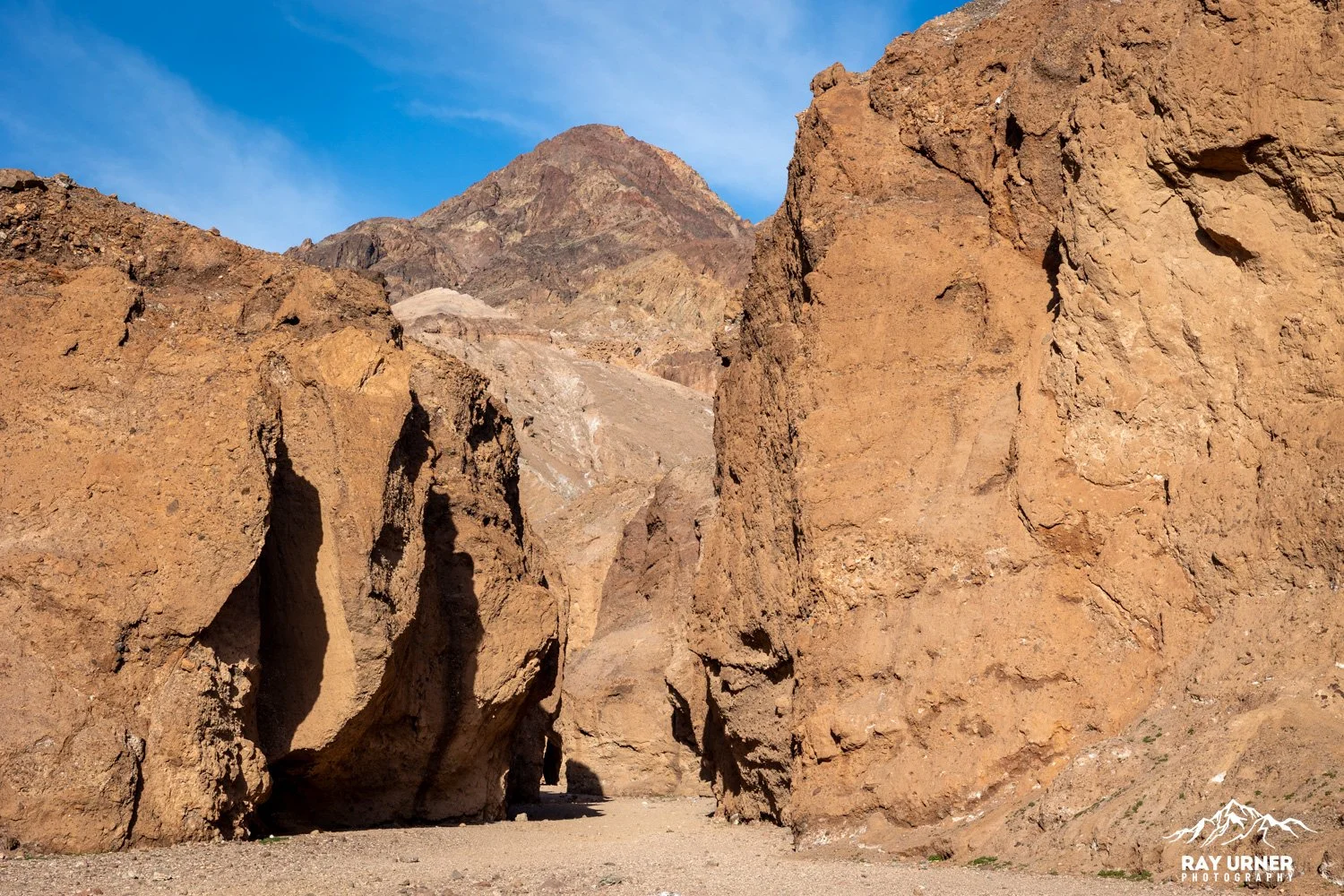
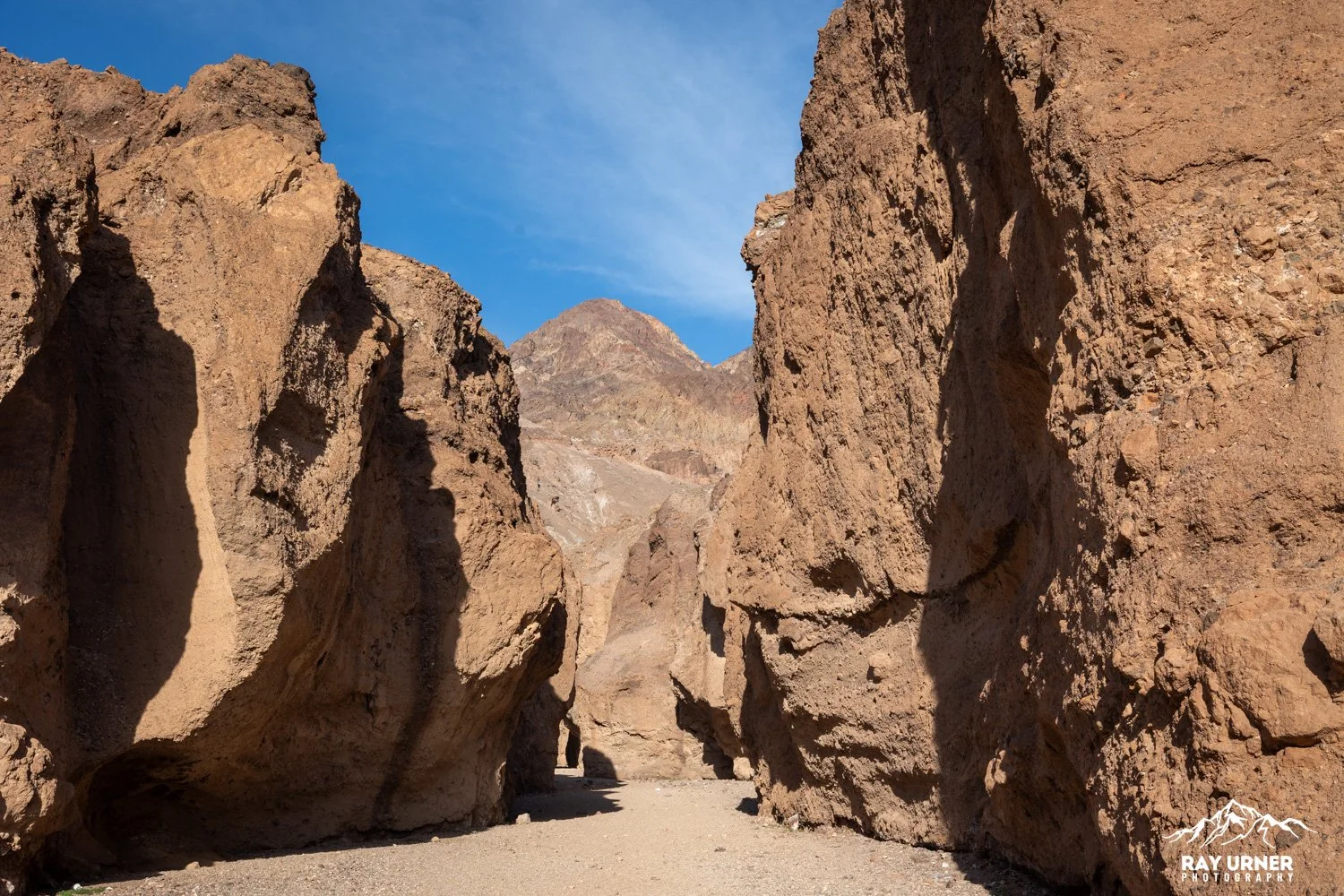
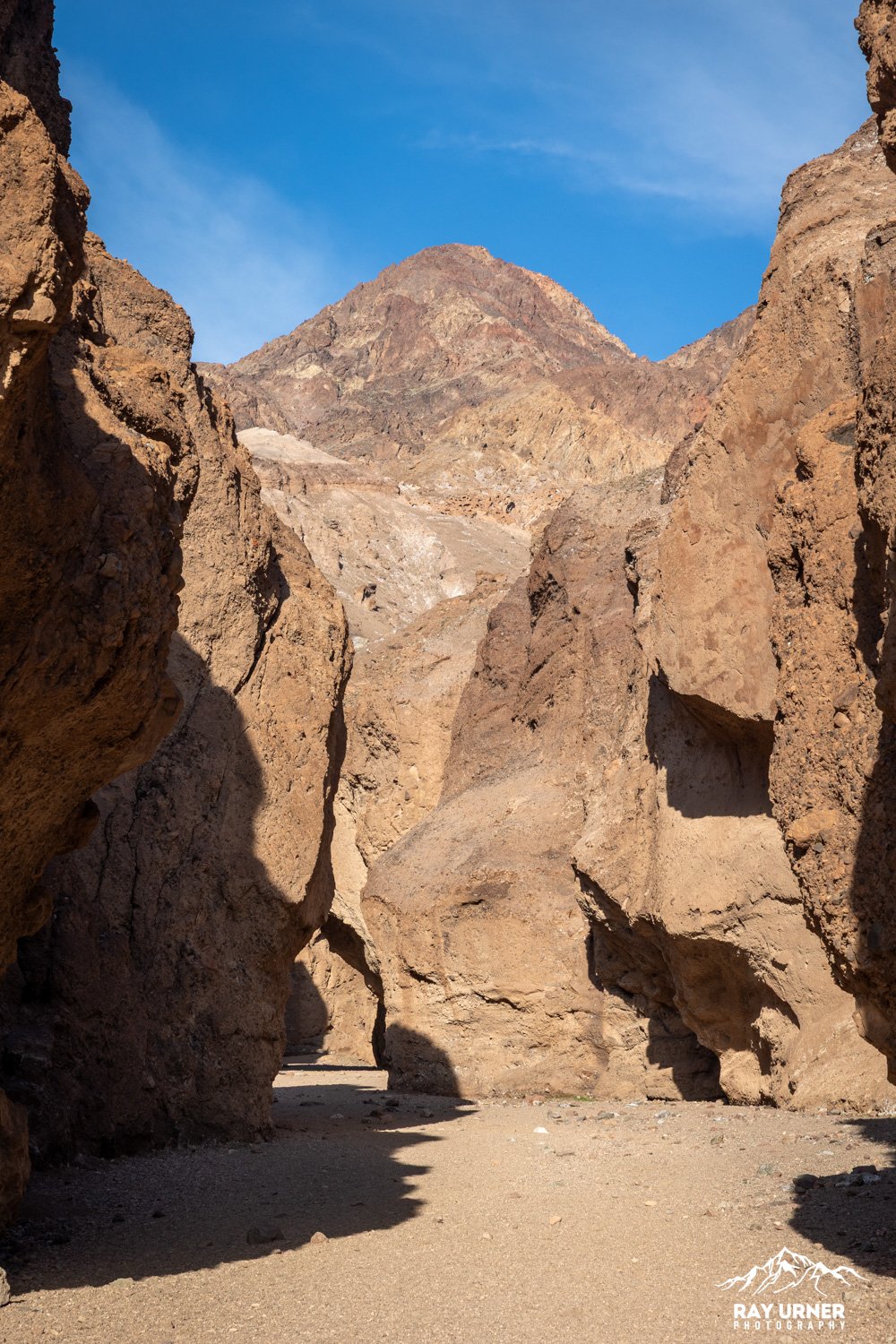
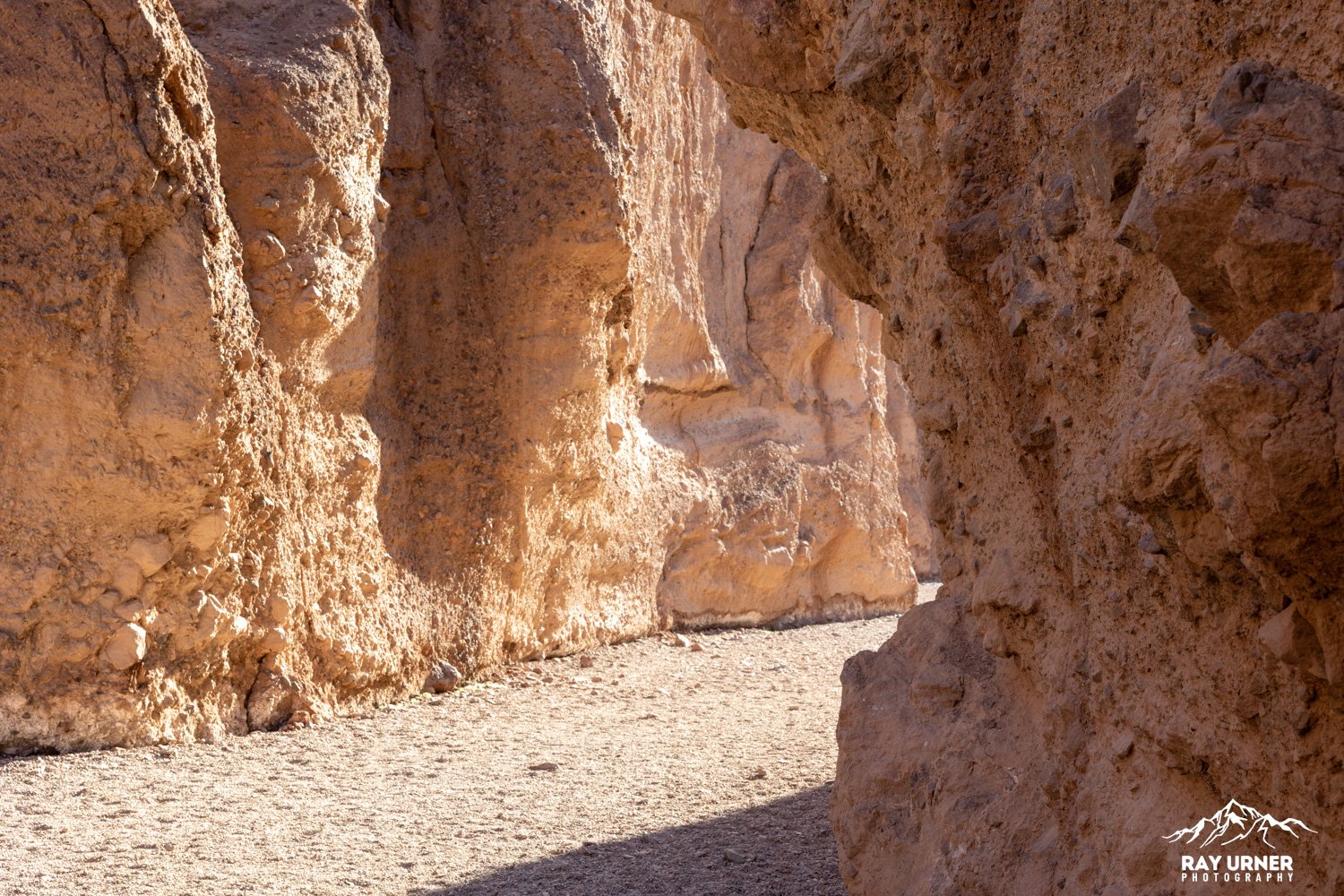
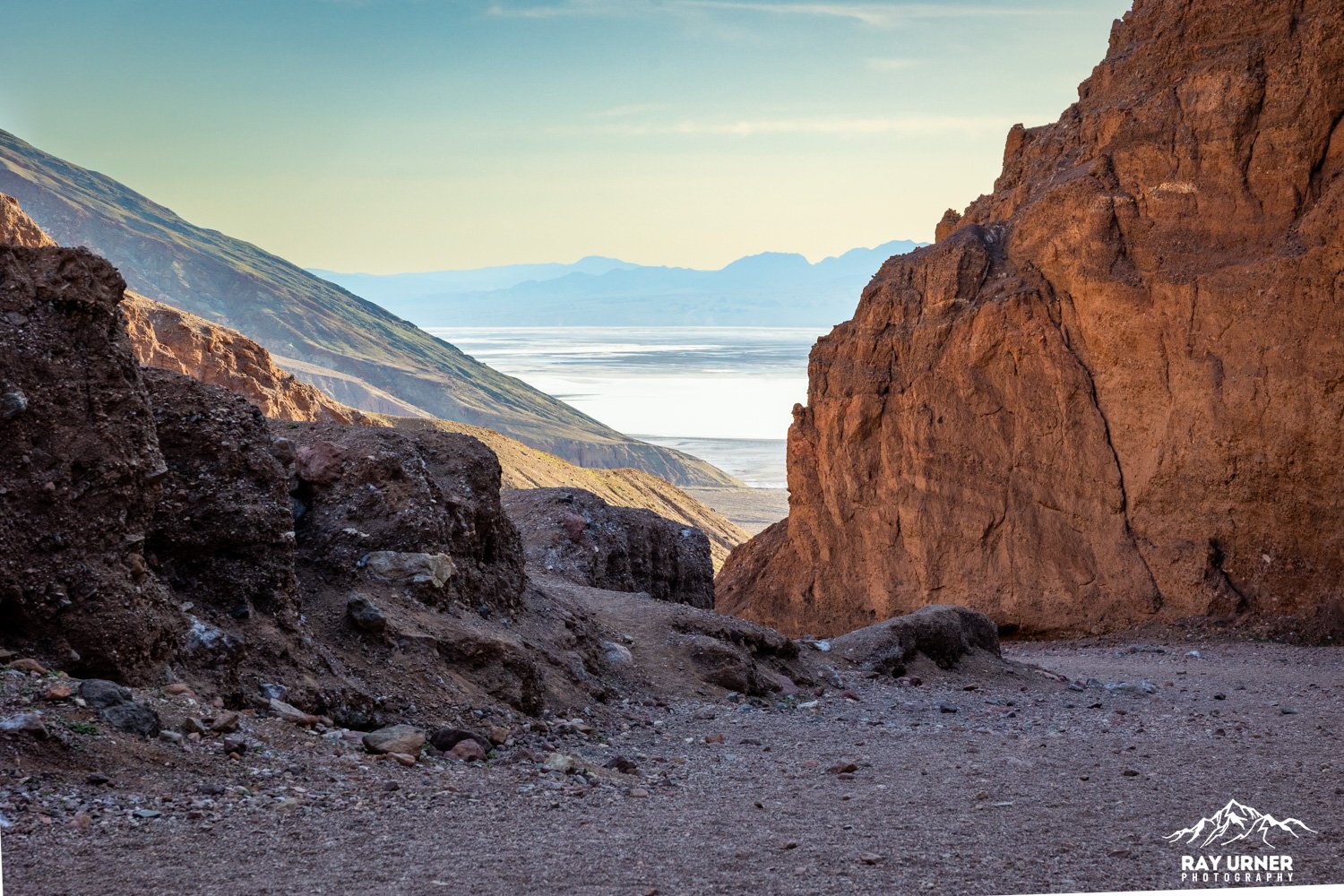
1. The Canyon Approach
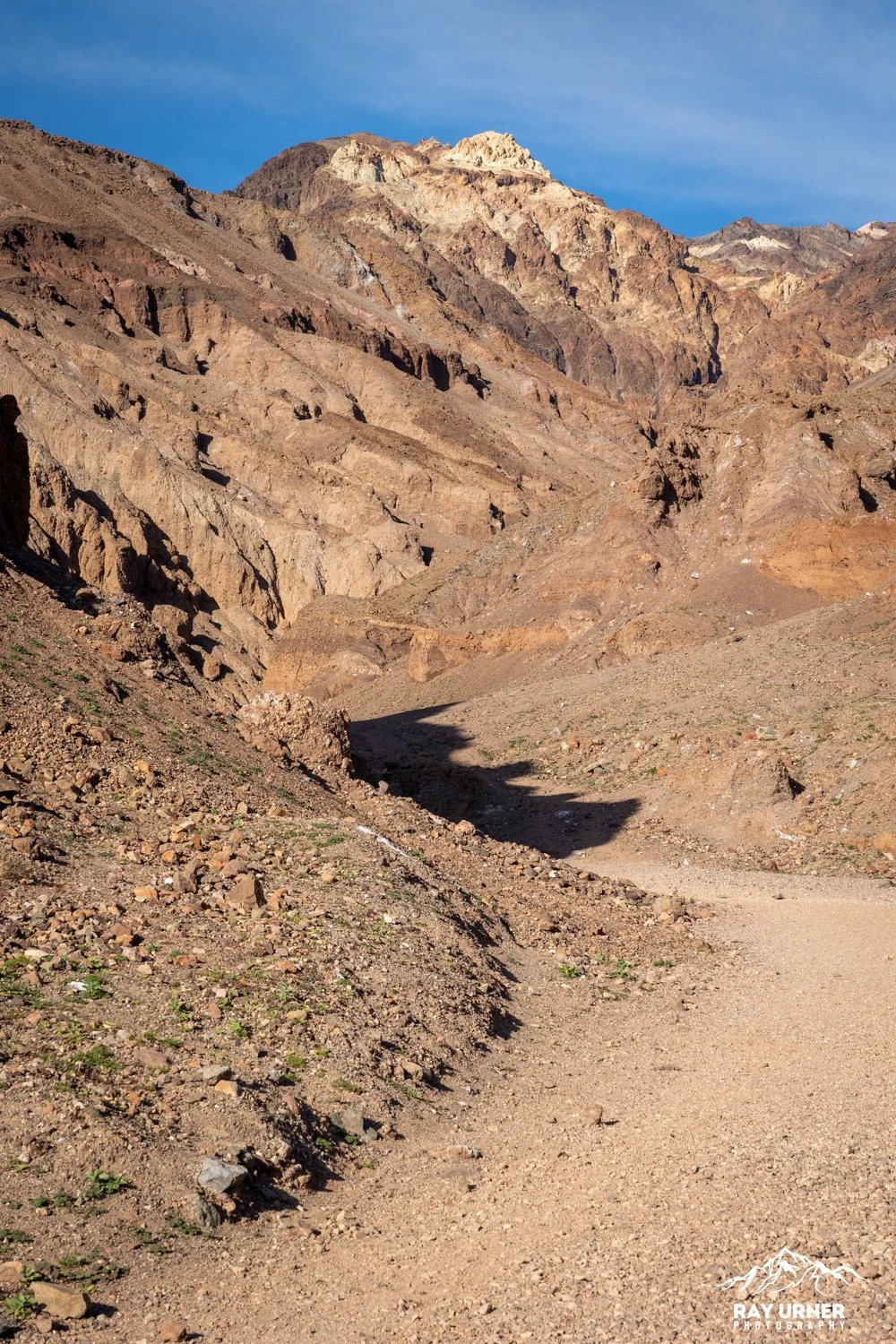
A wide gravel wash with subtle curves and leading lines, framed by rising canyon walls.
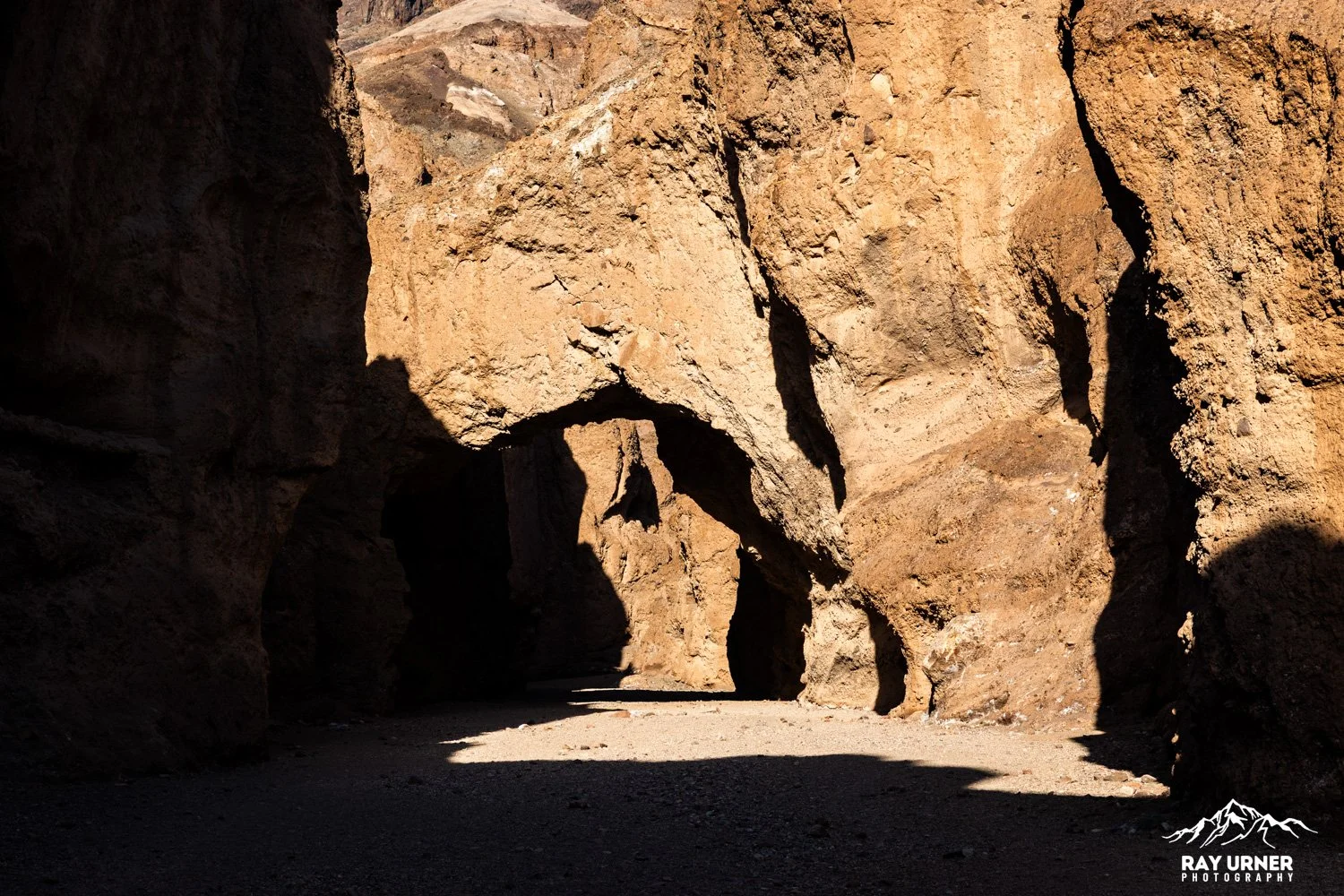
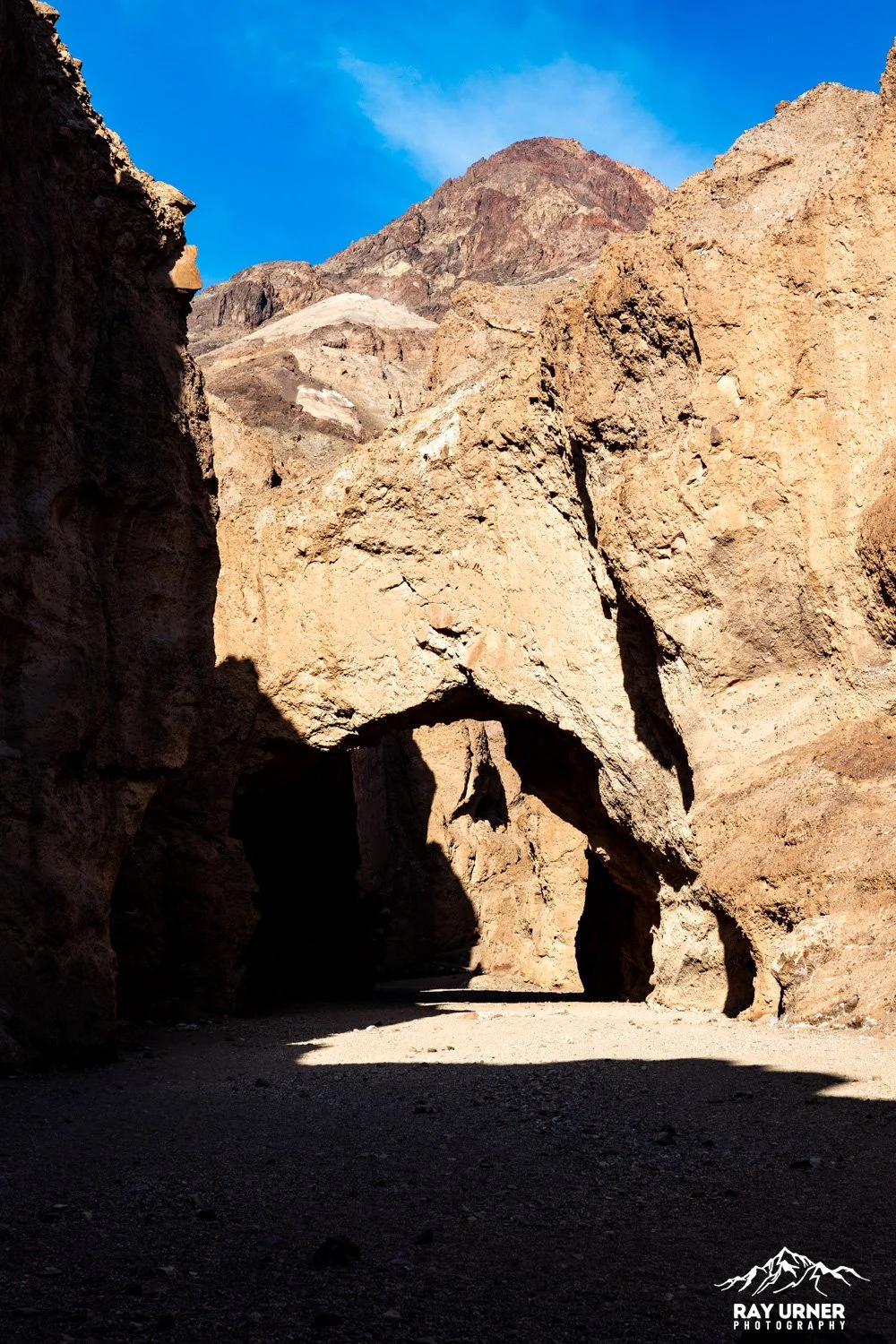
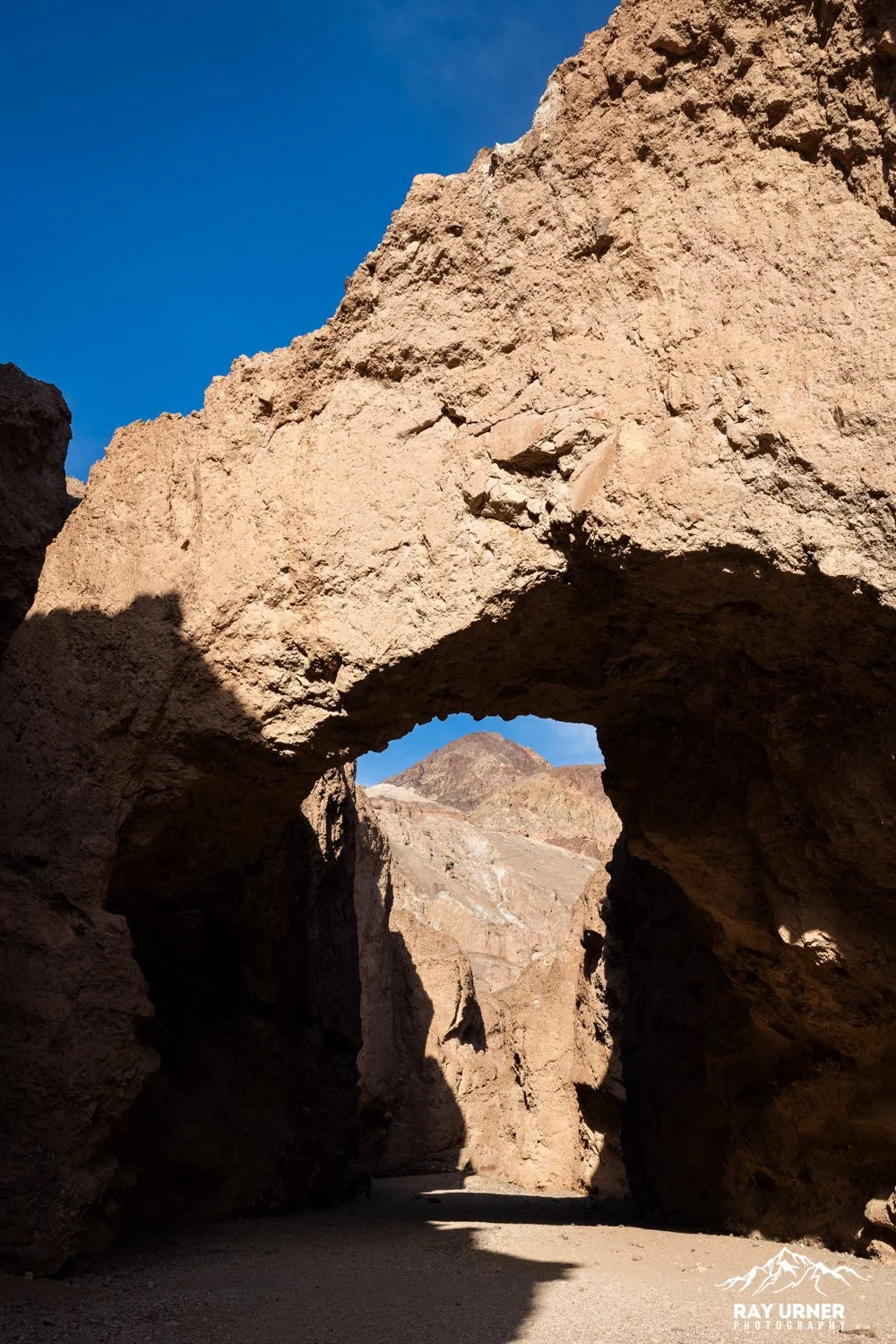
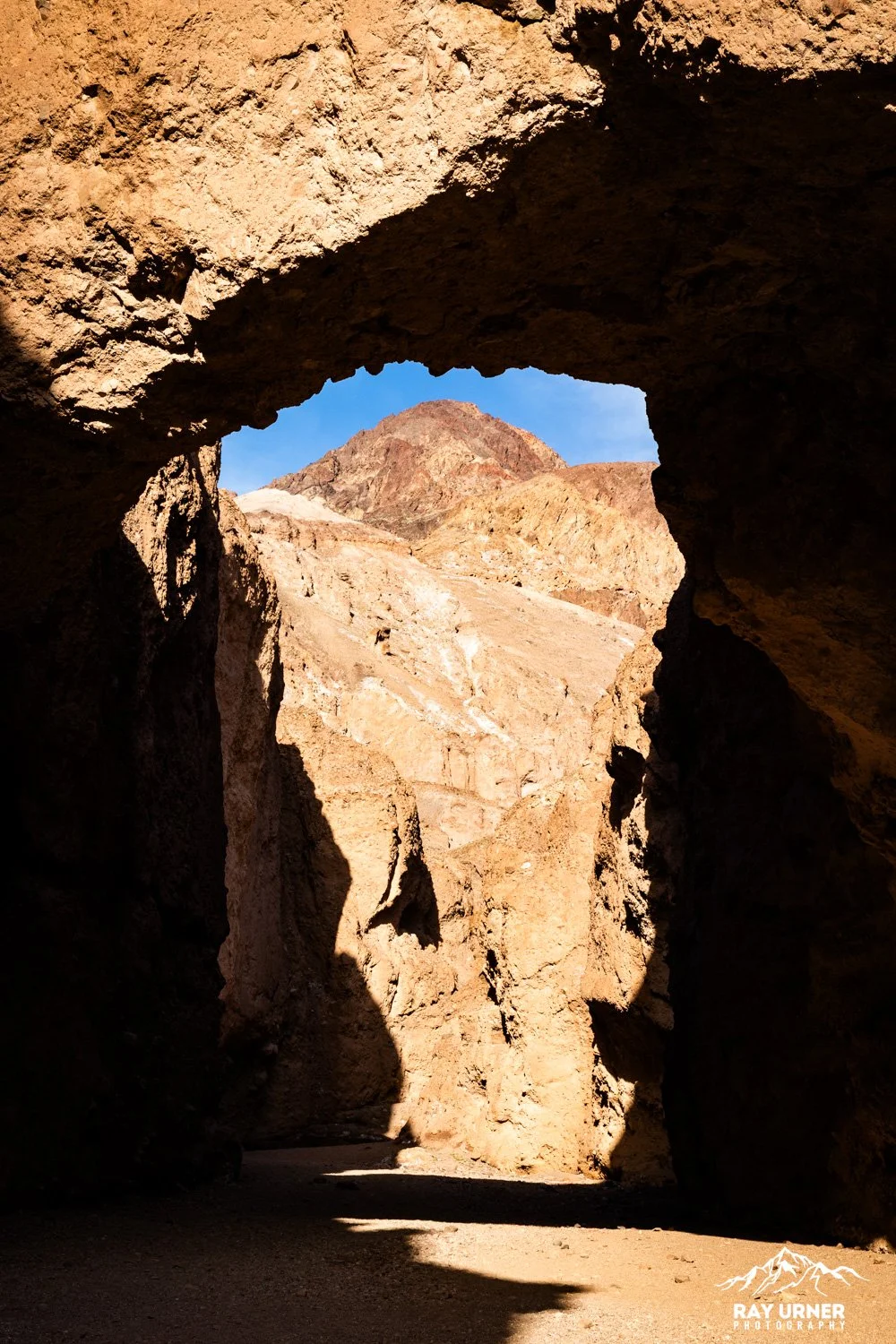
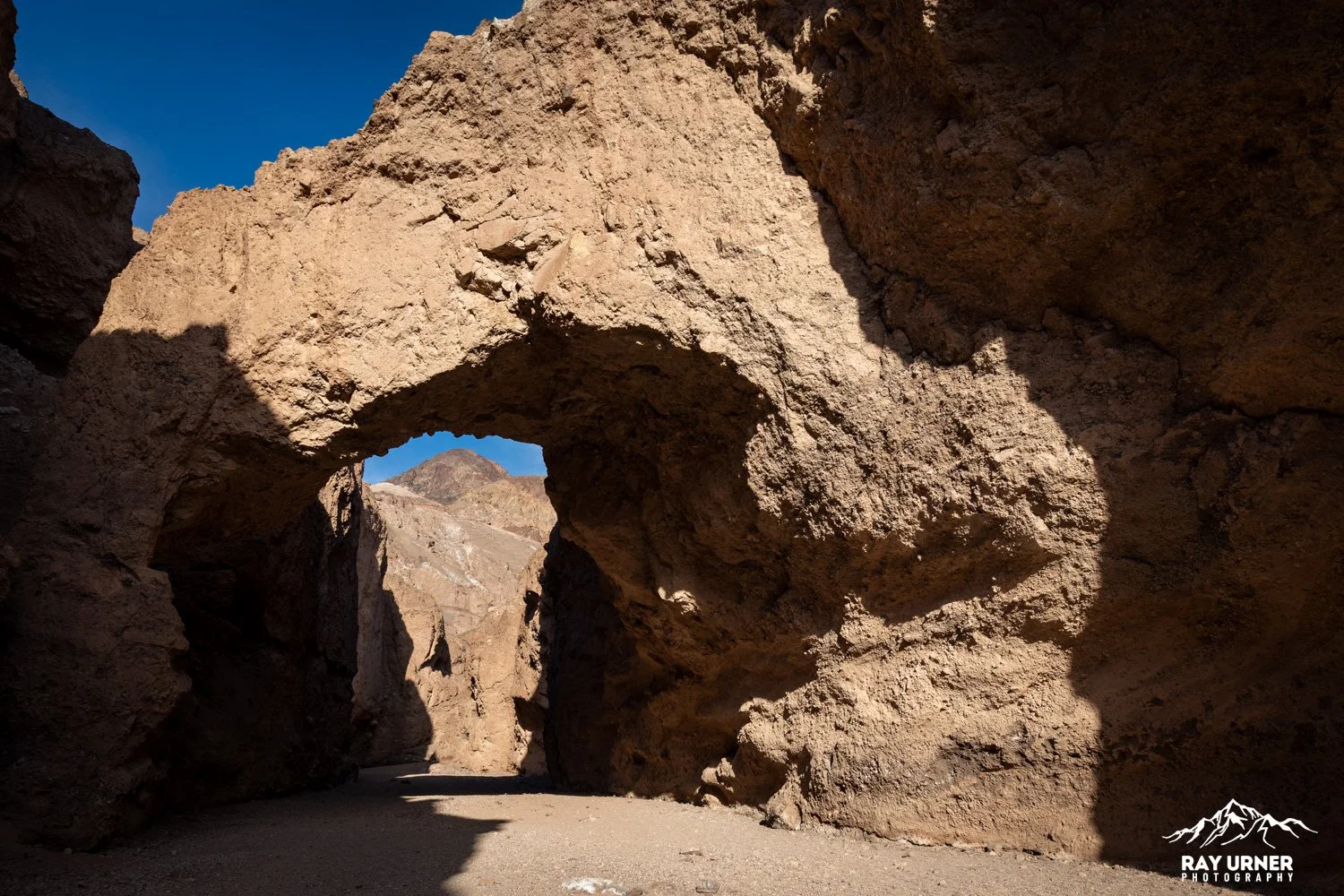
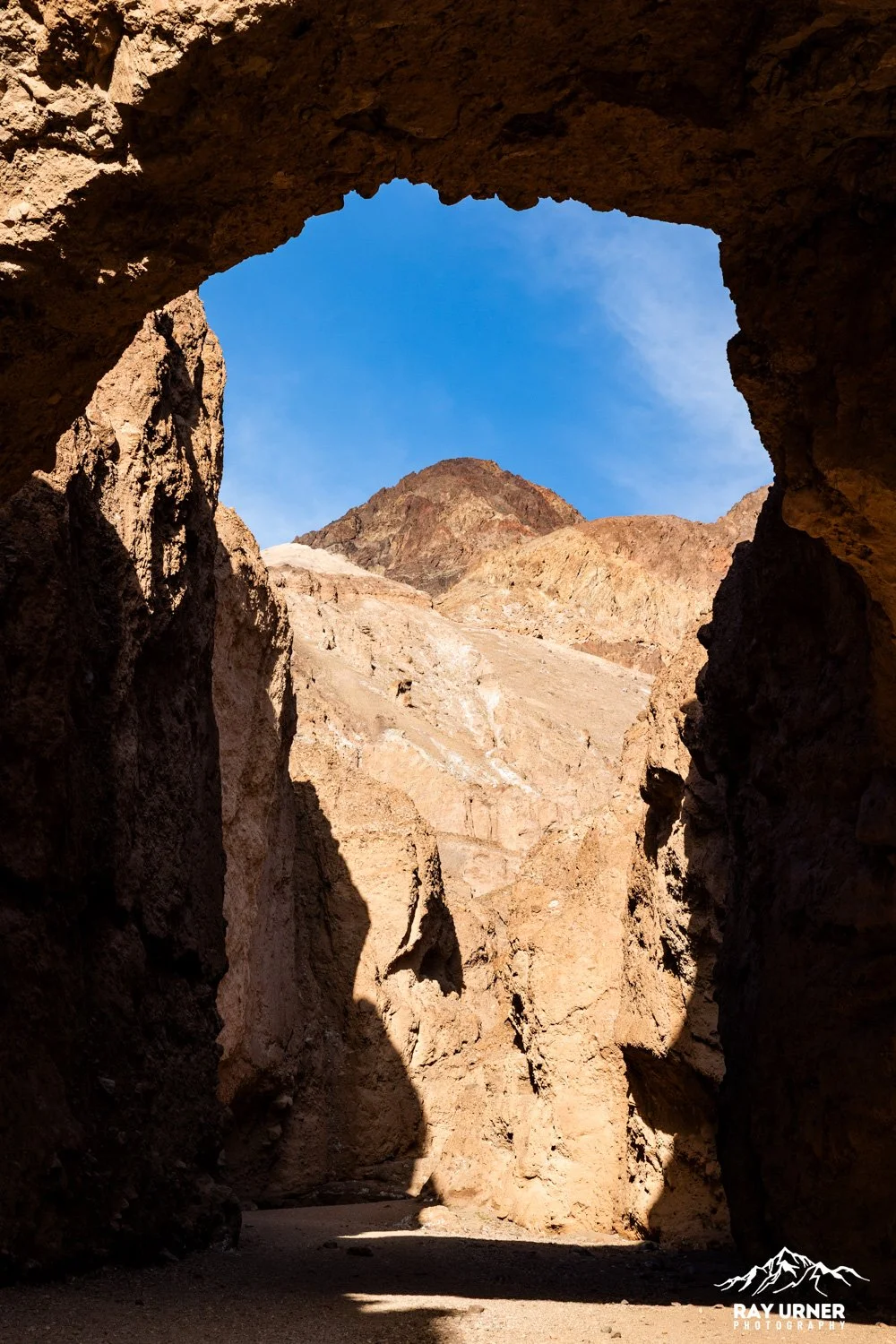
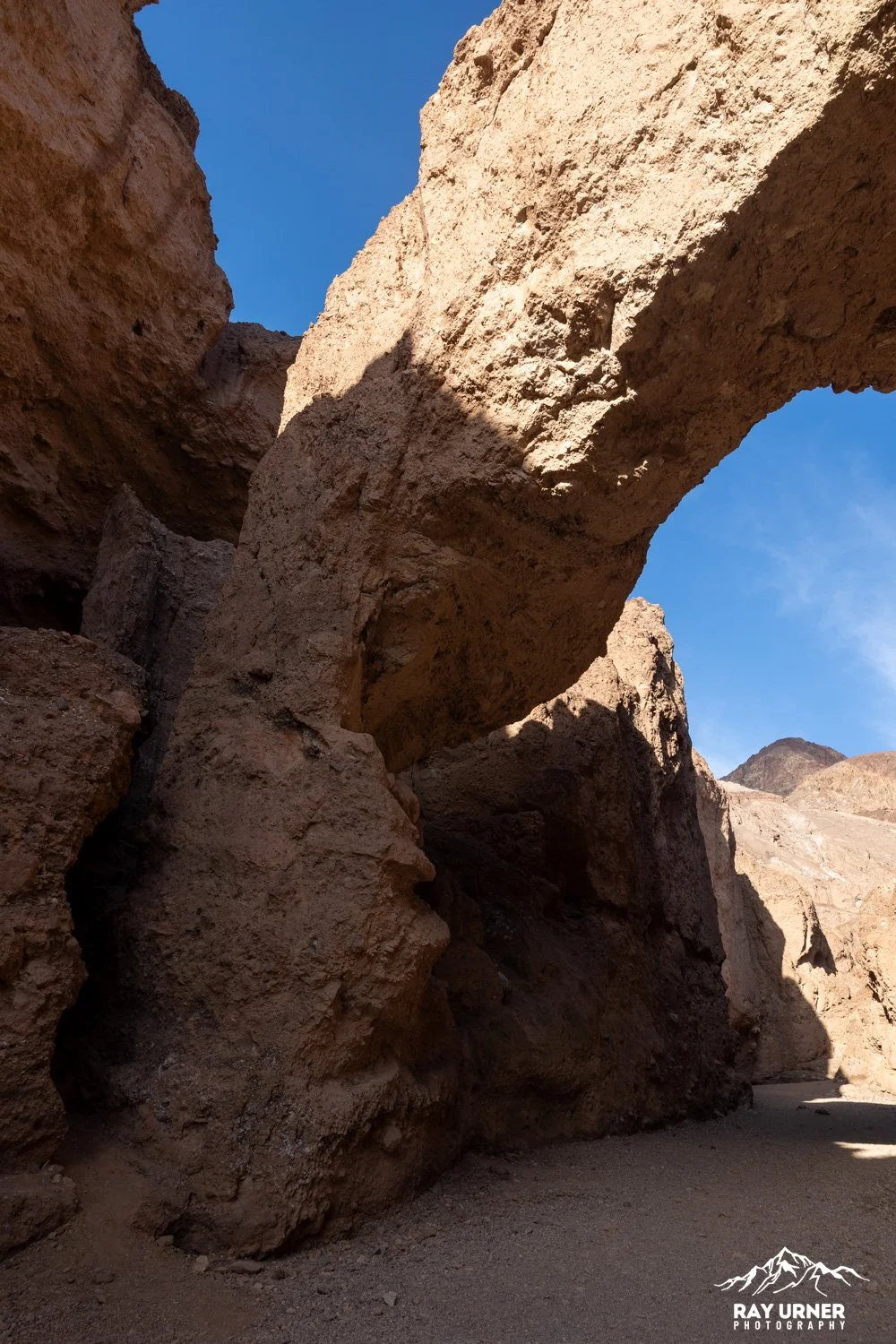
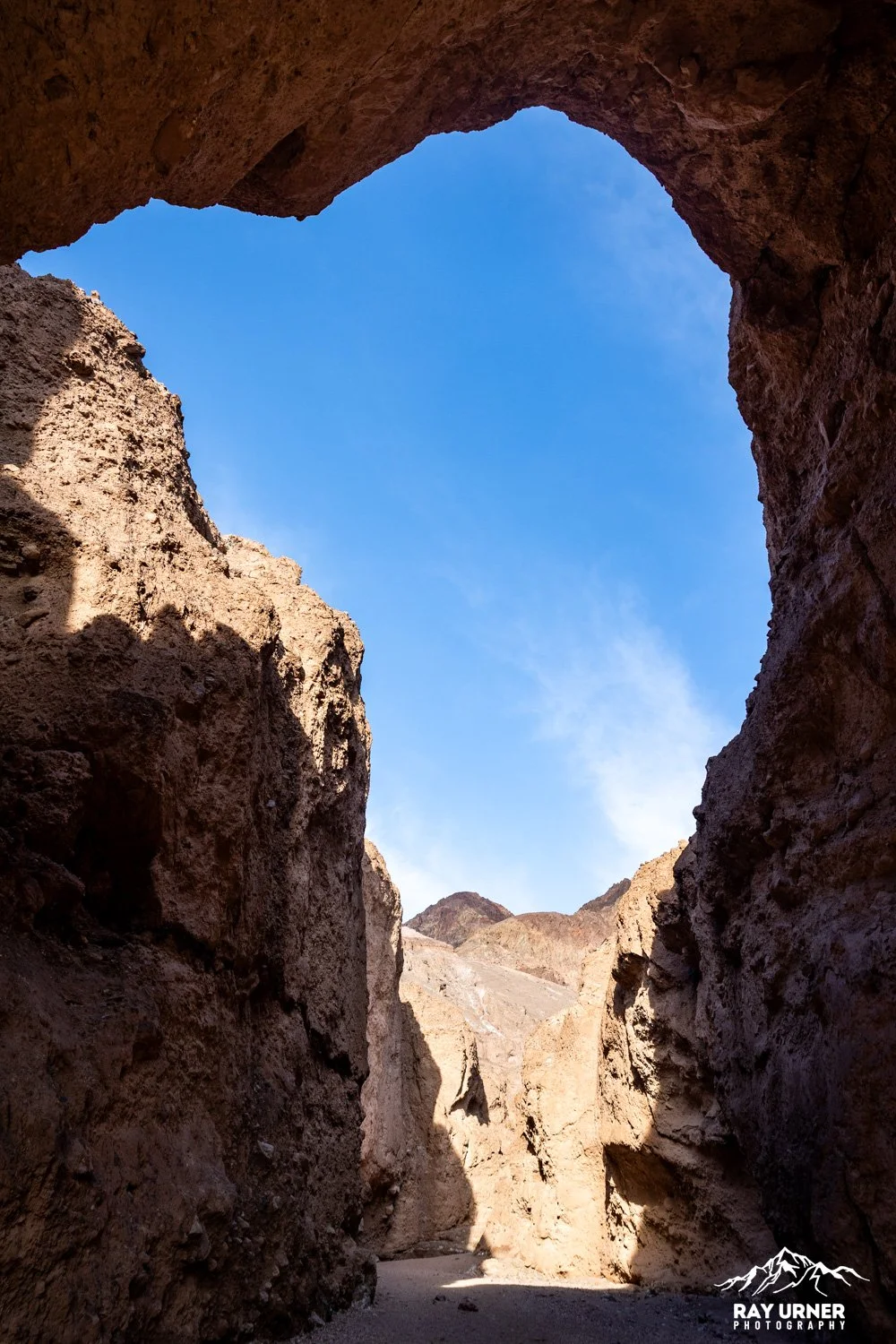
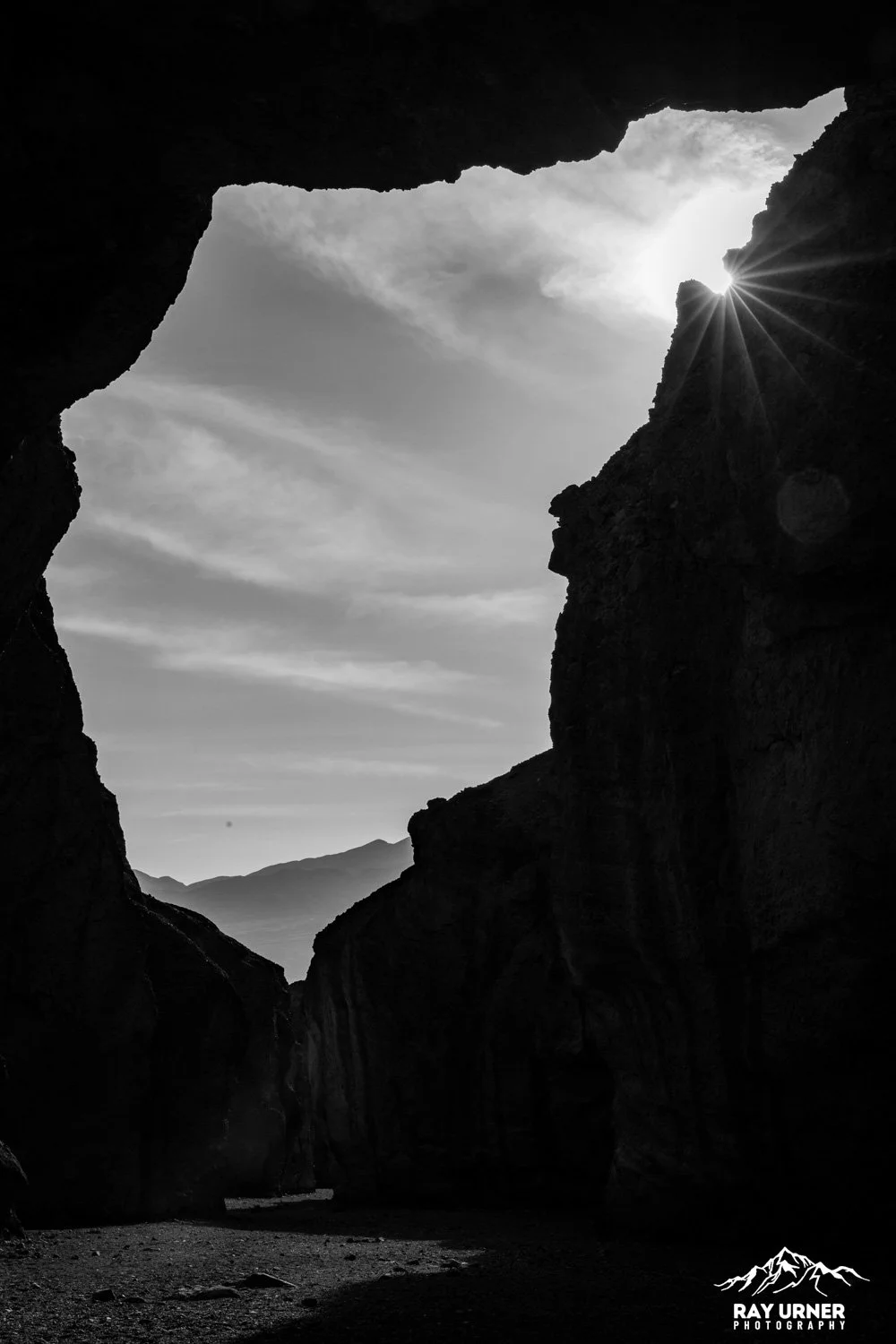
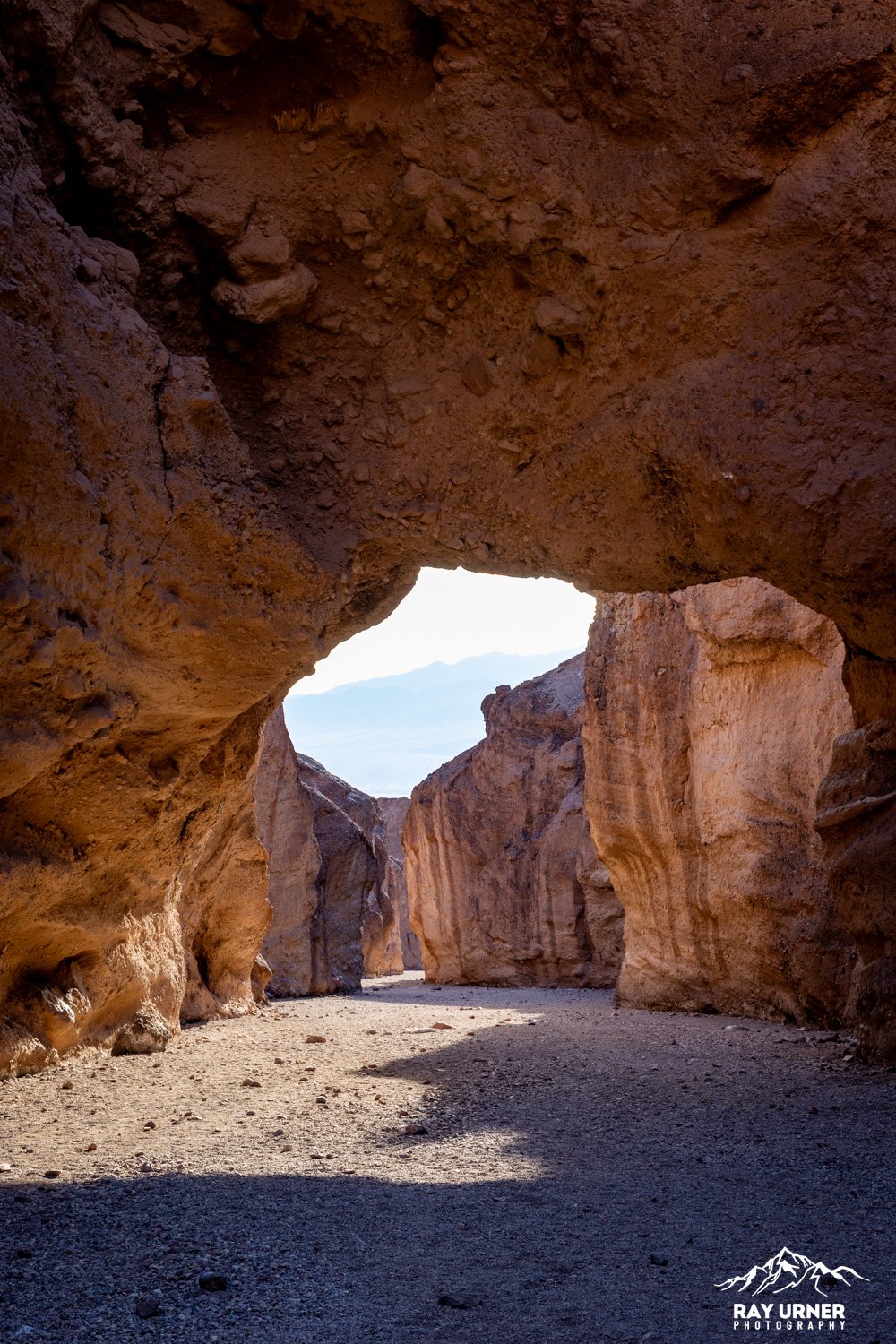
2. Natural Bridge Arch
The main feature—a large rock arch spanning the canyon, partially shaded depending on time of day.
3. Dry Falls Beyond the Bridge
Small rock steps and drops further up-canyon, adding additional compositional opportunities.
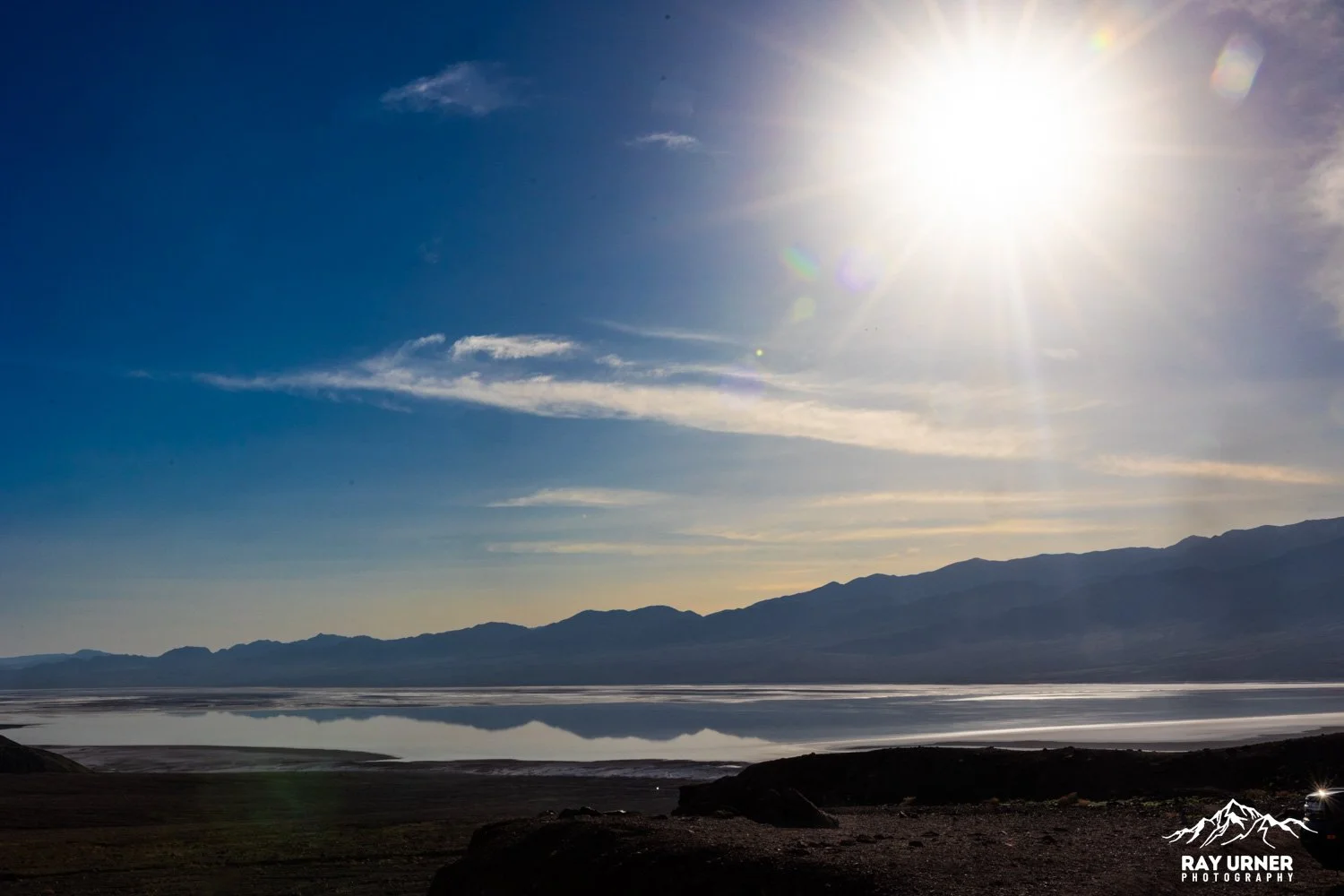
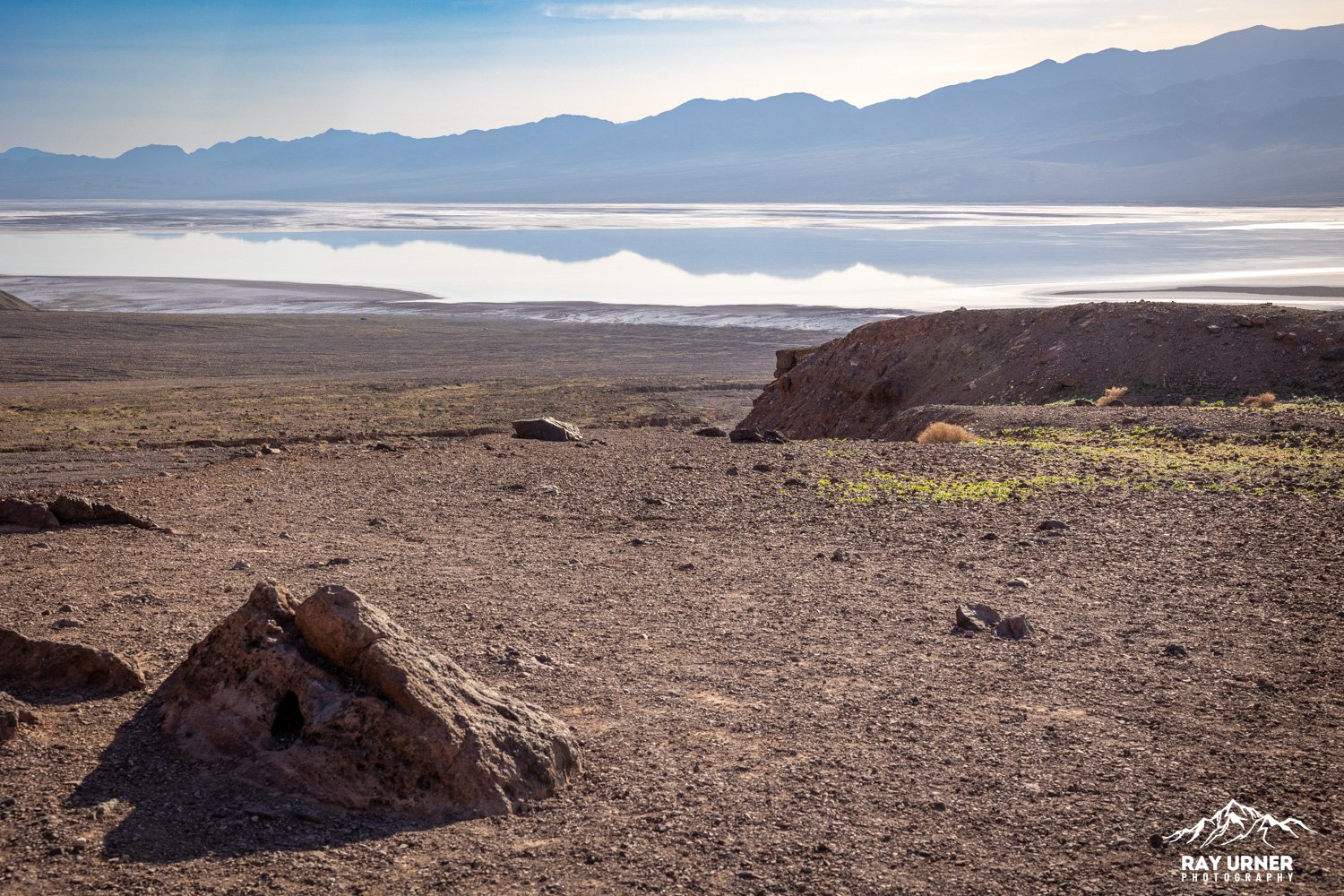
4. The Parking Lot
Once you’re done your hike, you can grab some sweet photos of Badwater Basin right from the parking lot
Best Times to Shoot:
• Late Afternoon: Best overall light—side illumination enhances texture and depth in the canyon walls.
• Early Morning: Softer light, good for even exposures and subtle tones.
• Midday: Harsh and contrasty; workable for documentary shots but less ideal for depth.
Best Angles & Subjects
1. Leading Lines to the Bridge
The gravel wash provides natural foreground lines.
• Shoot low and centered to guide the viewer into the frame.
2. Natural Bridge Framing
• Step back to include canyon walls for scale.
• Use mid-range zoom (24–70mm) to balance environment and subject.
3. Canyon Wall Textures
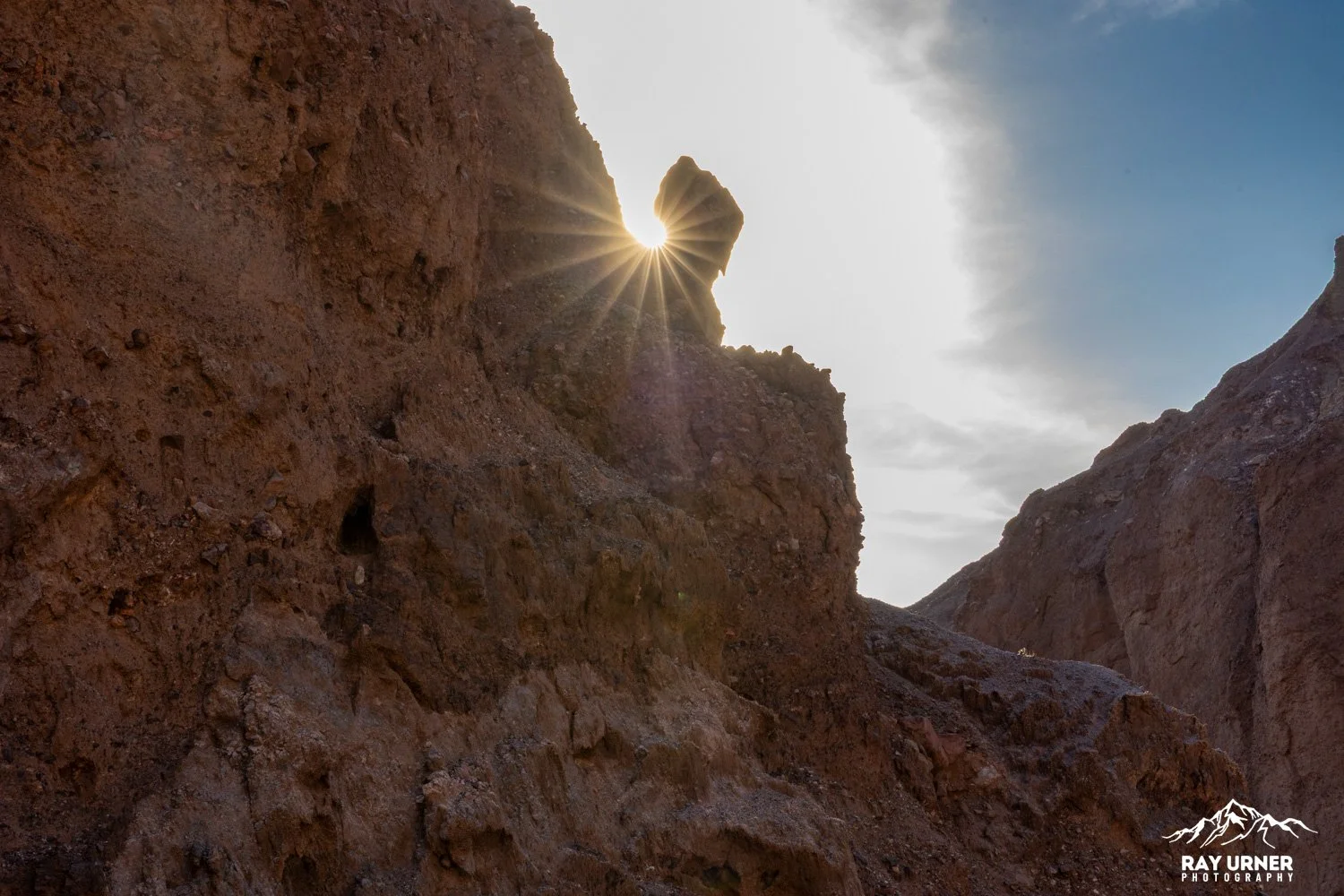
• Side light reveals erosion patterns and layers.
• Look for repeating shapes and diagonal lines.
4. Dry Falls Compositions
• Use rocks and drop-offs as foreground elements.
• Experiment with tighter framing for abstract details.
5. Intimate Canyon Scenes
• Move beyond the bridge for quieter, less-photographed compositions.
• Telephoto lenses help compress patterns and textures.
On the Ground Notes
• Trail is unmarked but easy to follow—simply follow the wash.
• Uneven footing; watch for loose gravel and rocks.
• No shade—heat can build quickly even on short hikes.
• Flash floods are possible (avoid during rain conditions).
• Best paired with Badwater Basin - you’re super close!
Pro Tips
• Arrive before peak afternoon light reaches the canyon floor for better balance between highlights and shadows.
• Bracket exposures if shooting the bridge when the canyon is shaded and sky is bright.
• Use a polarizer carefully—it can help with glare on rock but may unevenly darken the sky in narrow canyon views.
Natural Bridge is a subtle location—less about dramatic vistas and more about texture, depth, and composition. For photographers willing to slow down and work the scene, it delivers a surprisingly strong and varied portfolio from a very short hike.