Rhyolite Ghost Town
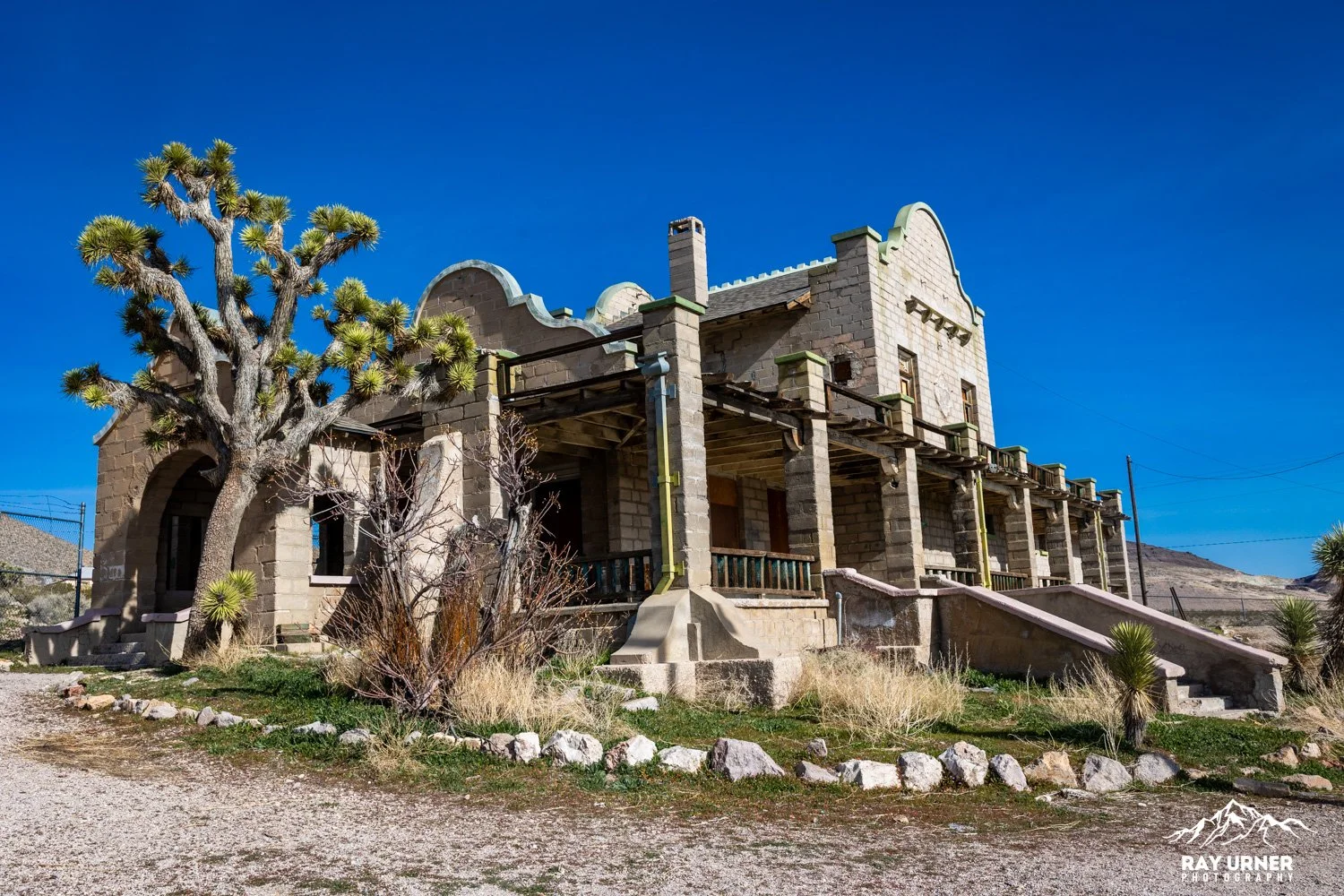
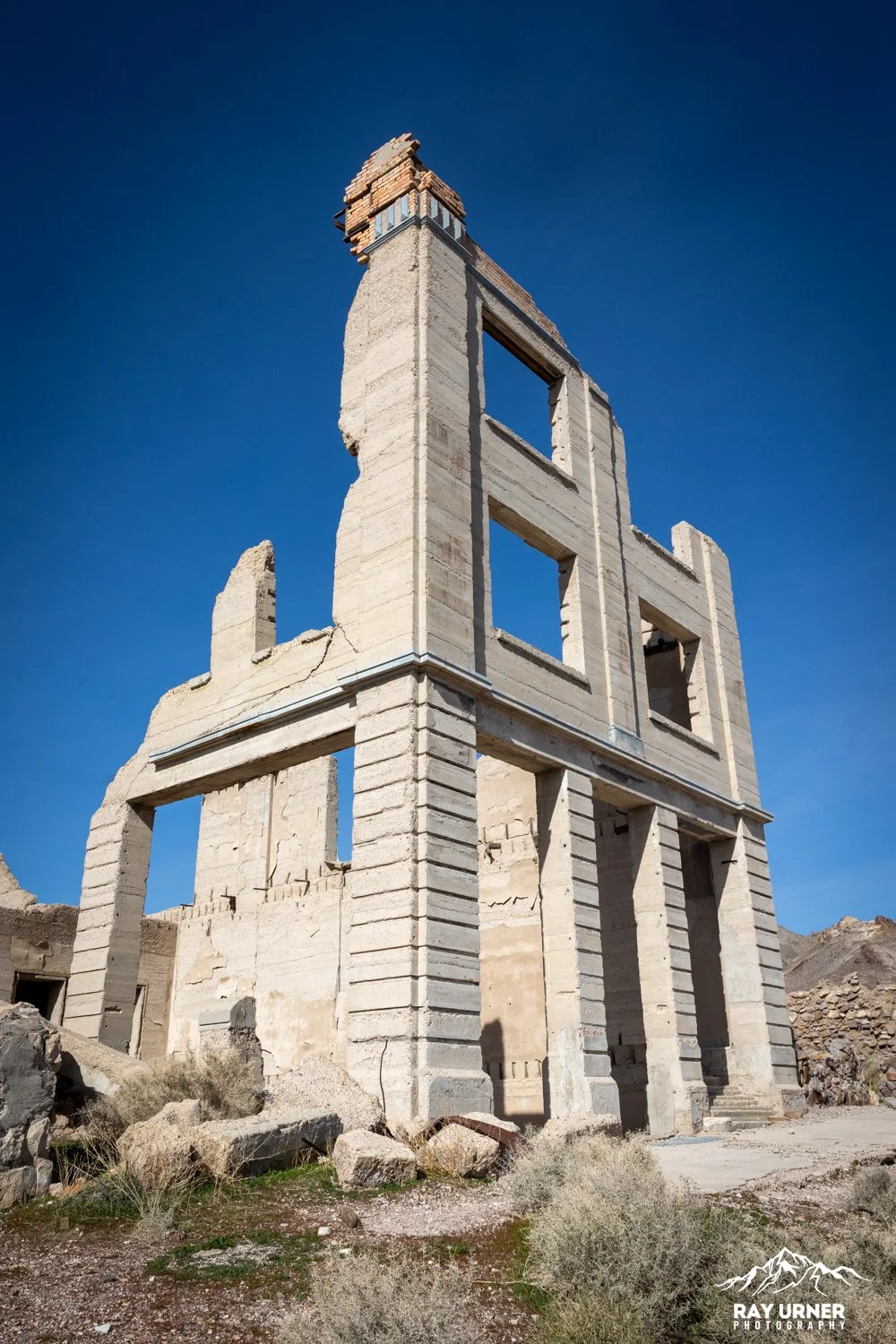
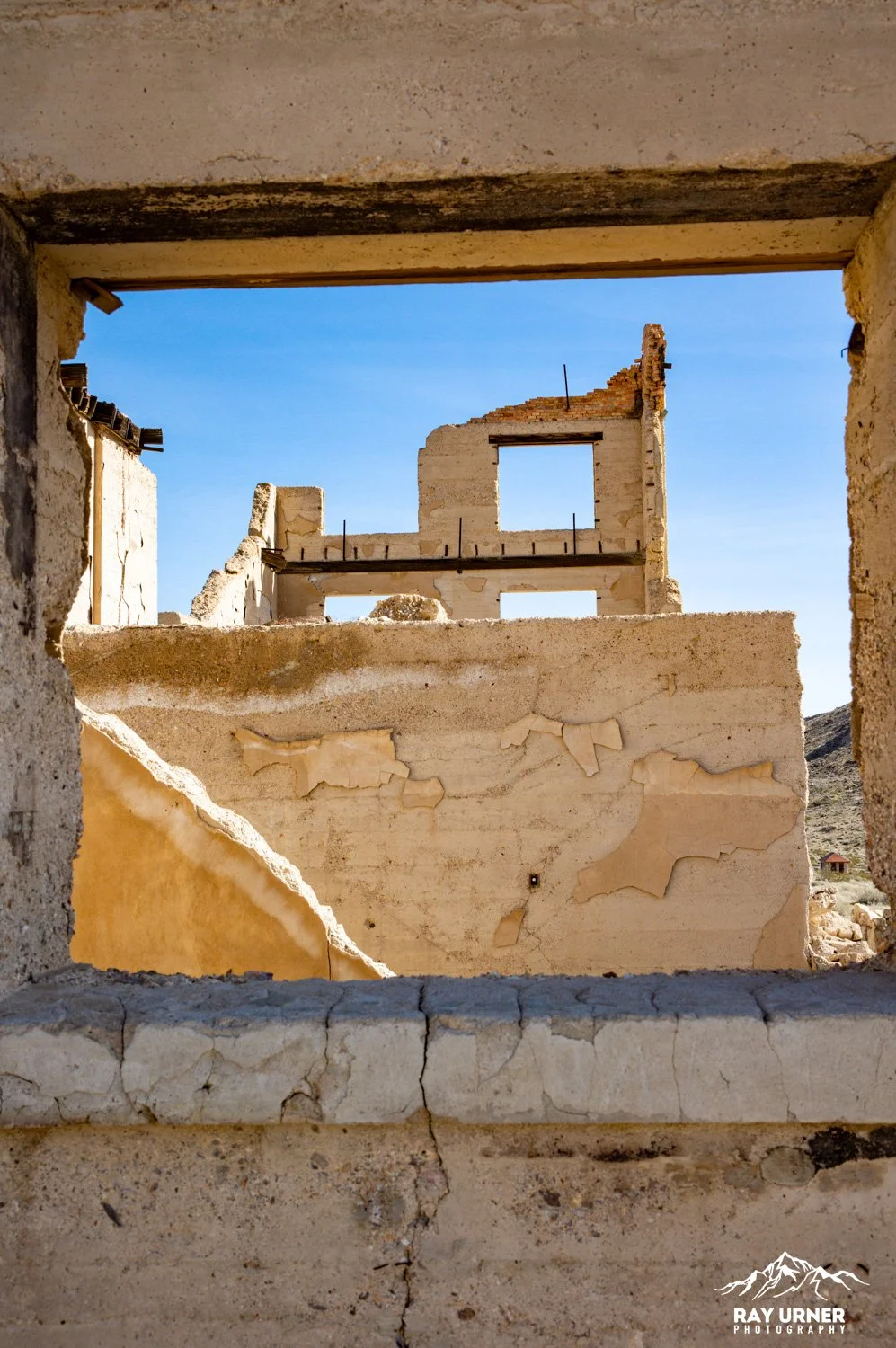
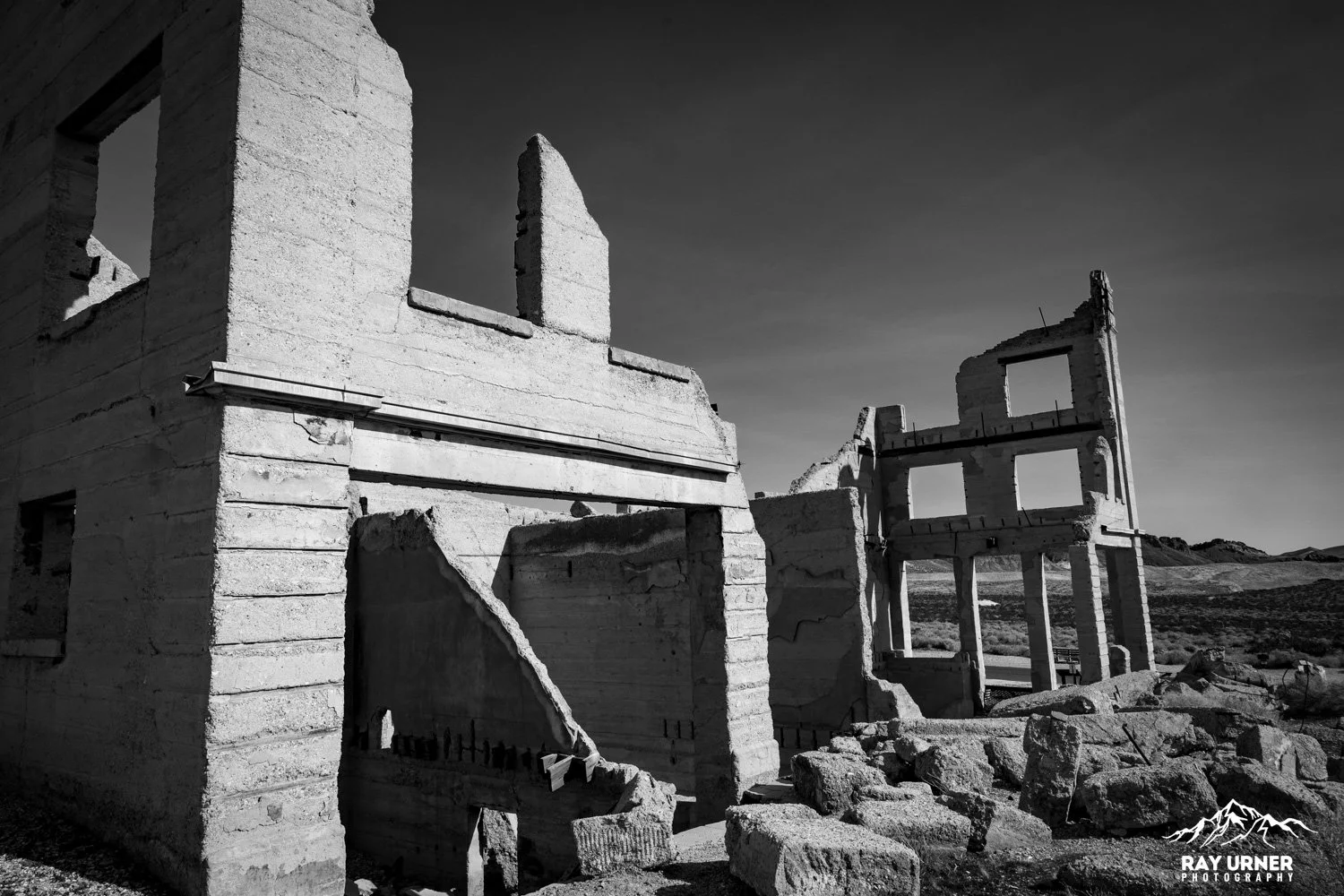
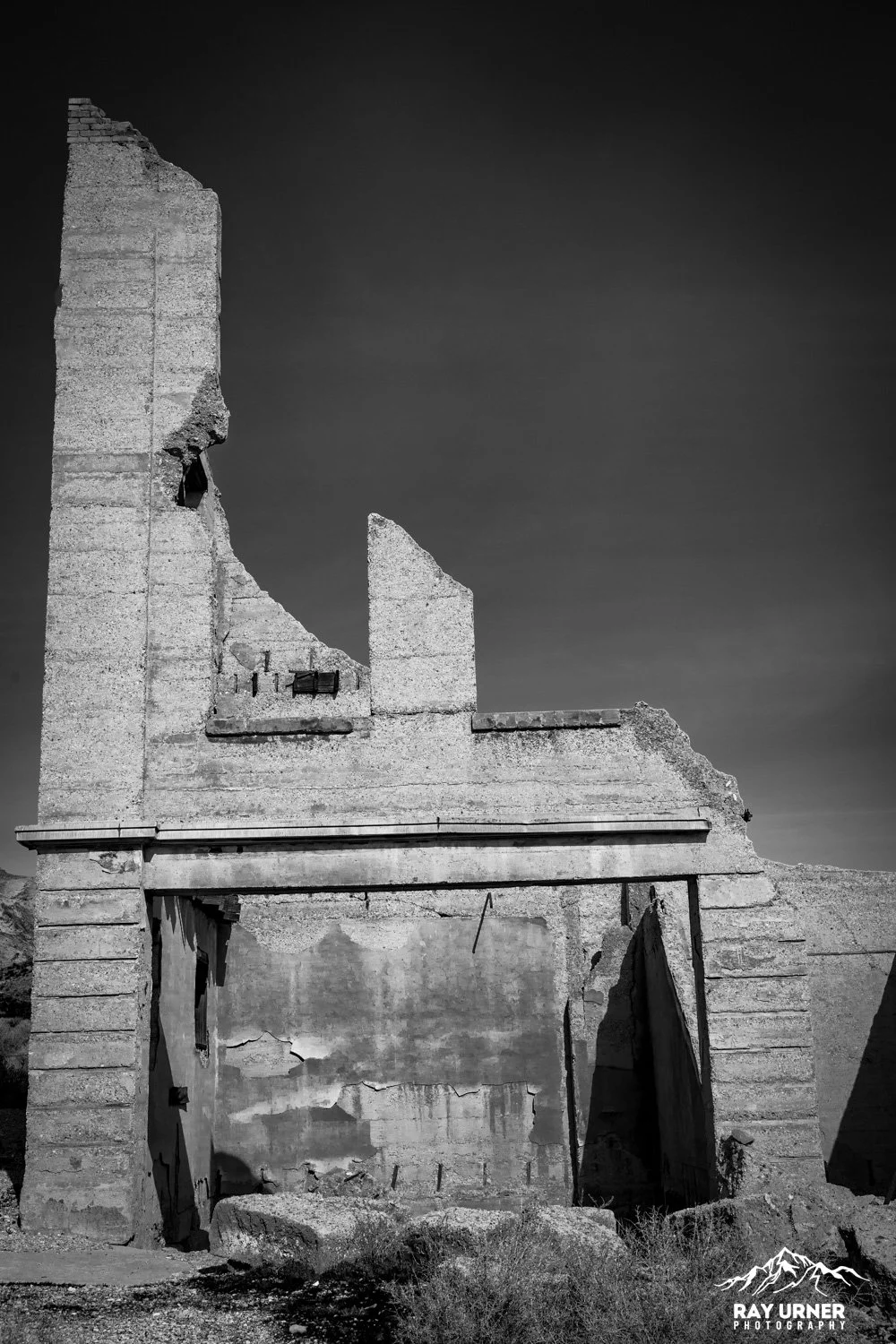
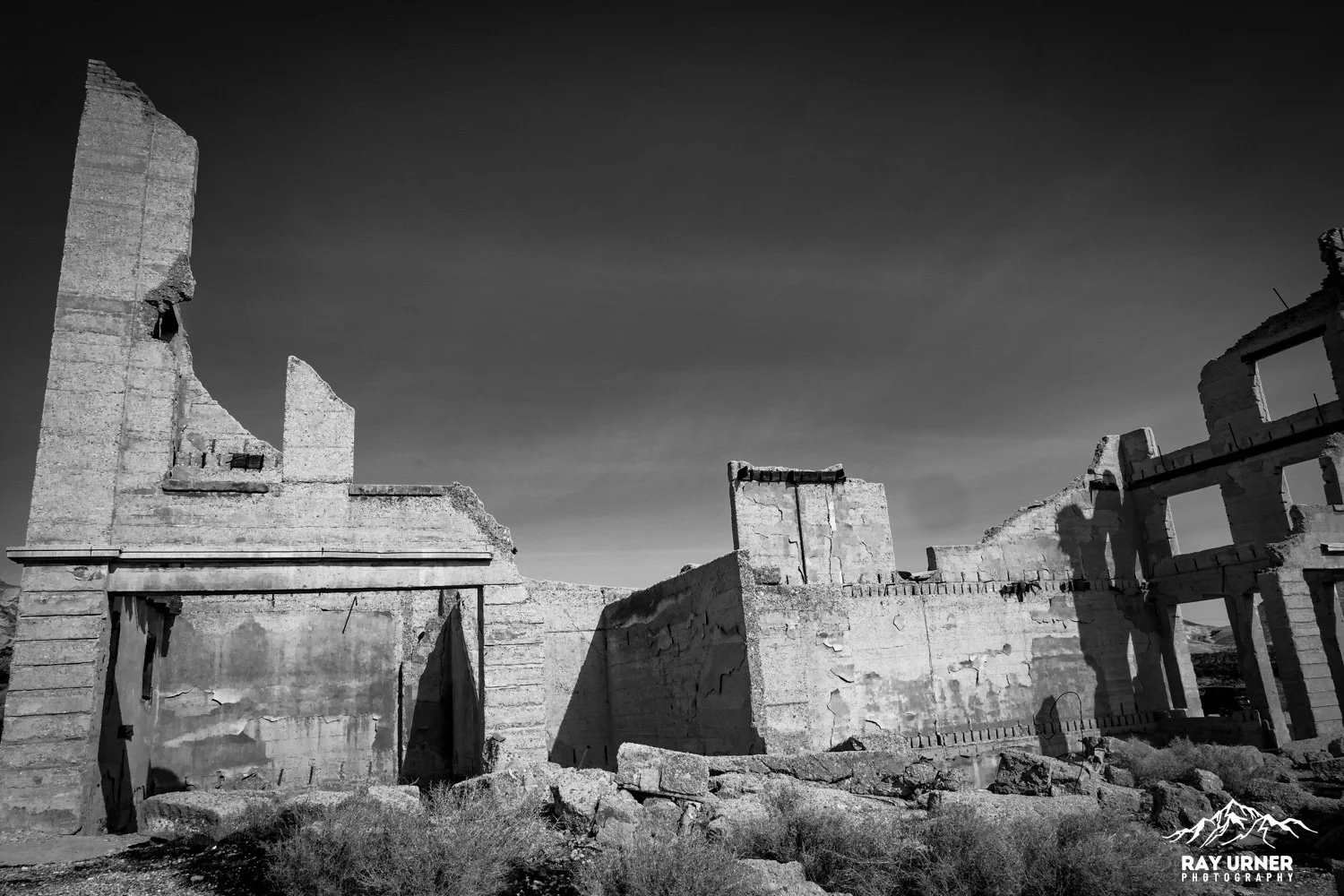
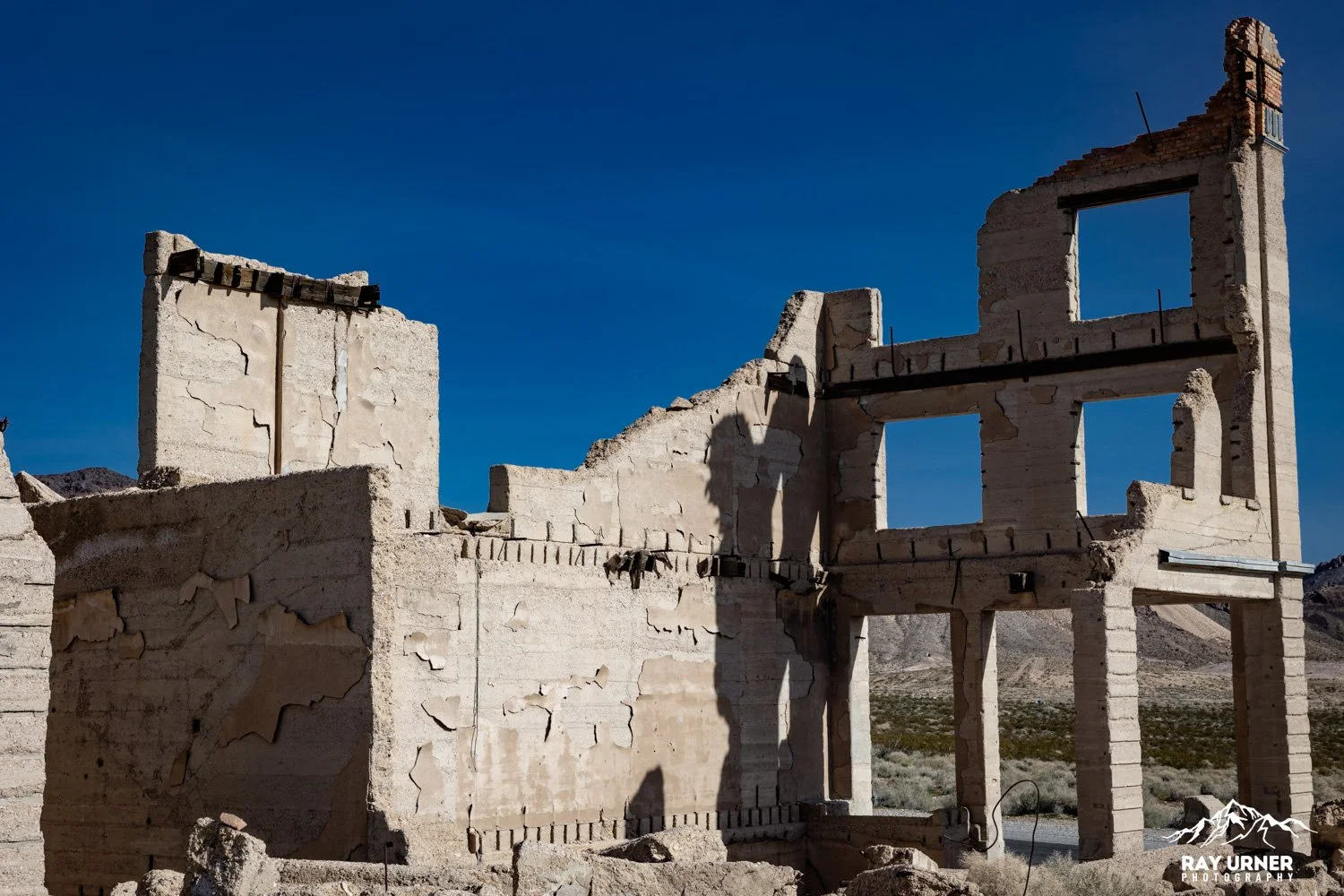
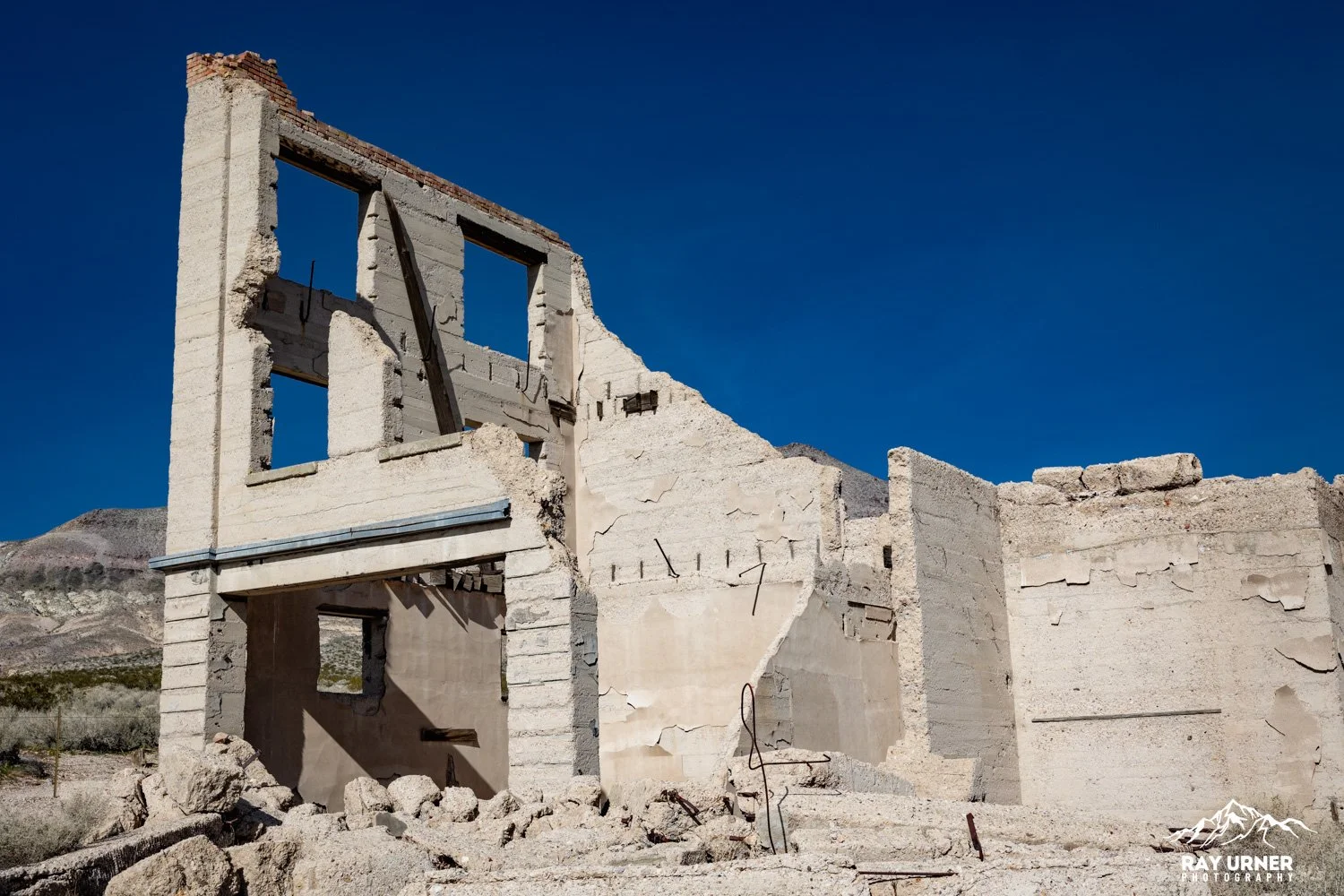
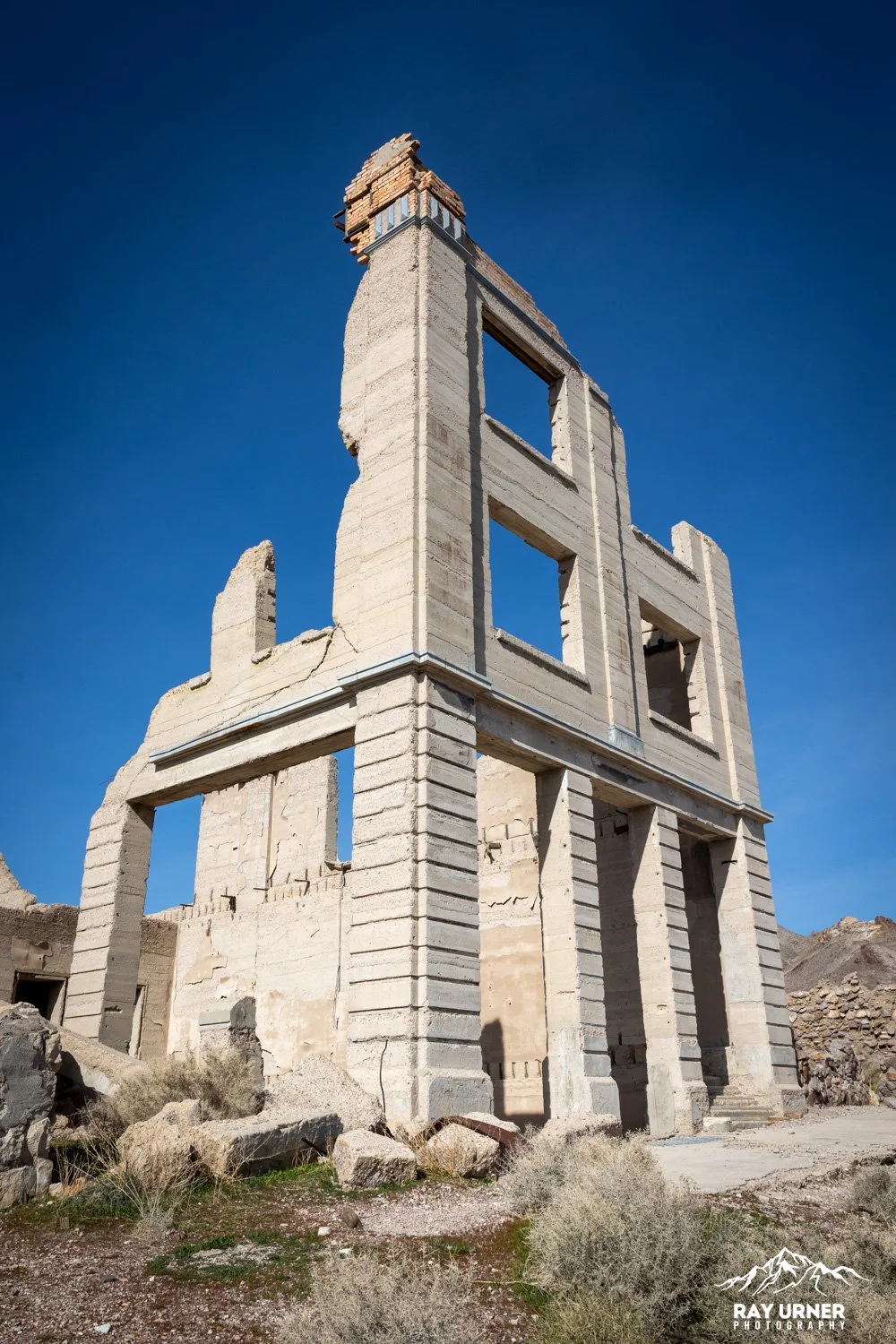
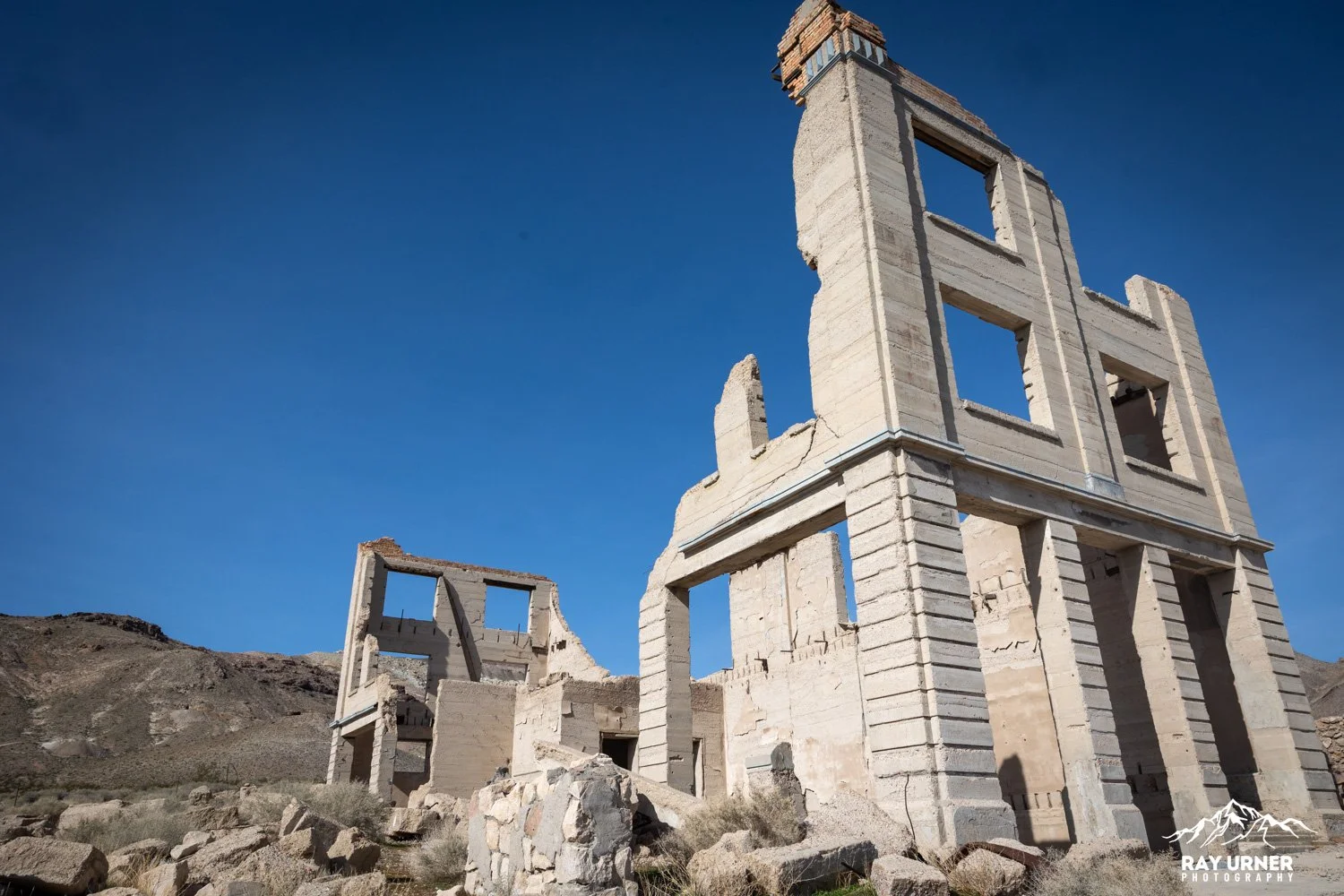
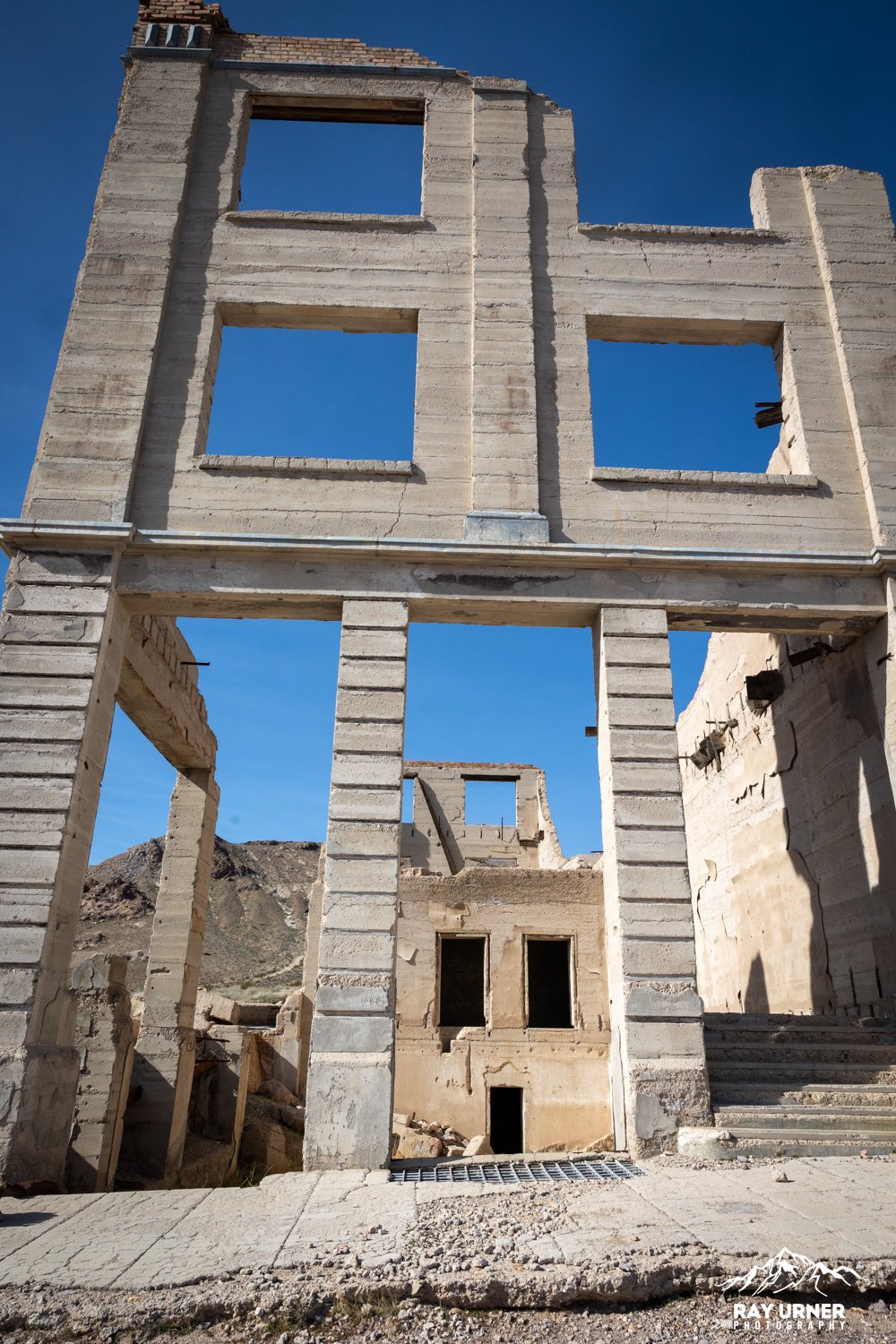
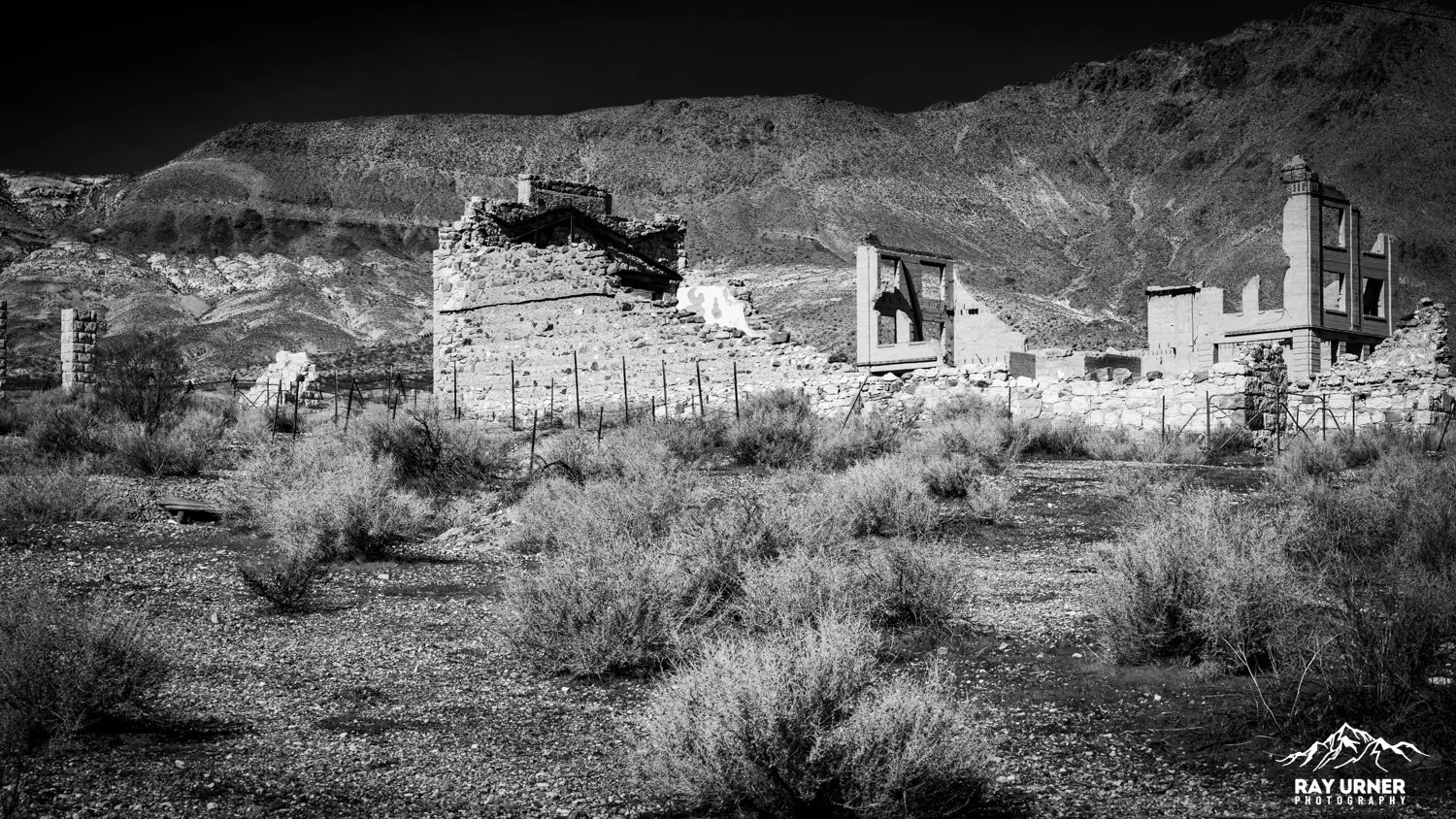
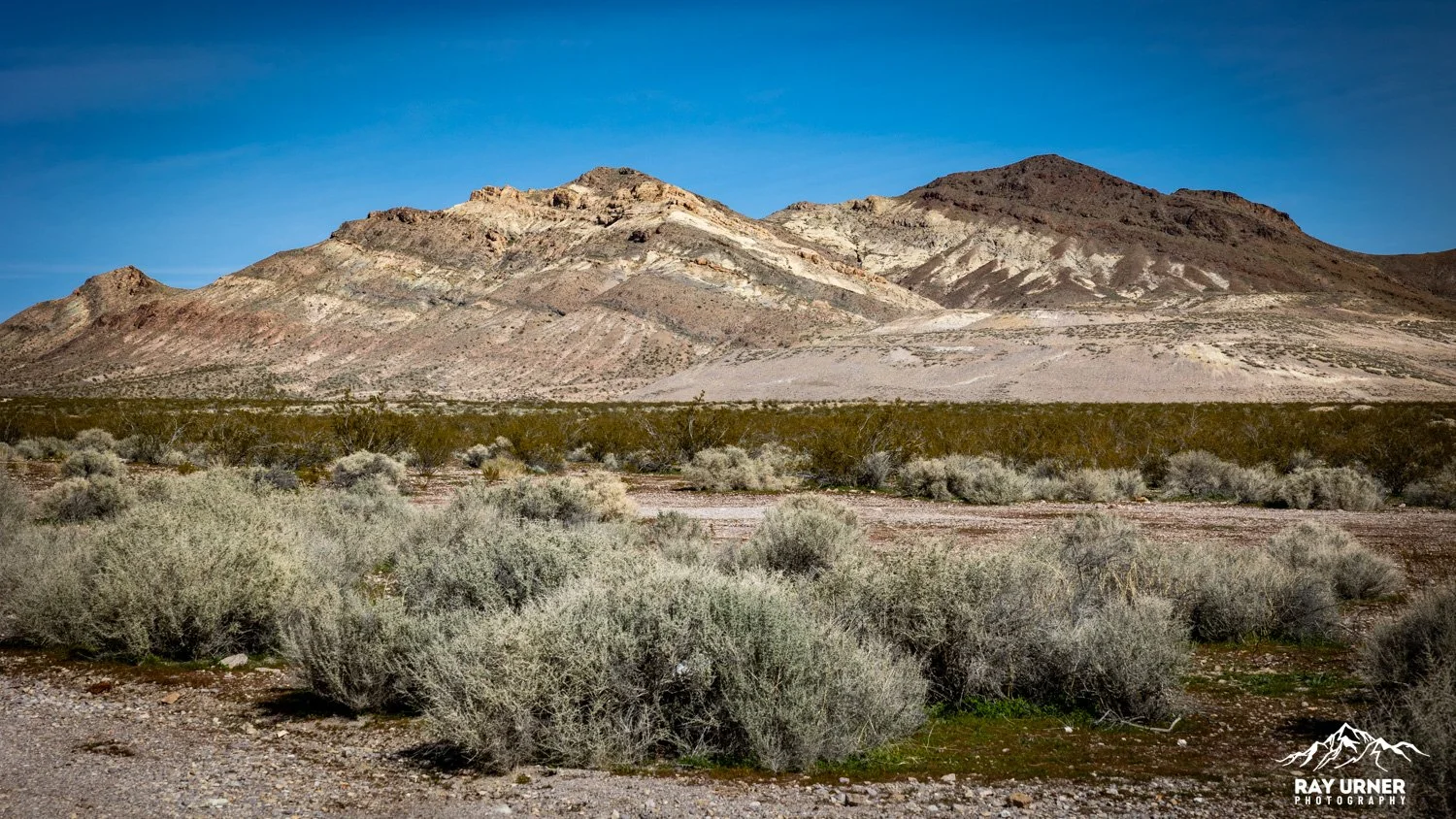
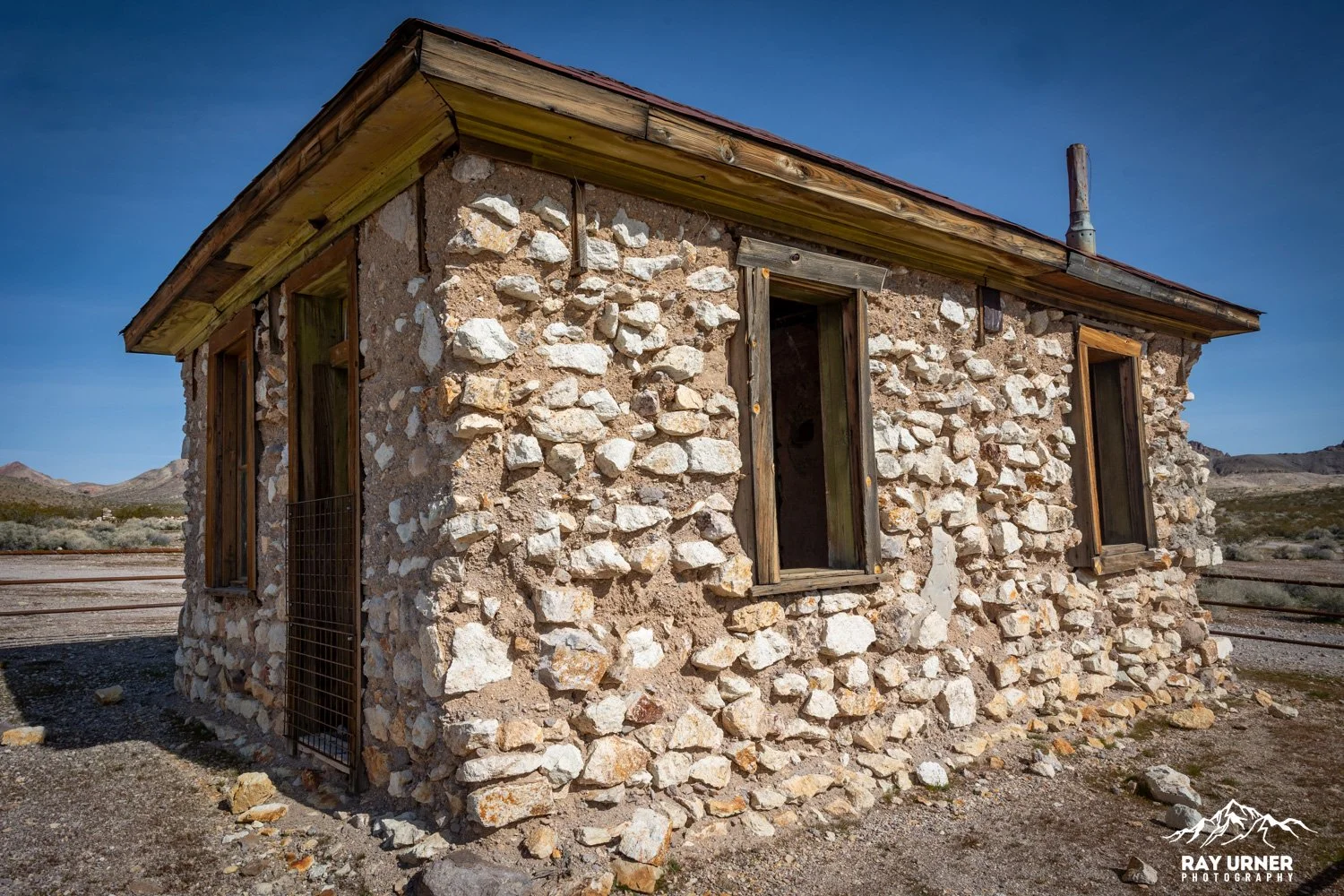
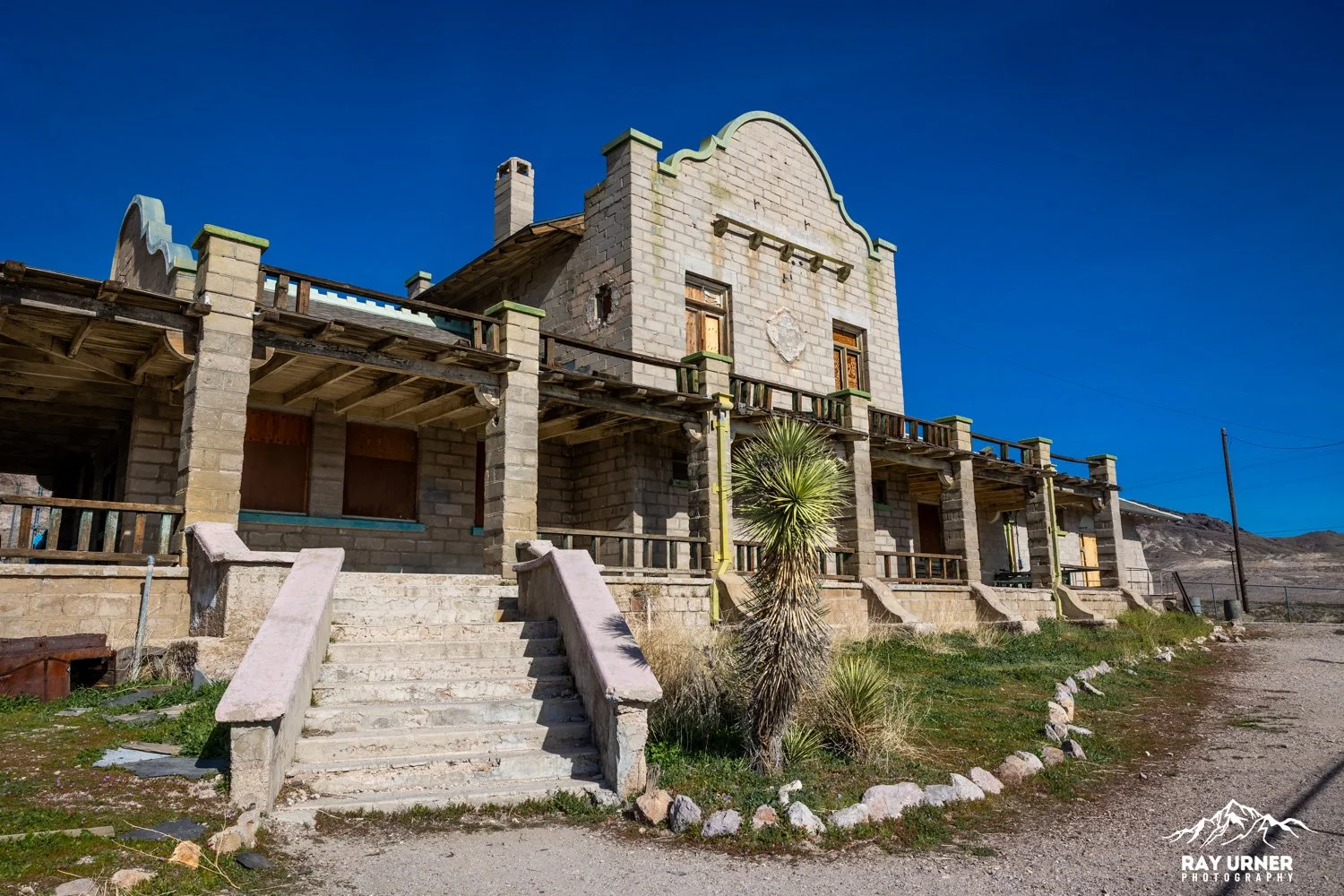
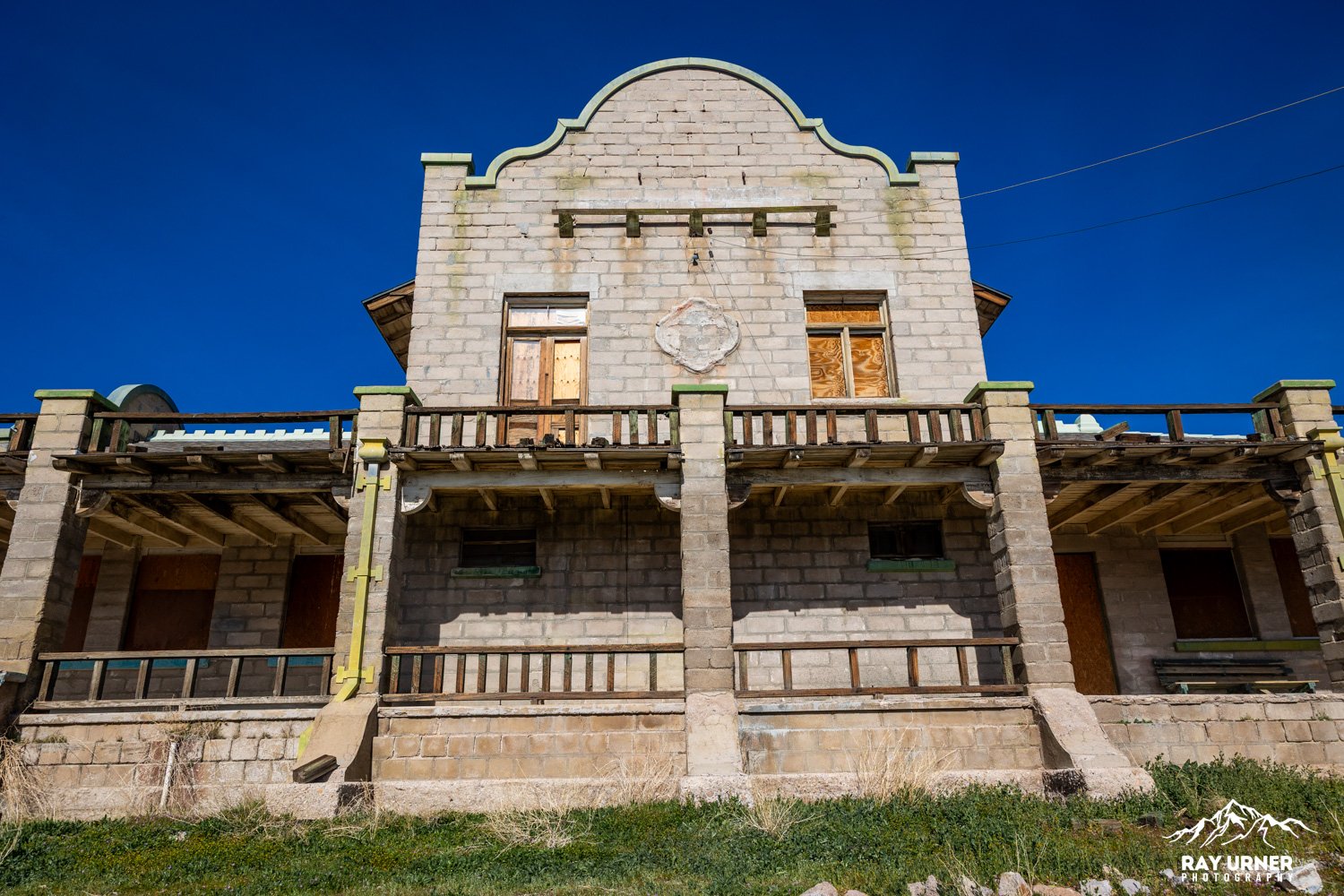
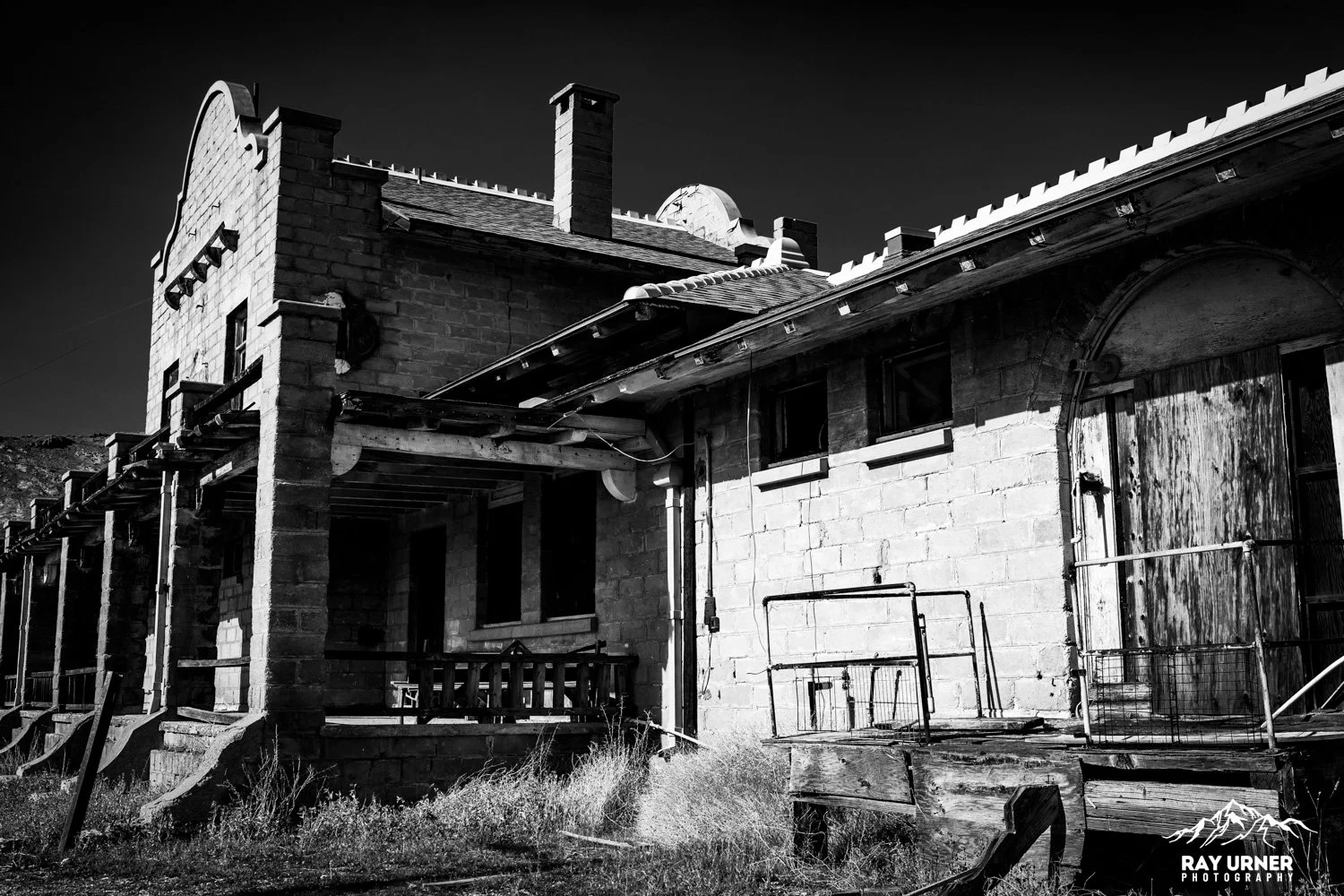
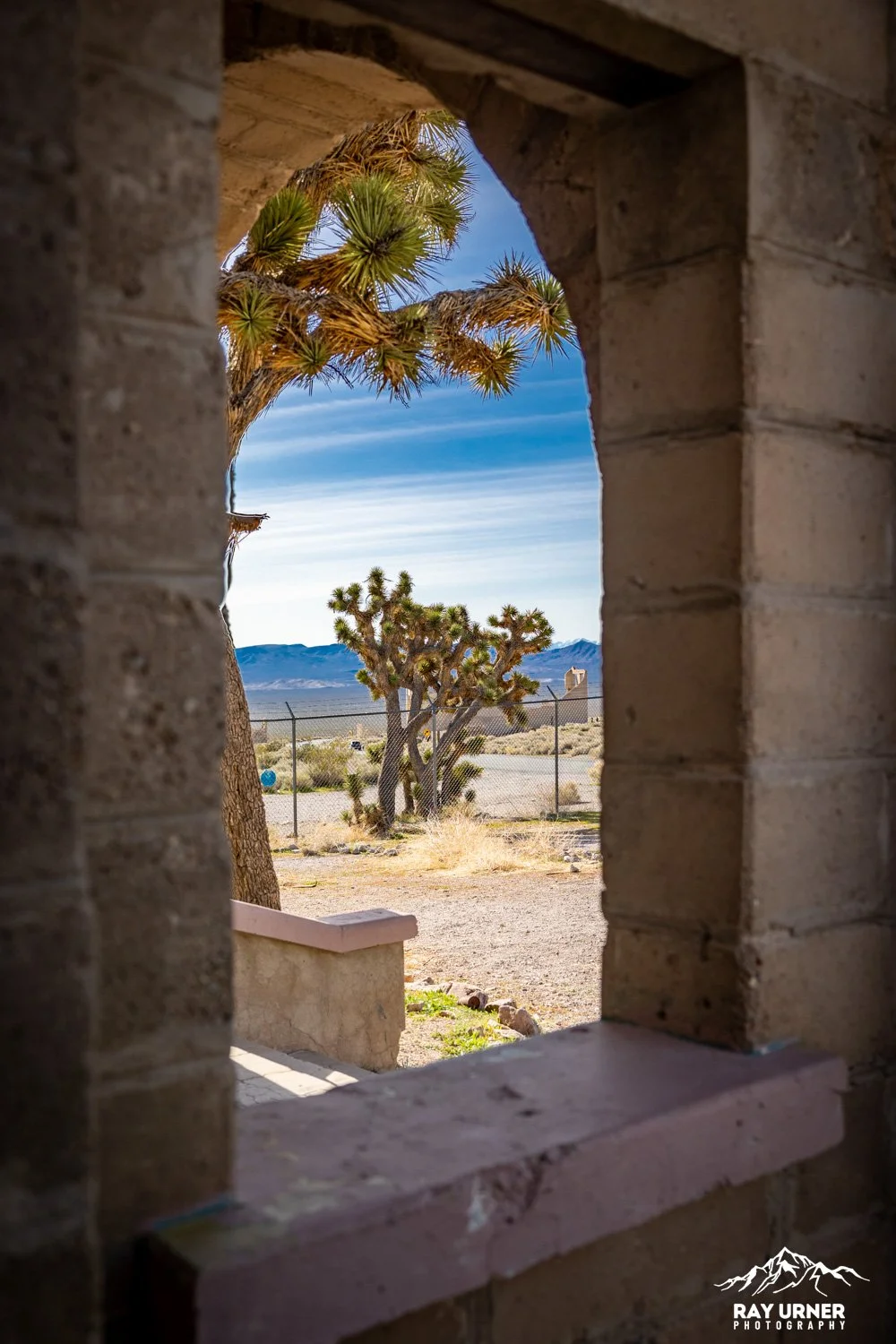
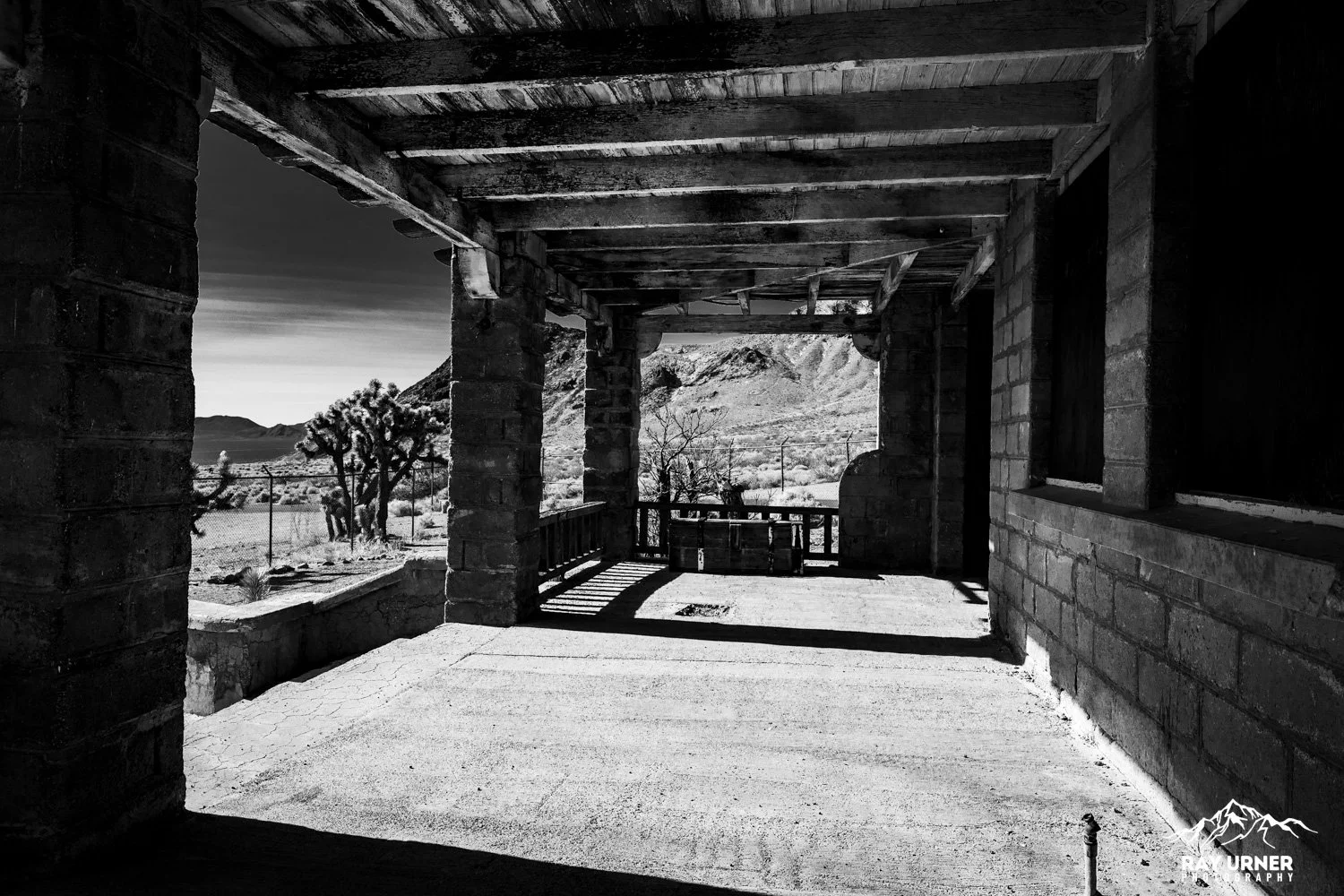
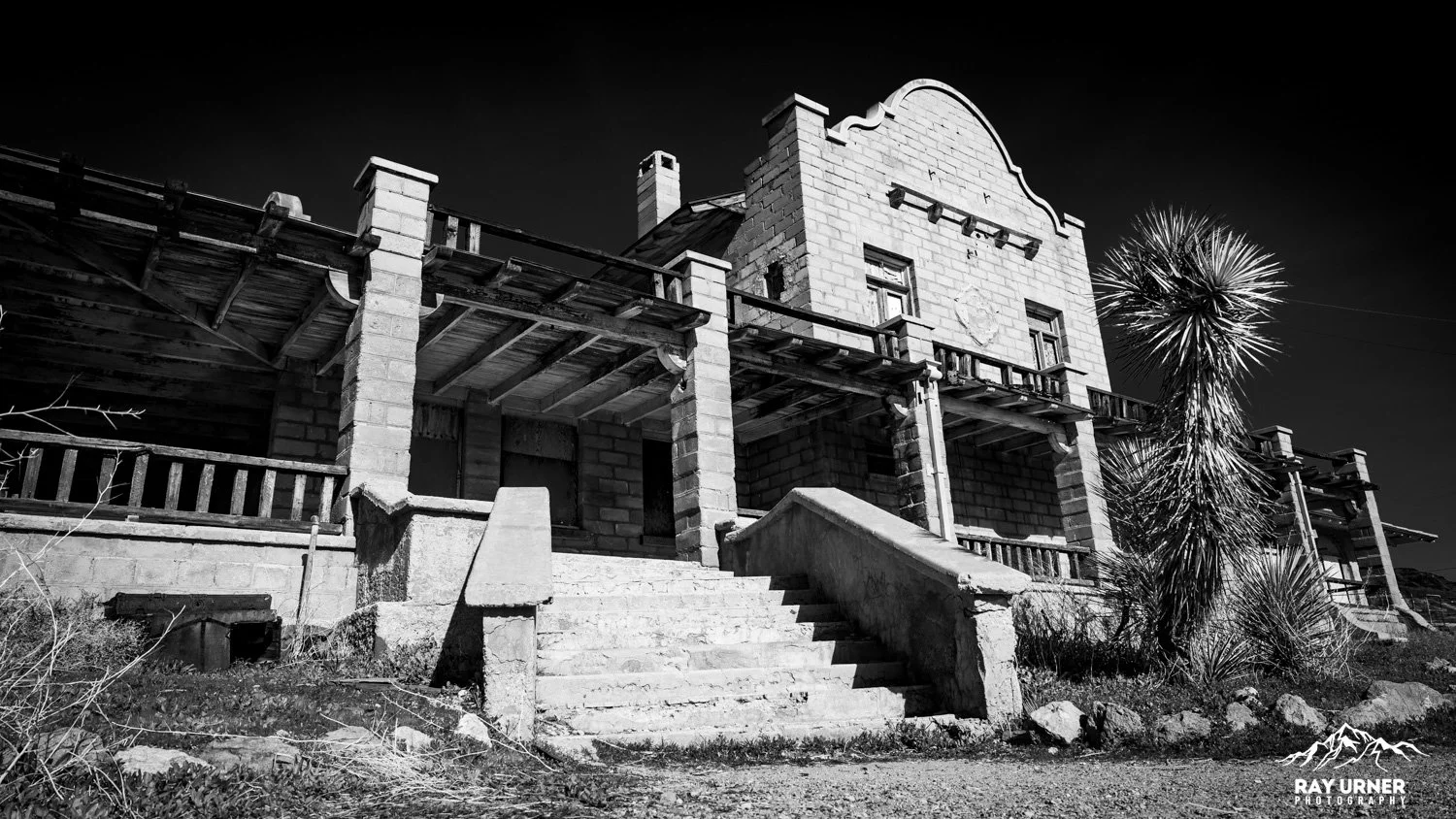
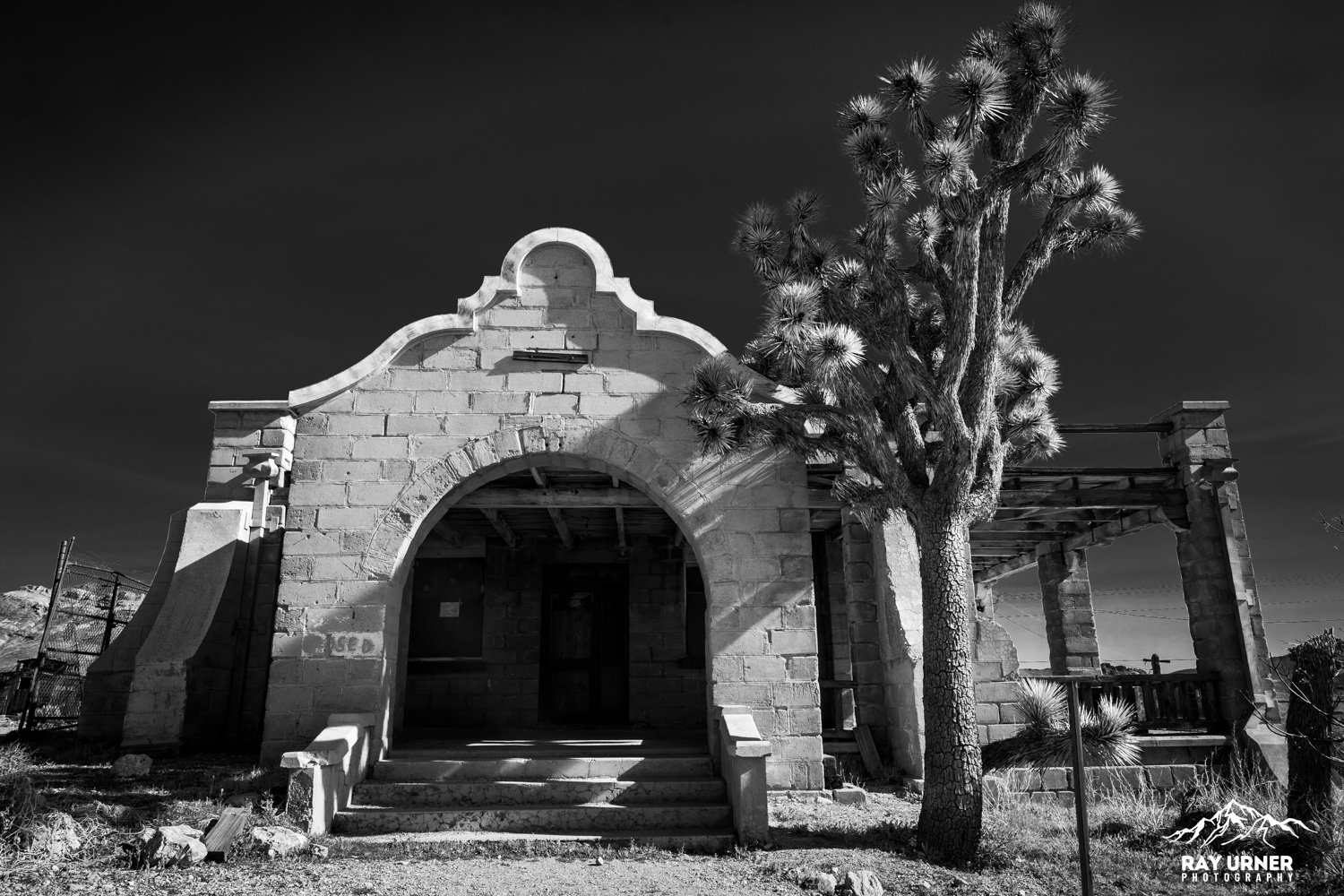
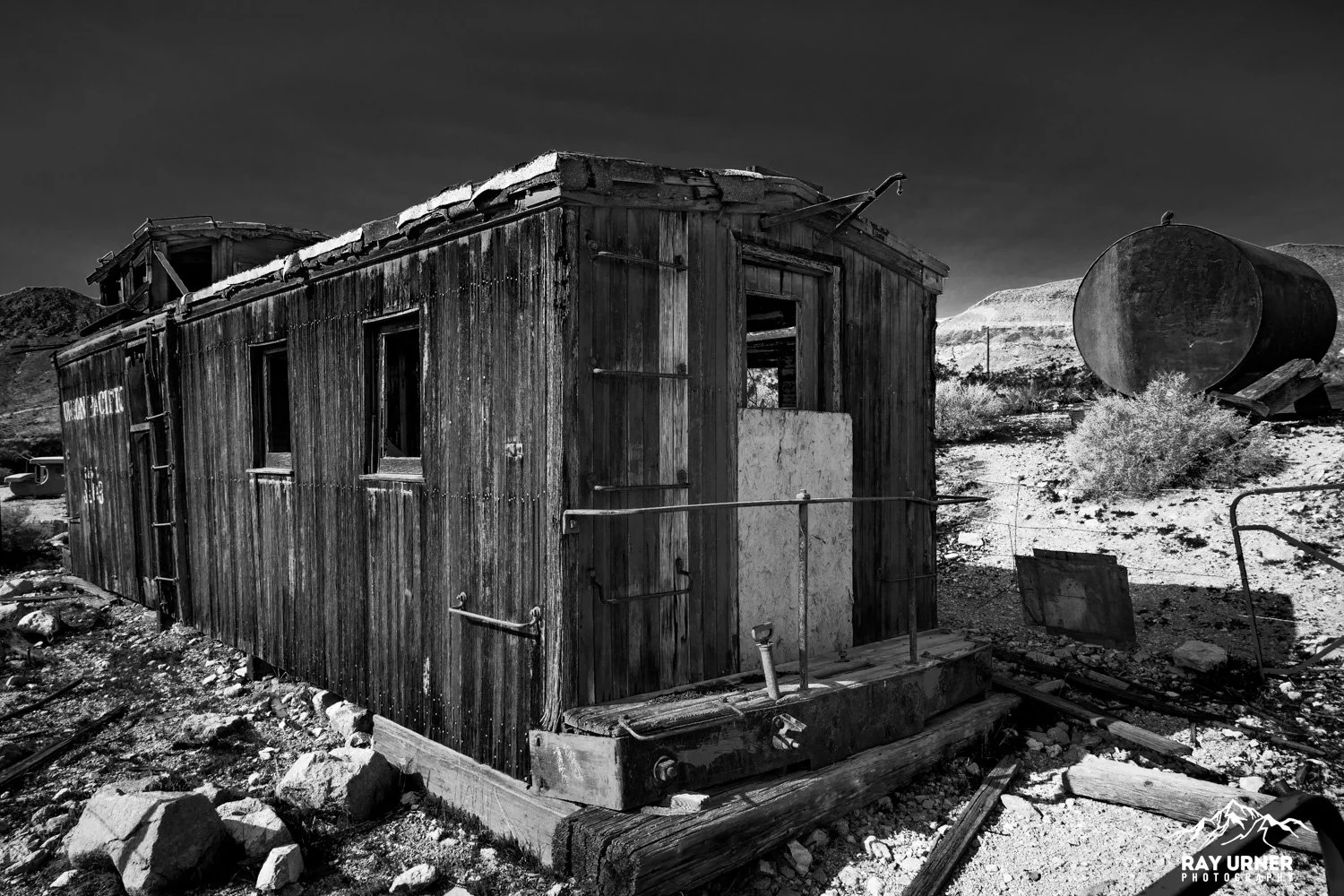
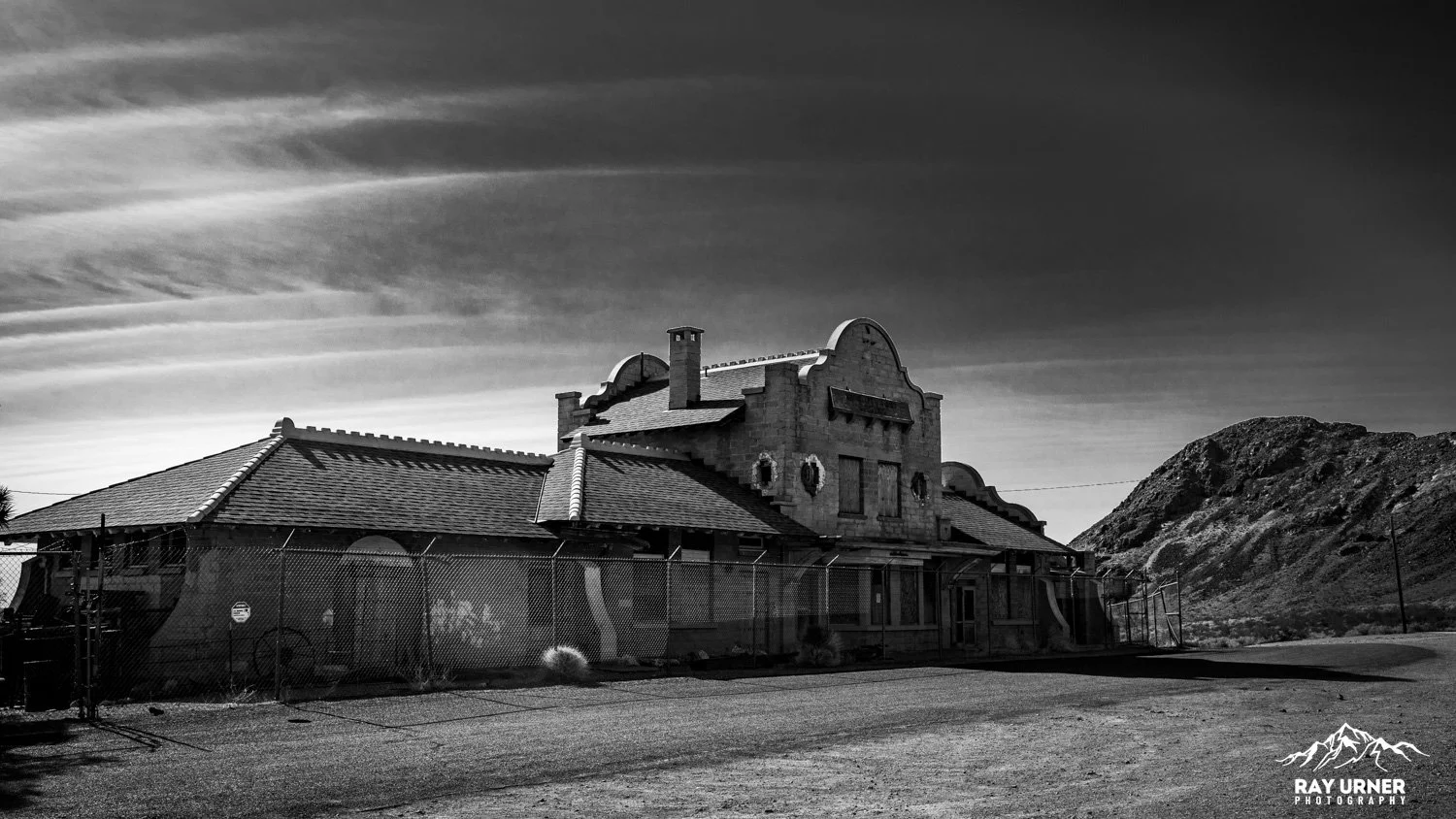
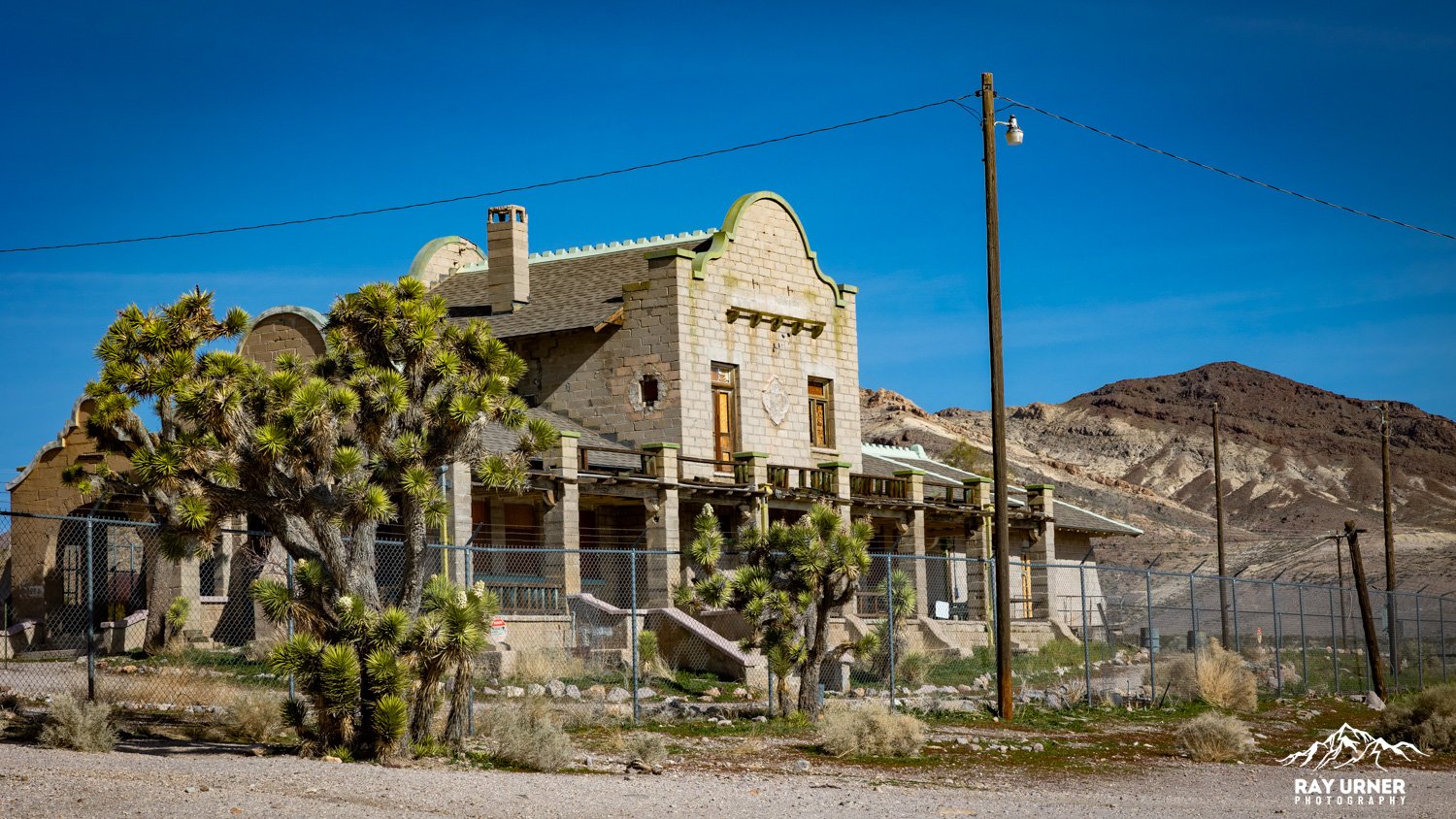
Just 4 miles west of Beatty, Nevada—and ~30 miles from Furnace Creek—Rhyolite is among the West’s most photogenic ghost towns: crumbling concrete façades (Cook Bank), a handsome Las Vegas & Tonopah train depot, and more punctuate the desert backdrop.
Why shoot at noon? Rhyolite’s architecture and art thrive on hard edges, deep shadows, and glass—perfect for bold, graphic images in mid‑day light that would feel flat at dawn/dusk.
Overview
Quick Facts
Access & Location: Off NV‑374 (Daylight Pass Rd), ~4 mi west of Beatty; signed turn‑off to Rhyolite and Goldwell Open Air Museum.
Key Subjects: Cook Bank ruins, LV&T train depot, jail/school remnants, and Goldwell’s desert sculptures.
History Snapshot: Boomed after 1904 discovery by Shorty Harris & E. L. Cross; population peaked ~5,000–8,000 with electricity, stock exchange, and an opera house before collapsing after 1907.
Harsh Mid‑Day Light: What to Shoot & How
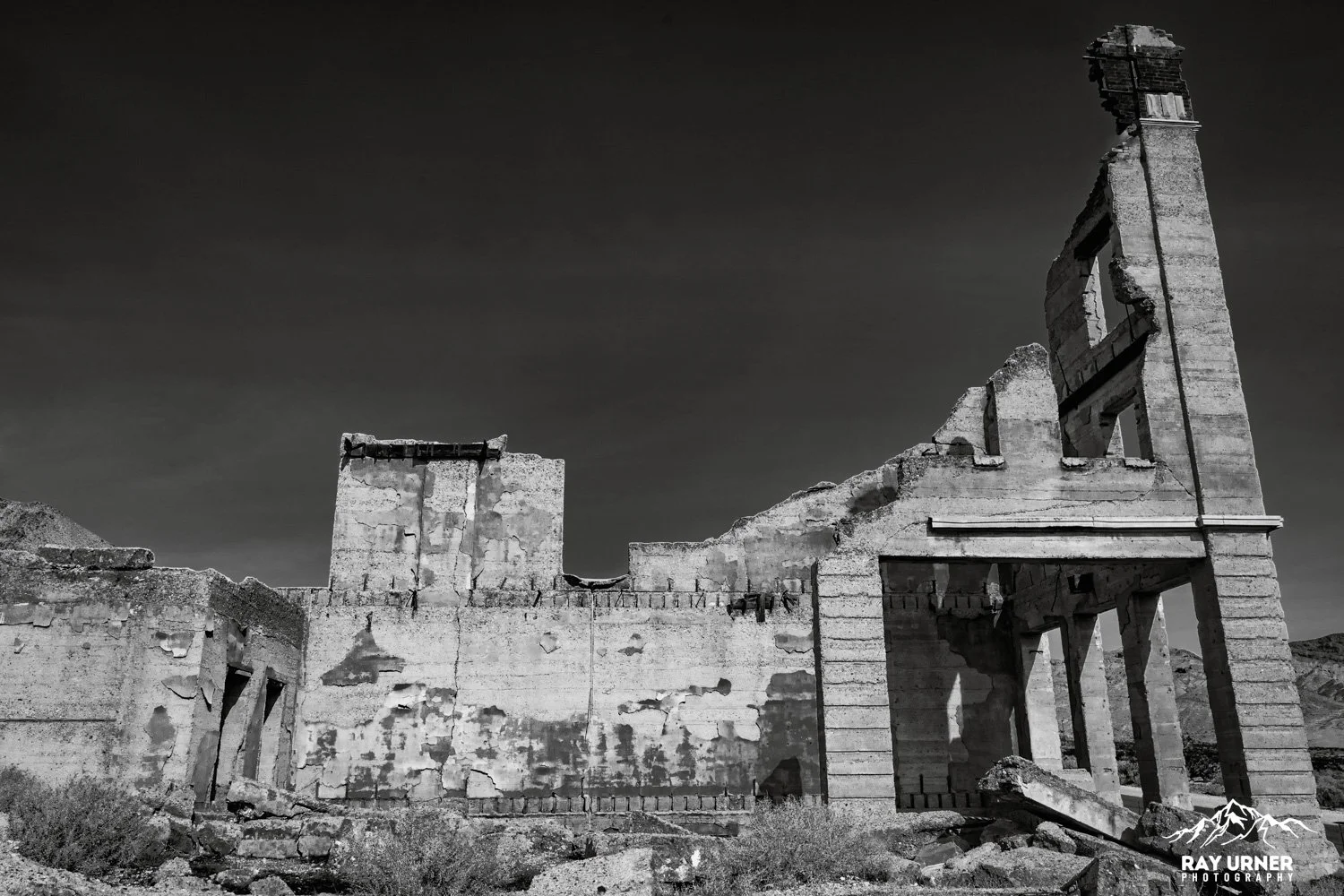
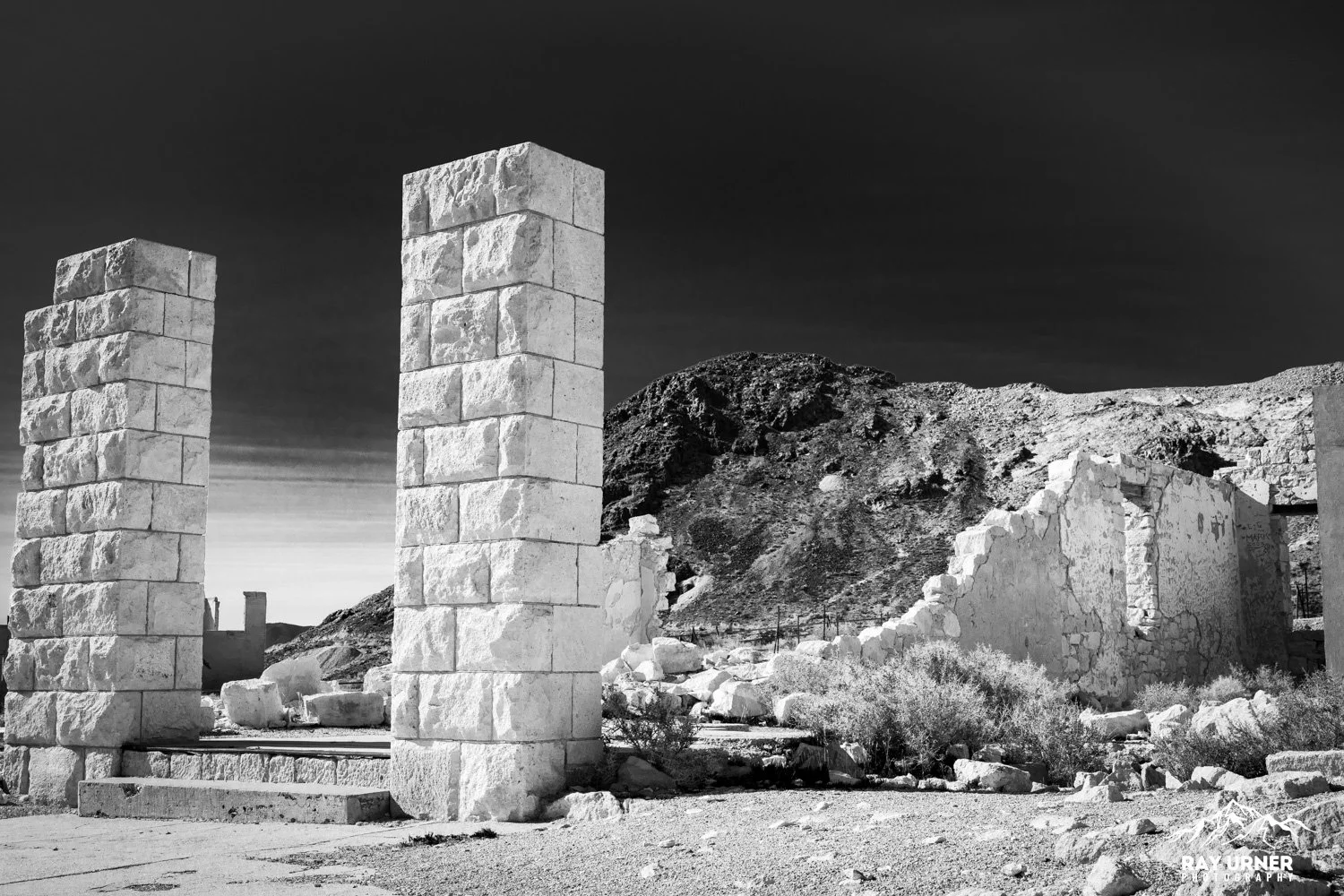
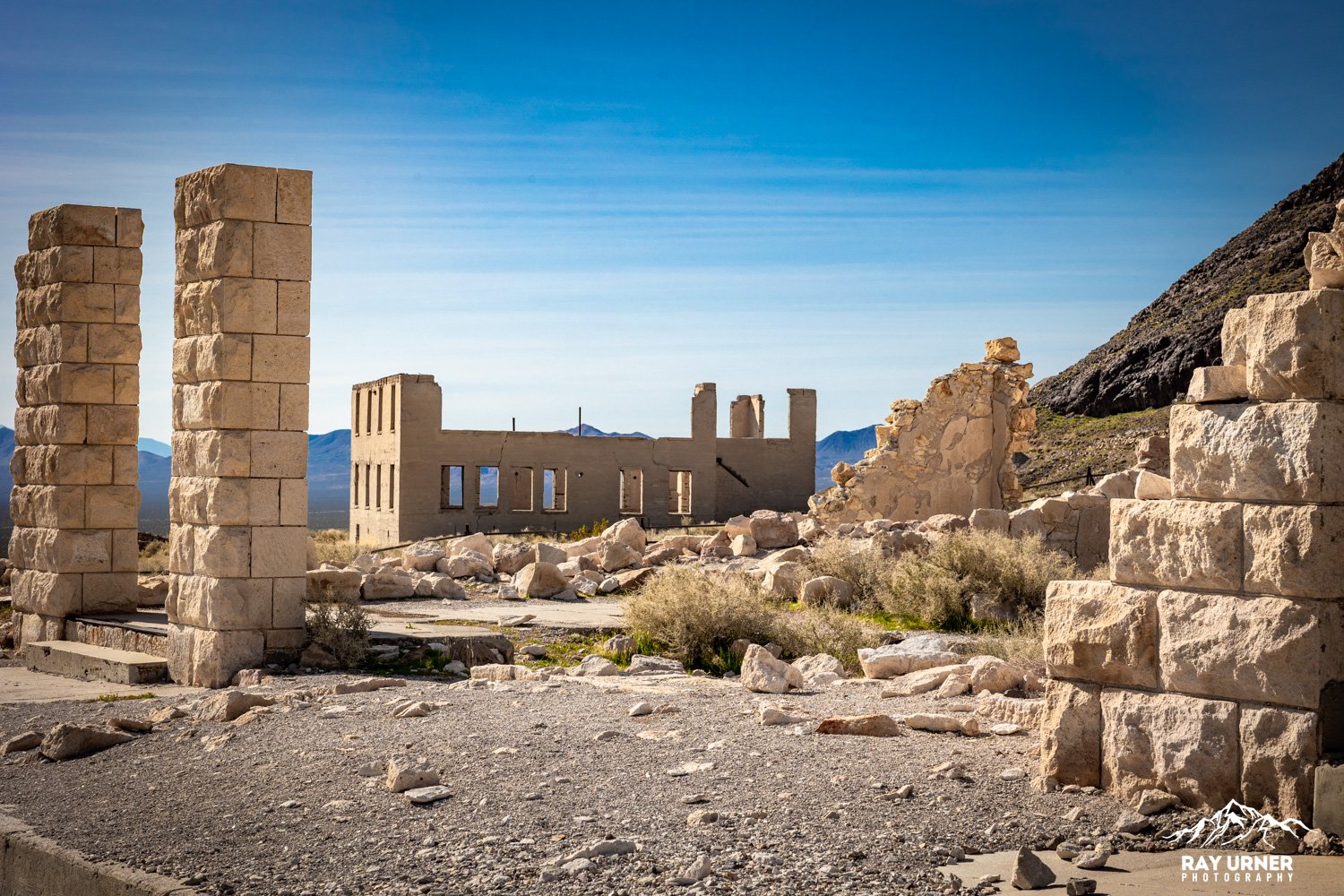
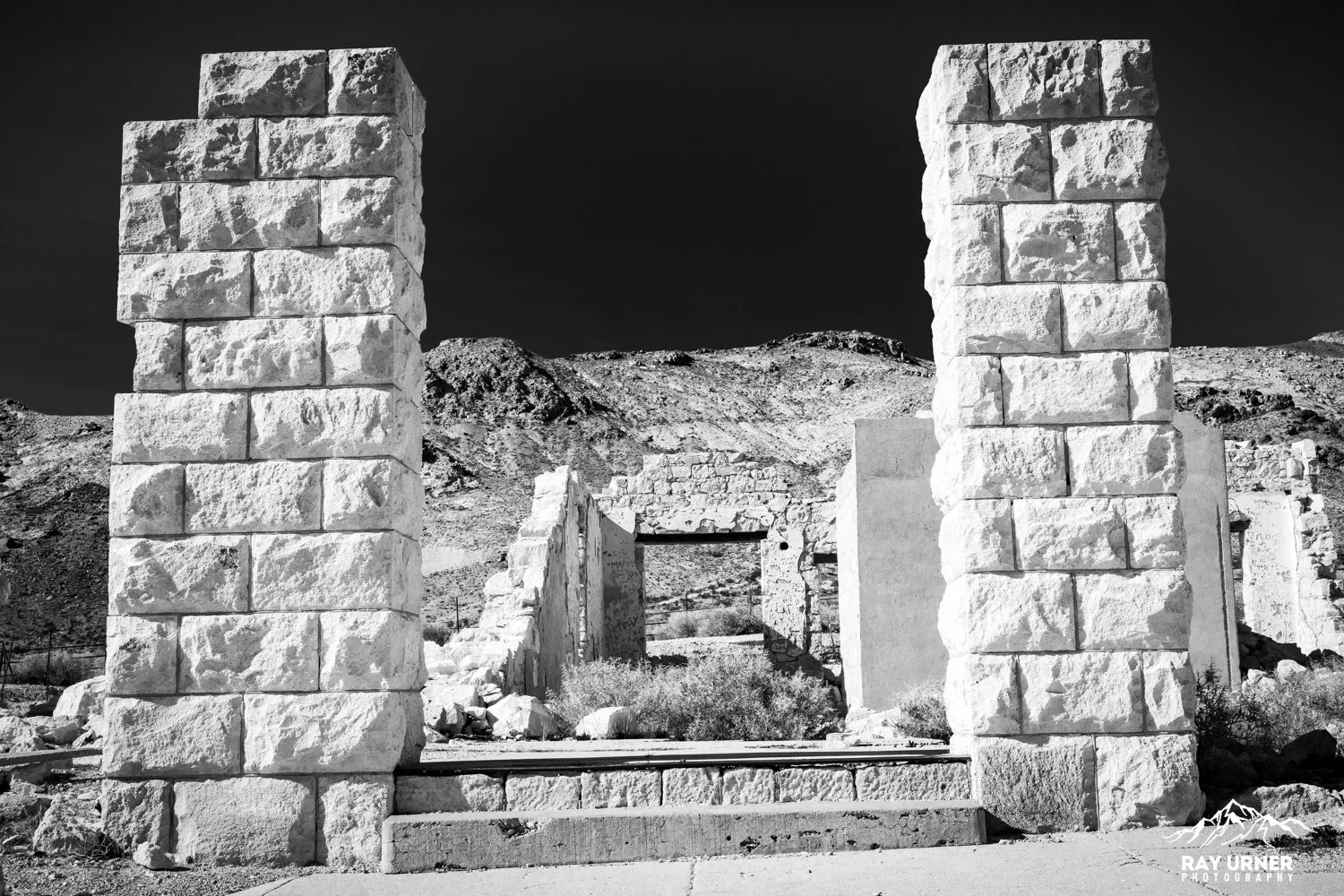
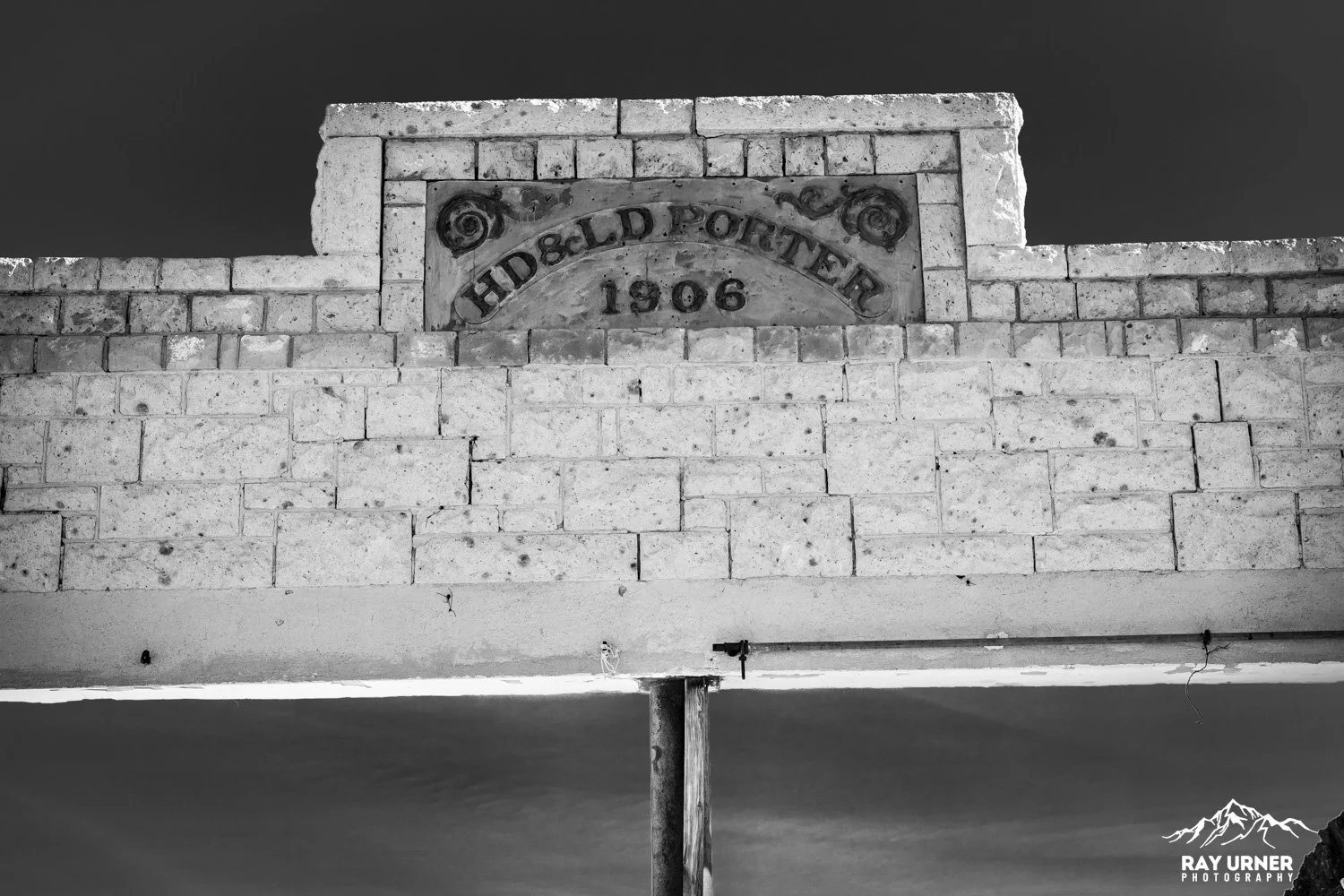
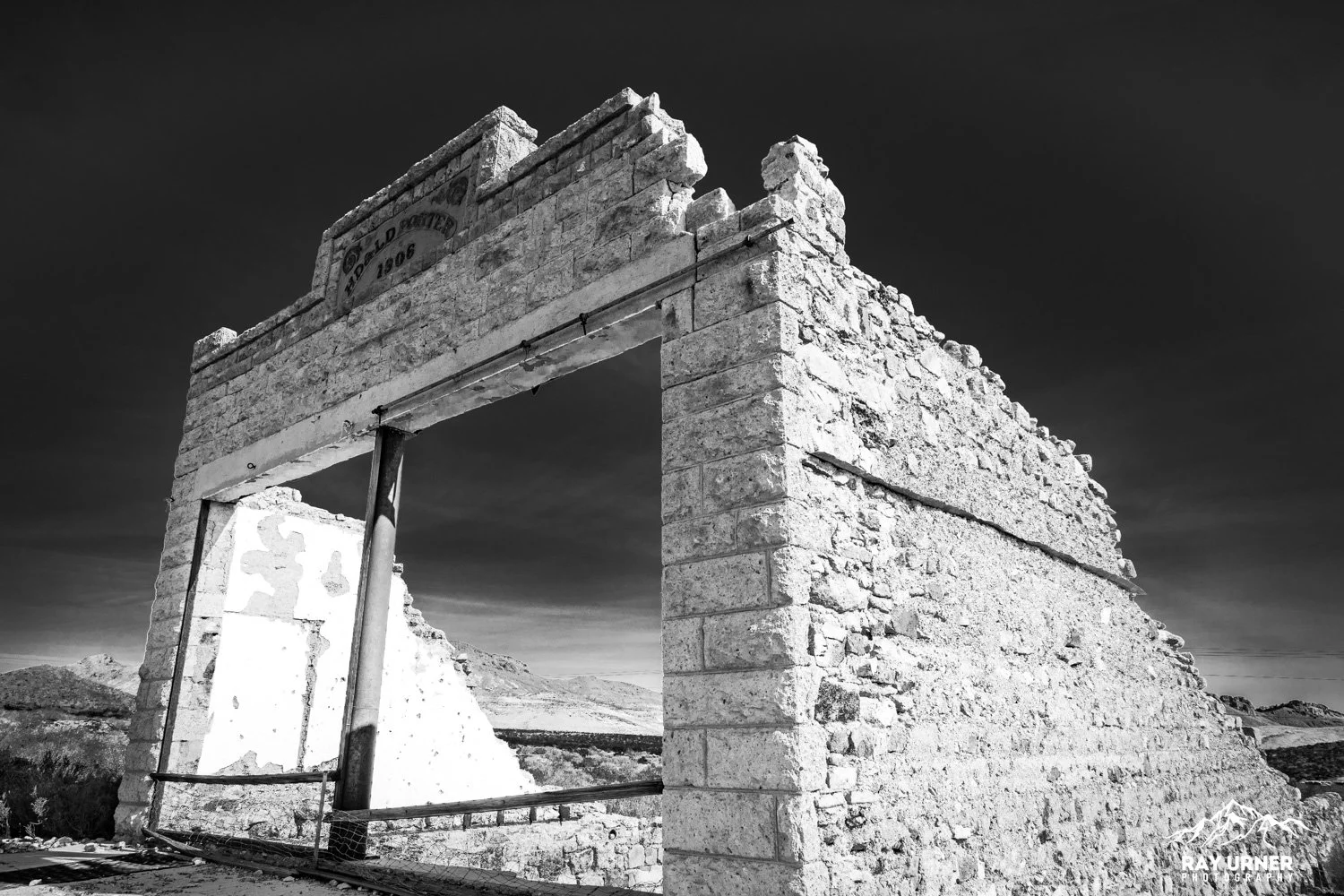
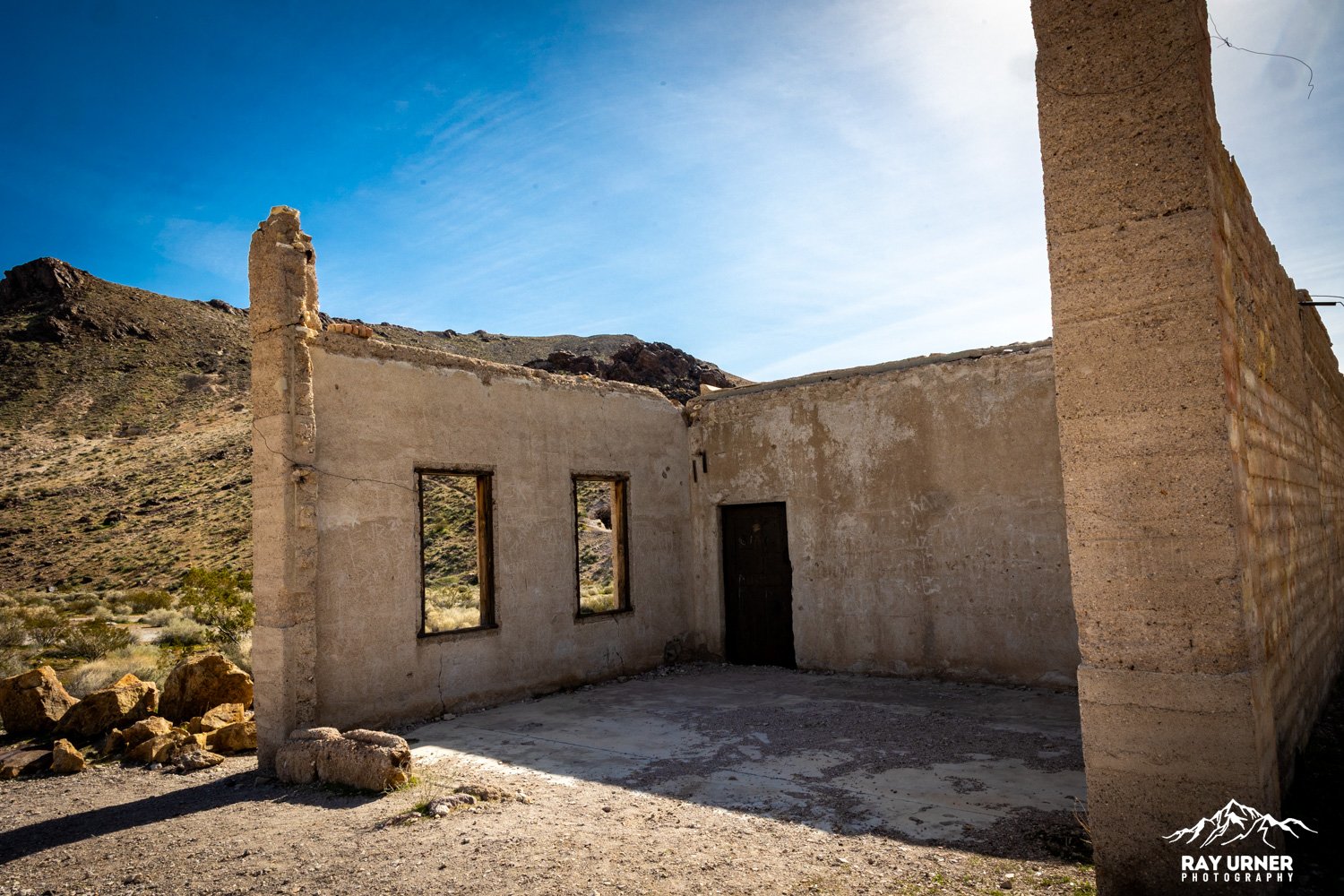
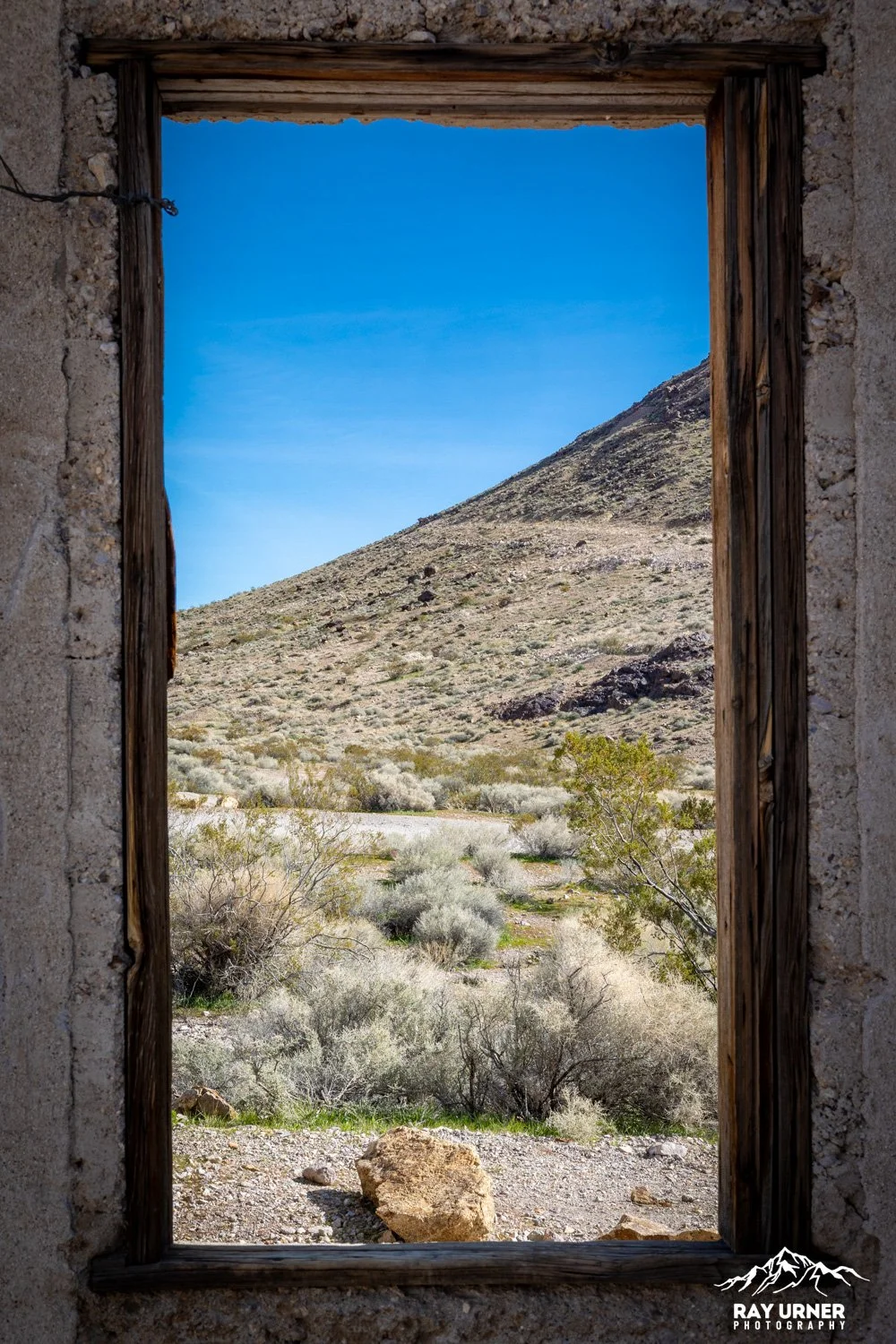
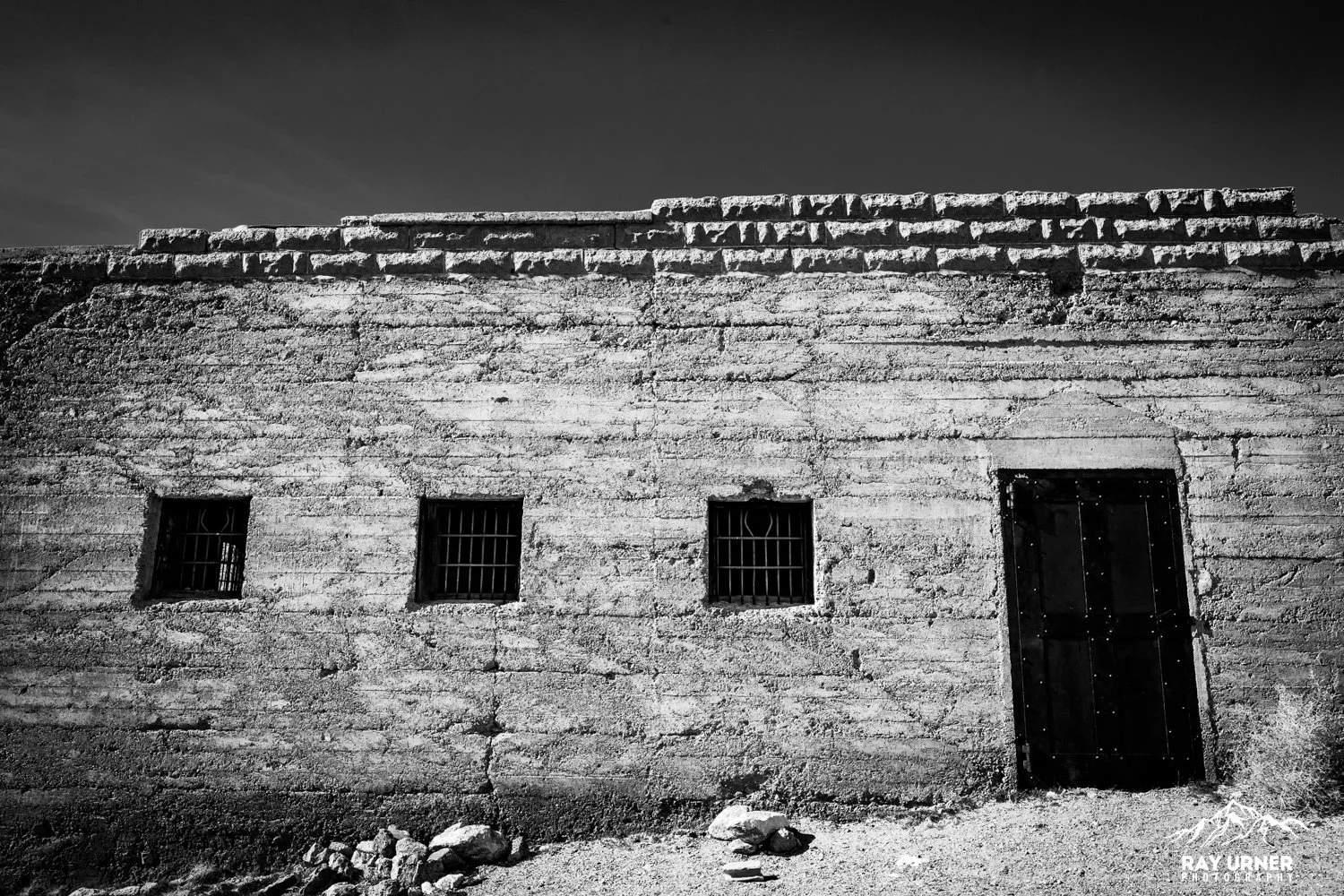
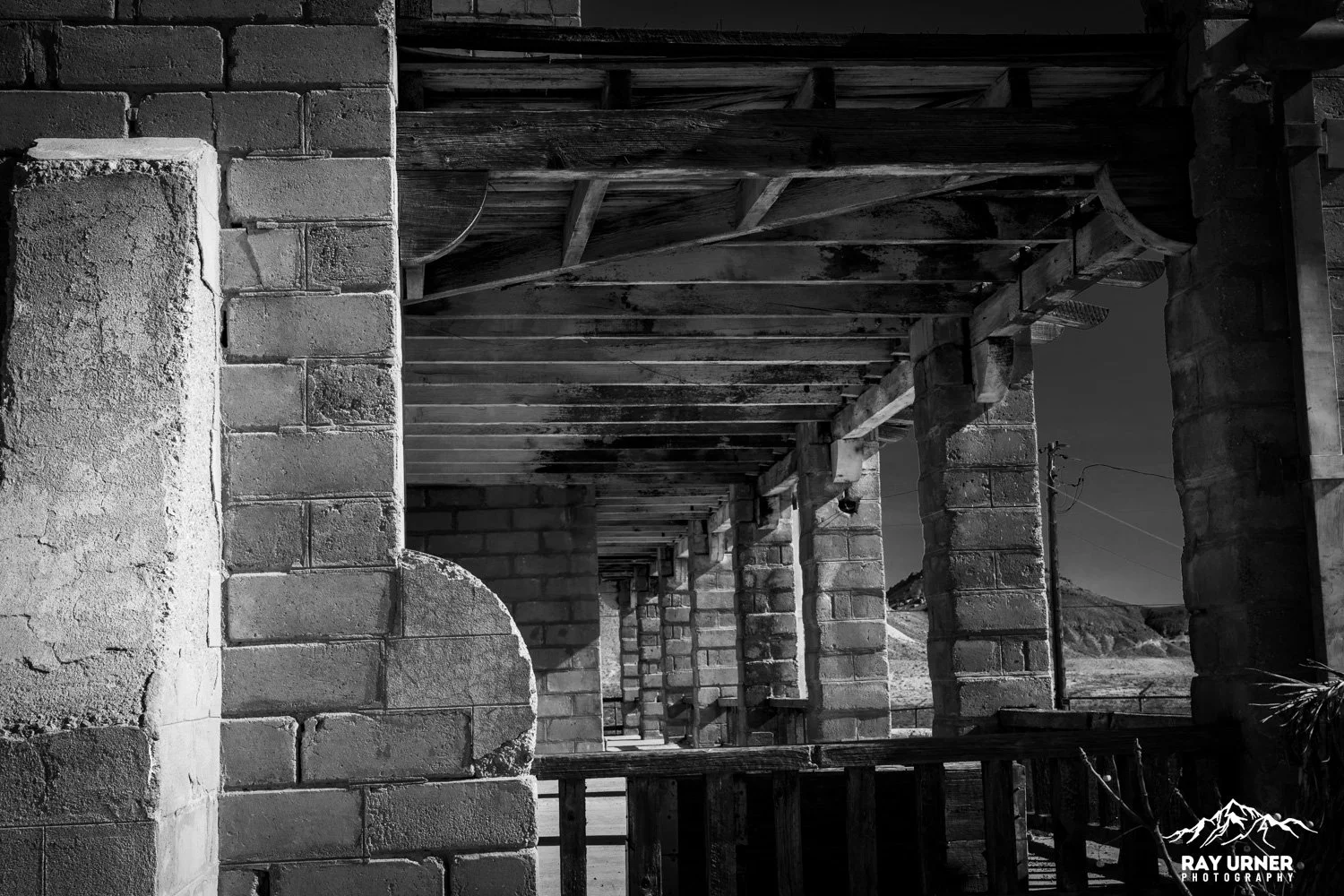
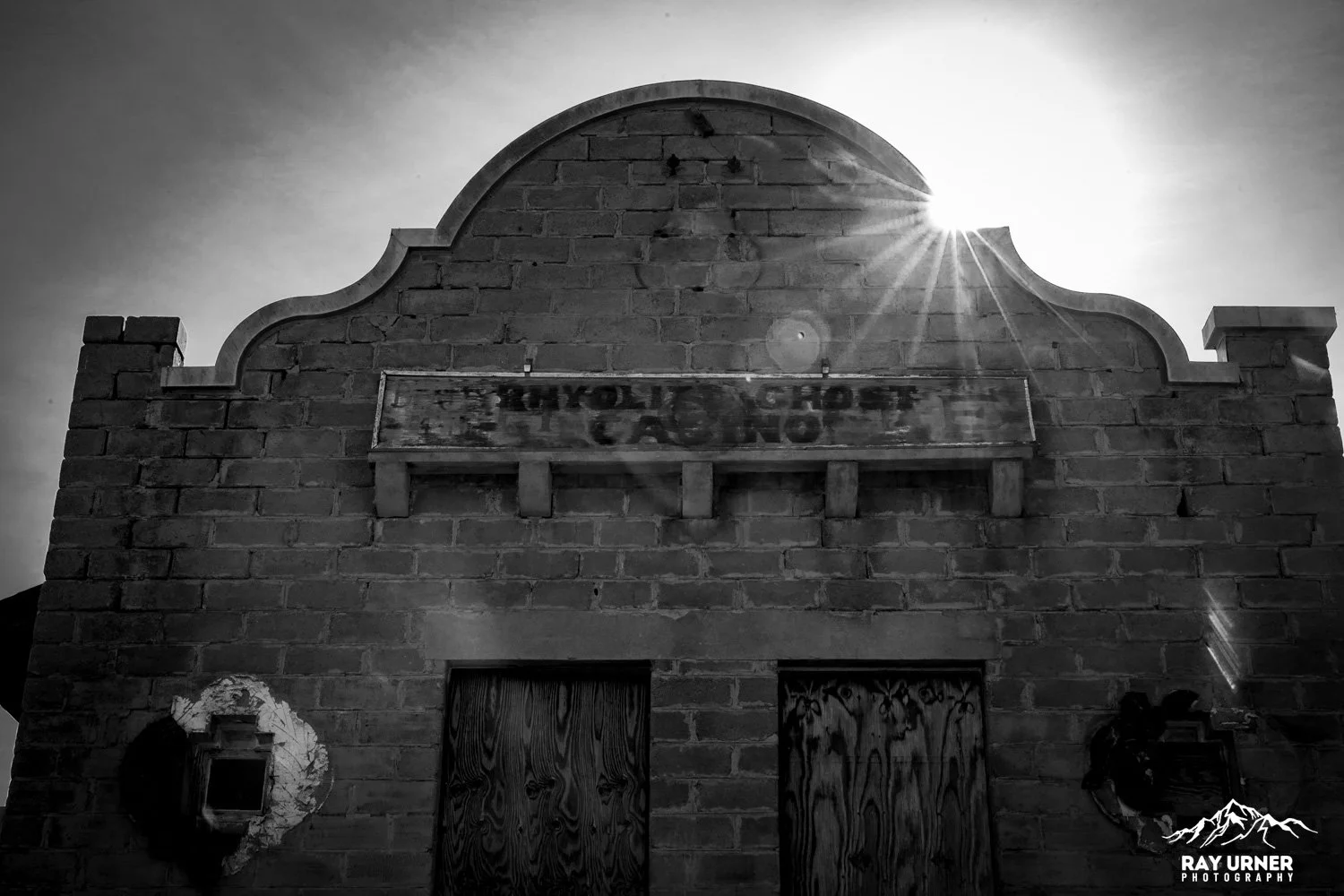
1) Concrete Ruins (Cook Bank, school, jail): punchy B&W and graphic geometry
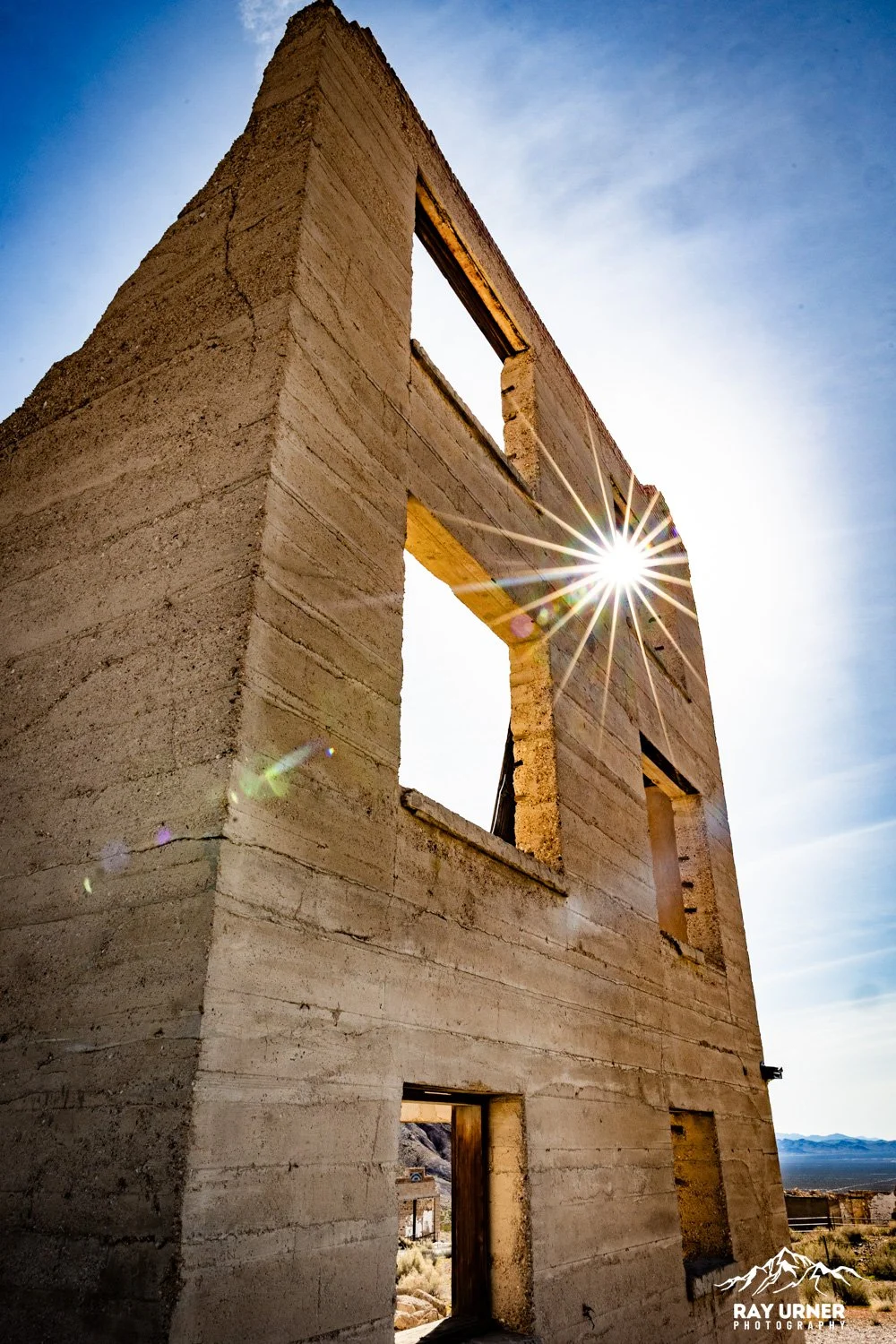
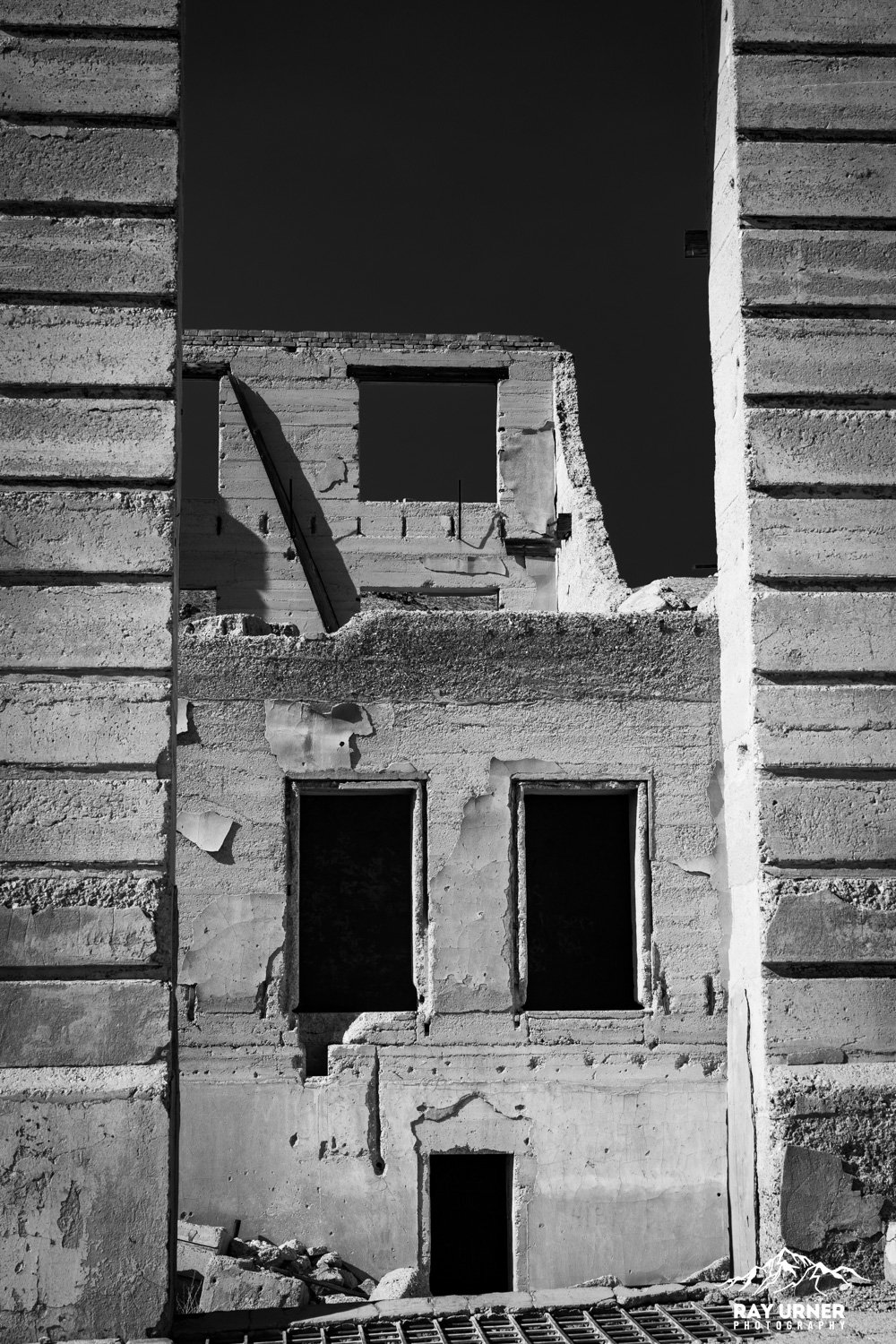
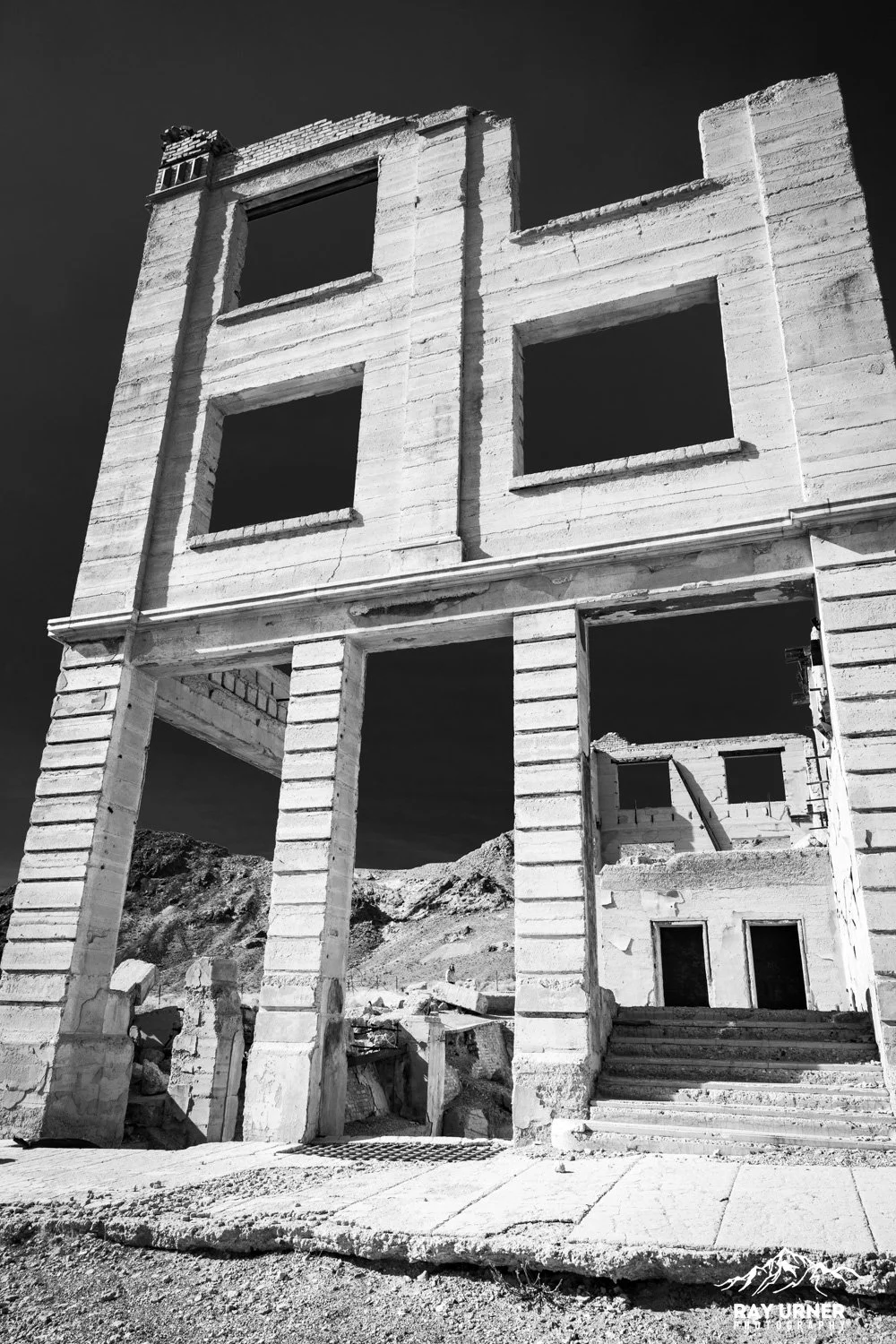
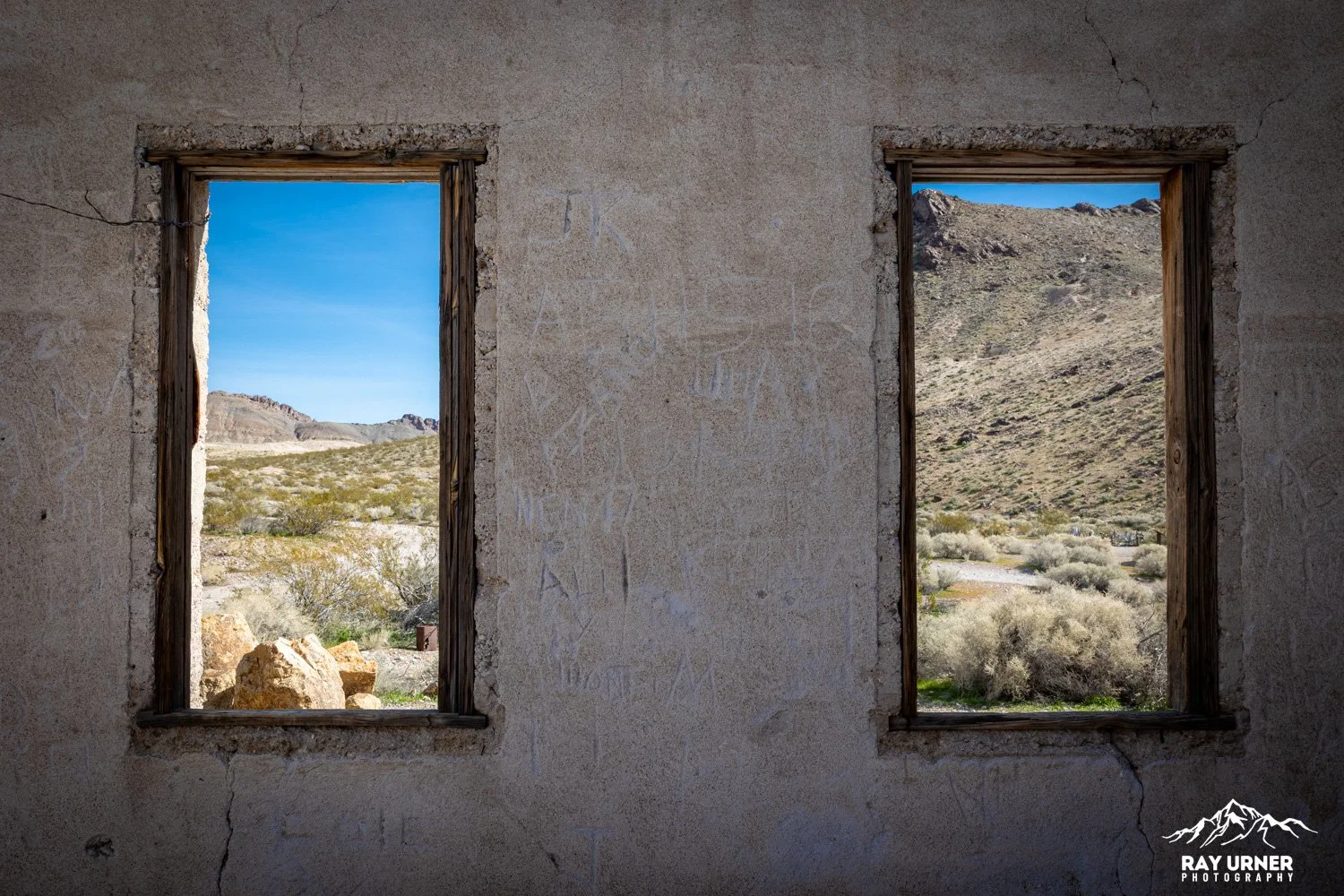
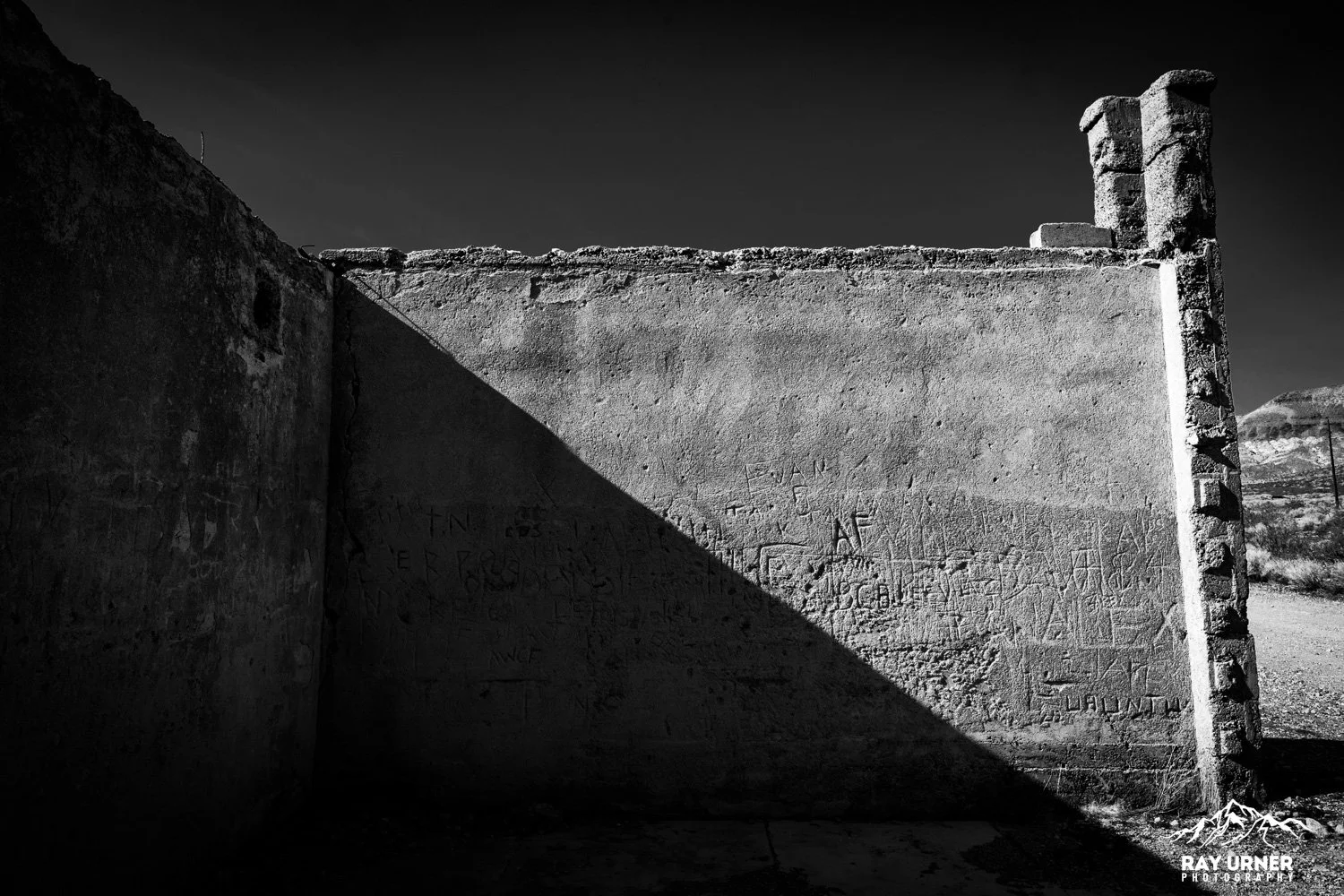
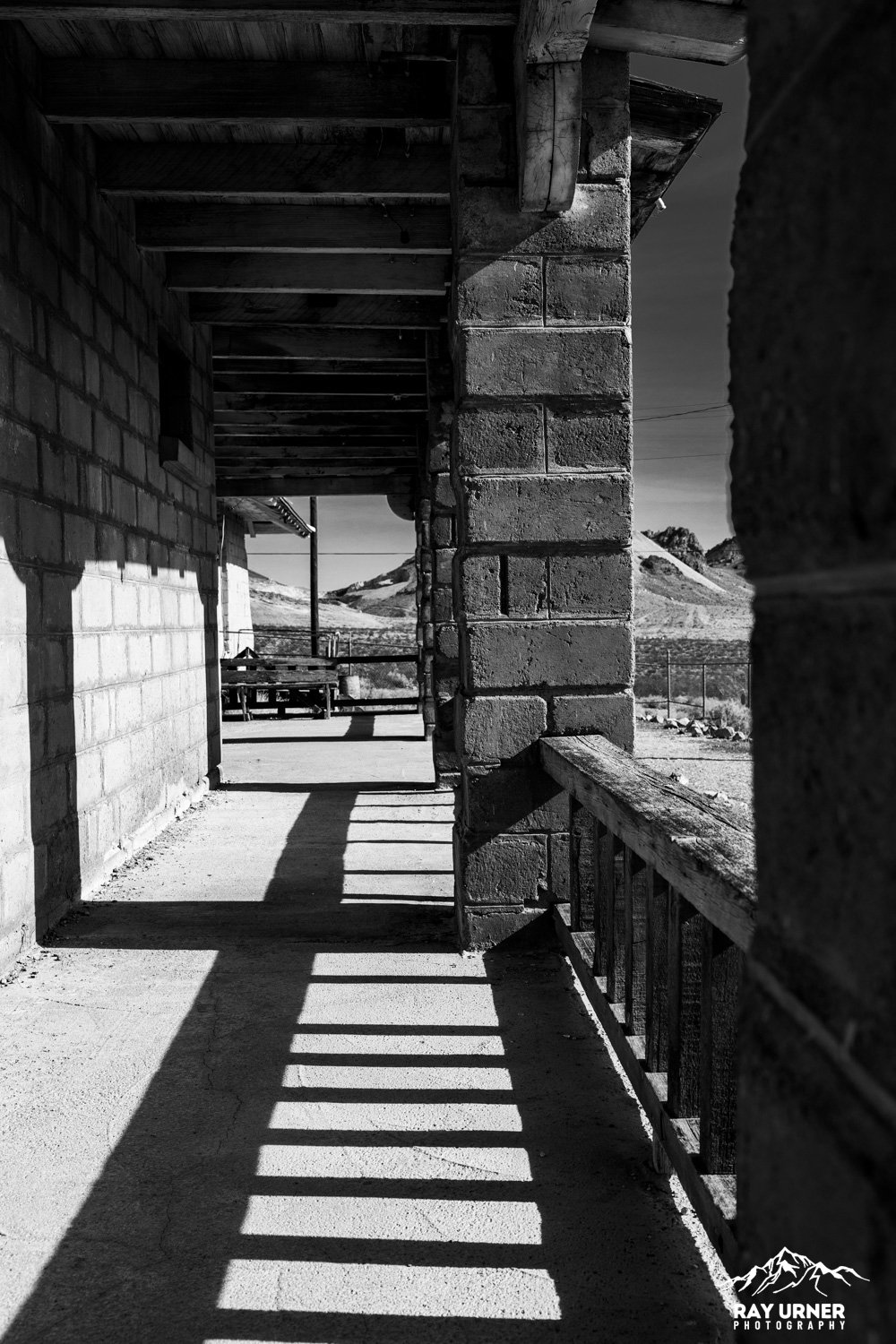
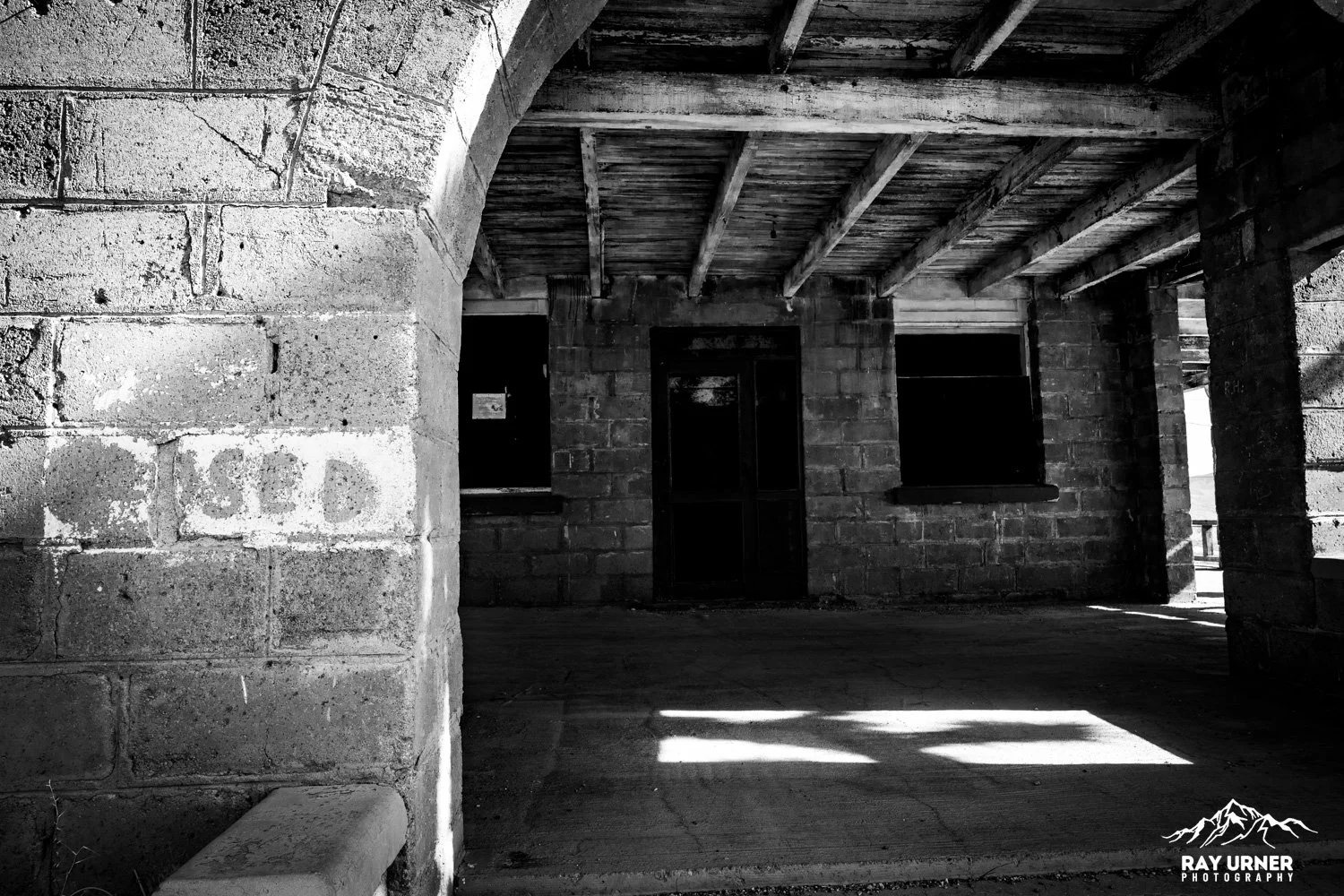
Approach: Embrace the high‑contrast scene—meter for highlights, allow deep blacks, and look for repeating window cut‑outs to cast rectilinear shadows across floors and walls. (Perfect for stark black‑and‑white.)
Lenses: 24–70mm for context; 70–200mm to compress broken lintels & wall remnants into layered abstract blocks.
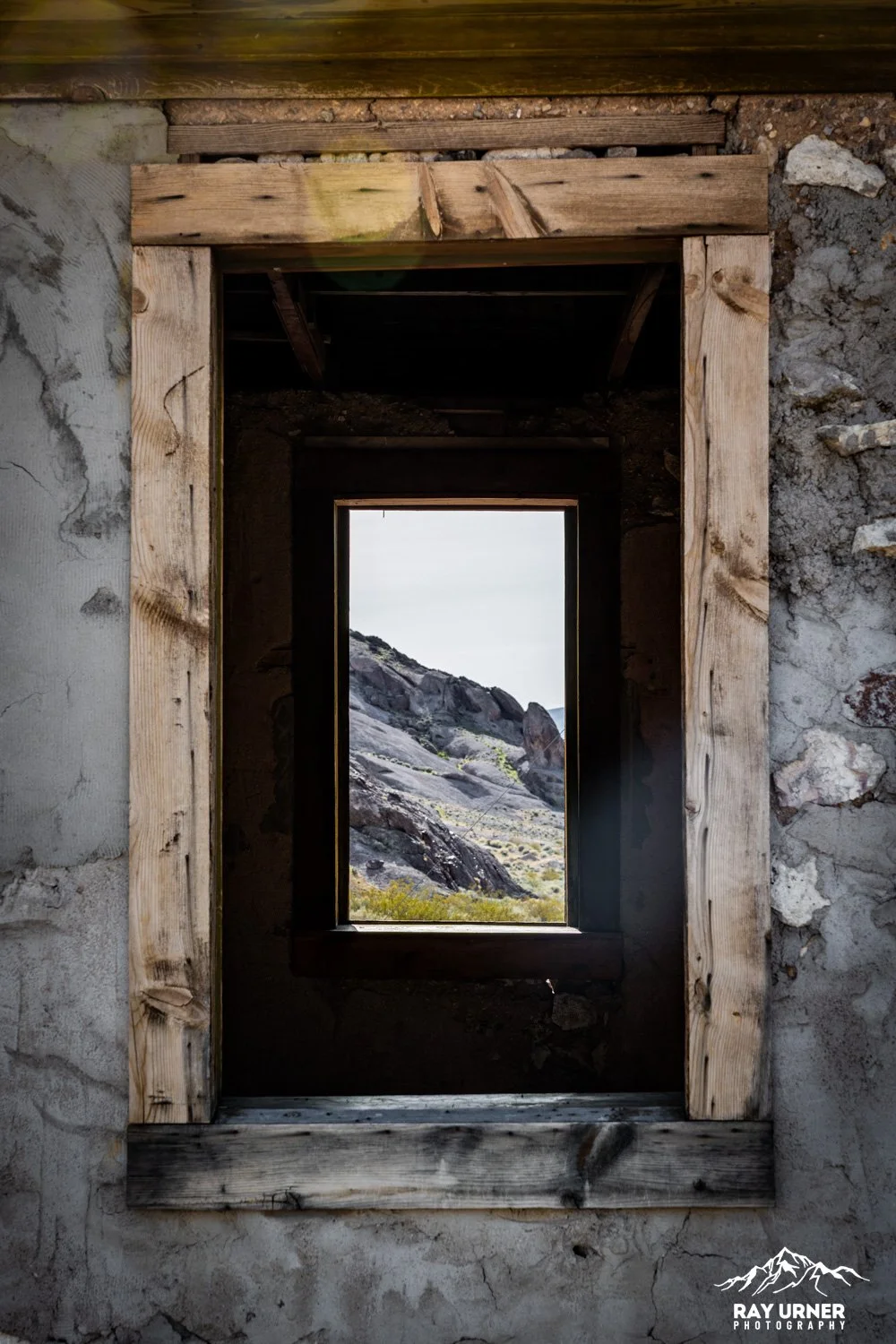
Angles: Stand inside the ruins and shoot outward; hard sun outlines openings with razor‑edged frames.
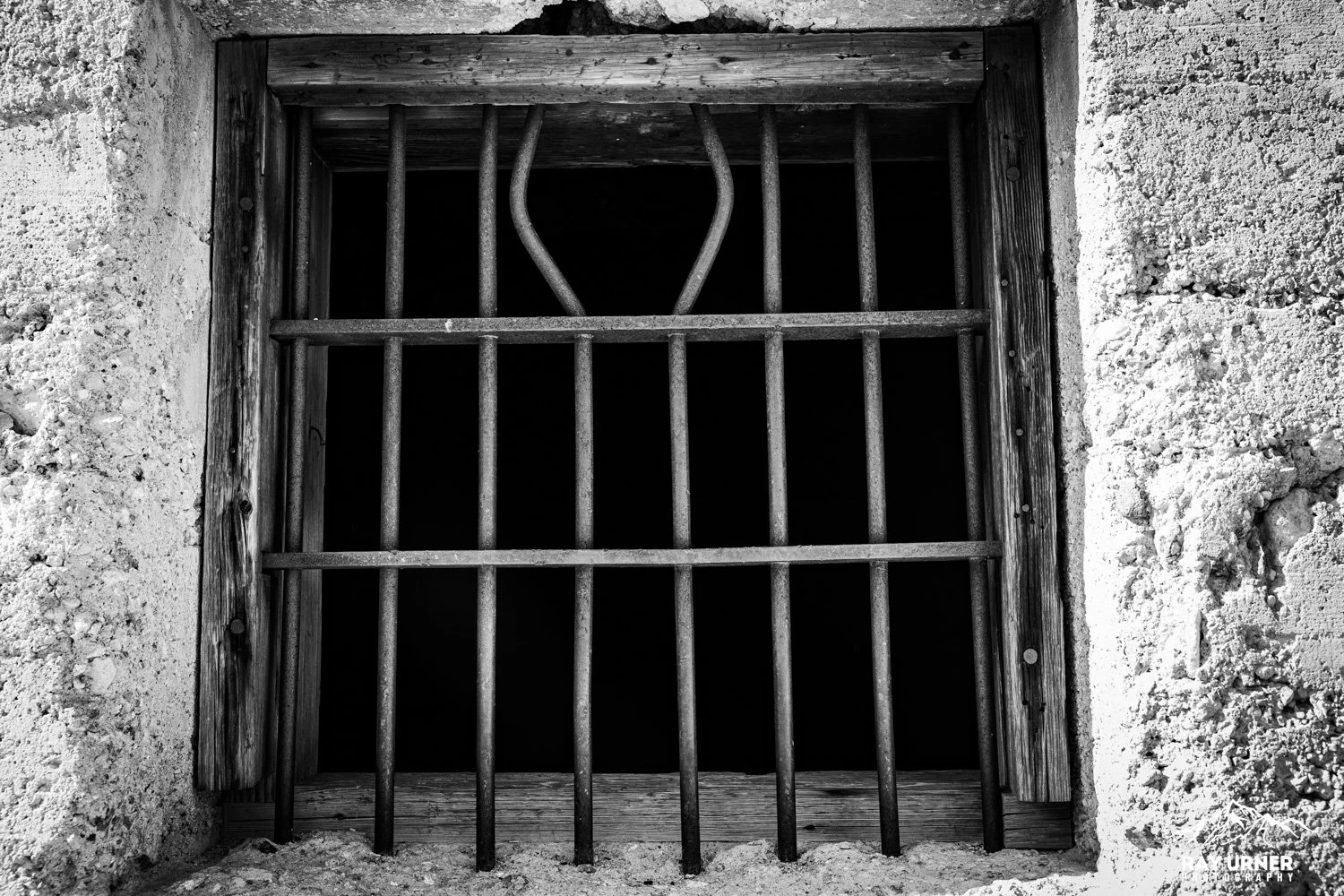
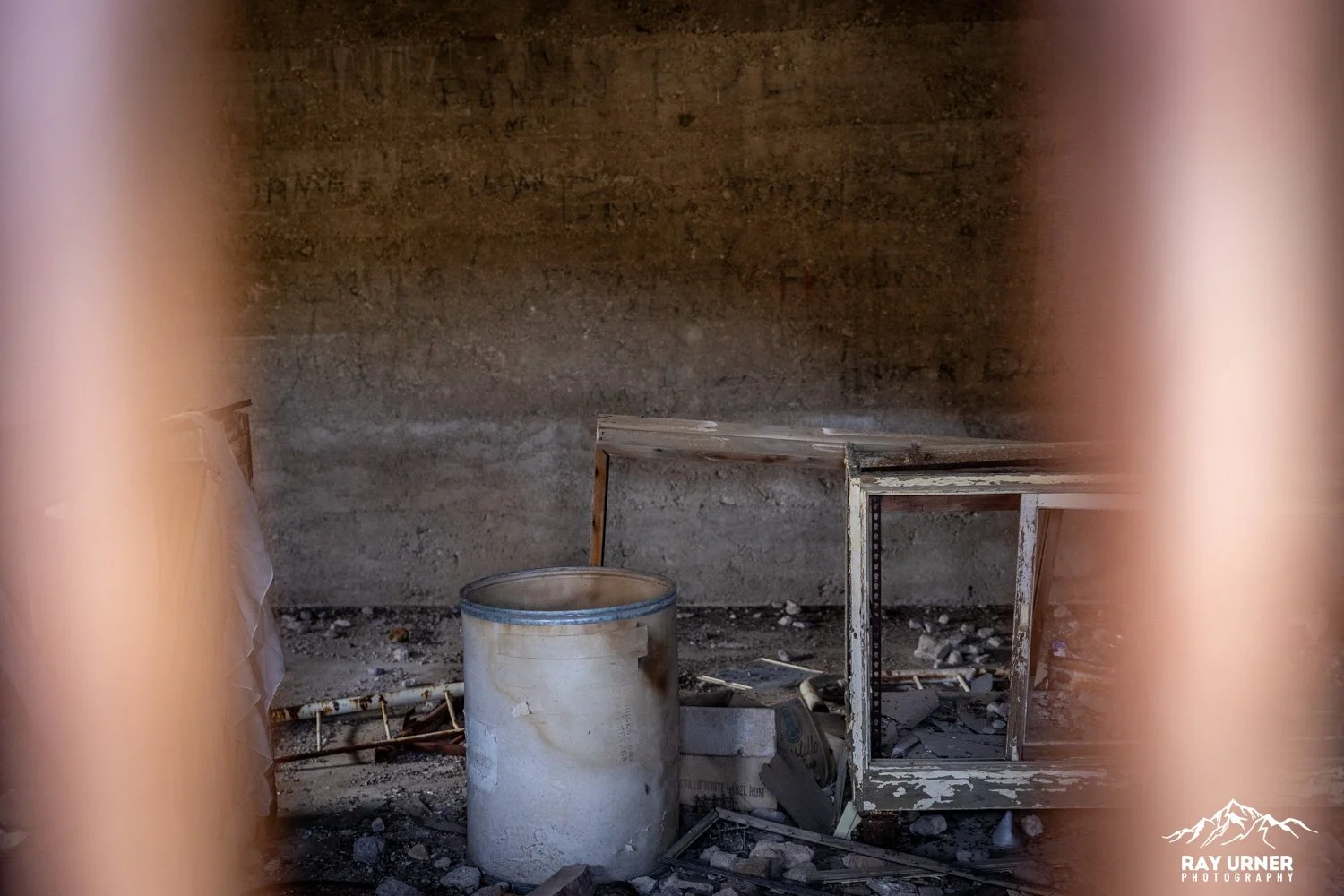
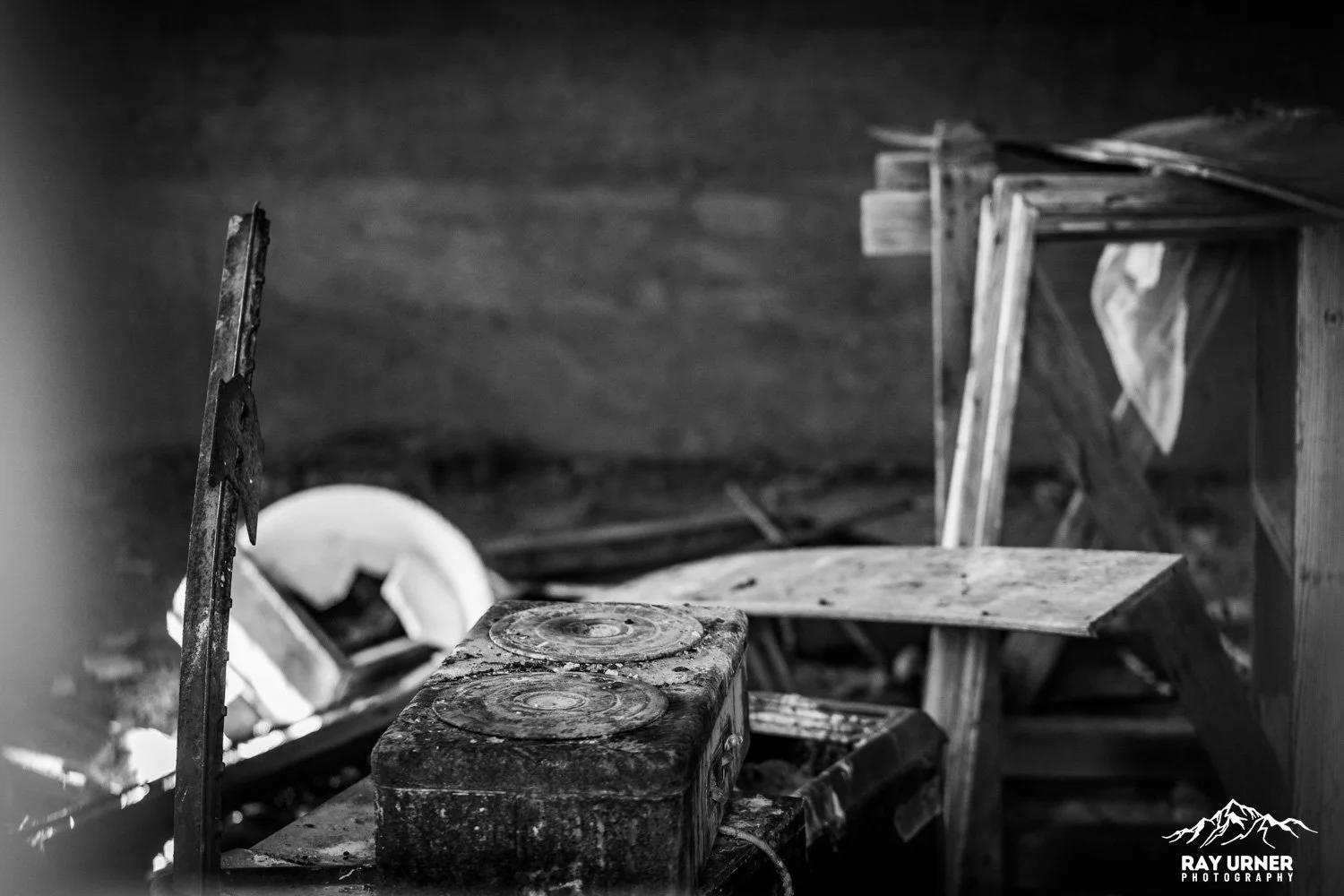
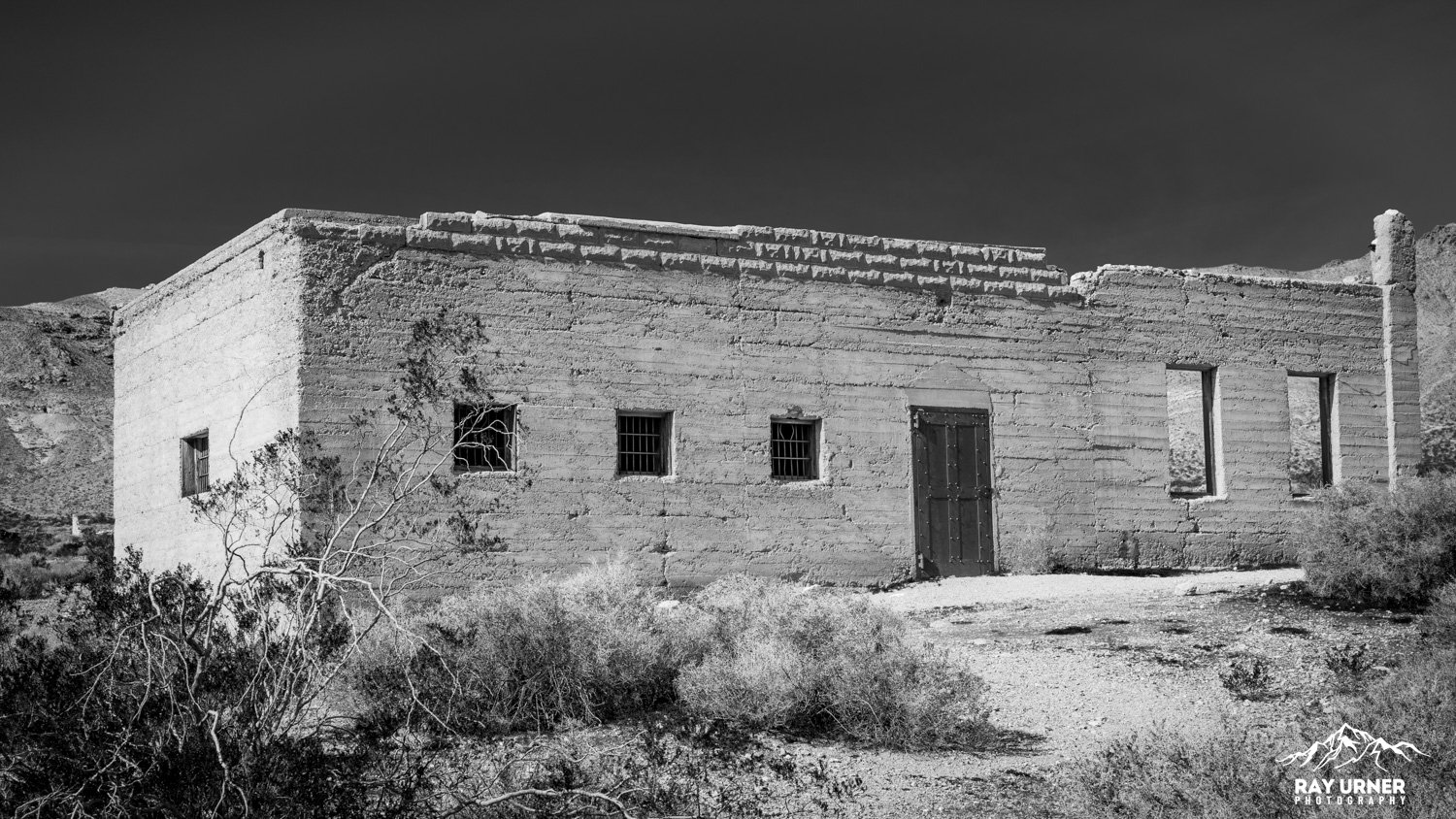
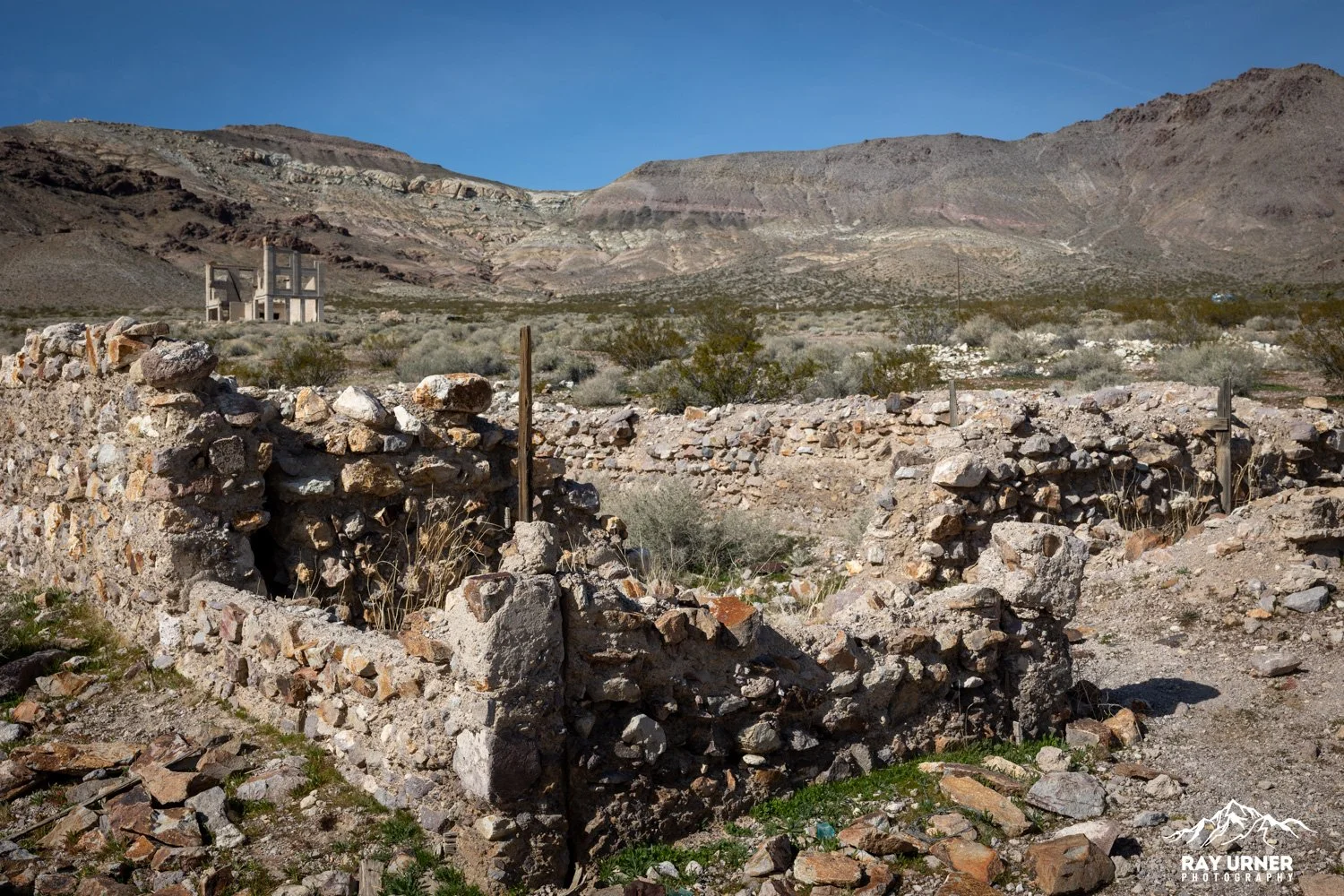
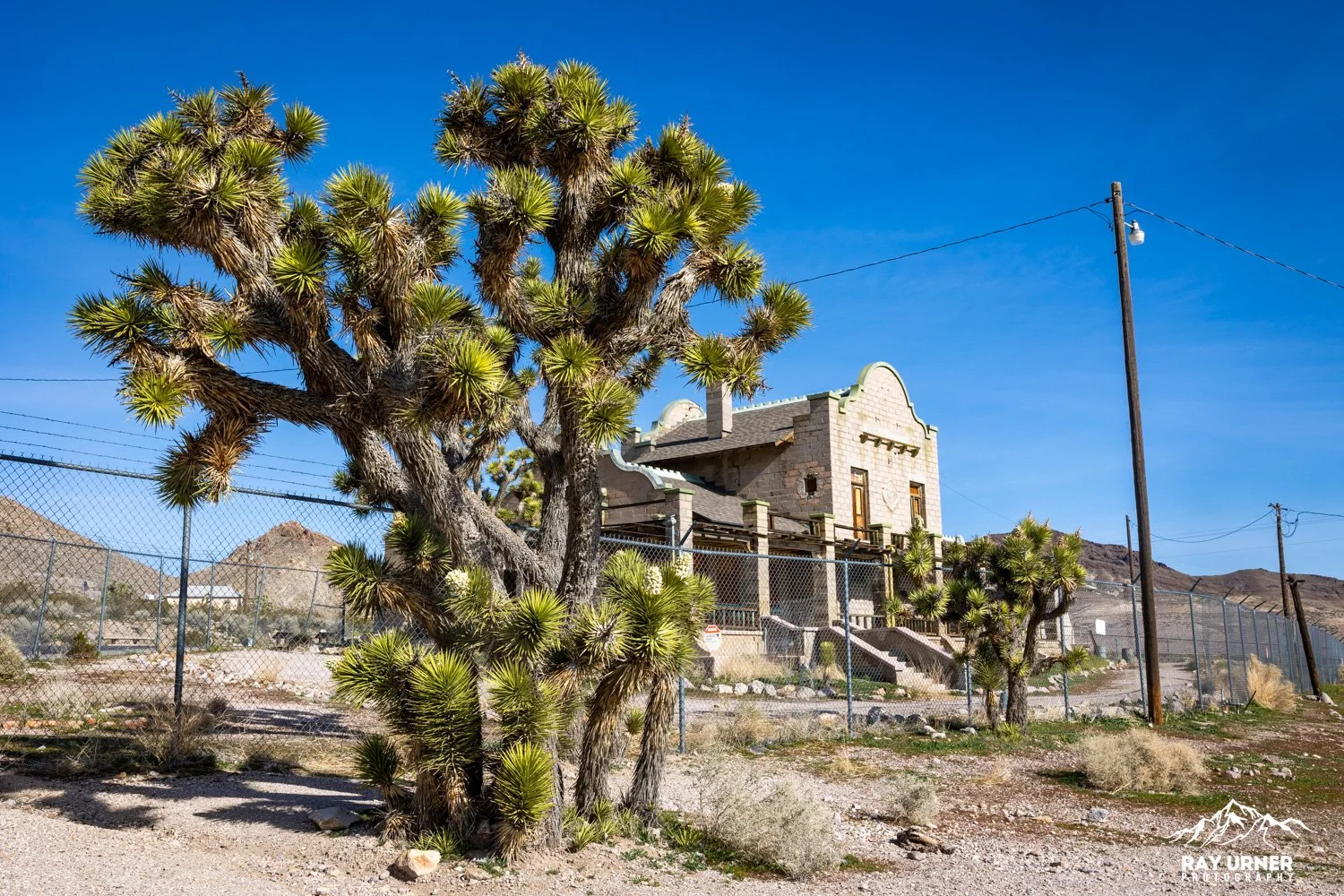
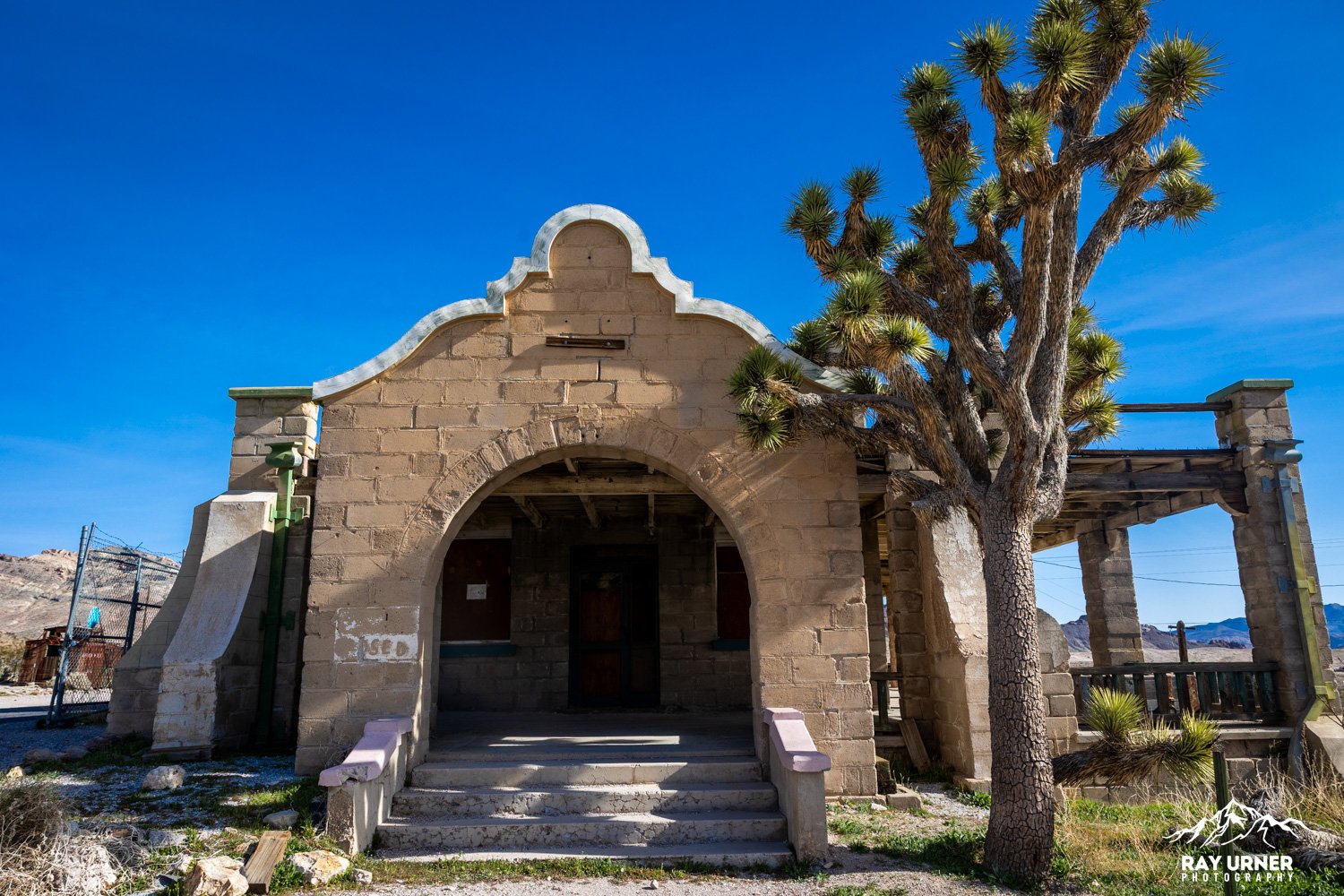
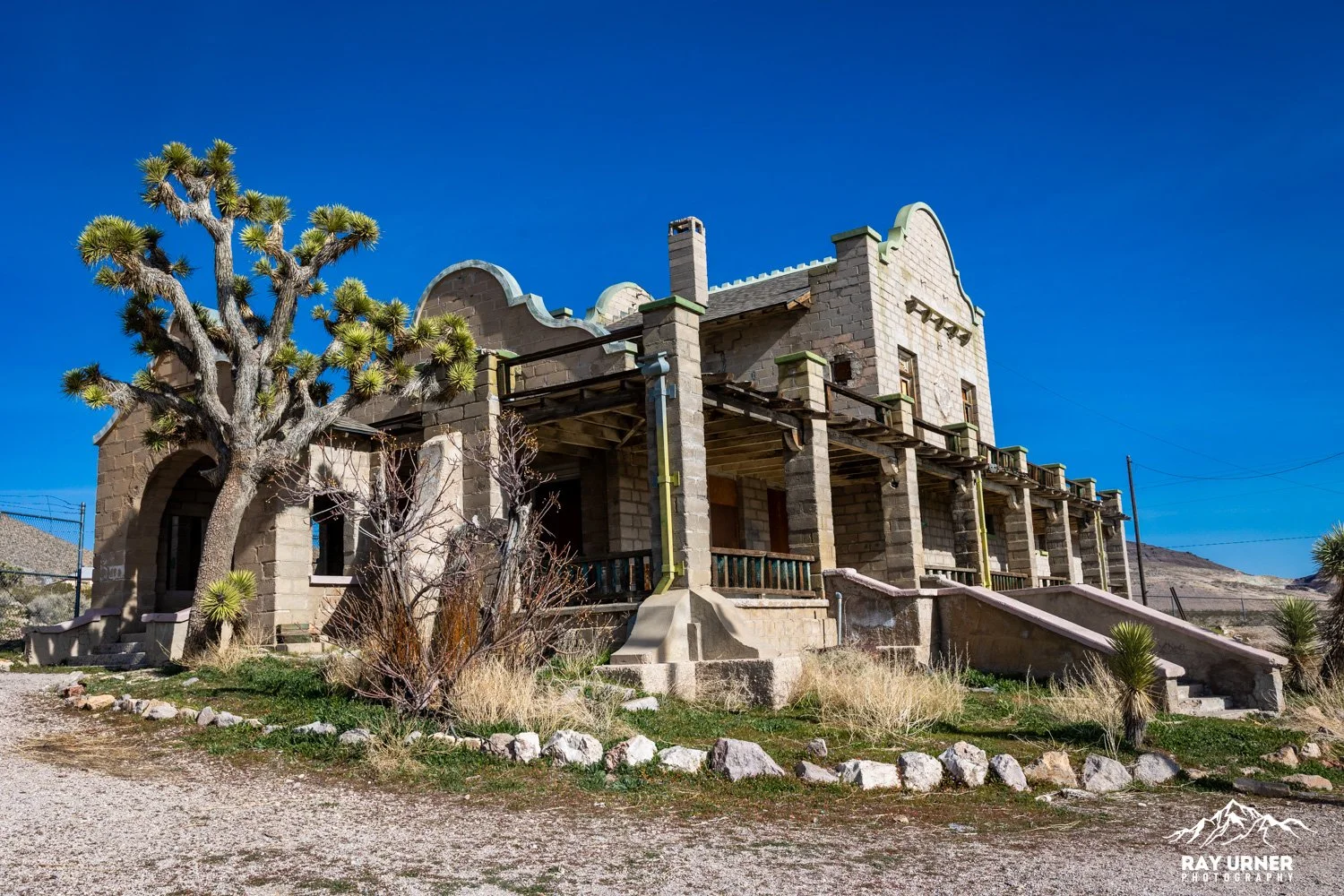
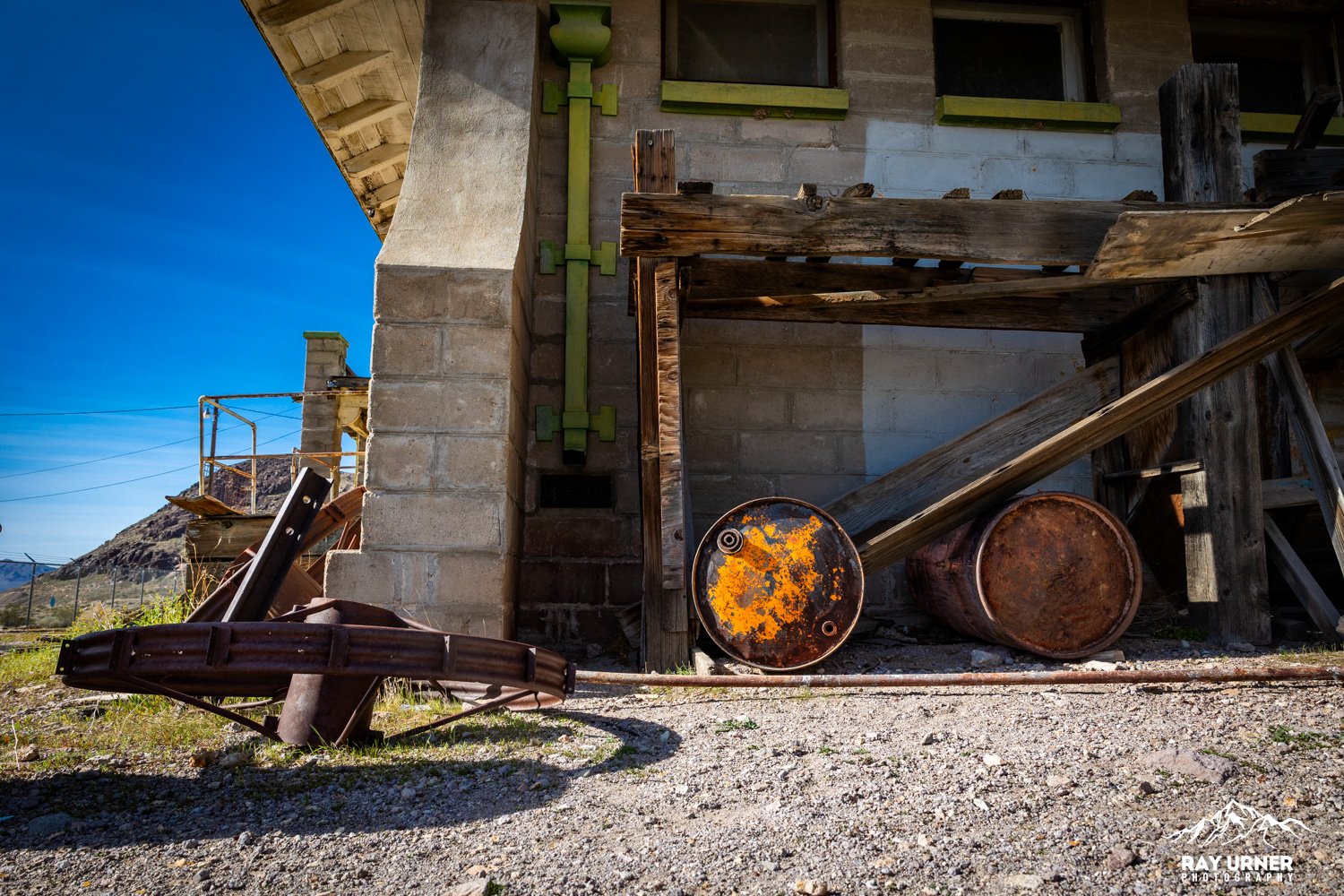
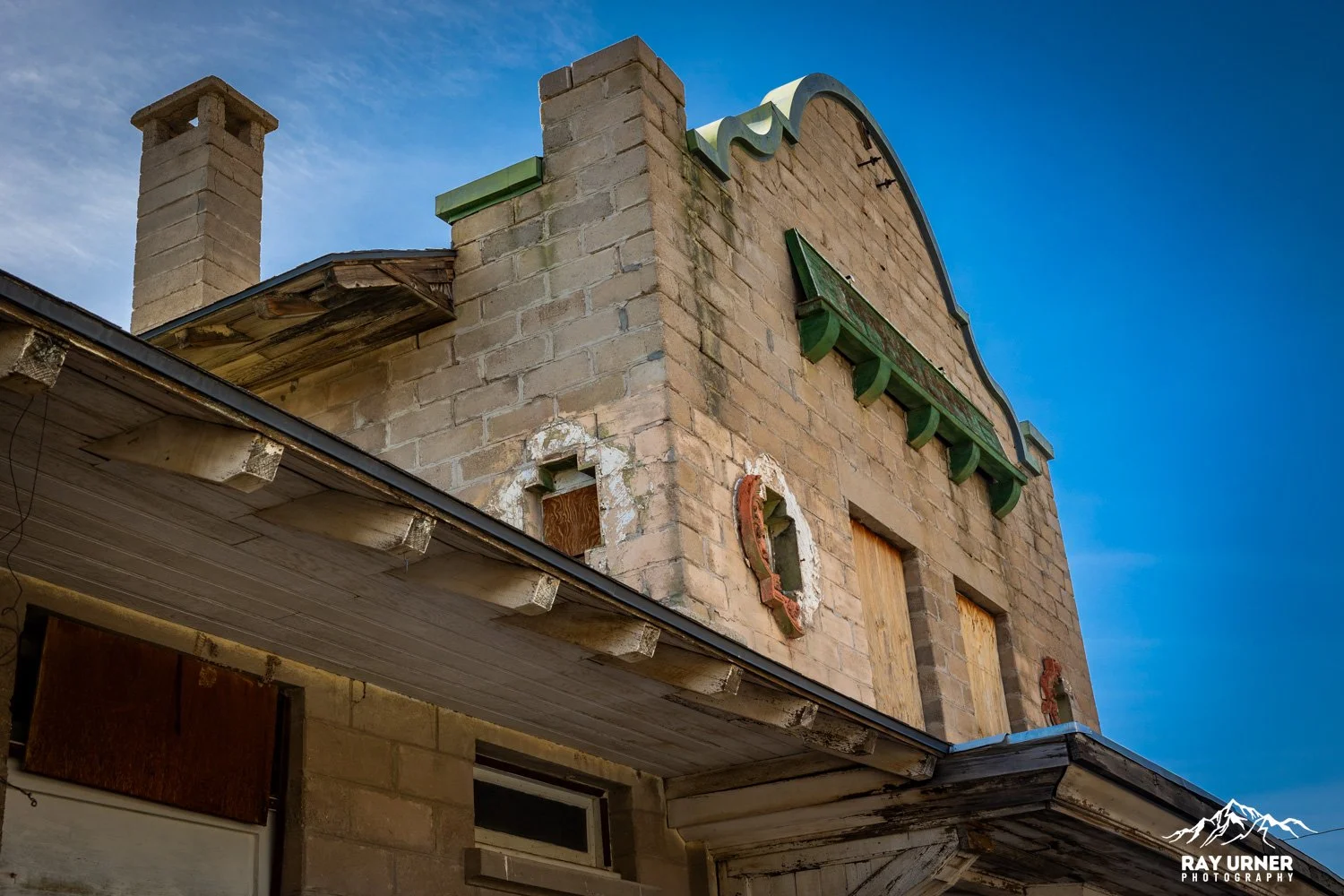
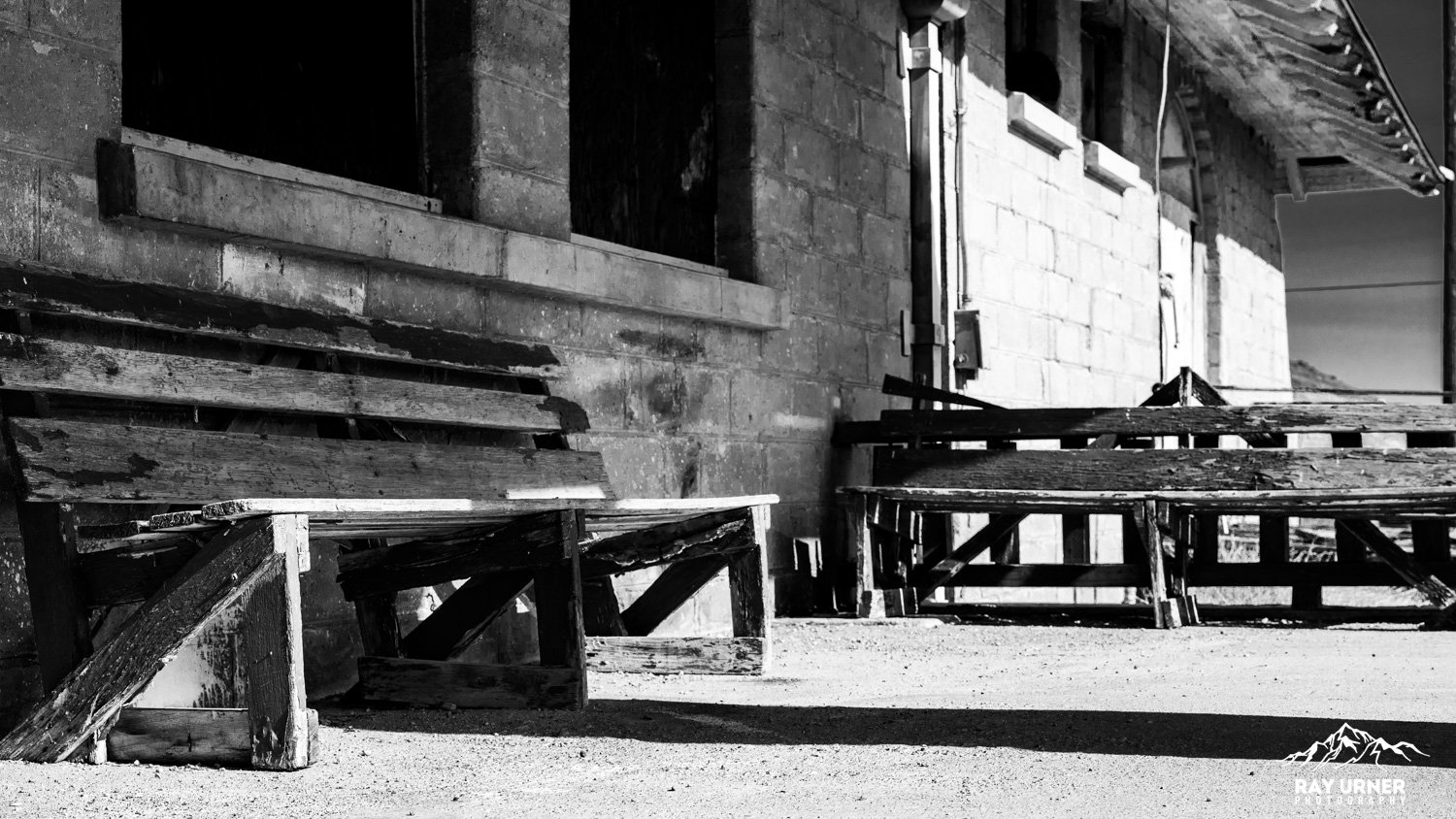
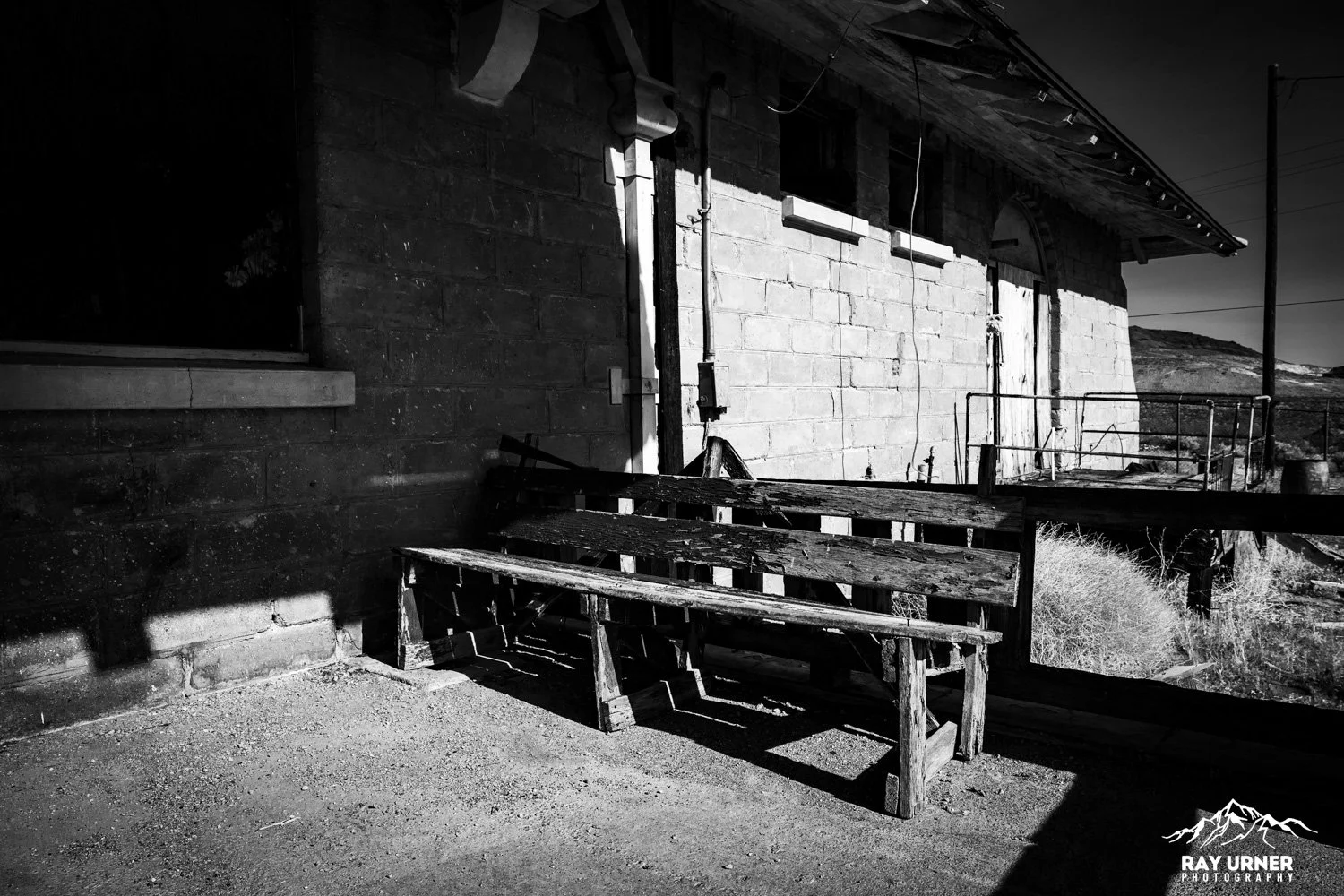
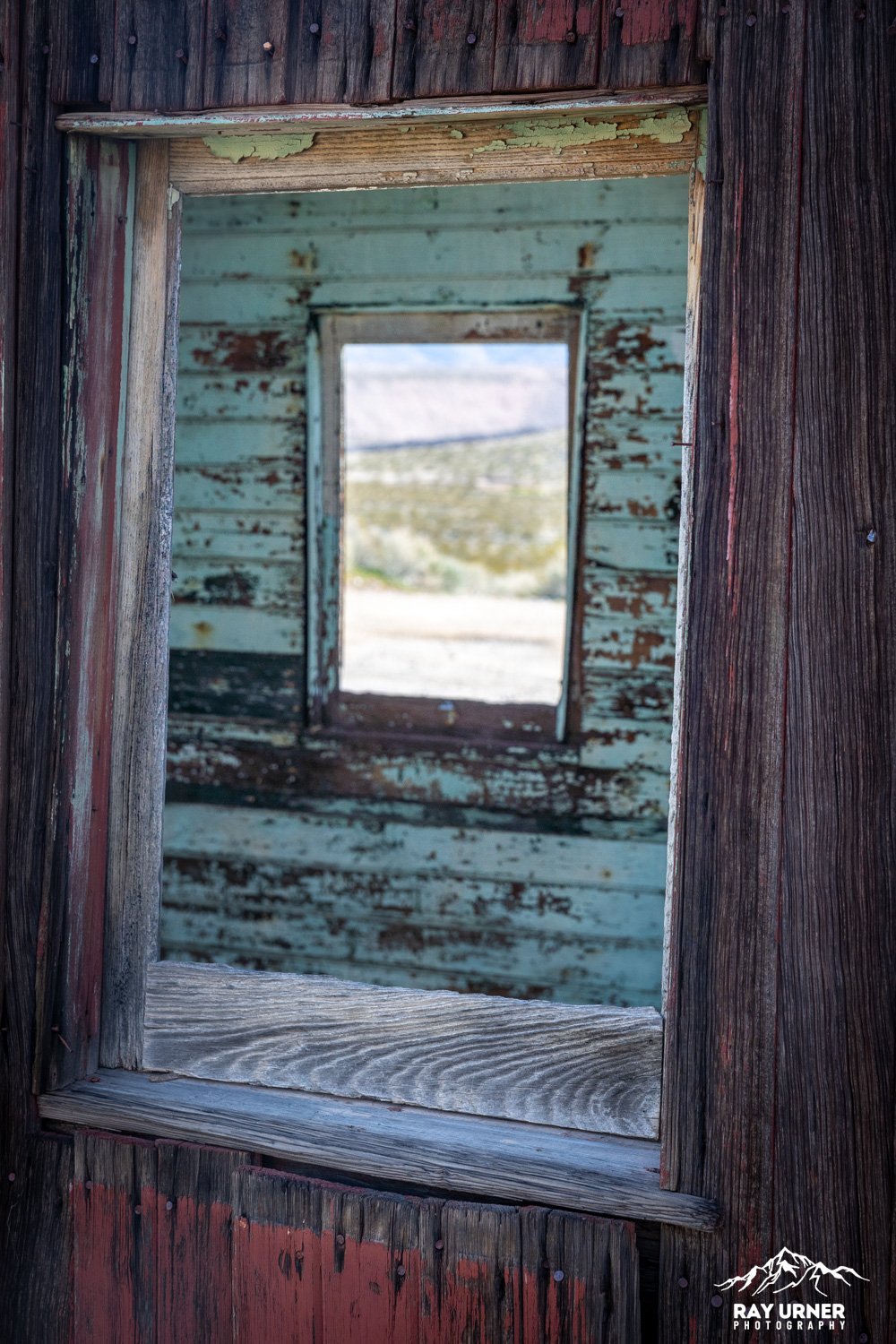
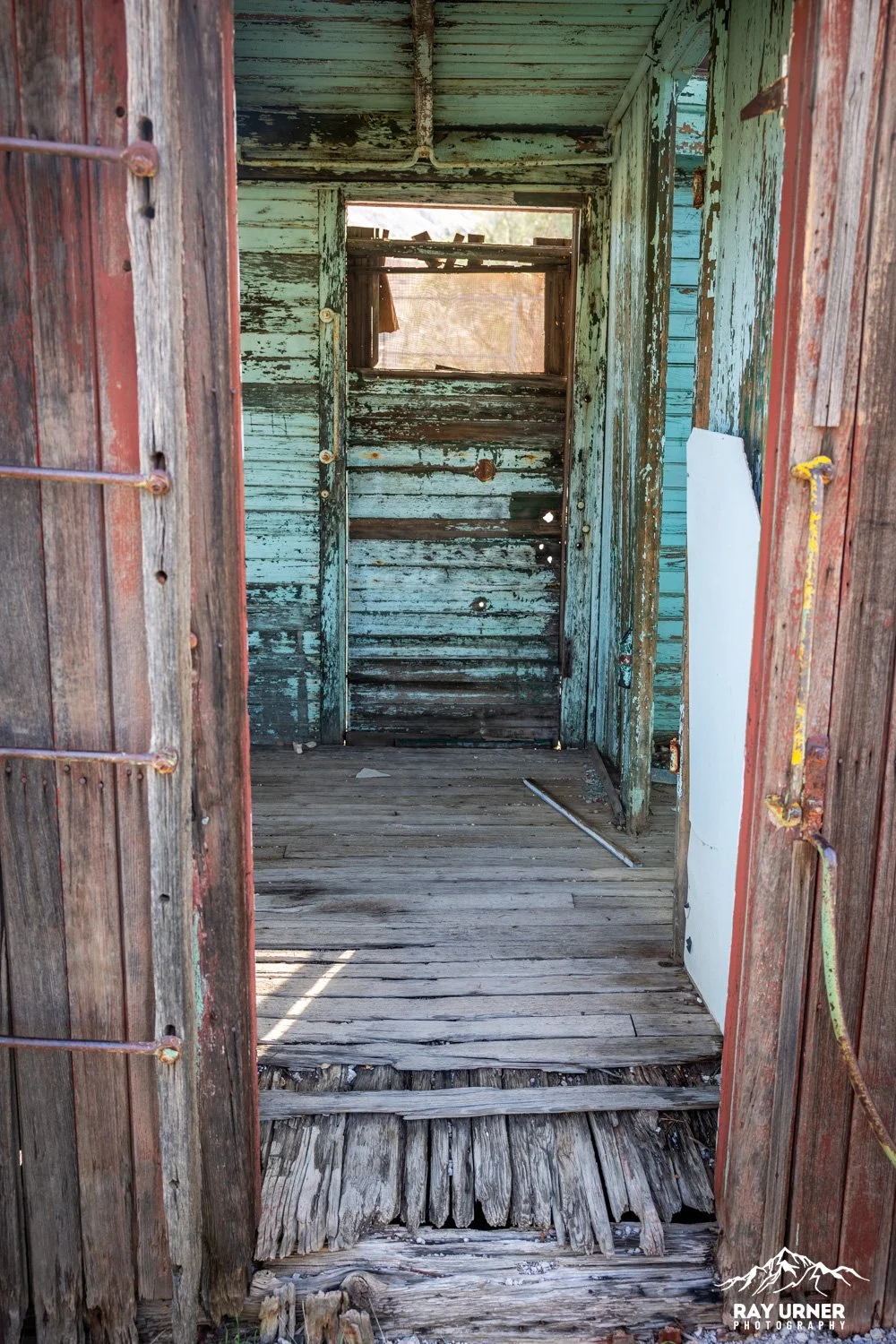
2) Train Depot & Streetscape Layers: heat‑haze perspective
Approach: Telephoto down the main alignments to capture rising thermal shimmer; it adds atmosphere to noon scenes.
Layering: Stack depot → ruin → mountains for a three‑plane composition; concrete edges stay crisp in noon light.
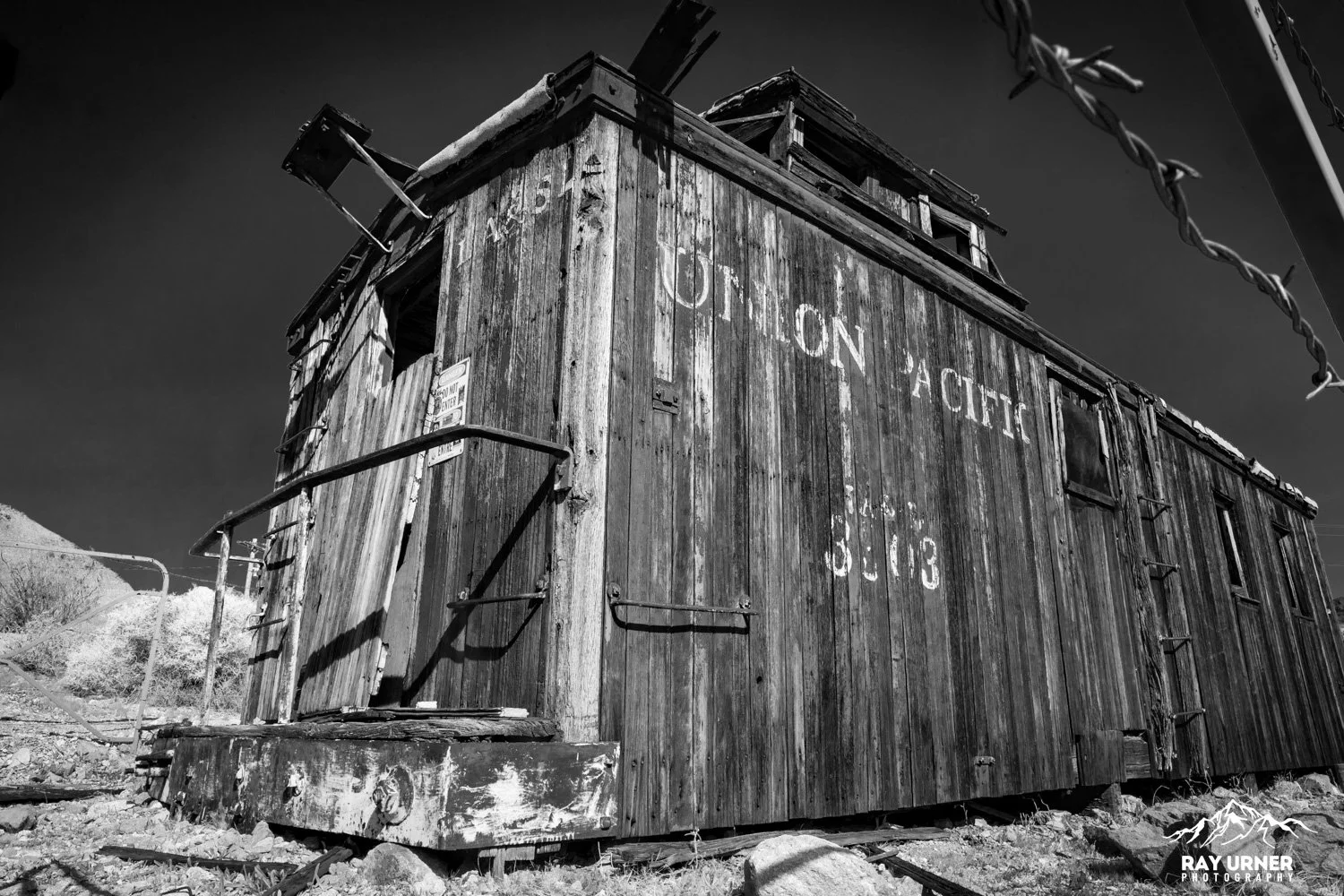
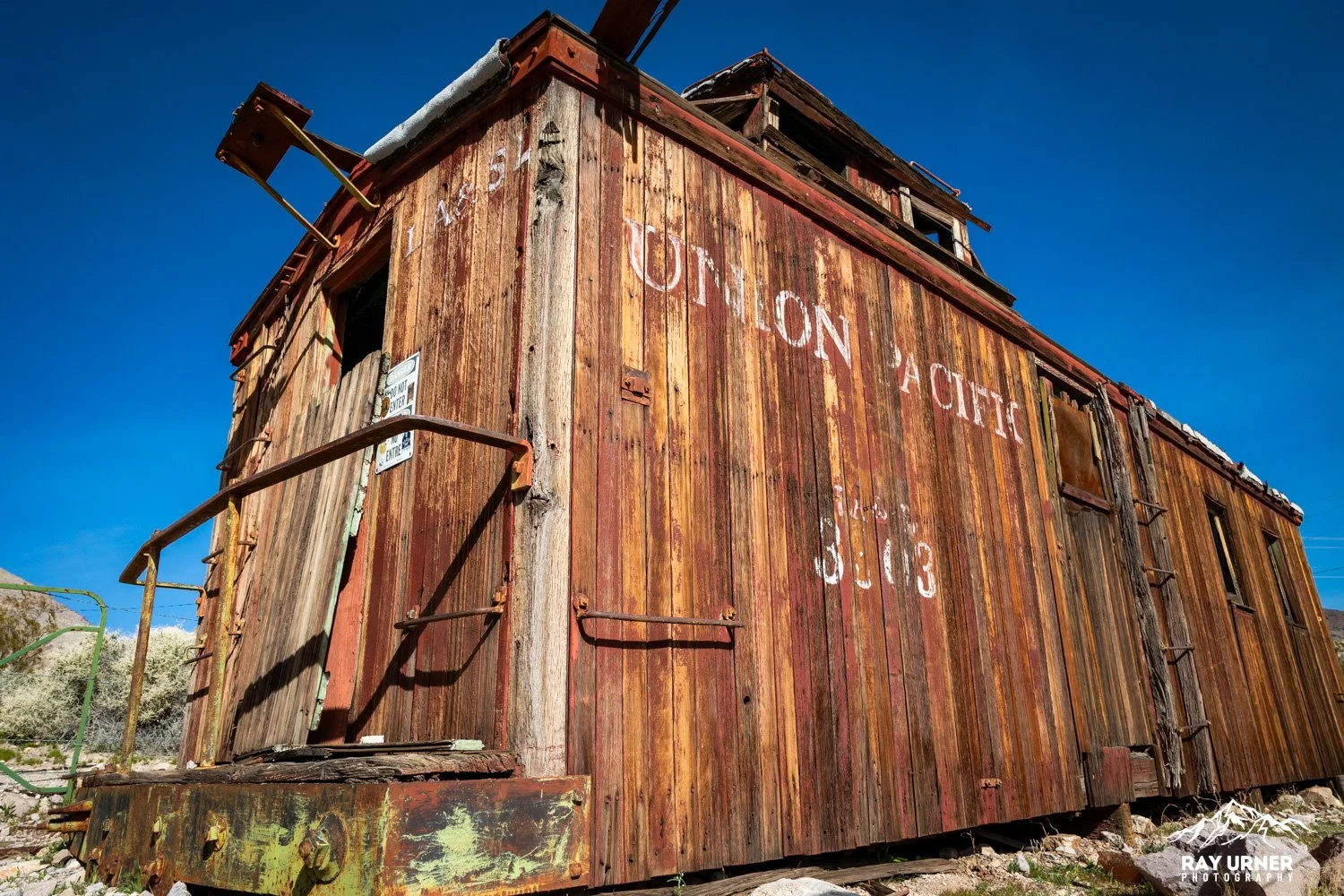
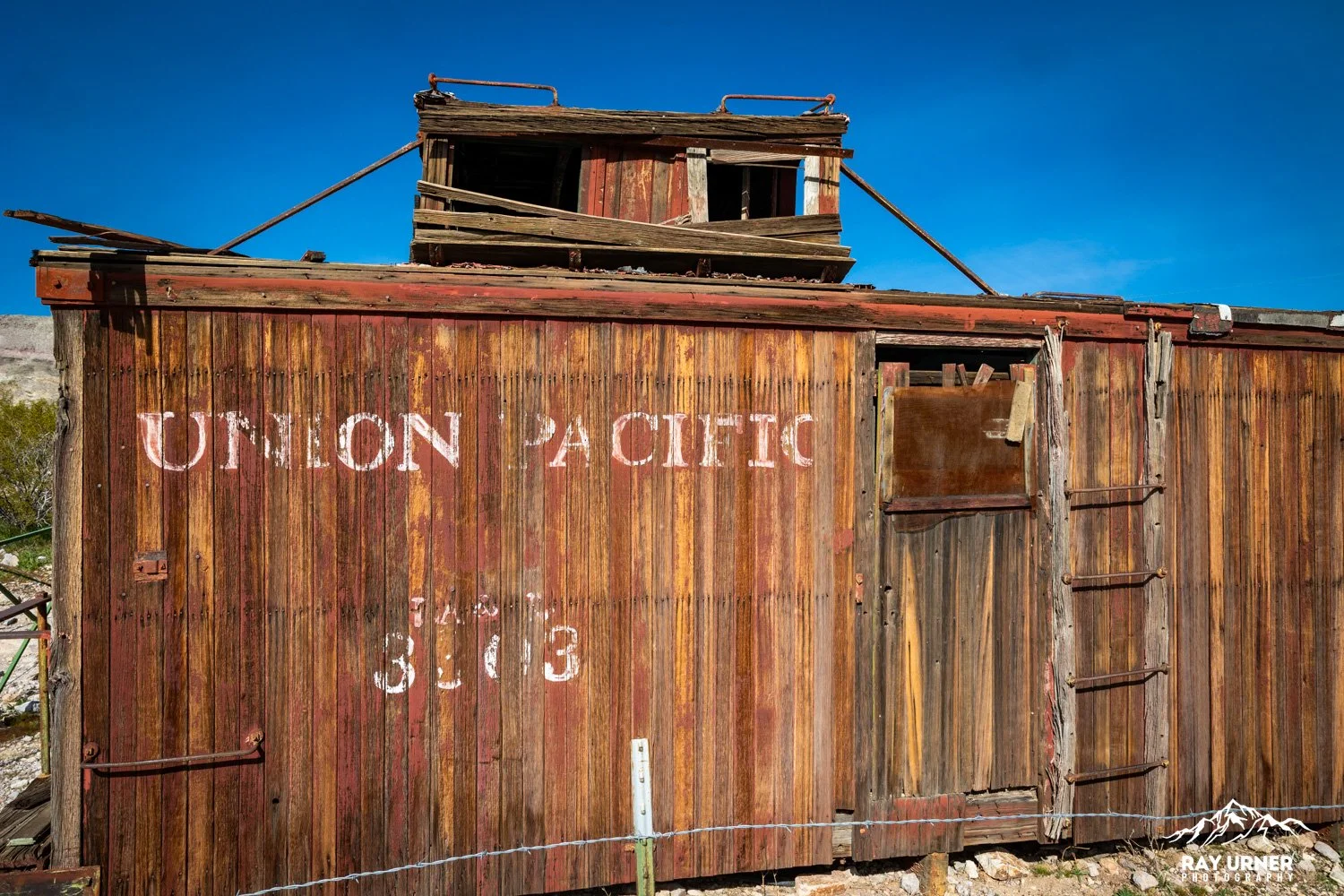
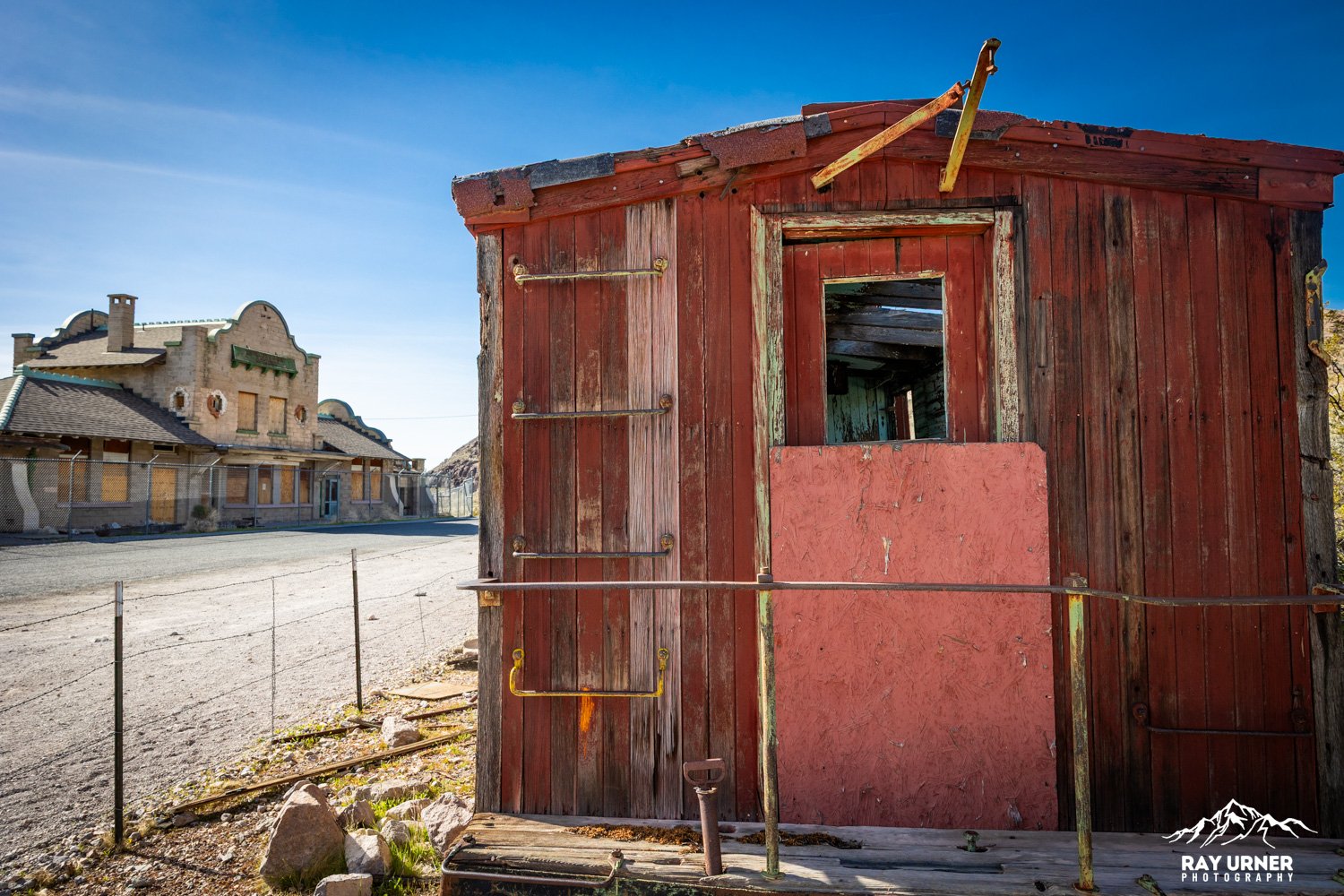
3) Mona Bell’s Grave
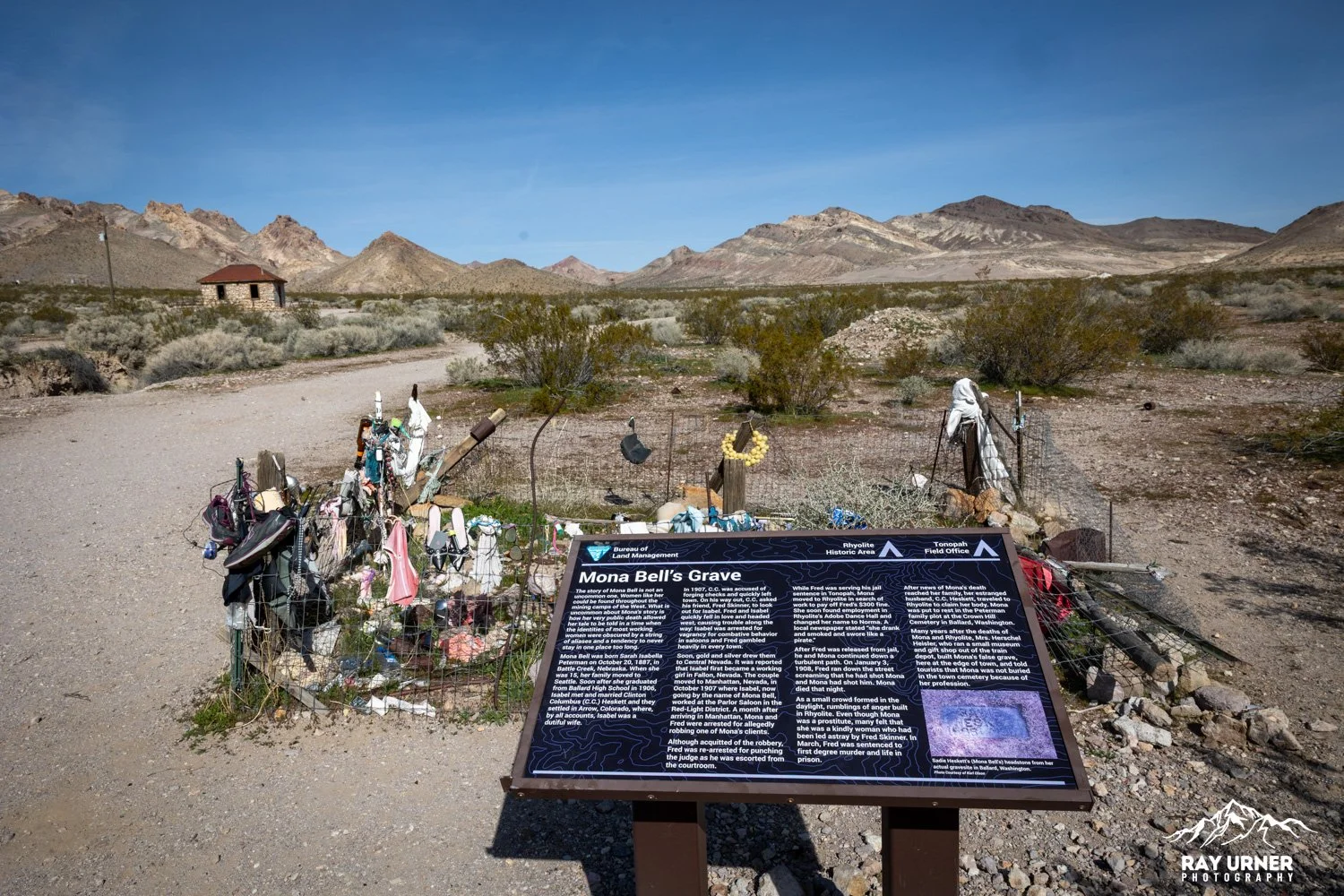
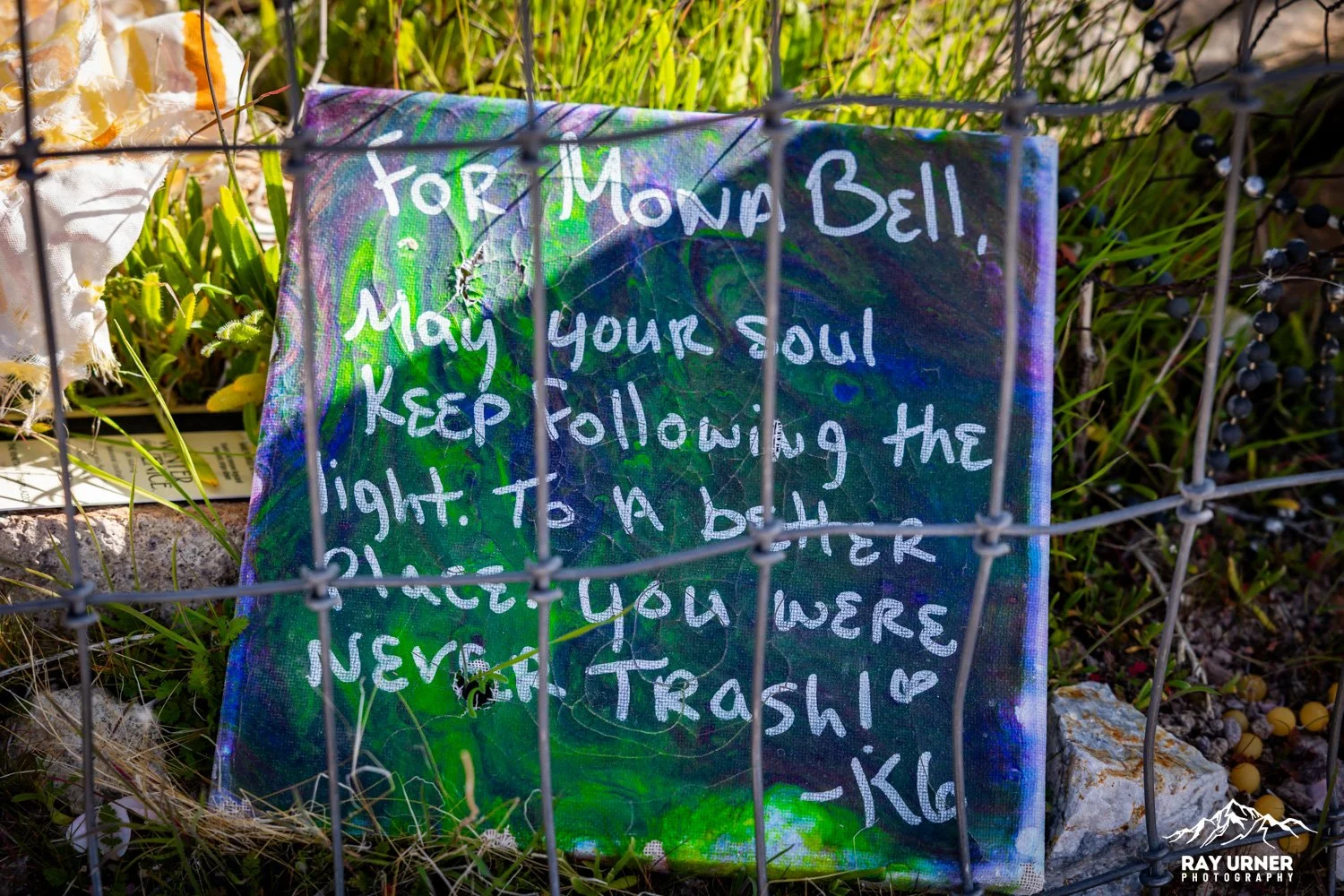
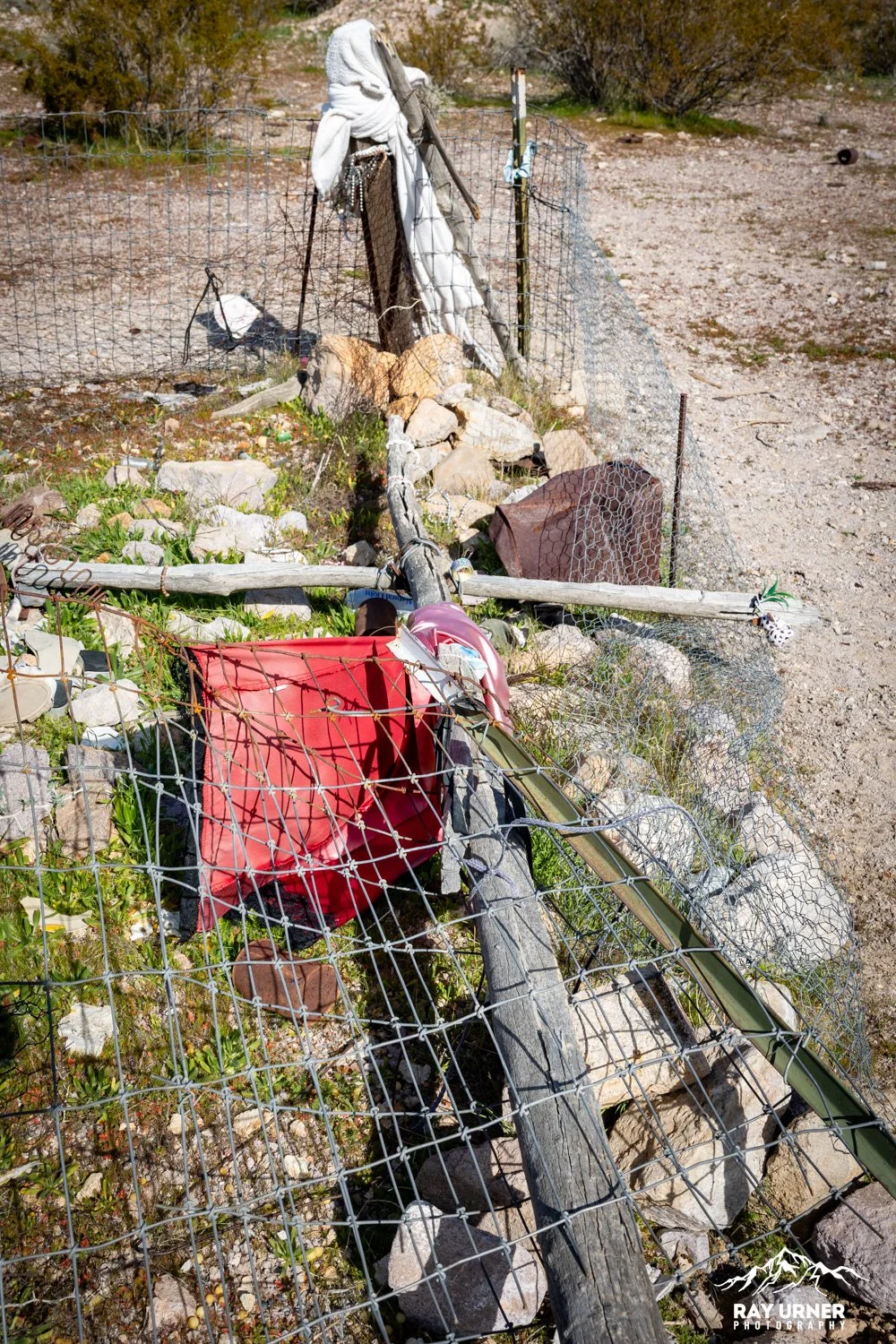
Mona Bell's grave is one of the most intriguing—and misunderstood—locations in Rhyolite.
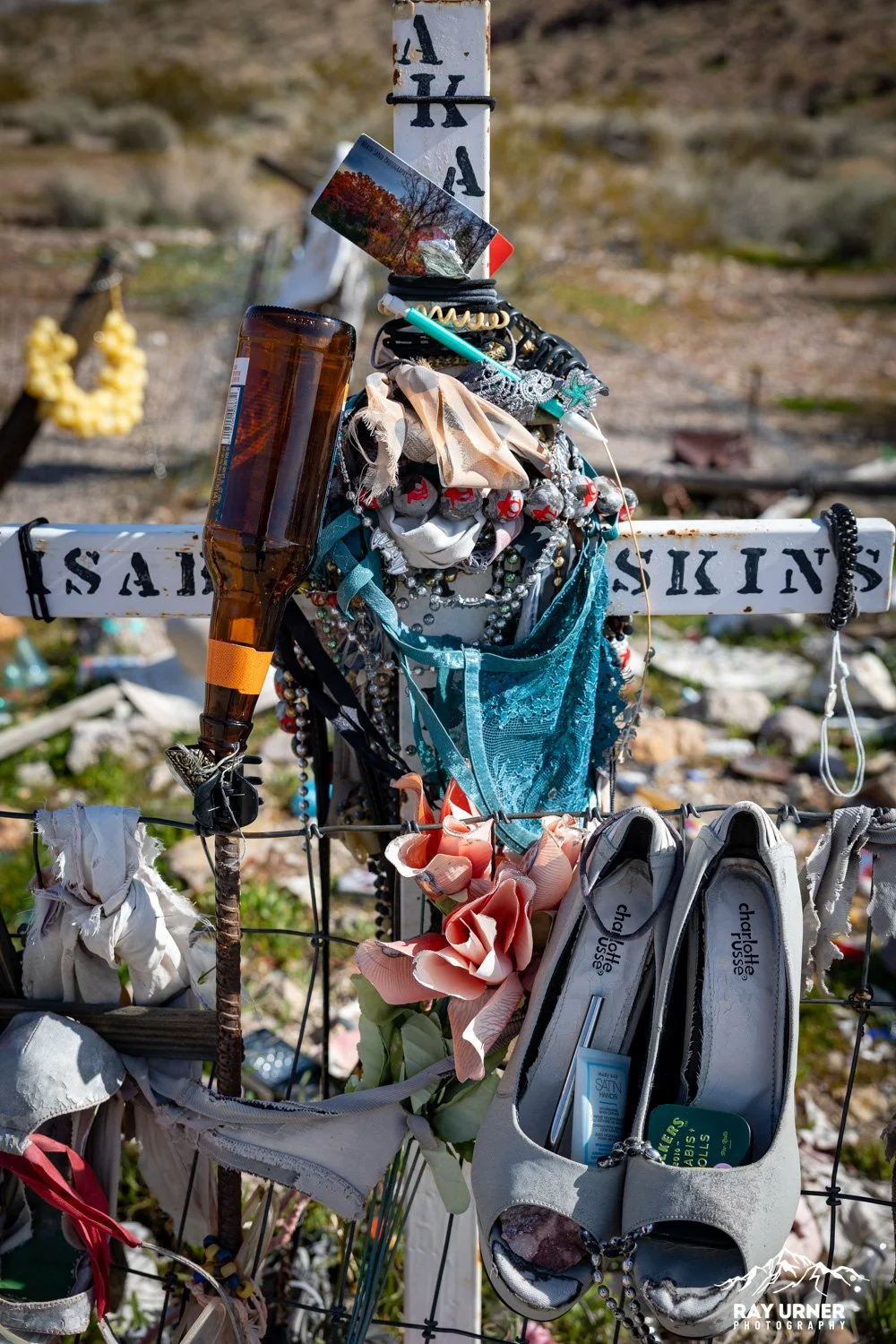
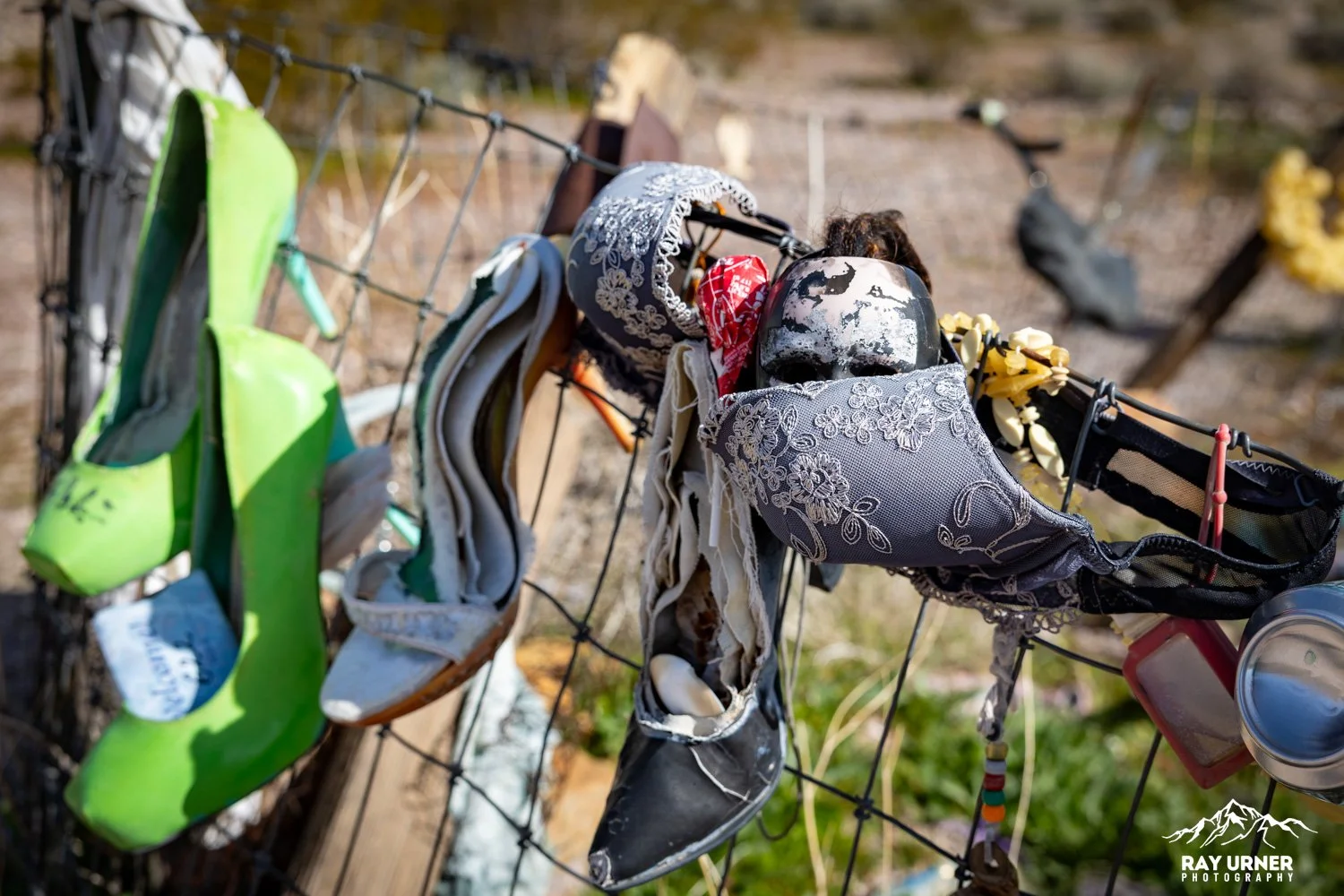
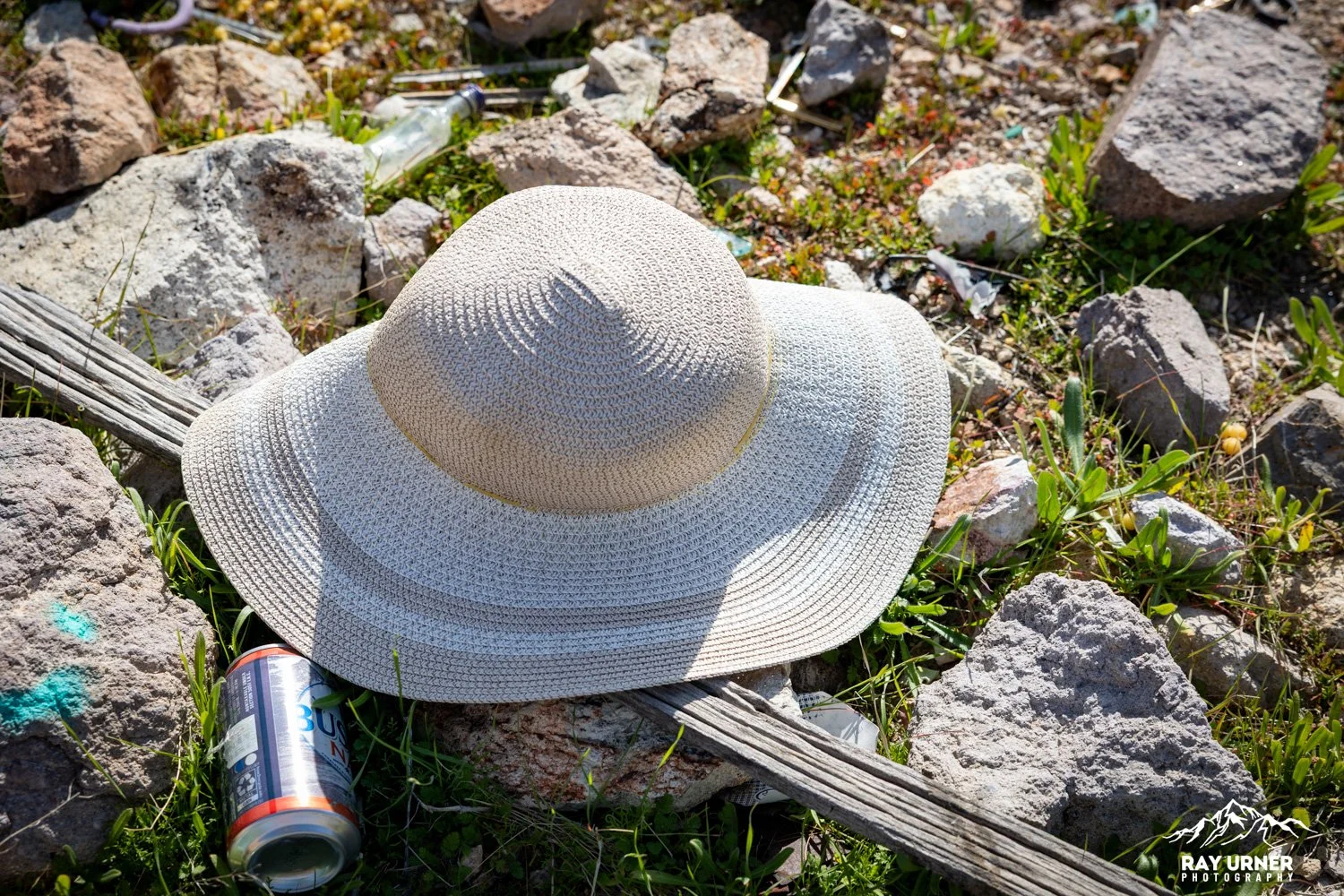
The popular legend says that Mona Bell was a beloved prostitute who was murdered by her jealous pimp in 1908. According to the story, the "respectable" women of Rhyolite refused to allow her to be buried in the town cemetery, so miners buried her on the edge of the red-light district. Visitors have embraced the tale for decades, leaving flowers, shoes, bottles, coins, and other small mementos at the grave.
The real story is even more interesting. Mona Bell was actually born Sarah "Sadie" Isabelle Peterman. She was indeed murdered in Rhyolite in January 1908 by her abusive companion, who used several aliases, including Fred Davis and Fred Skinner (his legal name was Llewellyn Felker). However, after the murder, her estranged husband traveled to Rhyolite, claimed her body, and took her back to Washington, where she was buried in her family's plot. The grave visitors see today is therefore a cenotaph—a memorial rather than her actual burial site. It was created in the 1950s to preserve the town's colorful folklore, and later cared for by local volunteers, including members of the Red Hat Society.
Photographing the grave in harsh mid-day sun
Shoot low. Get your camera just a foot or two above the ground so the fence, cross, and offerings stand out against the hills rather than the bright desert floor.
Use the offerings as foreground. The flowers, bottles, shoes, and trinkets tell the story far better than the marker alone.
Expose for the highlights. Nevada's white desert light can easily blow out the cross and surrounding rocks. Underexposing by about 2/3 stop usually preserves detail that you can recover later.
Create your own shade. If you're traveling with a diffuser or even a jacket held just out of frame, softening the sunlight on the marker can dramatically reduce the harsh contrast.
Look for backlighting. Walking around the memorial may let you use the sun to rim-light the cross while avoiding flat front lighting.
Include Rhyolite in the background. A wider composition that hints at the ghost town gives viewers context instead of making it look like an isolated grave.
A Walkable Mid‑Day Shooting Route (60–90 minutes)
Park near the Bottle House and start with sunlit glass‑wall details; test with/without Circular polarizer.
Stroll to Cook Bank for window‑frame shadows and high‑contrast B&W sets; add a tight tele crop of rebar, lintels, and cracked cornices.
Depot frontage: telephoto compressions along the old street grid; include the depot’s rooflines against the Funeral/Amargosa ranges.
Finish at Goldwell (2–3 minutes’ drive or a short walk): isolate a single sculpture with negative space, then step around for bold shadow geometry.
Creative Techniques for Mid‑Day
High‑Key & Low‑Key sets: In the same location, expose one image to the right (pale, airy ruin) and one to the left (inky blacks, rim‑lit edges) for a diptych. (Concrete and desert light handle both extremes well.)
Shadow stories: Wait for visitors to pass through doorway cutouts; their sharp silhouettes at noon create instant scale and narrative.
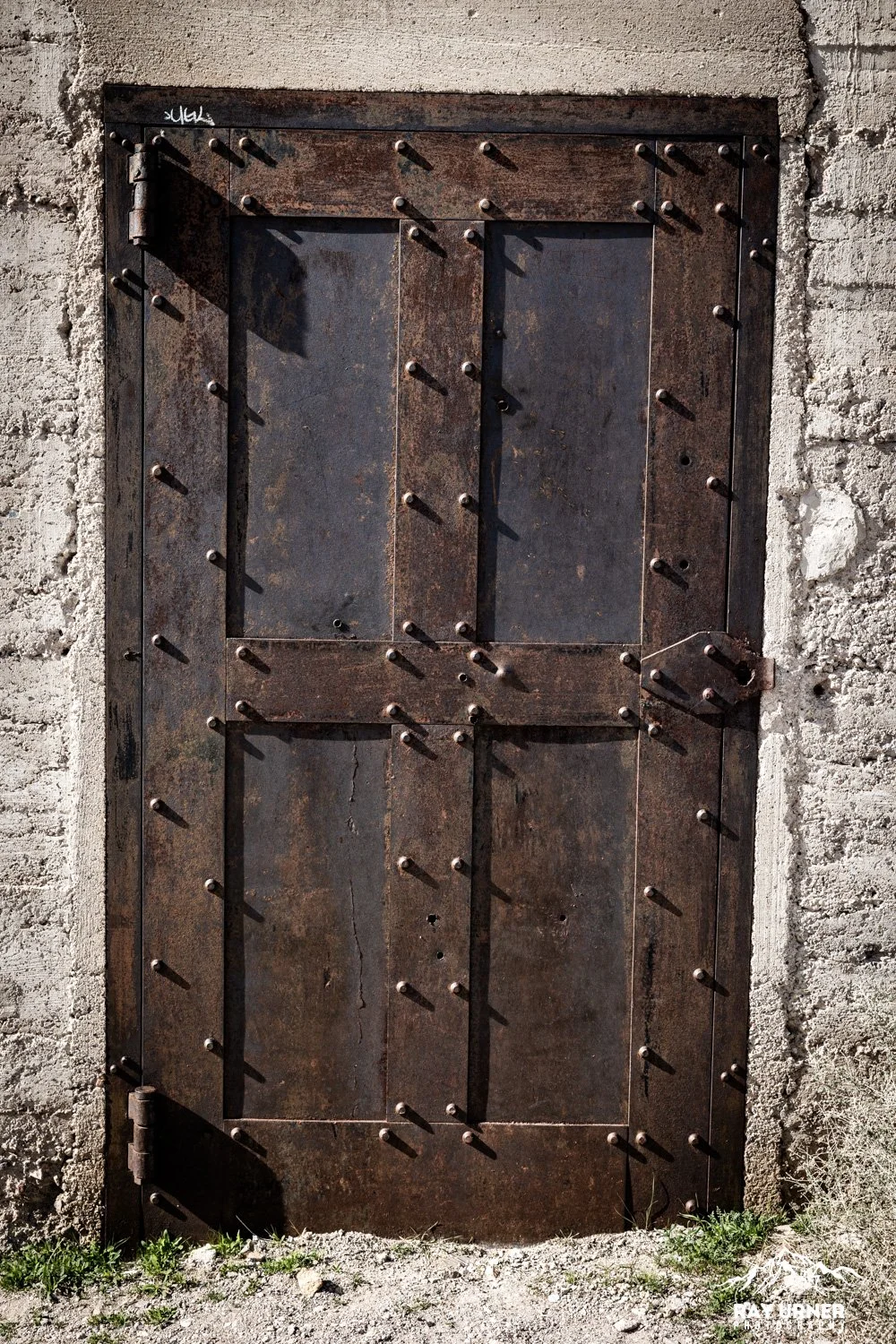
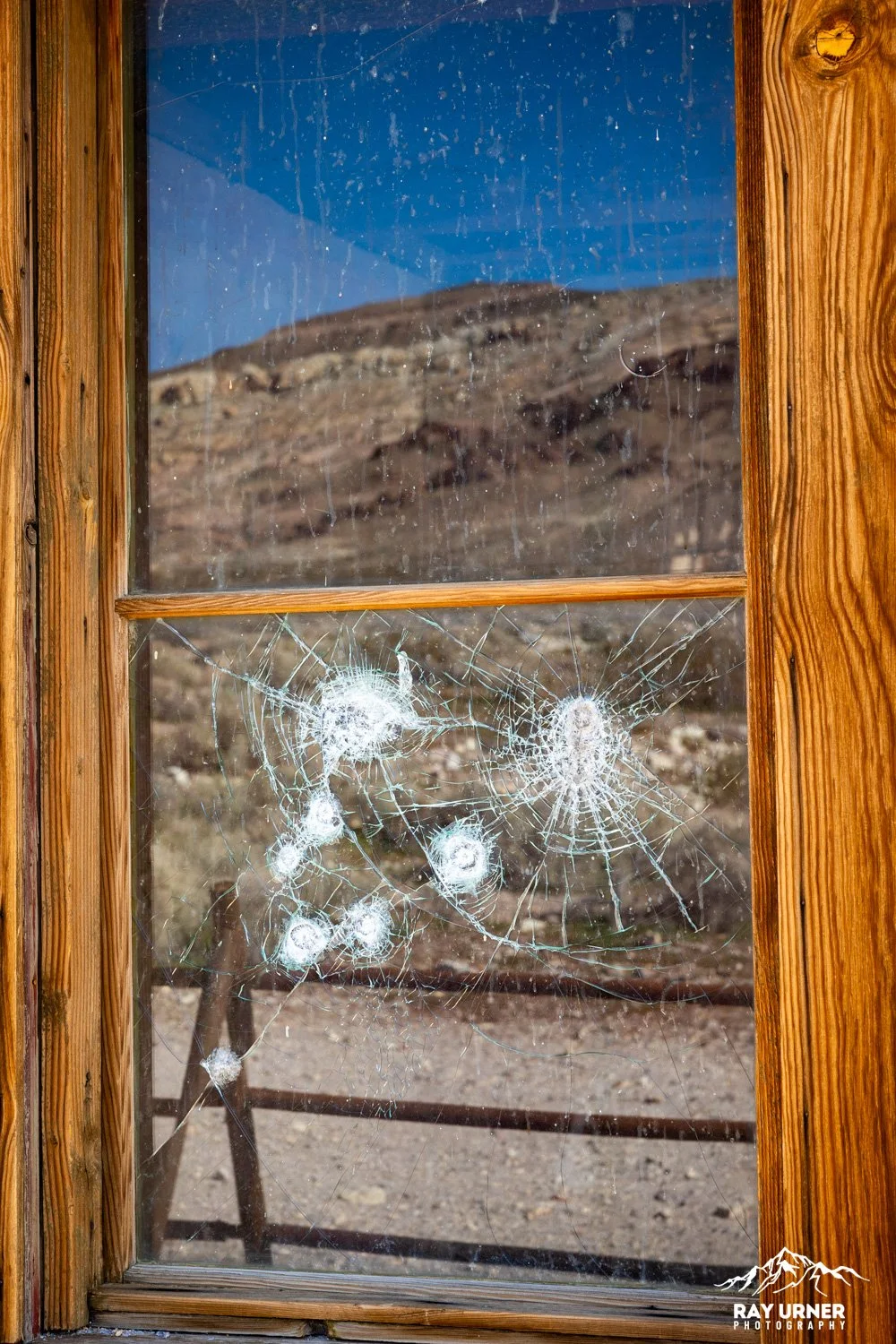
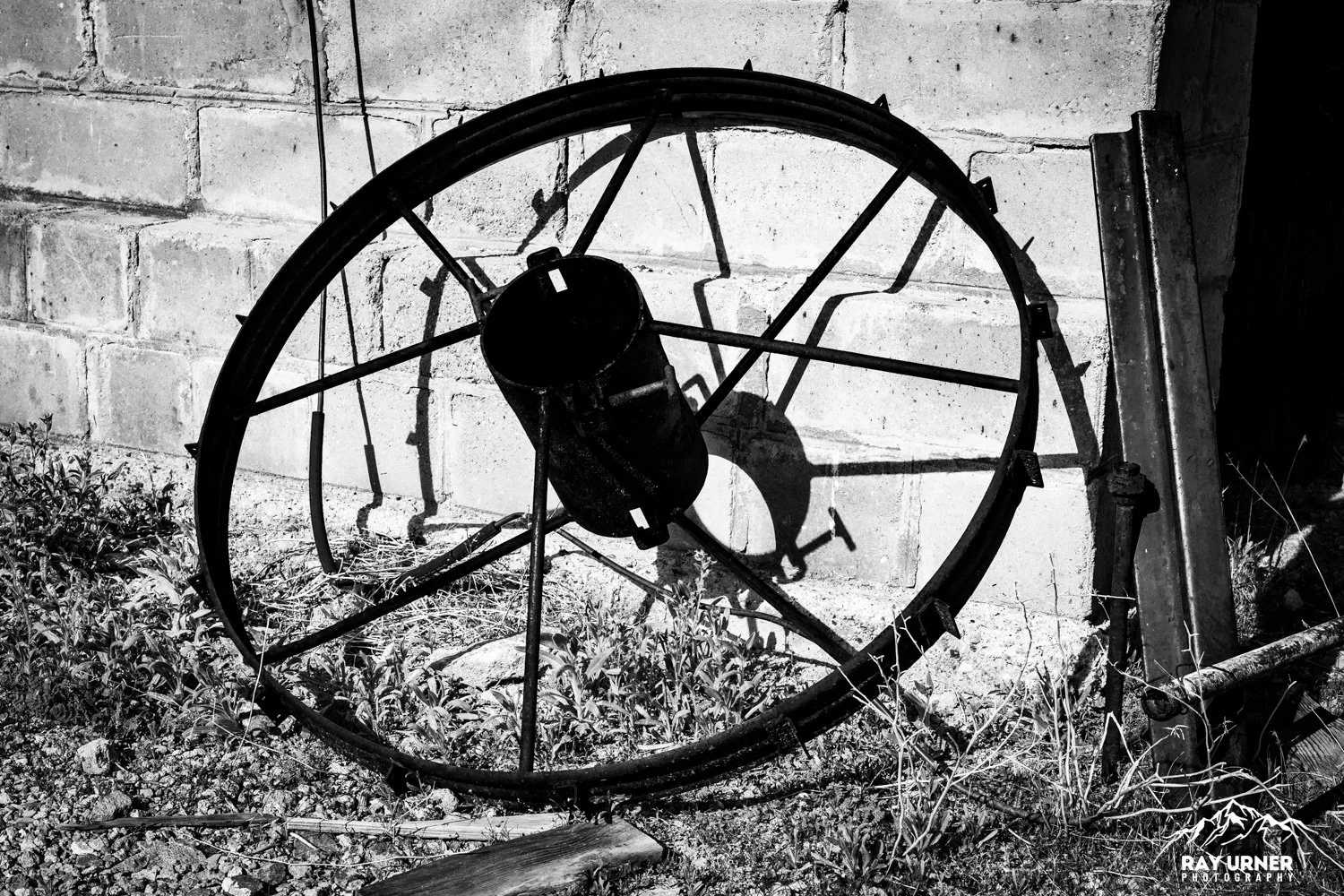
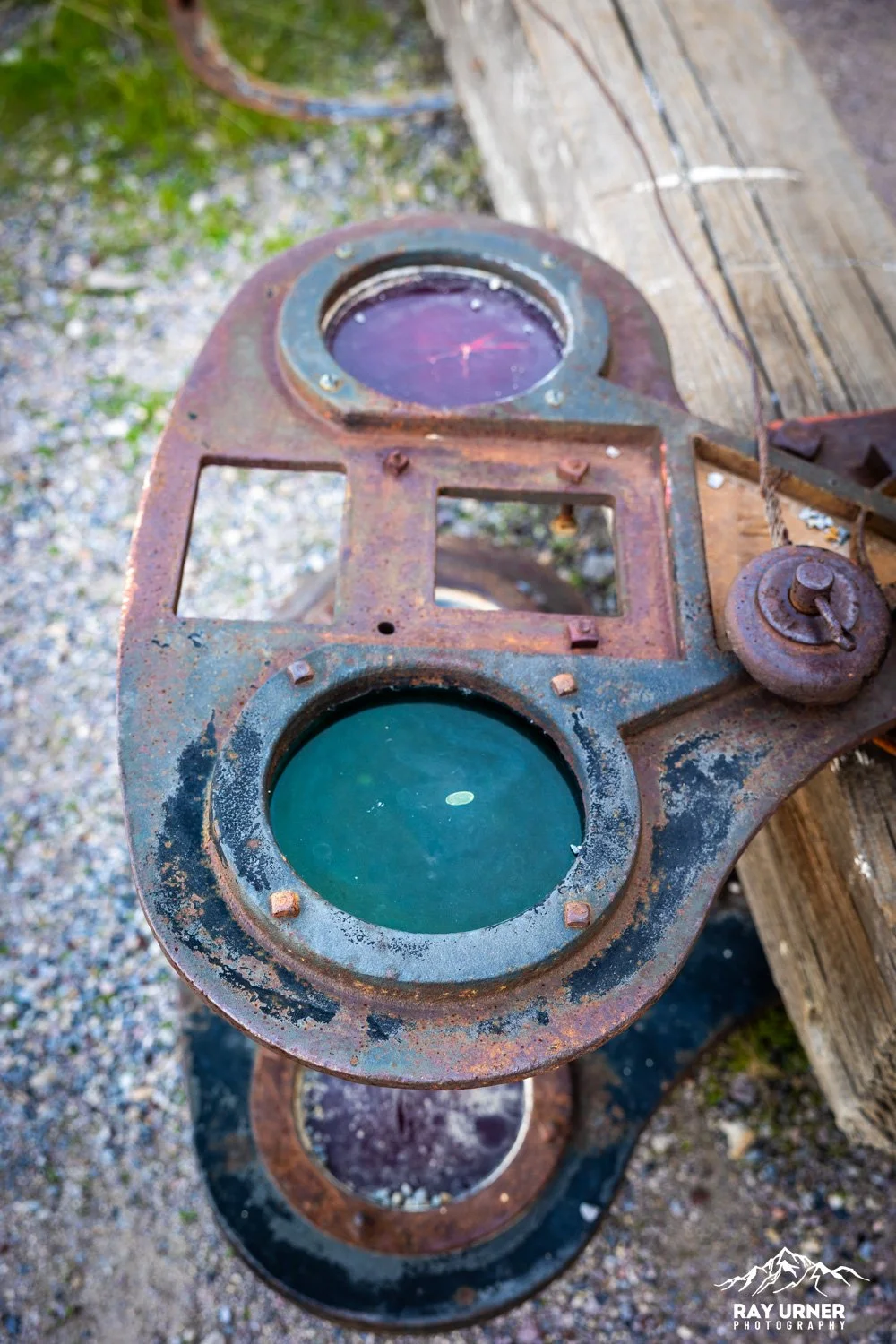
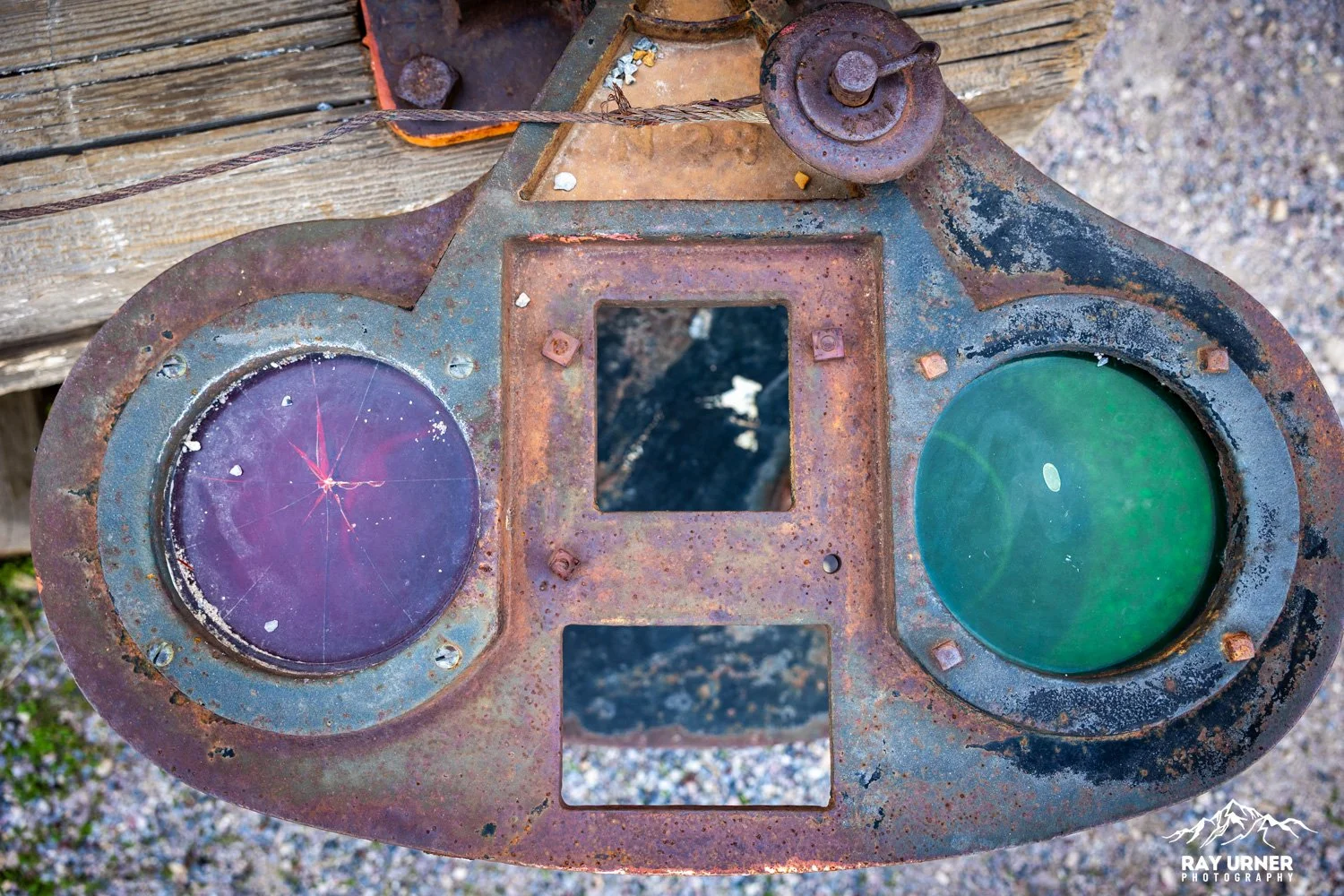
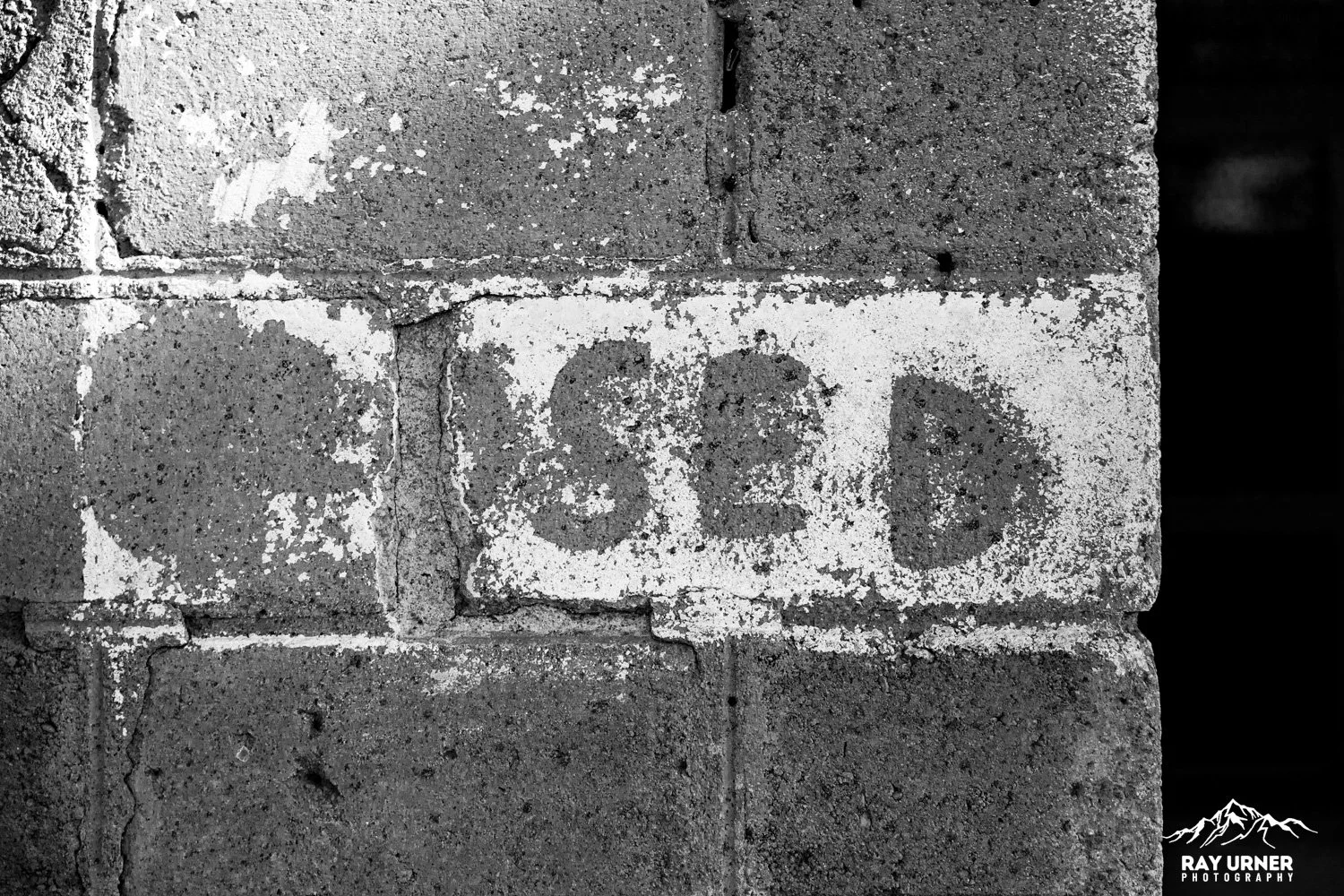
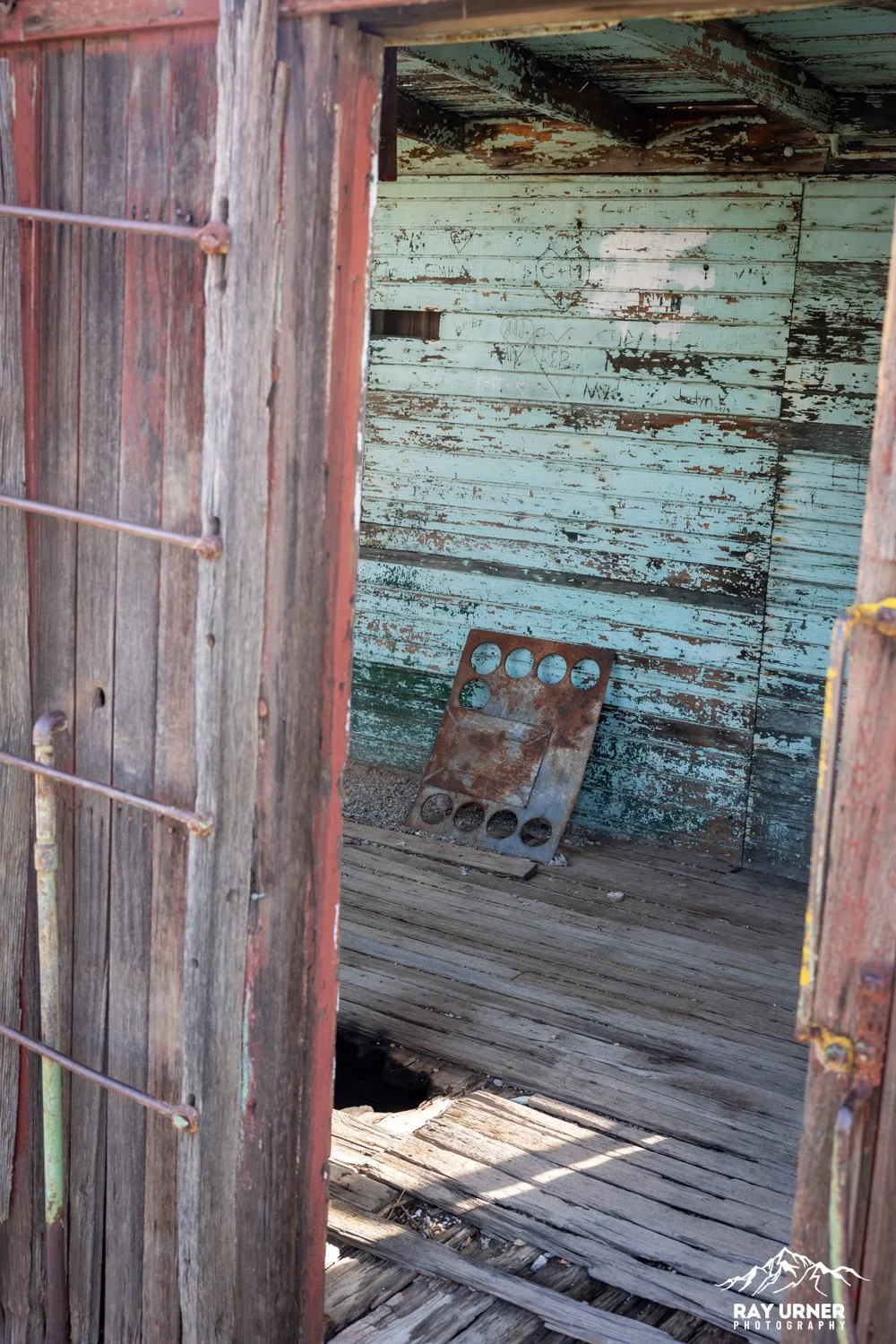
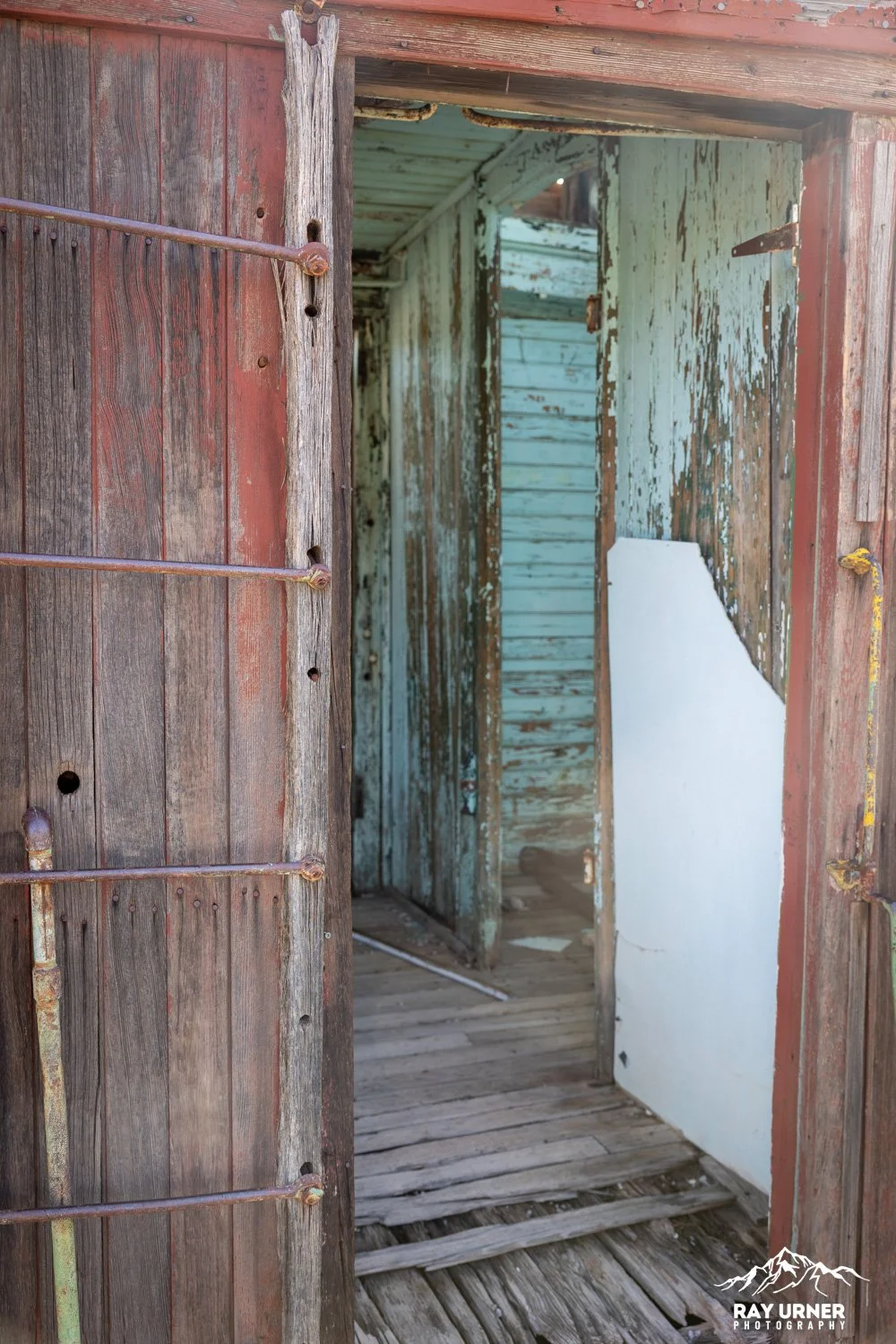
Texture macros: Noon’s raking micro‑shadows make great close‑ups of cement aggregate, bottle lips, and rust patina—perfect for detail pages.
Logistics & Context
Where it fits in your loop: Many Death Valley itineraries pair Rhyolite with Mesquite Dunes (AM) and Badwater/Artists Drive (PM). Rhyolite makes a mid‑day stop en route over Daylight Pass.
No services on site: Bring water, sun protection, and fuel; it’s managed as historic ruins with minimal facilities.
Open‑air art next door:Goldwell Open Air Museum is free and open; allow time to explore multiple installations.
History primer: Founded after 1904 discovery by Shorty Harris; grew to thousands with electricity, stock exchange, and an opera house before collapsing post‑1907.
Safety & Preservation
Stay on obvious paths and don’t enter unstable structures—concrete walls are fragile after a century of weathering.
Mind heat & wind: Even outside Death Valley, noon temperatures spike; bring extra water and protect gear from abrasive dust gusts.
Respect the art: Sculptures at Goldwell are artworks; avoid climbing/touching to preserve surfaces.
Suggested Shot List
Cook Bank window‑frame silhouettes in high‑contrast B&W.
Train Depot tele compression with heat‑haze.
Artifacts at Mona Bell’s grave.
Texture macro: rusted hinge, bottle seam, or mortar close‑up.