


Meeting of the Waters Confluent
Hello, adventurous photographers and nature lovers! If you’re on the hunt for a unique spot to capture the beauty of nature, look no further than the Meeting of the Waters in Yoho National Park. This magical confluence where the Yoho River meets the Kicking Horse River is a must-visit for anyone with a camera and a sense of wonder. Let’s dive into the geological marvels, the rivers, the surrounding mountains, and some tips for nailing those long exposure shots.
The Geology: A Tale of Two Rivers
The Meeting of the Waters is a fascinating geological and hydrological spectacle where the Yoho River meets the Kicking Horse River. Depending on conditions, the two rivers can display noticeably different colours and clarity, creating a striking visual contrast that is particularly appealing to photographers.
The Yoho River is one of the principal headwater tributaries of the Kicking Horse River, which ultimately flows westward into the Columbia River system. Both rivers are influenced by the glaciers and snowfields of the surrounding Canadian Rockies, with glacial meltwater contributing to their flow and, at times, carrying fine rock flour that gives the water a distinctive blue-green or cloudy appearance.
Photography Opportunities
The Rivers: A Dynamic Duo
Yoho River: The Yoho River joins the Kicking Horse River at the aptly named Meeting of the Waters, creating an opportunity to photograph the contrasting colours and textures of two major Rocky Mountain waterways. The appearance of the water can vary considerably depending on the season, recent weather and glacial runoff. The glacial silt usually has the color running milky.
Kicking Horse River: The Kicking Horse River is a major river of Yoho National Park and a Canadian Heritage River. Its name comes from an incident during the Palliser Expedition in 1858, when expedition geologist James Hector was kicked in the chest by a horse and knocked unconscious. The nearby pass and river subsequently became known as Kicking Horse. The water here is usually clear, has the silt has already been filtered out upsream.
For photographers, the Meeting of the Waters offers something particularly interesting: you're not simply photographing a river, but the visible meeting of two major waterways within the dramatic landscape of Yoho National Park.


The Mountains: Majestic Backdrops 🏔️
Surrounding the Meeting of the Waters are some of the most impressive peaks in the Canadian Rockies. Here’s a quick rundown of the mountains you can see:
Mount Stephen: Towering over the confluence, this mountain is a dominant feature of the landscape.
Mount Field: Named after the nearby town of Field, BC, this peak adds to the dramatic scenery.
Wapta Mountain: Providing a stunning backdrop, this mountain is part of the Waputik Range
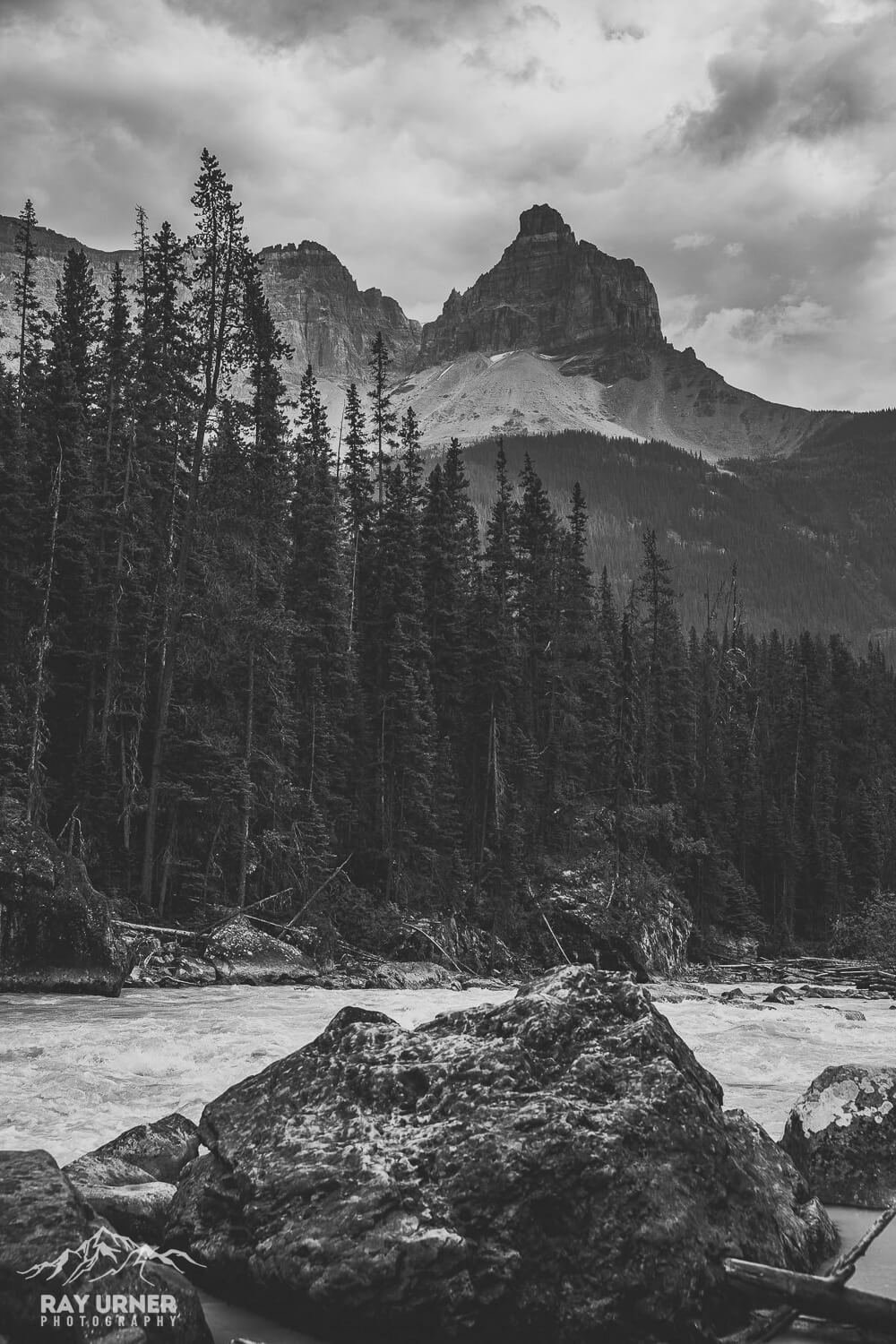
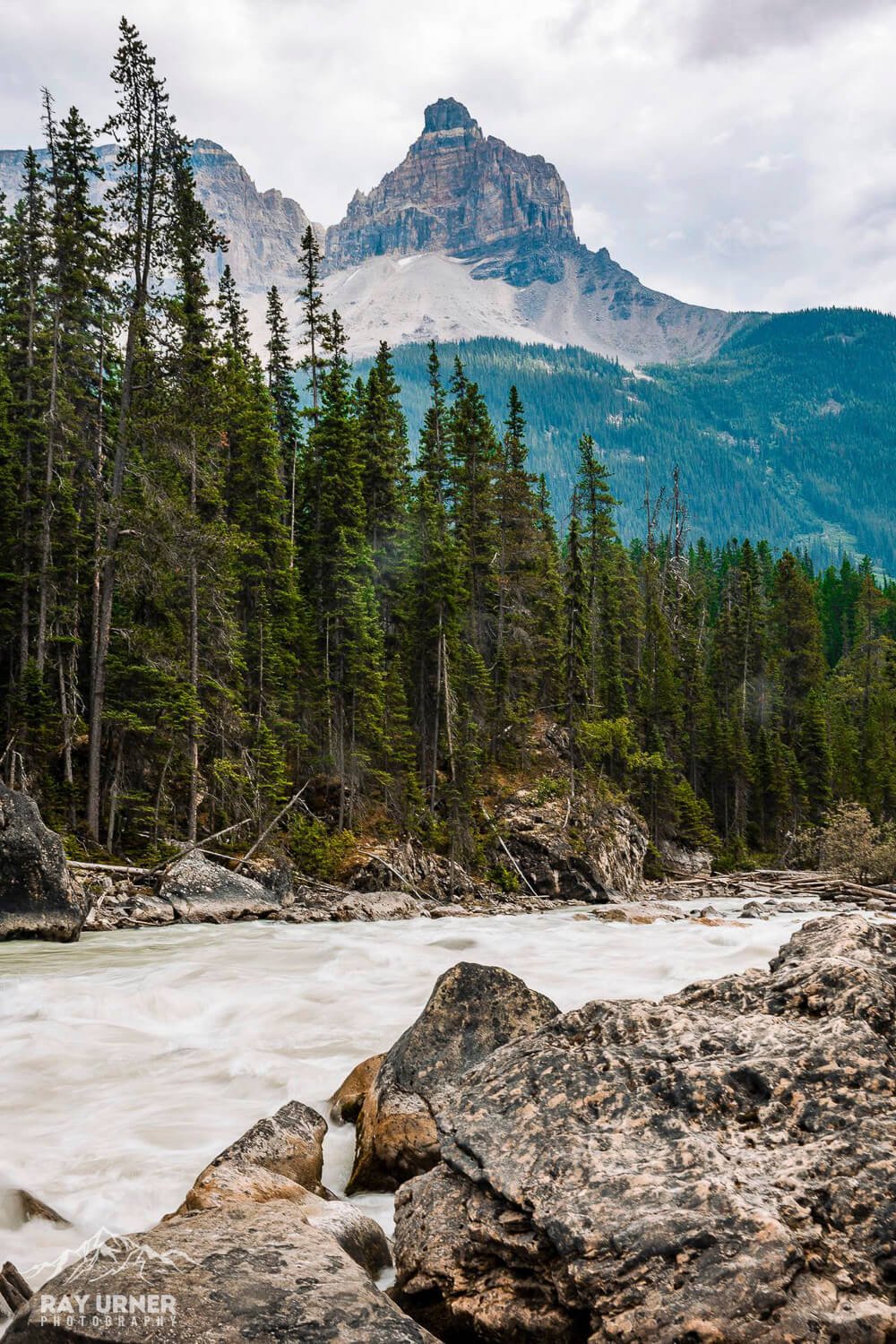
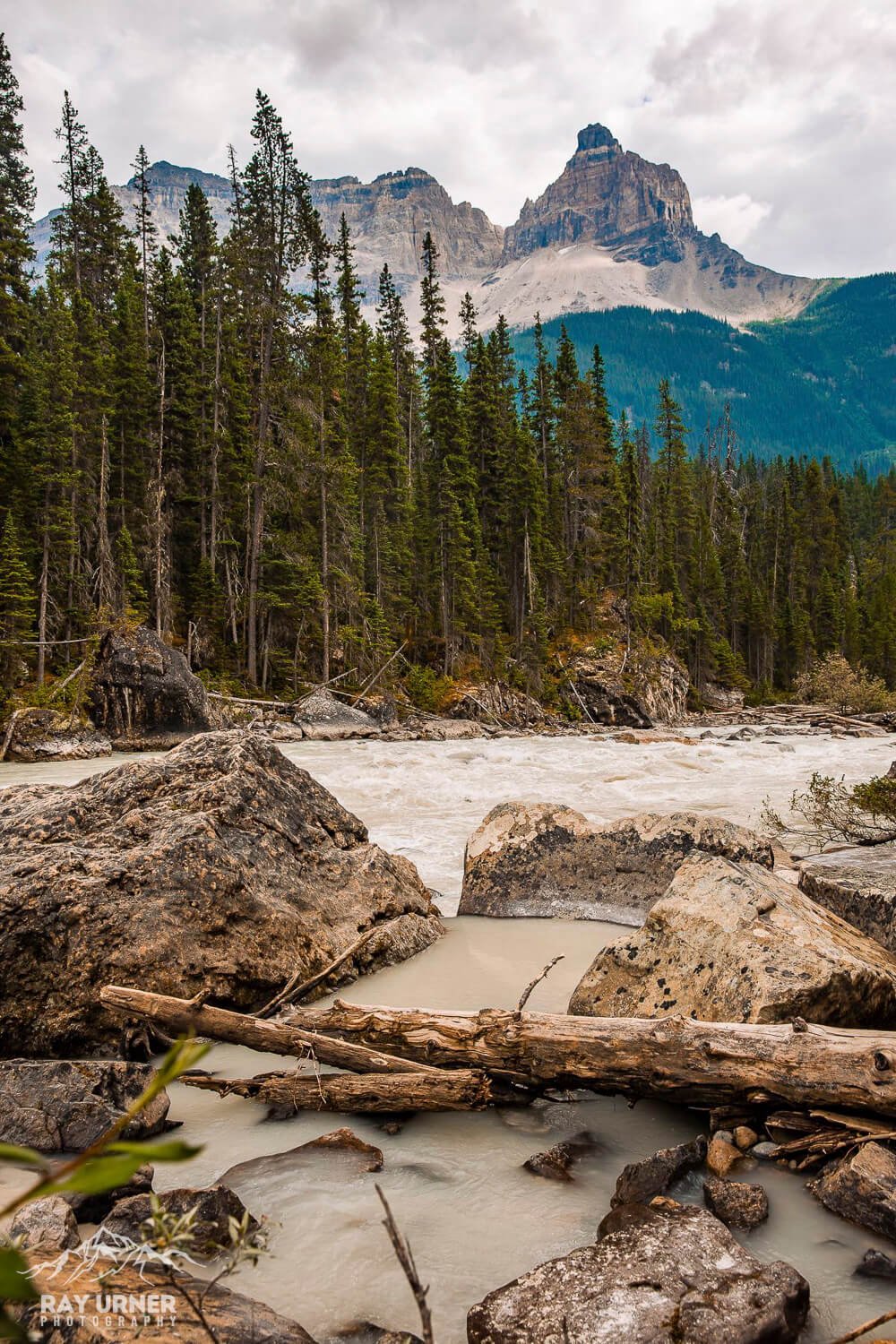
Long Exposure Photography: Making Water Dance
Capturing the flowing waters of the Yoho and Kicking Horse Rivers in a long exposure shot can create a dreamy, ethereal effect. Here are some tips to help you get that perfect shot:
Use a Tripod: Stability is key for long exposure photography. A tripod will keep your camera steady and prevent any unwanted blur.
Shutter Speed: Start with a shutter speed of 1-2 seconds to create a silky effect. Adjust as needed based on the flow of the water.
Neutral Density Filter: If you’re shooting in bright daylight, a neutral density filter can help reduce the amount of light entering your lens, allowing for longer exposures.
Low ISO: Keep your ISO low (around 100) to minimize noise in your photos.
Aperture: Use a small aperture (high f-stop number) to ensure a deep depth of field, keeping both the foreground and background in focus.
Final Thoughts: A Confluence of Beauty
So, there you have it – the Meeting of the Waters in all its splendor. Whether you’re a seasoned photographer or just starting out, this spot offers endless opportunities to capture the beauty of nature. From the contrasting rivers to the majestic mountains, every angle is a new adventure. Just remember to NOT fall into the river!