
Rialto Beach
Rialto Beach, a windswept stretch of Pacific coastline in Olympic National Park, is a place where nature’s raw power meets sublime beauty. Known for its towering sea stacks, dramatic driftwood, and rhythmic surf, it’s a favorite among photographers. But capturing its essence in the harsh afternoon sunlight? That’s a challenge—and an opportunity.
Rialto Beach: A Coastal Icon
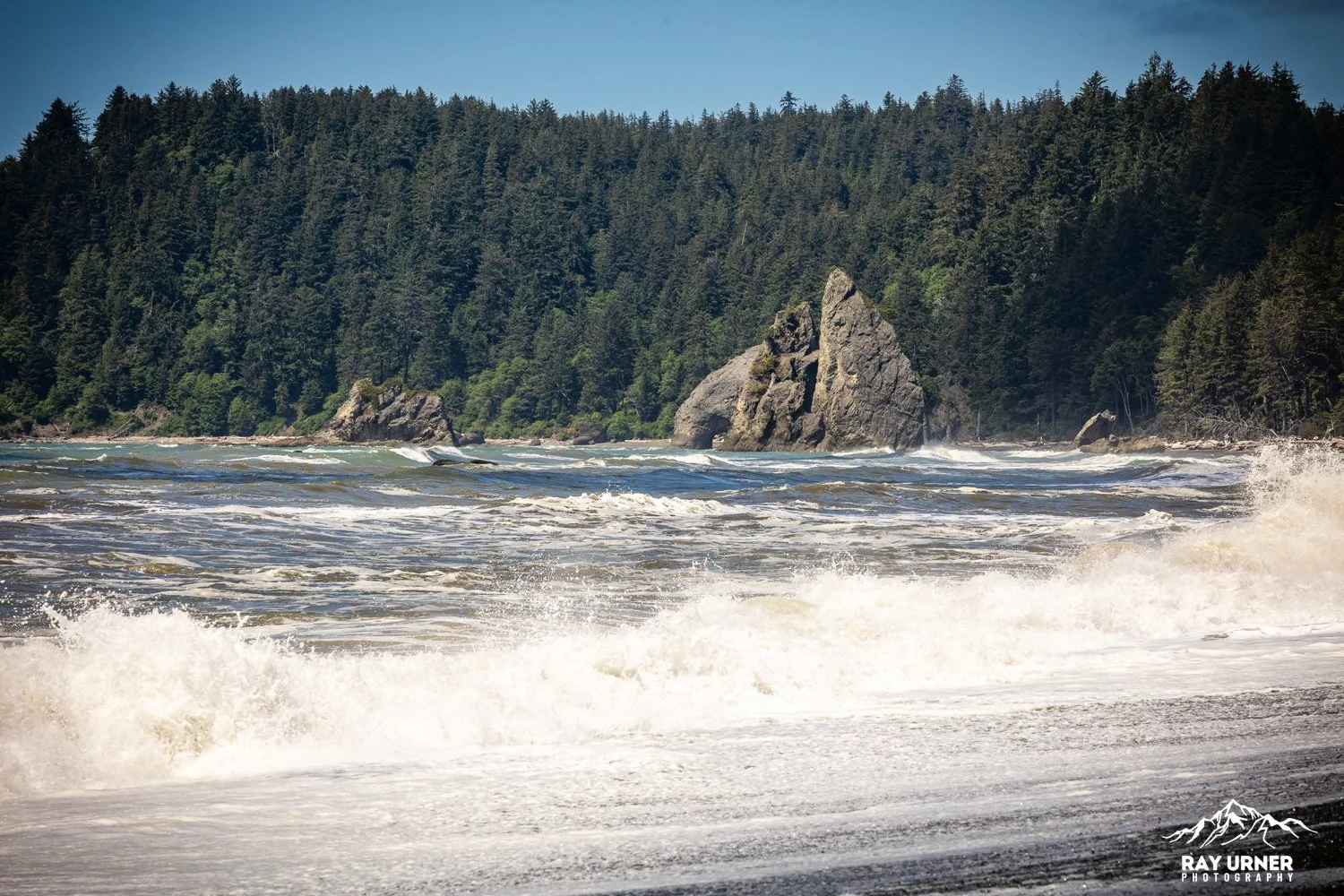
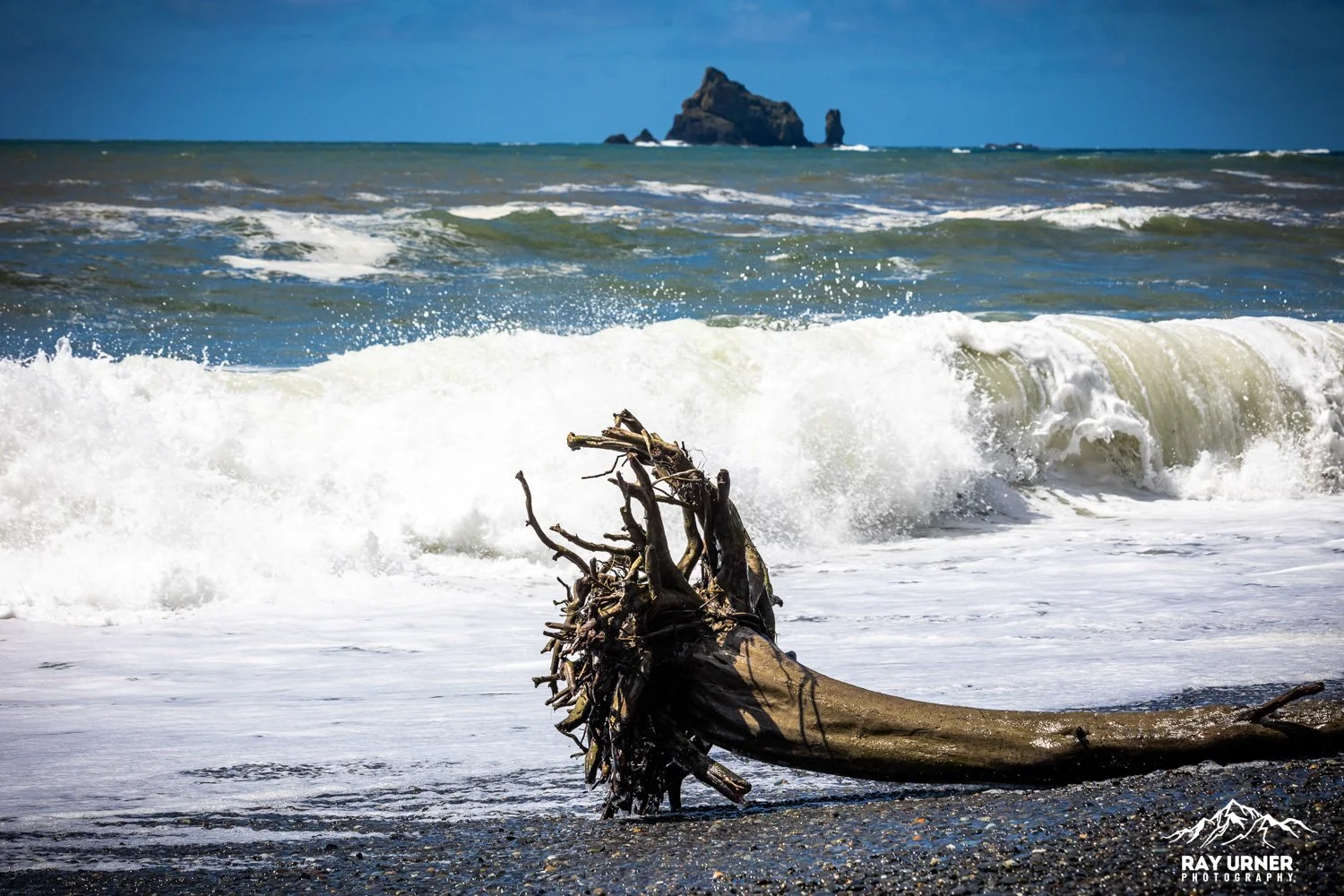
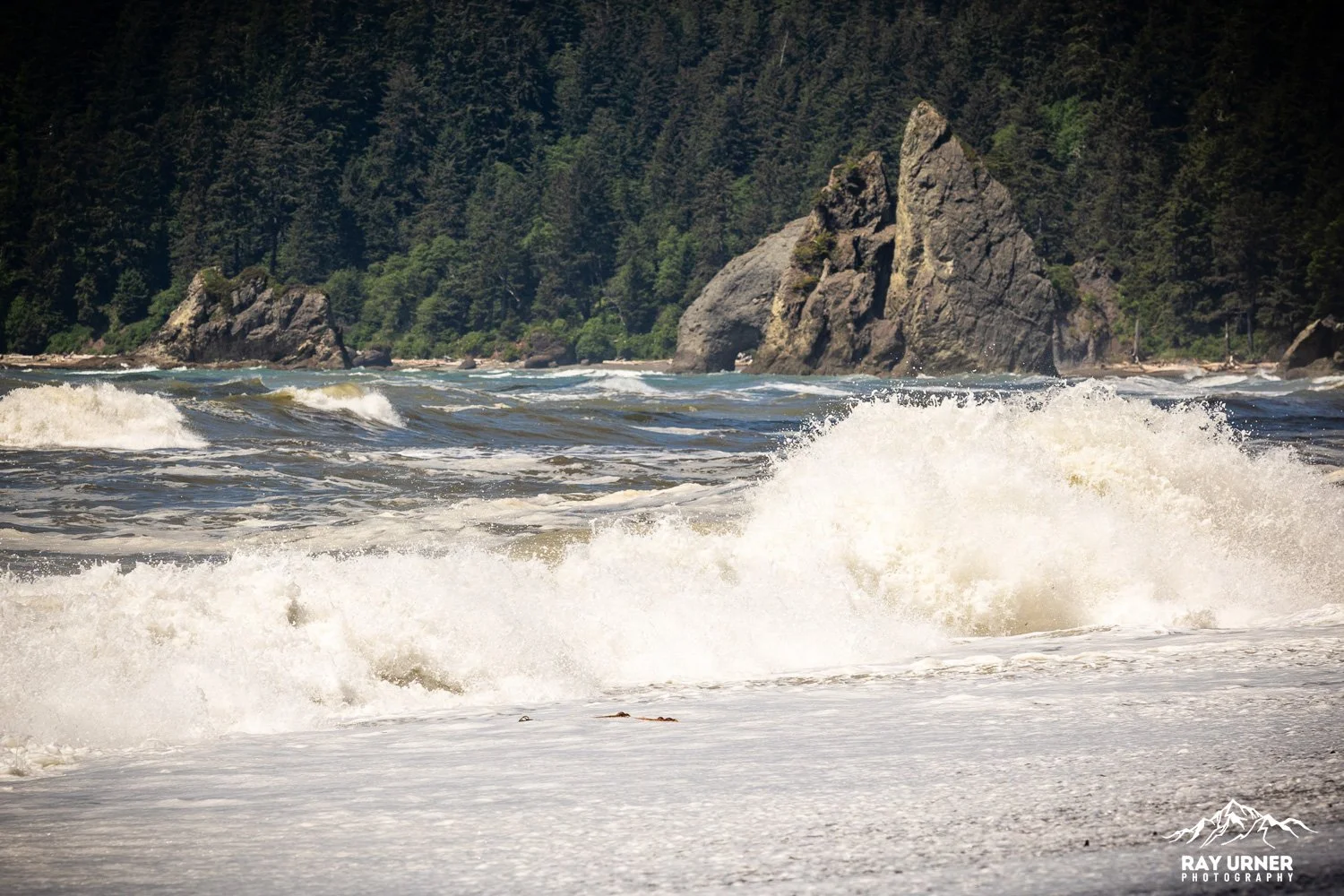
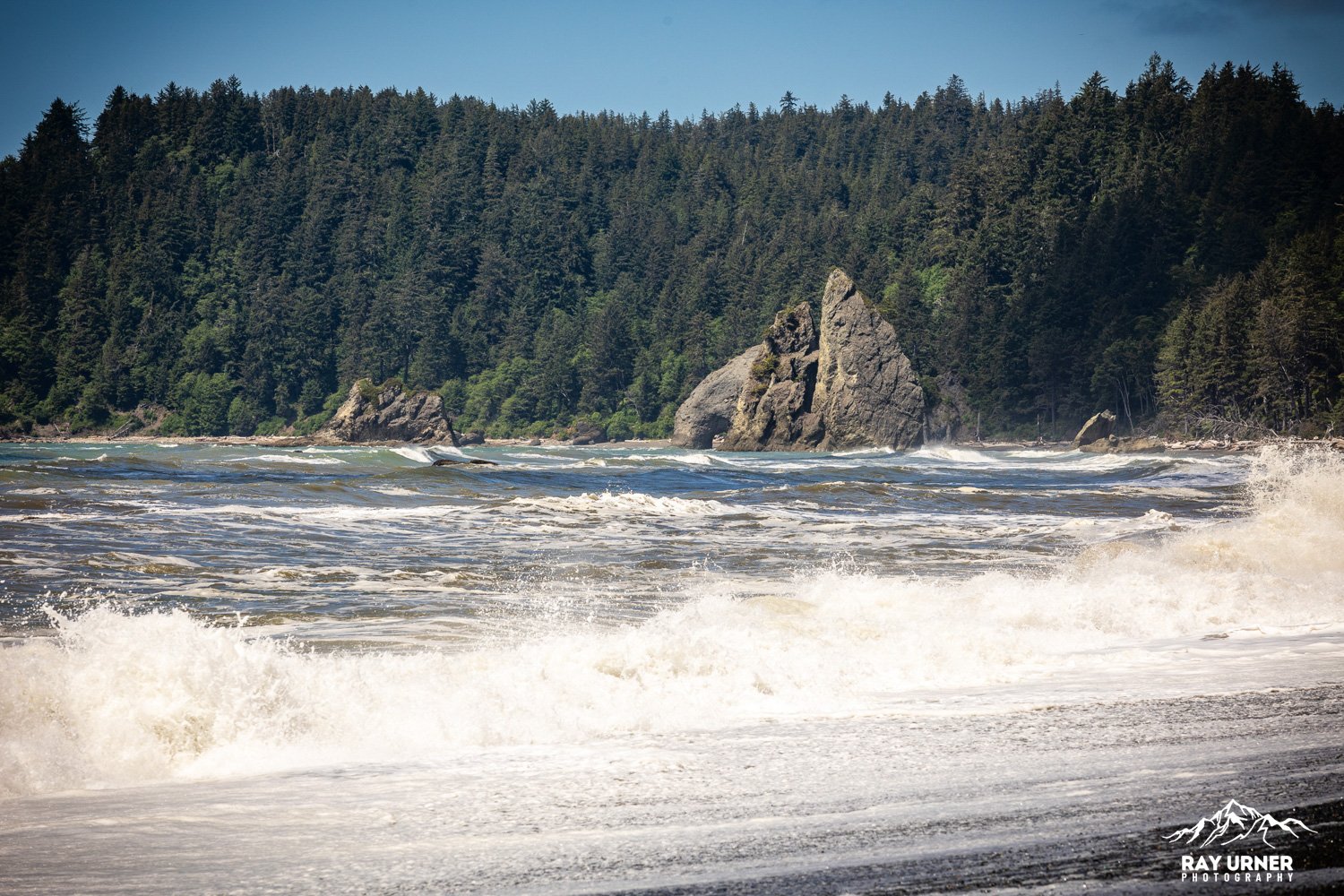
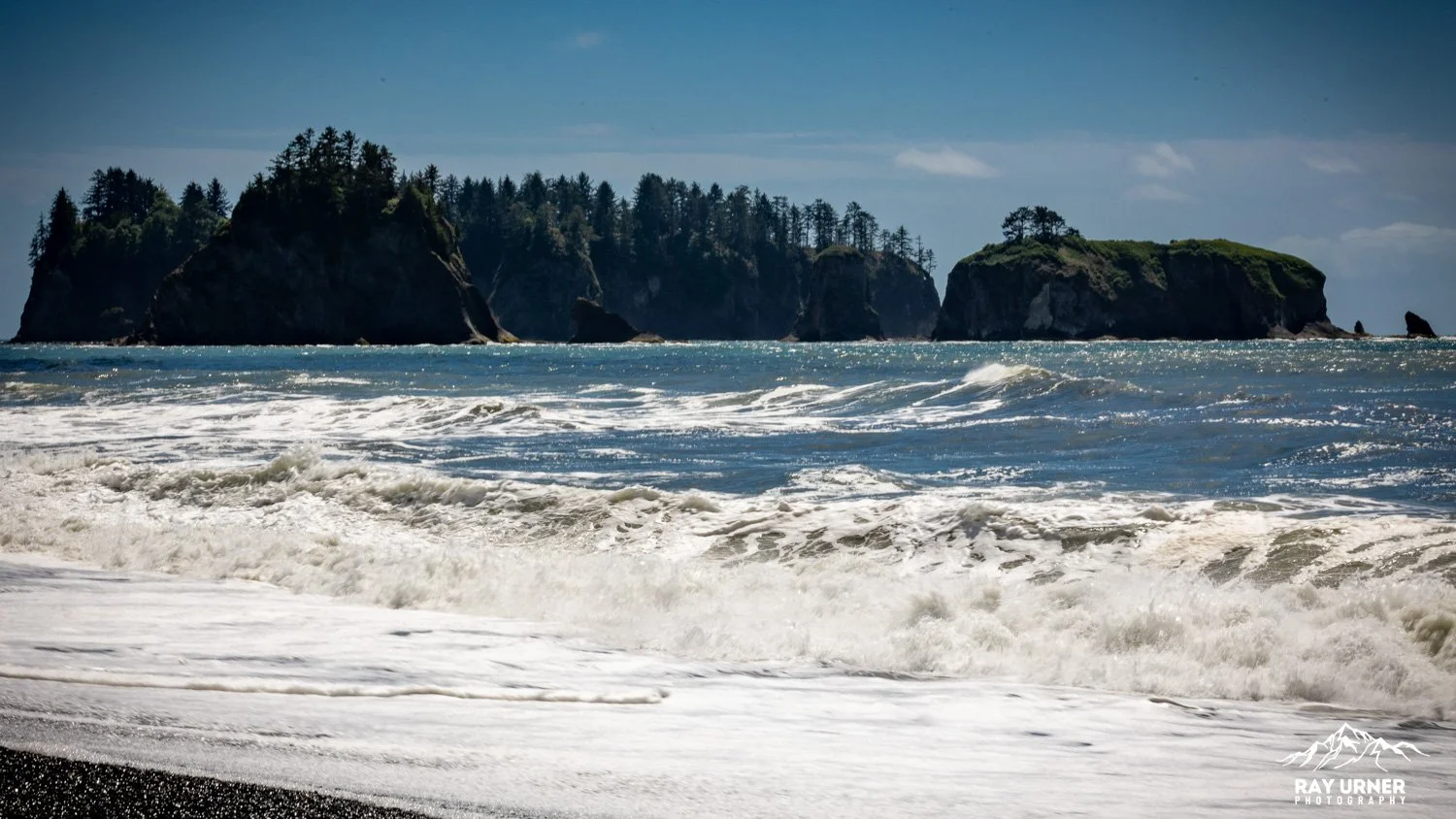
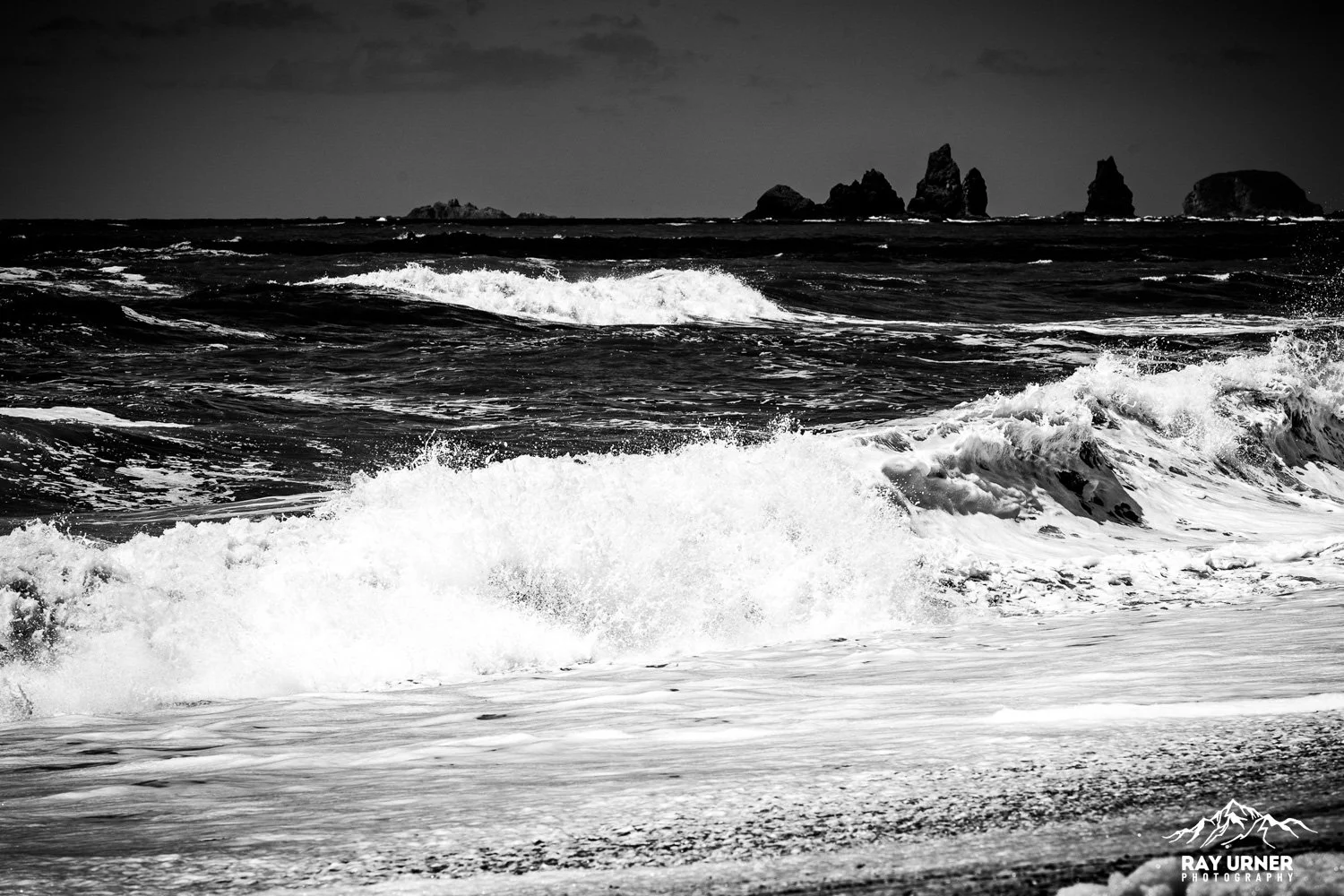
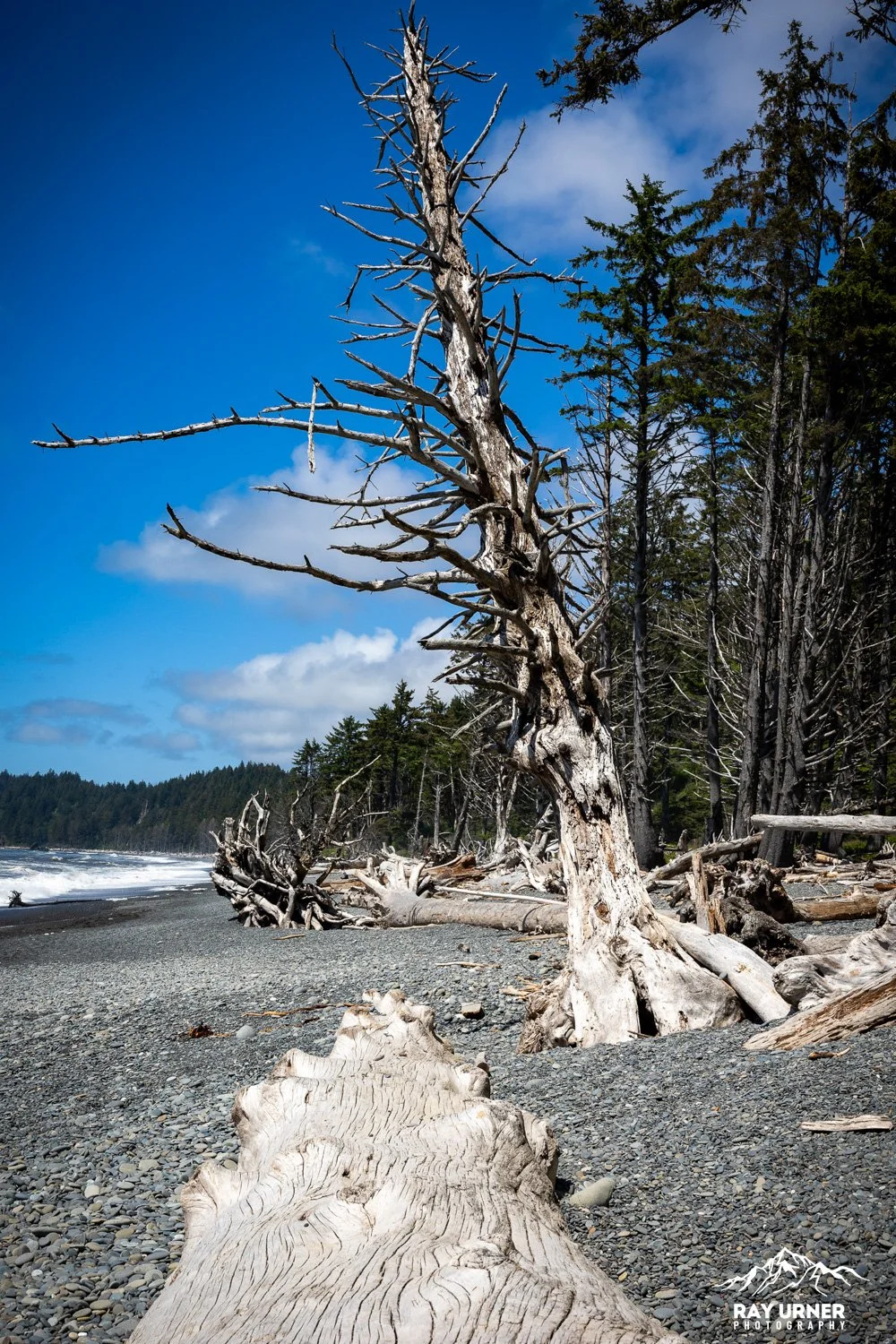
Located just north of the town of Forks, Washington, Rialto Beach is easily accessible via a paved parking lot with restrooms and picnic areas. The beach is famous for its rugged shoreline, massive driftwood logs, and iconic sea stacks like James Island and Little James Island.
At low tide, tide pools reveal a hidden world of sea stars, anemones, and crabs, while the ever-present roar of the surf provides a dramatic soundtrack.
A 2-mile walk north along the beach leads to the famed Hole-in-the-Wall, a sea-carved arch that’s especially photogenic at low tide. The tide was high when I was there, but hopefully you’ll have better timing!
Interesting Features and Natural Wonders
· Sea Stacks: These towering rock formations just offshore are remnants of ancient headlands, sculpted by relentless waves. They’re home to nesting seabirds and are especially striking when silhouetted against the sky.
· Tide Pools: At low tide, vibrant marine life emerges—purple sea stars, green anemones, and scuttling crabs. These pools are best photographed with a macro lens or from above with a polarizer to cut surface glare.
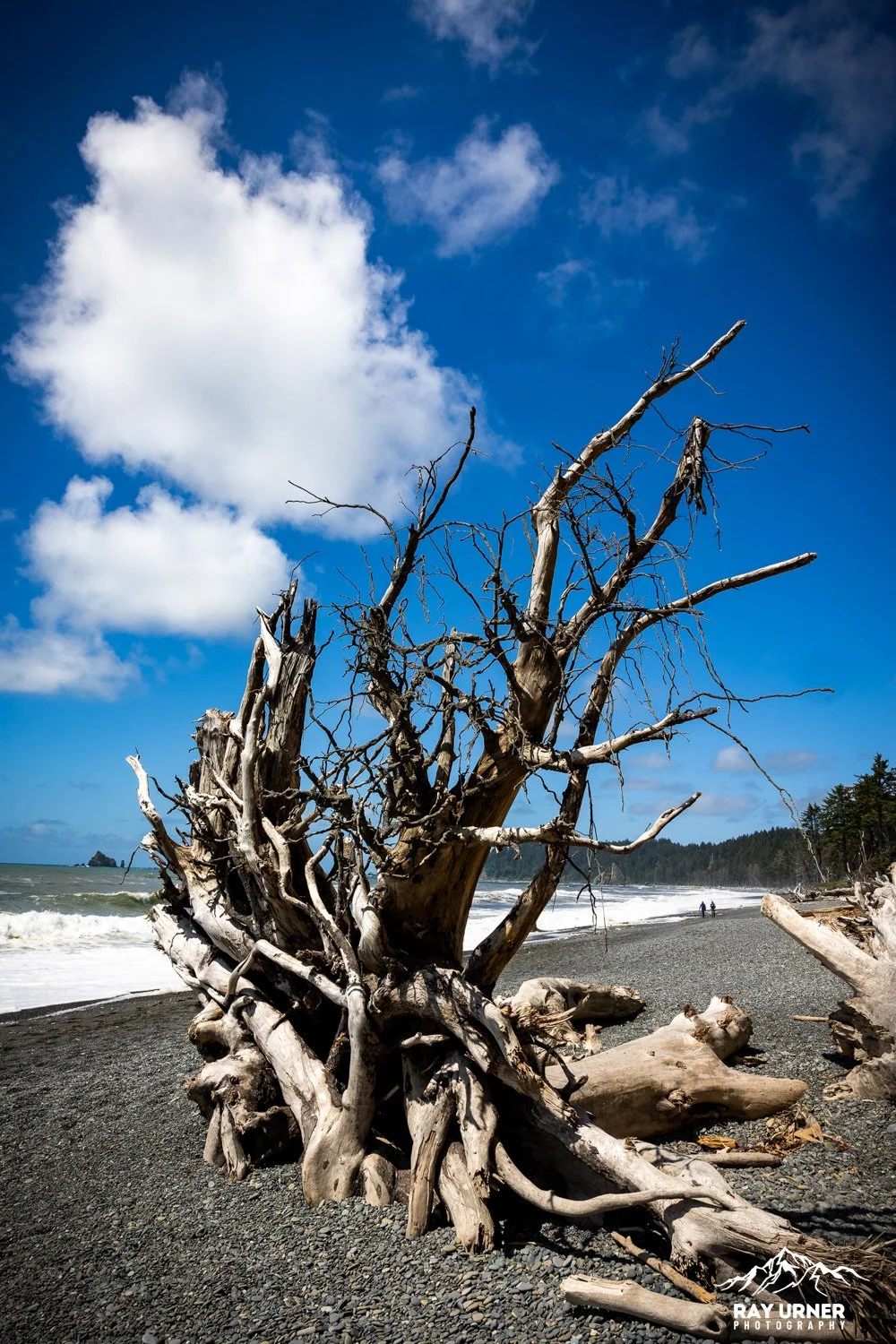
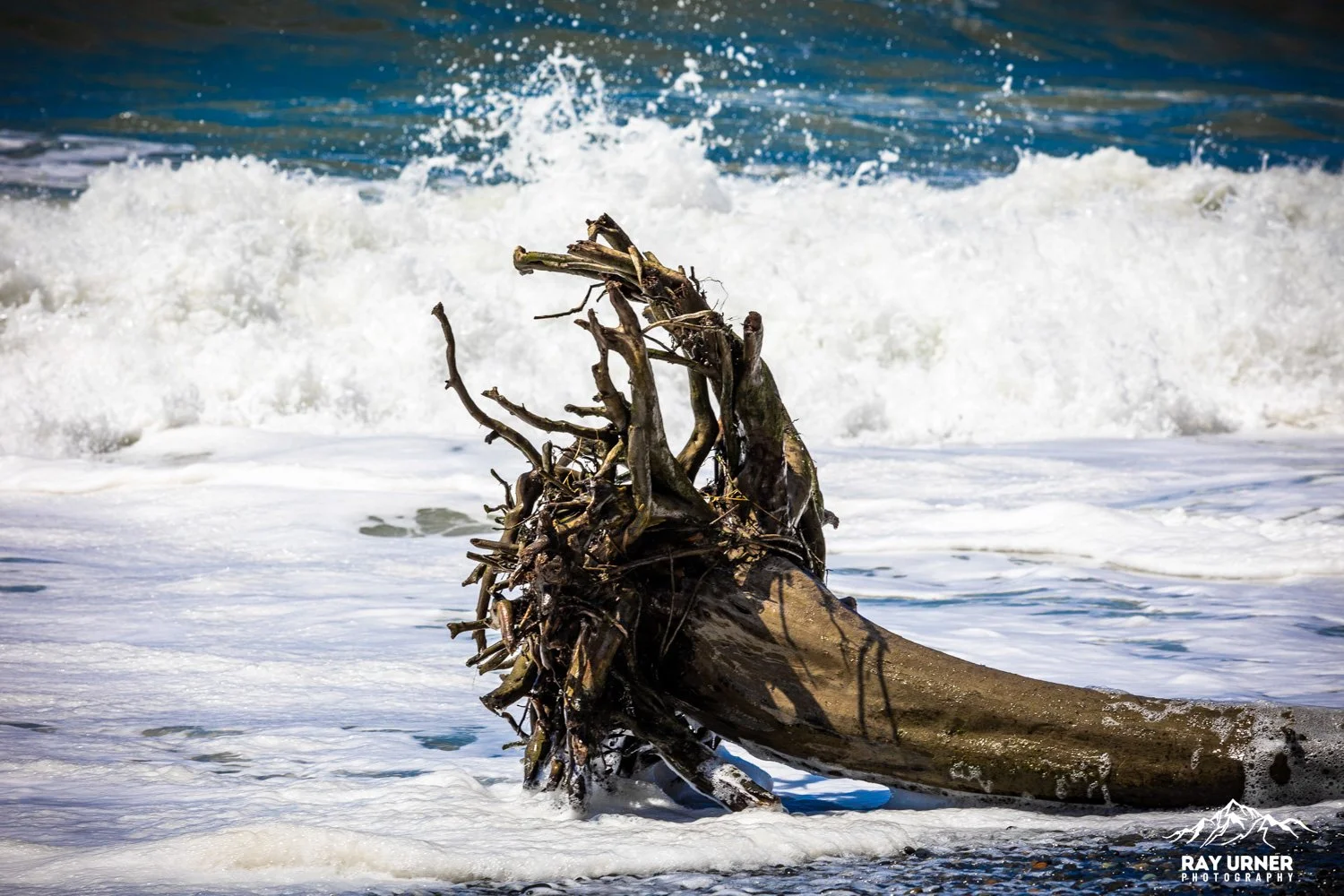
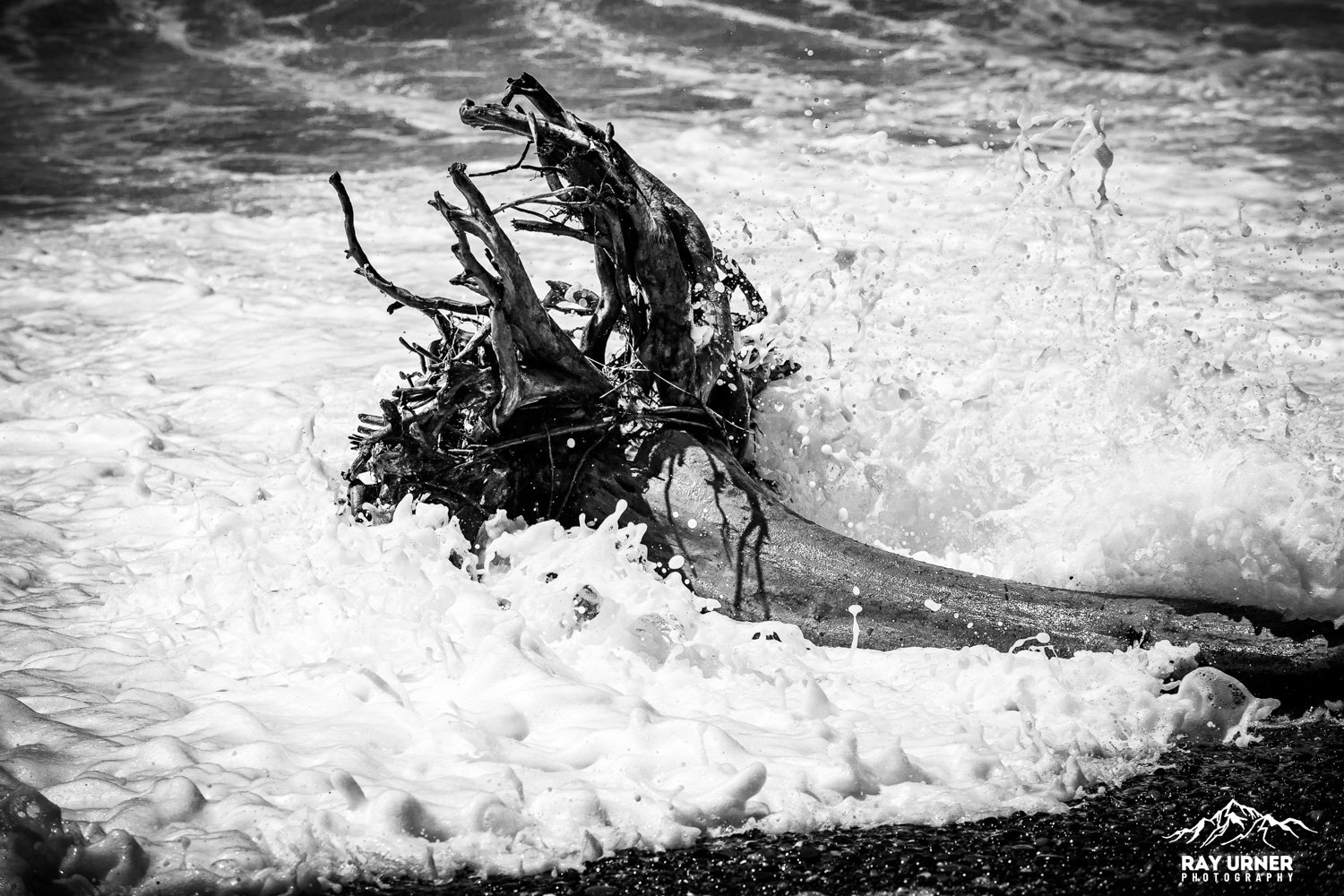
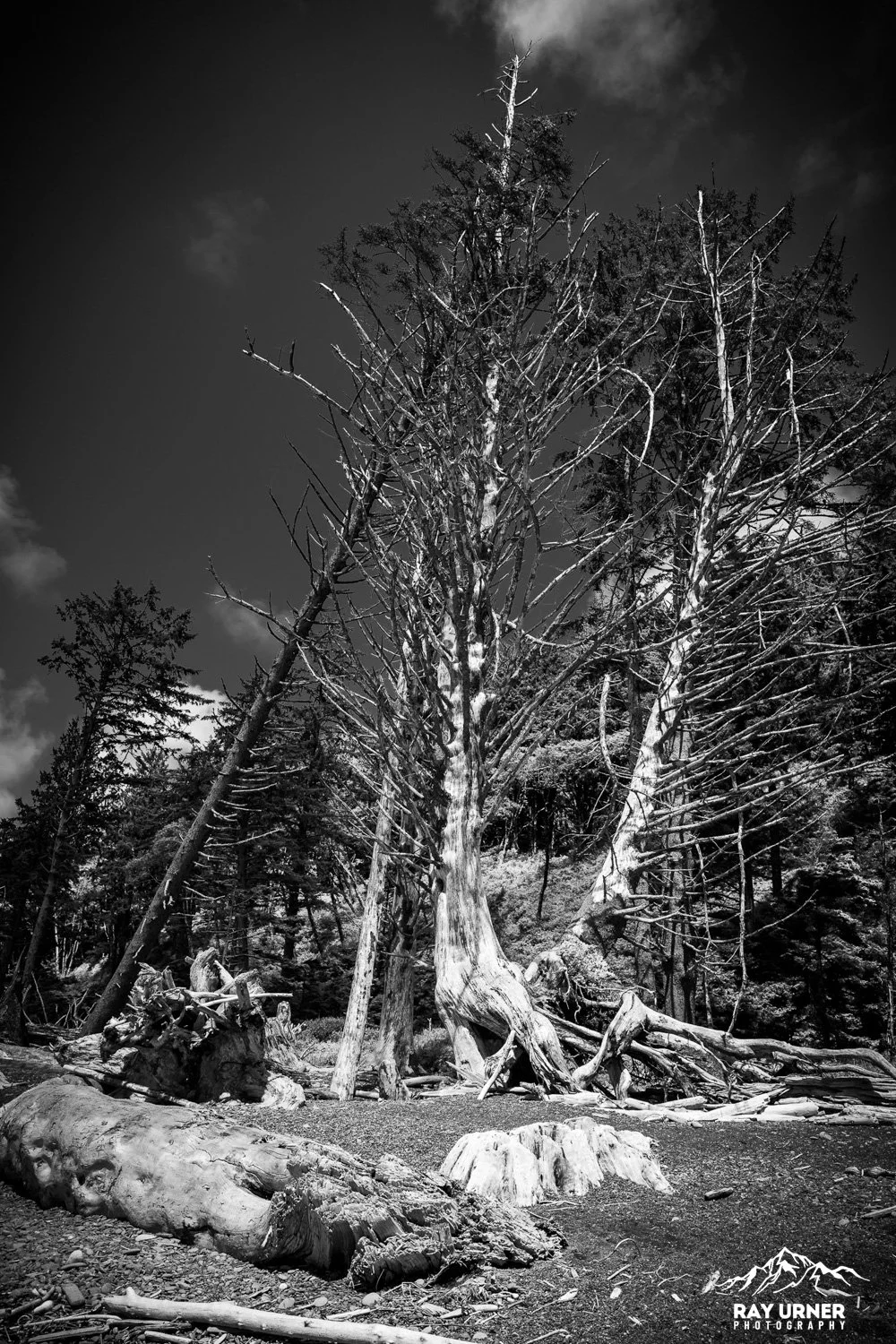
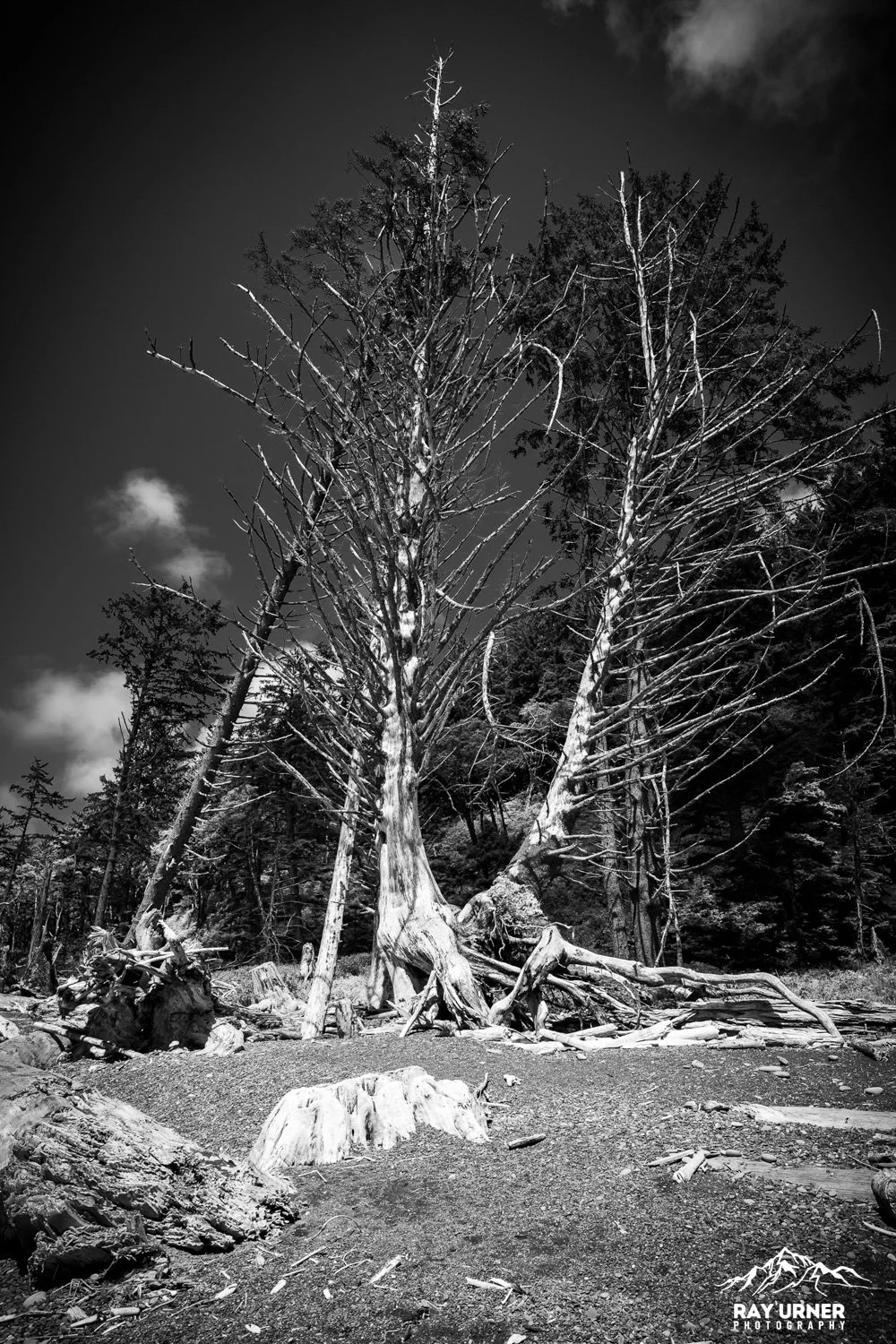
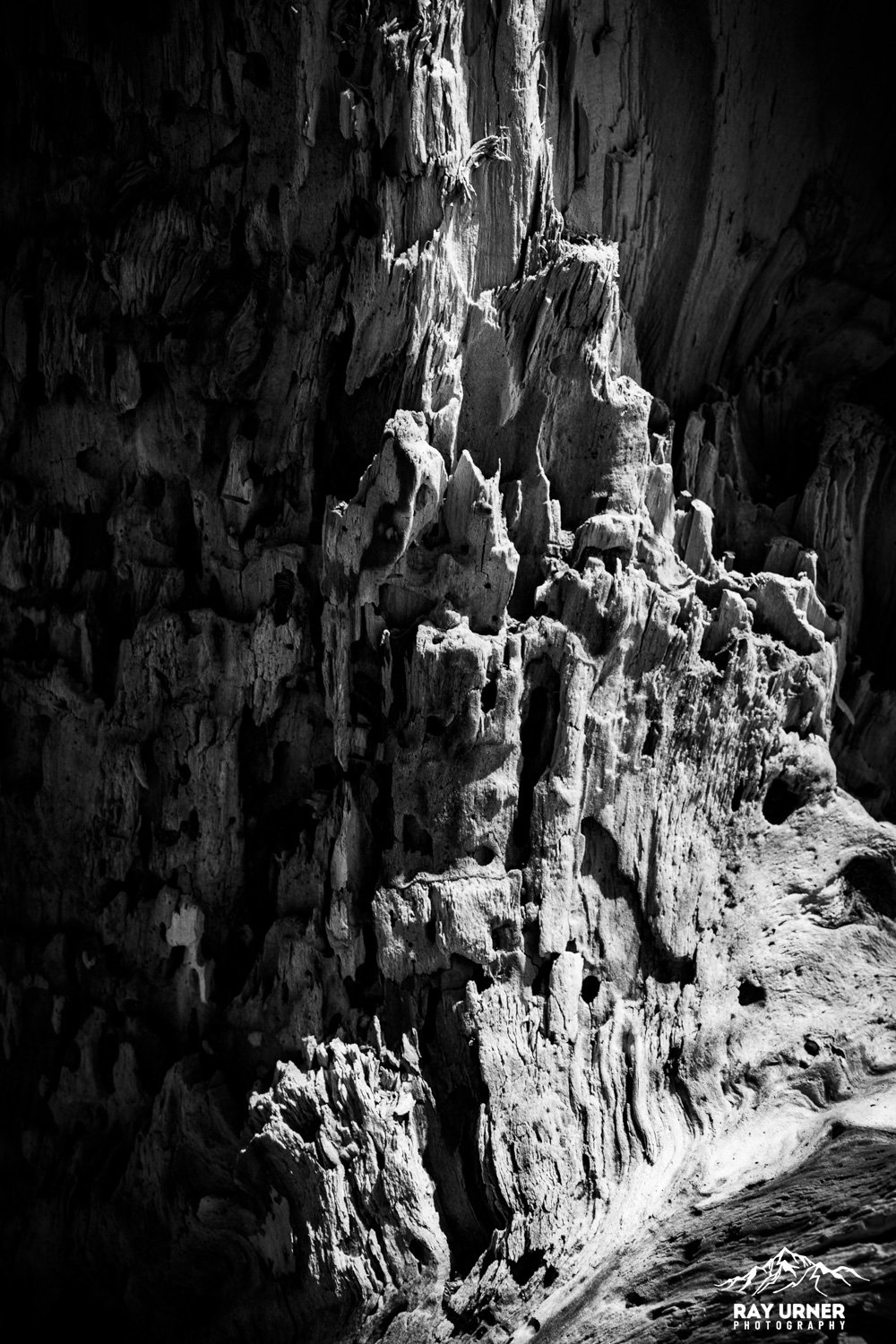
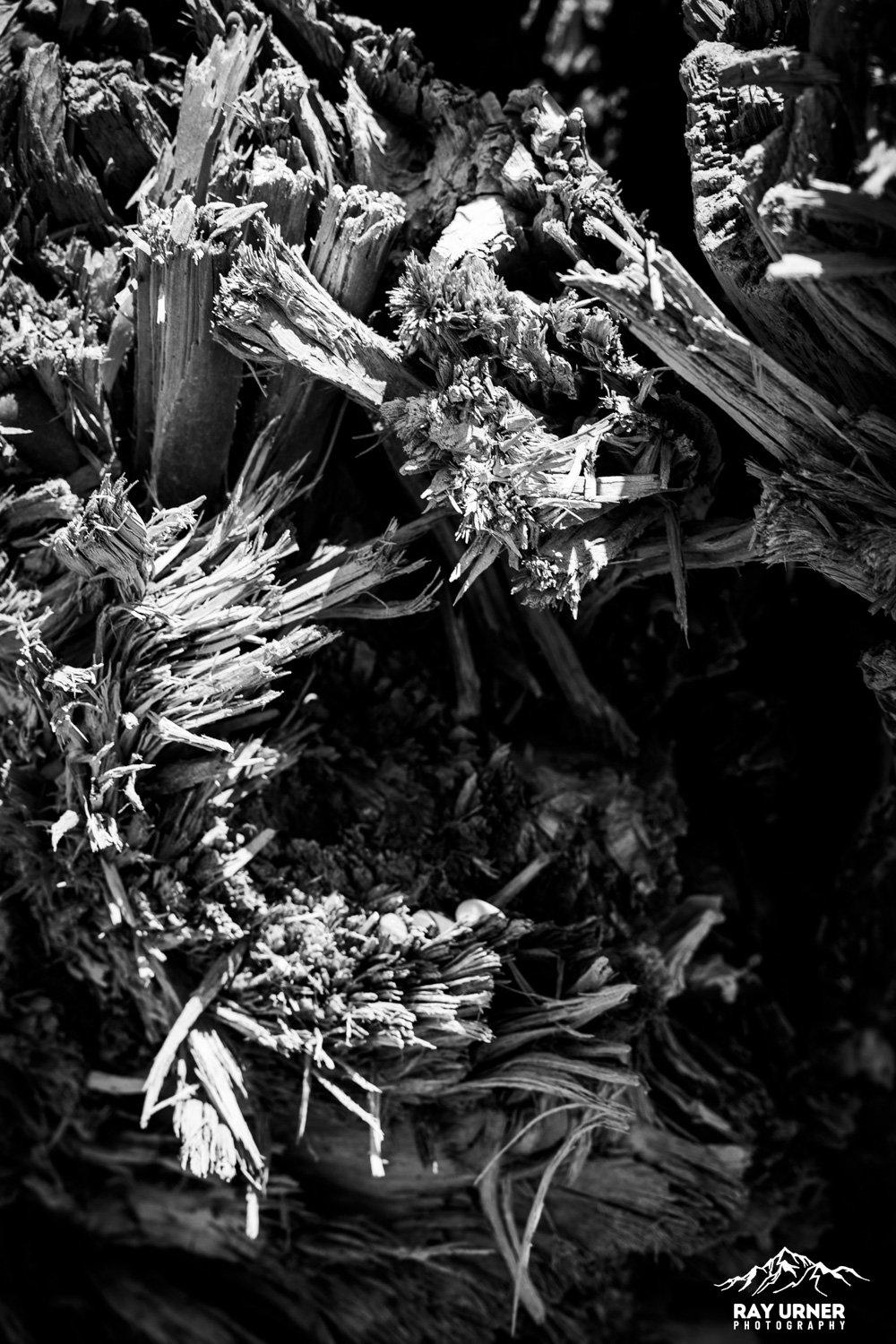
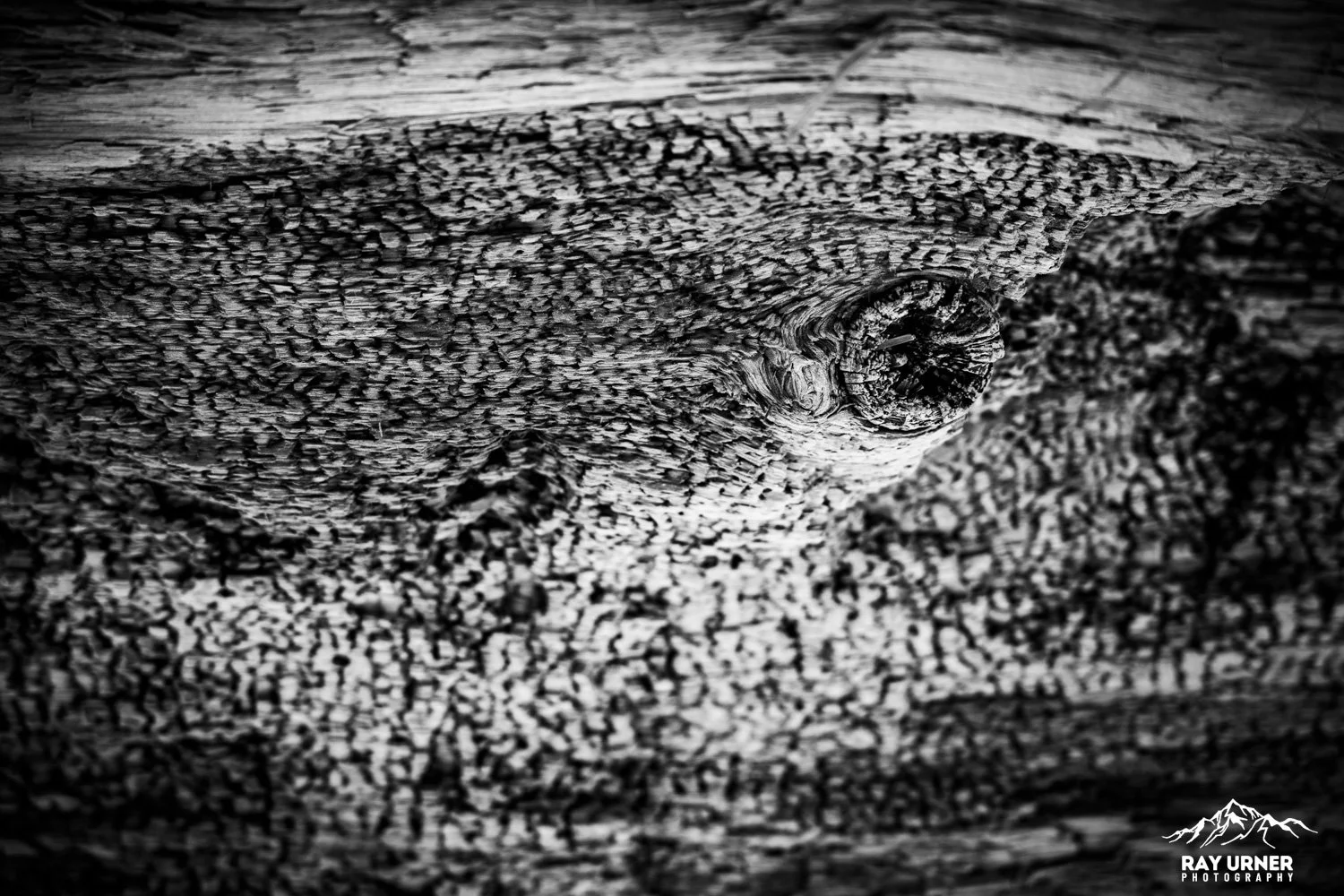
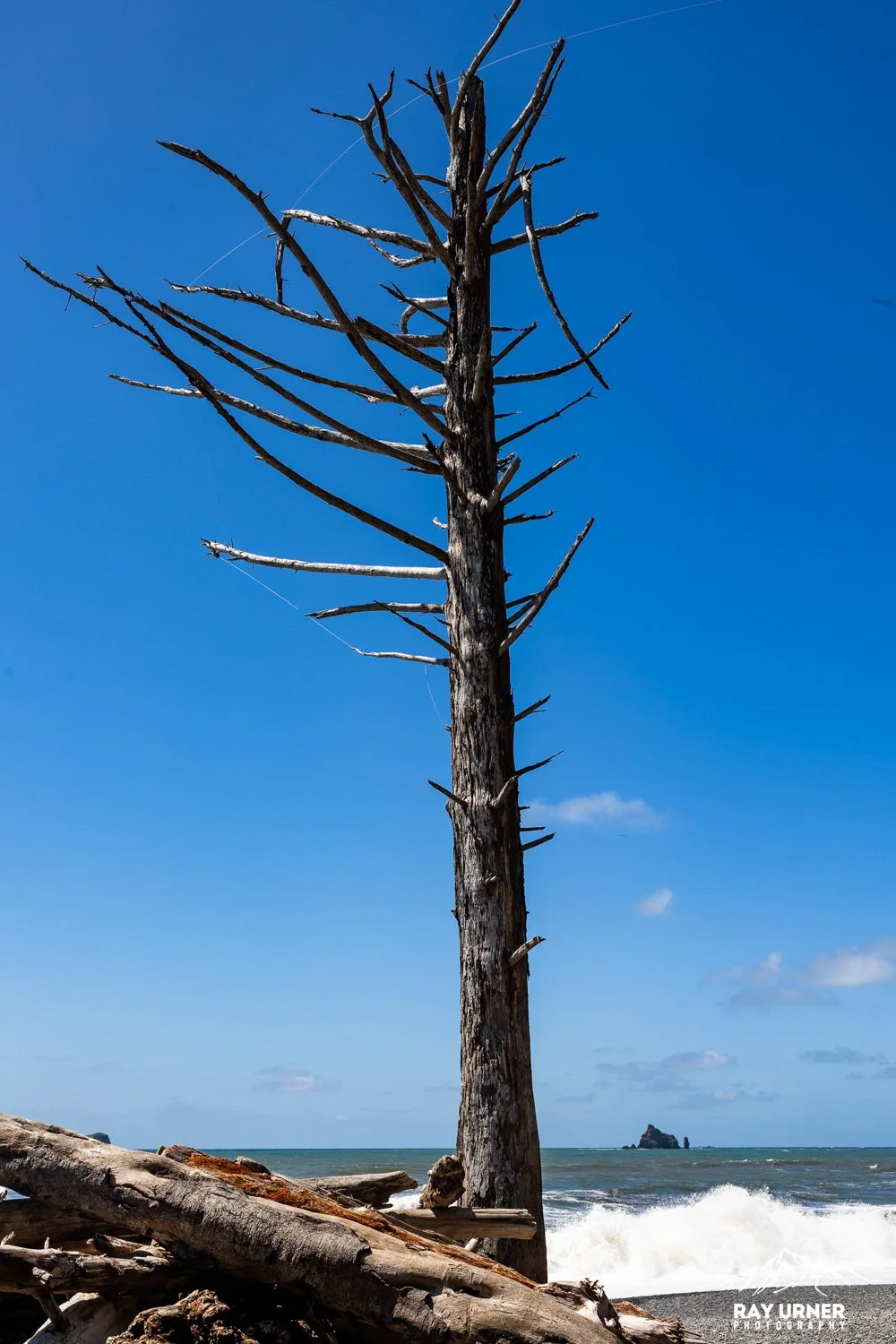
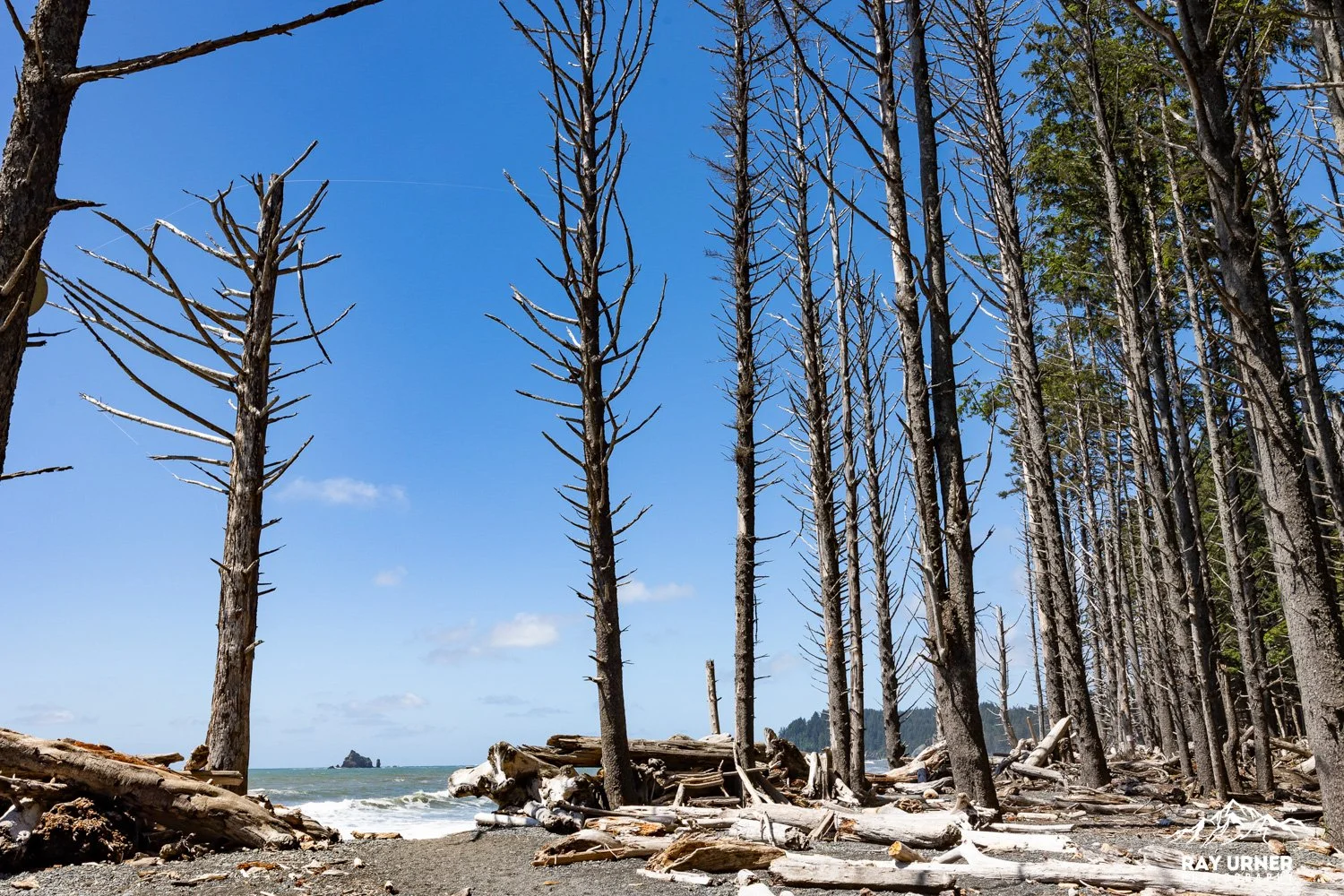
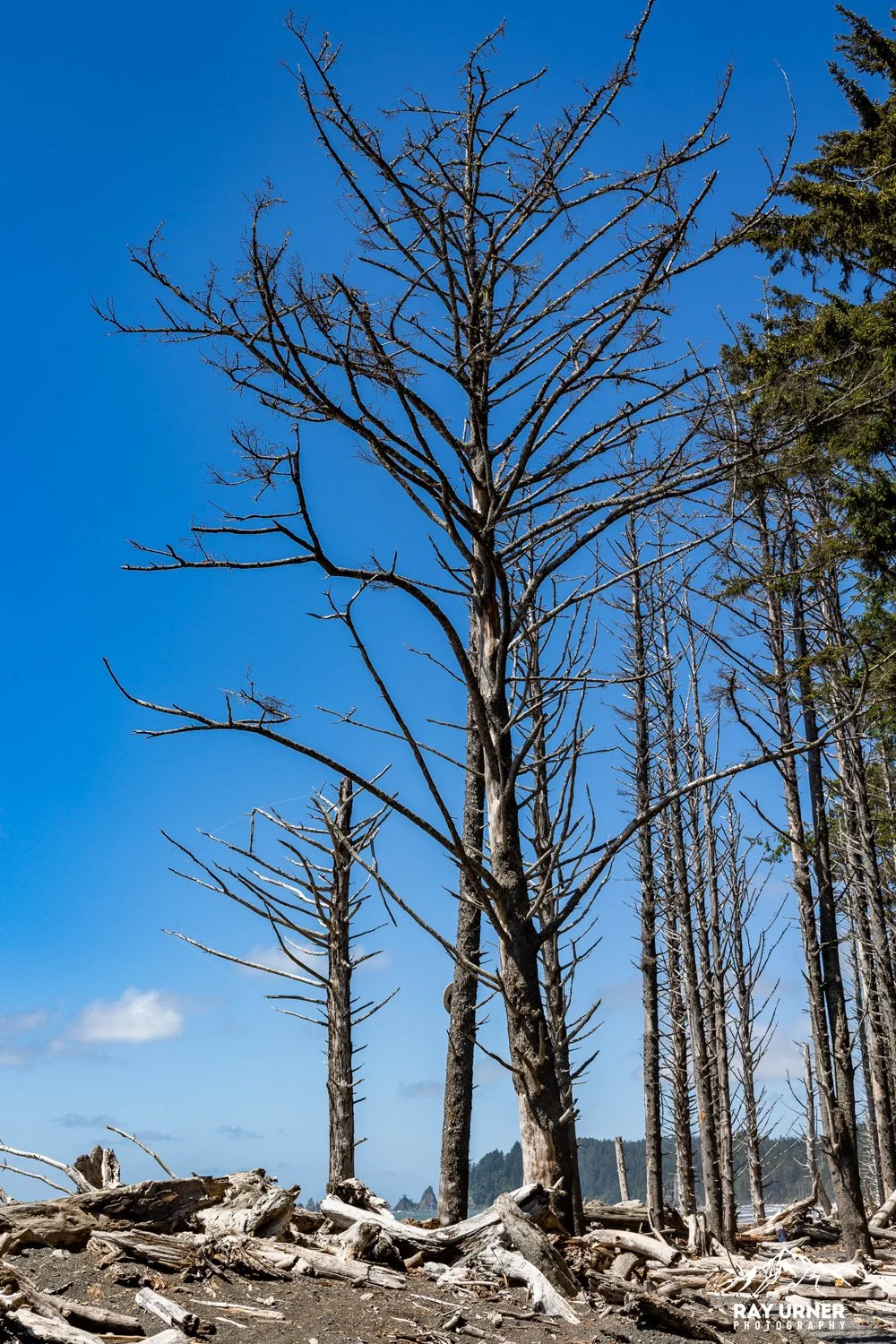
· Driftwood Forest: The beach is littered with massive logs, bleached and twisted by the sea. These natural sculptures offer endless compositional possibilities.
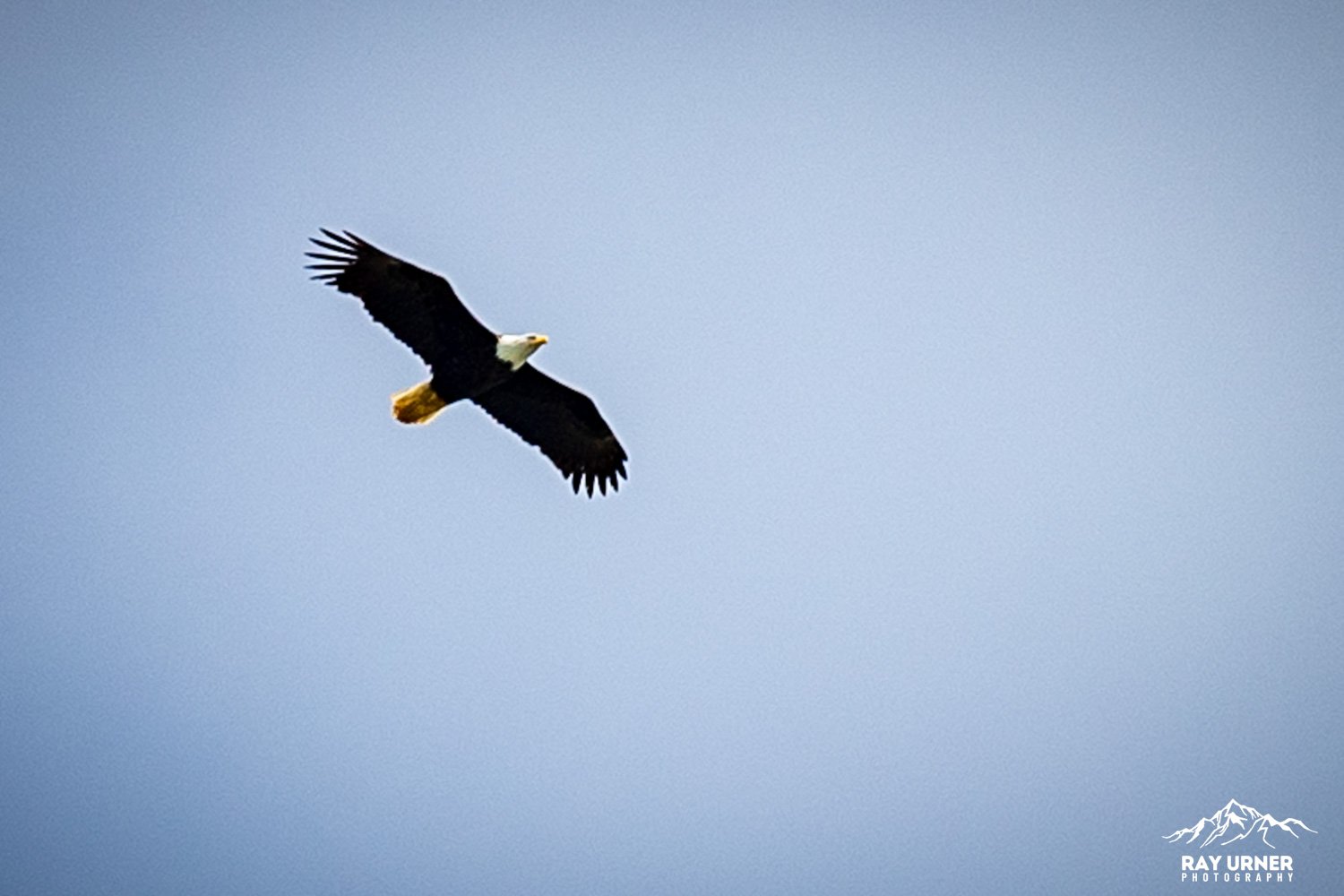
· Wildlife: Keep an eye out for bald eagles soaring overhead, harbor seals bobbing in the surf, and the occasional gray whale spout offshore.

Photographing in Harsh Afternoon Light: Embrace the Contrast
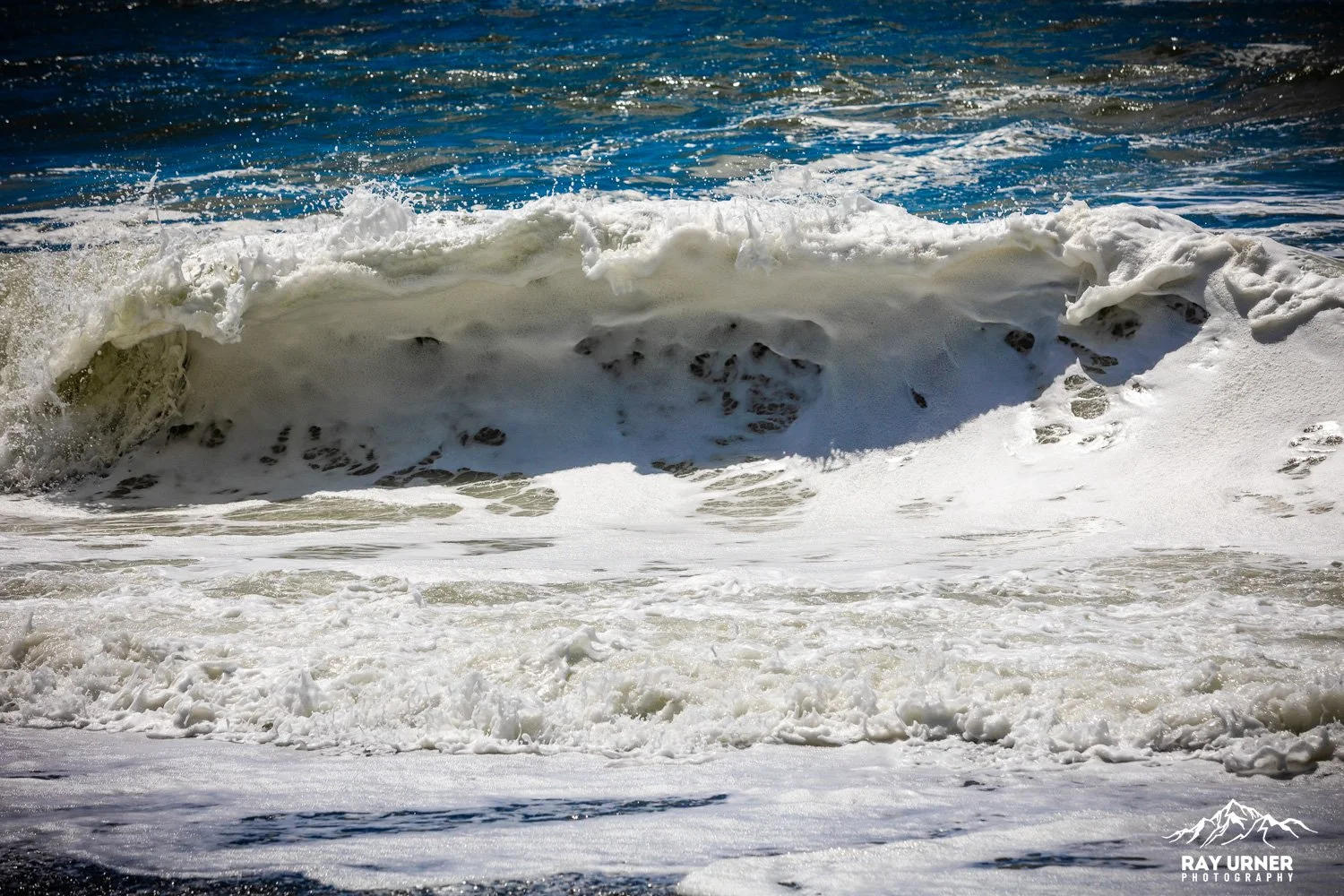
Afternoon light on Rialto Beach can be intense—bright sun, deep shadows, and high contrast. But rather than fighting it, photographers can use it to their advantage.
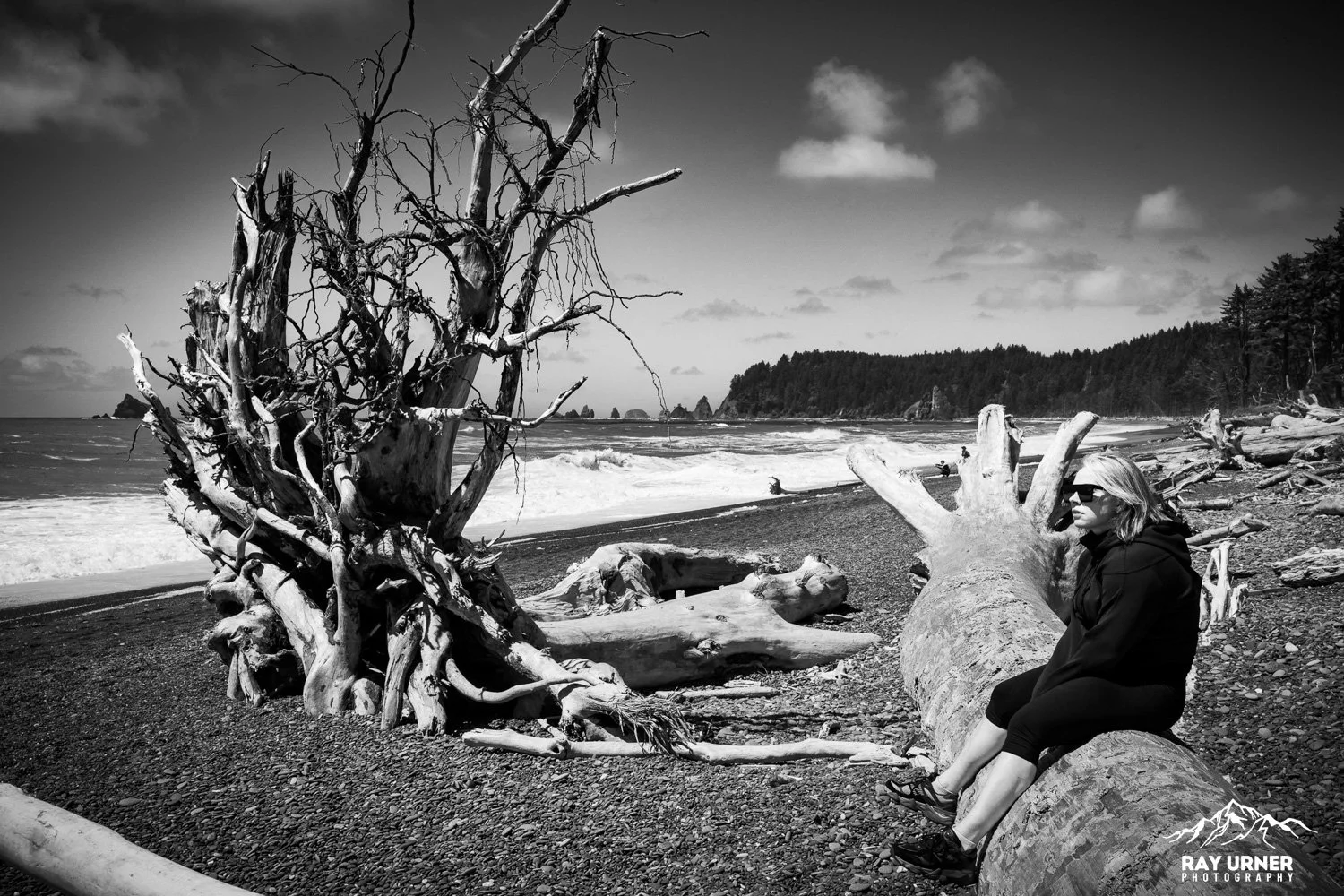
1. Use the Shadows: The massive driftwood logs cast long, sculptural shadows that add drama and texture to your compositions. Look for patterns and leading lines created by the interplay of light and shadow.
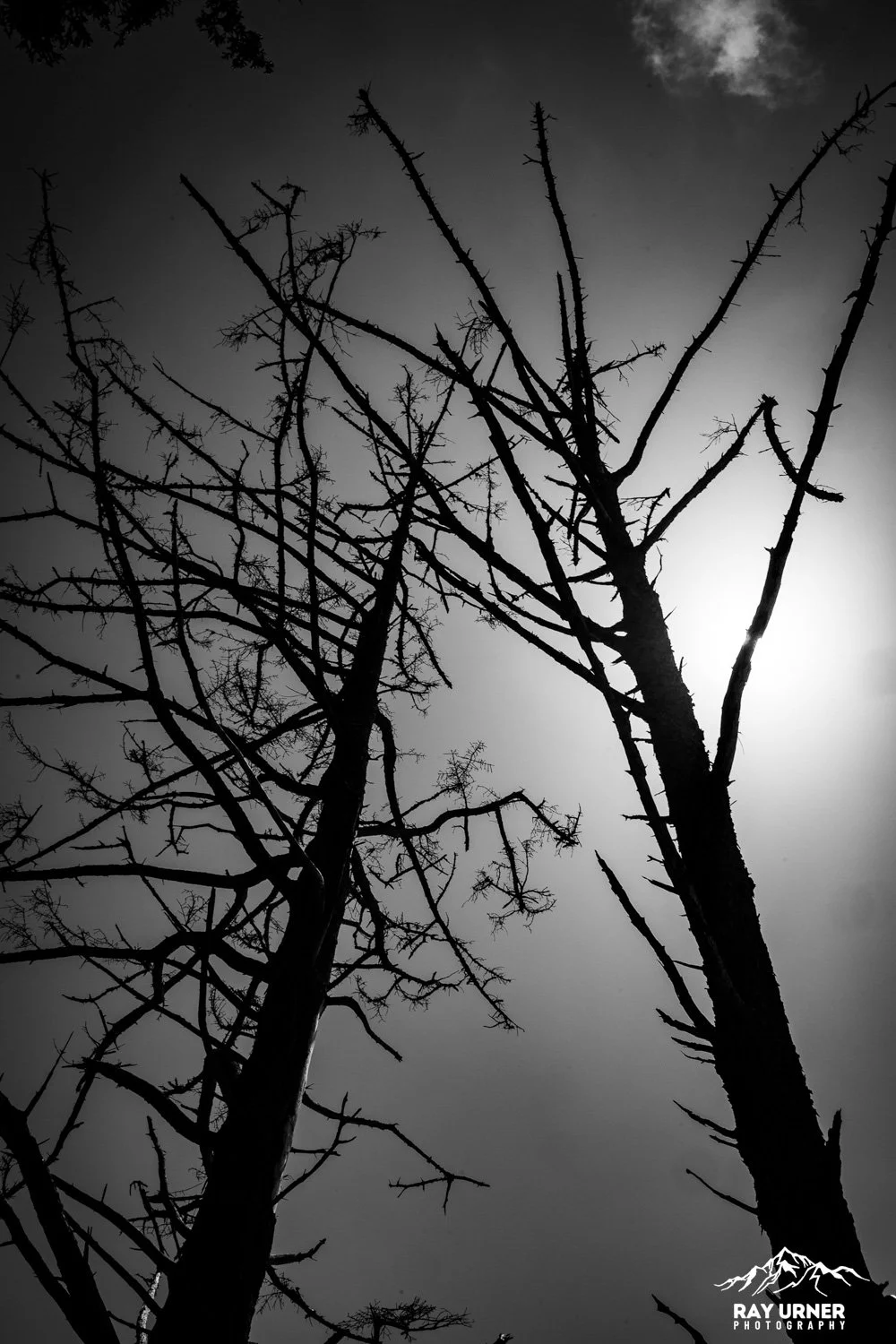
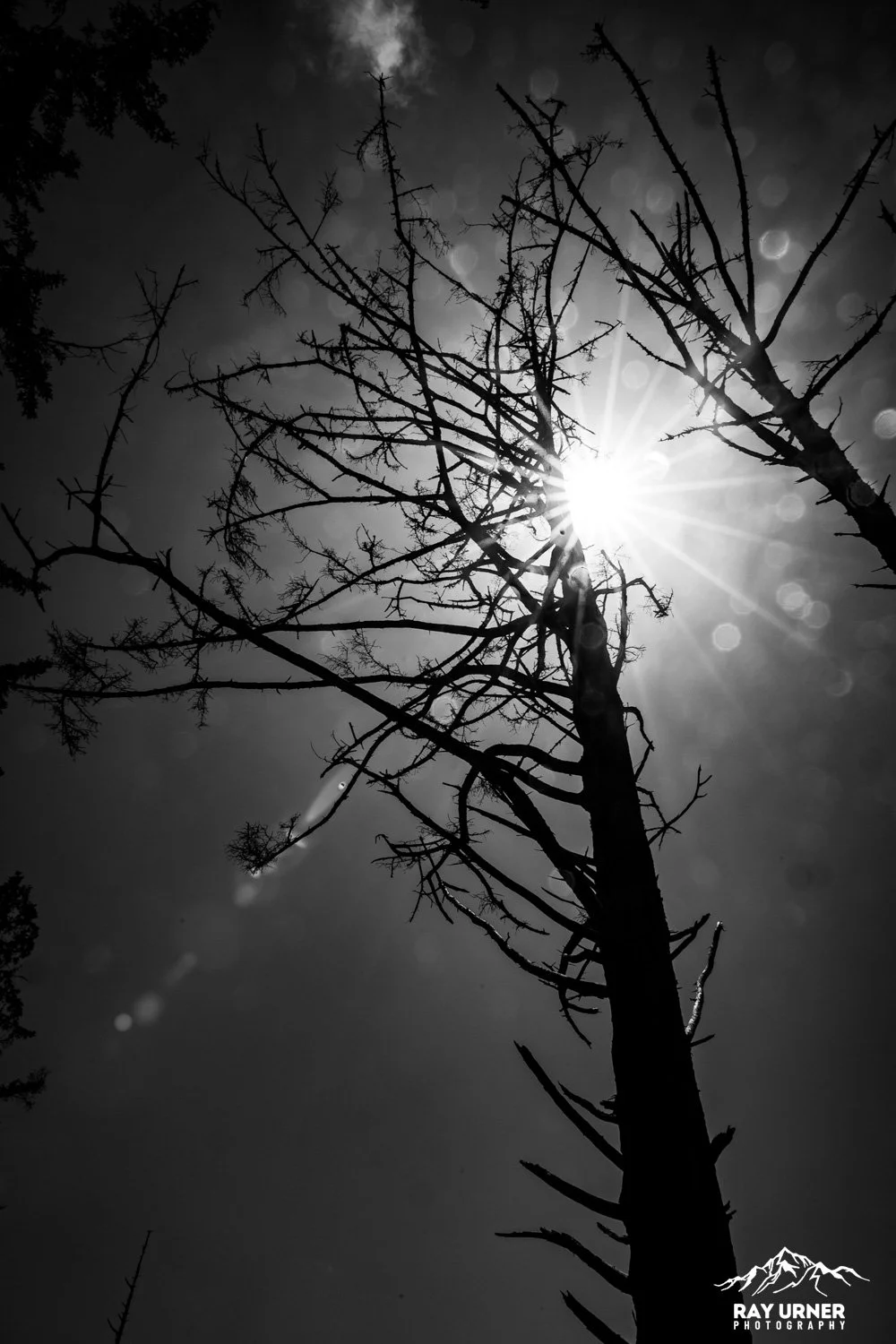
2. Shoot in Black and White: High-contrast scenes often translate beautifully into monochrome. The stark outlines of sea stacks, the texture of weathered wood, and the glint of sunlight on wet stones all pop in black and white.
3. Polarizing Filters Are Your Friend: A circular polarizer can cut glare off the water and wet rocks, deepen the blue of the sky, and enhance cloud contrast—perfect for mid-day shooting.
4. Frame with Foreground: Use driftwood, tide pools, or beach stones to anchor your foreground and lead the viewer’s eye toward the sea stacks or horizon.
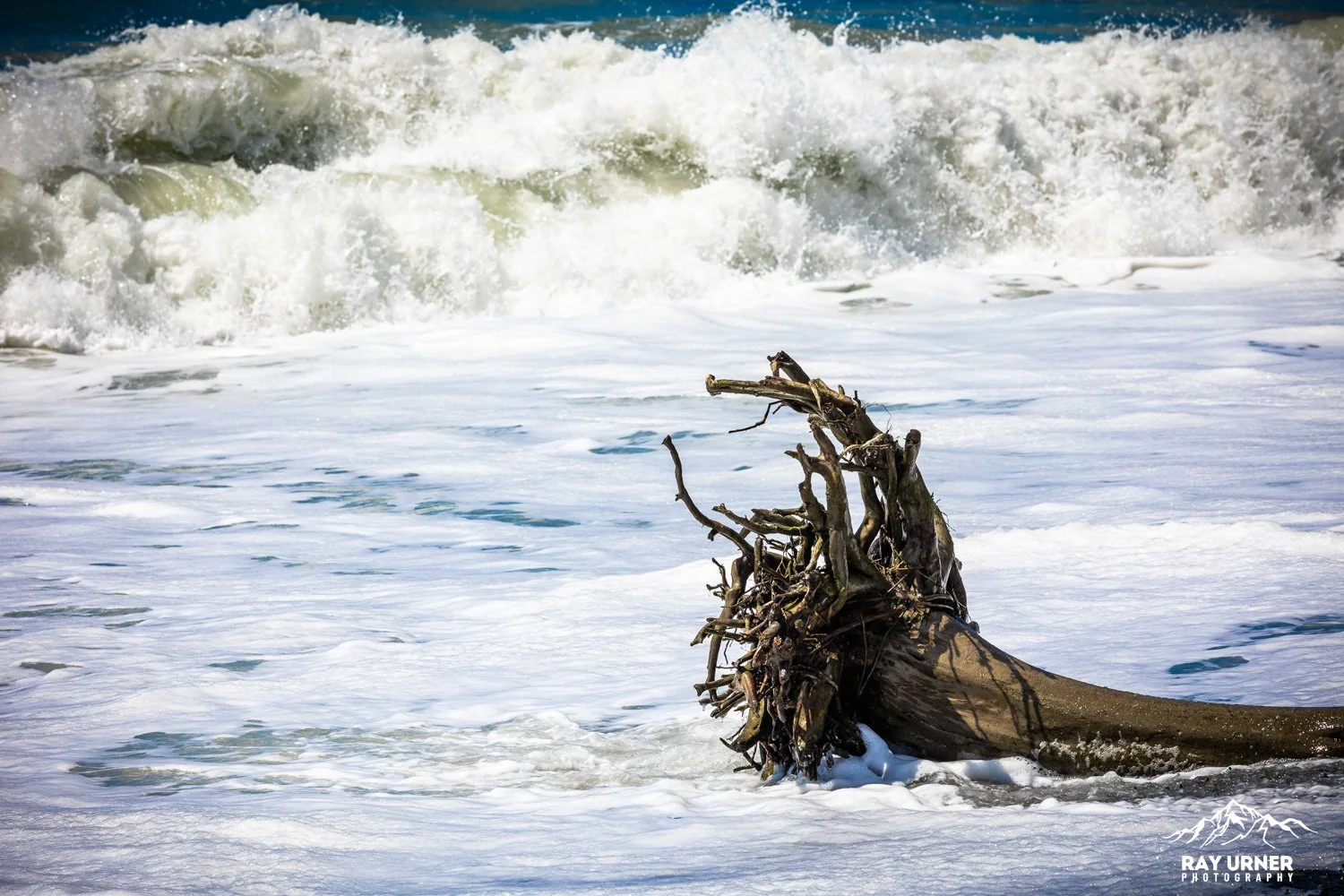
5. Embrace the Harshness: Let the sun flare through the sea stacks. Capture the glint of light on crashing waves. Harsh light can evoke the wild, untamed spirit of the Pacific coast.
Final Thoughts: Harsh Light, Bold Images
Photographing Rialto Beach in the afternoon isn’t about waiting for perfect light—it’s about embracing the elements. The sun may be high, the shadows deep, but the drama of this wild coastline is always present. With the right techniques and a creative eye, you can turn harsh light into high-impact images that capture the raw beauty of Olympic National Park’s most iconic beach.