
Tree of Life &
Kalaloch Beach
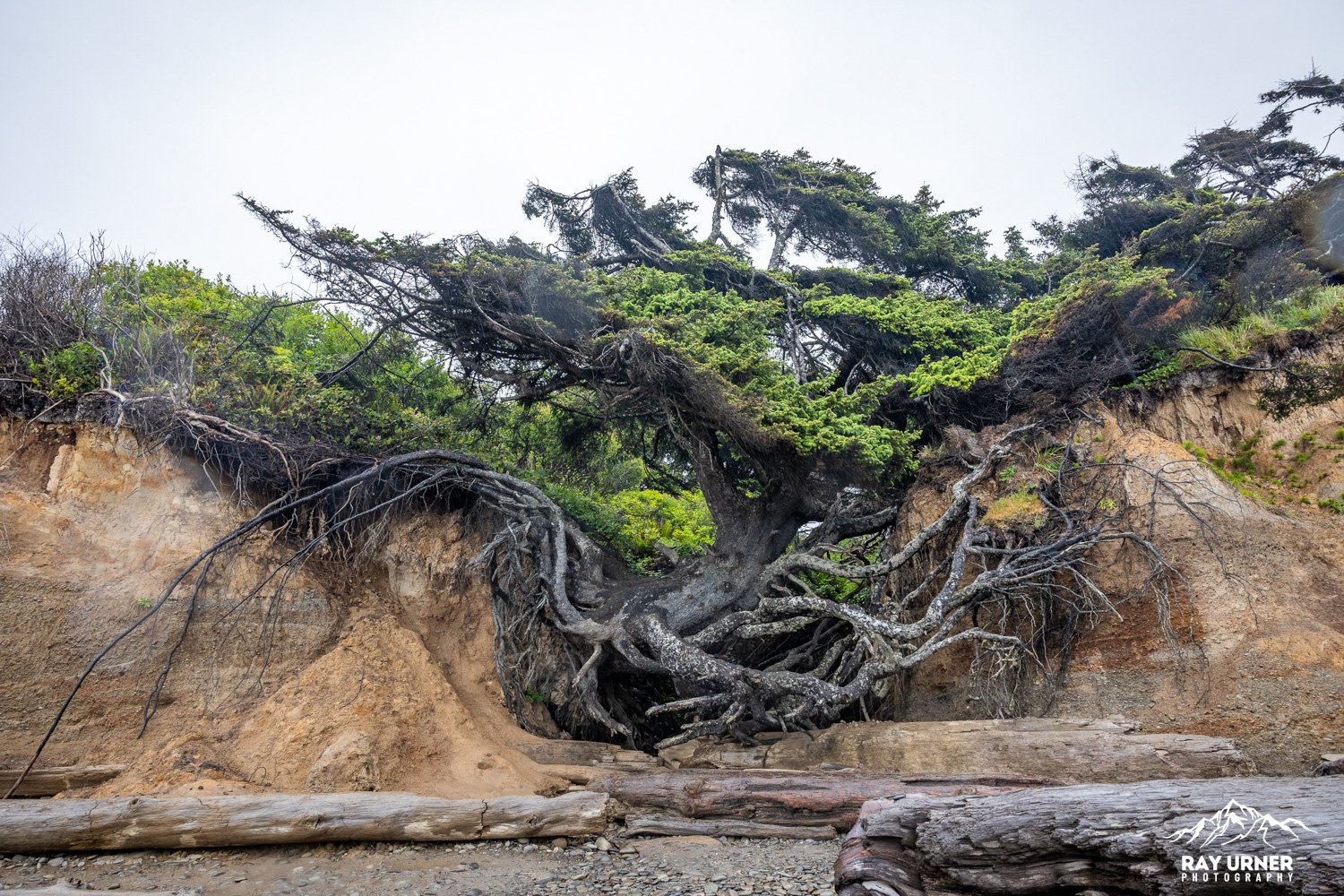
On Washington’s wild Olympic coast, where the Pacific Ocean meets ancient forest, a solitary Sitka spruce clings to life in a way that seems almost supernatural. Known as the Tree of Life, this gravity-defying marvel is a favorite subject for photographers. And while many seek it out under golden skies, it’s in the rain—when the sky broods and the sea churns—that the Tree of Life reveals its most haunting beauty.
Getting There: Trail and Kalaloch Beach Access
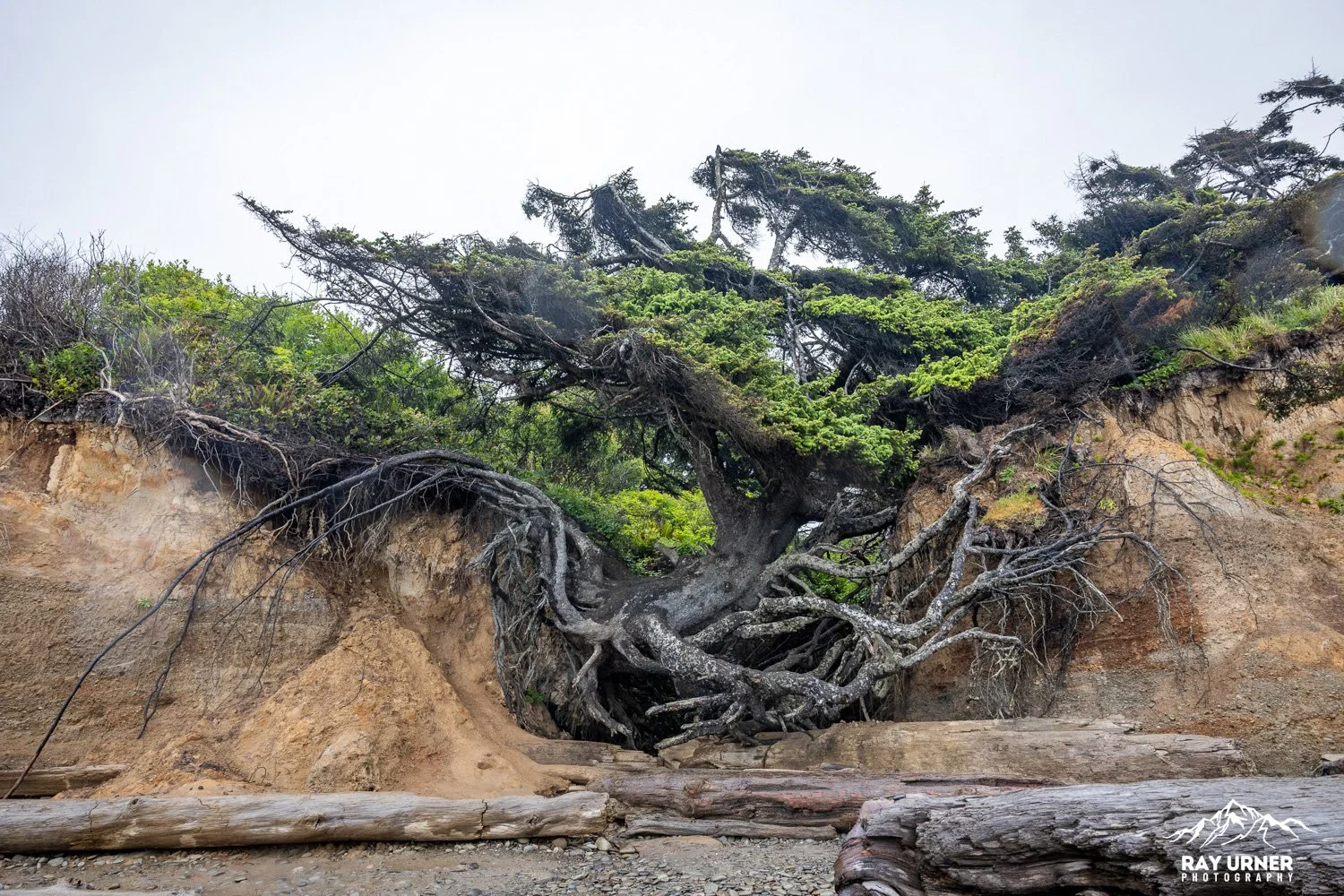
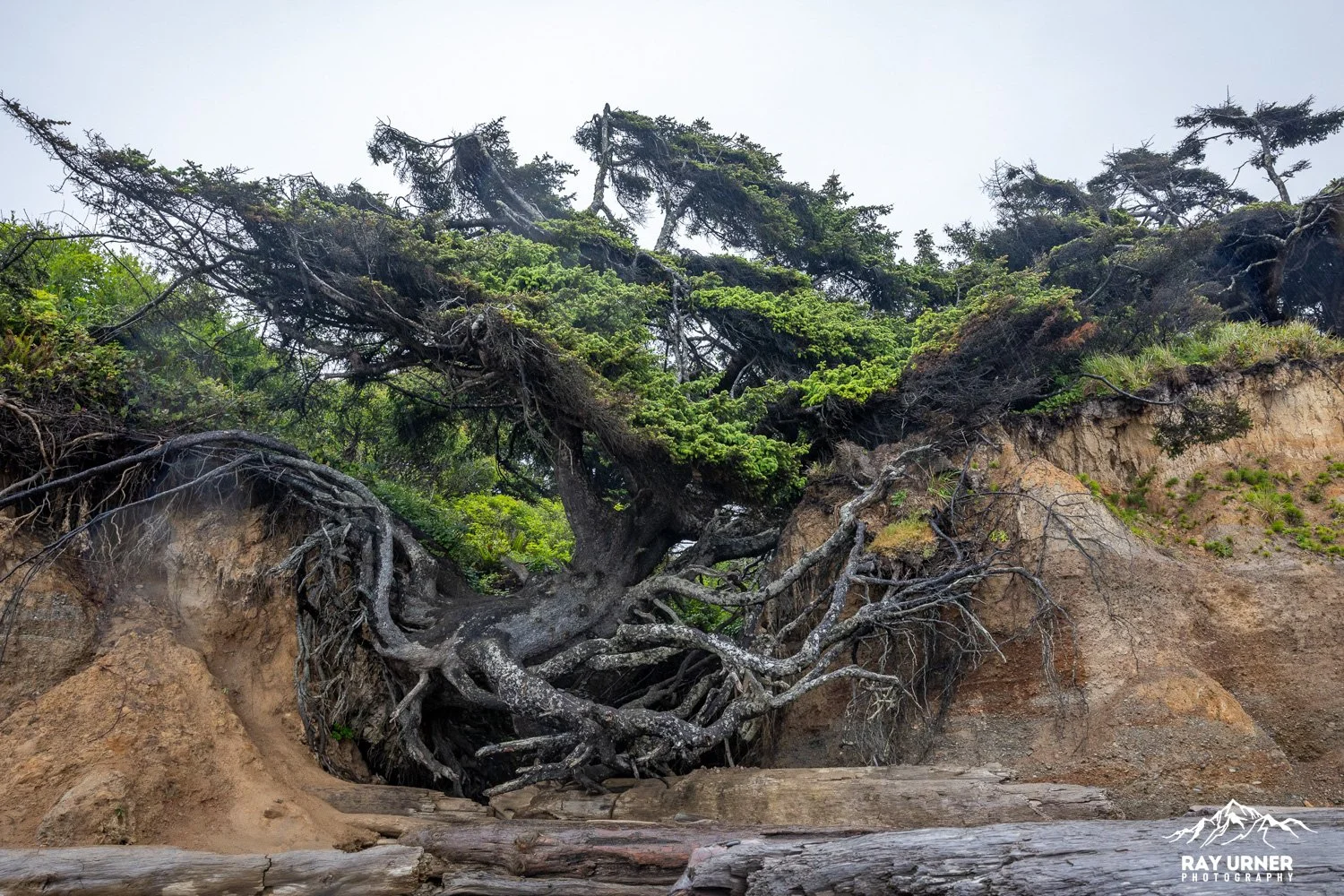
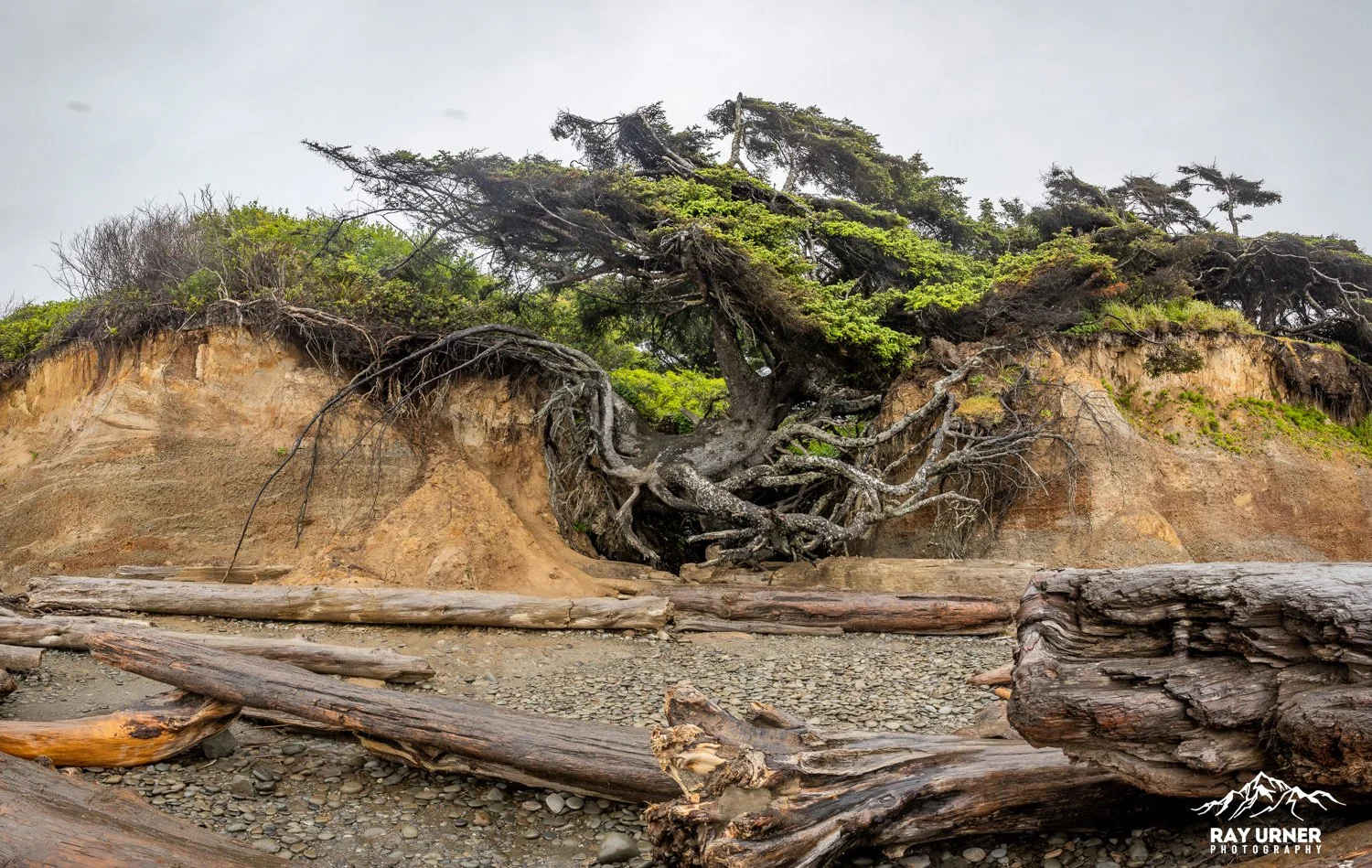
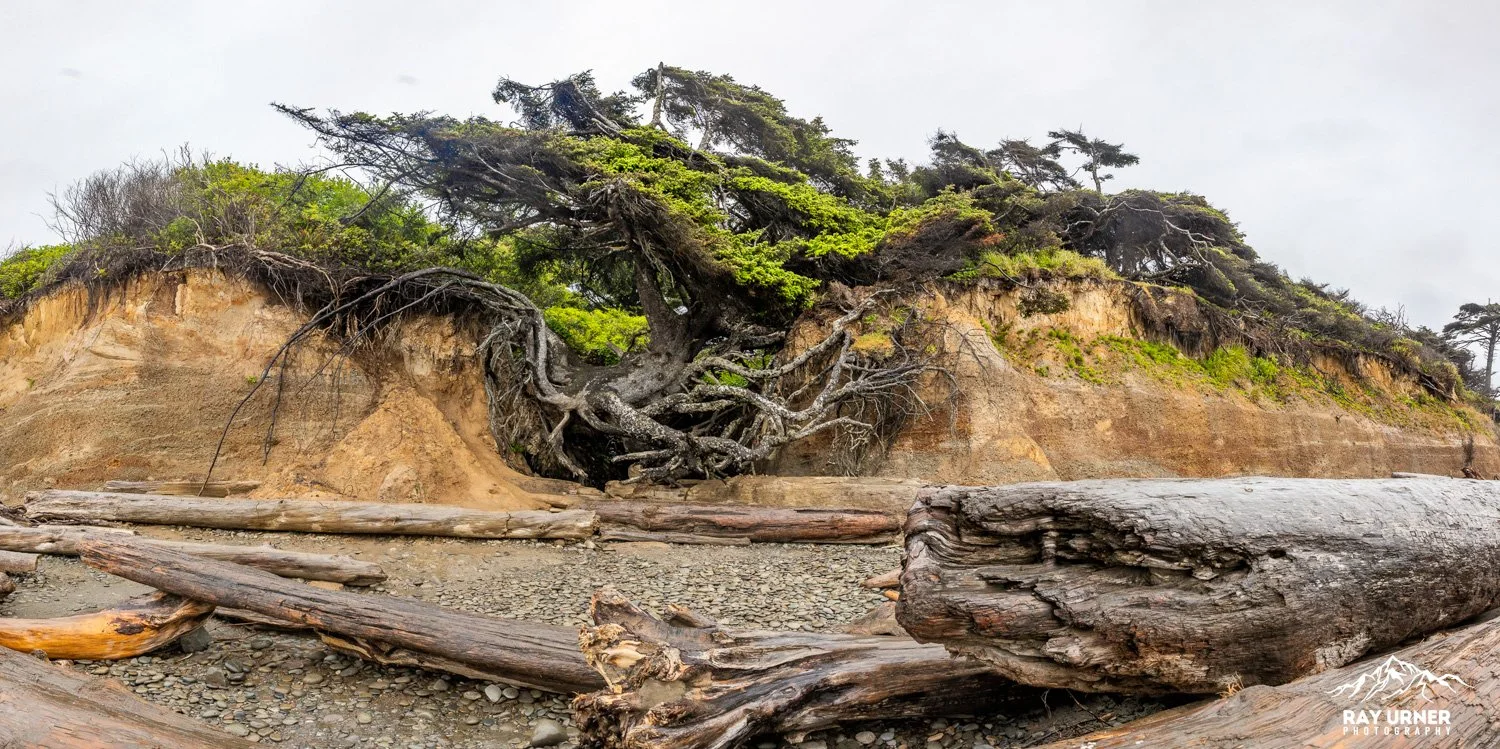
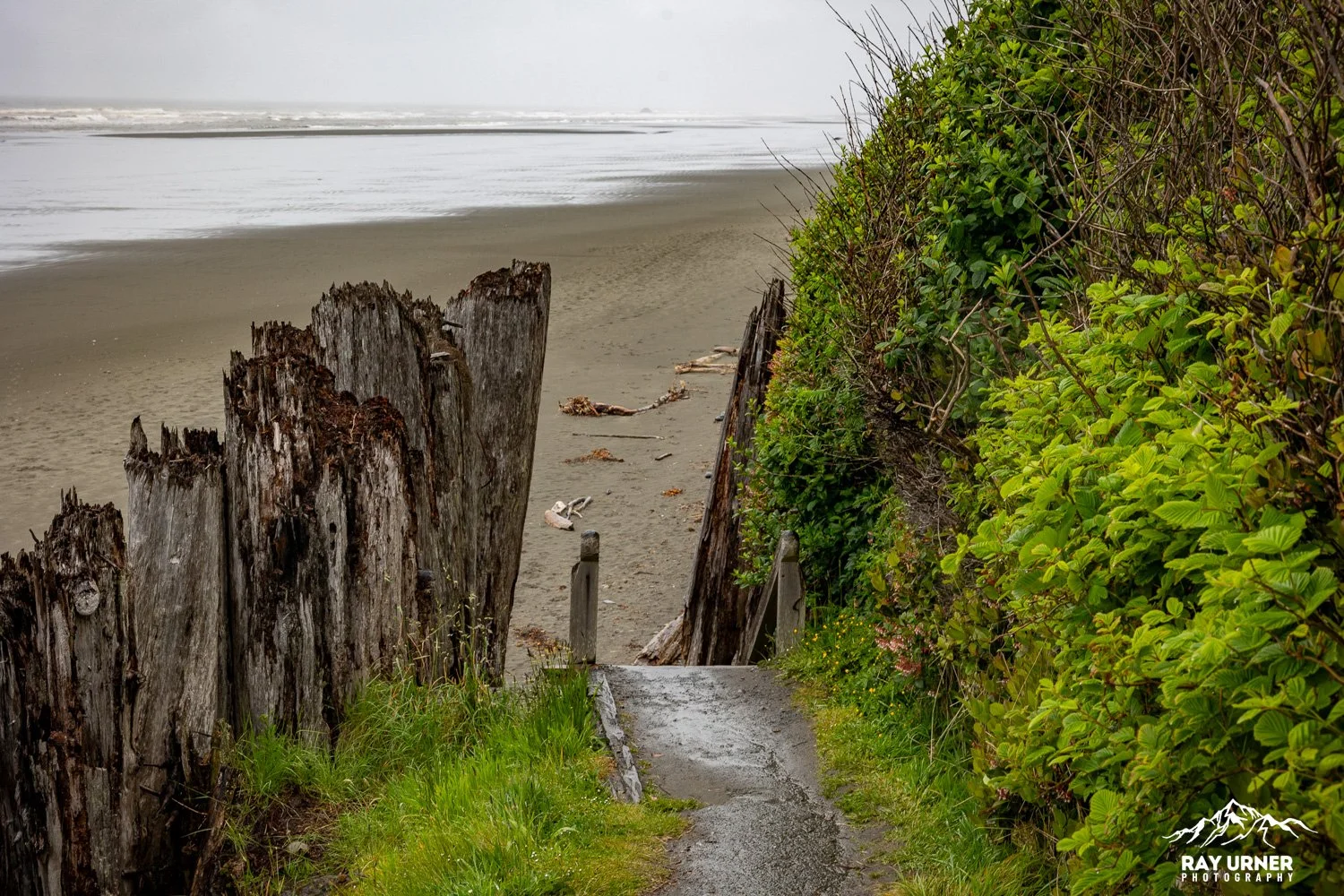
The Tree of Life is located on Kalaloch Beach, just south of the Kalaloch Campground and Lodge, along Highway 101 in Olympic National Park. From the campground, it’s a short walk down a sandy bluff to the beach. There’s no marked trail—just follow the beach north from the main access point near the campground restrooms. Within a few minutes, you’ll see it: a massive spruce suspended above a gaping void, its roots exposed and reaching across open air.
The beach is easily accessible year-round, but during heavy rain, the sand can become slick and the stream beneath the tree may swell. Waterproof boots and a rain jacket are essential.
The Tree of Life: A Natural Wonder
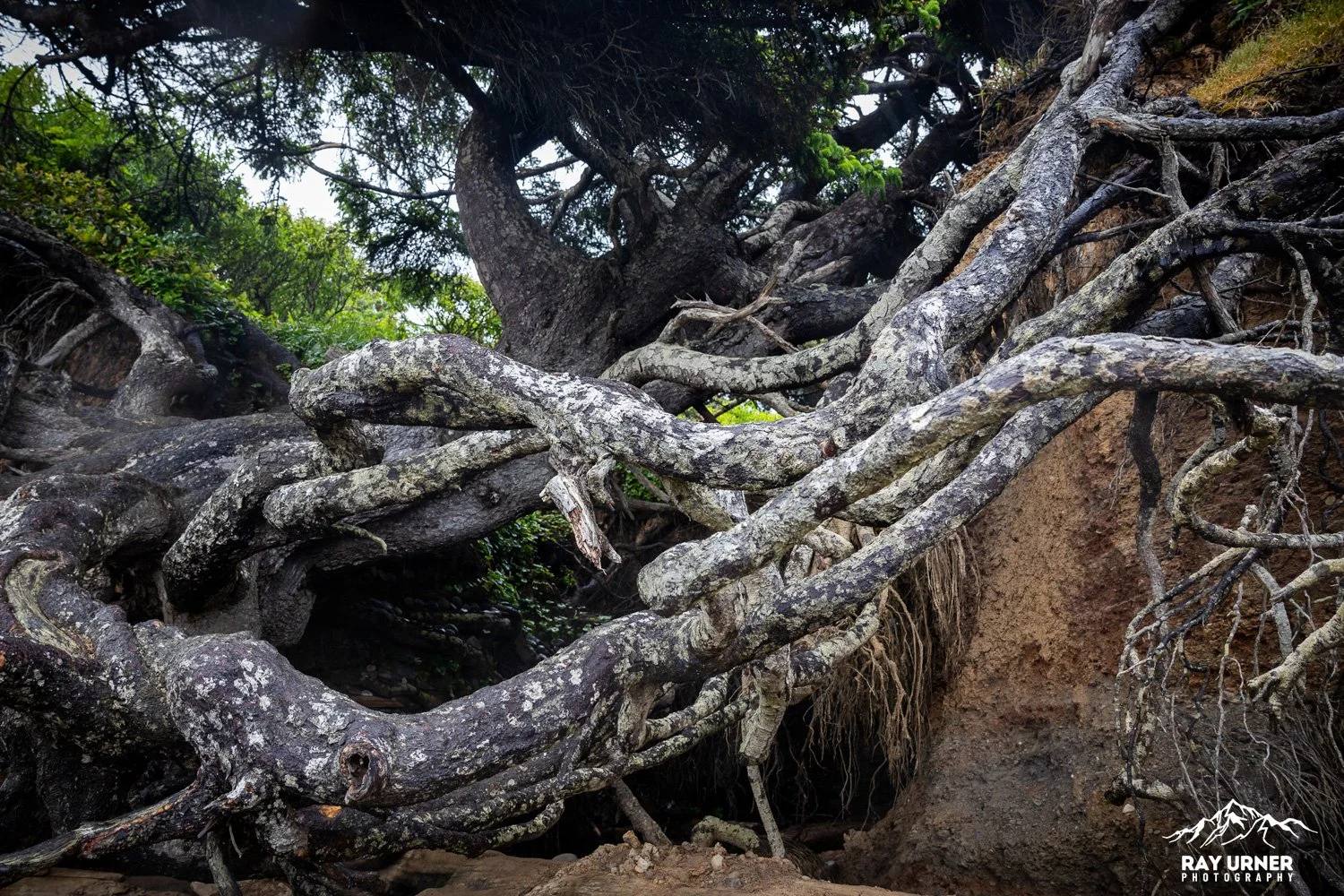
This Sitka spruce has become a symbol of resilience. Despite having most of its roots exposed and suspended in midair, it continues to thrive. The stream beneath it has eroded the soil over time, creating a cave-like void. Yet the tree holds on, its roots stretched like sinews across the gap.
Scientists and visitors alike marvel at its survival. It’s a living metaphor for endurance, adaptation, and the quiet power of nature. And in the rain, when the world feels hushed and elemental, that metaphor becomes even more profound.
Photographing in the Rain: Mood, Drama, and Texture
Rain transforms Kalaloch Beach into a moody, cinematic landscape. The overcast sky acts as a natural softbox, diffusing light and enhancing the deep greens and earthy browns of the tree and surrounding cliffs.
1. Embrace the Atmosphere: The rain adds a layer of emotion to your images. Mist clings to the cliffs, water droplets bead on the tree’s roots, and the ocean takes on a silvery sheen. Use this to create images that feel raw and elemental.
2. Use a Tripod and Lens Hood: Low light and wet conditions call for stability. A tripod allows for longer exposures, while a lens hood helps keep raindrops off your glass. Bring a microfiber cloth to wipe your lens frequently.
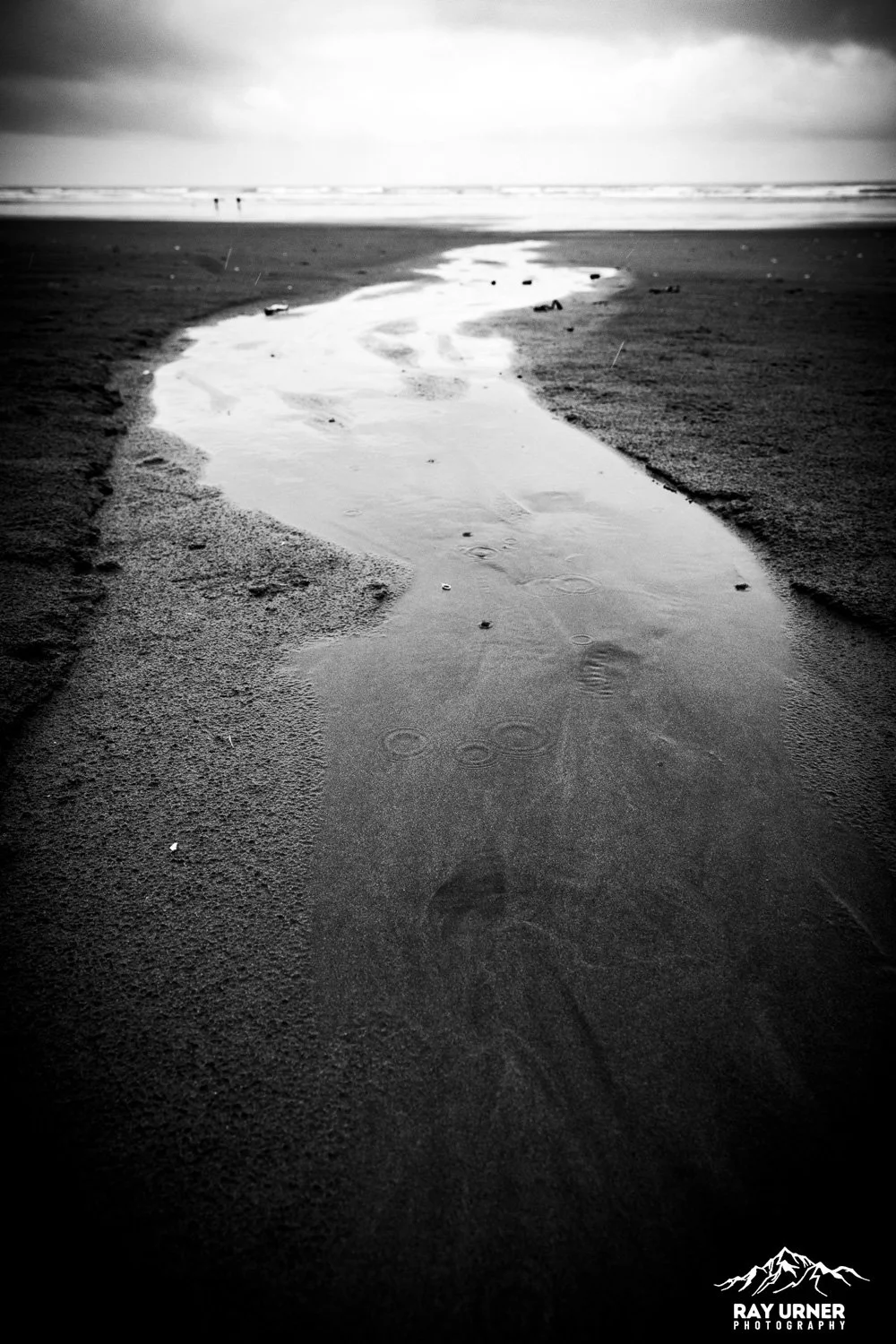
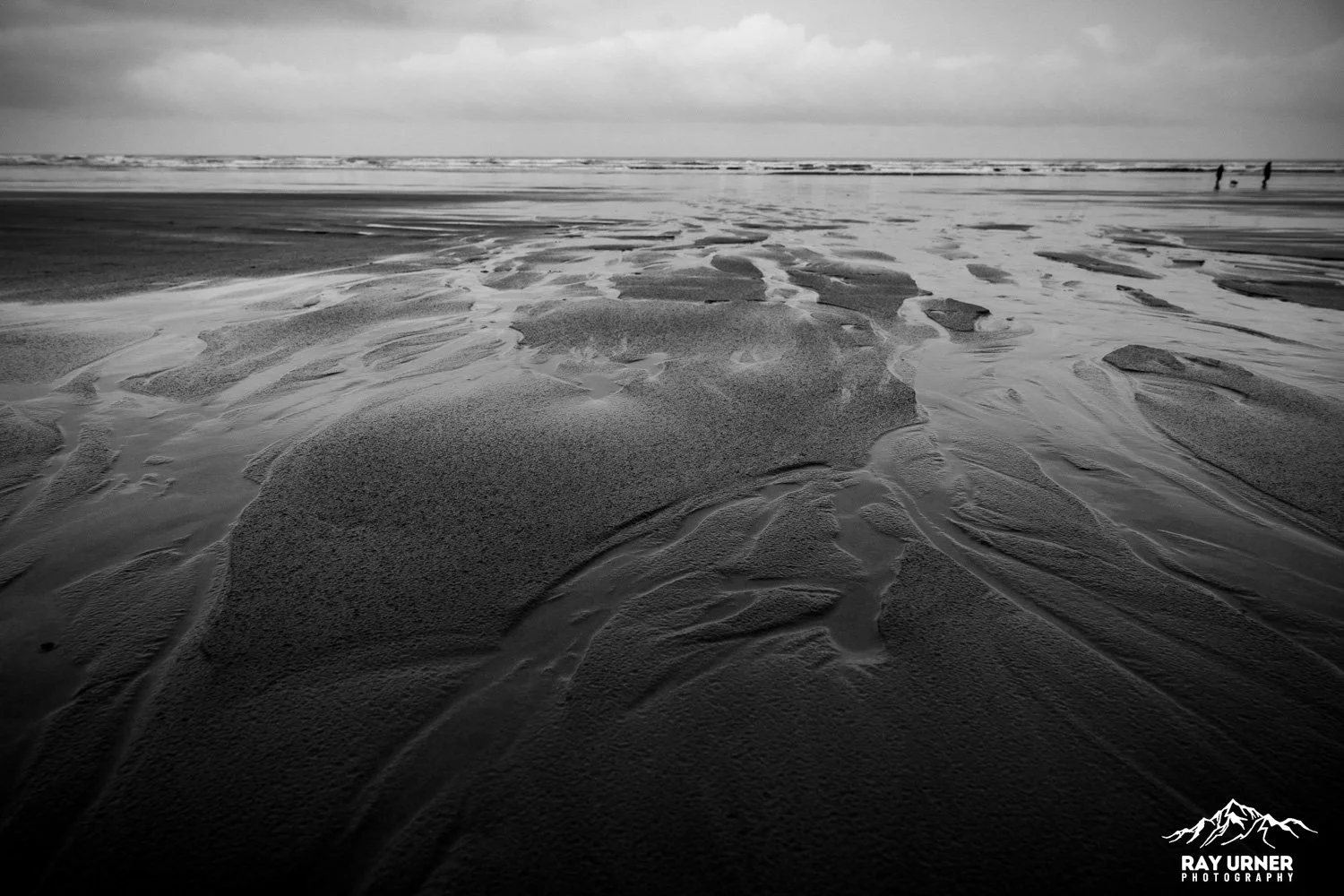
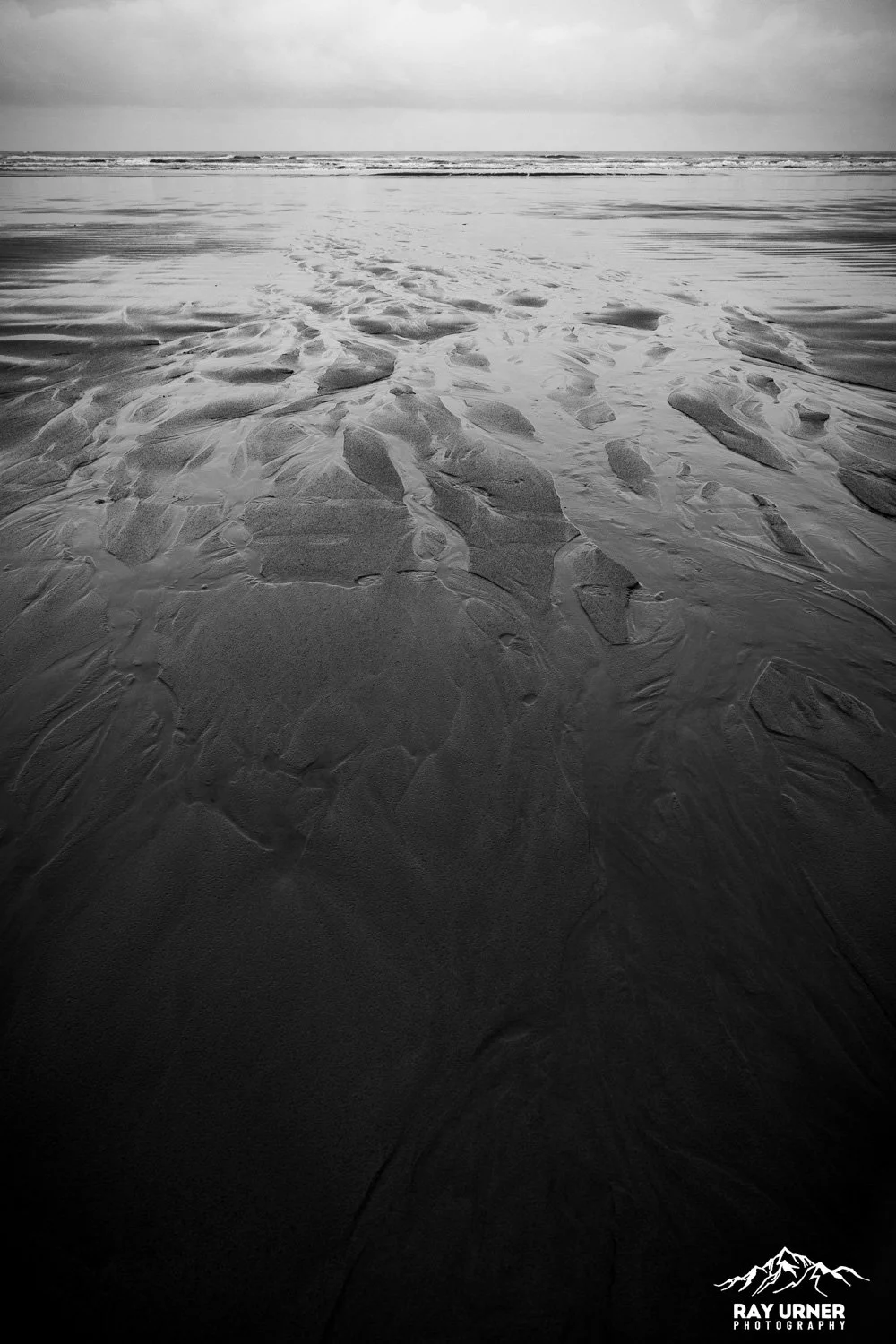
3. Go Wide, Then Go Close: Start with a wide-angle lens to capture the full drama of the tree suspended above the void. Then switch to a zoom or macro lens to focus on details: the texture of the roots, the rivulets of water running through the sand, or the interplay of rain and bark.
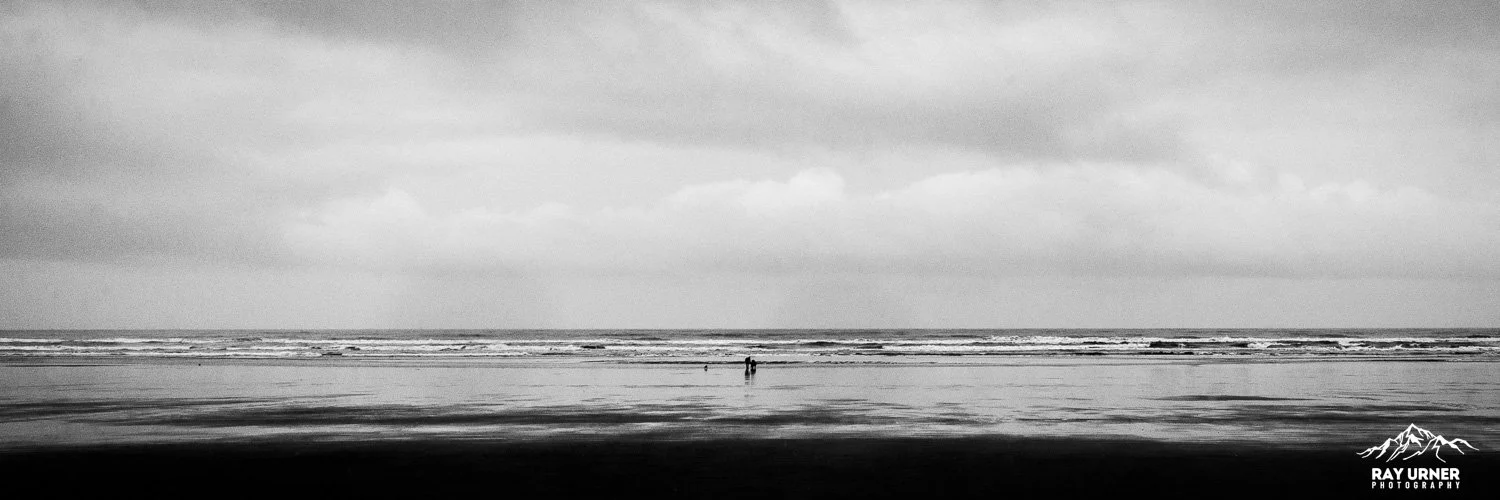
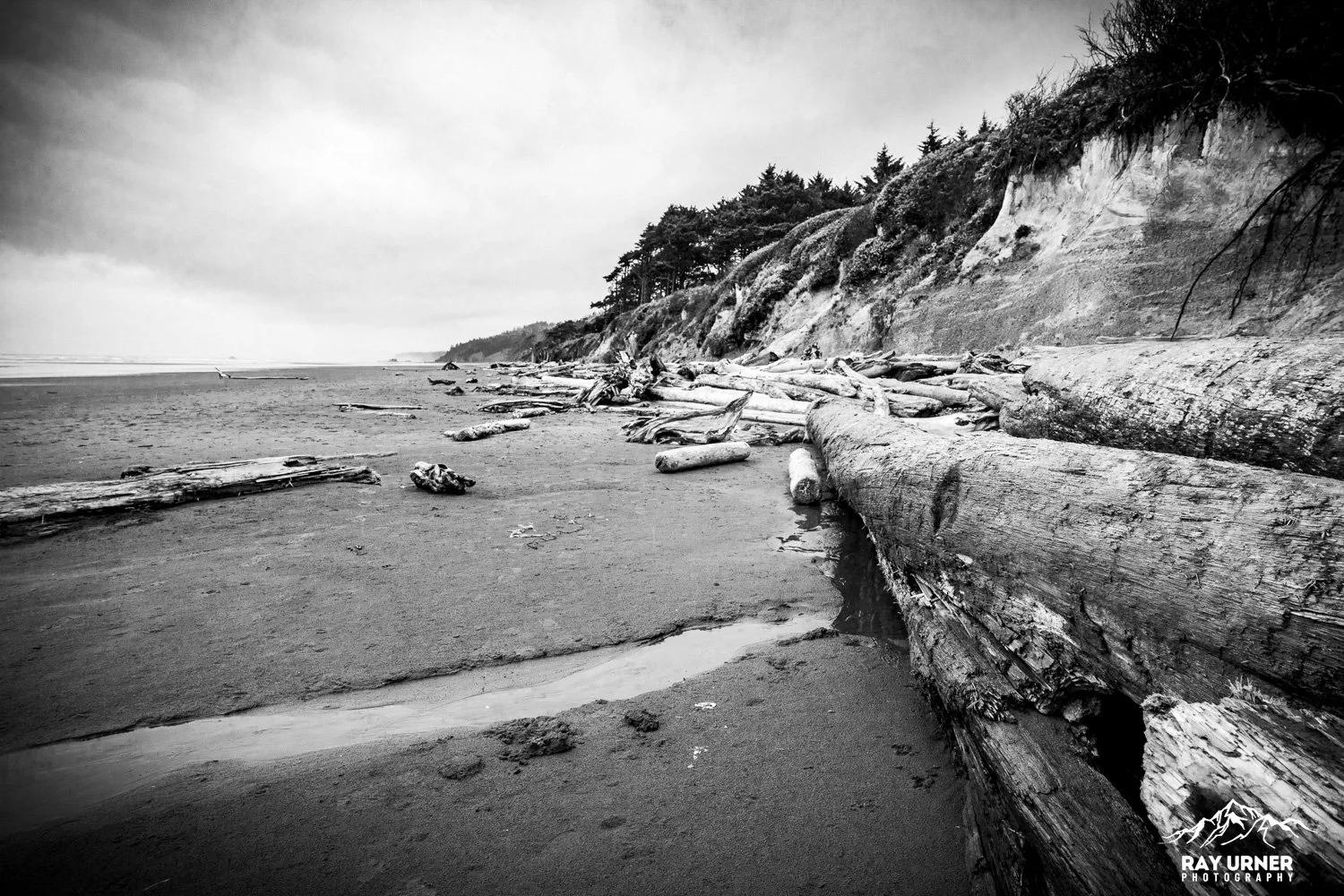
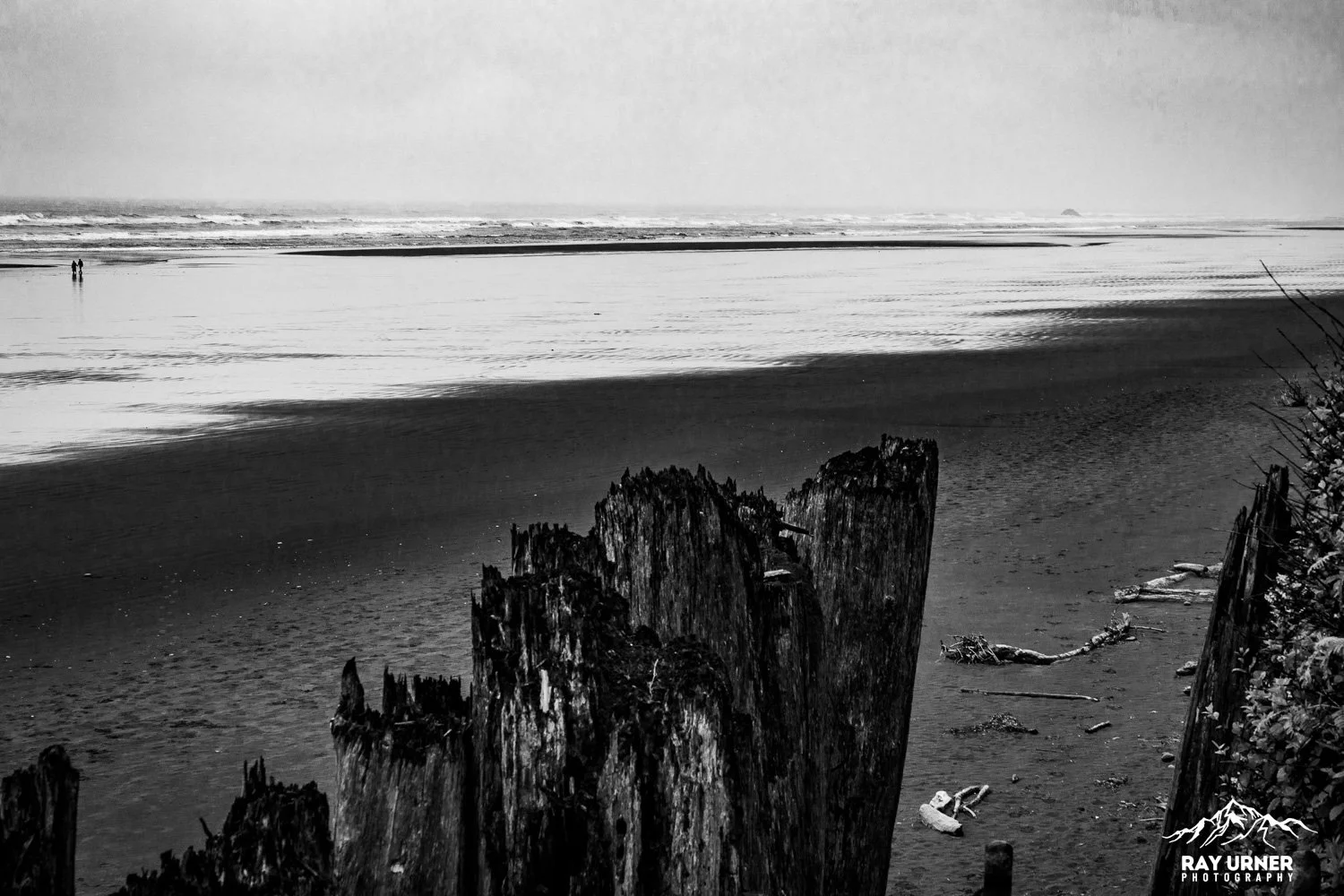
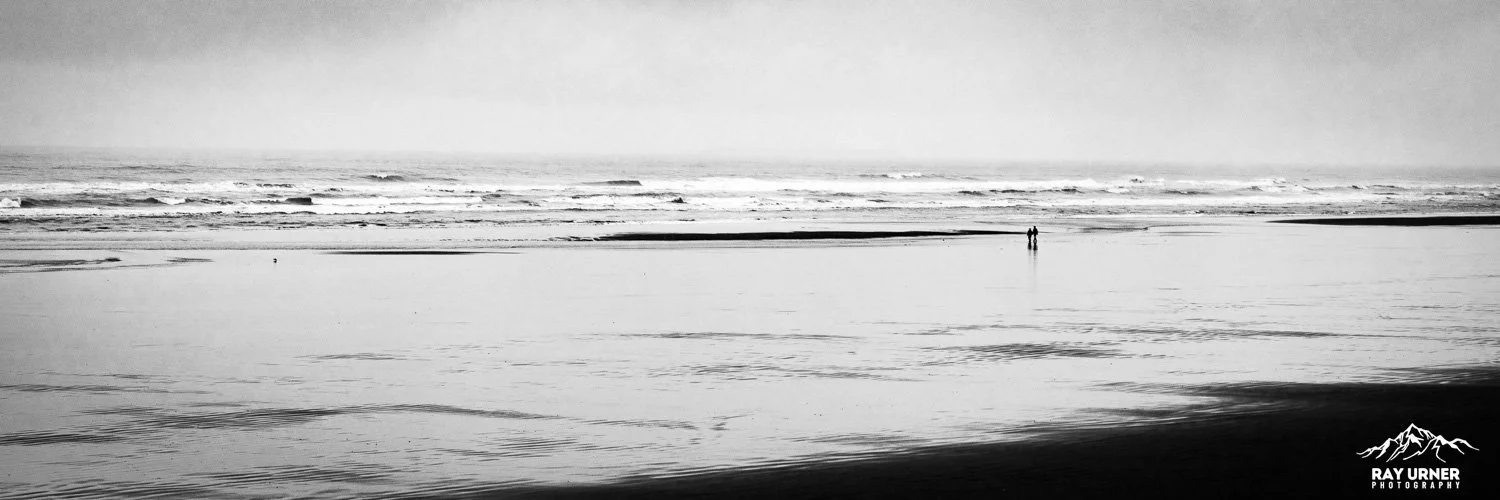
4. Black and White for Impact: Rainy scenes often translate beautifully into monochrome. The contrast between the dark roots and pale sky, the textures of wet wood and stone—these elements shine in black and white.
Kalaloch Beach: A Coastal Canvas
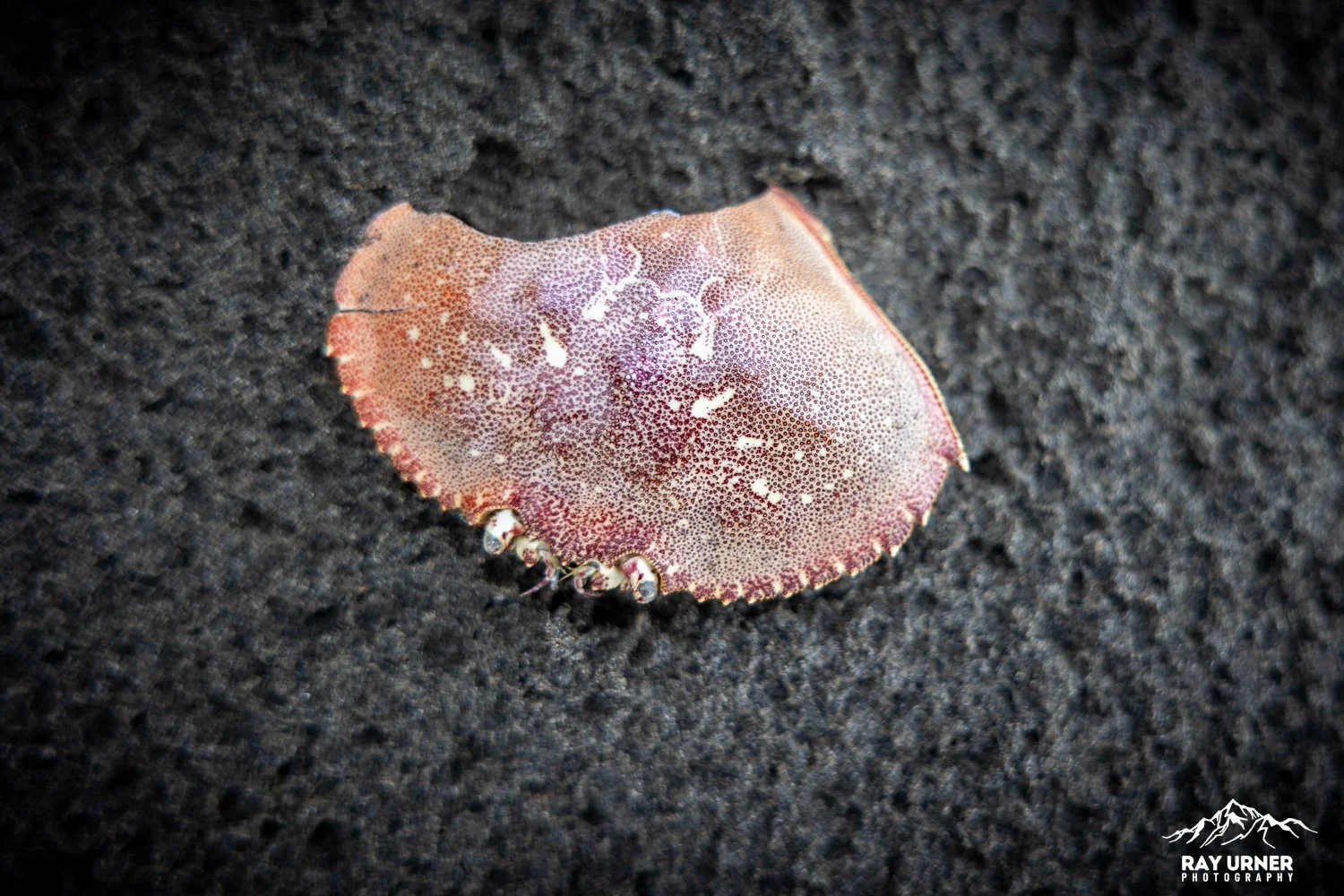
Beyond the Tree of Life, Kalaloch Beach offers endless photographic opportunities. Massive driftwood logs, tide pools, and dramatic surf all come alive in the rain. The beach is part of Olympic National Park’s 73-mile wilderness coastline—one of the longest undeveloped stretches in the contiguous U.S.
Final Thoughts: A Shot Worth the Storm
Photographing the Tree of Life in the rain isn’t just about capturing a unique image—it’s about experiencing the Pacific Northwest in its truest form. The wind, the waves, the mist—
it all becomes part of the story. And when you frame that tenacious tree against a stormy sky, you’re not just taking a photo. You’re capturing a moment of wild, defiant beauty.