
Heart Rock
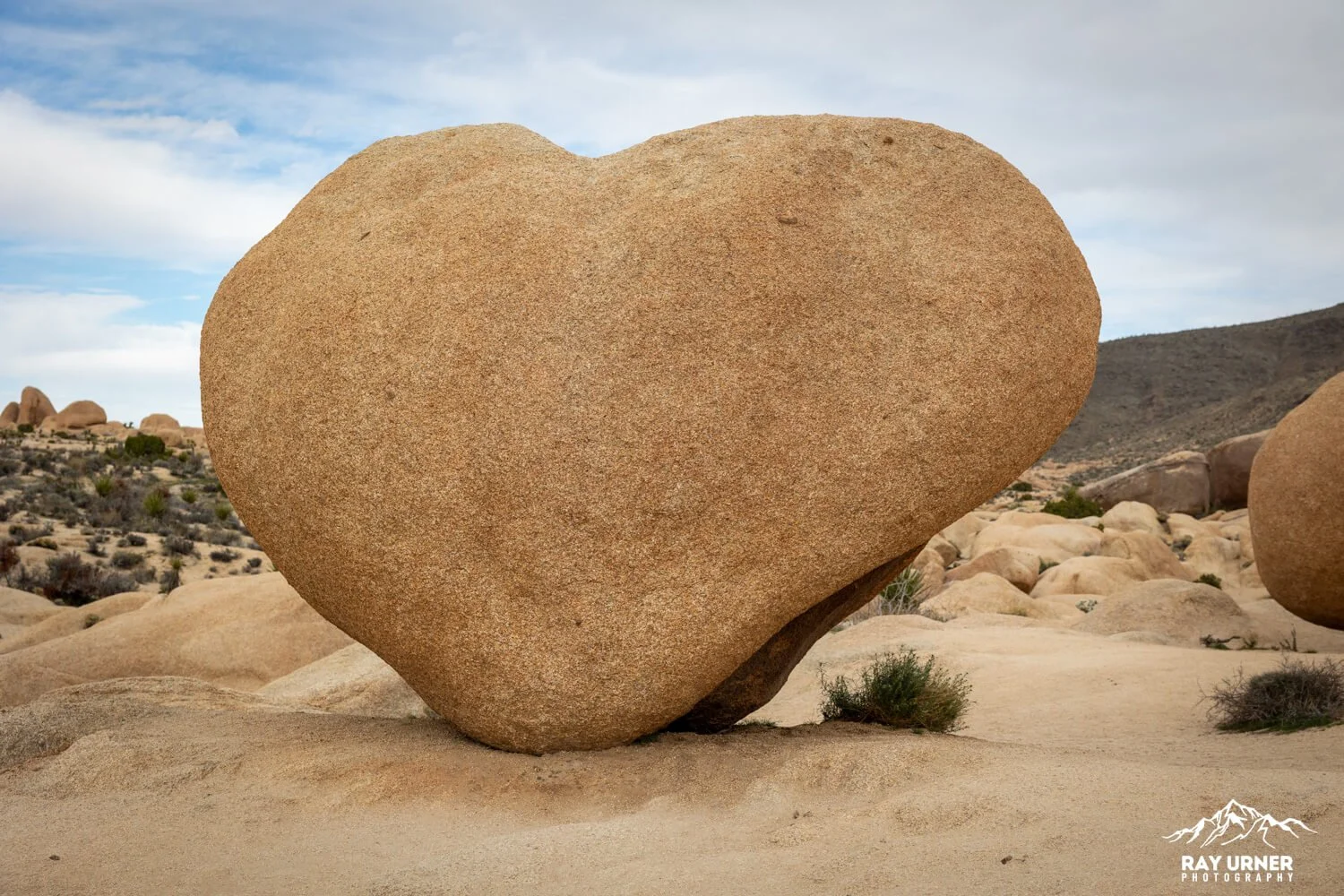
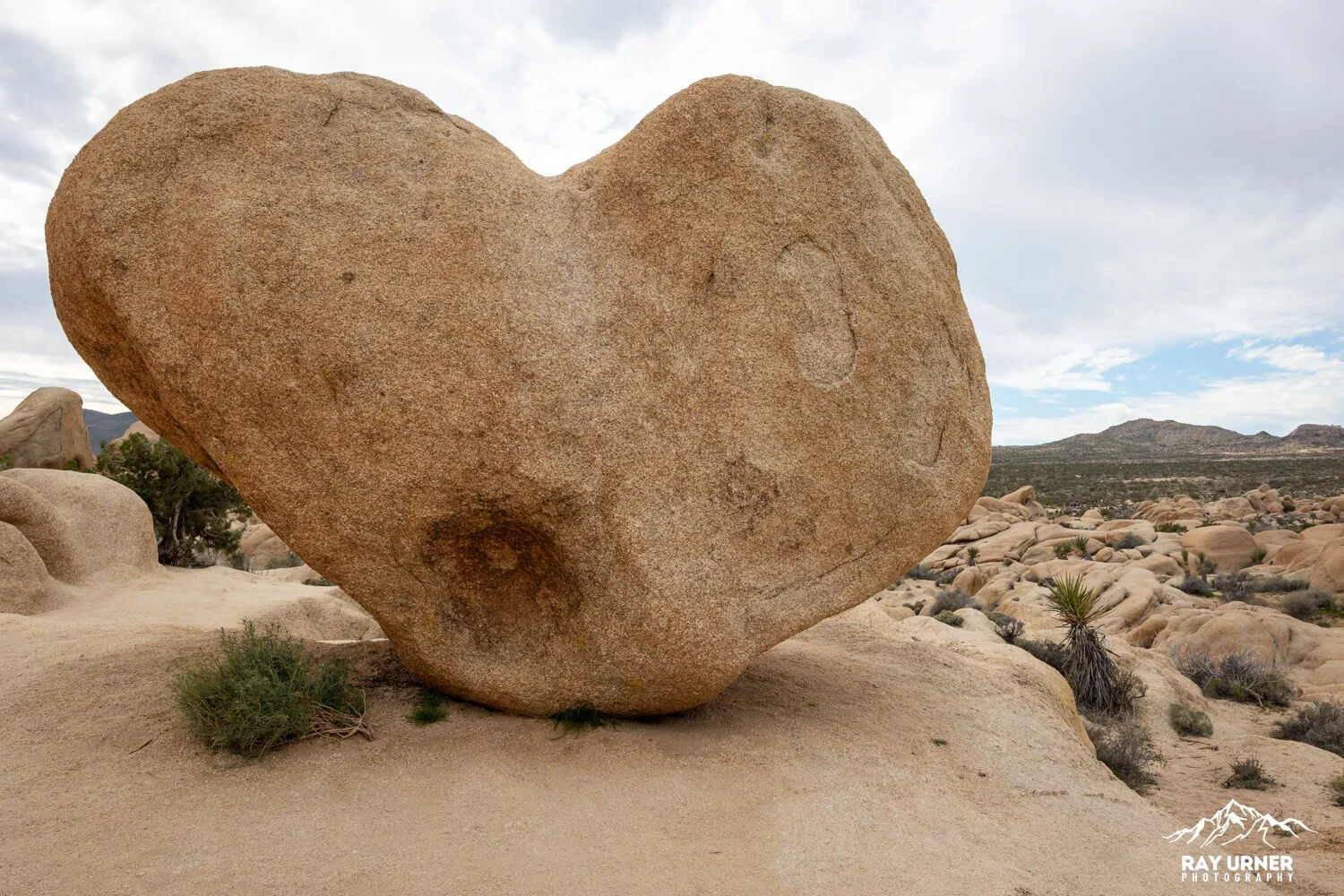
Heart Rock is a naturally heart‑shaped monzogranite boulder, about 10 feet tall, standing upright in a boulder field on the east side of Joshua Tree National Park. It’s one of the park’s most visually striking “object rocks,” along with Skull Rock, Split Rock, and Elephant Rock.
Originally unmarked, it used to be difficult to find — but the park now has official trail markers pointing toward it, making it accessible as an easy, short walk.
Heart Rock — Hiking and Photography Guide
Trailhead
Use the Arch Rock Nature Trail parking lot off Pinto Basin Road
This is the shared access point with Arch Rock if you wanted to do that one too.
Parking is limited; arrive early on weekends.
Distance & Time
~1.7 miles round‑trip
30–45 minutes
Easy terrain with very mild elevation gain (~108 ft)
How to Recognize Heart Rock
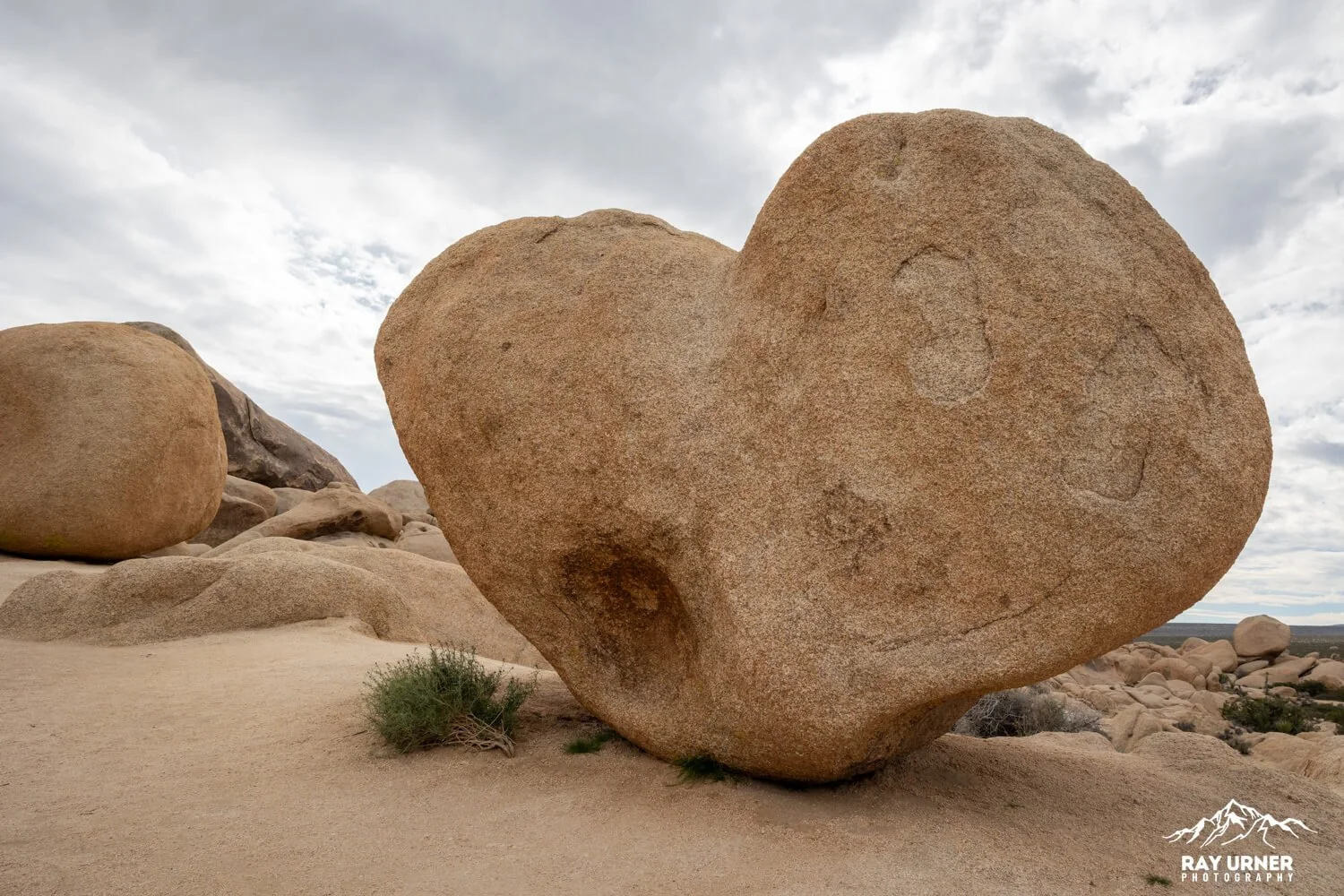
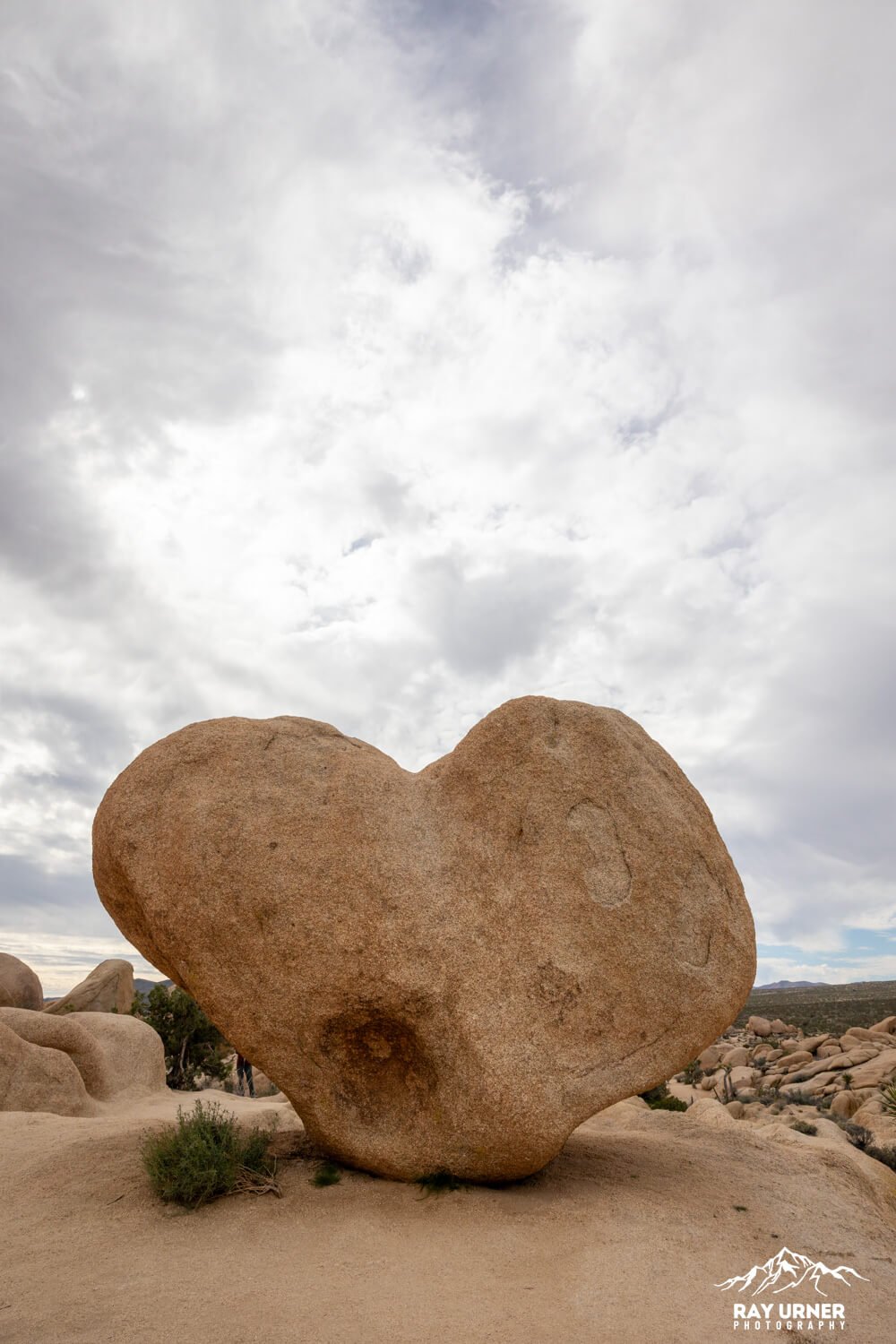
Heart Rock stands vertically in a boulder cluster and is shaped like a clean, symmetrical heart — pointed base, rounded lobes at the top.
It’s big enough to stand in front of for scale shots.
You can spot it from a distance once you’re close — it rises above its boulder field.
Best Photography Angles
1. Straight‑On Portrait Angle
Stand directly facing the heart. This is the classic Instagram‑famous angle.
Use 24–50mm for natural perspective.
Works in nearly all light due to the neutral granite color.
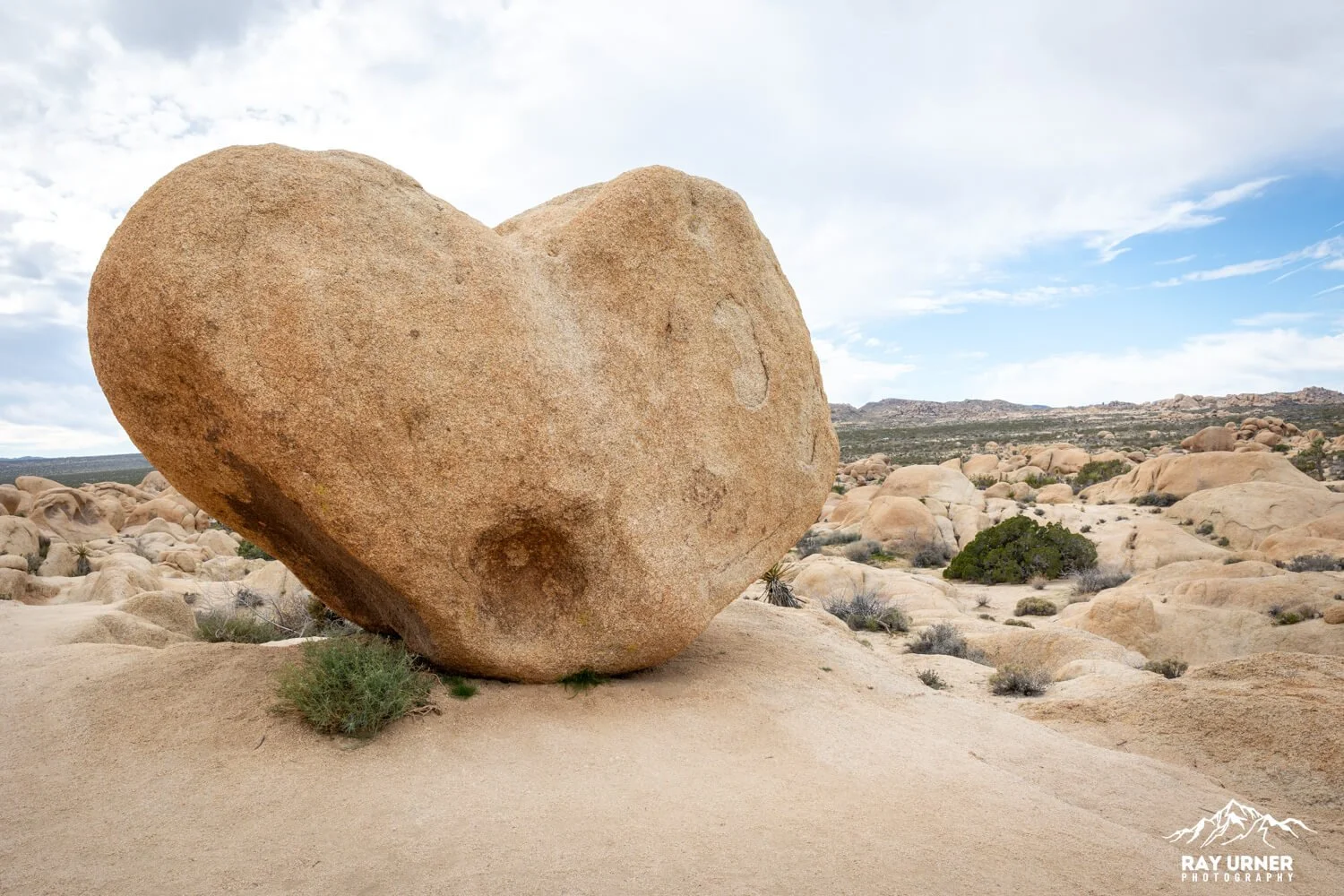
2. Side‑Angle Compression
Move slightly right or left to exaggerate the depth of the heart cleft.
Use 70–135mm to compress foreground and background boulders.
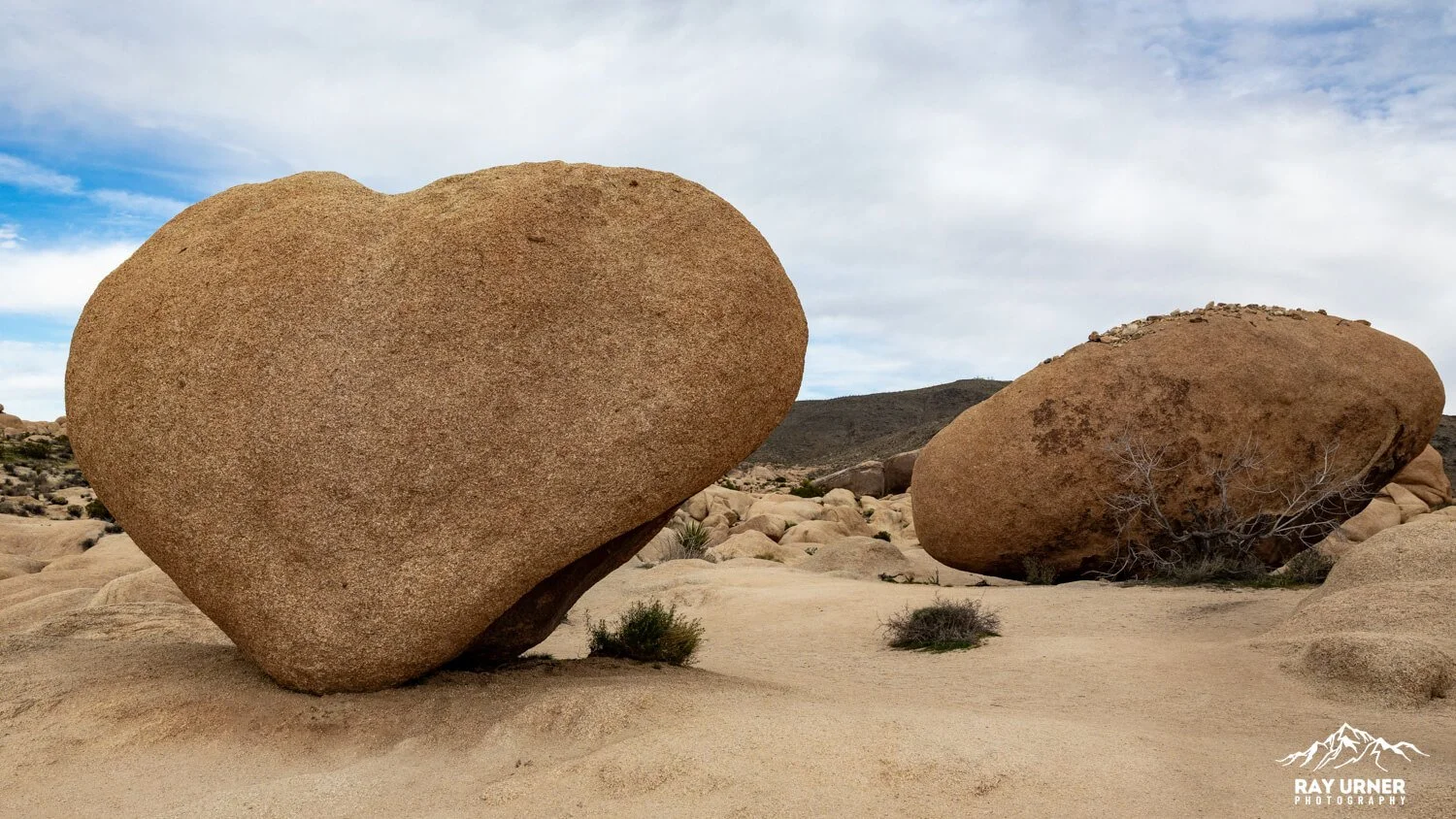
3. Foreground‑Framed Heart
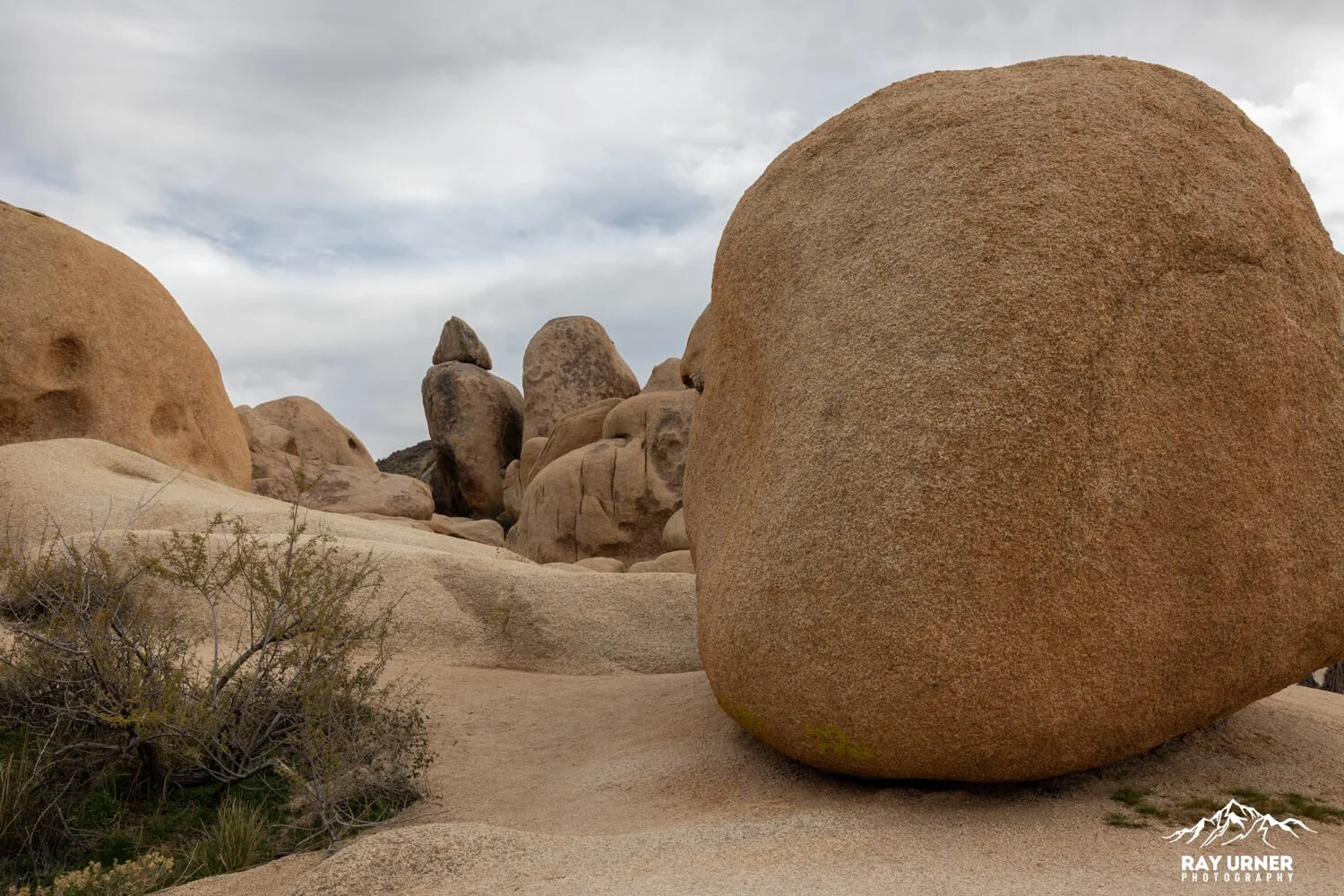
Use nearby smaller boulders or desert shrubs as foreground for depth.
Heart Rock sits in a boulder field, making it easy to layer compositions.
4. Human‑in‑Frame Scale Shot
A model or hiker standing at the base emphasizes its vertical height (~10 ft). I couldn’t do this one, because somehow, I had Heart Rock to myself!
Light & Timing
Early morning: Soft, even light; easiest for low‑contrast granite.
Late afternoon: Warm light adds glow to the monzogranite (best for color).
Midday: Still perfectly workable — the heart shape is defined by shadow edges, which actually stand out in harsher light.
On‑the‑Ground Navigation Tips
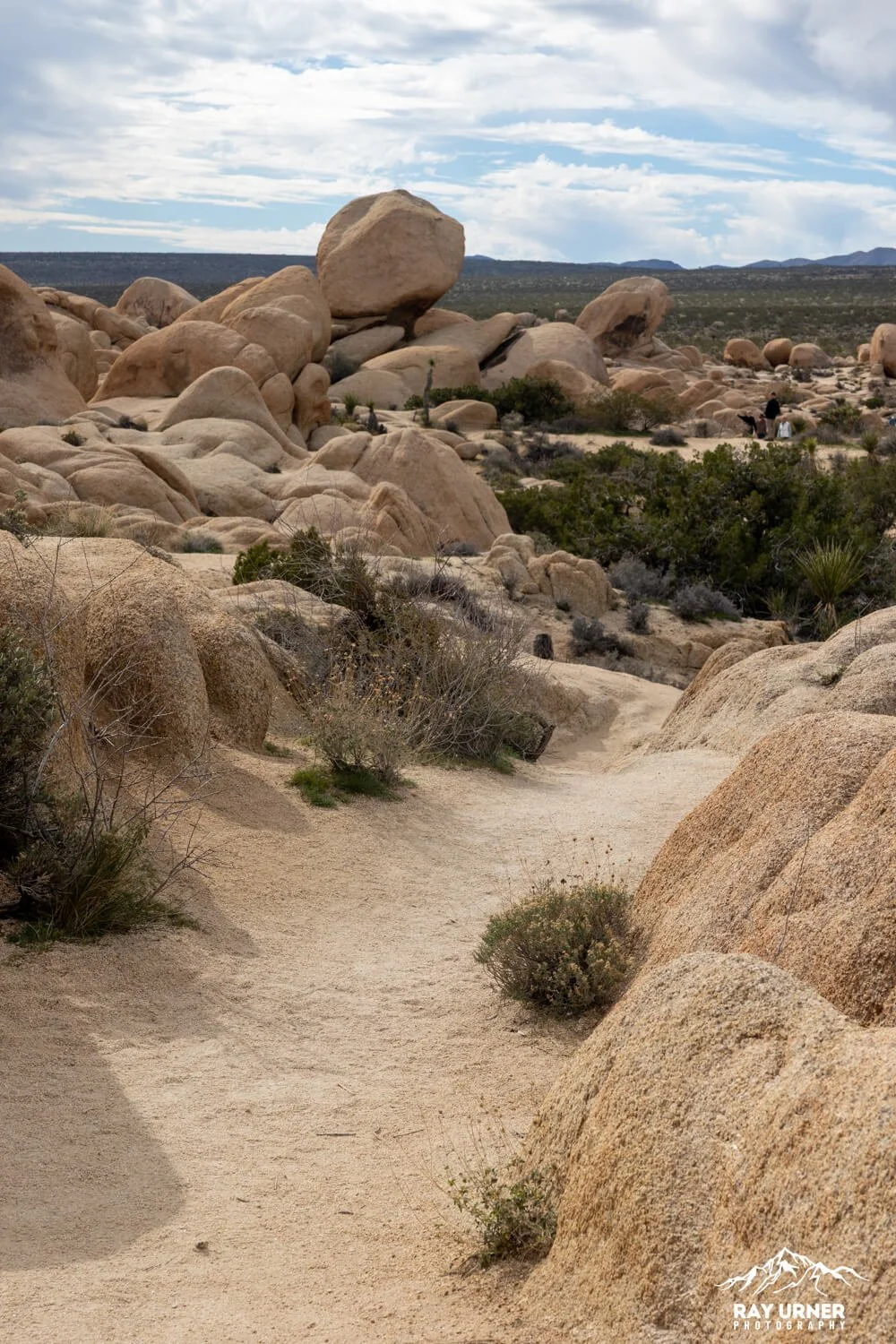
The trail is well‑marked, so navigation is easy.
If you find yourself scrambling over large boulders, you’ve drifted too far right — stay left of the main boulder field for the easiest approach.
No shade, no water — bring hydration even for the short outing.
Ecology Highlights
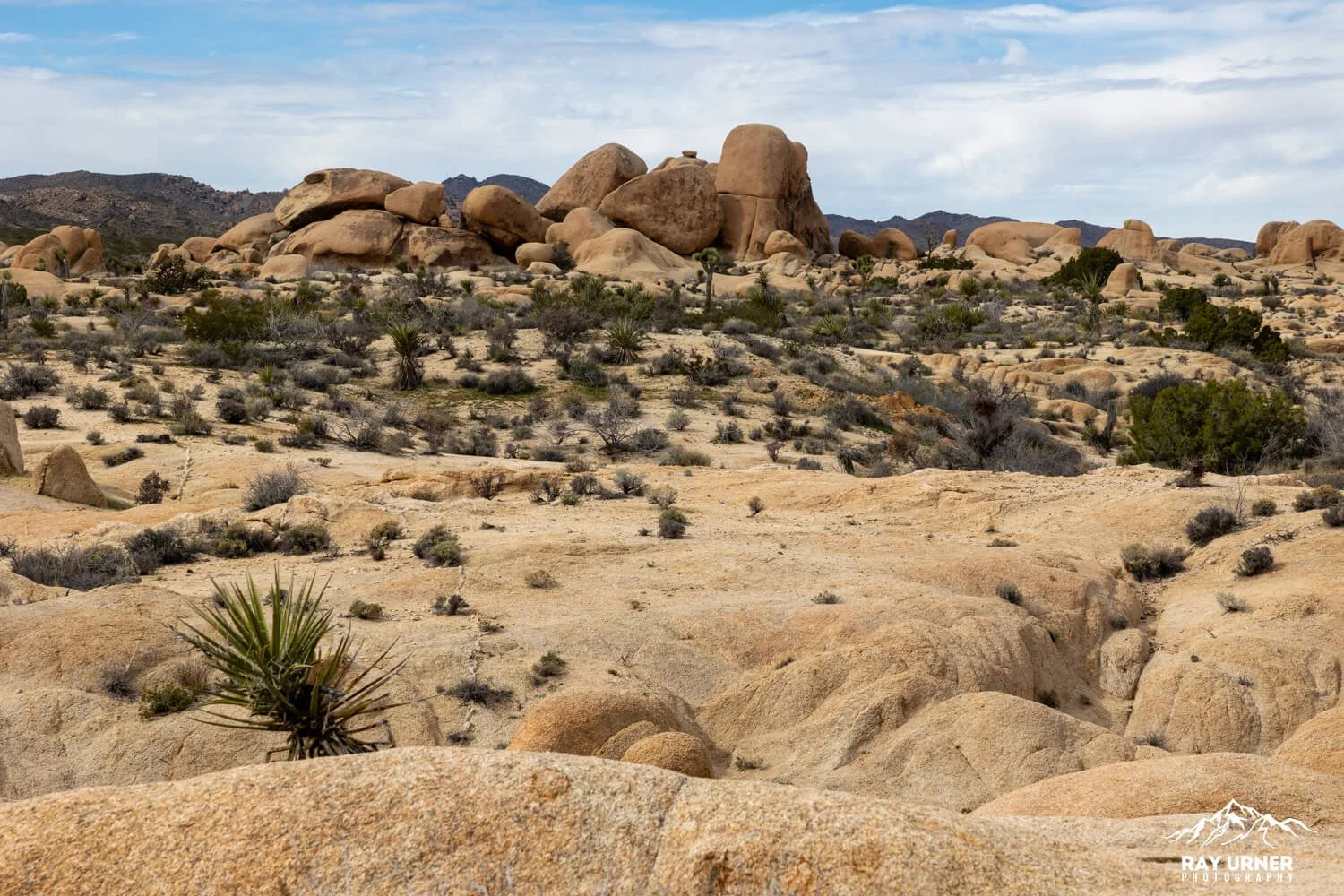
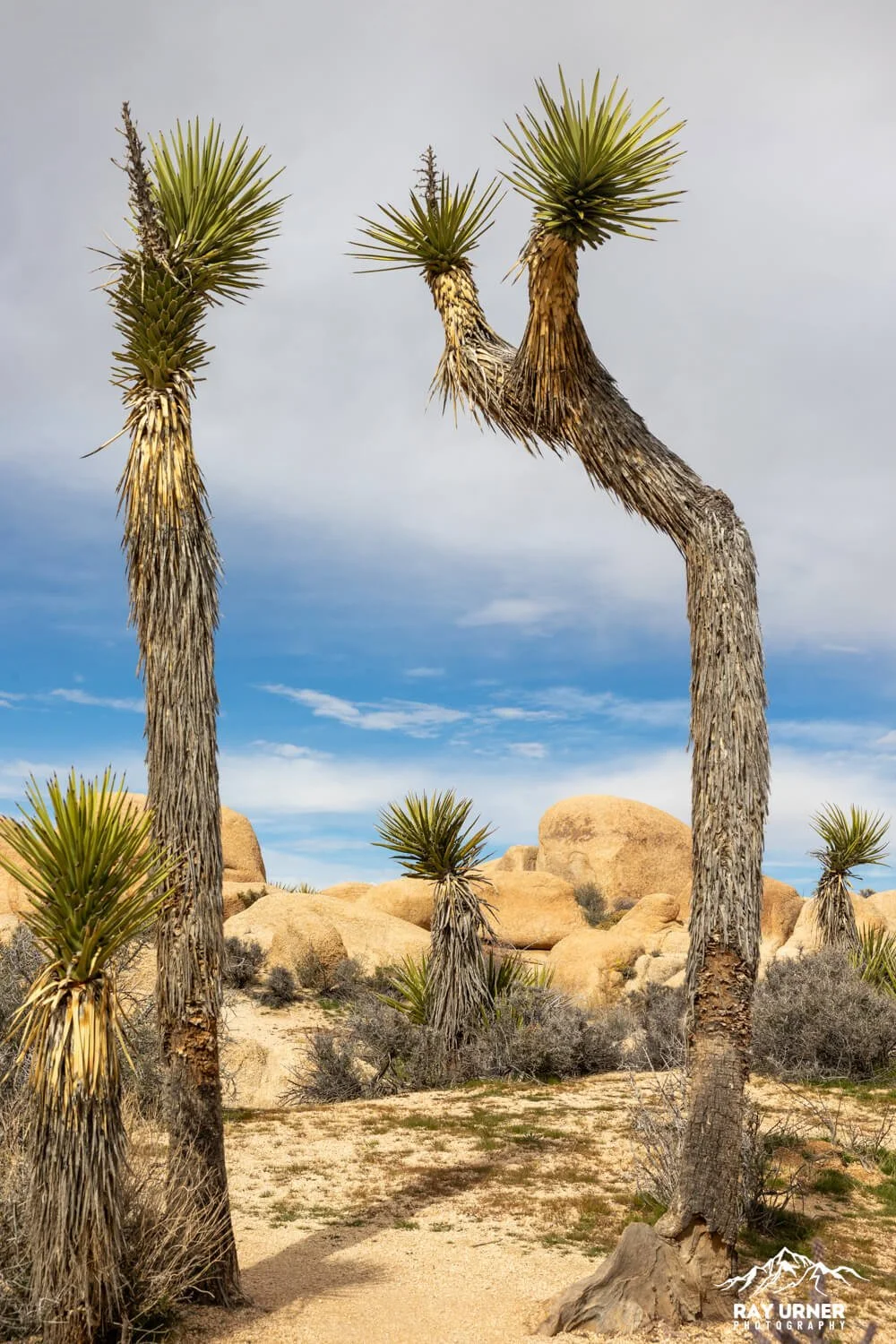
Along the walk you’ll see typical Pinto Basin and White Tank granite‑belt vegetation:
Creosote
Cholla
Mojave yucca
Desert almond and desert shrubs near the washes
(These are good for foreground elements in wide scenic shots!)
Logistics
Restrooms: Vault toilets at nearby White Tank Campground.
Permits: Standard park entry pass.
Pets: Not allowed.
Cell signal: None — download maps ahead of time.
Pro Tips
Heart Rock is quieter than Skull Rock or Arch Rock — especially early morning.
Because it’s vertical and tall, you can shoot low‑angle hero portraits without lens distortion if you pull back slightly and use a longer focal length.
This is one of the few formations in the park that works equally well in cloudy or harsh light — the heart shape is structural, not light‑dependent.
Keep exploring the immediate boulder field — several smaller “hidden heart” shapes exist nearby.