
Skull Rock
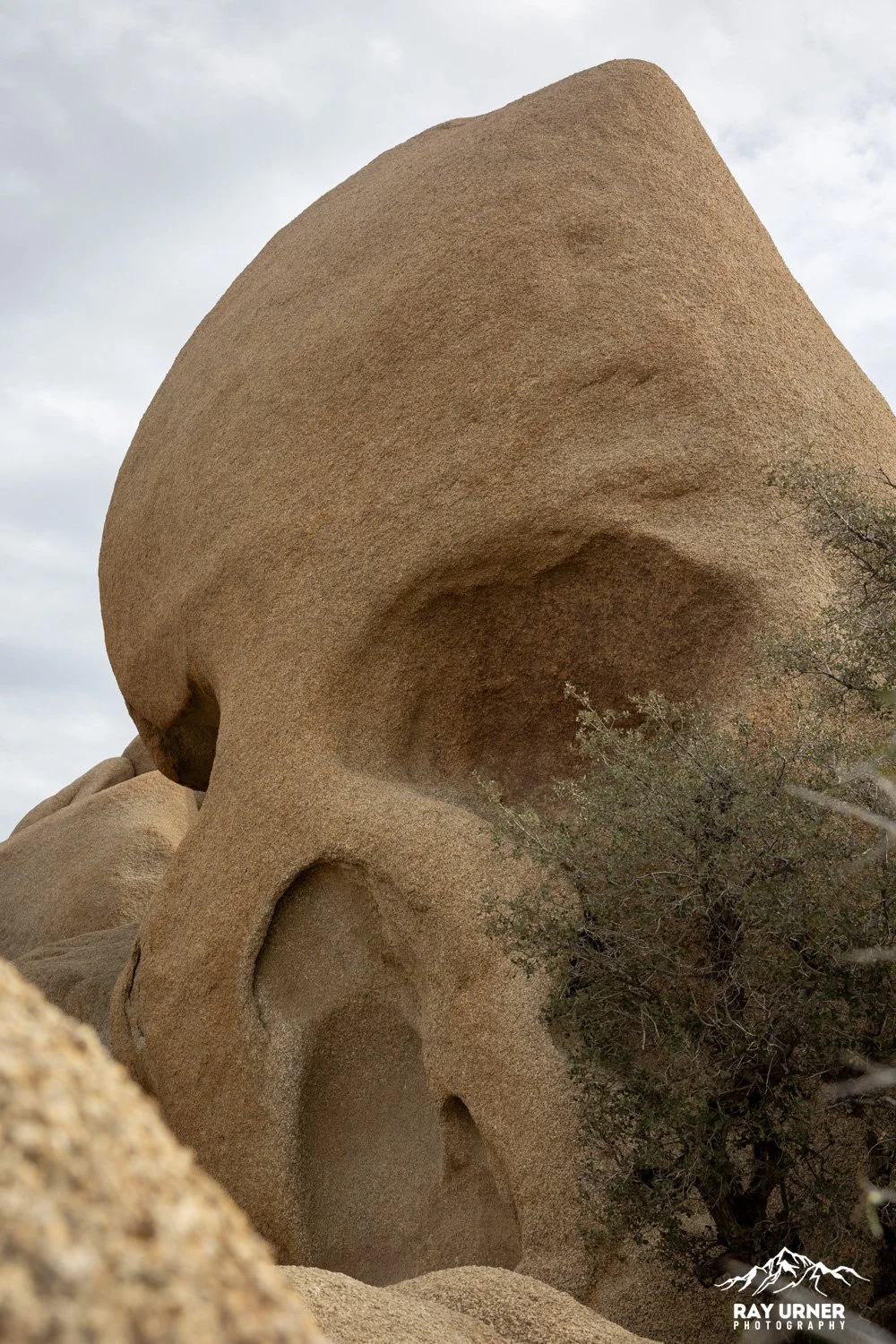
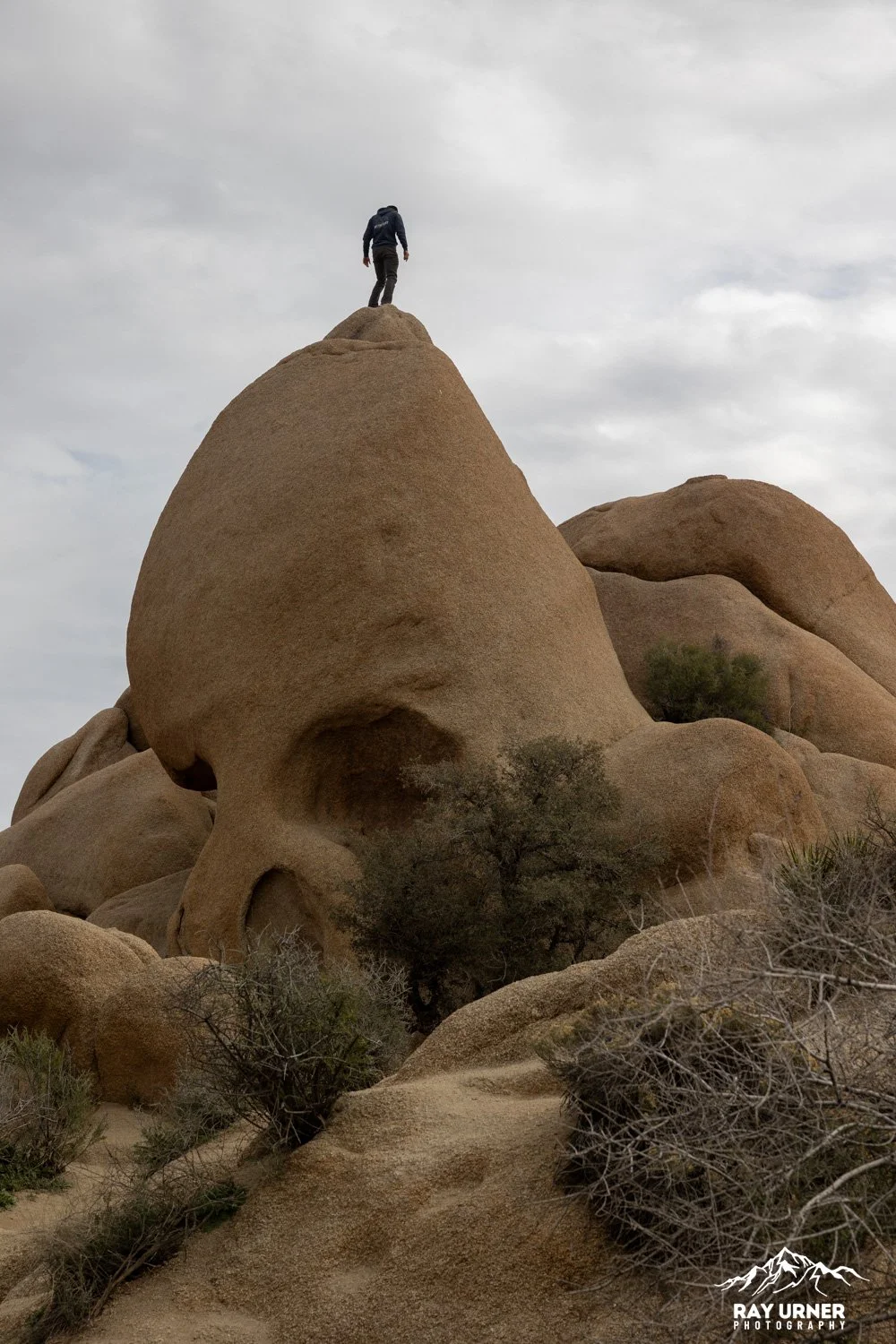
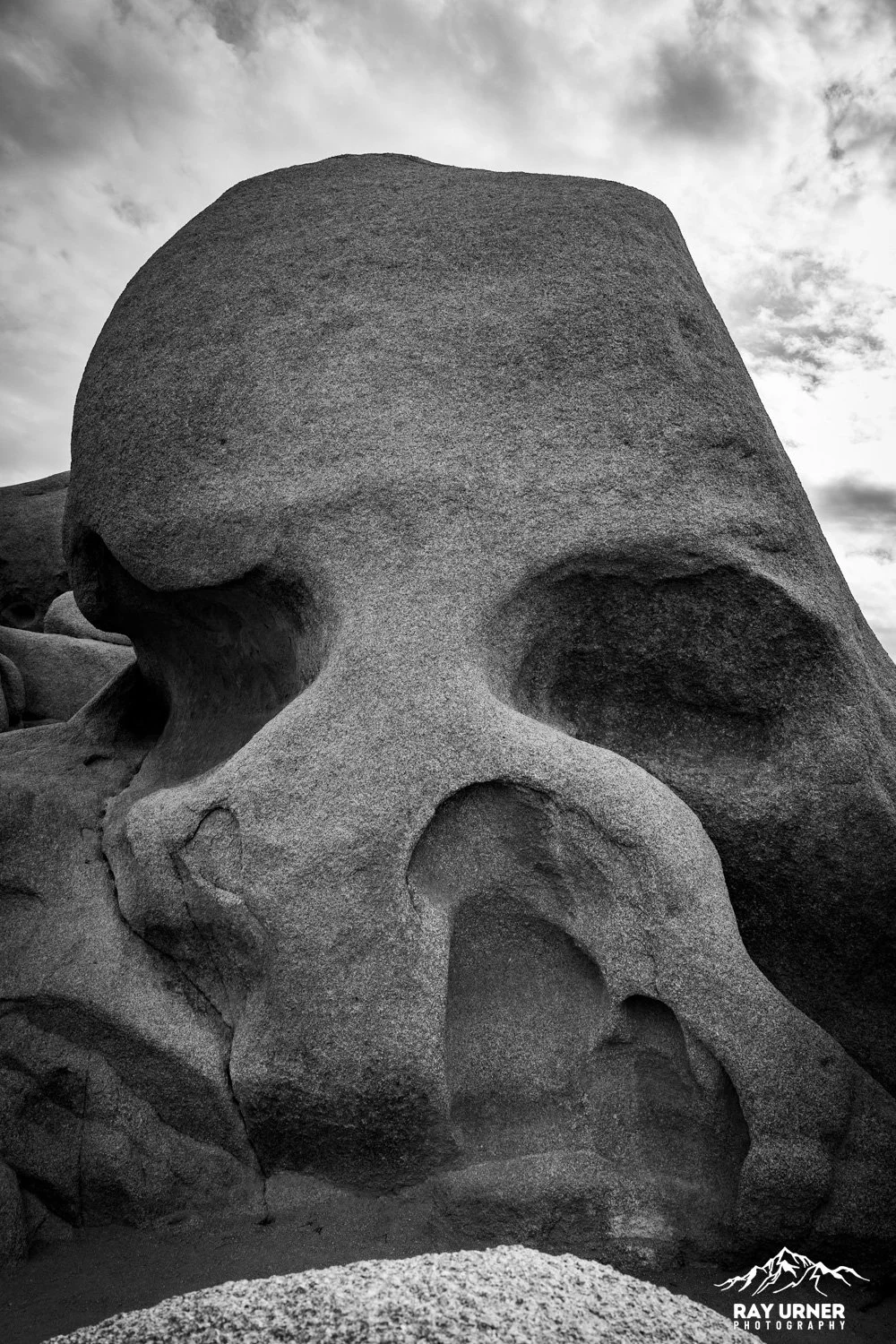
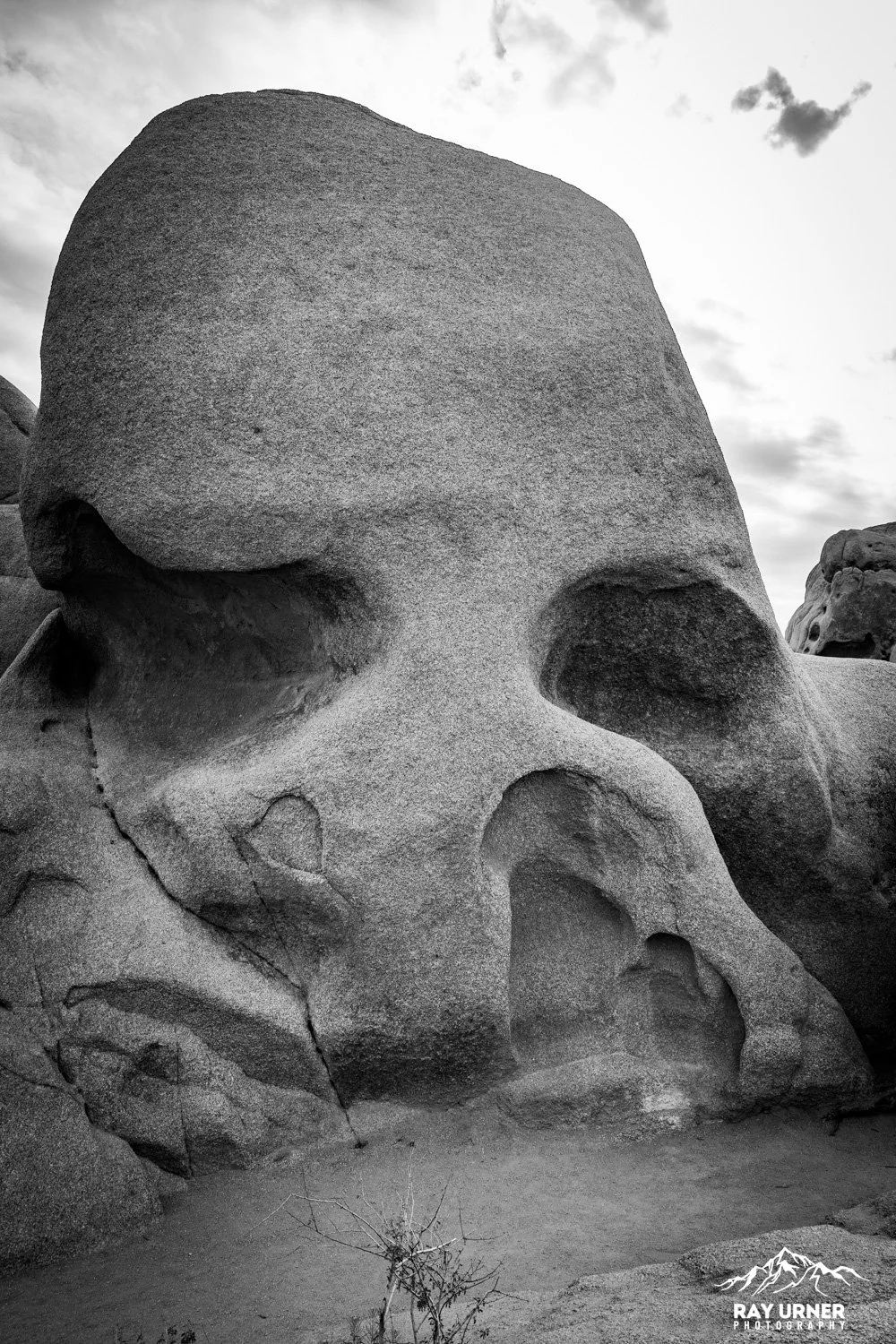
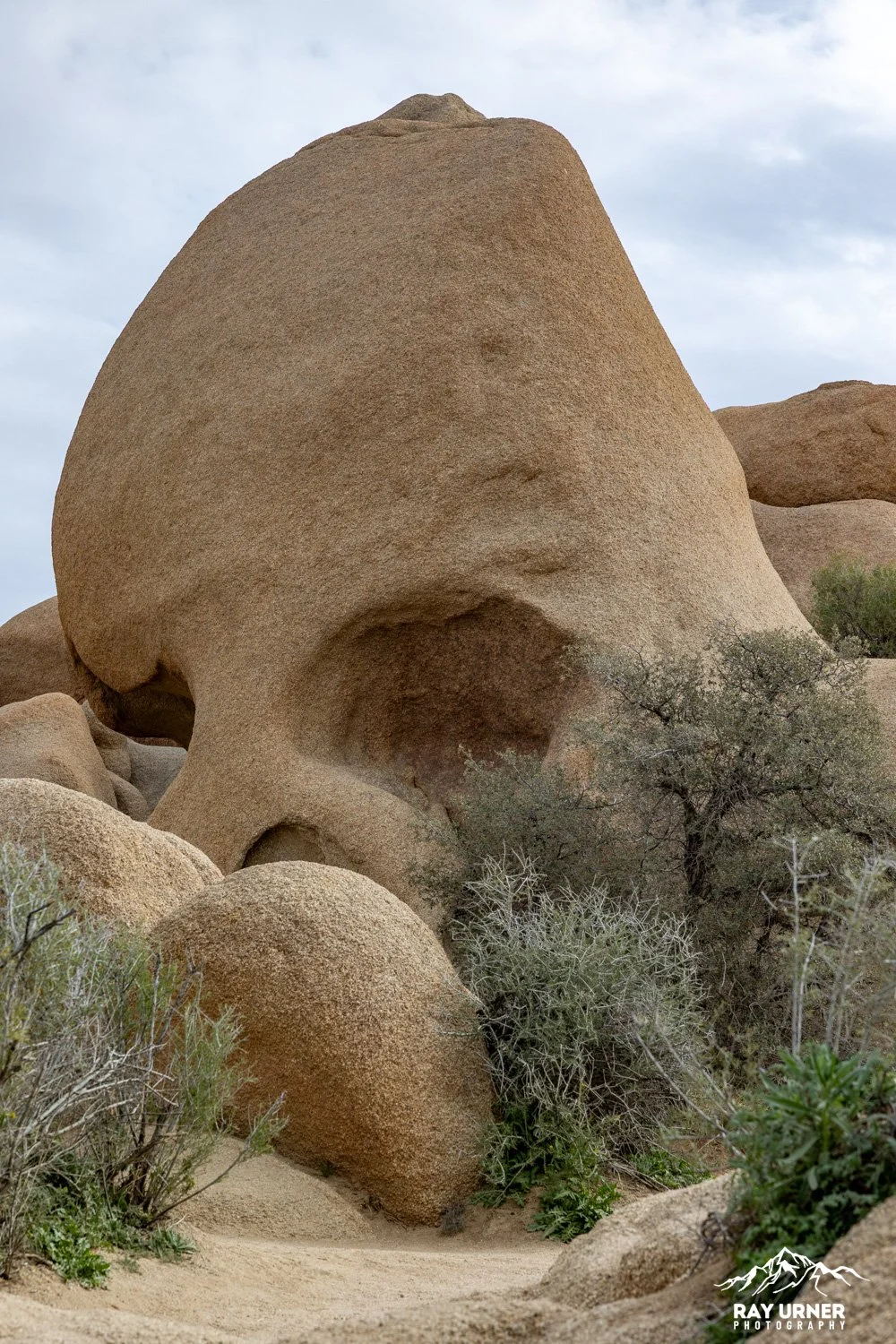
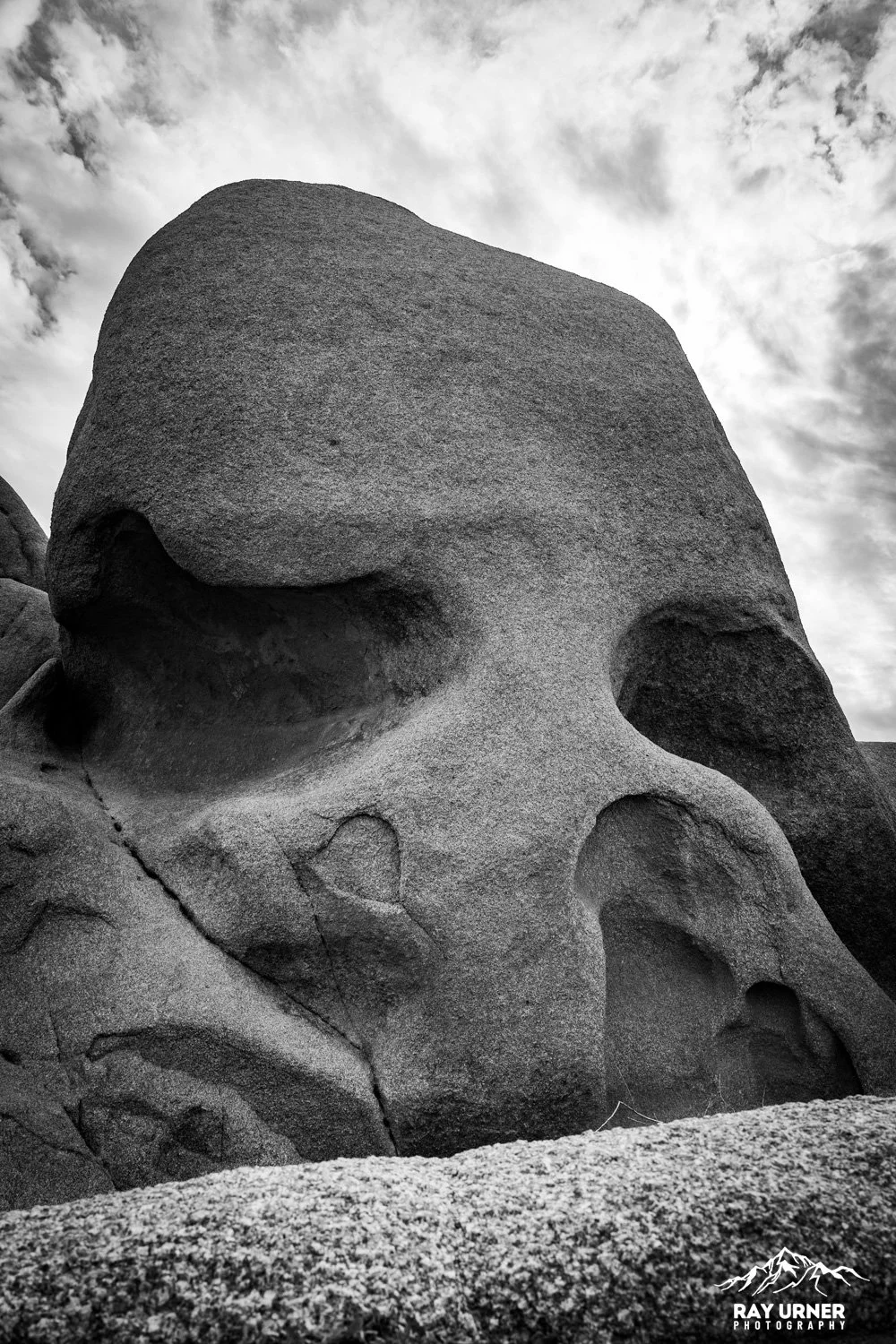
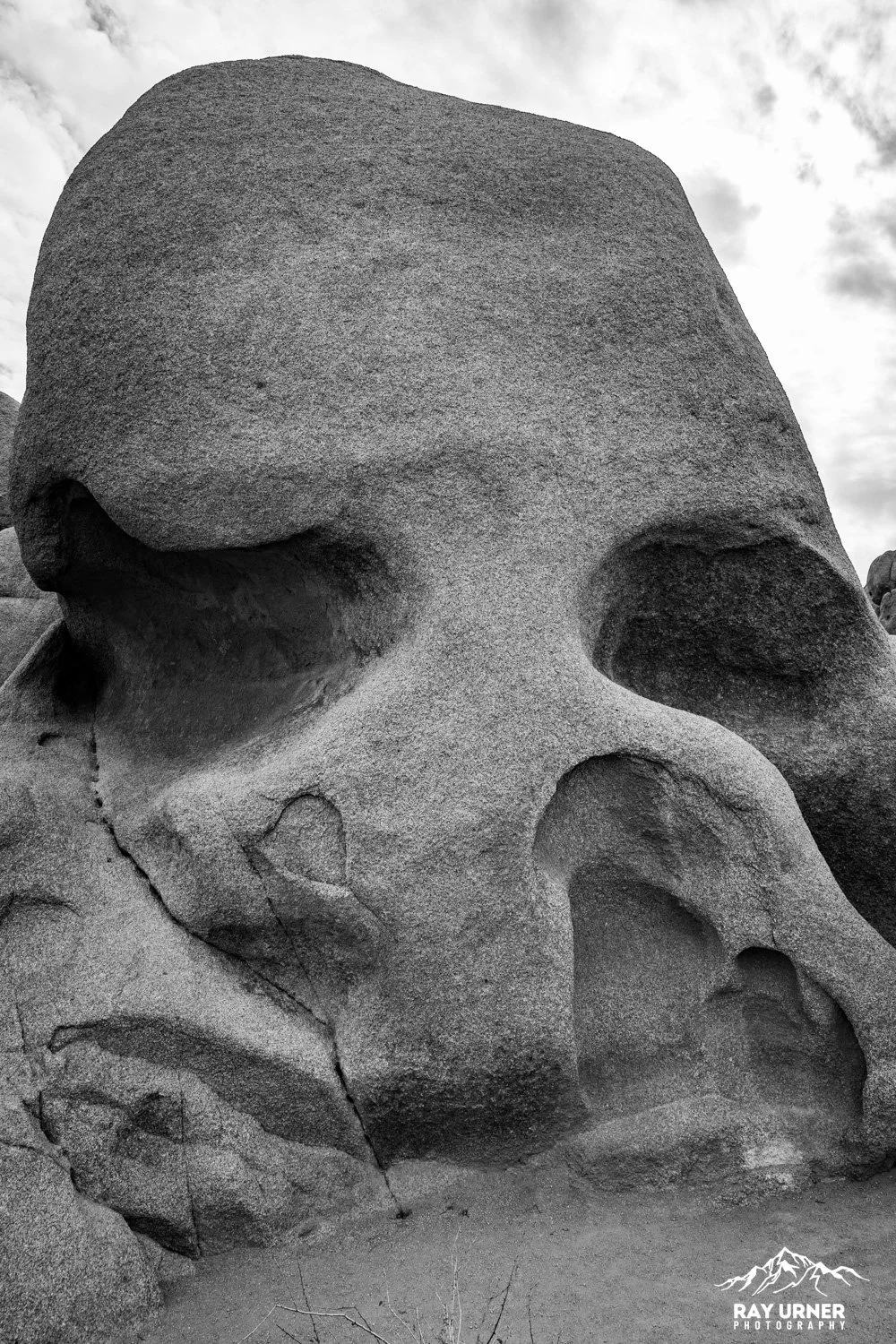
Skull Rock is one of Joshua Tree’s most iconic formations: a giant monzogranite boulder whose two “eye sockets” were carved over thousands of years by water erosion. It sits directly along Park Boulevard, making it one of the park’s easiest and most popular stops.
The full loop trail gives far more context than the quick roadside photo. It winds through washes, boulder fields, and pockets of Mojave vegetation, with interpretive signs throughout. The loop is flat, scenic, beginner‑friendly, and great for photography even in mid‑day light.
Skull Rock — Hiking and Photography Guide
Quick Facts
Trail Length: 1.7–1.8‑mile loop (depending on route)
Elevation Gain: 120–160 ft (easy)
Difficulty: Easy; family‑friendly
Trailheads:
Across from Jumbo Rocks Campground
Pull‑off parking along Park Boulevard (very limited)
Facilities: No water; no shade; vault toilets in the campground area
Access: Skull Rock itself is roadside — you can view it without hiking.
Trail Breakdown (The 1.7–1.8 Mile Loop)
1. Starting Point Options
Roadside Pull‑Off: Quick access to Skull Rock itself
Jumbo Rocks Campground: Best for completing the entire loop; some parking available
2. First Section — Skull Rock
The rock is visible immediately from Park Boulevard.
Expect crowds here.
Great as a starting photo, but continue the loop for variety.
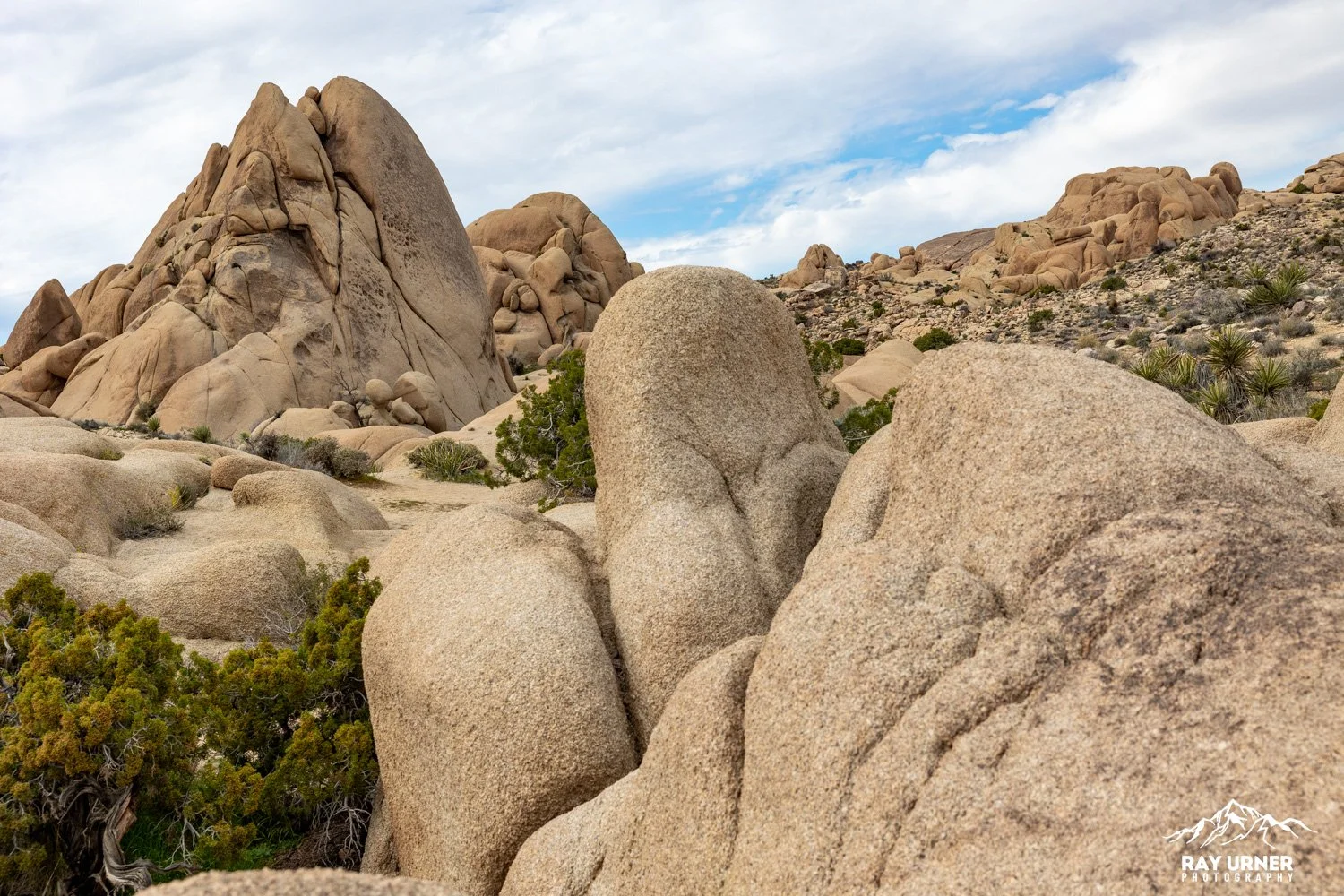
3. Boulder Fields & Desert Washes
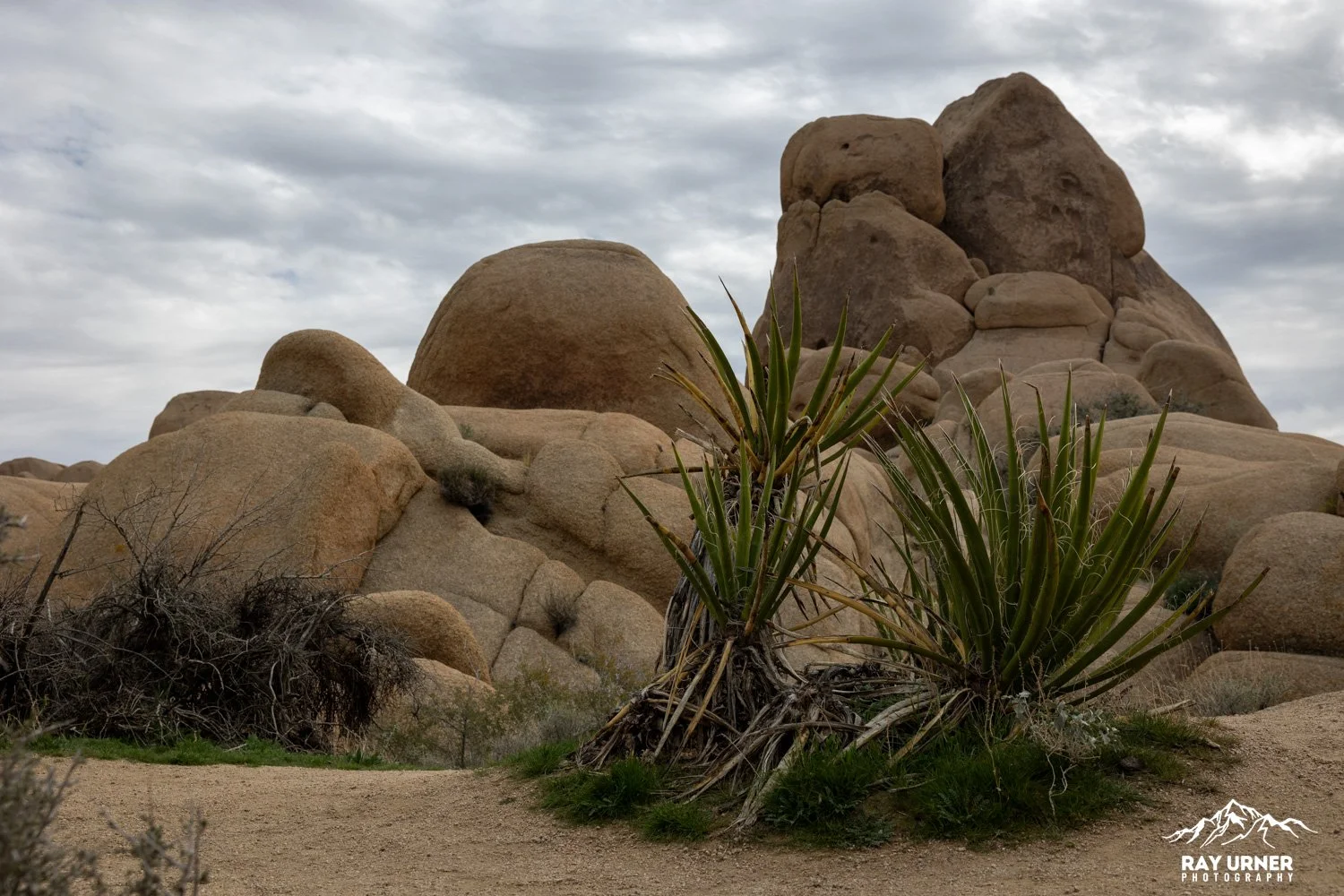
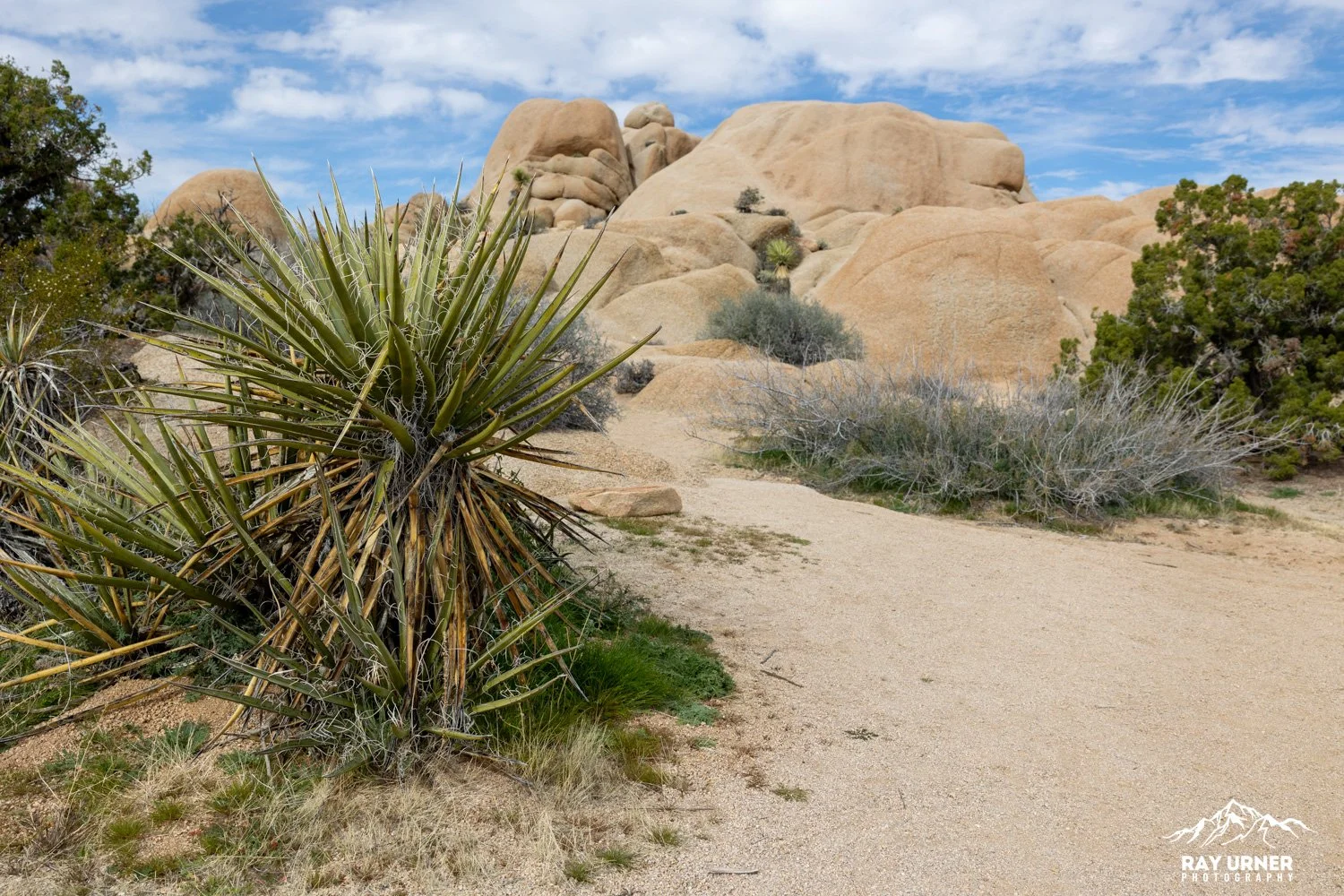
Past Skull Rock, the trail dips into washes lined with desert almond, oak, Mojave yucca, cholla, and cacti.
Light scrambling optional
Intermittent interpretive signs
4. Crossings of Park Boulevard
You cross the road twice on the full loop.
The northern section has Mojave scrub and riparian pockets.
The southern section has oak woodlands tucked among boulders.
5. Final Section — Return via Jumbo Rocks
The trail merges back toward the campground and loops through more granite formations before meeting the start.
Ecology
The loop features a cross‑section of mid‑elevation Mojave plant life:
Cat’s claw acacia and desert almond in sandy washes
Mojave yucca, California buckwheat, and oak woodlands along ridgelines and boulder bases
Cacti: Hedgehog cactus (magenta blooms), Mojave mound cactus (red hummingbird‑pollinated flowers) in spring
Best Photography Spots
1. Southeast Face of Skull Rock (Best Viewing Angle)
This side reveals the most skull‑like silhouette, with both carved sockets clearly visible.
Shoot 14–35mm up close for exaggerated features
Telephoto (70–200mm) from across Park Boulevard for compressed shape definition
2. Boulder Fields Along the Loop
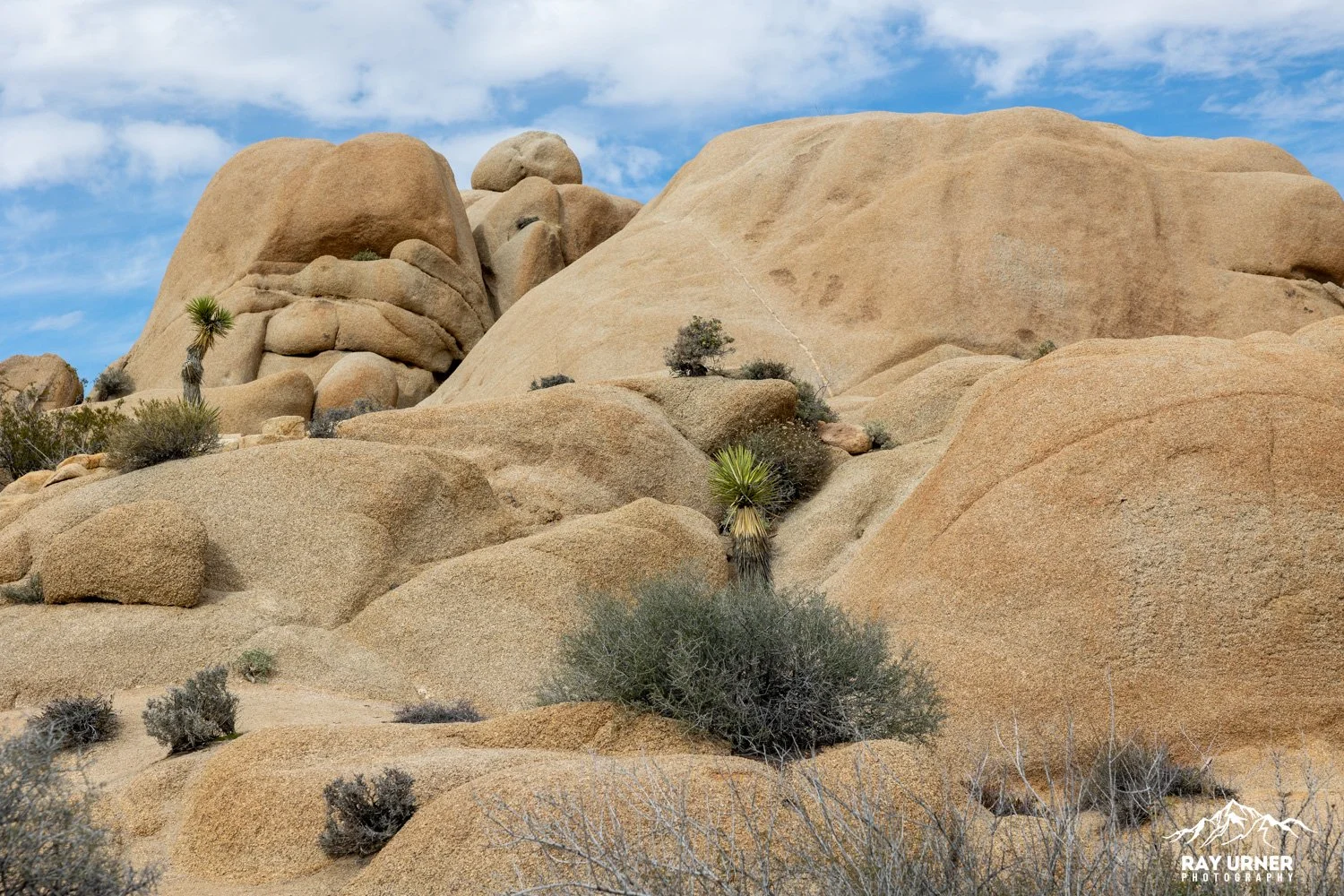
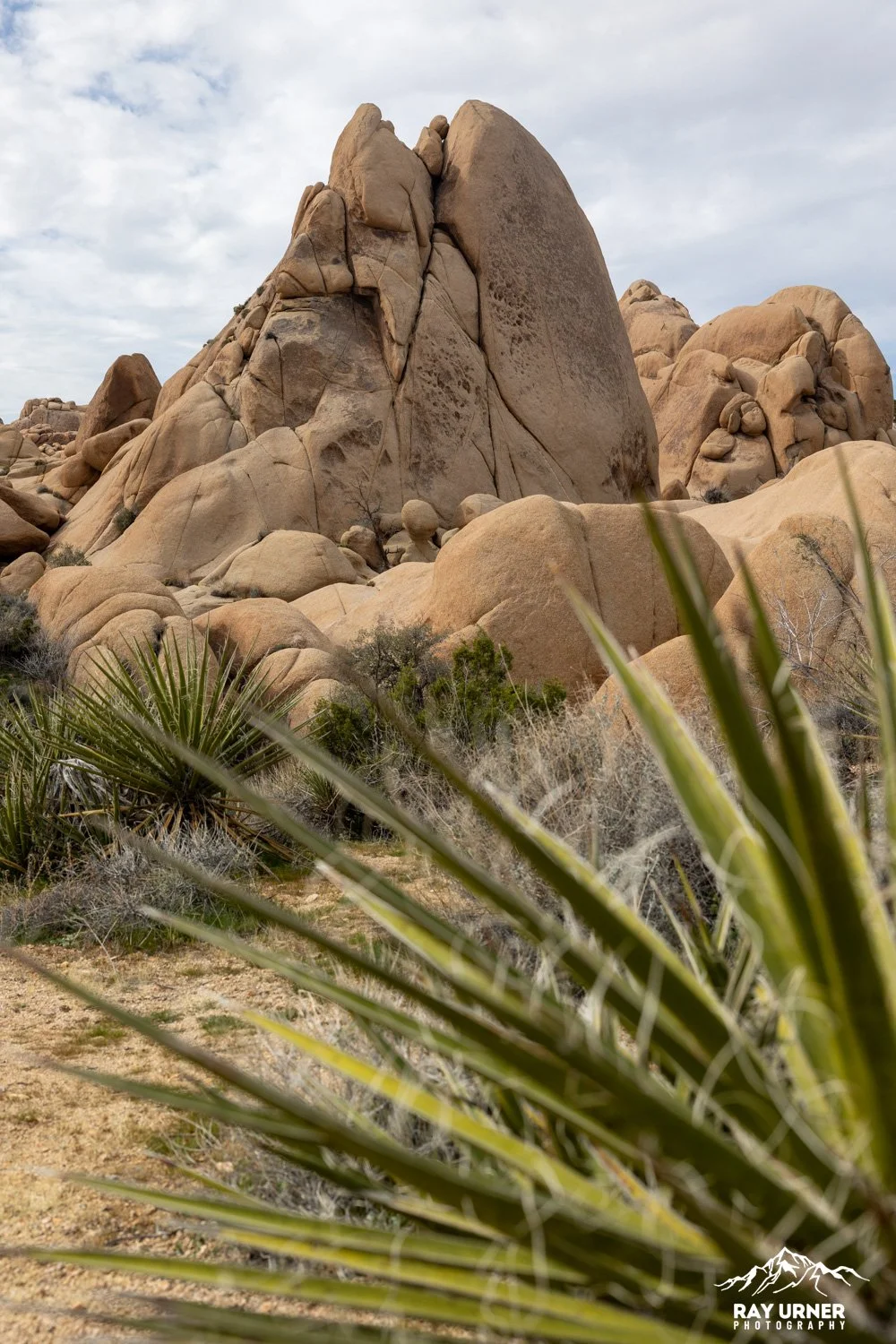
Look for line‑leading formations — tilted slabs, stacked domes, narrow corridors.
Excellent with strong midday shadows
Good place for environmental hiker shots
3. Desert Vegetation Close‑Ups
Spring is especially rich for cacti blooms (hedgehog, mound cactus).
Use macro or 70–200mm
Watch for bees (hedgehog cactus relies heavily on pollinators)
Shot List
Skull Rock hero shot: frontal “eye socket” composition
Wide view: Skull Rock + roadside Joshua trees
Boulder‑valley context frames along the loop
Detail textures: pitting, granite crystals, lichen patterns
Spring cactus bloom macros
Hiker silhouettes against boulder crests
Light & Timing
Best overall: Early morning or late afternoon (soft side‑light improves skull definition).
Midday: Still great for the loop — strong shadows carve boulders nicely; use contrast creatively.
Roadside crowds: Arrive before 9 a.m. or after 4 p.m. to avoid heavy traffic.
Hiking & On‑the‑Ground Intel
Trail is easy, with occasional narrow, rocky segments.
No shade — bring water.
No cell service — download maps.
Parking at roadside fills quickly.
Dogs not allowed.
Logistics
Parking: Roadside (limited) or Jumbo Rocks Campground
Restrooms: Campground vault toilets
Trail Type: Loop; can be extended via connecting trails (Face Rock, Split Rock, Discovery Trail)
Season: Visit October–April for coolest conditions; summer requires early starts.
Pro Tips
Shoot Skull Rock from low angles to deepen the “eye sockets.”
Use nearby boulders as foreground leading lines.
If you only want the rock, roadside access is enough — but the loop is 10× better for photography variety.
After rain, the surrounding granite darkens, boosting contrast for dramatic images.