

Wall Street Mill
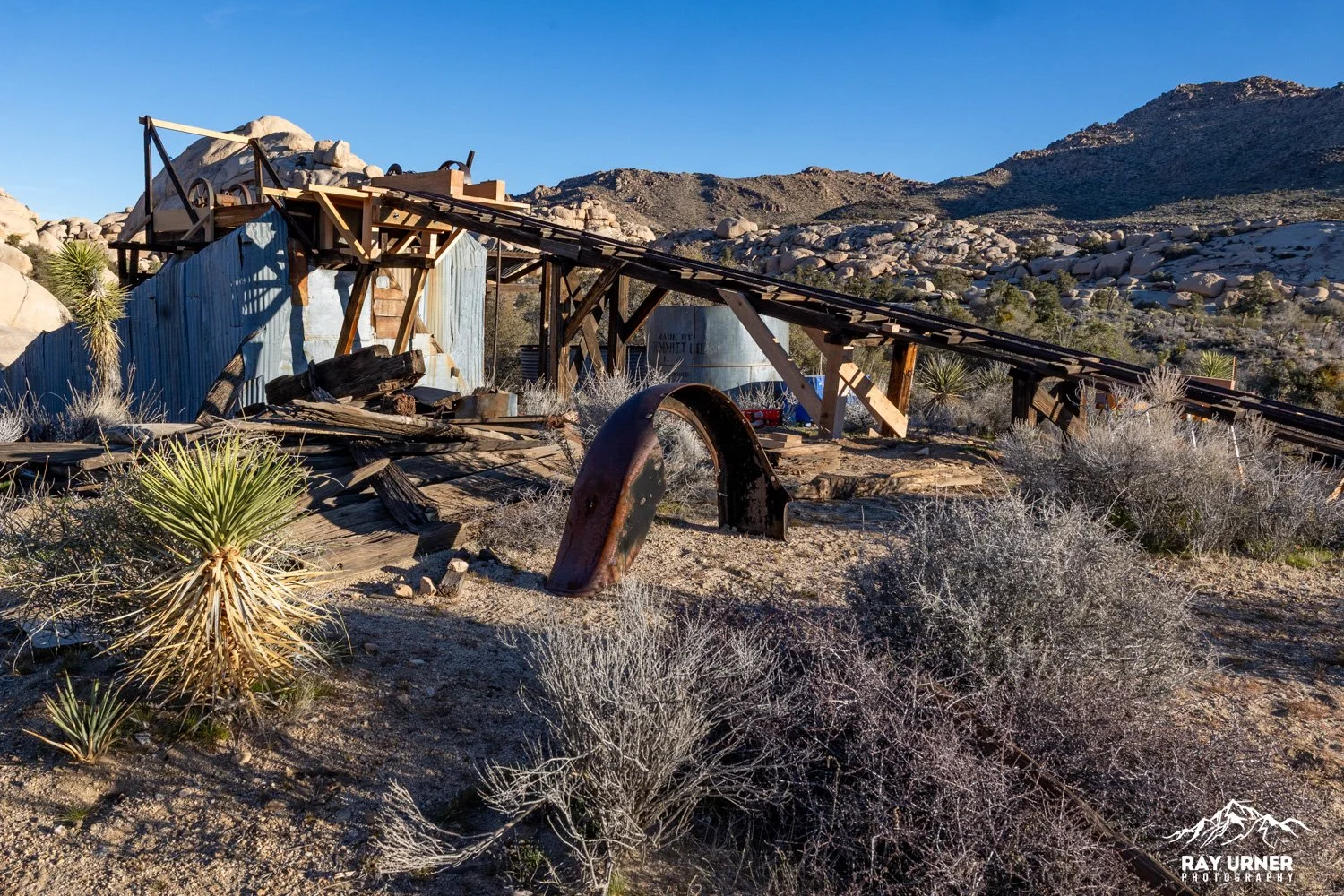
Wall Street Mill is Joshua Tree’s best‑preserved historic gold‑ore crushing mill, located in Queen Valley near the Wonderland of Rocks. It’s an easy 2‑mile out‑and‑back hike that blends iconic desert scenery, frontier‑era mining history, abandoned cars, a windmill, homestead ruins, and the intact 1930s mill itself.
Wall Street Mill - Hiking & Photography Guide
Trail Details
Distance: 2 miles out‑and‑back (from Barker Dam lot)
Elevation Gain: ~75–80 ft (flat, sandy terrain)
Time:45–120 minutes depending on exploration and photography
Difficulty:Easy
Trailhead: Barker Dam parking lot, with secondary access via an unpaved lot on Queen Valley Road.
Shade: None — open desert.
Cell Service: None.
Pets: Not allowed on the trail.
History
Wall Street Mill was built by Bill Keys, a rancher‑miner who ran the mill during the Depression‑era “second gold rush.”
Keys bought the site in 1930 and hauled machinery from other mines to assemble the mill.
The mill processed ore for miners in exchange for fees; gold went back to miners or to smelters.
Keys last used the mill in 1966.
A famous event connected to the site is the 1943 shooting of Worth Bagley during a road‑access dispute.
Keys served 5 years before being pardoned after new evidence showed self‑defense.
A stone marker commemorating Bagley’s death still exists along the trail (not part of the official historic district).
What You’ll See on the Hike
1. Joshua Tree Desert Scenery
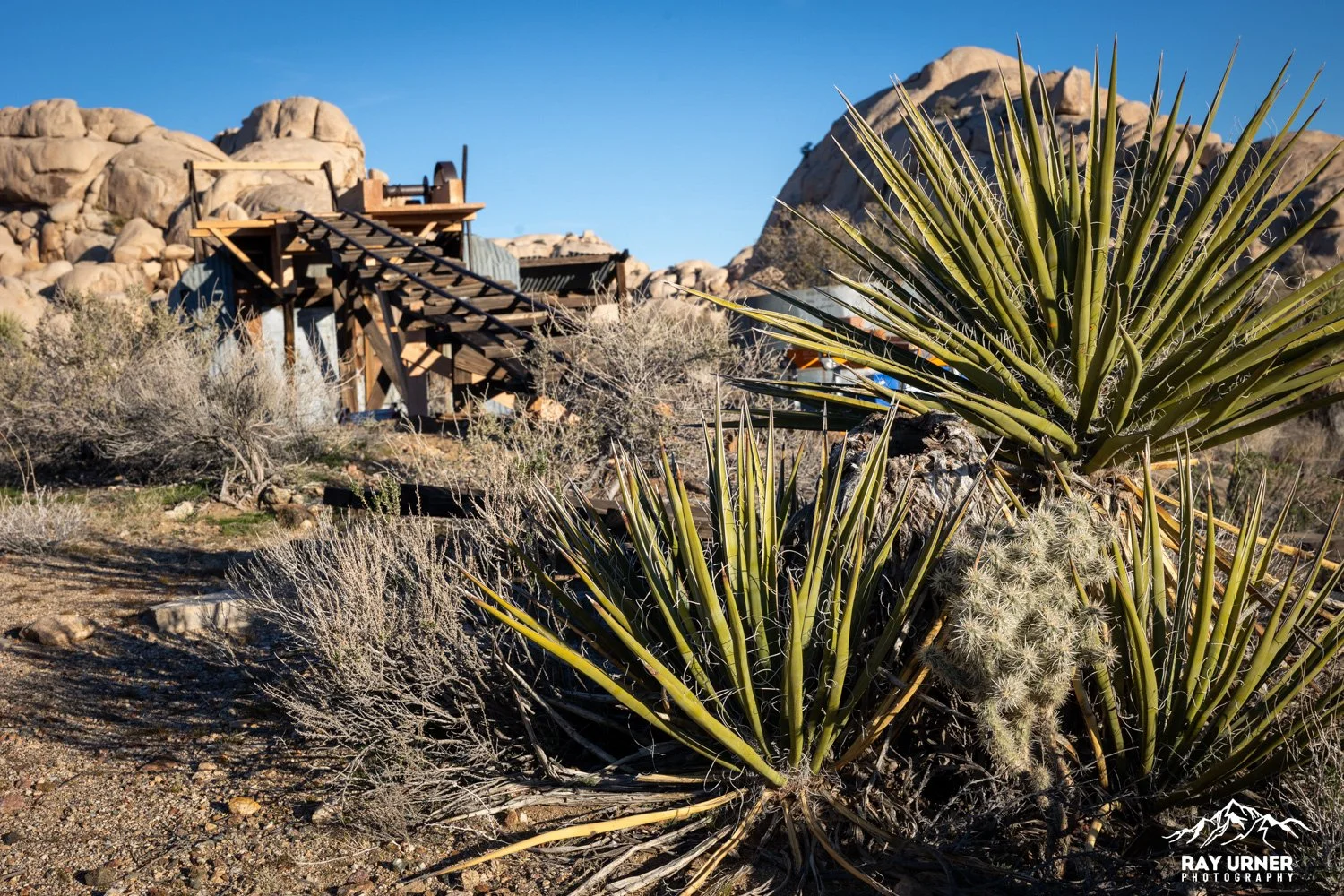
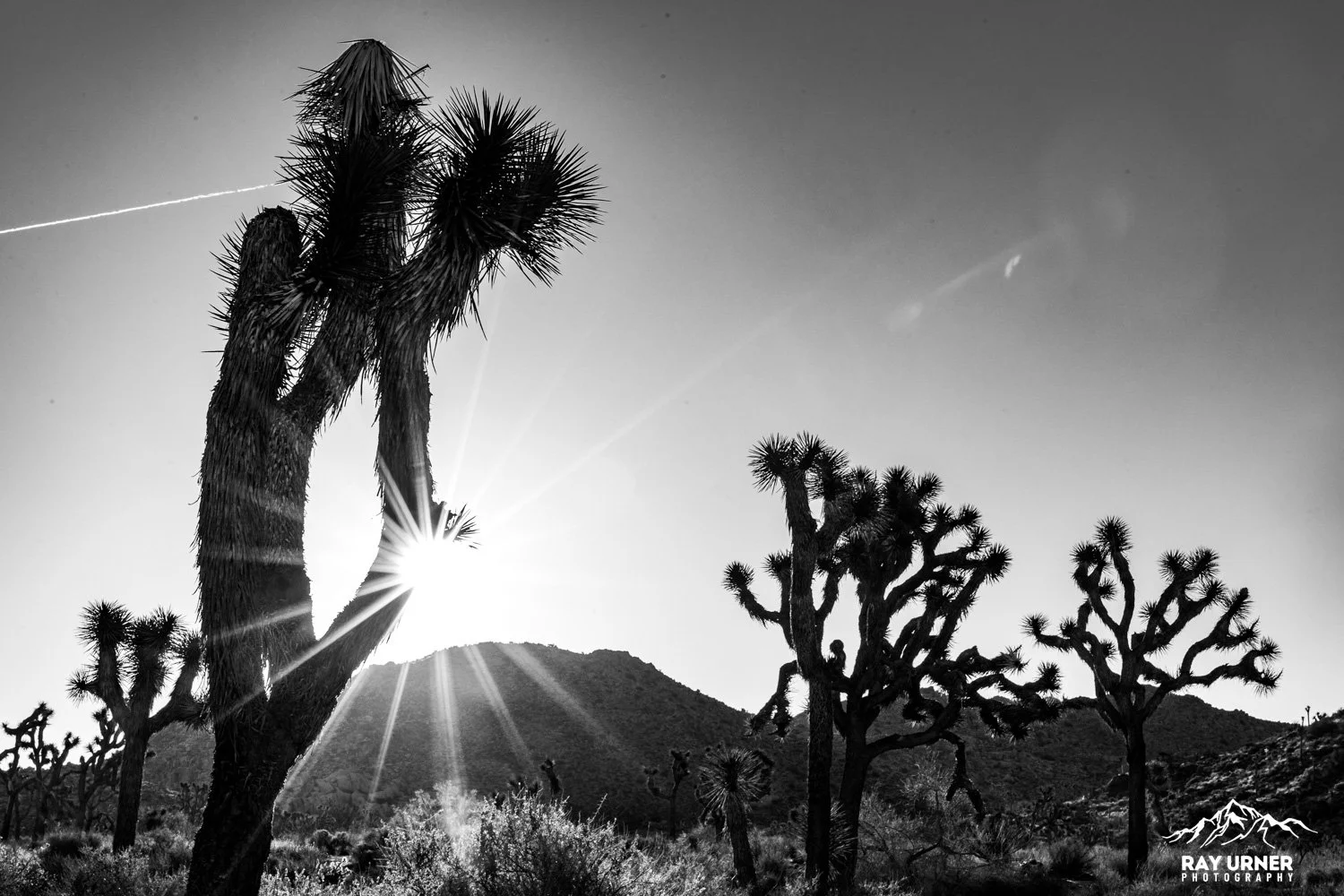
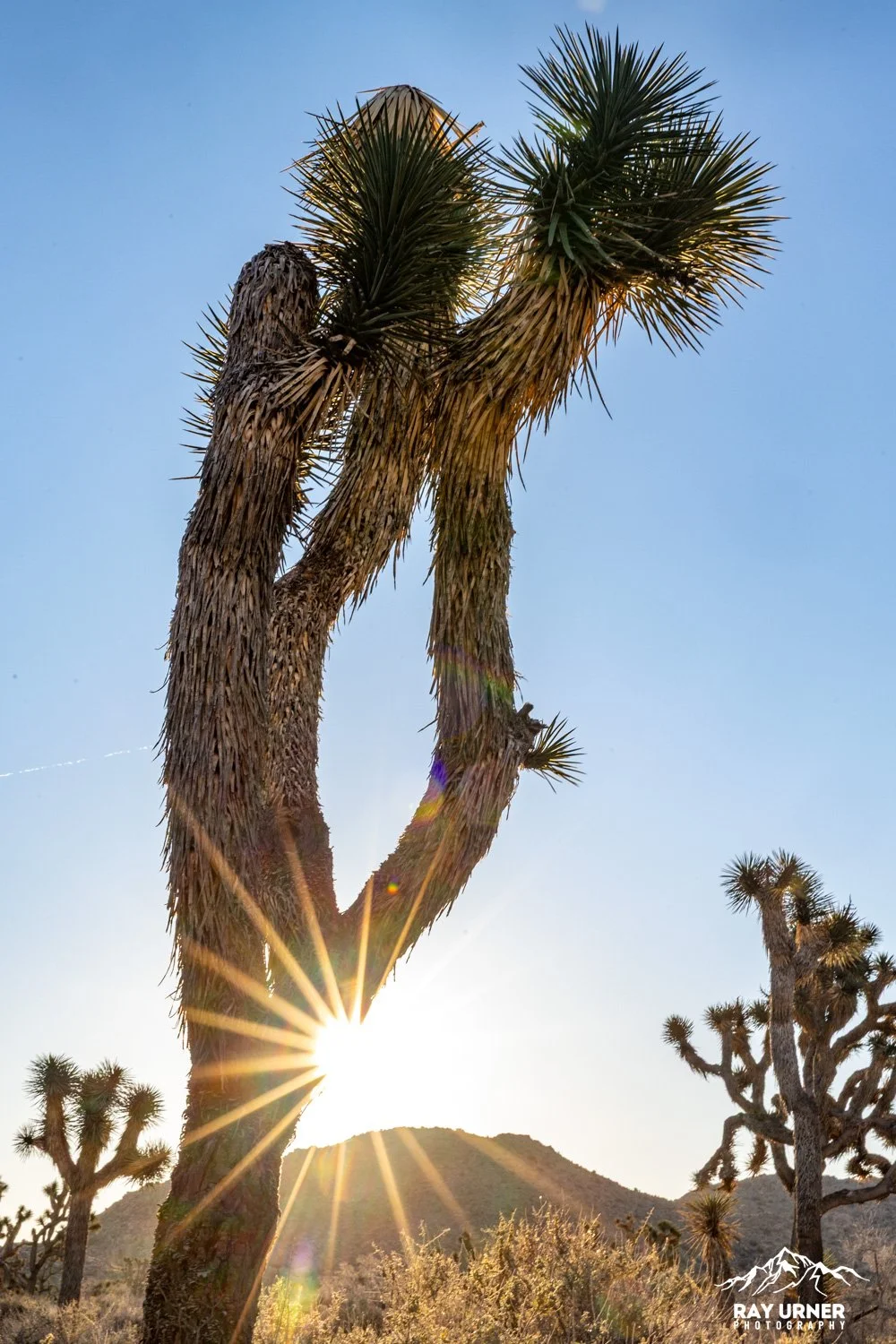
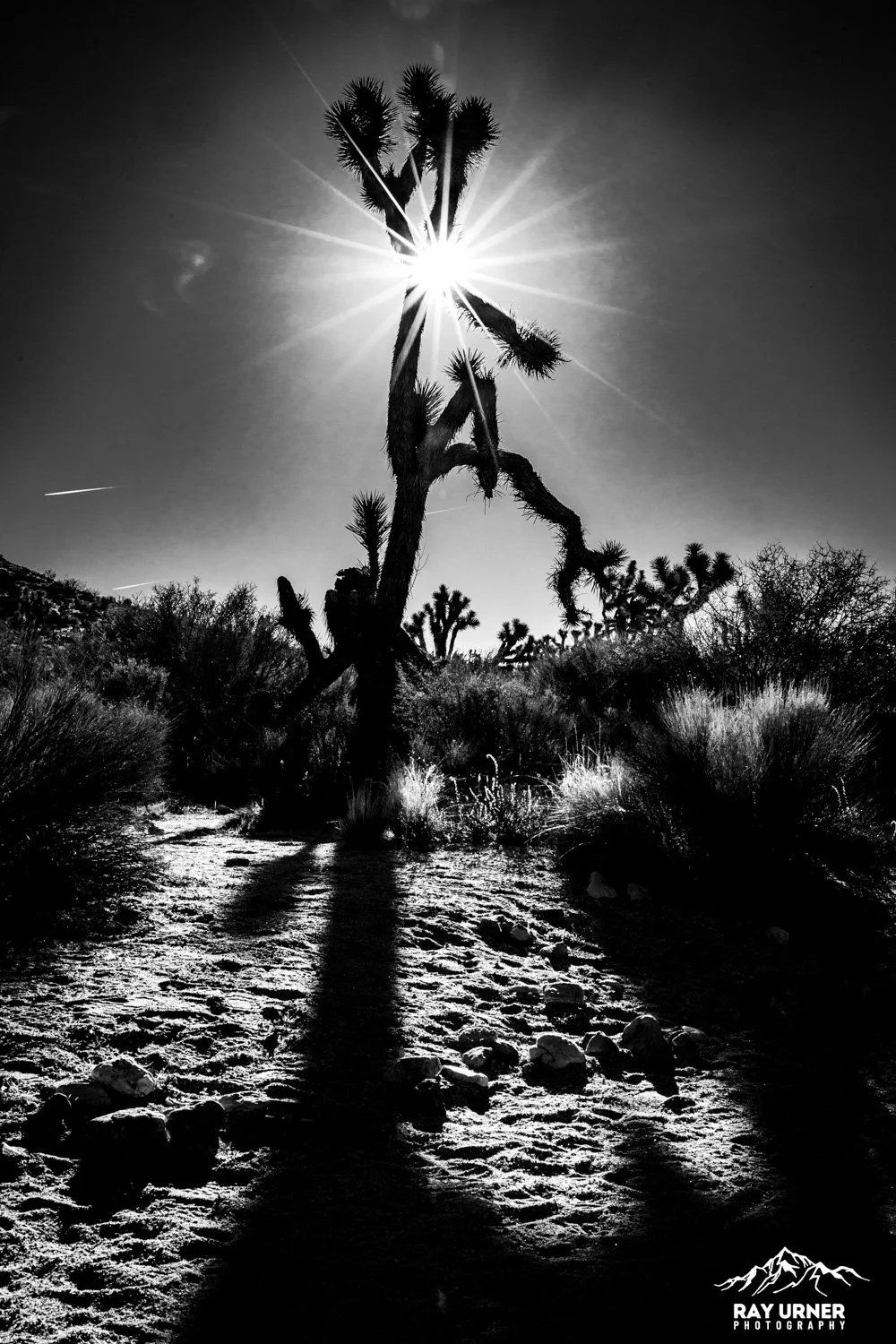
The approach is a sandy path lined with Joshua trees and low granite formations.
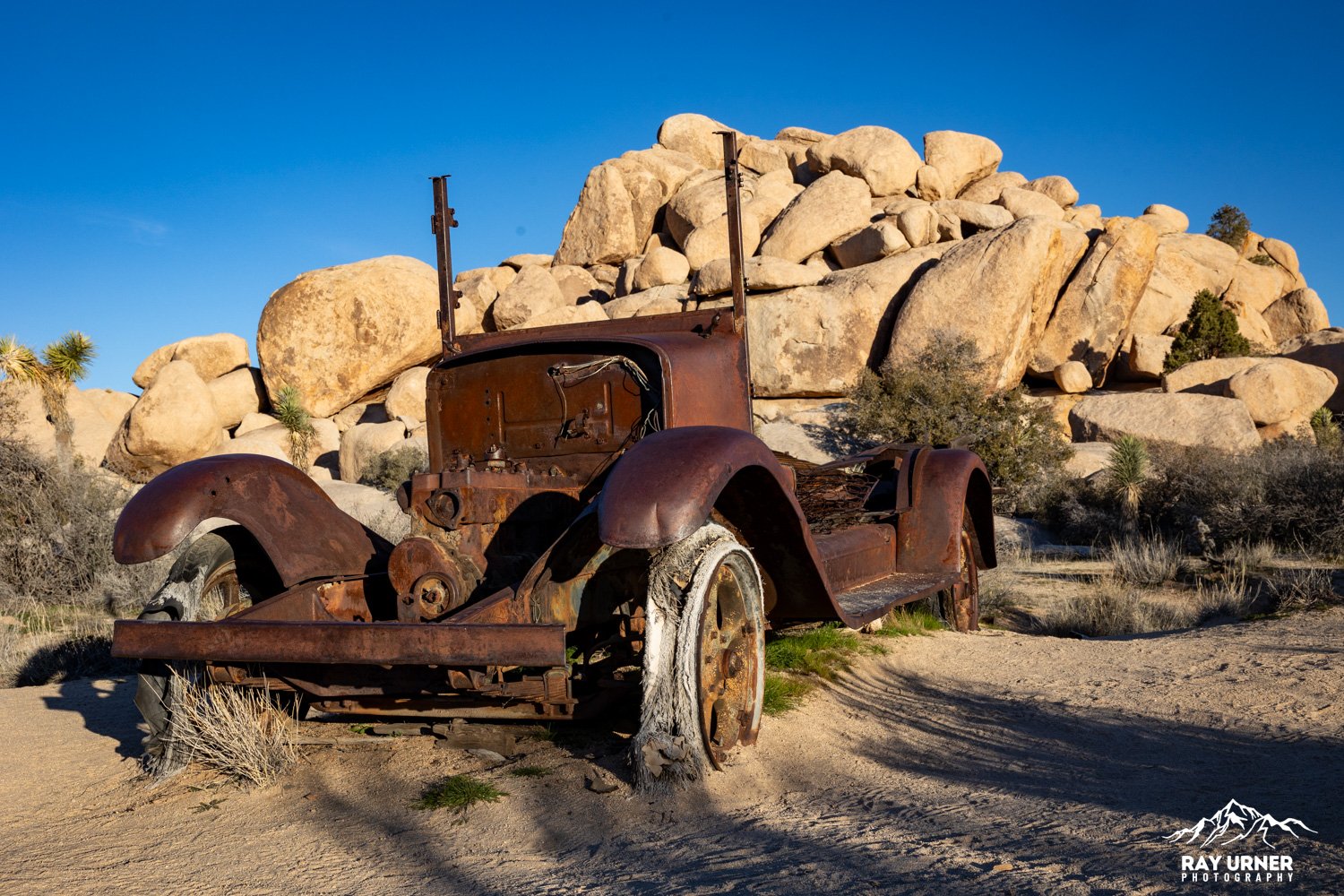
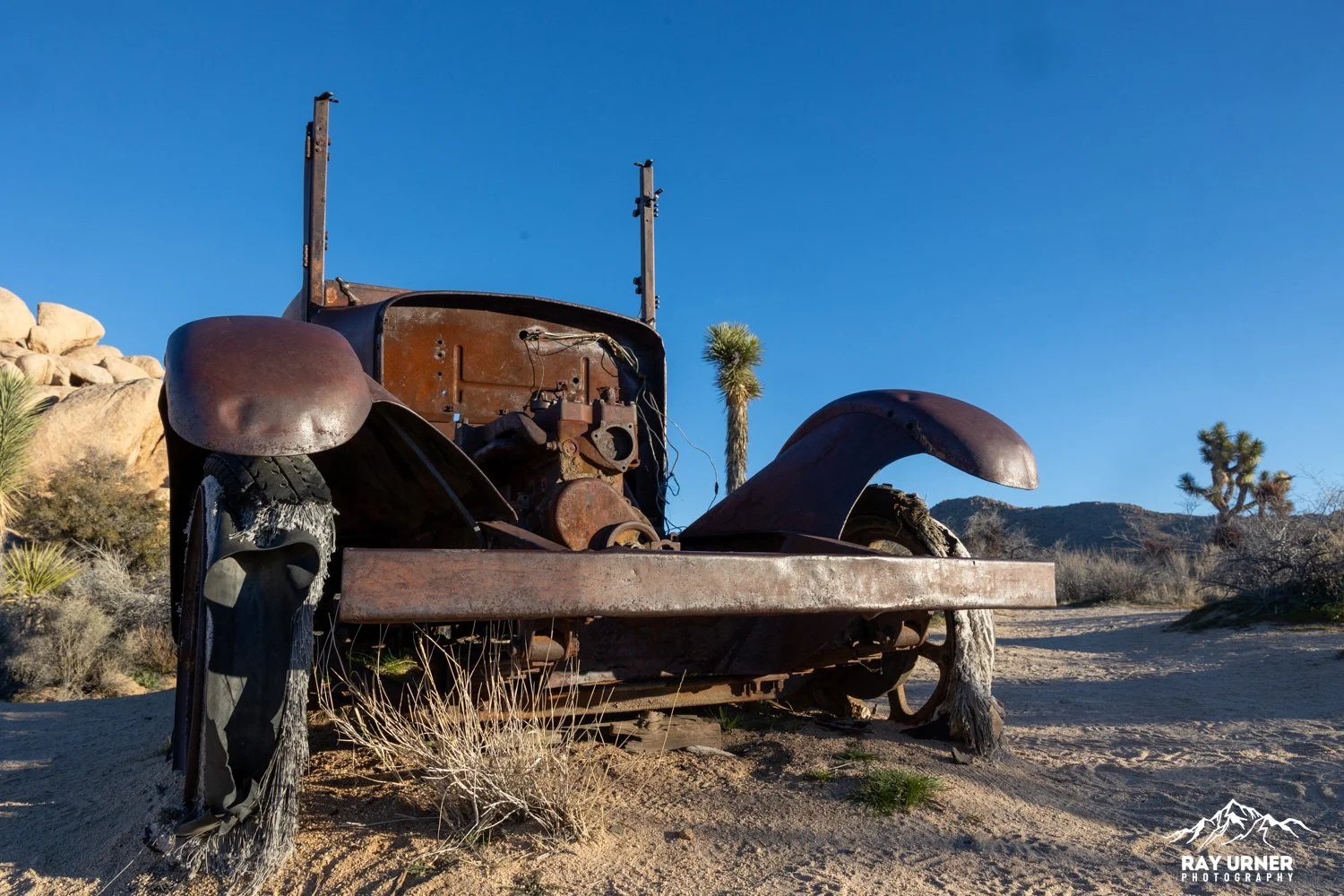
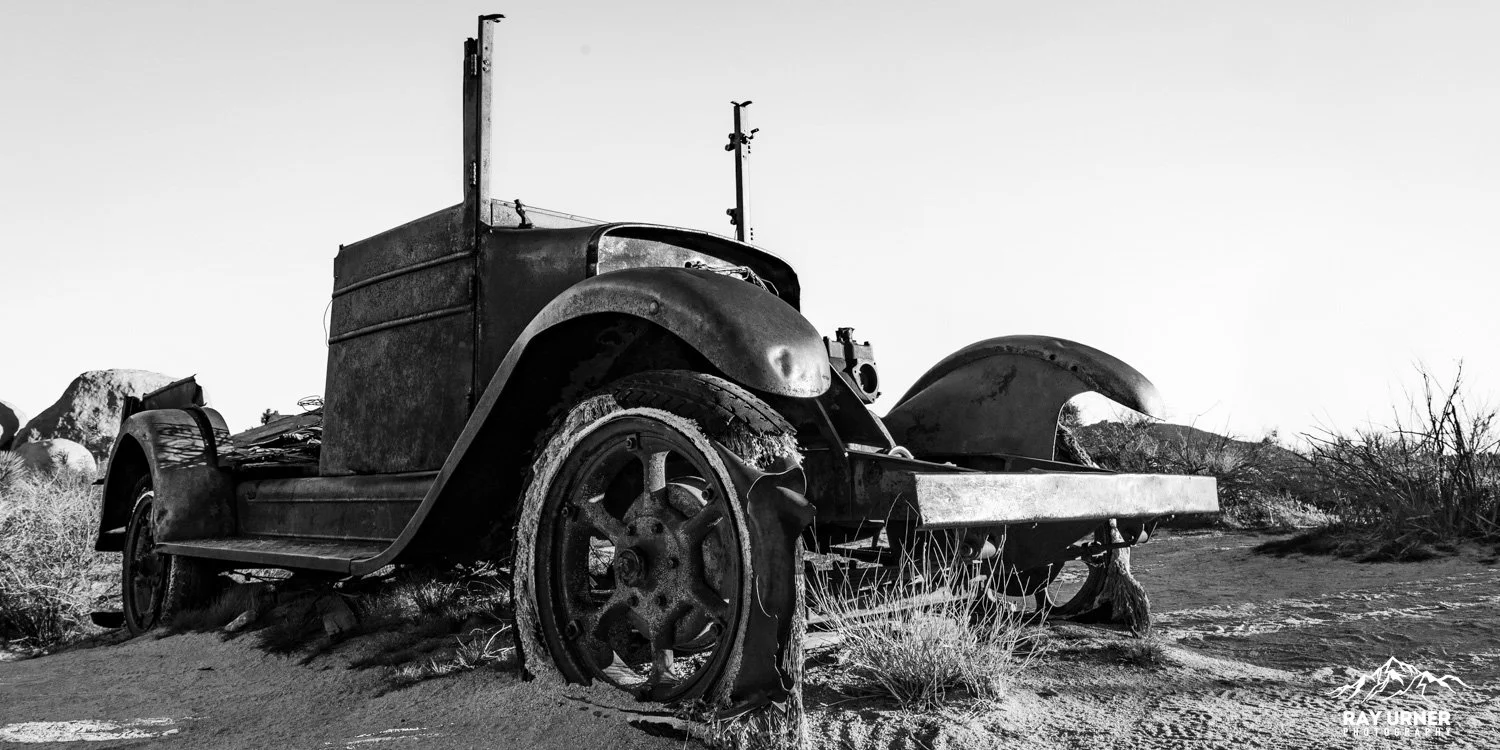
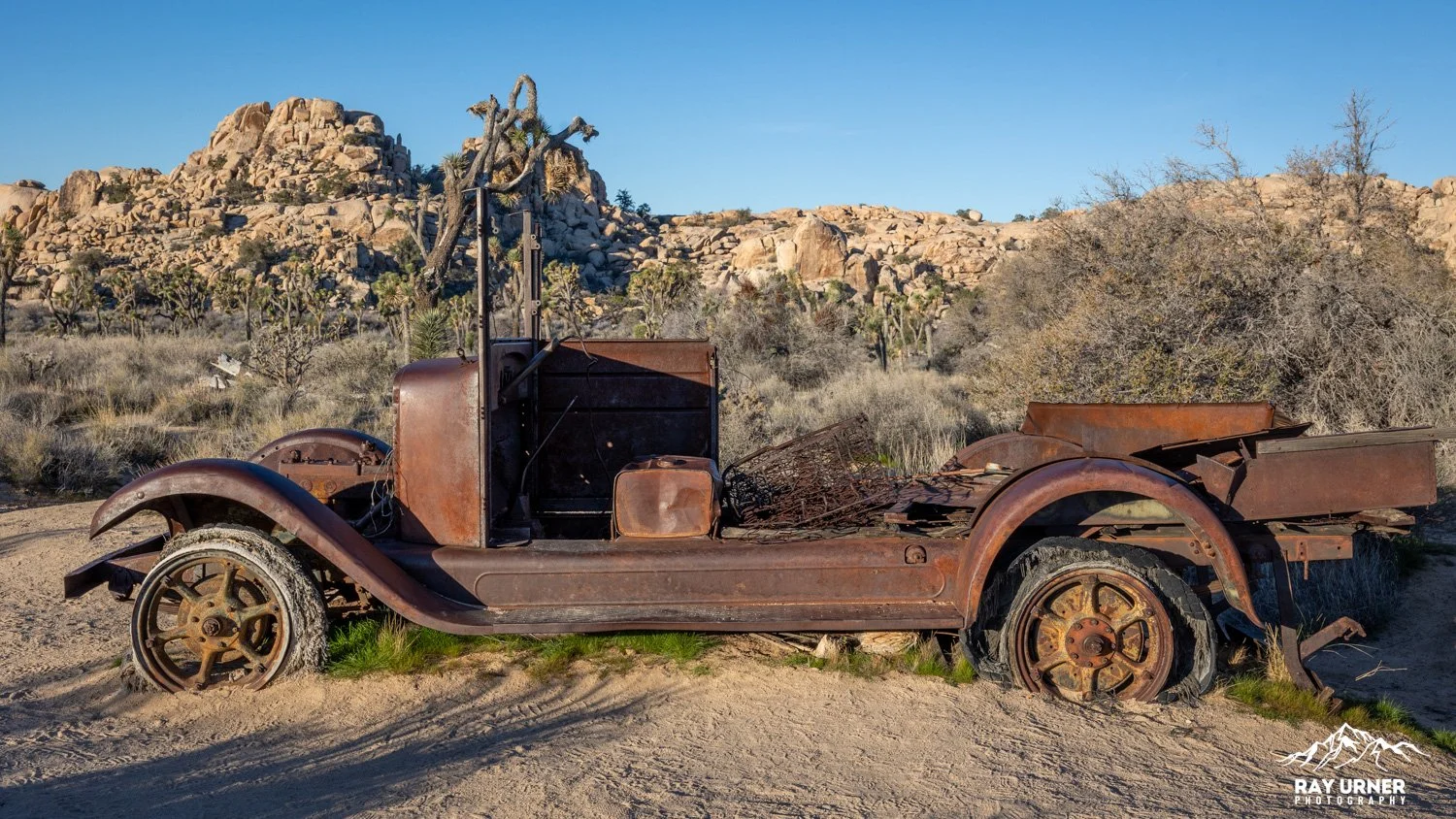
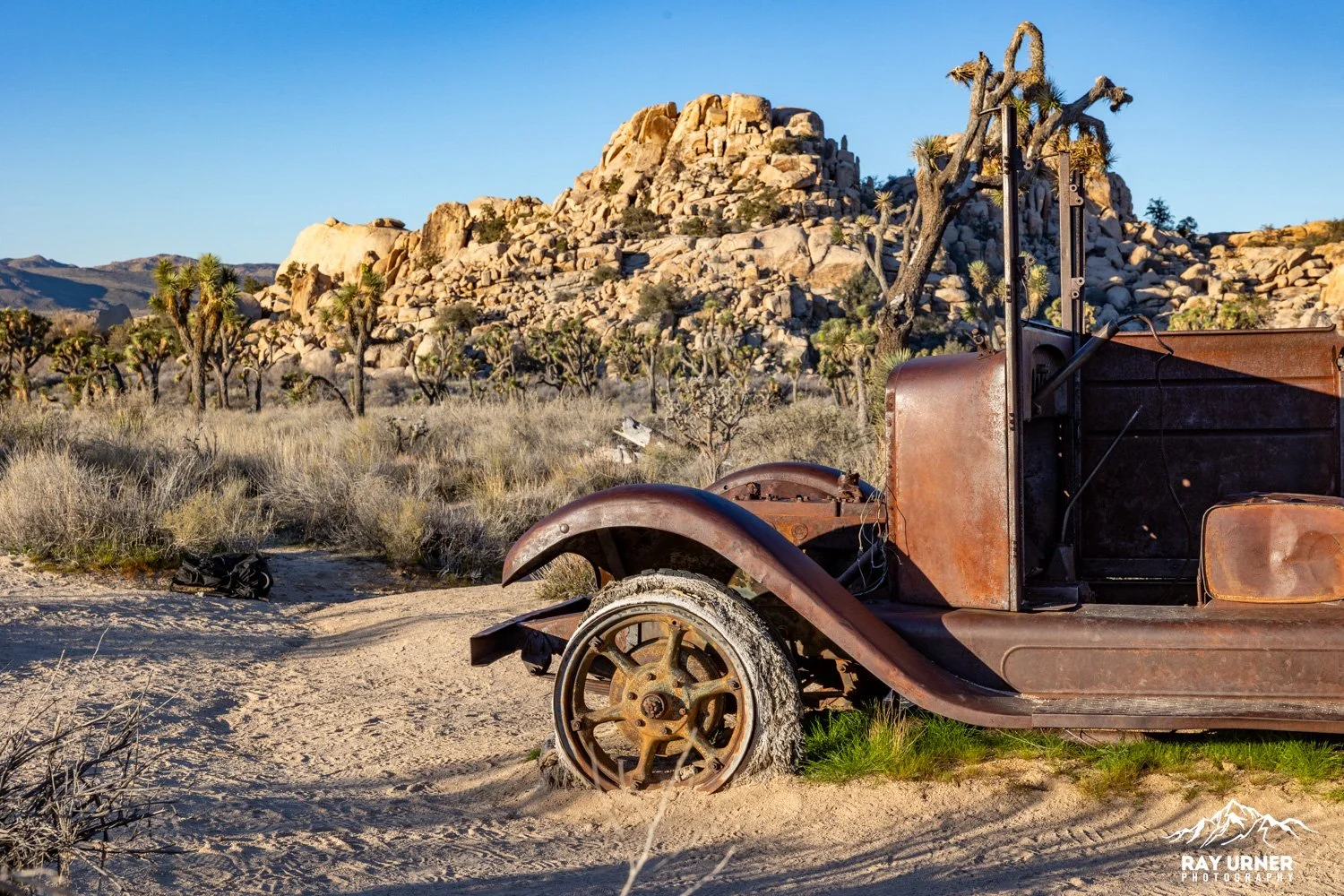
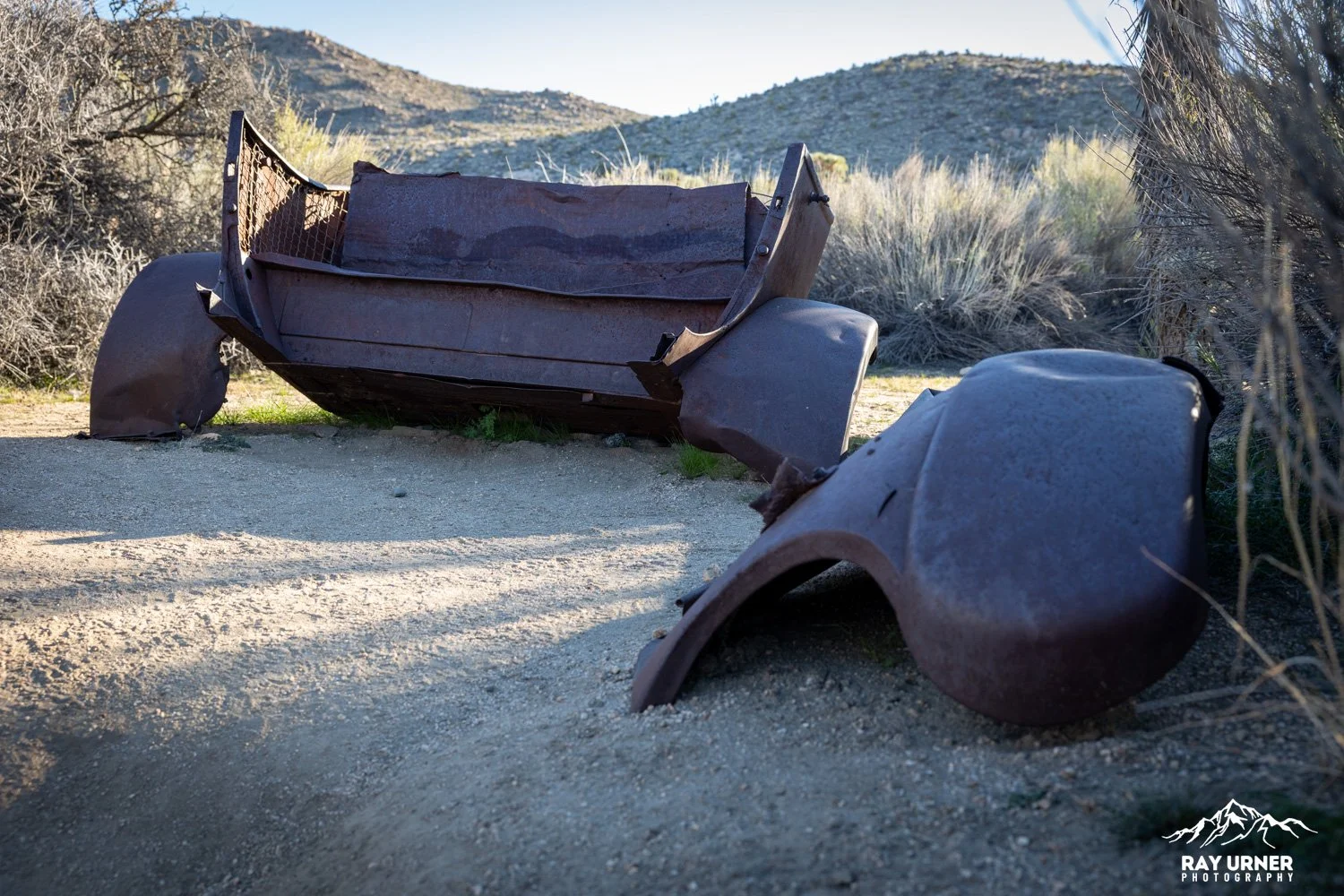
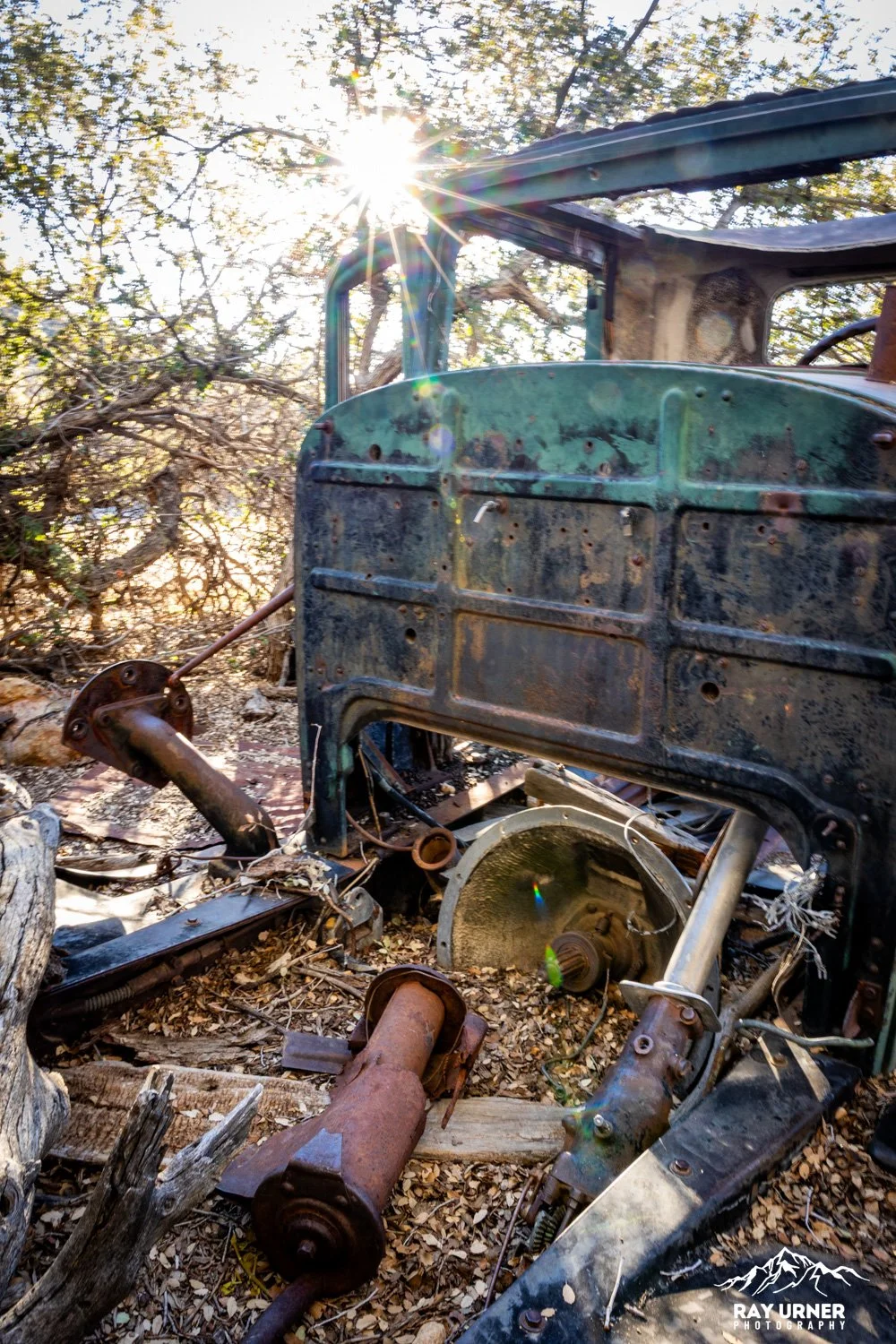
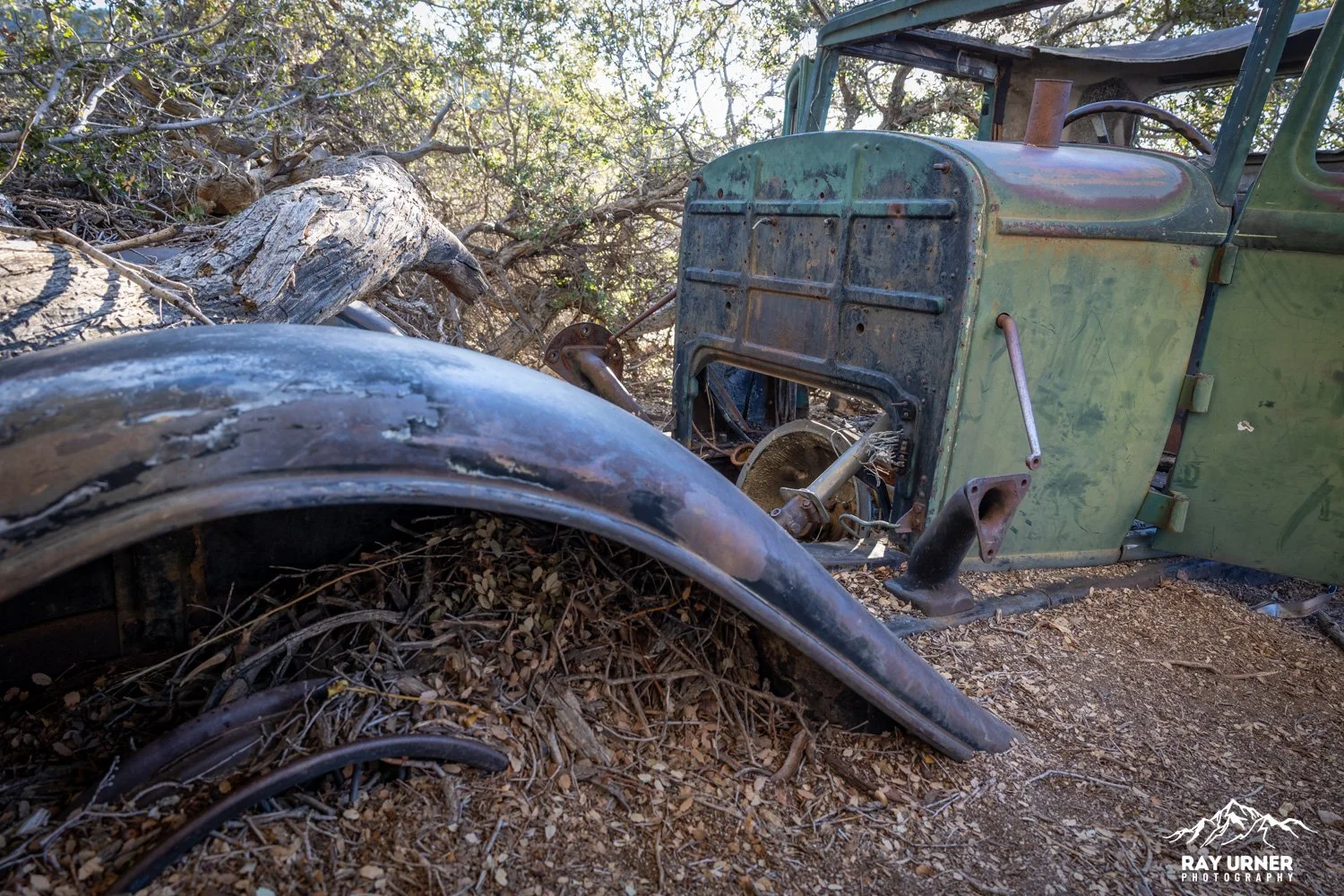
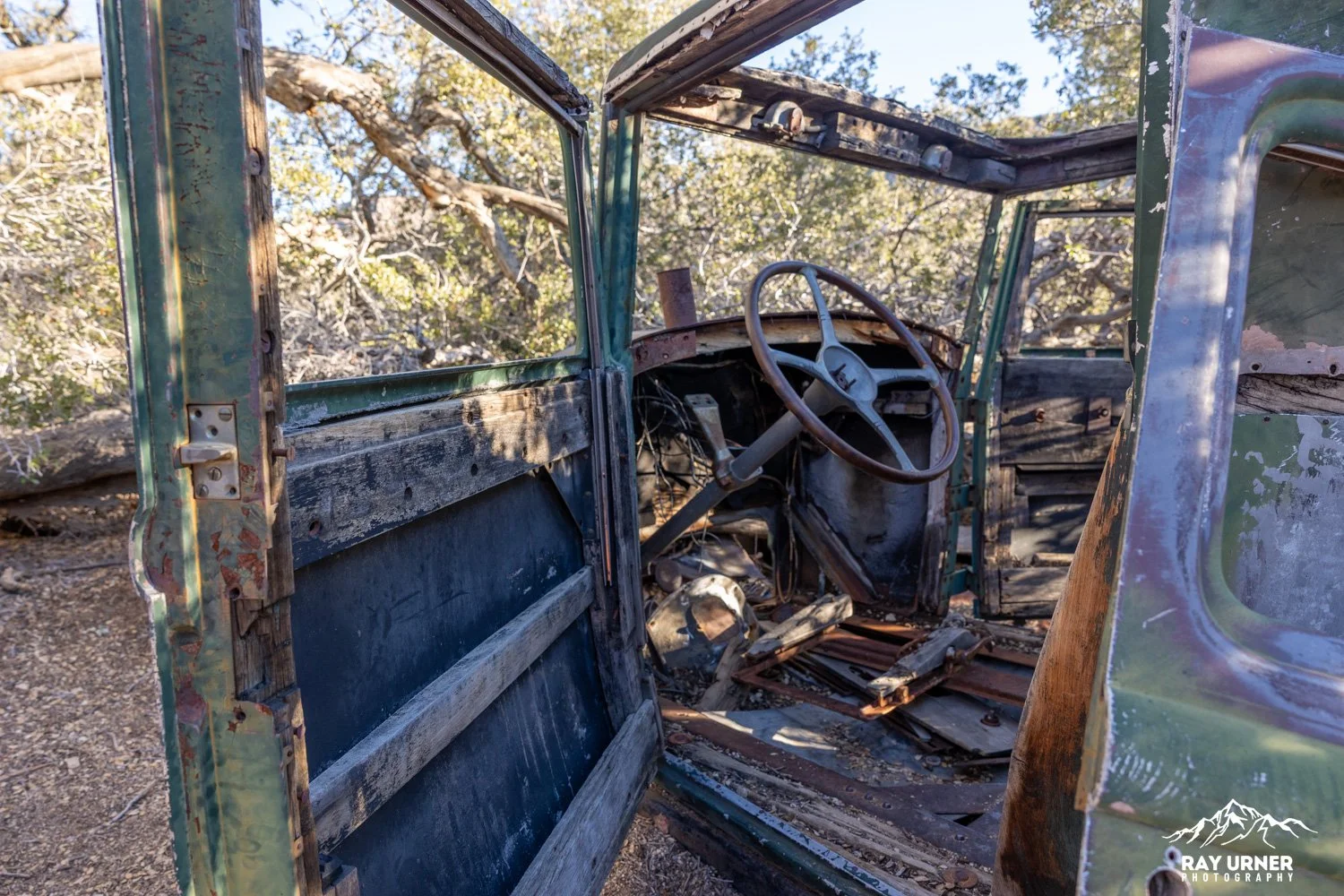
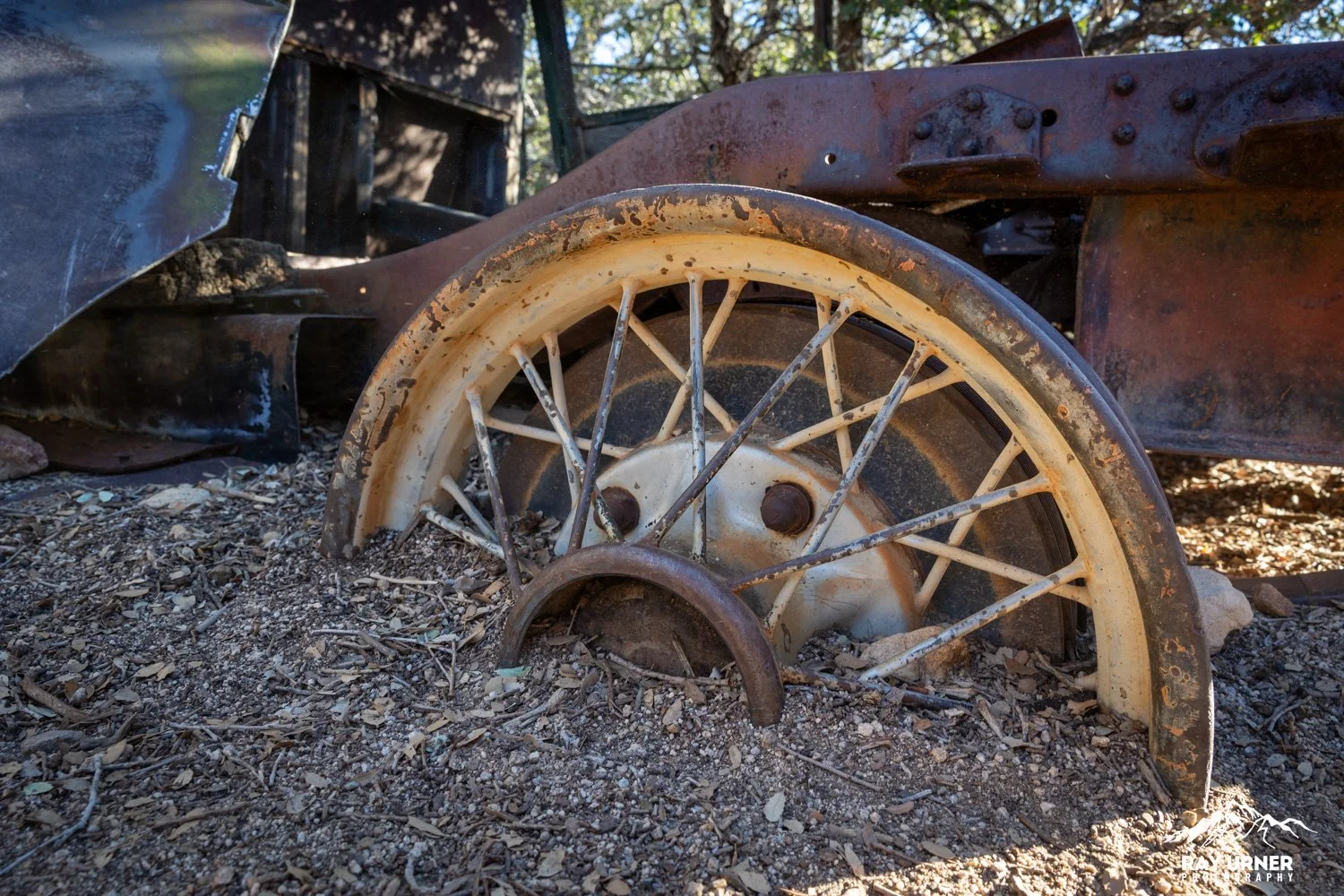
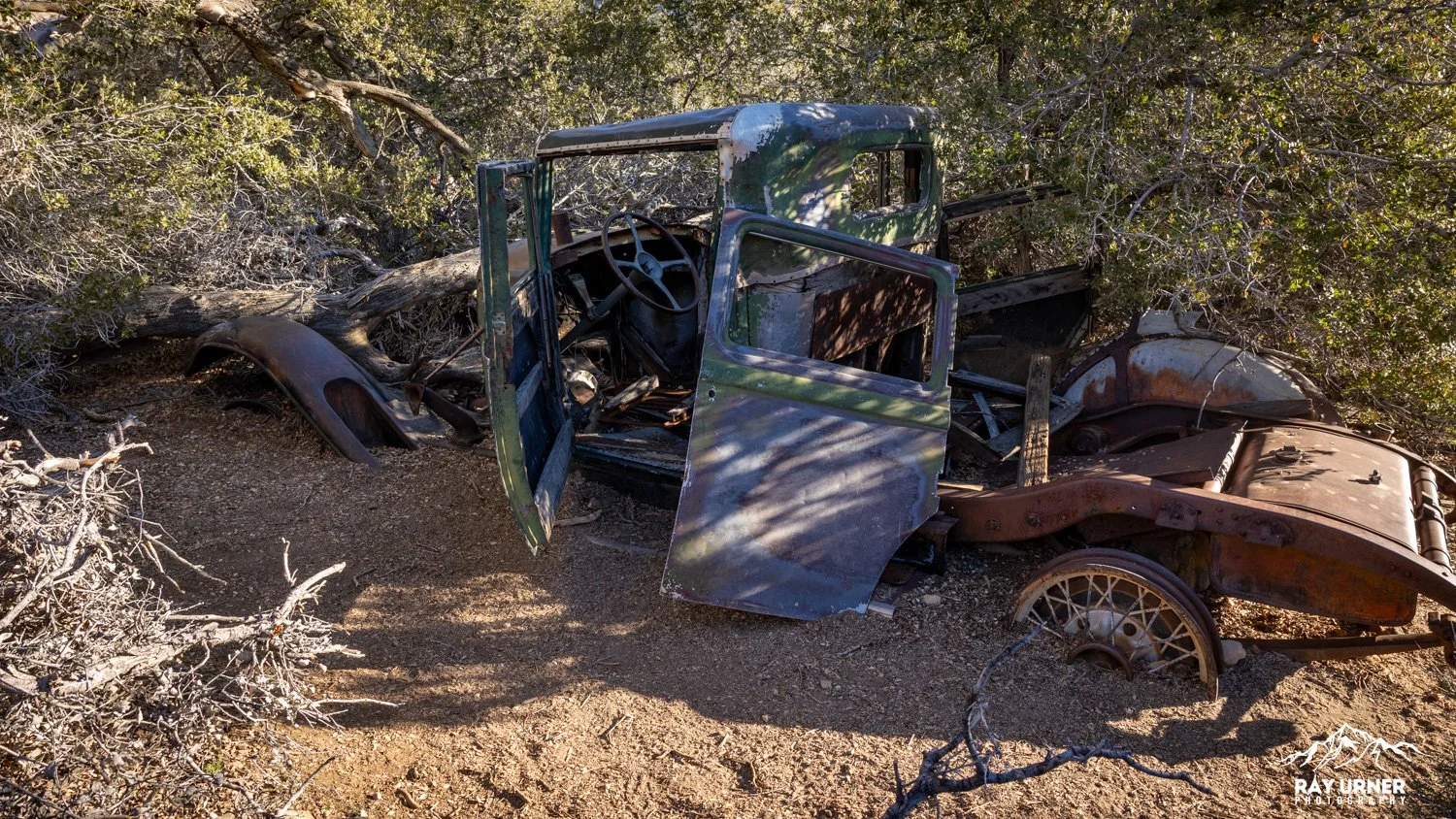
2. Abandoned Cars (3 total)
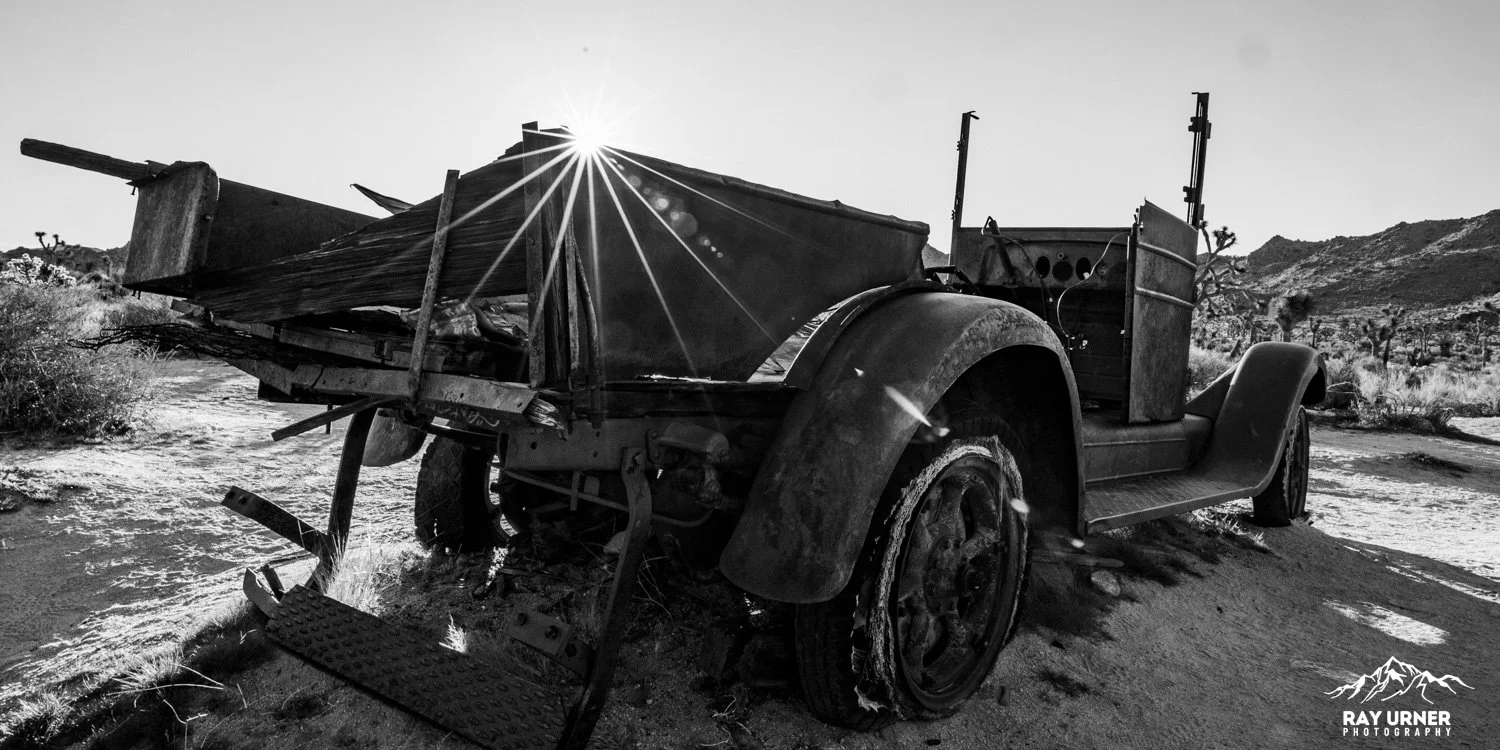
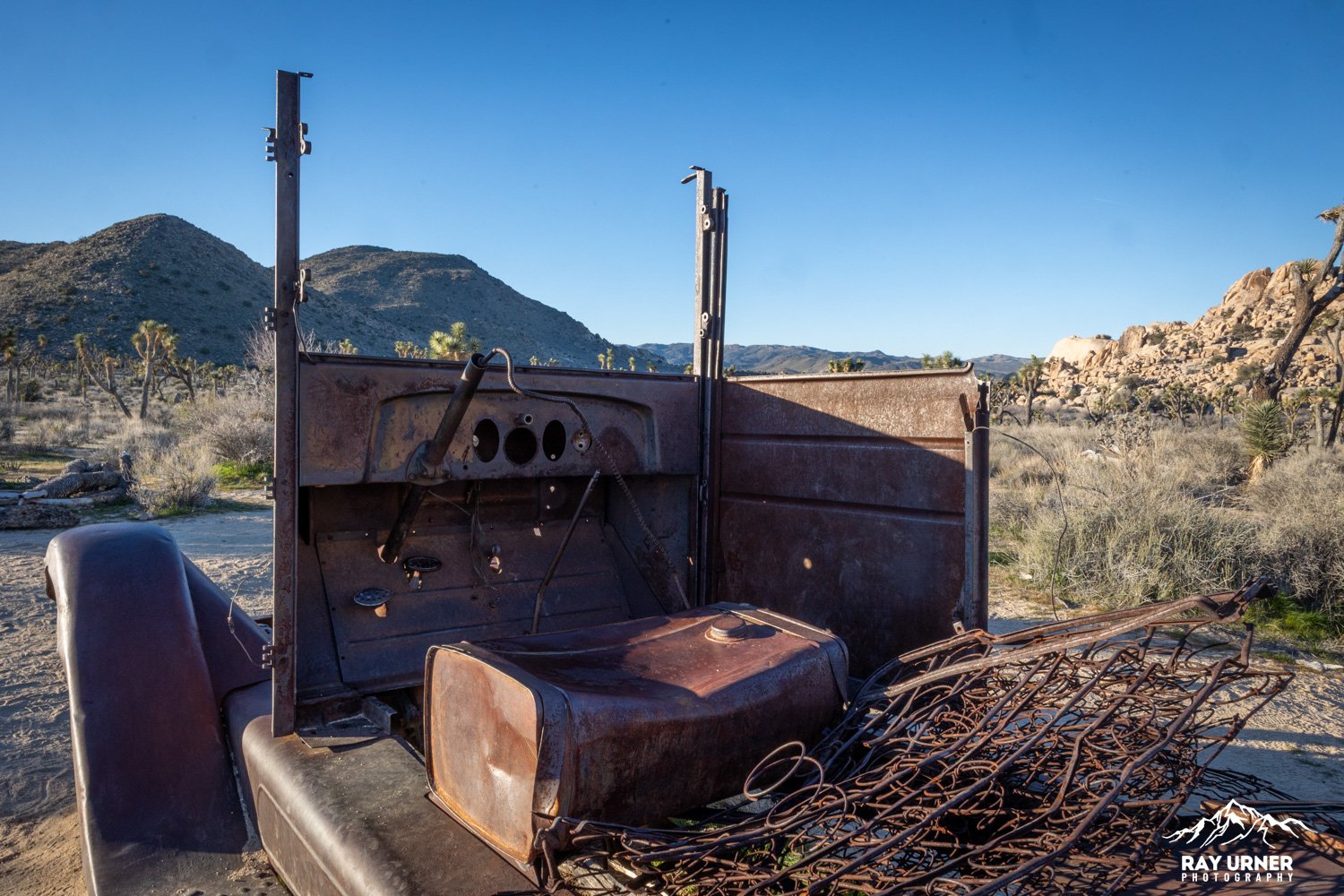
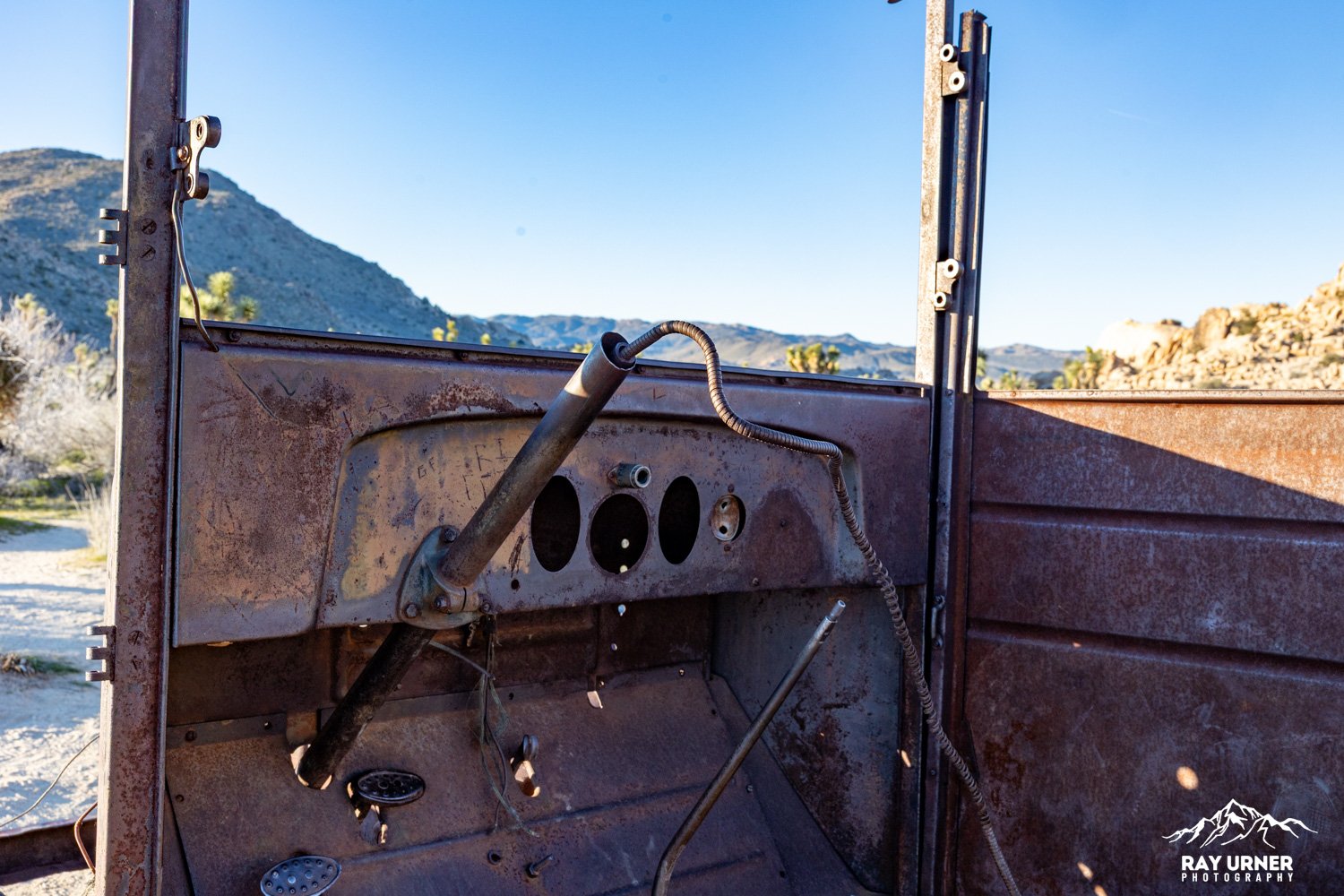
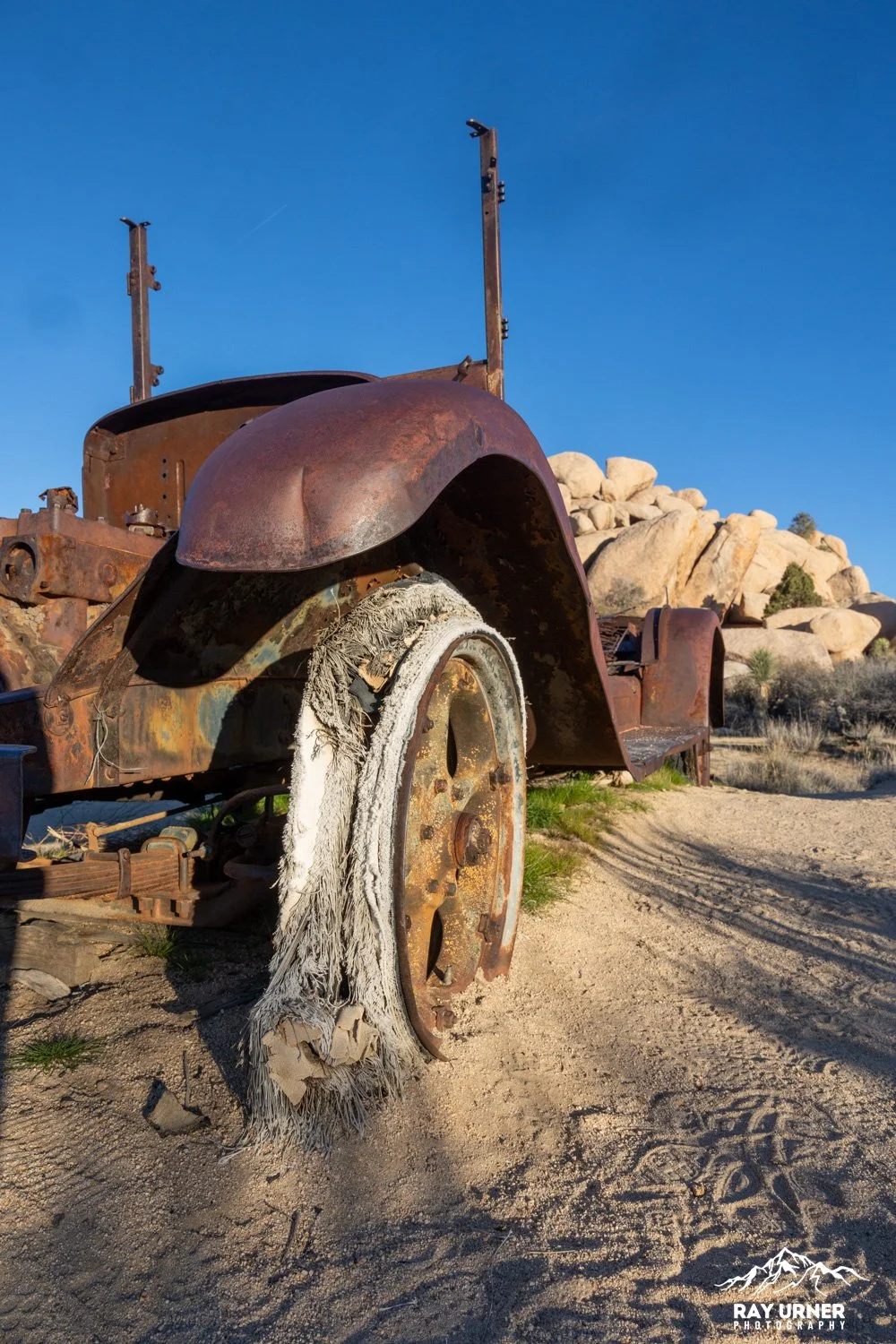
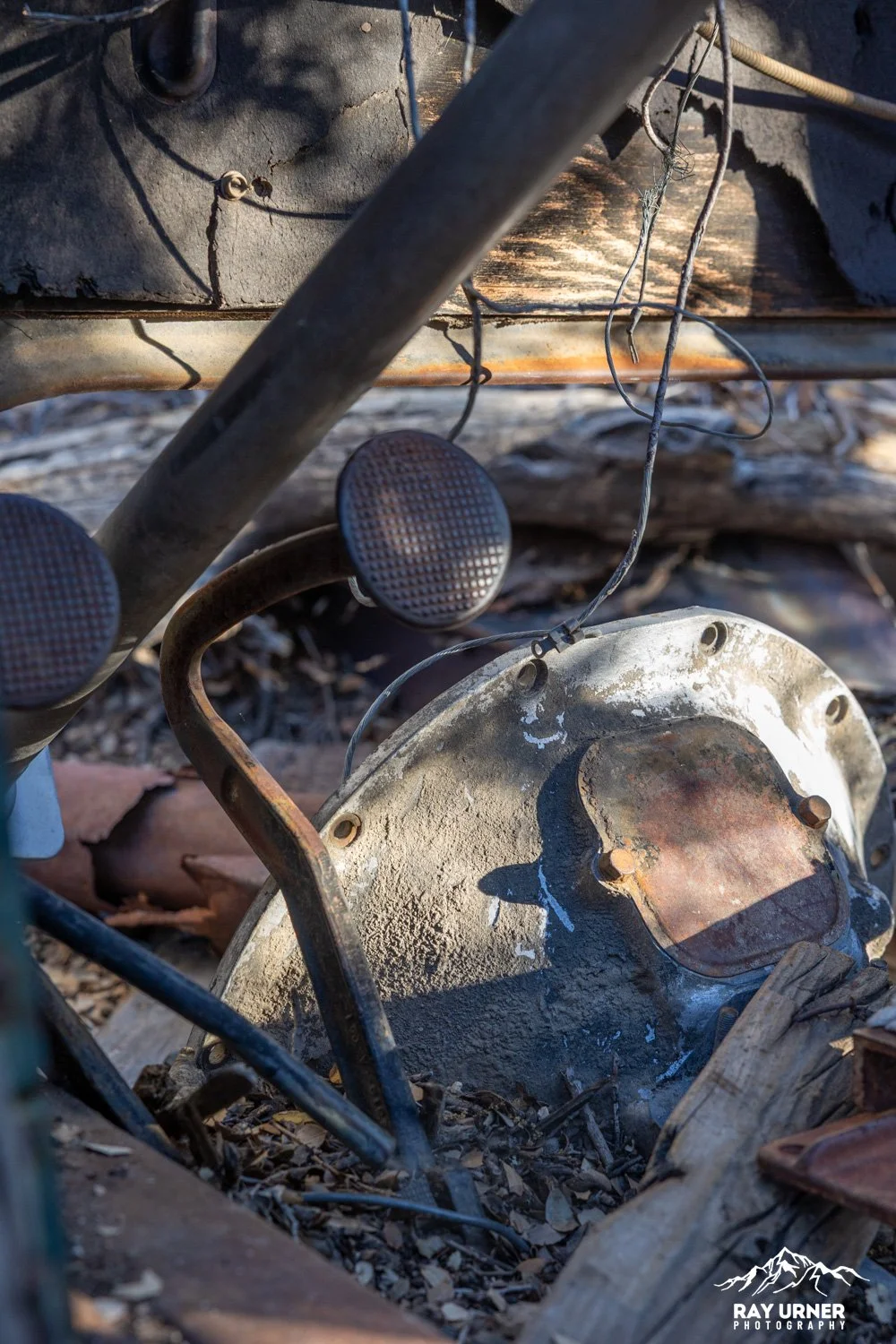
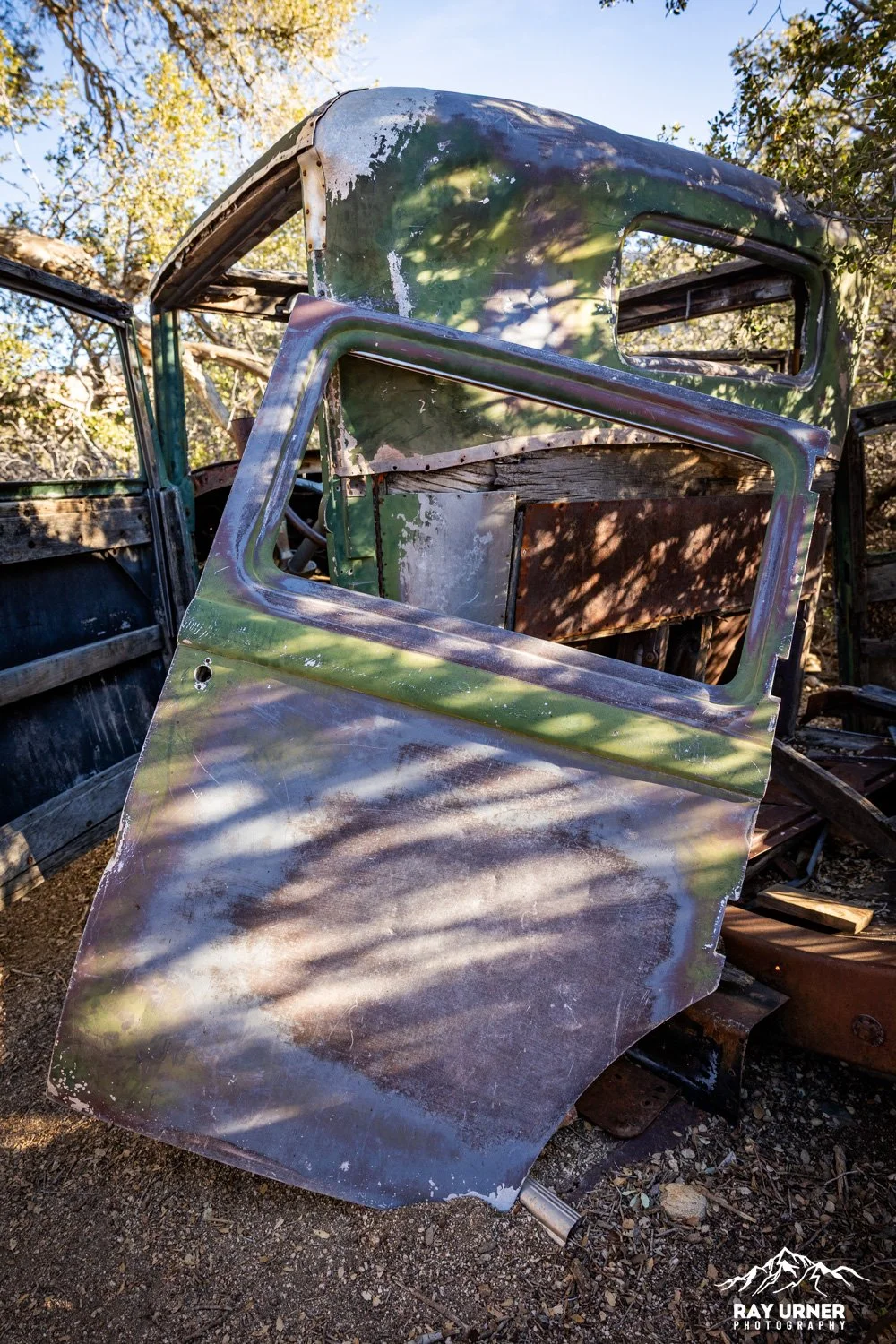
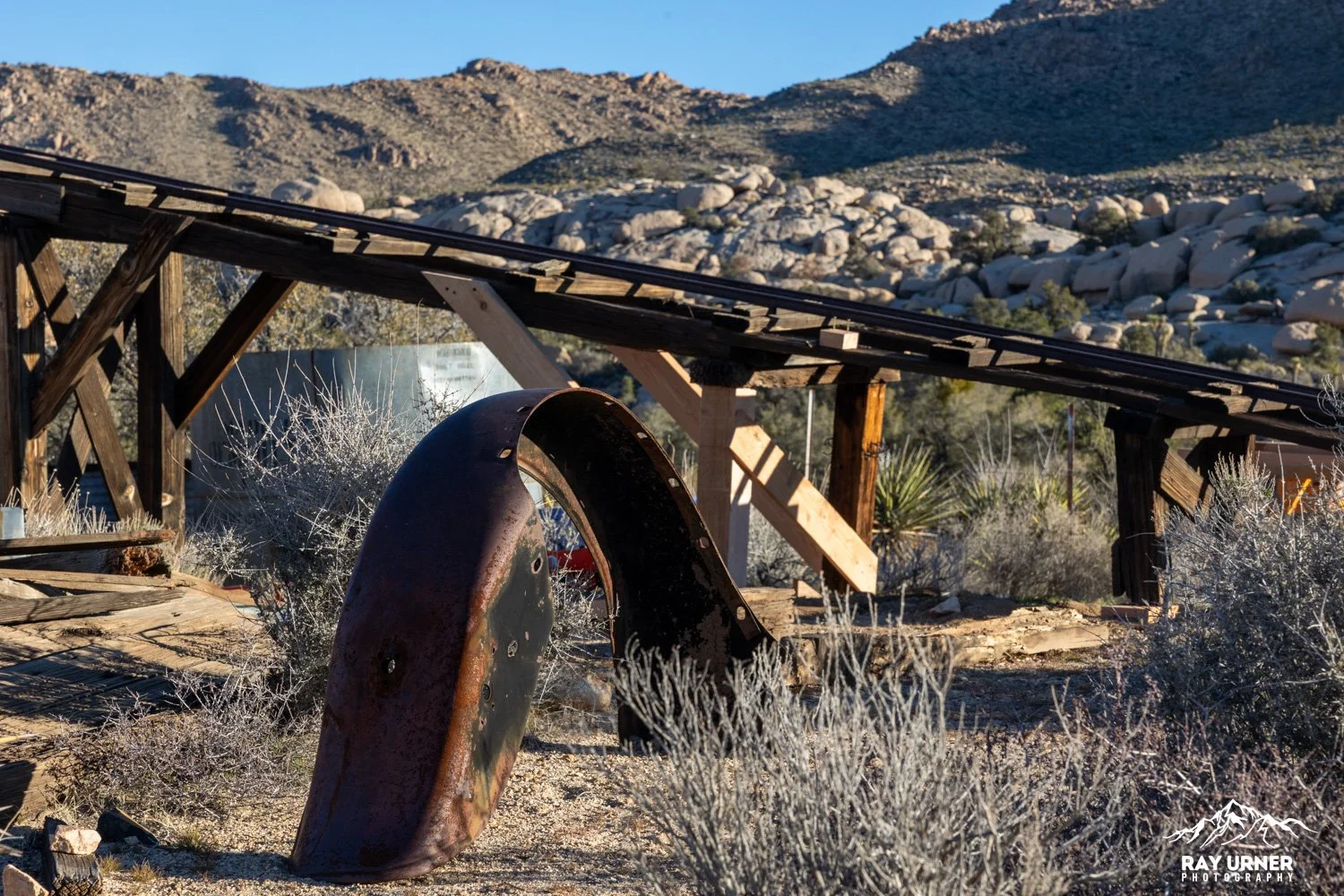
Old rusted vehicles from the mining era sit along the route.
One appears around 0.4 miles, another near 0.6 miles, and one closer to the mill site.
They are extremely photogenic foreground elements.
3. Windmill & Water Infrastructure
An old windmill, pump, and reservoir appear around halfway down the trail, marking the former water source for the mill.
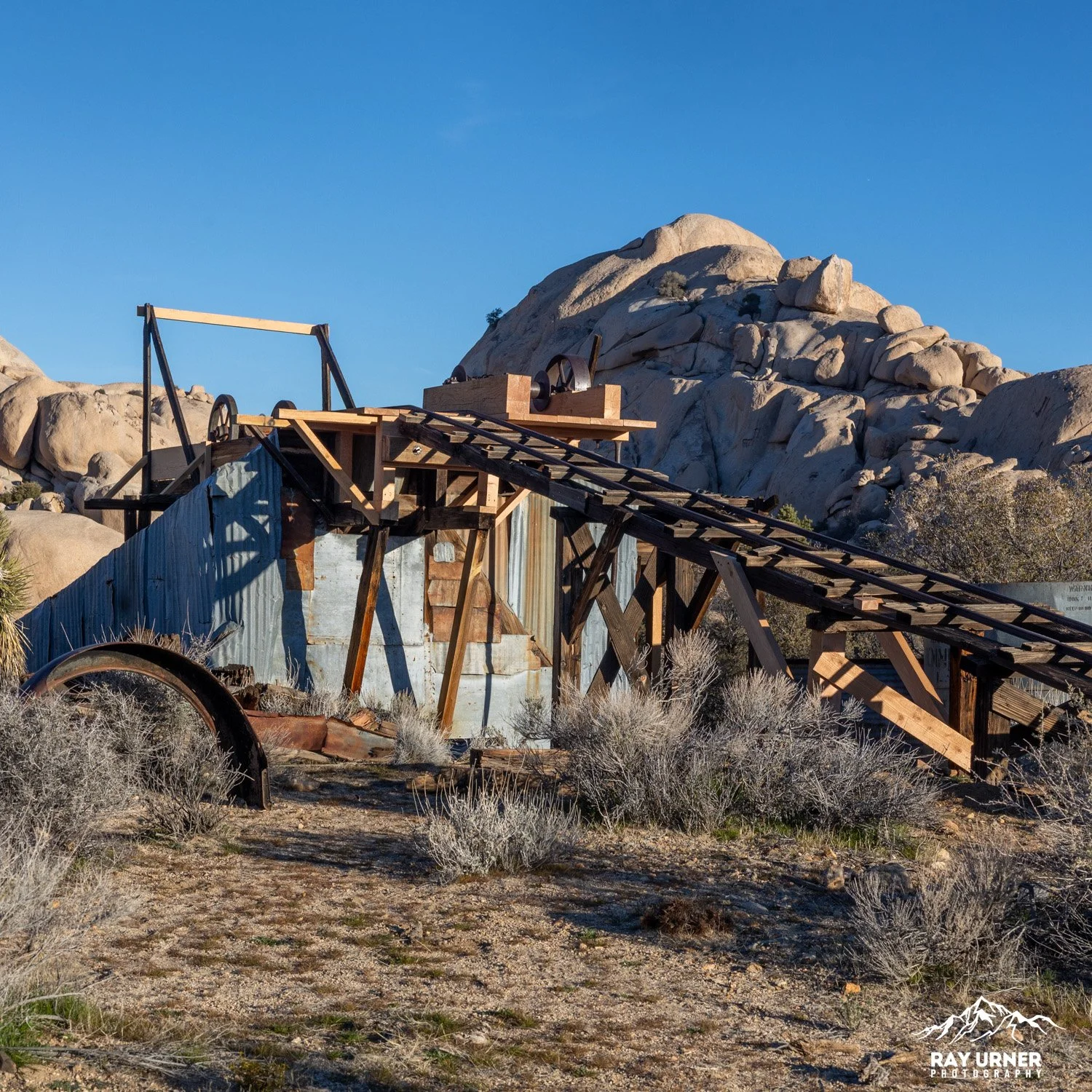
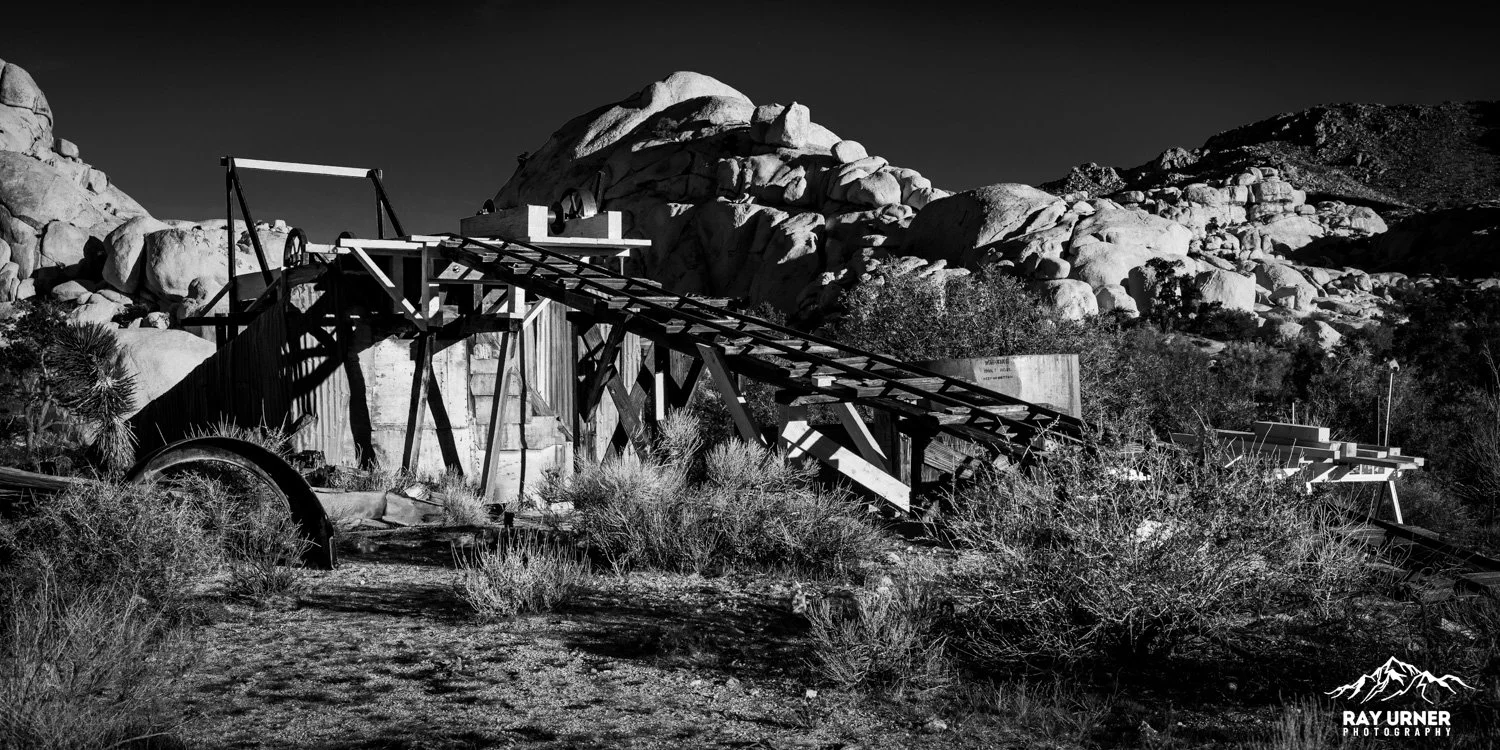
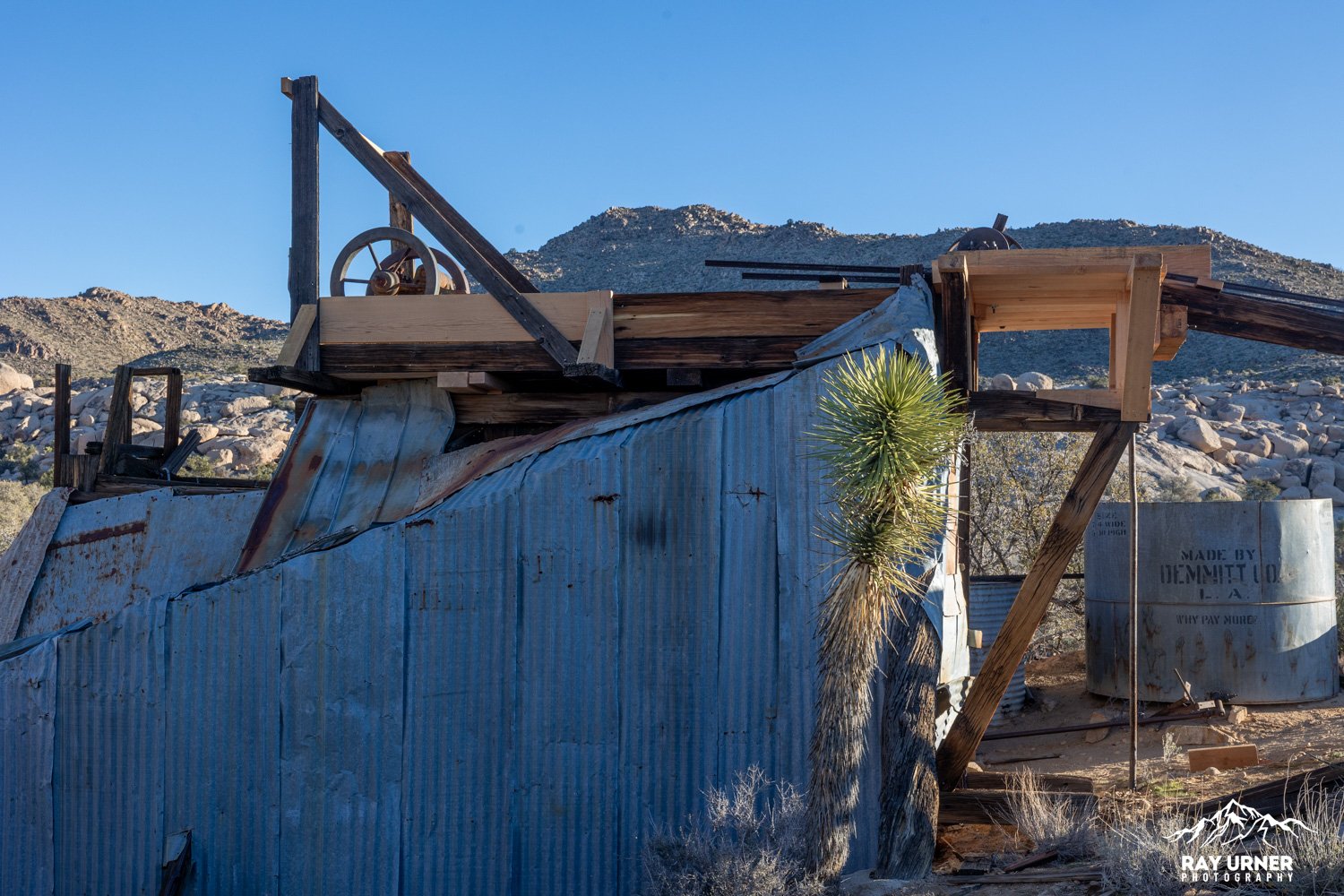
4. The Mill Itself
The mill structure includes:
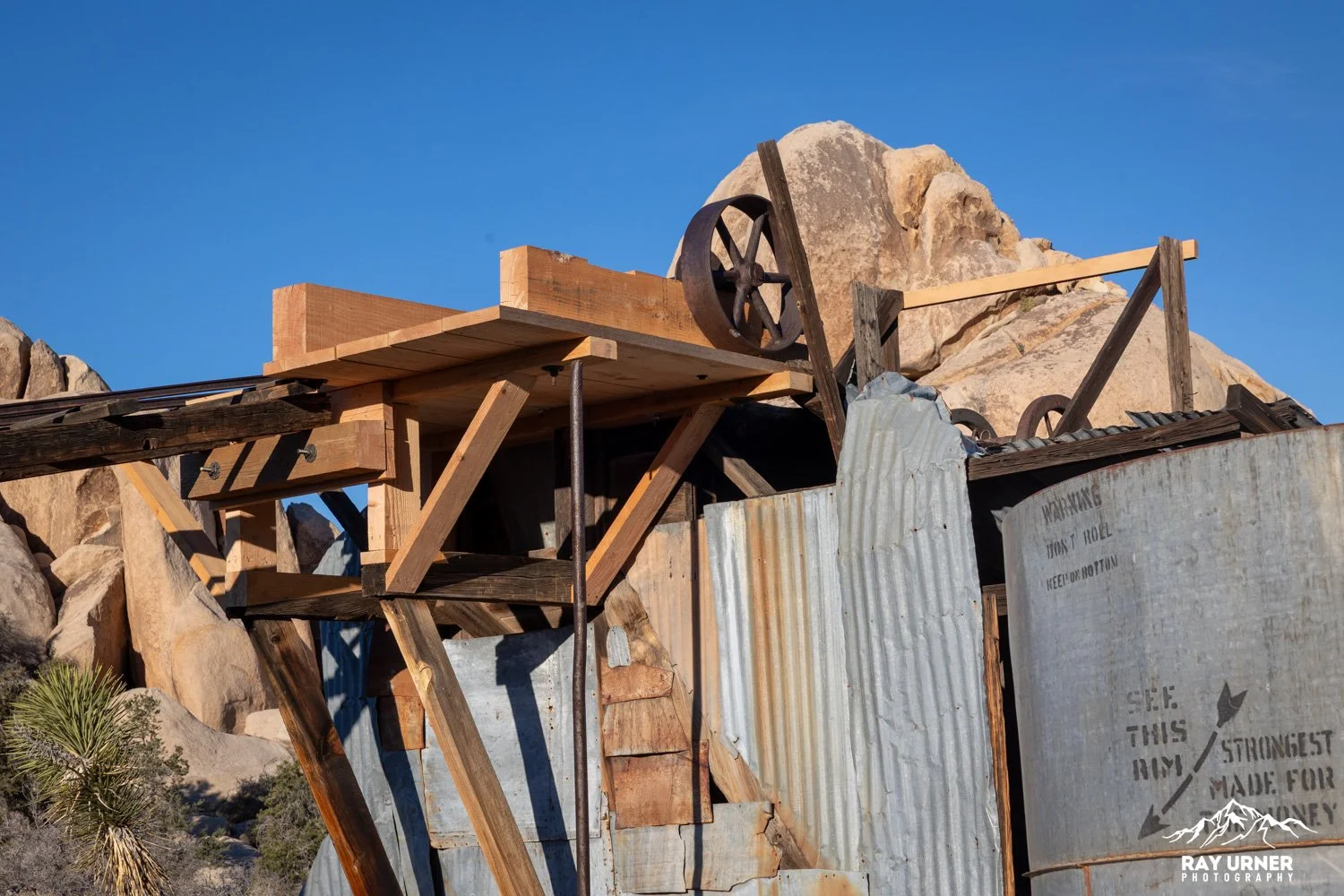
A heavy‑timber framed building
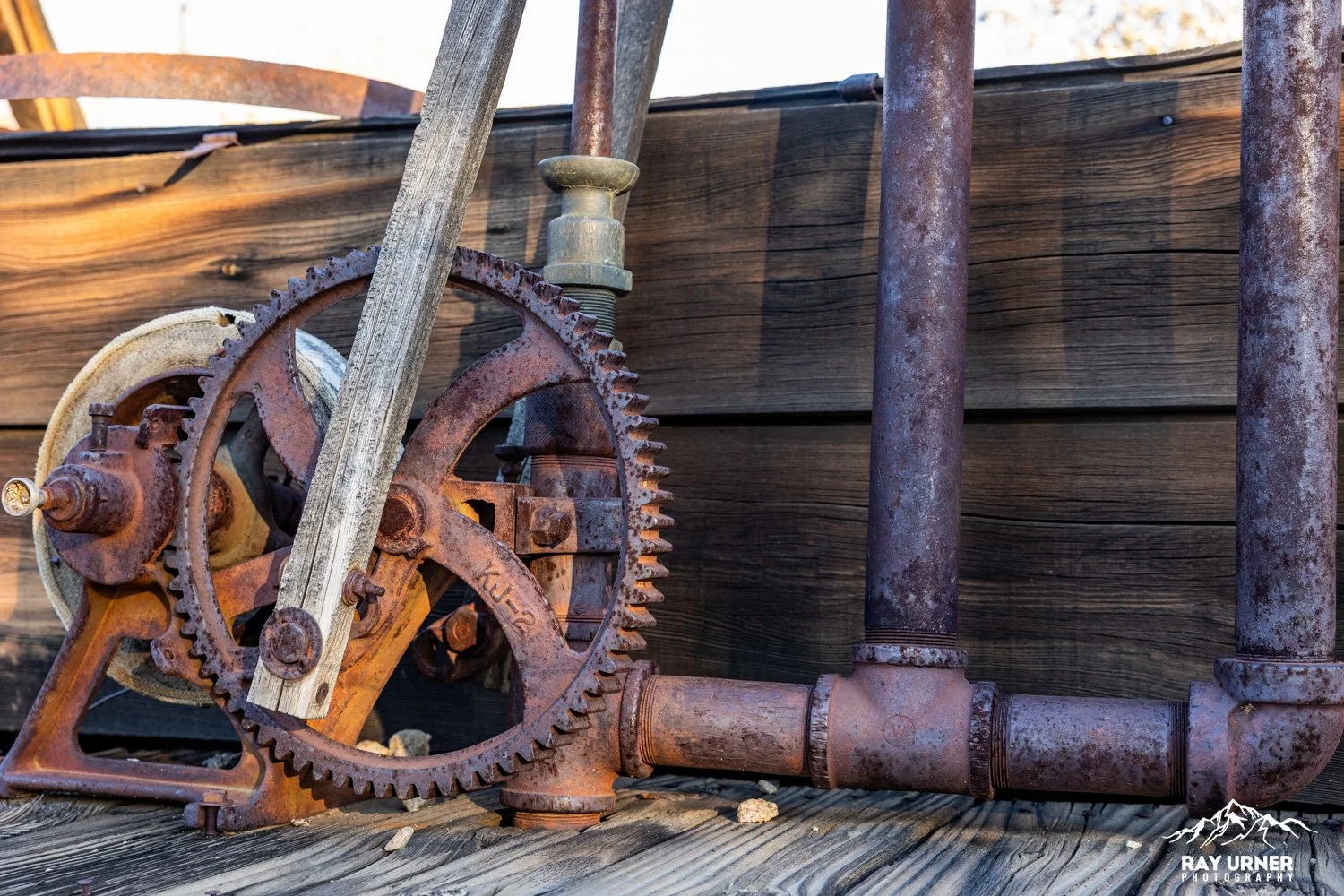
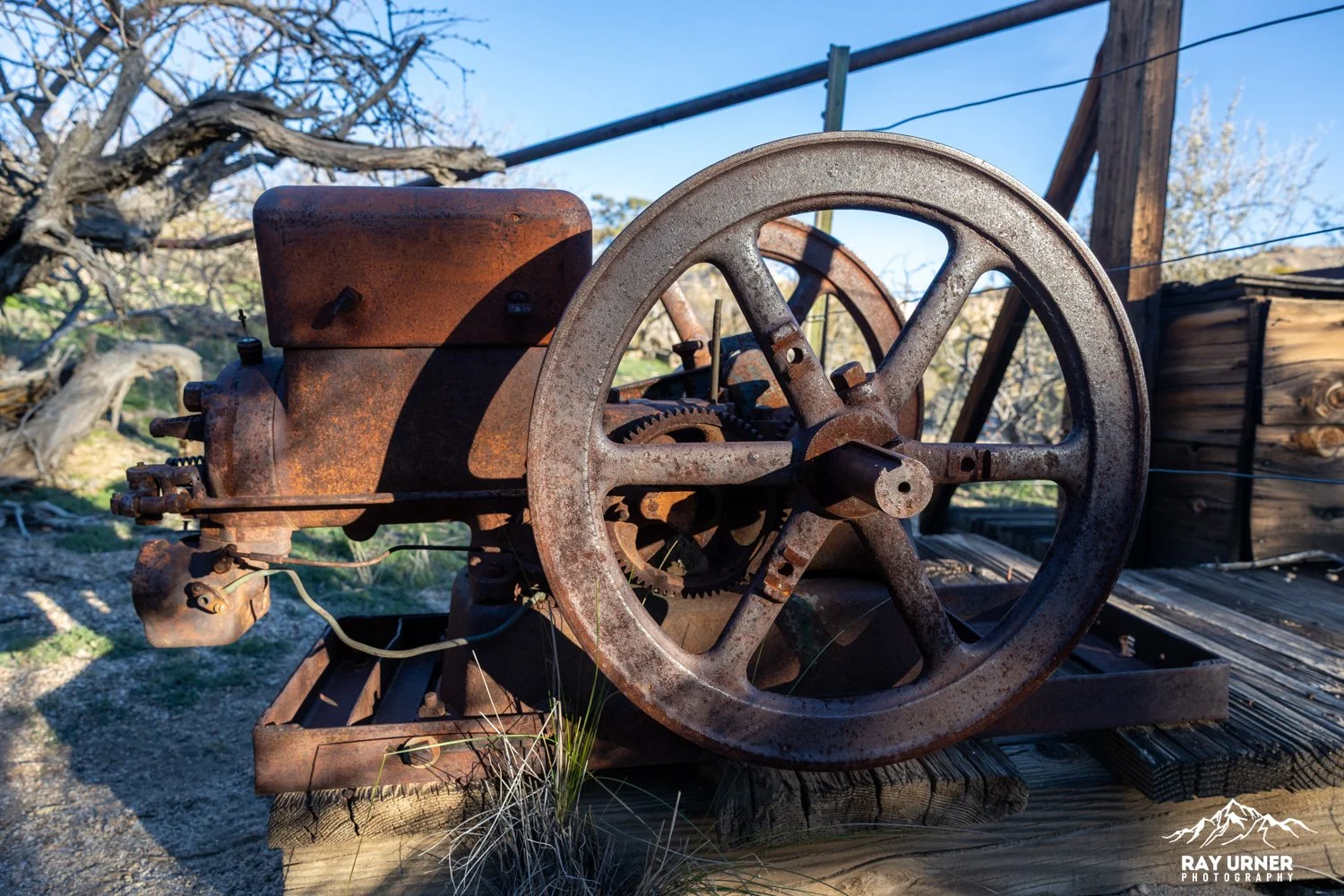
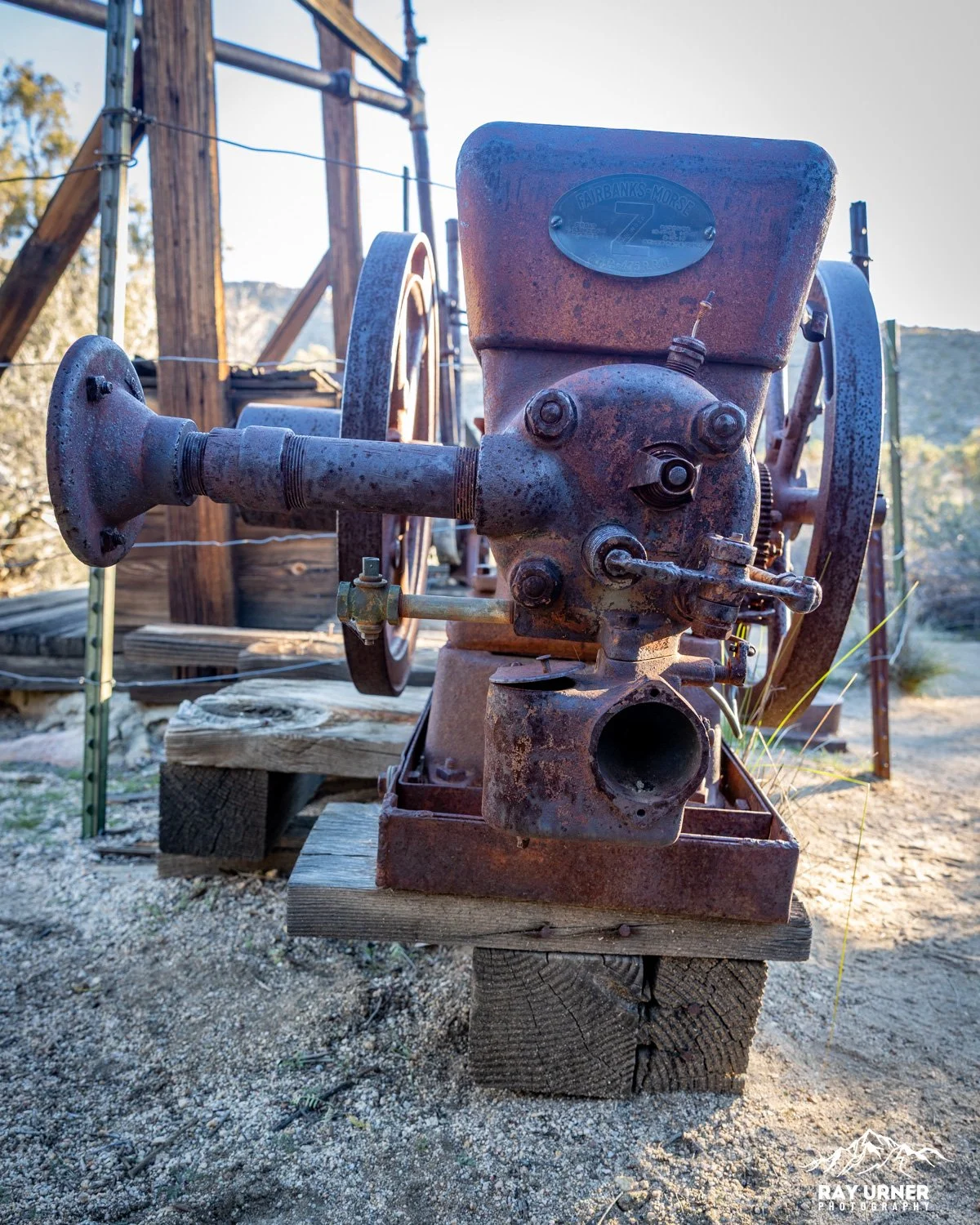
A stamp mill with two‑stamp Baker Iron Works machinery
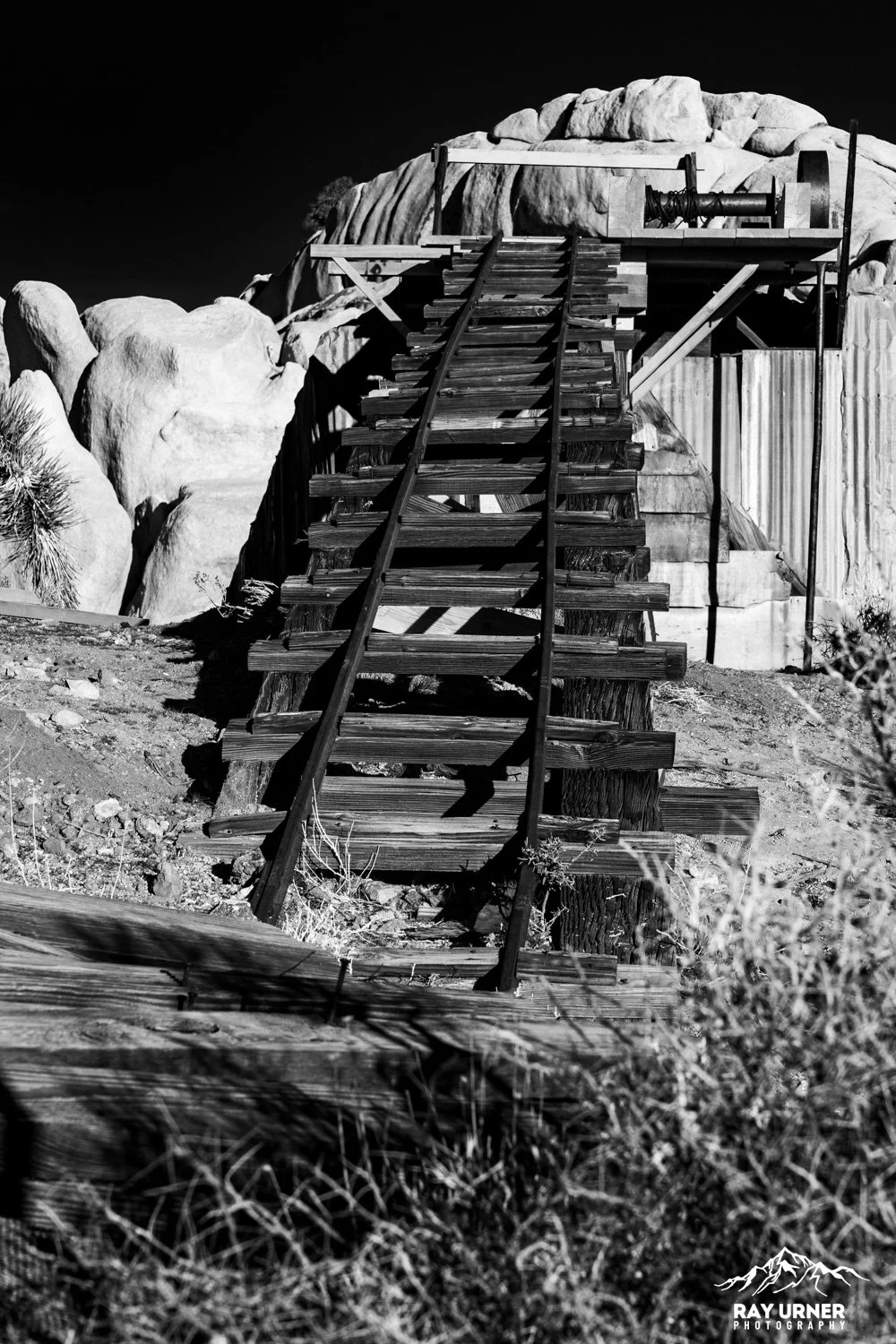
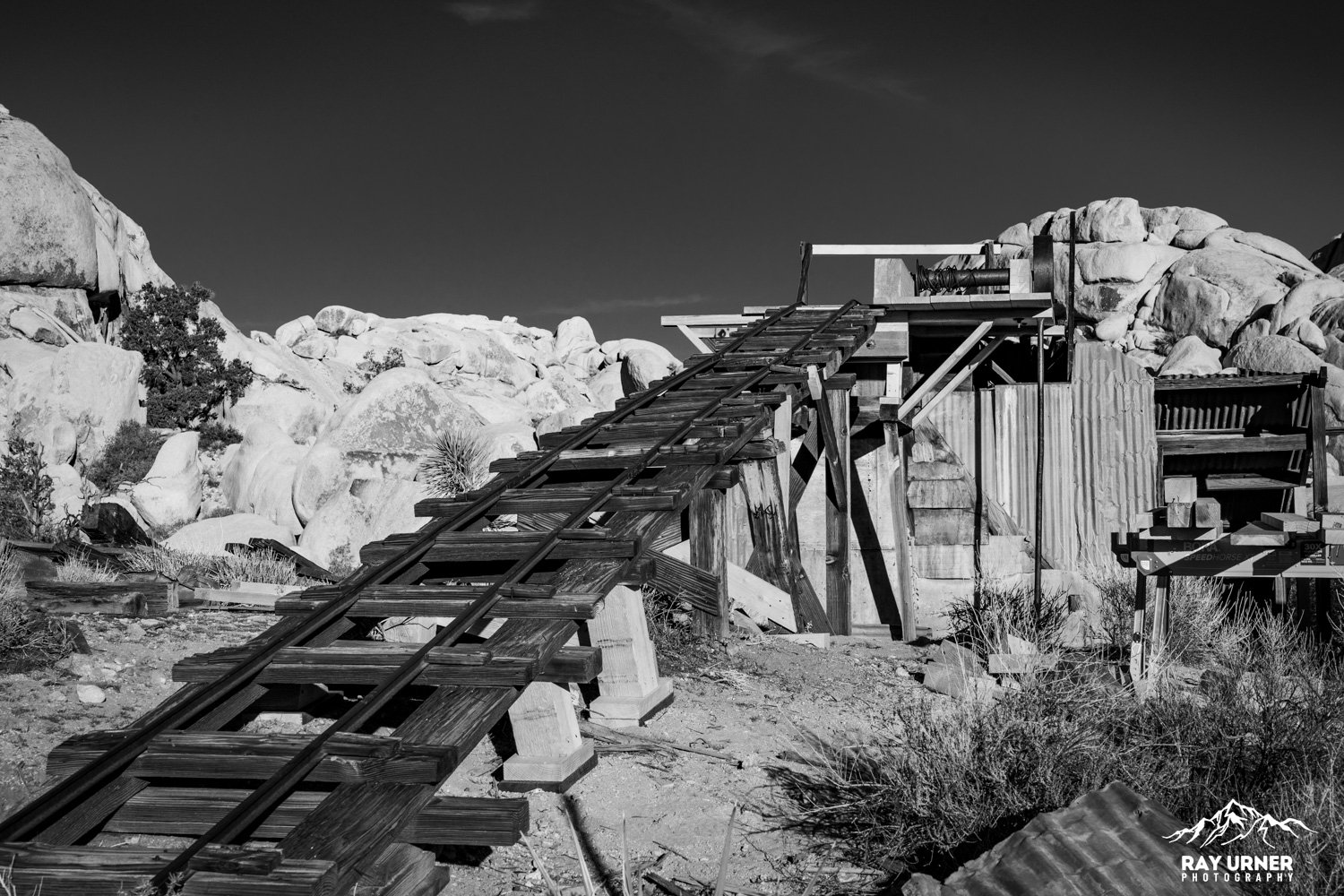
Ore tramway track above the mill
Concentrating table and water well
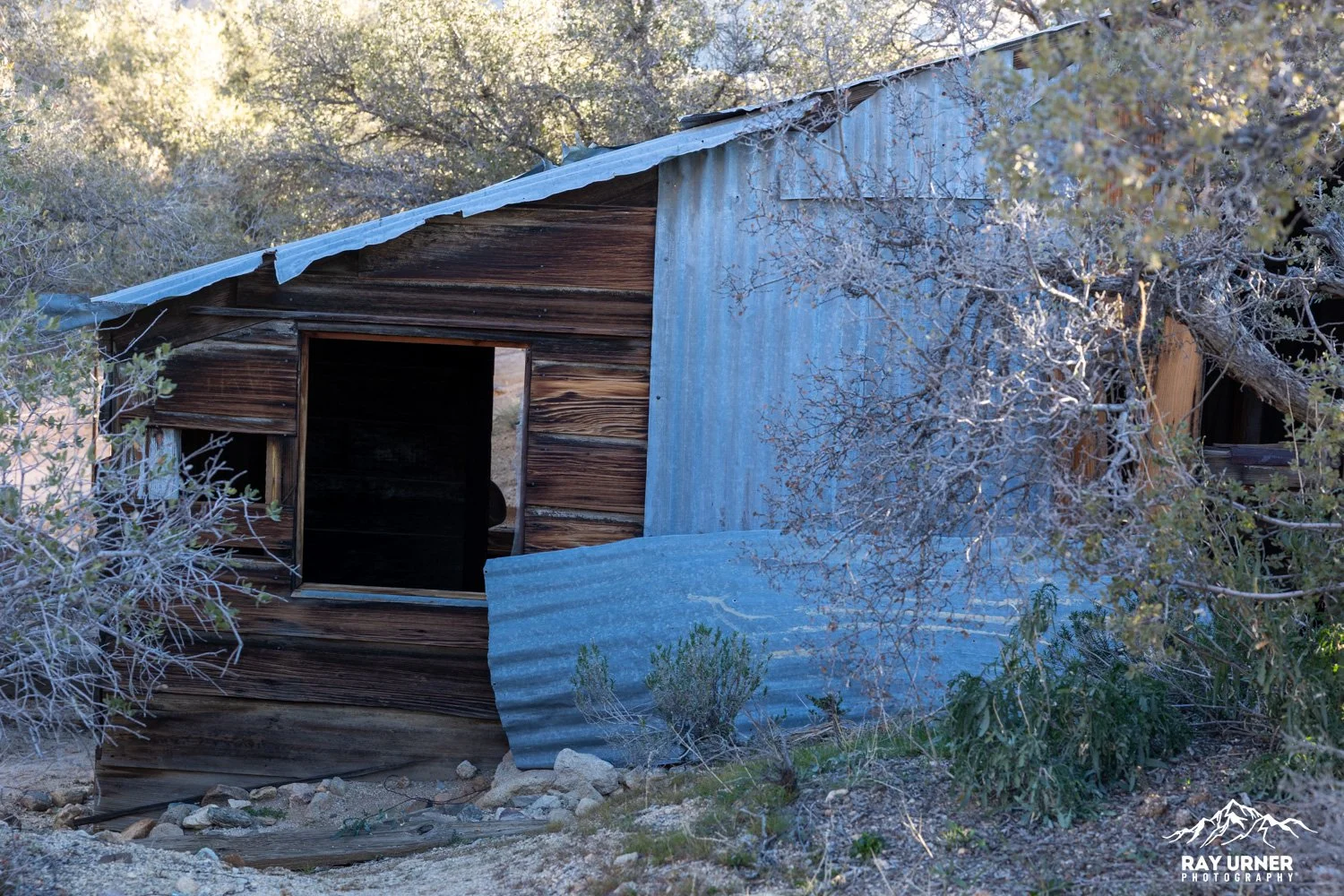
Corrugated metal siding and wooden ramp
This mill is the last intact stamp mill in Joshua Tree and remarkably photogenic.
Photography Guide
1. Abandoned Cars
One of the best spots for desert history photography.
Shoot with wide angles for environmental context or telephoto for texture.
Sunrise & late afternoon give the best directional light.

2. The Mill Structure
Photograph the mill from multiple elevations: climb nearby boulders (safe + low risk) for overhead angles.
The corrugated metal siding and wooden ramp create excellent line‑leading compositions.
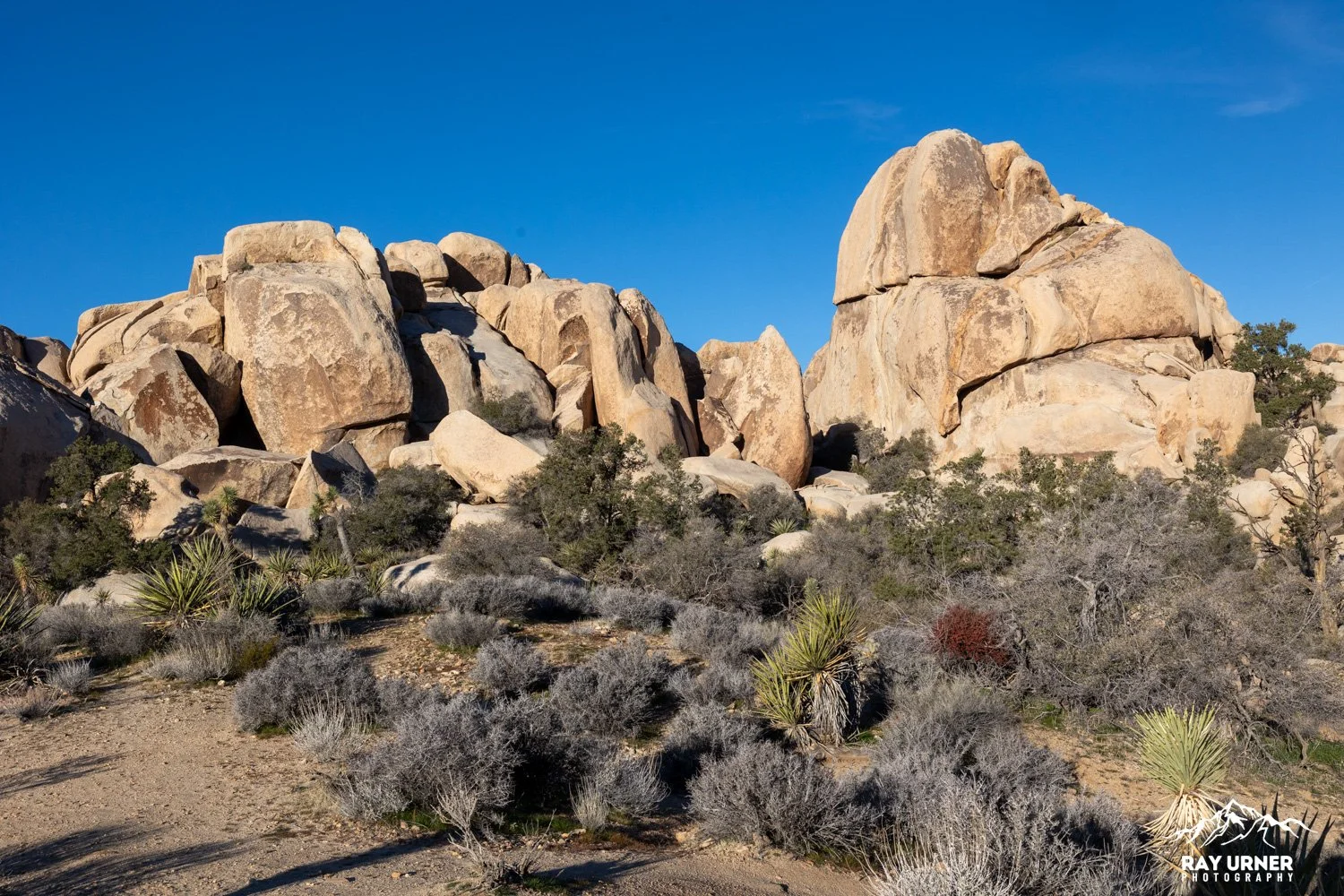
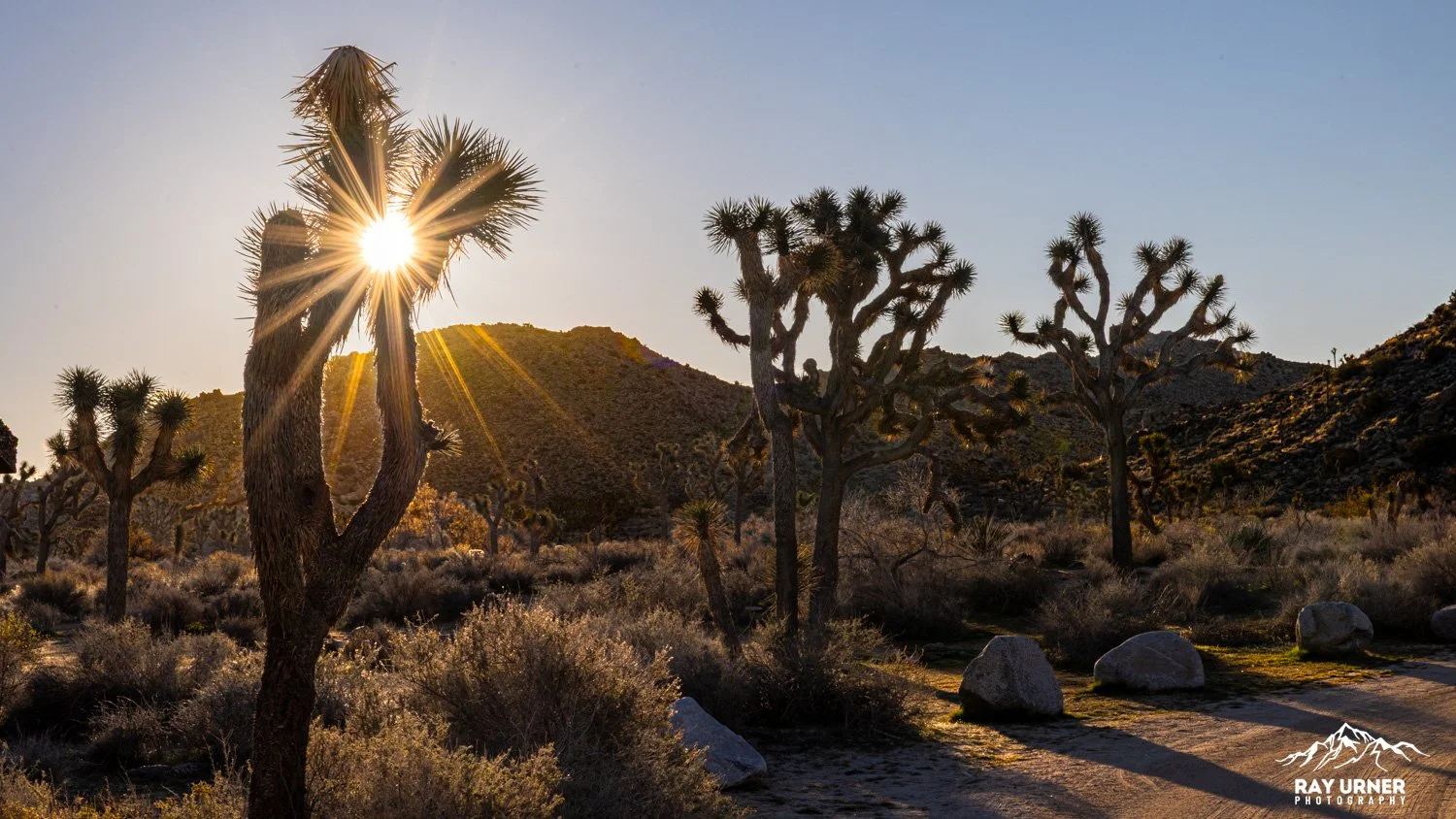
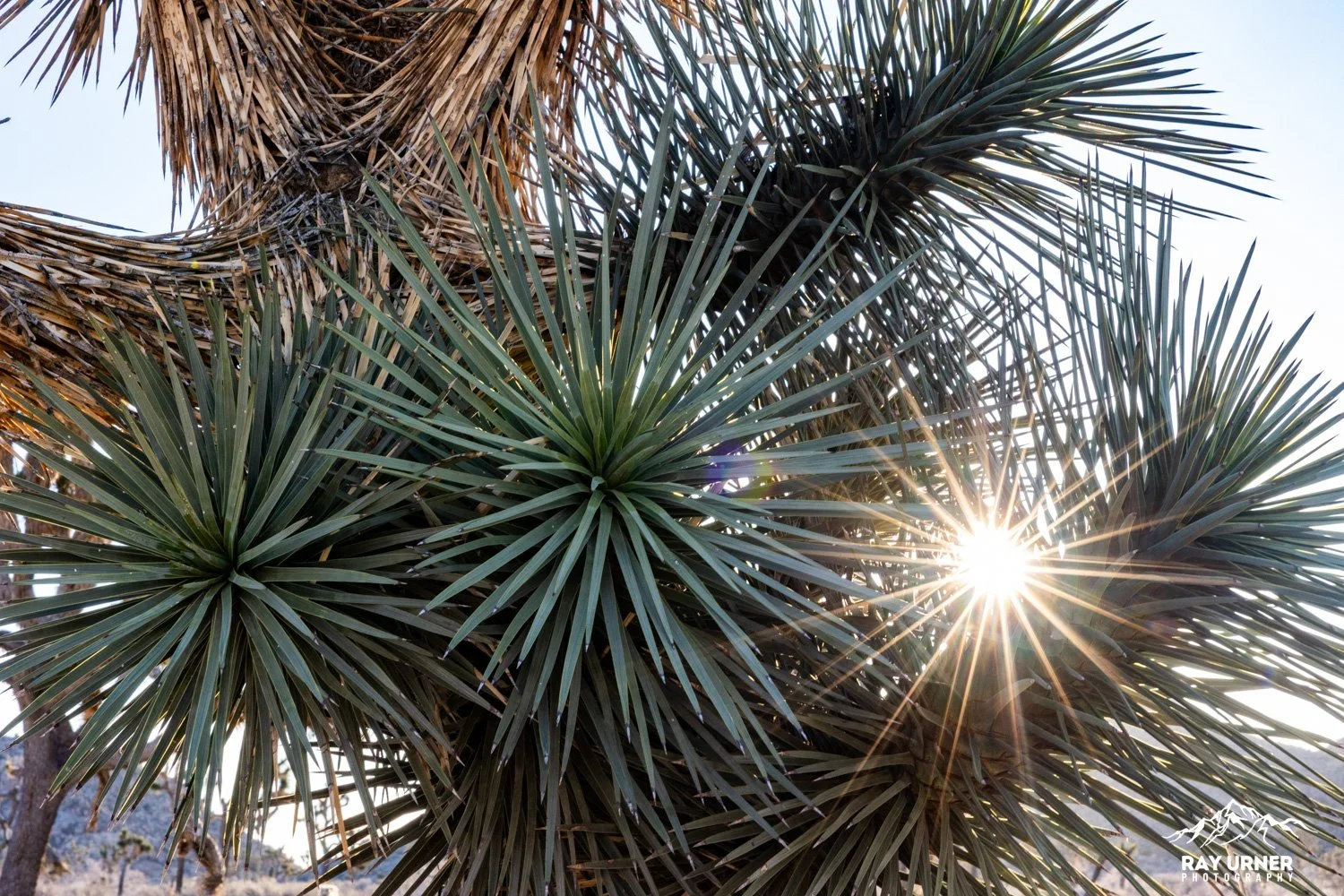
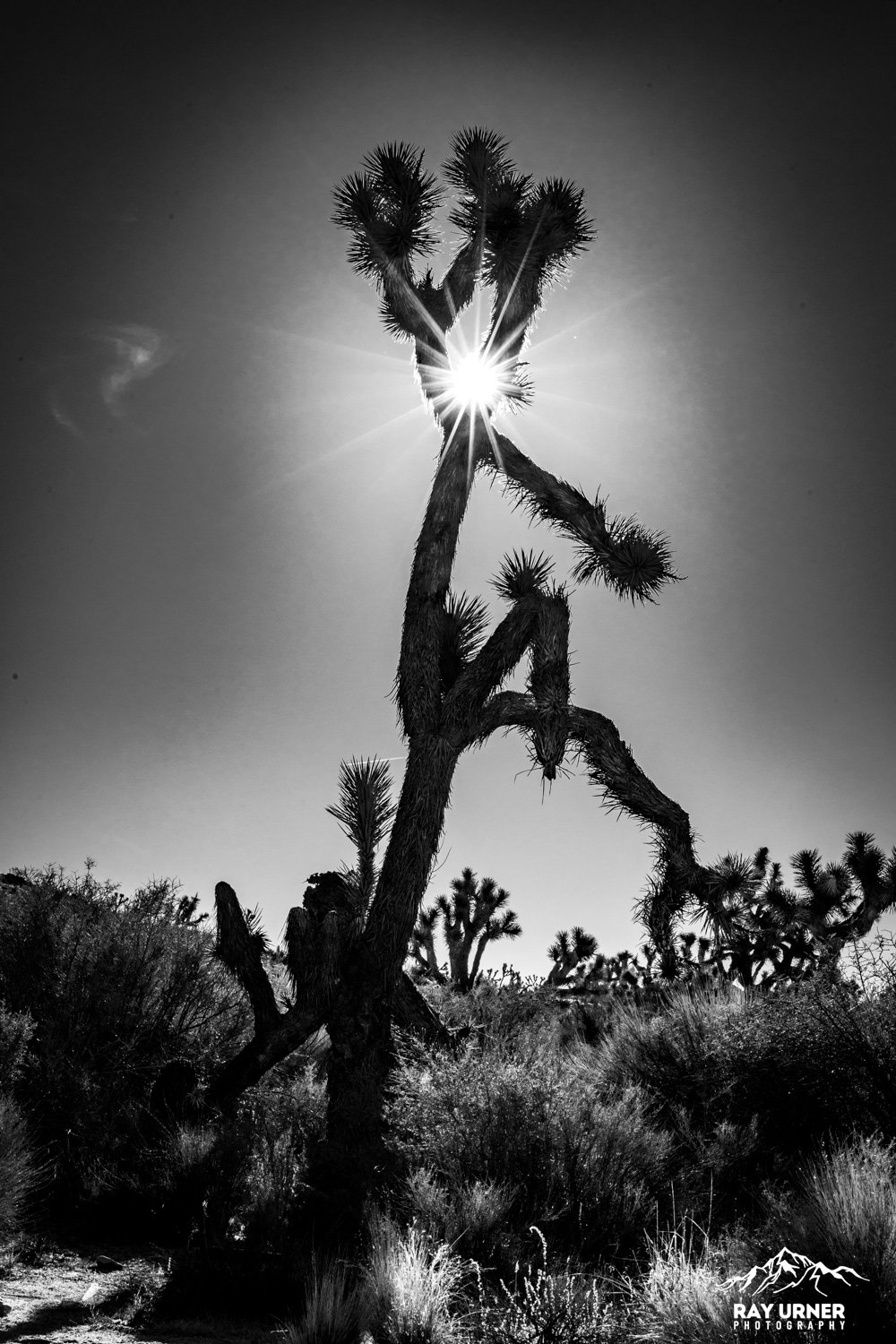
3. The Joshua Trees
I mean, we ARE in Joshua Tree National Park, after all!
Best Light
Morning: Great even illumination, cooler temps, and side‑light on mill machinery.
Mid‑day: Works well for high‑contrast metal and wood textures.
Late Afternoon: Long, warm shadows across the wash and boulders — best for storytelling shots of cars and ruins.
This trail is day‑use only, per NPS.
Logistics
Parking: Barker Dam lot fills early; Queen Valley Road lot is a backup.
Bathrooms: At Barker Dam area.
Fees: Standard park entry.
Timing: Avoid summer mid‑day; NPS advises starting before 10 a.m. in hot months.
Pro Tips
Bring extra water — zero shade.
Wear boots: sandy terrain + old debris around ruins.
Don’t touch artifacts; they’re part of protected history.
Combine this with Barker Dam for a two‑stop historic photography morning.