
Keys View
Keys View is sunrise gold: a 5,000‑foot overlook with a desert‑to‑mountain panorama, a front‑row seat to the San Andreas Fault, and morning light that paints the Coachella Valley in soft pastels—without needing to hike in the dark (as fun as that is sometimes.)
Keys View — Sunrise Photography Guide
Overview (Why sunrise here rocks)
While Keys View is a famous sunset location, sunrise has the real advantage: fewer people, open parking, cool air, soft pastels, and no waiting for crowds to clear. At dawn, the sun rises behind the viewpoint, casting pink and gold light across the Coachella Valley and the heavy ridgelines. The west‑facing vista means the mountains catch the earliest color while you shoot from stable, paved ground—no scrambling required.
Quick Facts
Elevation: ~5,185 ft on the crest of the Little San Bernardino Mountains
Access: 20‑minute drive from Park Boulevard down Keys View Road; paved to the top; wheelchair‑accessible viewpoint available
Trail Option: A short ~0.2‑mile paved loop to upper viewpoint; lower viewpoint fully accessible and less steep
Facilities: Vault toilet near parking; no water; high winds common
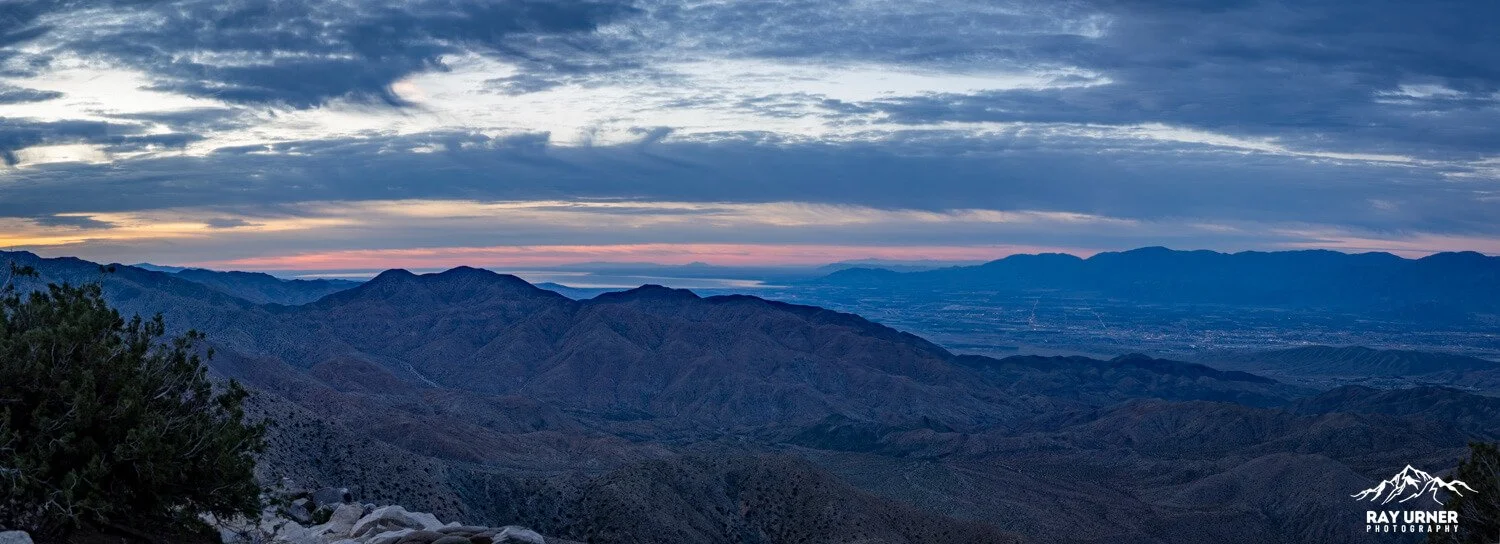
Visibility: Views include the Salton Sea (230 ft below sea level), San Jacinto Peak, San Gorgonio Mountain, Santa Rosa Mountains, and on extremely clear days, Mexico’s Signal Mountain
Overview (Why sunrise here rocks)
While Keys View is a famous sunset location, sunrise has the real advantage: fewer people, open parking, cool air, soft pastels, and no waiting for crowds to clear. At dawn, the sun rises behind the viewpoint, casting pink and gold light across the Coachella Valley and the heavy ridgelines. The west‑facing vista means the mountains catch the earliest color while you shoot from stable, paved ground—no scrambling required.
History
Keys View is named for William F. Keys, a homesteader whose ranching and mining legacy shapes much of the park’s early 20th‑century story. While Keys View itself was never a mining site, the vantage point was historically used to understand regional geography—especially the dramatic landforms influenced by the San Andreas Fault.
Geology
Joshua Tree sits atop a tangle of hundreds of fault lines, and Keys View offers the clearest park‑wide vantage of the San Andreas Fault, a 700‑mile strike‑slip boundary visible slicing across the valley floor. The southwest side of the viewpoint drops nearly a mile into the Coachella Valley, revealing how block faulting has shaped the basin. On exceptionally clear days you’ll see the entire basin‑and‑range pattern extending to Mexico.
Ecology
Because Keys View is at high elevation, you’ll notice pinyon–juniper woodland transitioning into high‑desert scrub. Wildlife encounters are less common at the viewpoint than in lower valleys, but raptors, ravens, and wind‑tough shrubs appear frequently. Thin air, cooler temperatures, and strong crosswinds are the most “ecological features” you’ll feel. (Hold onto your hat. Seriously.)
Best Photo Spots (and how to shoot them)
No coordinates per your preference—just visually recognizable setups.
Main Overlook Rail
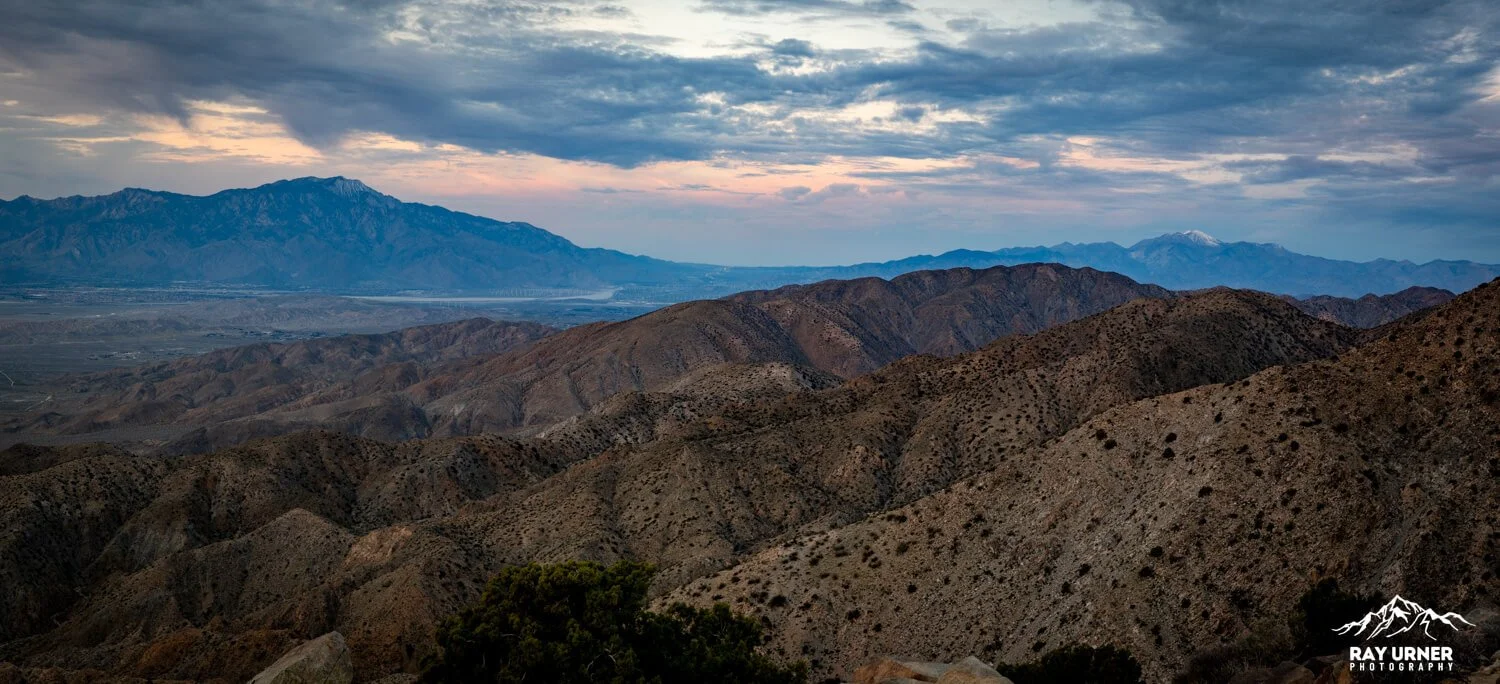
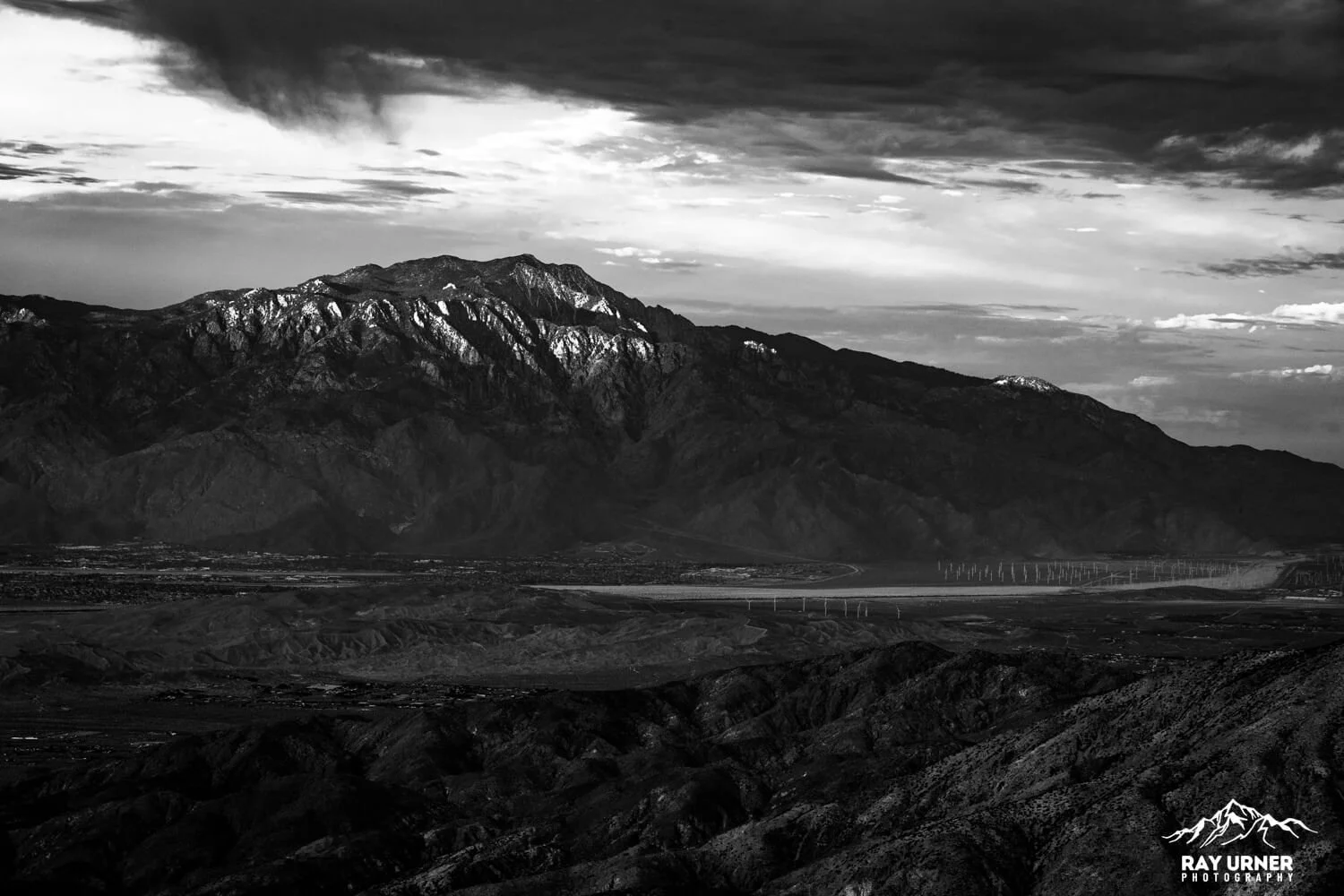
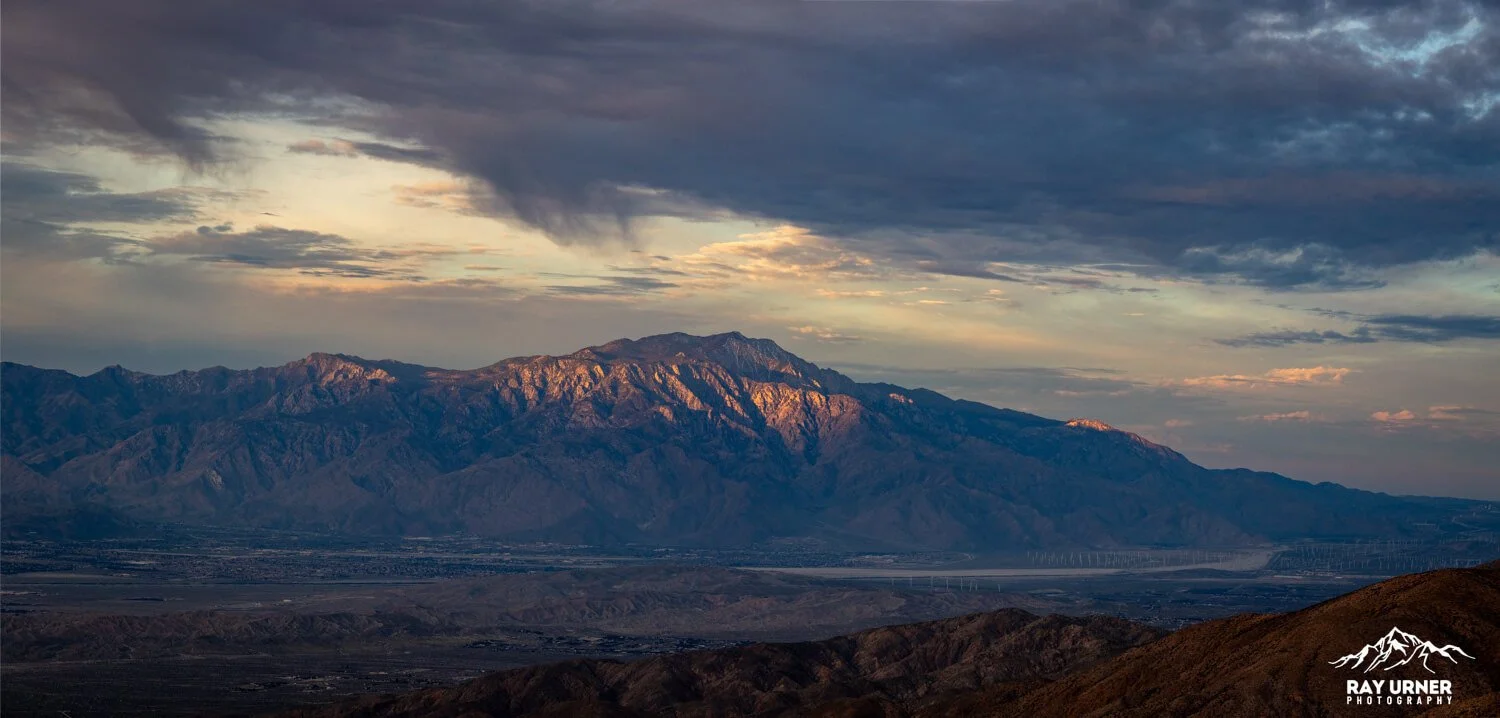
Your classic wide‑angle shot: Coachella Valley center frame, the San Andreas Fault running diagonally through mid‑ground. Use a wide angle lens for sweeping drama. Pre‑dawn pastel layer hits the ridges first.Leftward Pan toward the Salton Sea
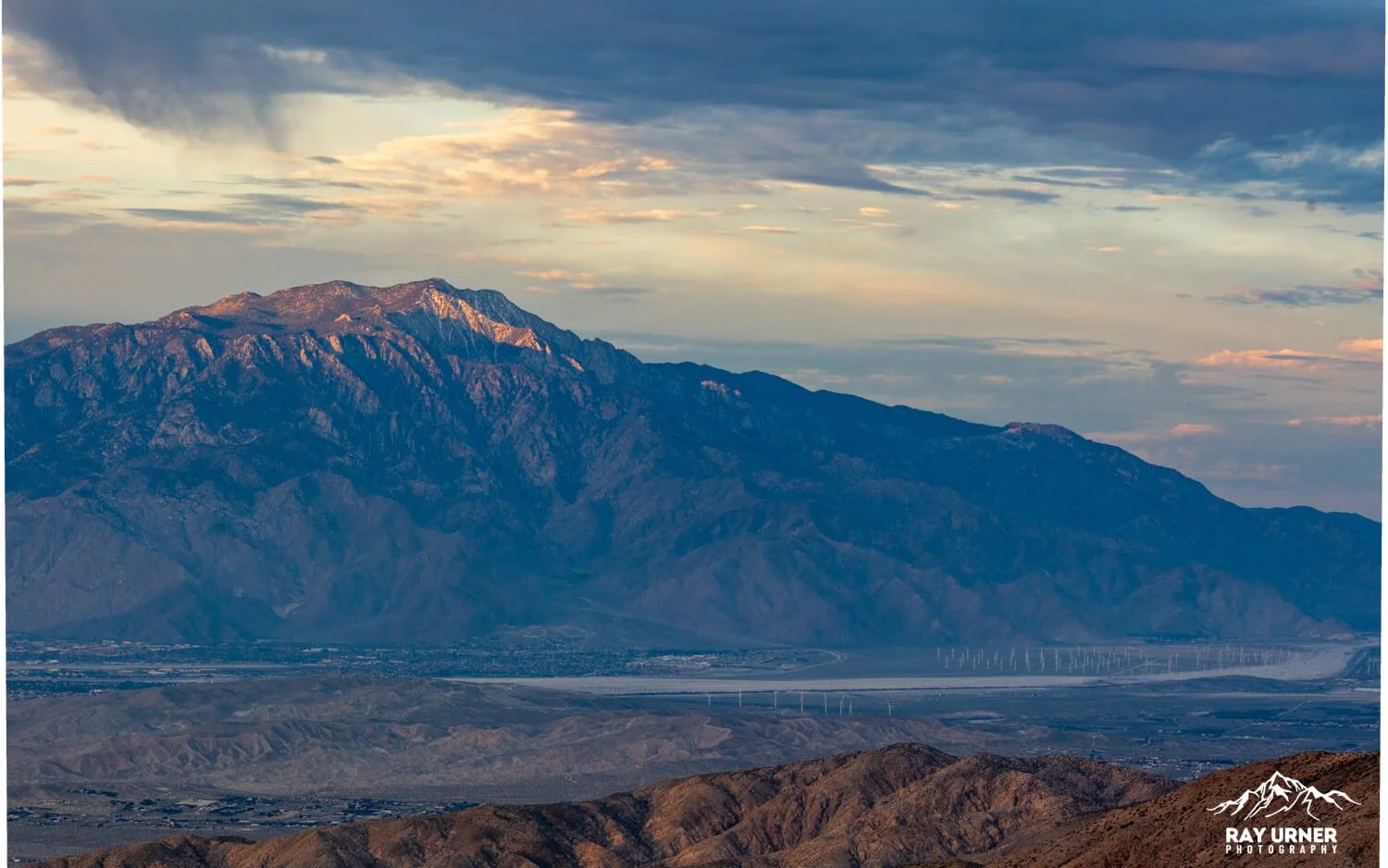
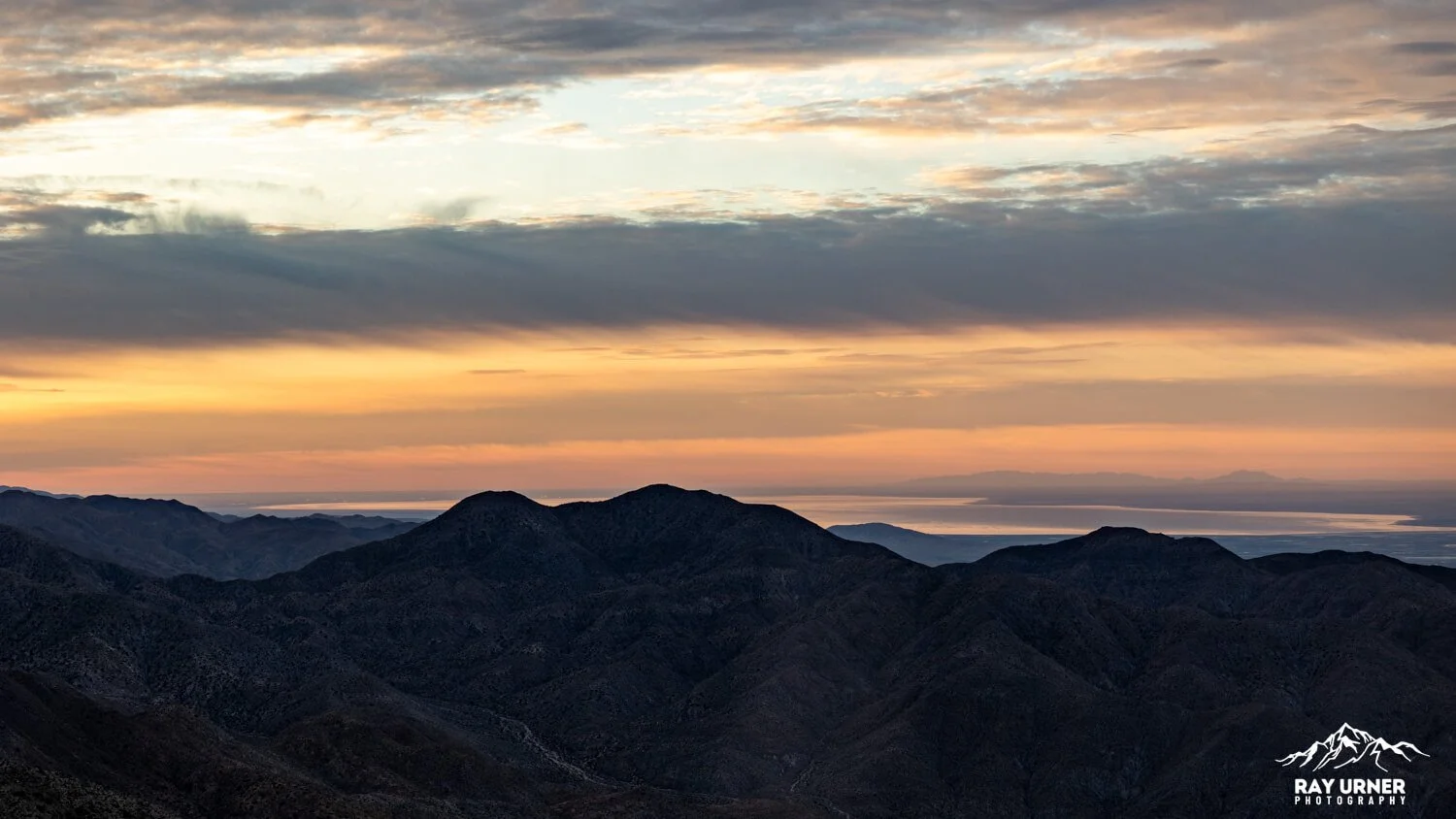
The Salton Sea sits 230 ft below sea level, reflecting early light with a soft silver sheen. Works beautifully with a telephoto (70–200mm) for compressed gradients.Rightward Pan toward San Jacinto & San Gorgonio
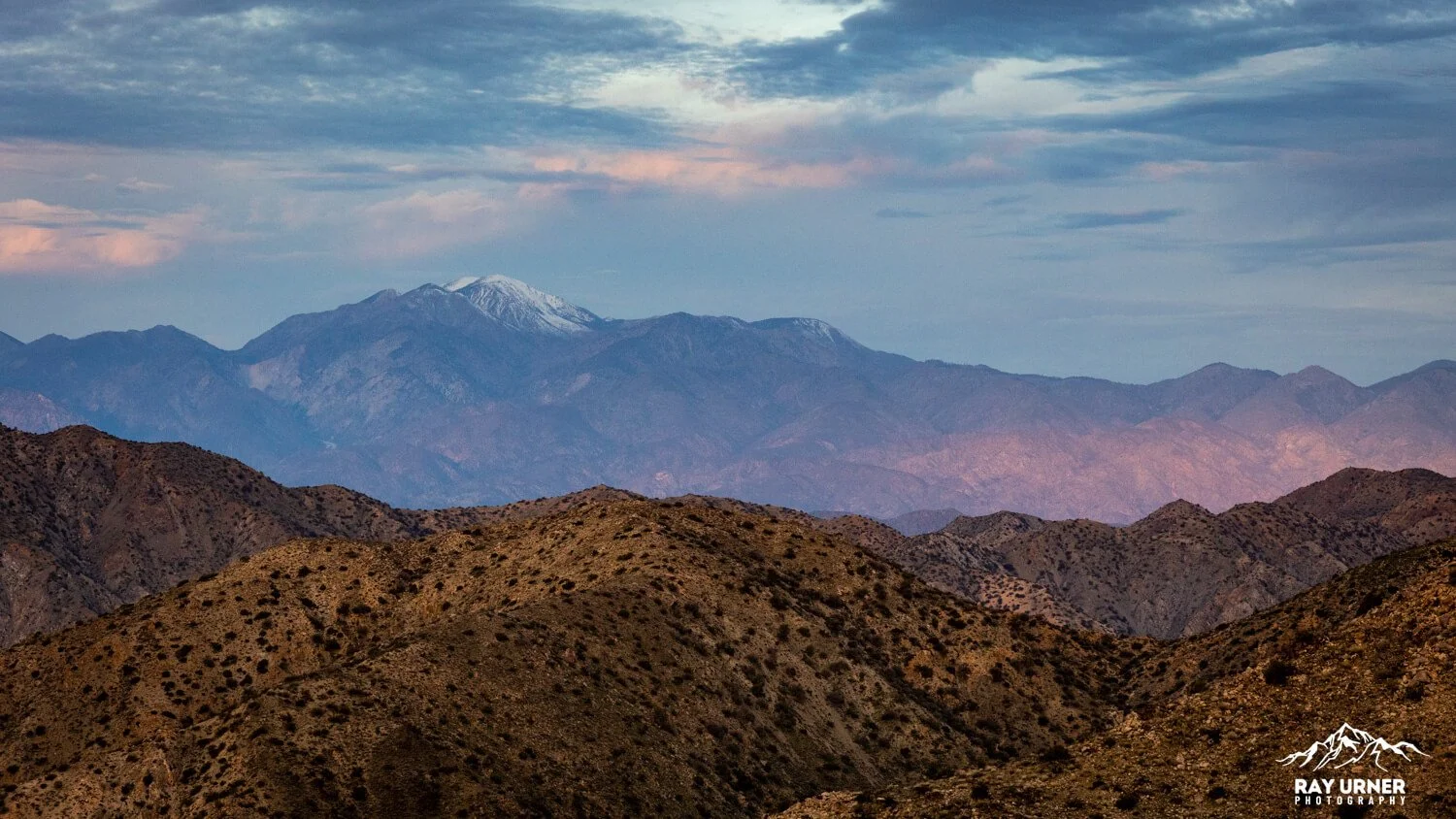
These peaks catch the earliest light and often hold snow in colder months. Use 100–200mm to isolate the peaks in pastel haze. A Circular Polarizer can subtly deepen sky gradient without over‑filtering.Lower Keys View Accessible Deck
Offers equally strong sightlines with more foreground shrubs for environmental framing. Great if winds are brutal at the upper deck—this spot is slightly more sheltered.
Shot List (Plug‑and‑play ideas)
Pre‑Dawn Blue Hour: Subtly lit Coachella Valley with silhouetted ridges; tripod + 2–6 sec exposures.
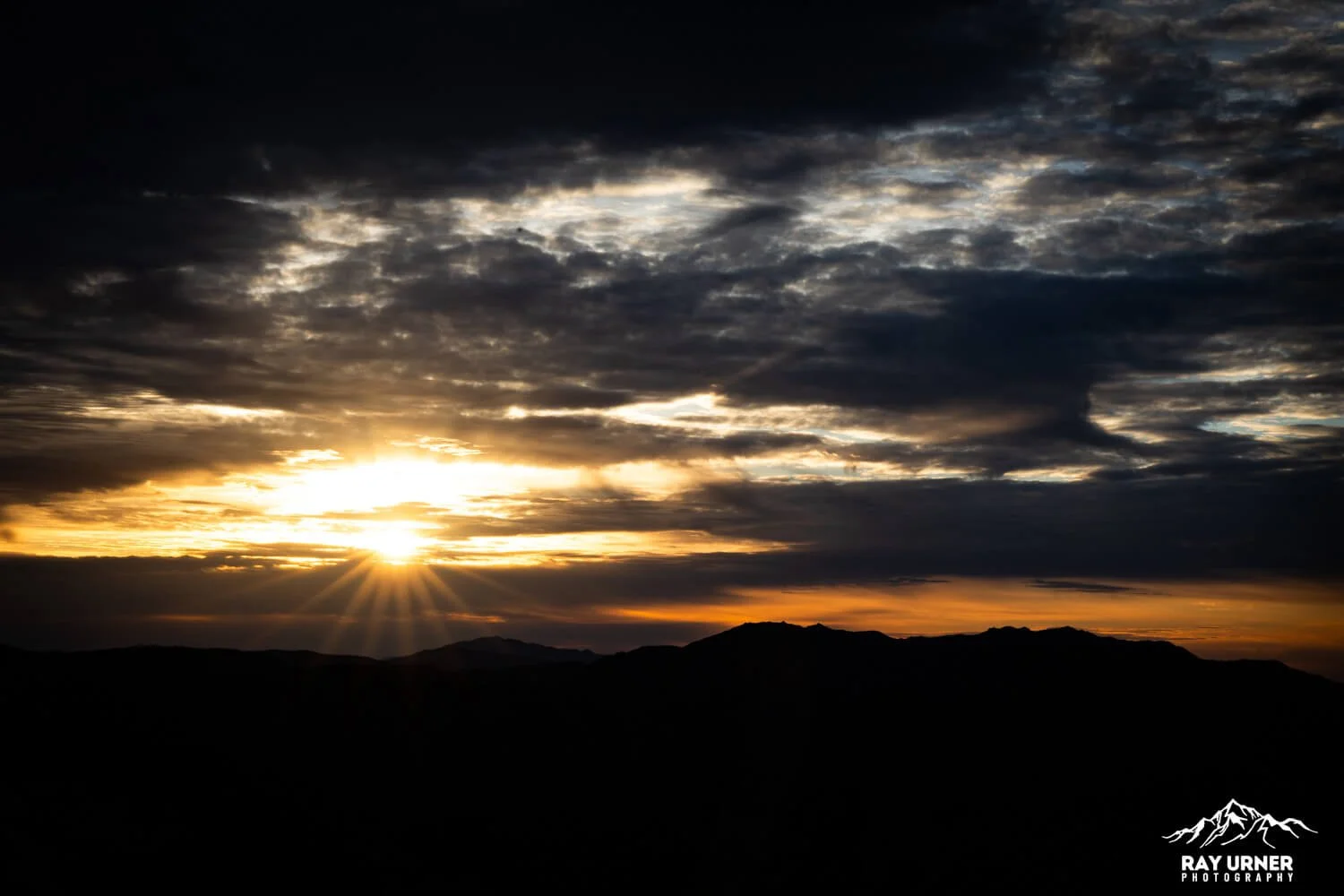
Sunrise Color Wash: Pastel glow over San Jacinto + San Gorgonio; 35–70mm for a balanced composition.
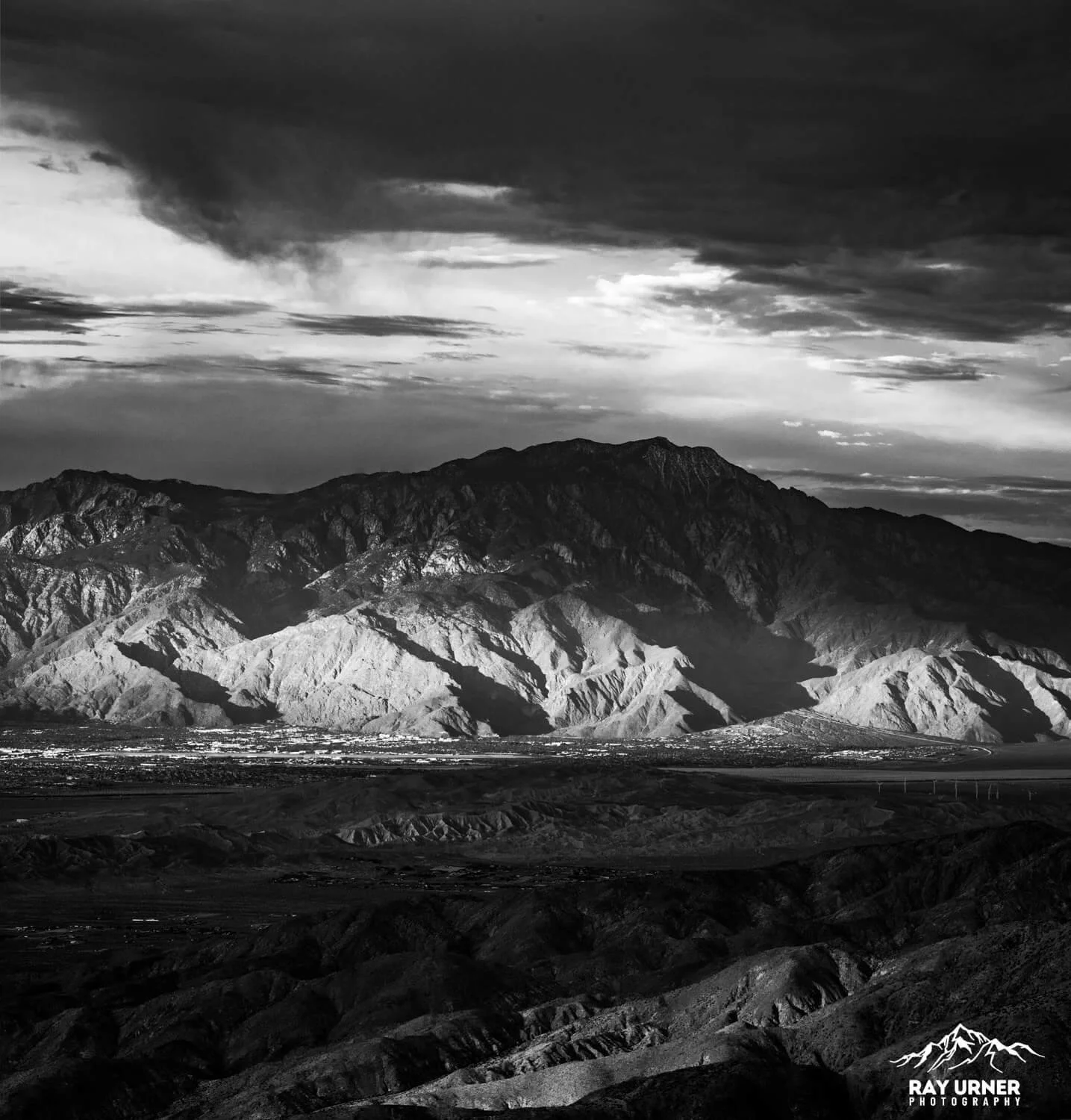
Telephoto Textures: Fault‑line compression with 135–200mm; emphasizes layering.
Atmospheric Haze: Use side‑light to accentuate the basin’s depth curves when air quality is hazy (common).
Minimalist Silhouette: A lone visitor at the railing during first light—great for scale.
Lens kit: Ultra‑wide (14–24/15–35), mid‑zoom (24–70), tele (70–200).
Filters: Circular Polarizer
Tripod: Optional but helpful for blue hour, long exposures, and panoramas.
Light & Timing
Best arrival time: 30–45 minutes before sunrise to capture blue hour and pre‑dawn layering.
Why sunrise works: Parking is wide open, winds may be calmer, and you avoid sunset crowds entirely. When I was here, I literally had the entire viewpoint to myself.
Conditions: Keys View is often windy—gusts can exceed 30–40 mph, so weigh down your tripod or shoot handheld with high shutter speeds. [
Hiking
There’s no real “hike”—just a paved, short 0.1–0.25‑mile path with mild incline. Still, the altitude means lower temps than the rest of the park. Dress warm. Winds whip across the ridge regardless of season.
No reliable cell service; download maps or offline sunrise timing ahead of time.
Logistics
Parking: Upper lot with 40+ spaces including van‑accessible; lower lot has 2 accessible spots; both paved.
Restrooms: Vault toilet at upper lot; grab bars but no running water.
Drive: 20 minutes from Park Boulevard; fully paved to the top.
Safety: Strong winds, cooler temperatures; stay back from edges on especially gusty mornings.
Accessibility Notes
Main viewpoint: Paved, accessible.
Lower Keys View: Best for wheelchair users (minimal grade, smoother path).
Path width: Typically ≥6 ft; gentle grades.
Pro Tips
Check air quality: Clear mornings reveal Signal Mountain in Mexico—a rare but spectacular bonus. [nps.gov], [california...mylens.com]
Wind strategy: Shield your camera behind stone barriers; shoot handheld to avoid tripod vibration.
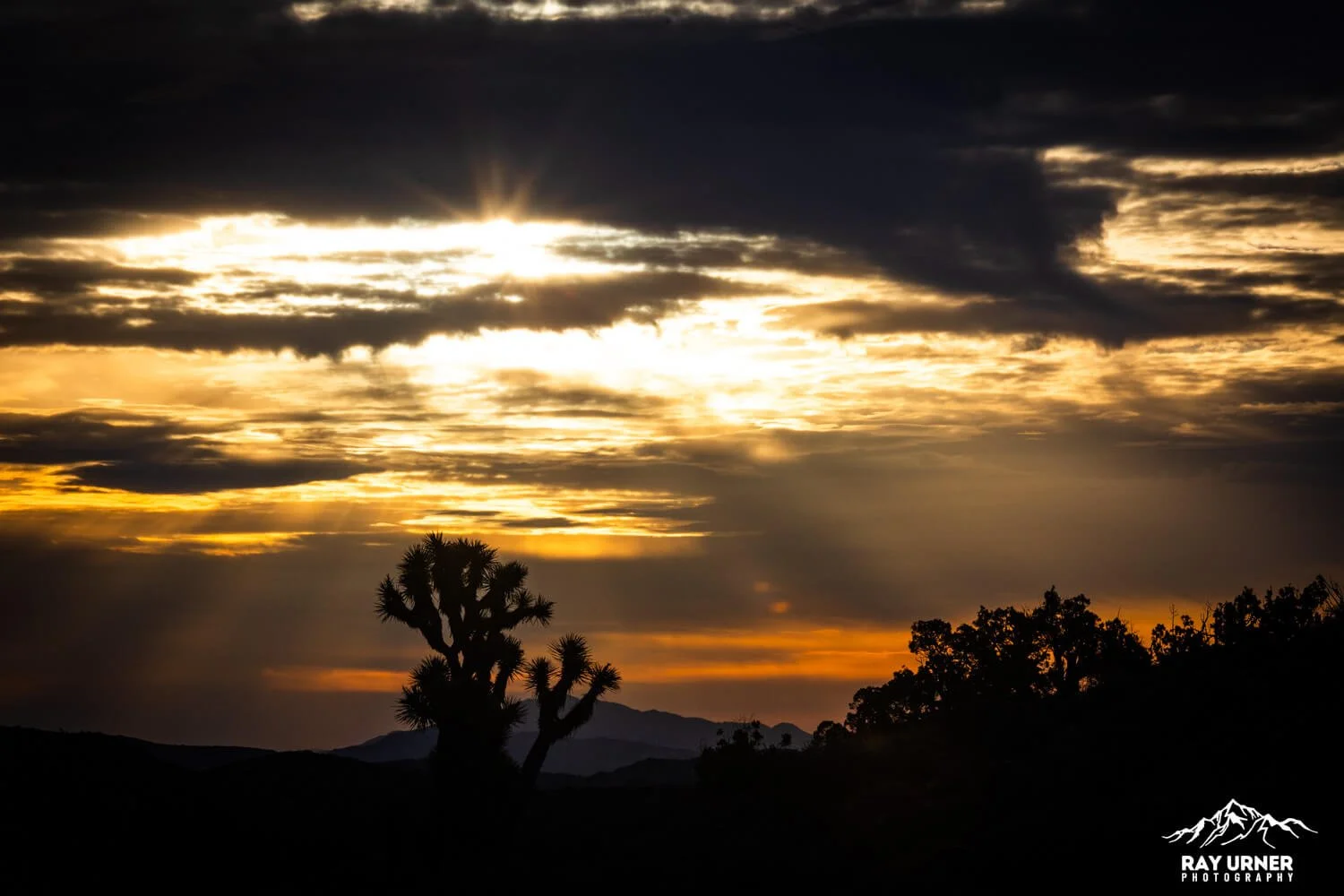
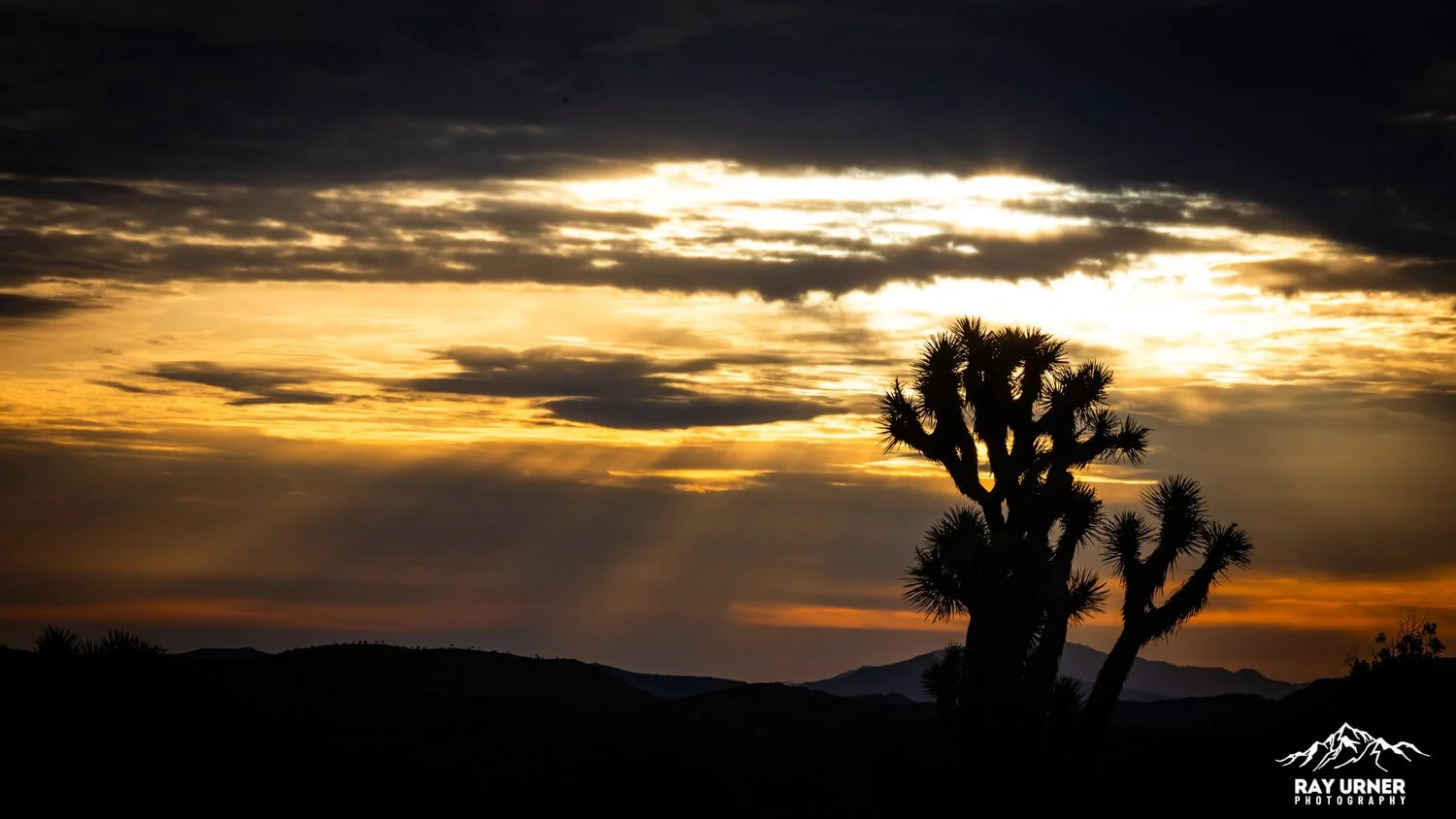
After sunrise: Head back down Keys View Road—Joshua trees glow beautifully in first light.
FAQs
Is Keys View good specifically for sunrise?
Absolutely—fewer people, soft pastel light facing the mountains, and easy parking.
How long does the visit take?
15–45 minutes depending on how long you stay for color shifts.
Is the road safe in the dark?
Yes—it’s paved and graded, but drive slowly for wildlife and potential wind gusts.
Can I fly a drone?
No—drones are prohibited in Joshua Tree National Park.